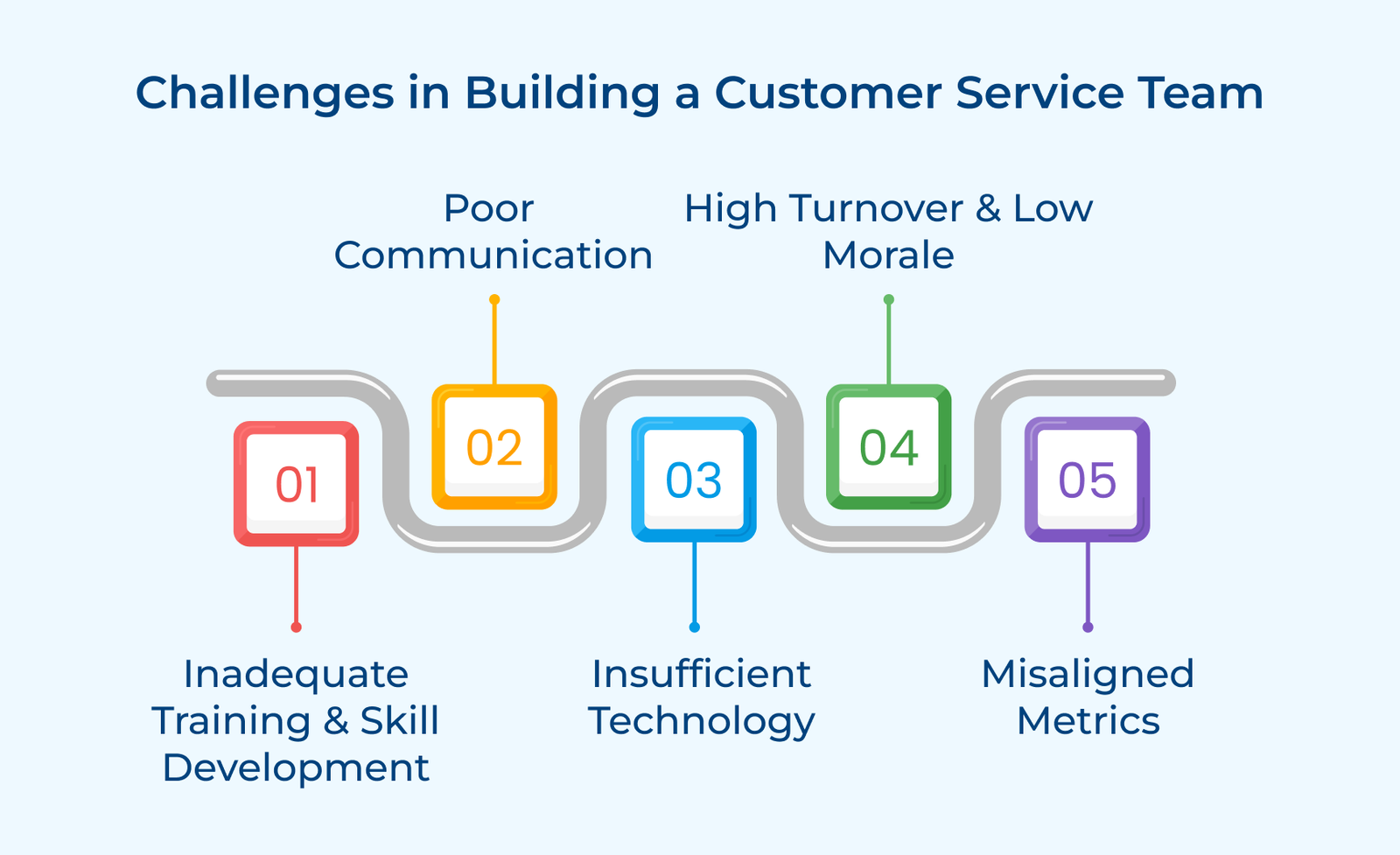
1. Inadequate Training and Skill Development
Without proper training, new hires are left unprepared to handle customer inquiries, while neglecting ongoing skill development leads to a stagnant, unadaptable workforce. It results in frustrated customers and demotivated employees.
Implement a robust training program that includes both comprehensive onboarding and continuous skill development. Regularly assess performance, address skill gaps with targeted training and enhance peer-to-peer learning to help employees refine their skills in a supportive environment.
2. Poor Communication and Collaboration
Silos within the customer service team create disjointed customer experiences, with poor information flow leading to conflicting advice and repeated inquiries. The lack of collaboration leads to inefficiency and frustration.
Promote a culture of open communication by using collaborative tools and holding regular team meetings for information sharing. Launch cross-functional projects to break down silos and encourage knowledge exchange. Recognize and reward collaborative efforts to reinforce their value.
3. Insufficient Technology and Tools
Outdated technology slows down service, with inconsistent tracking across platforms leading to fragmented customer histories and delayed responses. It frustrates both customers and agents.
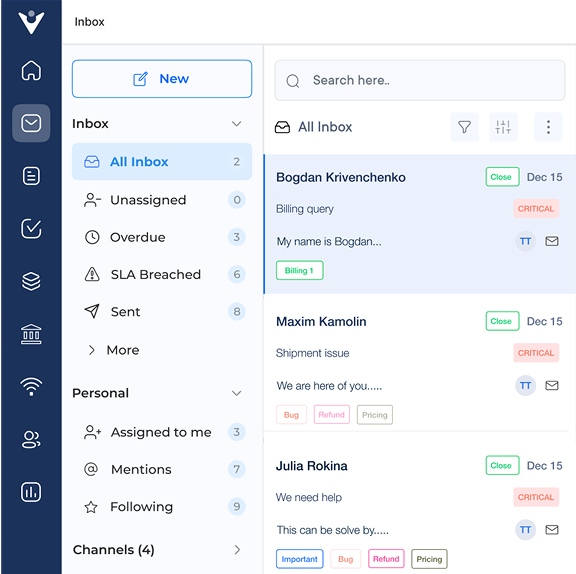
Invest in modern customer service software that integrates all customer communication channels and provides comprehensive customer data. Regularly update technology to keep pace with evolving needs and ensure agents are fully trained to leverage new tools effectively.
4. High Turnover and Low Morale
High turnover or burnout are draining resources, with low morale leading to poor performance and a negative customer experience.
Tackle turnover by improving working conditions, offering competitive compensation and providing clear career growth opportunities. Create a positive work environment with team-building activities, recognition programs and professional development.
5. Misaligned Metrics and Incentives
Focusing only on metrics like call times leads to rushed, shallow interactions, with agents prioritizing speed over quality. Misaligned incentives drive poor service experiences.
Create a balanced scorecard that includes both quantitative and qualitative metrics. Align incentives with customer satisfaction and effective problem resolution. Regularly review and adjust metrics to ensure they enhance the right behaviors.
Customer Service Team Examples
Let’s go through real-life examples of brands that have prioritized their customer service teams, highlighting the strategies they employed and the outstanding outcomes they achieved.
1. Zappos
Zappos is famous for its exceptional customer service, empowering its customer loyalty team with extensive training and the freedom to think creatively. There are no scripts or time limits for interactions, allowing reps to provide truly personalized support.
One standout policy lets representatives send free shoes or other items at their discretion. It has led to heartwarming stories, like a rep sending flowers to a customer who mentioned buying shoes for her late mother’s funeral, demonstrating Zappos’ commitment to going above and beyond for its customers.
2. Ritz-Carlton
Ritz-Carlton is renowned for its “Ladies and Gentlemen serving Ladies and Gentlemen” philosophy, empowering every employee, from housekeeping to management to spend up to $2,000 per guest to resolve any issue without approval.
The philosophy is part of a broader strategy focused on intensive training and anticipating guest needs. One famous example saw staff flying from Bali to Singapore to return a guest’s forgotten laptop charger, showcasing their unwavering commitment to exceptional service.
3. Amazon
Amazon’s customer service is driven by efficiency and quick problem resolution. Using advanced data analytics, they track interactions, measure response times and identify recurring issues.
Through their “Customer Connection” program, executives, including CEO Jeff Bezos, periodically work in customer service roles to stay closely connected with customer needs. Amazon’s approach prioritizes customer satisfaction, often offering instant refunds or replacements before requiring the return of the original item, even if it means higher short-term costs.
4. Nordstrom
Nordstrom is renowned for its customer-first philosophy, training sales associates to be product experts and empowering them to make decisions that benefit the customer.
Rather than an official handbook, Nordstrom has one rule: “Use good judgment in all situations.” The flexibility has led to legendary service stories, like a sales associate who refunded a customer for tires, although Nordstrom doesn’t even sell them.
5. Southwest Airlines
Southwest Airlines focuses on empowering its customer service team and enhancing a strong, fun company culture. They hire for attitude and train for skill, believing that friendly, motivated employees deliver exceptional service.
Encouraging staff to be themselves, Southwest creates memorable customer experiences, like flight attendants adding humor to safety announcements. The airline also empowers frontline staff to make decisions that benefit customers, such as holding flights for late passengers when possible.
Experience the Power of Dedicated Support with the Customer Service Team
A dedicated customer service team is essential for boosting customer satisfaction, enhancing loyalty and setting a brand apart. Investing in exceptional support is no longer optional, it’s key to sustainable growth with customer experience often outweighing product or price.
A strong customer support team enhances satisfaction by delivering timely, personalized solutions. As the frontline ambassadors of the brand, they turn frustrated customers into loyal advocates, building trust and strengthening customer relationships with every interaction.
Key takeaways:
- Effective customer service is a crucial differentiator in modern business.
- A skilled team can elevate customer experiences and build lasting loyalty.
- Investing in customer service directly boosts both your brand reputation and bottom line.