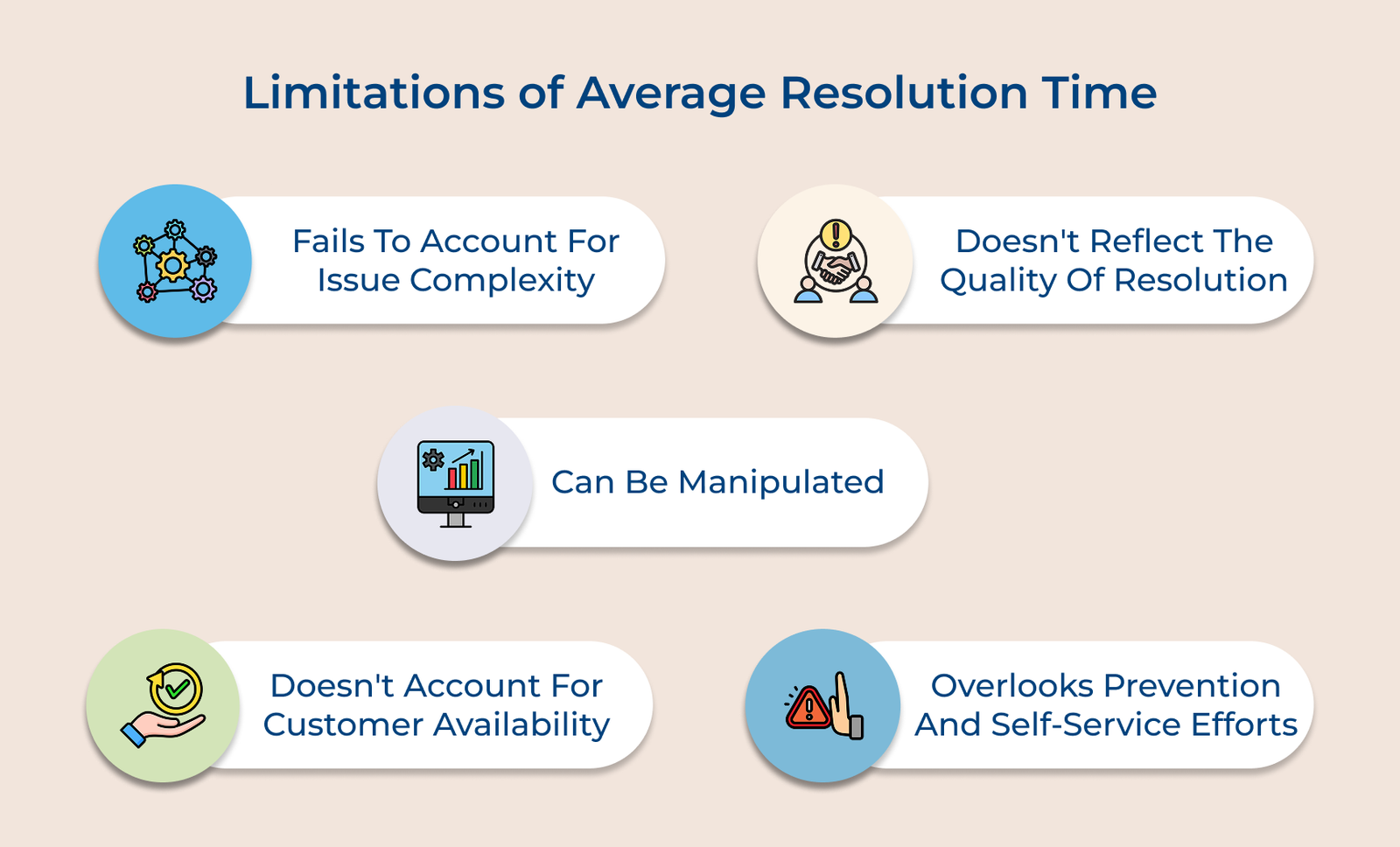
1. Fails to Account for Issue Complexity
ART often treats all issues the same, which can misrepresent efficiency, as complex problems naturally take longer.
You get a clearer view of performance by categorizing issues by complexity and calculating separate ARTs for each level, enabling fairer comparisons.
2. Doesn’t Reflect the Quality of Resolution
Limitation: ART prioritizes speed over quality, risking quick but shallow fixes that can lead to recurring issues and lower customer satisfaction.
Solution: Combine ART with metrics like customer satisfaction and first-contact resolution rates for a balanced approach that ensures quality in support.
3. Can Be Manipulated
Limitation: Teams may rush resolutions or close tickets prematurely to improve ART, leading to incomplete solutions and a poor customer experience.
Solution: Implement random ticket audits, customer follow-ups and track reopened tickets to ensure resolutions are effective, maintaining quality alongside speed.
4. Doesn’t Account for Customer Availability
Limitation: ART can be skewed by unproductive waiting times, such as when customers are unresponsive, giving an unfair view of the support team’s efficiency.
Solution: Implement a “working time” metric that excludes customer wait periods, offering a more accurate reflection of the team’s actual resolution efforts.
5. Overlooks Prevention and Self-Service Efforts
Limitation: ART overlooks proactive efforts like issue prevention and self-service, which reduce ticket volume but aren’t captured in the metric, undervaluing the strategies.
Solution: Track self-service usage alongside ART, measuring ticket reductions, success rates and the impact of proactive support on demand.
Examples of Average Resolution Time
Check out the examples of average resolution time that will help businesses identify benchmarks, assess their performance and learn strategies to improve resolution times.
Zappos
Zappos, known for its outstanding customer service, optimizes resolution times by empowering agents with the freedom to resolve issues thoroughly, without relying on scripts or time limits. The approach may seem unconventional, but it leads to faster resolution by addressing problems completely during the first contact.
The company invests heavily in additional training, ensuring agents are equipped to handle a wide range of issues efficiently. The comprehensive strategy results in high customer satisfaction, proving that quality service can drive both speed and success, without focusing on traditional time-based metrics.
Amazon
Amazon has significantly cut its ticket resolution time by leveraging technology and self-service tools. Their comprehensive self-service portal, featuring detailed product info, FAQs and troubleshooting guides, enables customers to quickly resolve common issues without contacting support.
Amazon employs AI-powered chatbots and an advanced ticketing system that efficiently routes inquiries to the right department for more complex problems. The tech-driven solutions, paired with a robust knowledge base, allow Amazon to resolve most customer issues within minutes, drastically reducing overall resolution times.
Nordstrom
Nordstrom, known for its exceptional customer service, has optimized resolution times by adopting a “customer-first” approach. Empowering employees to make real-time decisions allows them to resolve issues on the spot, reducing the need for escalations and speeding up problem resolution.
Nordstrom has implemented a seamless omnichannel support system, enabling customers to switch between in-store, phone, email or social media without having to repeat their issues. The streamlined approach ensures swift, efficient resolutions, no matter the initial contact channel.
Average Resolution Time: Where Promptness Meets Precision
Average resolution time (ART) is a key metric that balances speed and accuracy in customer service. It plays a vital role in customer satisfaction, operational efficiency and business success. Companies show their commitment to excellent service by resolving issues quickly.
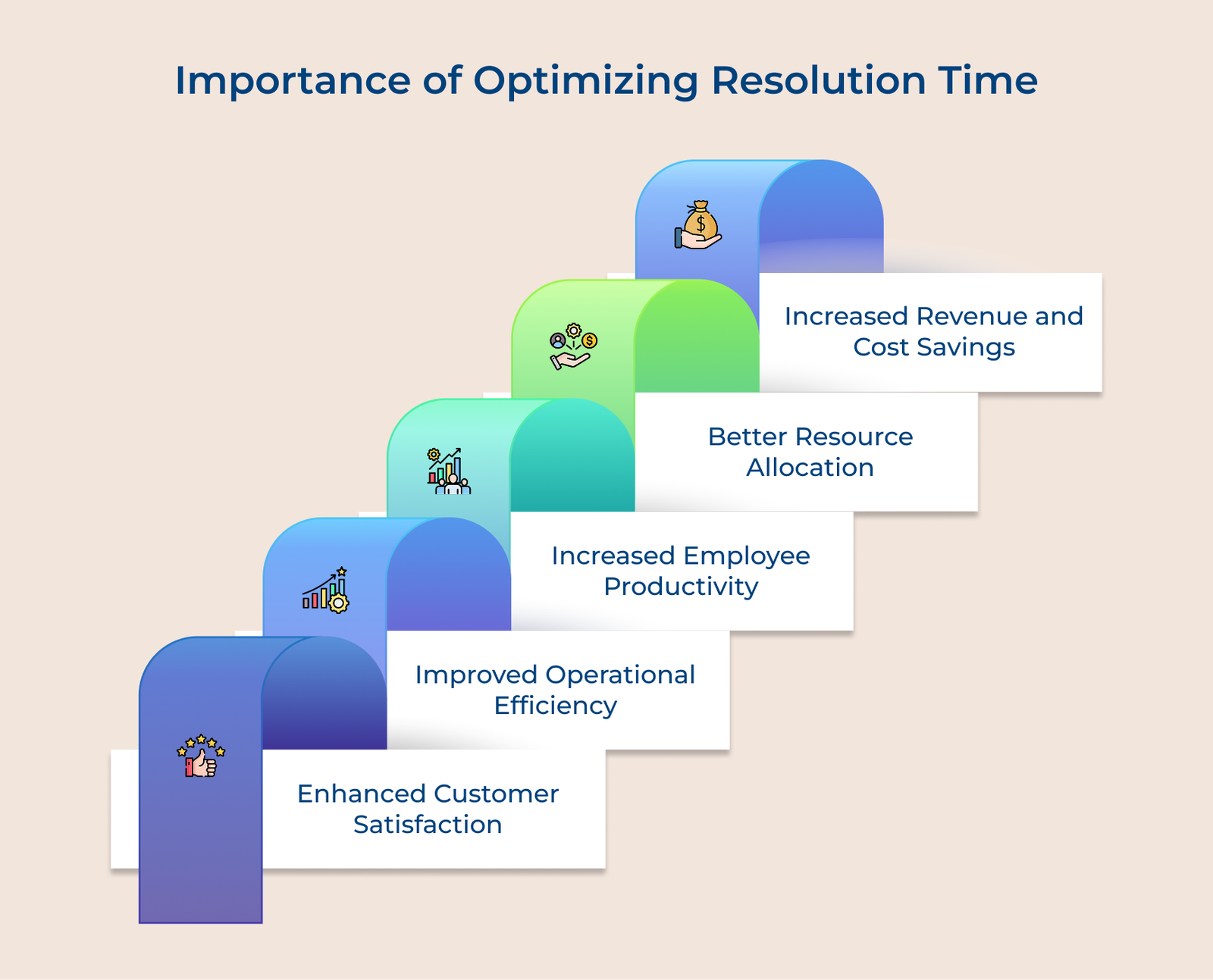
Faster ART boosts customer satisfaction by reducing frustration and valuing customers’ time, leading to stronger loyalty. It also enhances team productivity, enabling support staff to handle more issues and reduce operational costs.
Key takeaways:
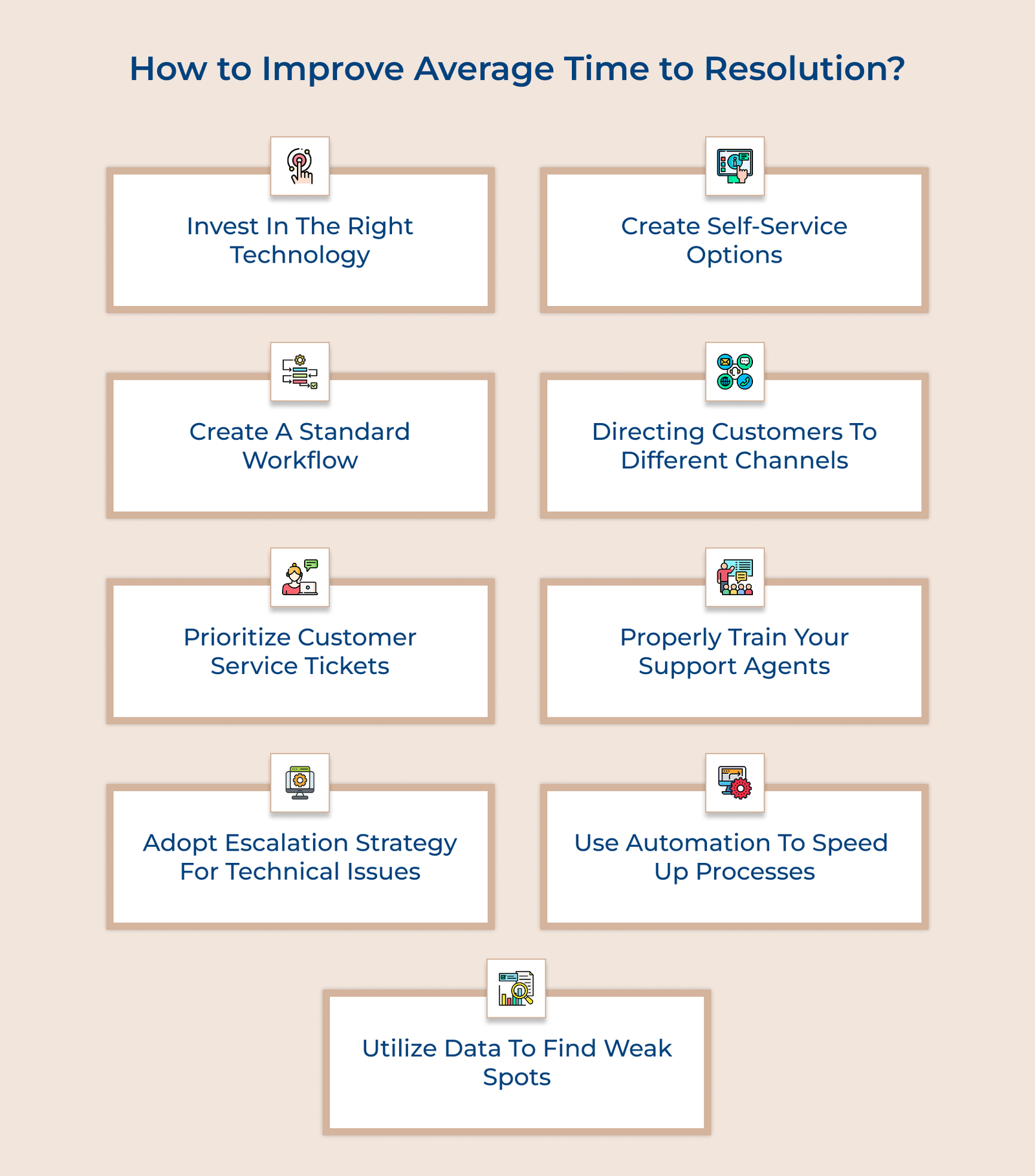
- Optimizing ART requires a balanced approach, blending technology, training and process improvements.
- Speed is important, but quality should never be sacrificed for faster resolutions.
- Ongoing monitoring and analysis of ART, along with other key metrics, ensure continuous enhancement of customer support.