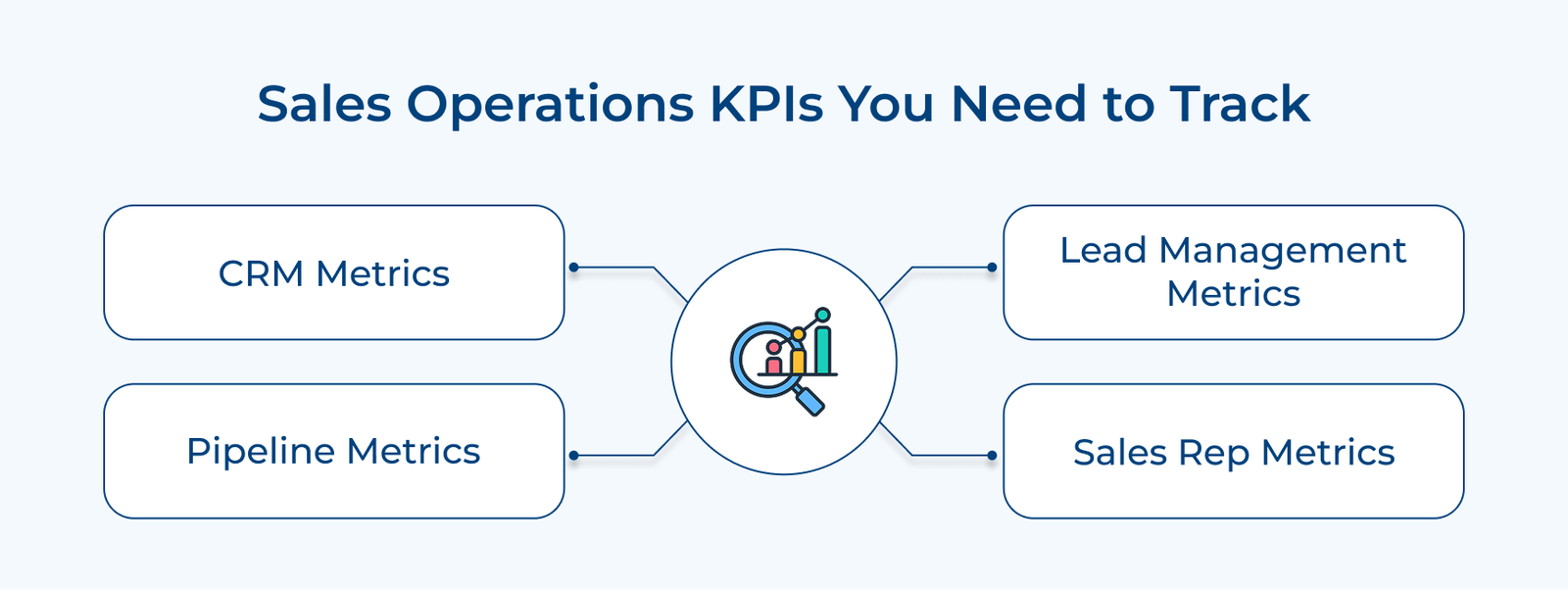
A. CRM Metrics
CRM metrics provide a detailed view of your sales process effectiveness. The metrics form the foundation for understanding the health of your sales pipeline and the effectiveness of your customer engagement efforts.
1. Average Deal Value
Average deal value reflects the typical value of a closed deal, offering insights into your sales pipeline’s health and lead quality. It helps assess pricing strategies, spot upselling opportunities and prioritize high-value deals for greater revenue impact.
Formula:
Total Value of Closed Deals / Number of Closed Deals
Sum up the total monetary value of all closed deals within a given period to calculate the average deal value. Divide the sum by the total number of deals closed in that same period. It provides a representative figure of the typical deal size.
Example:
If you closed 10 deals in a month with a total value of $500,000:
Average Deal Value = $500,000 / 10 = $50,000
How to improve?
- Train your sales team in value-based selling, focusing on customer outcomes over product features.
- Equip them with upselling and cross-selling strategies to maximize revenue opportunities.
2. Close Rate
Close Rate or win rate, measures the percentage of leads converted into customers. It’s a key indicator of your sales team’s efficiency, lead quality and the effectiveness of their strategies.
Formula:
(Number of Closed Deals / Total Number of Opportunities) x 100
Calculate the close rate by dividing the number of successfully closed deals by the total number of opportunities (including both won and lost deals) in a given period. Multiply the result by 100 to express it as a percentage.
Example:
If you had 100 opportunities and closed 25 deals:
Close Rate = (25 / 100) x 100 = 25%
How to improve?
- Create a streamlined sales qualification process to prioritize high-quality leads.
- Offer continuous training and coaching to sharpen your team’s closing skills.
3. Revenue Growth Rate
The revenue growth rate tracks how quickly your company’s income is rising. It reflects the success of your sales strategies, helping you spot trends, allocate resources wisely and plan for expansion.
Formula:
((Current Period Revenue – Previous Period Revenue) / Previous Period Revenue) x 100
Subtract the last period’s revenue from the current period, divide by the previous period’s revenue and multiply by 100 to calculate the revenue growth rate. Ensure consistent periods (monthly, quarterly or annually) for accuracy.
Example:
If your revenue was $1,000,000 last year and $1,200,000 this year:
Revenue Growth Rate = (($1,200,000 – $1,000,000) / $1,000,000) x 100 = 20%
How to improve?
- Expand your product range or enter new markets to unlock additional revenue opportunities.
- Focus on customer retention strategies to boost lifetime value and drive recurring revenue.
B. Pipeline Management Metrics
Pipeline metrics focus on the flow and quality of opportunities through your sales process. The metrics, such as pipeline forecast, open opportunities and sales cycle length, help sales teams manage their workload.
4. Pipeline Forecast
Pipeline forecast estimates future sales by evaluating open opportunities, their stages and historical close rates. The metric is crucial for financial planning, resource allocation and setting achievable sales targets, guiding strategic decisions on hiring, marketing or growth.
Formula:
The sum of (Deal Value x Probability of Closing) for all open opportunities
Assign a closing probability to each opportunity based on its sales stage to calculate the pipeline forecast. Multiply the opportunity value by its probability, then sum the results for all opportunities.
Example:
If you have three opportunities:
1. $50,000 with 80% probability
2. $30,000 with 50% probability
3. $100,000 with 20% probability
Pipeline Forecast = ($50,000 x 0.8) + ($30,000 x 0.5) + ($100,000 x 0.2) = $40,000 + $15,000 + $20,000 = $75,000
How to improve?
- Regularly update opportunity values and closing probabilities to keep forecasts accurate.
- Ensure only high-quality leads enter the pipeline by implementing a strong sales qualification process.
5. Open Opportunities
Open Opportunities track the number of active sales prospects in the pipeline, offering a snapshot of future business potential and pipeline health. Monitoring the metric helps manage workload, prioritize leads and adjust strategies to maintain a steady flow of opportunities.
Formula:
Total count of active opportunities in the pipeline
Count all active sales prospects in the pipeline to calculate open opportunities, regardless of stage or value. The metric can be measured at a specific time or averaged over a set period.
Example:
If your sales pipeline contains:
– 5 opportunities in the qualification stage
– 8 opportunities in the proposal stage
– 3 opportunities in the negotiation stage
Total Open Opportunities = 5 + 8 + 3 = 16
How to implement:
- Establish a lead nurturing program to continuously feed new opportunities into your pipeline.
- Regularly refresh your pipeline by removing or re-engaging inactive prospects.
6. Sales Cycle Length
Sales cycle length tracks the average time it takes to turn a lead into a closed deal, from first contact to final sale. The metric is key for resource planning, forecasting and pinpointing process bottlenecks. You can set realistic expectations and optimize your approach for faster conversions by understanding your sales cycle.
Formula:
The sum of (Deal Close Date – Deal Creation Date) for all closed deals / Number of Closed Deals
Subtract the creation date from the close date for each deal to calculate the sales cycle length. Then, average the durations across all closed deals to determine the overall cycle length.
Example:
If you closed 3 deals with the following cycle lengths:
1. 45 days
2. 30 days
3. 60 days
Average Sales Cycle Length = (45 + 30 + 60) / 3 = 45 days
Best practices:
- Analyze your sales process to pinpoint stages where deals stall and implement strategies to accelerate progress.
- Equip reps with tools to handle objections and close deals faster.
C. Lead Management Metrics
Lead management metrics assess the effectiveness of your lead generation, qualification and nurturing processes. The metrics are essential for aligning sales and marketing efforts.
7. Lead Generation Ratio (Marketing vs Sales)
The lead generation ratio compares leads generated by marketing to those from sales, highlighting the effectiveness of both teams in building the pipeline. It helps optimize resource allocation, improve collaboration and assess the ROI of sales efforts.
Formula:
Lead Generation Ratio = Number of Marketing-Generated Leads / Number of Sales-Generated Leads
Calculate the lead generation ratio by dividing the number of leads from marketing by those from sales over a set period. The ratio reveals the contribution of each source to your pipeline.
Example:
If marketing generated 150 leads and sales generated 50 leads in a month:
Lead Generation Ratio = 150 / 50 = 3:1
How to improve:
- Adopt a lead scoring system to prioritize high-quality leads for both teams.
- Continuously refine marketing campaigns to boost both the quantity and quality of leads generated.
8. Lead Response Time
Lead response time tracks how quickly sales reps reach out to new leads after they enter the system. Fast responses are crucial for increasing conversion rates and capturing opportunities before they slip away. The metric highlights inefficiencies in lead handling and ensures timely engagement with potential customers.
Formula: Lead Response Time = Sum of (First Contact Time – Lead Creation Time) / Number of Leads
Subtract the lead creation time from the first contact time for each lead to calculate the lead response time, then divide the total duration by the number of leads. It gives you the average response time.
Example:
If you have 3 leads with the following response times:
1. 2 hours
2. 30 minutes
3. 1 hour
Average Lead Response Time = (2 + 0.5 + 1) / 3 = 1.17 hours
Pro tips:
- Implement an automated lead routing system for instant lead assignment to sales reps.
- Set up alerts to ensure timely follow-ups and quick responses to new leads.
9. Lead Conversion Rate
Lead conversion rate tracks the percentage of leads that turn into customers, reflecting the sales team’s ability to nurture and close deals. The metric is key for assessing lead quality, sales strategy effectiveness and funnel efficiency. It highlights areas for improvement in lead nurturing and closing techniques.
Formula: Lead Conversion Rate = (Number of Converted Leads / Total Number of Leads) x 100
Divide the number of converted leads by the total leads generated to calculate the Lead conversion rate, then multiply by 100 to express it as a percentage.
Example:
If you generated 500 leads and 50 became customers:
Lead Conversion Rate = (50 / 500) x 100 = 10%
How to improve:
- Launch a lead nurturing program to enhance relationships and add value at every stage.
- Continuously refine your ideal customer profile to target the leads most likely to convert.
D. Sales Rep Metrics
Sales rep metrics evaluate individual and team performance within your sales organization. The metrics, such as sales agent turnover rate, upsell rate and sales productivity, help identify top performers or potential issues affecting sales productivity.
10. Sales Agent Turnover Rate
The sales agent turnover rate tracks the percentage of sales reps who leave within a given period, reflecting team stability and the success of your retention efforts. High turnover can hurt productivity and lead to lost opportunities, offering valuable insights into potential issues with culture or leadership.
Formula:
(Number of Sales Reps Who Left / Average Number of Sales Reps) x 100
Divide the number of reps who left during a set period by the average number of reps employed in that period, then multiply by 100 for a percentage to calculate the sales agent turnover rate. Use consistent timeframes (e.g., quarterly or annually) for accurate comparisons.
Example:
If 5 sales reps left during a year when you had an average of 50 sales reps:
Sales Agent Turnover Rate = (5 / 50) x 100 = 10%
How to improve:
- Develop a robust onboarding and training program to ensure new hires thrive.
- Conduct exit interviews regularly to uncover turnover causes and address any recurring issues.
11. Upsell Rate
The Upsell Rate tracks the percentage of customers who buy additional products or services beyond their initial purchase. It reflects your sales team’s ability to drive extra revenue from existing customers. The metric is valuable because upselling is often more profitable than acquiring new customers and signals strong customer satisfaction.
Formula:
(Number of Customers Who Purchased Upsells / Total Number of Customers) x 100
Divide the number of customers who made additional purchases by the total customer base to calculate the upsell rate, then multiply by 100. Define “upsell” clearly and use consistent periods for accuracy.
Example:
If 200 out of 1000 customers purchased additional products or services:
Upsell Rate = (200 / 1000) x 100 = 20%
Best practices:
- Train sales reps to spot upsell opportunities by analyzing customer needs and usage patterns.
- Launch a customer success program to maximize value from initial purchases, increasing upsell potential.
12. Sales Productivity (Revenue per Rep)
Sales Productivity or Revenue per Rep, measures the average revenue generated by each sales rep in a given period. It offers valuable insights into individual and team performance, highlighting top performers. The metric is key for assessing sales strategies, setting realistic targets and optimizing resource allocation.
Formula: Sales Productivity = Total Revenue Generated / Number of Sales Representatives
Divide the total revenue generated in a given period by the number of active sales reps during that time to calculate sales productivity. It gives you the average revenue per rep.
Example:
If your team of 10 sales reps generated $2,000,000 in revenue over a quarter:
Sales Productivity = $2,000,000 / 10 = $200,000 per rep
Pro tips:
- Offer continuous training to enhance rep skills and efficiency.
- Leverage sales enablement tools to streamline processes and minimize administrative workload.
5 Software To Monitor And Analyze Sales Operations Kpis
Following are the top powerful software solutions designed to enhance the analysis of sales operations KPIs, ensuring better performance and outcomes.
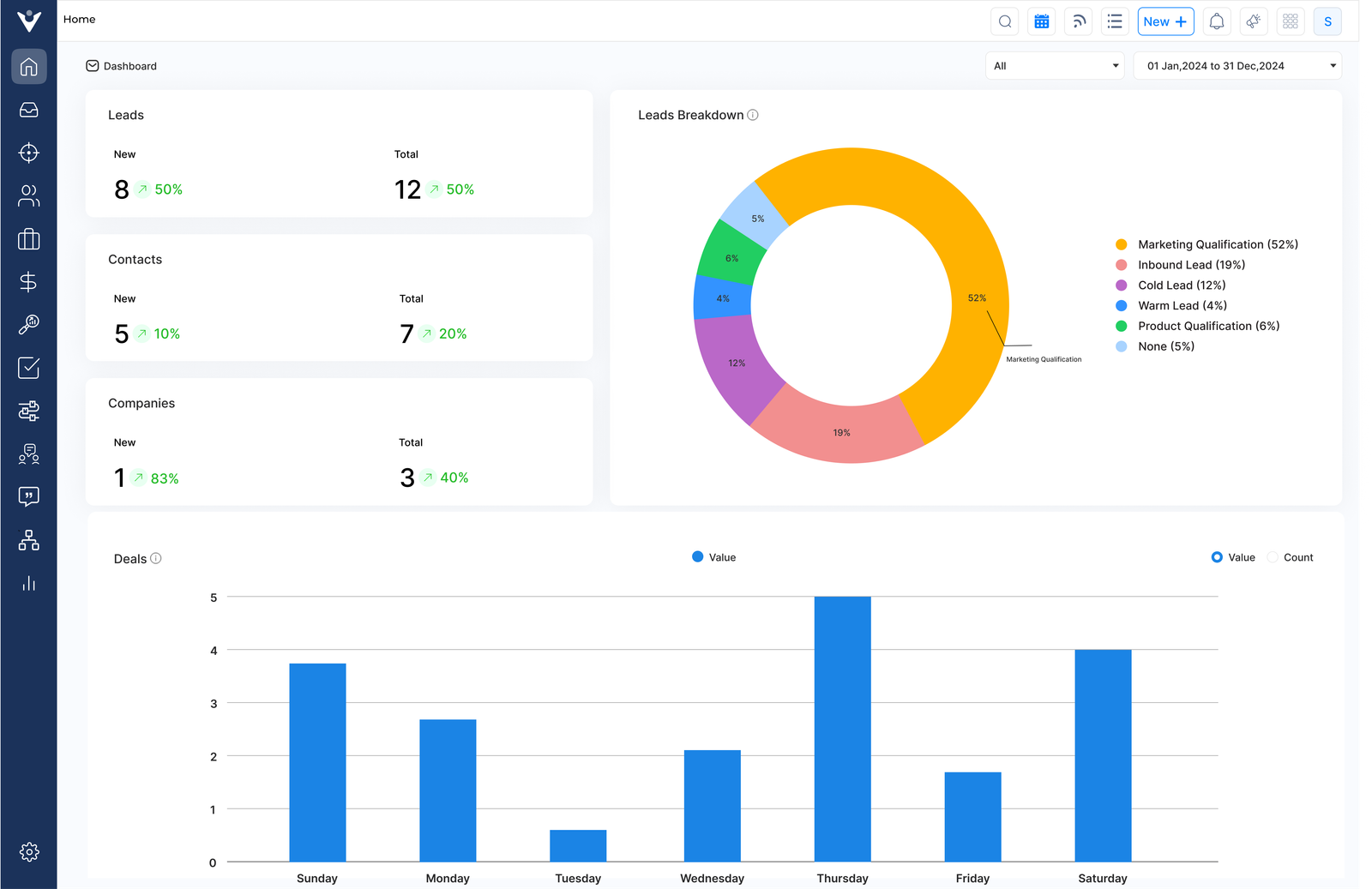
1. Veemo Sales