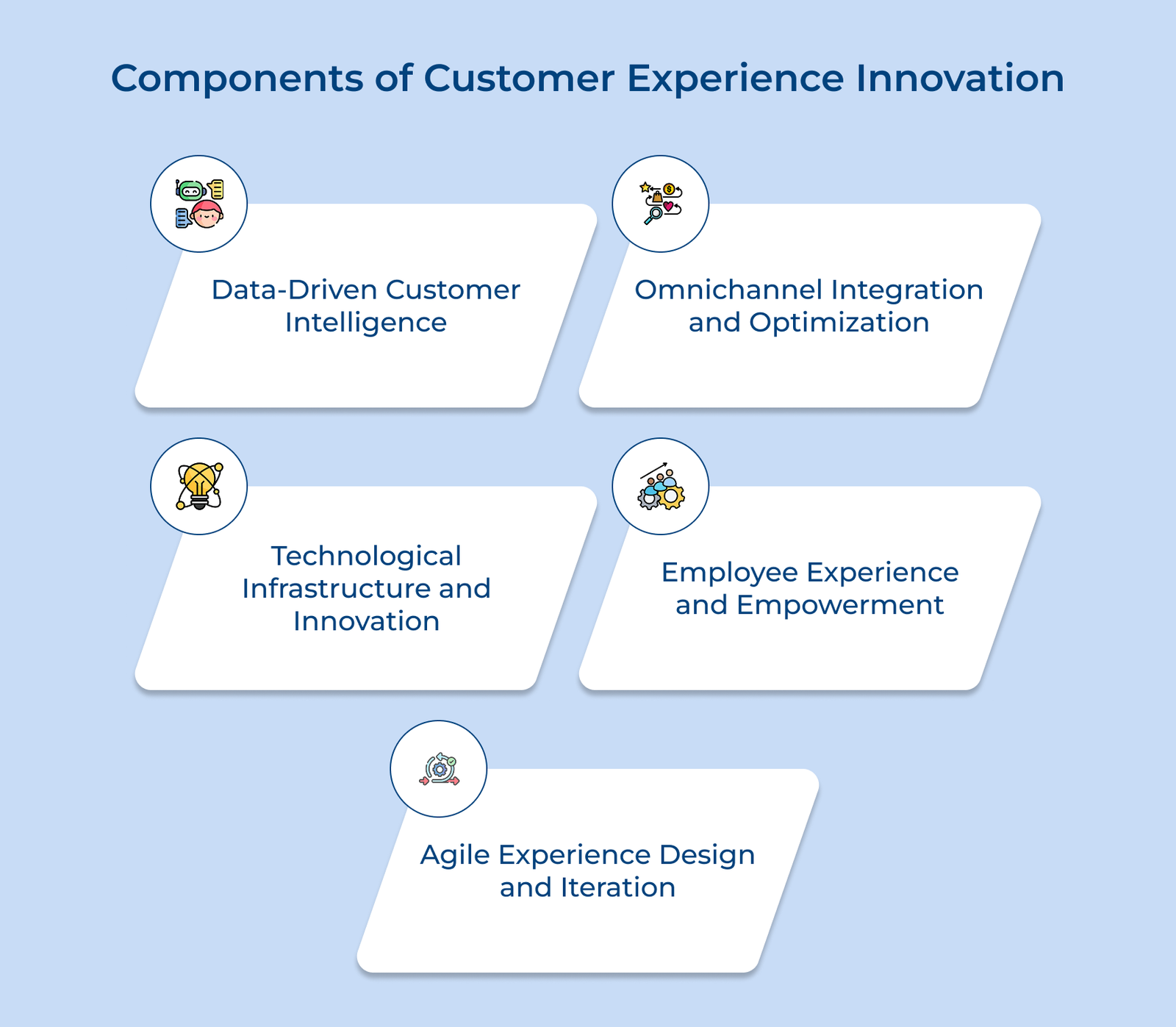
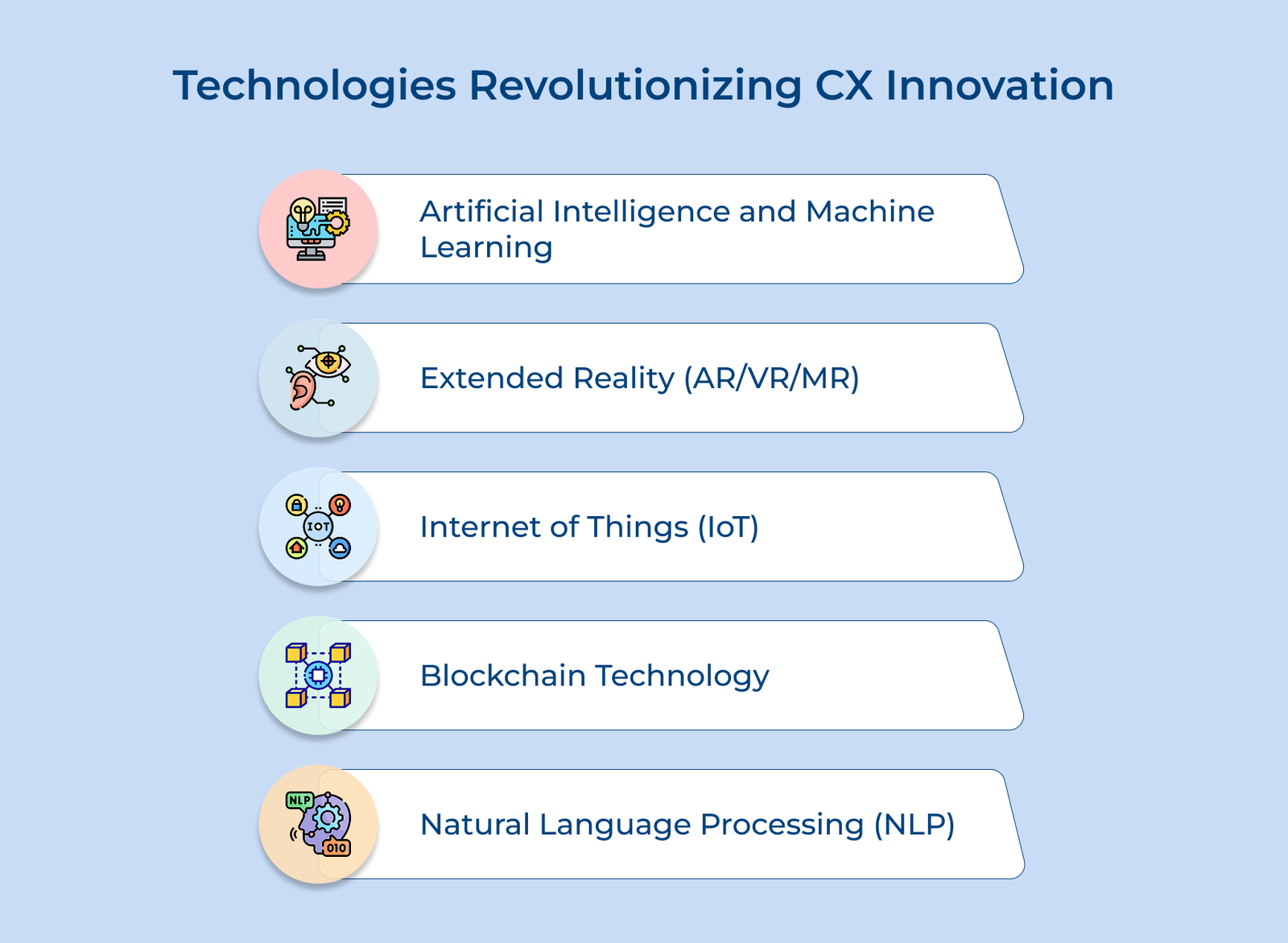
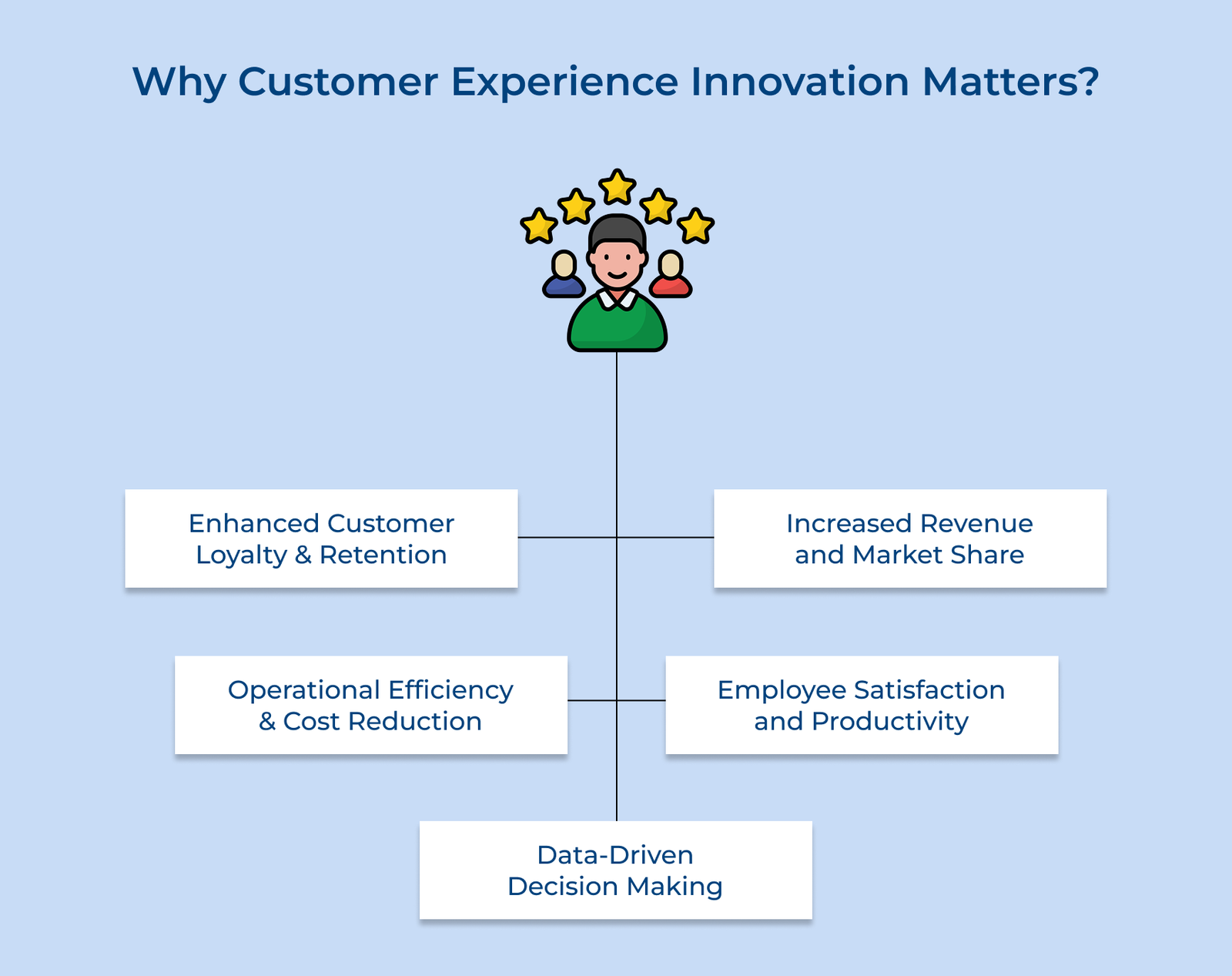
Organizations should focus on:
- Integration planning: Ensure smooth connectivity across CX innovations with a unified data architecture.
- Employee training: Provide thorough training and clear documentation for new technologies.
- Performance monitoring: Set KPIs and conduct regular reviews for continuous optimization.
- Change management: Communicate benefits and create adoption roadmaps for all innovations.
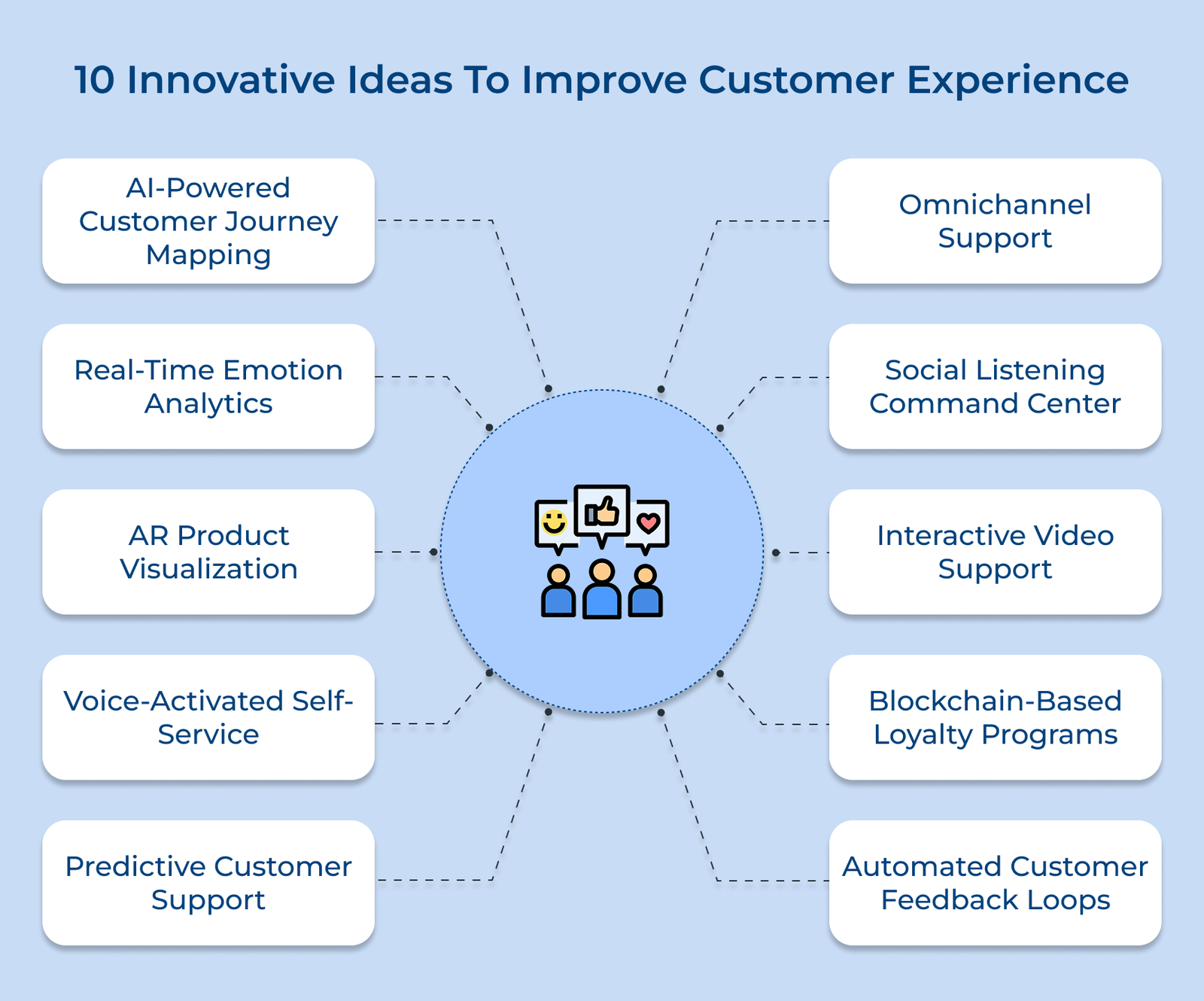
1. Personalized AI-Powered Customer Journey Mapping
Personalized AI-powered journey mapping transforms how businesses engage with customers by tailoring experiences to their evolving preferences. The innovation uses machine learning to analyze behavioral patterns, personalize content and optimize journeys in real-time, providing deep insights into decision-making.
Let’s assume that an e-commerce platform uses AI to adjust the homepage layout, recommend products and send personalized notifications based on browsing history or past purchases.
Best practices:
- Ensure transparent data collection with strong privacy controls.
- Regularly calibrate systems to improve accuracy and relevance.
2. Real-Time Emotion Analytics Implementation
Emotion analytics revolutionizes customer service by allowing businesses to understand and respond to customer emotions in real-time. The technology strengthens emotional connections with customers and reduces friction in their journey. Using sentiment analysis, the system gauges emotions across interactions, while pattern recognition identifies mood trends.
Imagine there’s a customer service platform that analyzes voice and text patterns to detect frustration. It will work to adjust the tone accordingly and escalate to human agents when needed.
Pro tips:
- Establish clear protocols for escalating negative emotions or high-stress situations.
- Continuously train emotion detection models with diverse data to enhance accuracy.
3. Product Visualization with Augmented Reality
Augmented Reality transforms product discovery by merging digital and physical shopping experiences, boosting customer confidence. The AR platform offers three main features: interactive 3D demos for real-time product exploration, virtual try-before-you-buy to visualize items in real settings and customization tools for instant product modifications.
Imagine a furniture retailer that lets customers virtually place furniture in their homes, customize colors and styles and explore each piece from multiple angles—all through their mobile devices.
Best practices:
- Ensure cross-device compatibility and optimize AR experiences for various screen sizes and platforms.
- Implement intuitive gesture controls and provide clear tutorial guidance for first-time users.
4. Voice-Supported Self-Service
Voice-activated solutions transform customer self-service by enabling hands-free, intuitive interactions. The technology enhances convenience, reduces support costs and speeds up response times with automated assistance. Leveraging natural language processing, the system understands diverse queries and dialects, while multi-language support expands accessibility.
Take the example of banking service. They enable customers to check their balances and perform transactions through voice commands, implementing security measures based on specific actions.
Pro tips:
- Create natural conversational flows that maintain context.
- Ensure robust security while keeping voice authentication simple and user-friendly.
5. Predictive Customer Support
Predictive support systems shift customer service from reactive to proactive, addressing issues before they escalate. The innovation enhances customer satisfaction and reduces support costs by resolving problems early. Using advanced algorithms, the system detects potential issues based on usage patterns and triggers automated interventions. A solution recommendation engine offers personalized fixes based on past success rates.
Software companies anticipating user frustration and proactively providing tutorials or support resources before issues even arise is an example of predictive support.
Actionable tips:
- Set clear thresholds for automated interventions to avoid over-notifying customers.
- Regularly update prediction models with feedback and success data.
6. Omnichannel Support Enhancement
Omnichannel support ensures a seamless and consistent customer experience across all touchpoints, allowing customers to move effortlessly between channels without repeating information. Businesses that implement omnichannel strategies retain 89% of their customers. The system uses cross-platform data synchronization to maintain consistency, with unified customer profiles for accurate, up-to-date preferences.
Assume there’s a retail service that connects its mobile app with in-store experiences, allowing customers to start their shopping journey online and seamlessly continue in-store. The instant access to customer preferences enables the staff to provide a more personalized and efficient shopping experience.
Best practices:
- Ensure real-time data synchronization for consistency.
- Design smooth transition flows that preserve context when customers switch channels.
7. Social Listening Command Center Creation
Social listening command centers revolutionize brand management by monitoring and responding to customer sentiment across social platforms in real time. The technology provides valuable insights into customer preferences and emerging market trends. The system tracks brand mentions, visualizes sentiment patterns through trend analysis and prioritizes responses for critical interactions.
A brand monitoring center analyzes social media conversations around product launches, categorizing mentions by sentiment and urgency. High-priority interactions are instantly routed to the right team, ensuring swift and effective responses.
Pro tips:
- Set clear response protocols for varying sentiment levels.
- Implement escalation workflows to handle potential crises effectively.
8. Interactive Video Customer Support Integration
Interactive video support enhances remote customer assistance by offering personalized, visual troubleshooting. The approach combines the convenience of digital support with the effectiveness of face-to-face interactions, improving resolution times and customer satisfaction. The system builds upon three core functionalities.
Let’s consider that a technology support service uses interactive video to assist with product setup. It enables the agents to guide customers through configuration steps using real-time visuals and annotations.
Best practices:
- Ensure high-quality video streaming with automatic adjustments for connection speeds.
- Implement privacy protocols and secure consent before video sessions.
9. Blockchain-Based Loyalty Program Innovation
Blockchain-based loyalty programs revolutionize traditional reward systems by providing transparent, immutable transaction records. The innovation enhances trust while enabling seamless cross-brand reward sharing and enhancing customer engagement. The system uses smart contract technology for automated reward distribution based on set criteria.
Assume there’s a multi-brand loyalty platform that lets the customers earn tokens from various retailers, which are tracked and redeemed across participating merchants.
Pro tips:
- Simplify blockchain concepts for user-friendly interfaces.
- Ensure strong security measures to protect data and transactions.
10. Automated Customer Feedback Loop System
Automated feedback systems revolutionize customer satisfaction tracking by turning real-time insights into actionable improvements. The systems capture feedback across multiple touchpoints and automate responses to drive continuous improvement. The system operates through three integrated components. Multi-channel feedback collection gathers insights from diverse sources including social media, surveys and direct interactions.
Let’s consider that a service platform gathers feedback from mobile apps, websites and in-store interactions. It categorizes responses and triggers improvement workflows, keeping customers updated on actions taken.
Actionable tips:
- Define feedback categories and response protocols for consistency.
- Use closed-loop communication to inform customers of actions taken based on their input.
Customer Experience Innovation Examples
Check out the five prominent companies that have successfully transformed their customer interactions and achieved remarkable business impact.
1. Nike’s Digital-First Experience Innovation
Nike transformed customer experience with its Nike App ecosystem, offering personalized shopping through AR foot scanning for precise sizing and immersive in-store experiences. Virtual try-ons and tailored product recommendations based on workout patterns enhance the journey.
The digital shift has boosted customer engagement, reduced return rates and increased direct-to-consumer sales. Nike’s personalized approach has deepened its connection with younger audiences, driving brand loyalty and growth.
2. Starbucks’ Mobile-First Loyalty Innovation
Starbucks revolutionized customer experience with its mobile app, integrating ordering, payments and rewards. Using predictive analytics, it suggests personalized drinks and offers contactless pickup. Their innovative approach includes gamified rewards and location-based personalization.
The mobile-first strategy has boosted repeat customer growth, increased average order value and strengthened customer relationships through personalized experiences while reducing wait times.
3. Amazon’s Seamless Shopping Experience
Amazon revolutionized ecommerce with one-click ordering, predictive shipping systems and AI-powered personalized recommendations. Its voice-activated shopping via Alexa and innovative delivery solutions create seamless cross-device experiences.
The innovations have solidified Amazon’s leadership in convenience, driving exceptional customer loyalty and setting new benchmarks for shipping speed in retail.
4. Tesla’s Direct-to-Consumer Experience
Tesla transformed automotive retail with its direct-to-consumer model and digital-first buying experience. Offering virtual car customization, remote software updates and mobile service units through an integrated app, Tesla enhances convenience.
The innovative strategy has enhanced a loyal brand community, reduced dealership costs and allowed Tesla to maintain premium pricing by delivering an exceptional customer experience.
5. Apple’s Integrated Ecosystem Experience
Apple delivers a seamless experience through its integrated hardware and software ecosystem, offering personalized support via the Apple Genius Bar. Apple enhances convenience with features like Apple Pay and unified customer profiles.
The cohesive strategy drives exceptional customer loyalty, helping Apple maintain premium pricing and consistently grow its service revenue by prioritizing superior customer experience.
Experience the Future of Engagement with Customer Experience Innovation
The future of customer experience is being shaped by emerging technologies and evolving customer expectations. Companies embracing CX innovation are unlocking new opportunities for growth by enhancing meaningful connections and enhancing customer engagement. Successful CX strategies blend cutting-edge tech with human-centered design. Leveraging AI, AR/VR, blockchain and other innovations enables businesses to create personalized, seamless experiences that build lasting relationships.
Organizations must remain agile, adapt to new technologies and stay attuned to shifting customer needs. Those who excel in the transformation will set new standards for customer engagement and drive sustainable growth.
Key takeaways:
- CX innovation drives a competitive edge through differentiation.
- Technology enables personalized experiences while maintaining a human touch.
- Continuous adaptation and customer focus are essential for success.