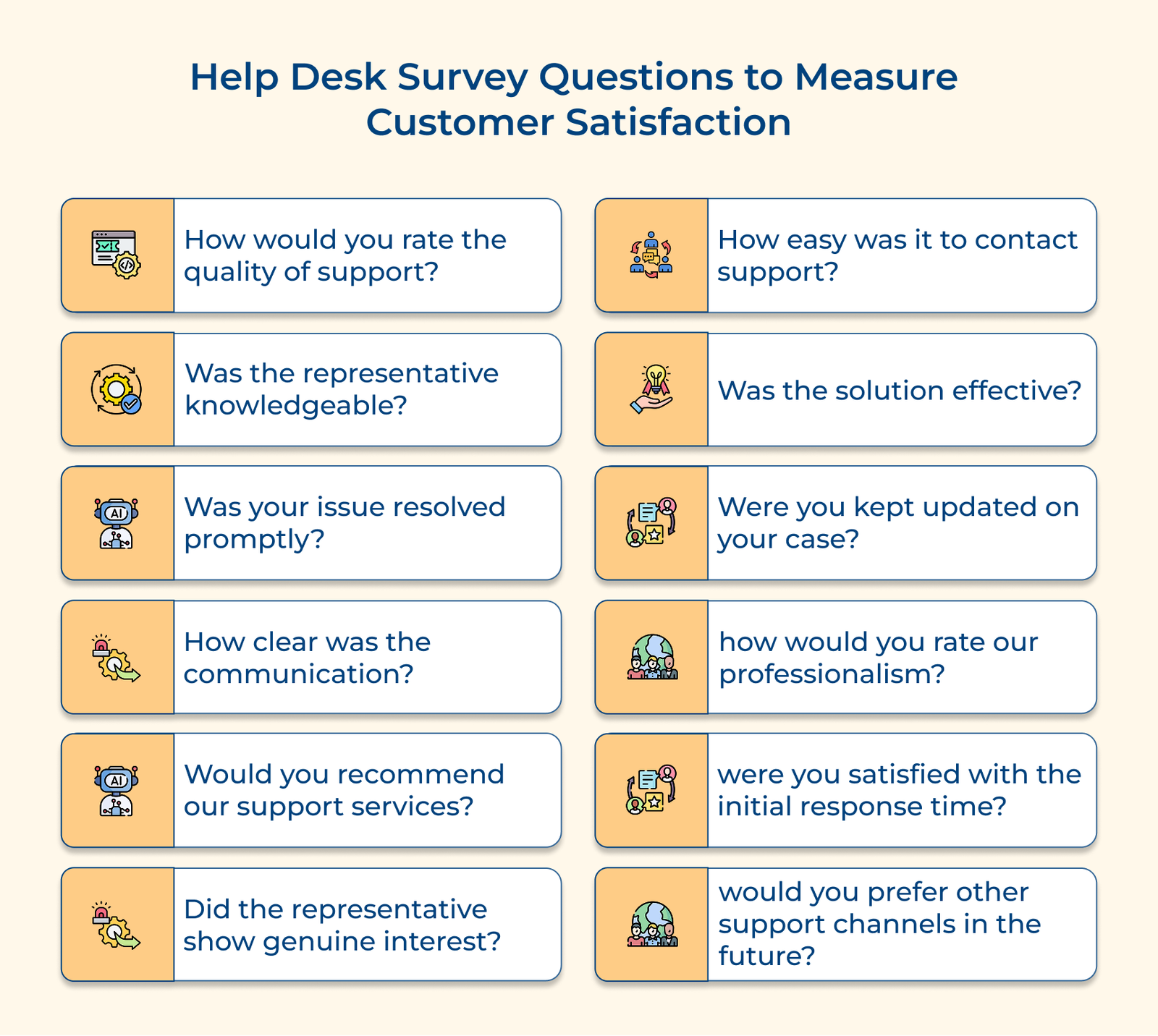
1. How would you rate the overall quality of support you received today?
The overall quality rating measures the customer’s entire experience with support, typically on a 1-5 scale from “Very Poor” to “Excellent.”. It serves as a baseline to assess satisfaction and identify service trends.
The metric offers a snapshot of customer sentiment, helping organizations calculate the customer satisfaction score (CSAT) and monitor service performance. Low scores highlight areas for improvement, while high scores confirm effective service practices.
Key takeaways:
- General satisfaction metrics reveal key strengths and gaps in customer support.
- The insights drive decisions on team training and resource allocation for improved service delivery.
2. Was our support representative knowledgeable about your issue or technical problem?
The metric assesses the technical proficiency of support staff in resolving customer issues. Effective support agents must possess in-depth product or service knowledge to deliver accurate solutions and maintain credibility with customers.
Agent expertise directly influences both resolution speed and customer trust. Feedback from the question helps identify training opportunities and areas where technical resources, such as documentation or knowledge bases, can be enhanced for better support.
Pro tips:
- Technical expertise ratings guide improvements in training and knowledge management.
- They reveal if support teams require extra resources or specialized training to enhance their performance.
3. Did our customer service team resolve your issue on time?
Time-to-resolution measures how efficiently support teams address customer issues, from ticket creation to final resolution, including any delays. It directly reflects the team’s ability to meet customer expectations for swift problem-solving.
Fast resolution times boost customer satisfaction and optimize resource allocation, reducing operational costs. Organizations leverage the metric to streamline support processes, set realistic service level agreements and continuously improve service delivery.
Actionable tips:
- Resolution time metrics highlight process bottlenecks and workflow inefficiencies.
- The data informs staffing decisions and helps set realistic response time benchmarks for better operational efficiency.
4. How satisfied were you with the communication clarity during your support interaction?
Communication clarity measures how effectively support representatives convey technical information to customers. It involves using accessible language, avoiding jargon and ensuring the customer fully understands the solution.
Clear communication builds customer trust and enhances issue resolution. When support staff explains complex concepts simply, it reduces confusion, improves satisfaction and minimizes follow-up interactions.
Key takeaways:
- Communication ratings help refine customer interaction guidelines and create effective templates.
- Insights drive targeted training to enhance explanation skills and boost customer engagement.
5. Would you recommend our support services to others based on your experience?
The question measures customer advocacy, gauging the likelihood of positive referrals through the Net Promoter Score (NPS) method. Customers rate their recommendation likelihood on a 0-10 scale, categorizing them as promoters, passives or detractors.
High NPS scores reflect strong customer satisfaction, trust and loyal customers. Organizations use the metric to predict retention rates, assess service reputation and identify opportunities for growth by focusing on promoters while addressing detractor concerns.
Pro tips:
- NPS scores offer insights into customer loyalty and highlight areas for improvement to boost advocacy.
- The results drive strategic decisions on enhancing customer experience and refining service quality.
6. Did our representative show genuine interest in understanding and solving your problem?
The metric assesses the empathy and emotional intelligence of support staff. Successful interactions combine technical expertise with interpersonal skills to enhance trust and positive customer experiences.
Empathy enhances customer satisfaction and loyalty, as representatives who connect emotionally with customers tend to receive higher ratings. It helps diffuse frustration and ensures a positive support experience.
Best practices:
- Empathy ratings inform soft skills training and refine customer service strategies.
- They highlight best practices for building rapport and managing emotional customer interactions effectively.
7. How easy was it to contact our support team when you needed help?
The question measures how easy it is for customers to access support, considering factors like channel availability, wait times and user-friendly navigation. Smooth access to help reduce customer effort, minimizing frustration and improving satisfaction.
Timely and accessible support channels play a key role in resolving issues efficiently. Feedback from the metric helps organizations fine-tune their support strategies, optimize resource allocation and enhance the customer experience.
Key takeaways:
- Accessibility ratings help refine support channel strategies and operating hours.
- Insights guide investments in self-service options and infrastructure upgrades to improve customer experience.
8. Was the solution provided by our support team effective for your issue?
Solution effectiveness evaluates the quality and long-term impact of the support team’s resolutions. It focuses on both immediate issue resolution and preventing future problems through root cause analysis.
Effective solutions reduce repeat contact and build customer confidence, cutting support costs in the process. The metric helps organizations assess the quality of their knowledge base and solution documentation, ensuring lasting customer satisfaction.
Actionable tips:
- Solution quality metrics drive improvements in knowledge-based content and troubleshooting methods.
- They inform the creation of standardized frameworks and best practices for consistent, effective resolutions.
9. Did our representative keep you informed about the progress of your case?
The metric evaluates the support team’s ability to provide timely, proactive updates during the resolution process. Key touchpoints include initial acknowledgment, progress updates and final resolution confirmation, ensuring customers are kept informed throughout the interaction.
Proactive communication alleviates customer anxiety, minimizes unnecessary follow-ups and promotes trust. Feedback from the metric helps organizations refine communication protocols and establish effective update frequency guidelines for better customer experiences.
Key takeaways:
- Communication frequency metrics help streamline update protocols and template creation.
- Insights from the results guide the automation of status updates and optimize communication timing for enhanced efficiency.
10. How would you rate the professionalism of our support team member?
Professionalism evaluates how well support representatives adhere to conduct standards, including courtesy, respectful language, appropriate tone and composure during difficult interactions. The quality is crucial for maintaining a positive customer experience and reflects the overall brand perception.
High professionalism ratings are linked to greater customer trust and loyalty. Organizations use the feedback to uphold service standards and identify areas for improvement, ensuring support teams deliver consistently excellent service.
Pro tips:
- Professionalism ratings help enhance service standards and training programs.
- Insights guide the creation of service scripts and procedures for effectively managing challenging situations.
11. Were you satisfied with the time it took to receive the initial response?
First response time measures how quickly customers receive an acknowledgment after submitting a support request. A fast initial response sets clear expectations for resolution speed and shows that the issue is a priority. The promptness, if automated or personalized, significantly impacts customer perception and satisfaction.
Quick responses boost customer confidence, reduce anxiety and prevent escalations. Organizations use the metric to fine-tune resource allocation and optimize queue management, ensuring faster response times, especially during peak periods.
Pro tips:
- First-response metrics help determine ideal staffing and shift schedules.
- The data also informs the use of automated responses and priority routing to improve efficiency.
12. Would you prefer different communication channels for future support interactions with us?
Channel preference surveys gather insights into customers’ preferred communication methods, including email, phone, chat, social media and self-service options. The data helps organizations identify any gaps in their support offerings and adapt to changing customer expectations.
Optimizing support channels based on customer feedback enhances accessibility and convenience, boosting satisfaction. Organizations can strategically expand or consolidate their support channels to better serve their customers by understanding preferences.
Actionable tips:
- Channel preference insights drive decisions on investing in new communication technologies.
- They help align support strategies with customer demographics and ensure the right channels are prioritized for maximum satisfaction.
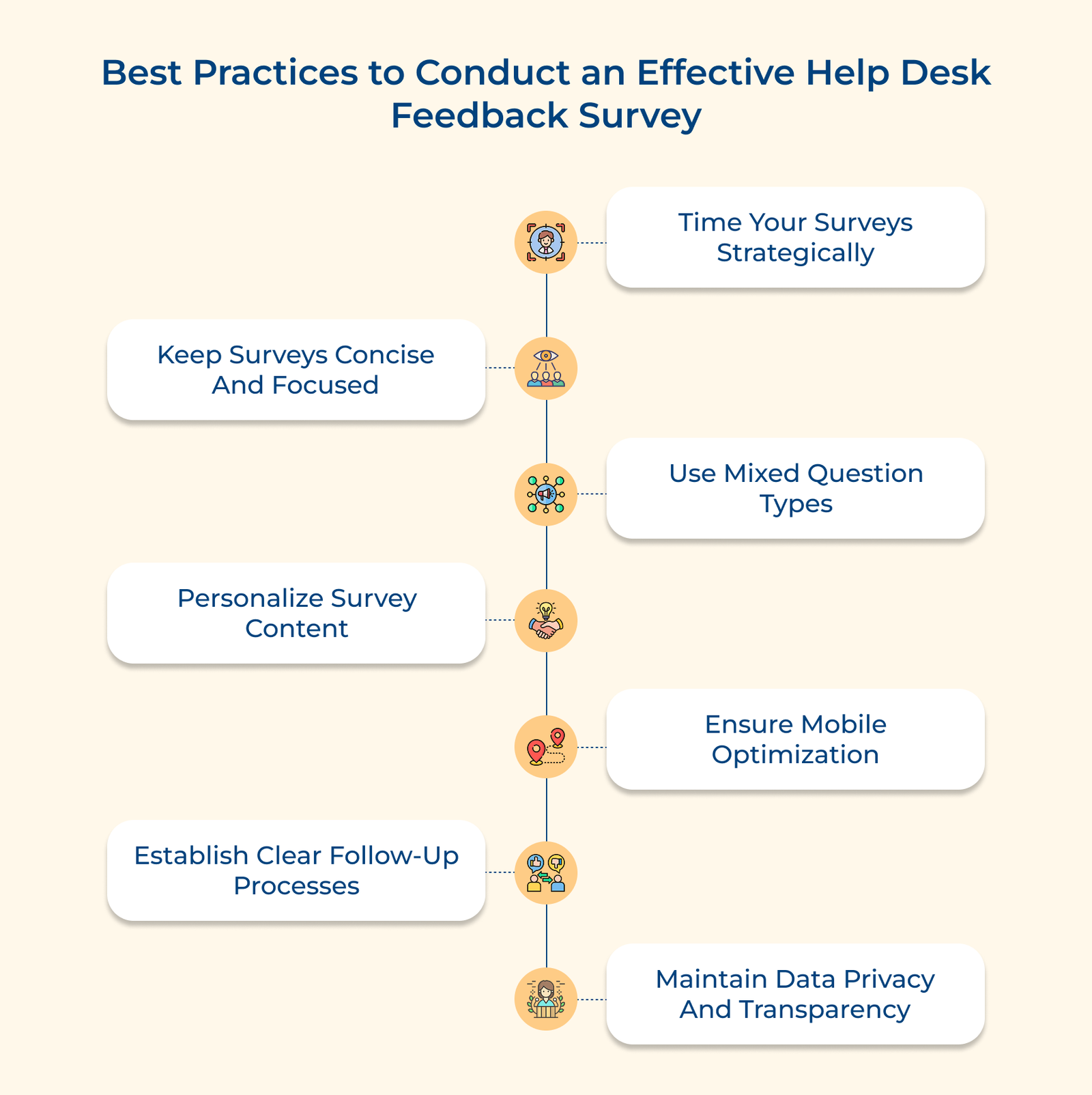
Best Practices to Conduct Effective Help Desk Feedback Survey
Below are the best practices for conducting effective help desk feedback surveys, so you can refine your processes and enhance customer experiences.