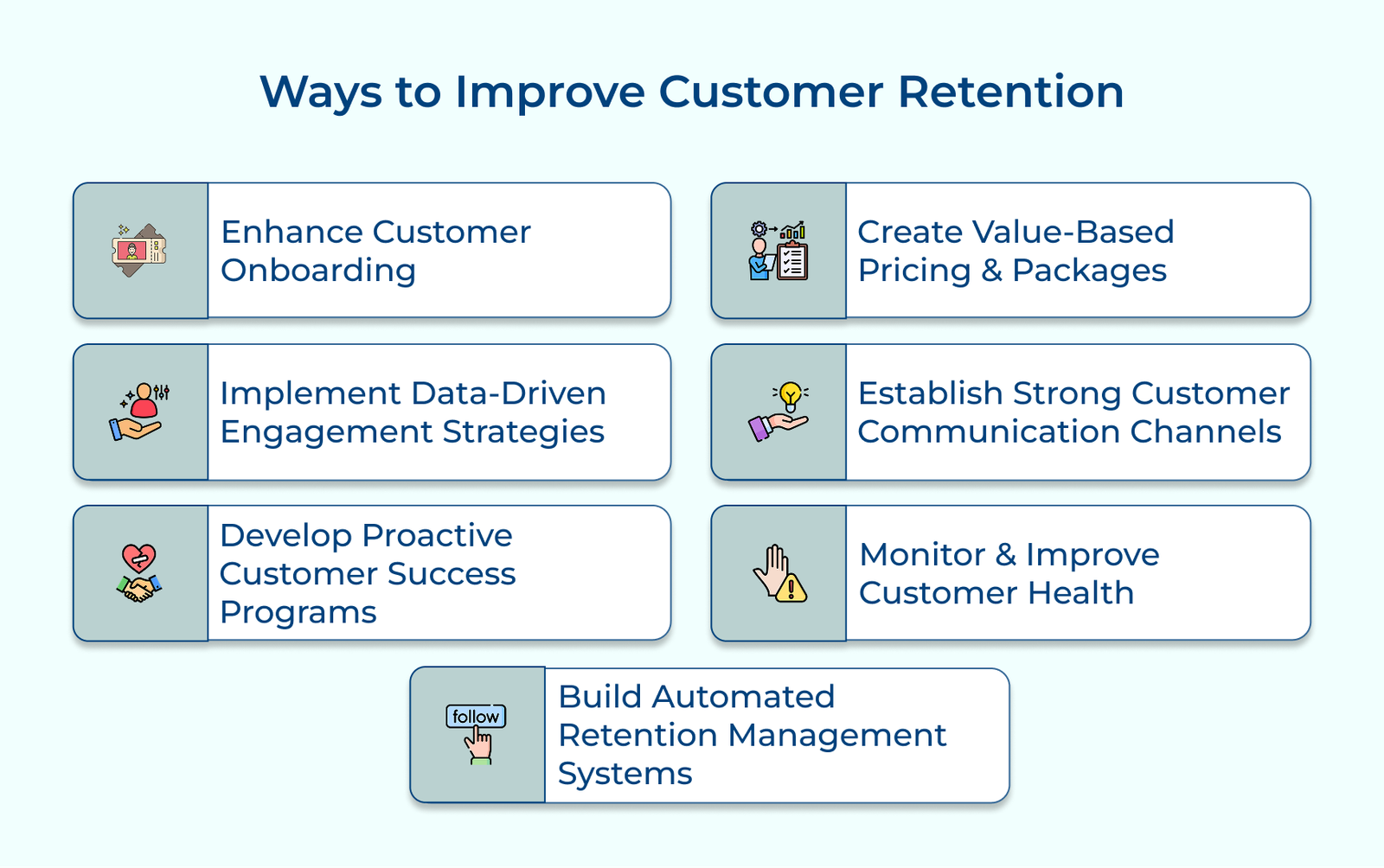
1. Enhance Customer Onboarding and Educational Support
The onboarding phase is crucial for long-term customer success and retention. A well-designed program helps customers understand product value and achieve quick wins, shaping their ongoing engagement.
Training materials, like video tutorials and guides, empower customers to master key features. Personalized onboarding paths cater to different customer needs, ensuring tailored guidance and smooth adoption.
Best practices:
- Use milestone-based programs to track and celebrate progress.
- Schedule regular check-ins during the first 90 days for continued support.
2. Implement Data-Driven Engagement Strategies
Data-driven engagement strategies help businesses make informed decisions to strengthen customer relationships and reduce churn. Companies can target retention efforts more effectively by analyzing behavior metrics like product usage and engagement patterns.
Let’s assume that a SaaS platform may track feature adoption and usage patterns to identify high-value actions. Predictive analytics then helps foresee and address potential churn, allowing proactive intervention.
Pro tips:
- Use a centralized dashboard to track key engagement metrics across all touchpoints.
- Establish clear escalation protocols for addressing at-risk behaviors.
3. Develop Proactive Customer Success Programs
Proactive customer success programs show a company’s dedication to customer outcomes by addressing potential issues before they affect customer satisfaction. The preventive approach enhances stronger relationships and increases retention.
Regular success reviews, like quarterly business check-ins or monthly health checks for key accounts, offer structured opportunities to assess progress and ensure goal alignment. Early warning systems help identify concerning behavior patterns, allowing rapid intervention.
Actionable tips:
- Use standardized review templates for consistent customer assessments.
- Set clear escalation paths to address risks identified during success reviews.
4. Create Value-Based Pricing and Packages
Value-based pricing aligns costs with the benefits customers receive, ensuring a fair exchange and boosting satisfaction. Flexible subscription models cater to diverse needs, with tiered pricing allowing customers to scale based on usage. The adaptability helps customers optimize spending while maintaining access to essential features and services.
Service bundles enhance perceived value through complementary offerings. Companies package related services to create comprehensive solutions. A marketing platform might bundle analytics tools with consultation services to provide enhanced value for enterprise customers.
Pro tips:
- Regularly assess pricing to ensure alignment with customer-perceived value.
- Provide clear upgrade paths to highlight increasing value at each tier.
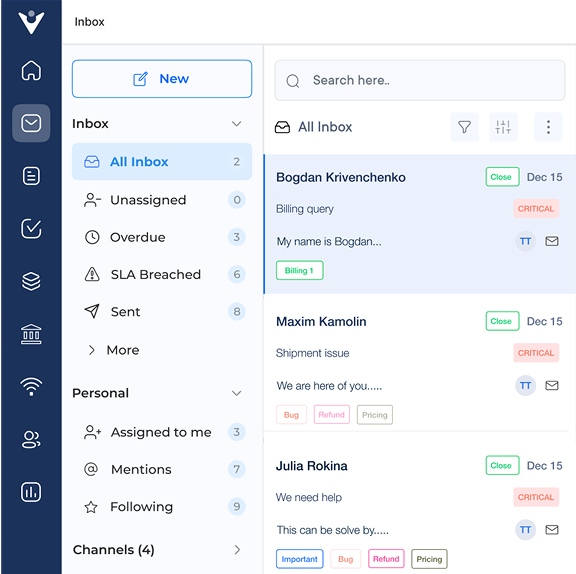
5. Establish Strong Customer Communication Channels
Effective communication channels are vital for building strong customer relationships. A well-structured approach ensures ongoing engagement, addresses needs promptly and enhances long-term retention.
Regular feedback mechanisms, like surveys and VIP customer calls, help gather valuable insights. Consistent touchpoints through communication calendars keep customers informed and engaged, promoting satisfaction.
Best practices:
- Establish clear communication guidelines for consistent messaging.
- Implement automated triggers to mark important customer milestones and engagement opportunities.
6. Monitor and Improve Customer Health
Customer health monitoring offers crucial insights into relationship strength and potential risks. Organizations can improve service quality and boost retention efforts by regularly assessing customer satisfaction. Health scoring systems evaluate customer relationship status through key metrics like engagement and product usage.
Imagine a subscription service that actively tracks key factors to calculate comprehensive health scores. When an account shows signs of risk, intervention strategies kick in to provide proactive support. Targeted action plans based on these scores ensure timely and effective responses, helping the company improve customer retention.
Actionable tips:
- Set clear health score thresholds to trigger specific interventions.
- Develop recovery playbooks for various customer health challenges.
7. Build Automated Retention Management Systems
Automation enhances retention by streamlining processes and ensuring consistent customer engagement. The efficient approach helps organizations scale retention efforts while maintaining reliable customer relationship management.
Automated workflows ensure timely communications, such as personalized product recommendations triggered by purchase history. Follow-up triggers maintain engagement at key customer milestones, optimizing resource use.
Actionable tips:
- Document all automated workflows for easy maintenance.
- Regularly review processes to improve performance based on data insights.
How to Measure Customer Loyalty and Retention: Key Metrics
Check out the key metrics to effectively measure customer loyalty and retention, helping you drive long-term business success.
Key questions:
1. How likely are you to recommend our product/service to others?
2. Do you intend to keep using our product/service?
3. What factors would influence your decision to stay with us?