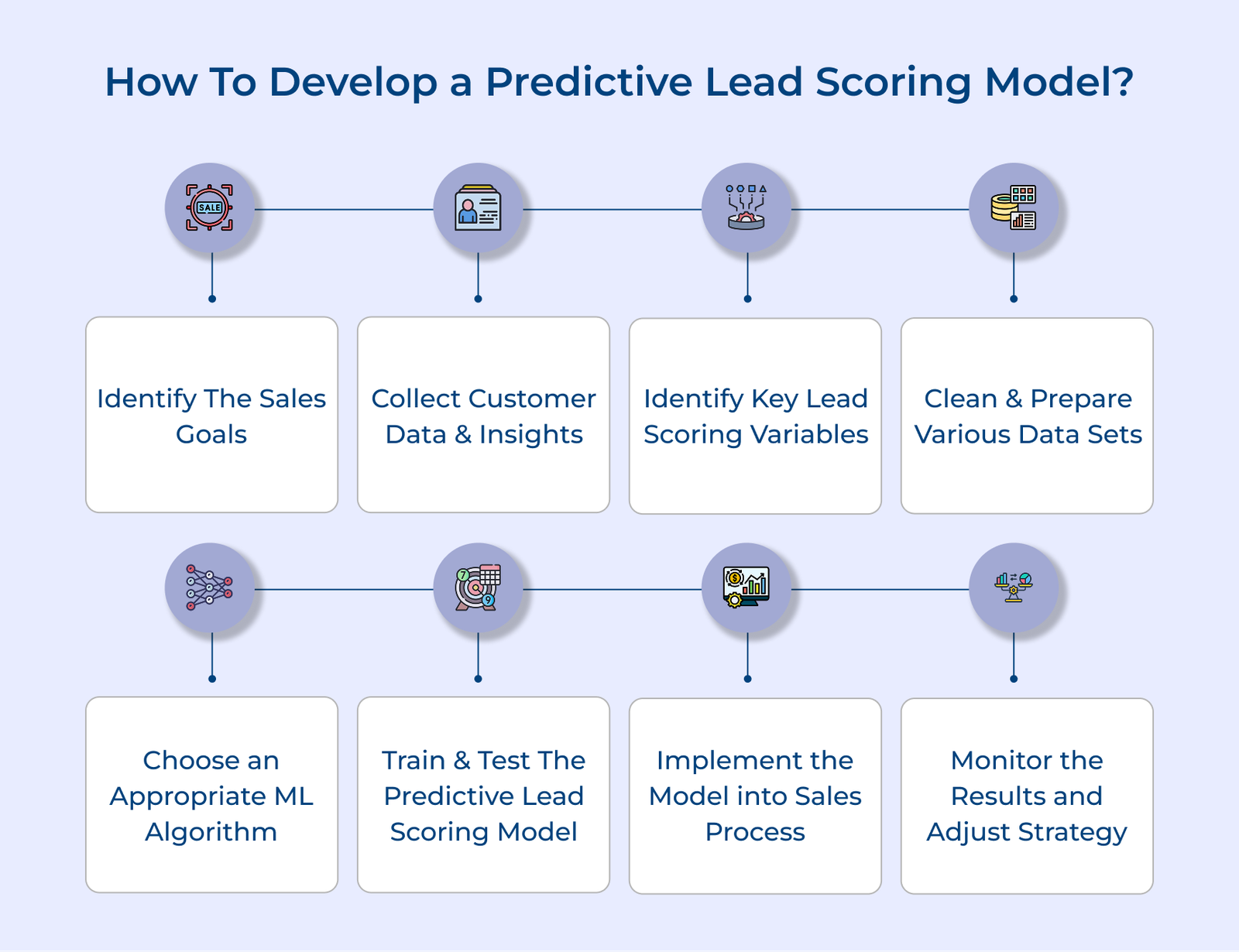
1. Identify the Sales Goals of your Business
Defining clear sales goals is critical for building an effective lead-scoring model. Without specific objectives, you can’t accurately assess what makes a “good” lead or measure success. The step ensures your lead scoring system aligns with your business targets, allowing you to focus on leads that contribute most to achieving your goals.
Sales, marketing and leadership teams must work together to set concrete objectives like revenue targets, conversion rates, sales cycle length or customer lifetime value. The goals are then translated into actionable metrics that define qualified leads. The process involves analyzing current sales performance, market conditions and growth projections to establish realistic targets.
Actionable tips:
- Use the SMART (Specific, Measurable, Achievable, Relevant, Time-bound) framework to define your sales goals. Make sure each goal has a clear timeline and measurable outcomes.
- Engage both sales and marketing teams in goal-setting to ensure secure buy-in from all key stakeholders involved in lead generation.
2. Collect Various Historical Customer Data and Insights
Historical customer data forms the backbone of predictive lead scoring by revealing patterns and traits that differentiate successful conversions from those that fall through the cracks. Sales teams can better understand the factors that contribute to lead quality by analyzing past customer behaviors.
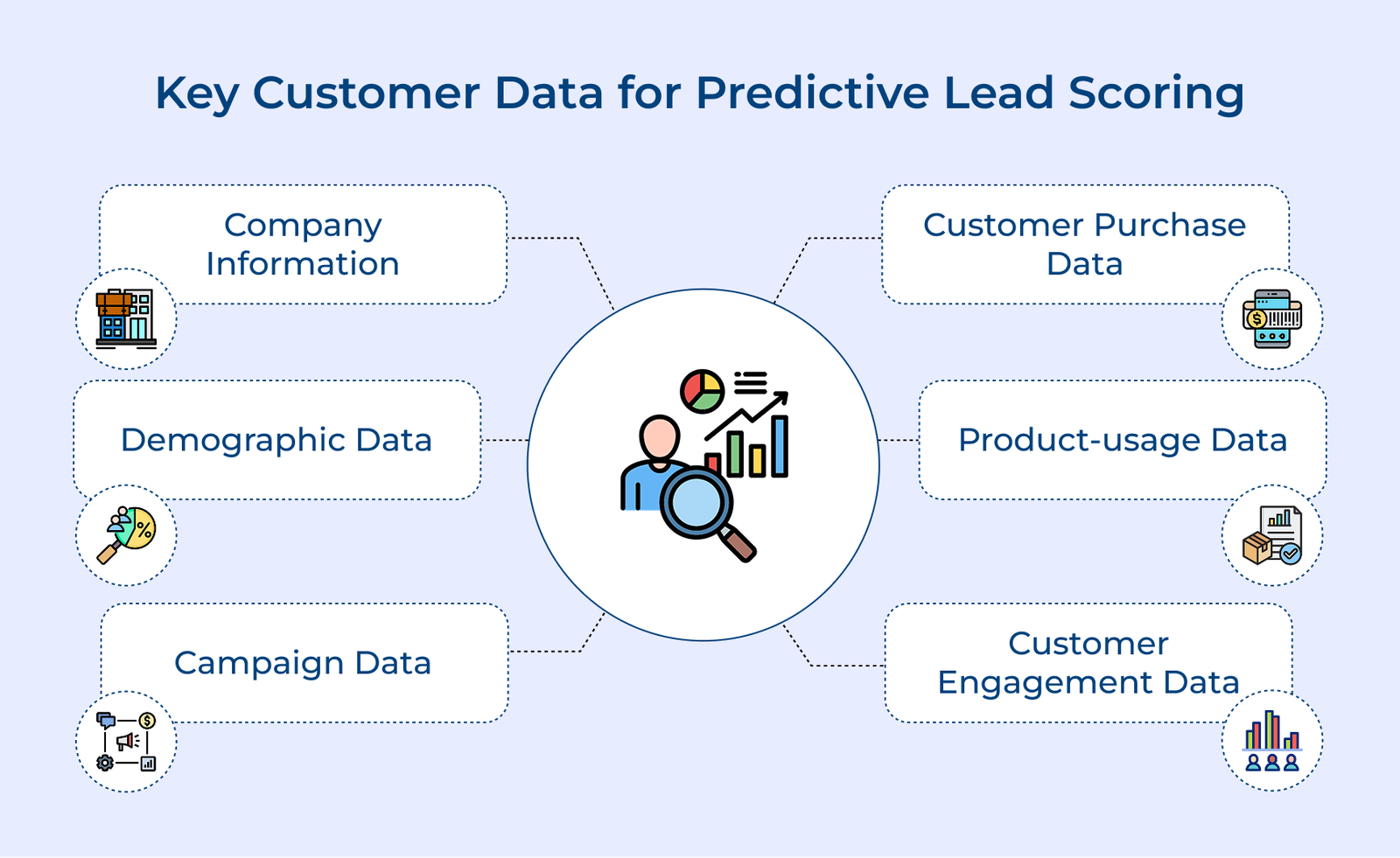
Data is gathered from a variety of sources such as CRM systems, marketing automation platforms, website analytics, social media and sales records. The rich mix of demographic, behavioral, engagement and conversion data is then consolidated into a central database, providing a comprehensive view to train the predictive model.
Pro tips:
- Develop a detailed data collection plan that outlines all relevant data sources and sets clear protocols for consistent extraction.
- Implement automated tracking systems to capture real-time interactions across all customer touchpoints, ensuring no critical data is overlooked.
3. Identify Key Lead Scoring Variables
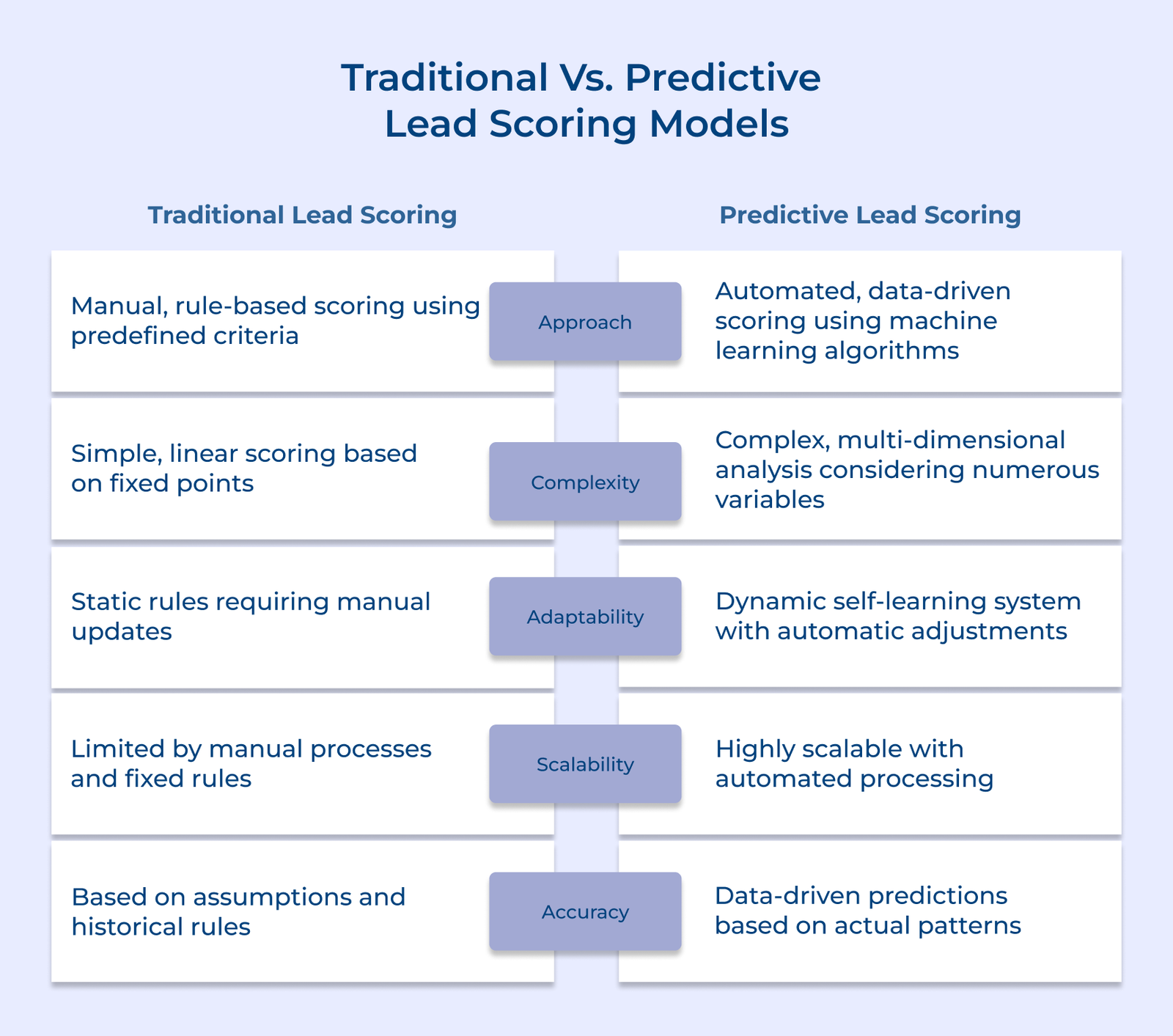
Choosing the right variables is key to building an accurate lead scoring model. The right mix of factors helps differentiate between high-potential and low-potential leads, improving the precision of your conversion predictions.
You can identify which variables are most closely linked to successful conversions by using statistical analysis and machine learning. It includes both explicit data, such as company size and implicit data, like website interactions, email engagement or content downloads, to pinpoint the strongest indicators of lead quality.
Best practices:
- Regularly analyze the correlation between variables and conversion success to identify the most predictive factors.
- Develop a balanced scorecard that includes both demographic and behavioral data, assigning weights based on their impact on conversion rates.
4. Clean and Prepare Various Data Sets
Clean, well-organized data is vital for building an effective predictive model. Poor data quality can lead to inaccurate predictions and unreliable outcomes, so ensuring data integrity is a critical step for model success.
The process involves removing duplicates, addressing missing values, standardizing formats and normalizing data scales. It also includes data transformation and feature engineering, organizing everything into a format that’s optimized for machine learning algorithms to train on.
Actionable tips:
- Implement automated data validation rules to catch and flag inconsistencies before they enter your database.
- Establish a standardized approach for handling missing data, using decision trees to determine when to impute values or exclude records.
5. Choose Appropriate Machine Learning Algorithm
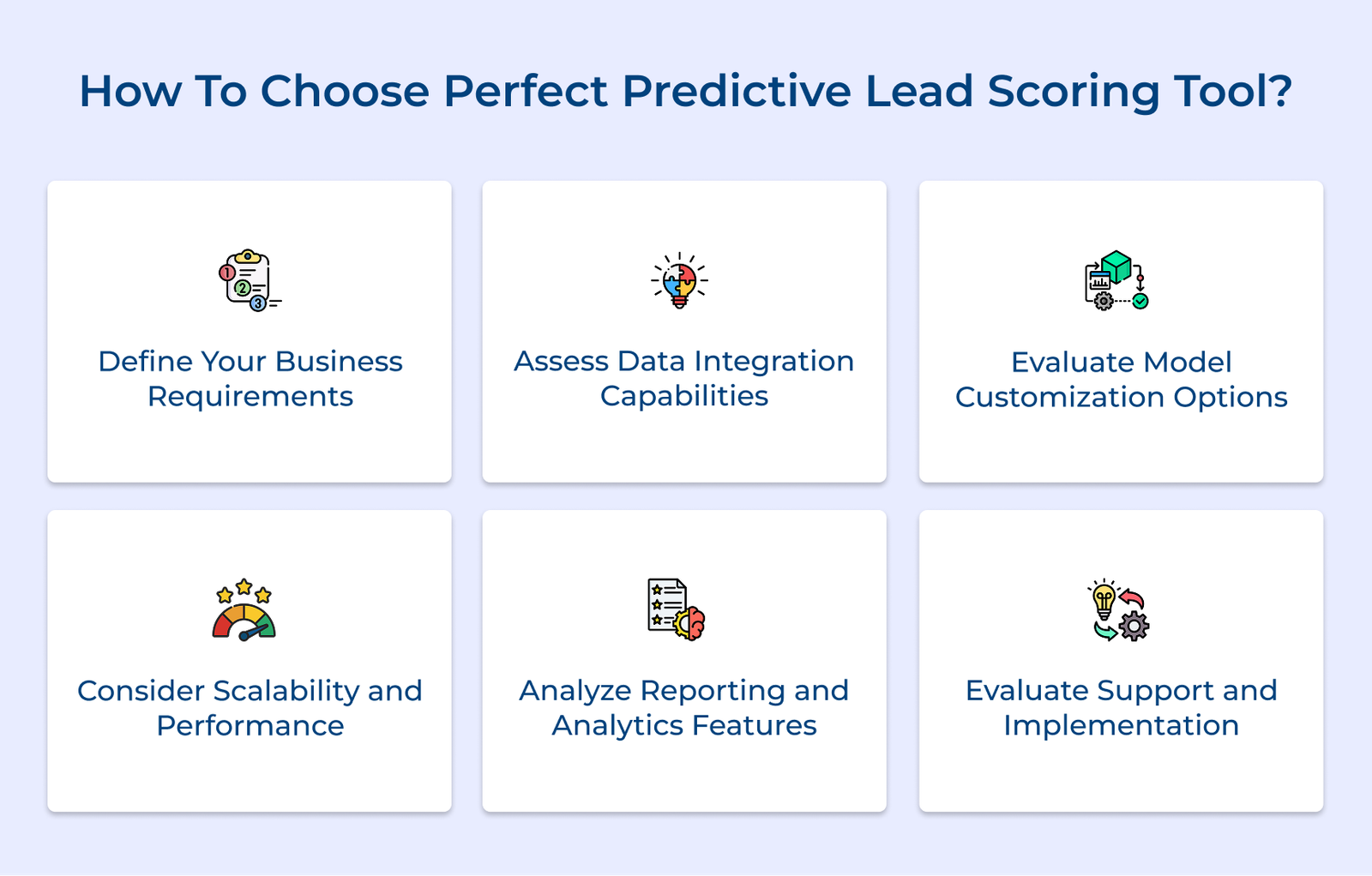
Selecting the right algorithm is key to building an accurate and efficient predictive model. Different algorithms excel in different areas and choosing the right one ensures your model processes data effectively.
You can match the algorithm to your specific data types and prediction needs by evaluating various machine-learning techniques such as logistic regression, random forests or gradient boosting. Testing and comparing performance metrics will help identify the most effective approach for your lead-scoring model.
How to implement:
- Start with simpler algorithms like logistic regression before moving to more complex models, allowing for easier interpretation and troubleshooting.
- Leverage cross-validation to assess the performance of different algorithms and identify the most reliable option for your needs.
6. Train and Test the Predictive Lead Scoring Model
Training and testing are essential to ensure your model can accurately predict lead quality. The process validates the model’s effectiveness and reliability before it’s deployed in real-world scenarios.
The dataset is divided into training and testing sets, with the model first trained on the training data and then evaluated on the testing data. The cycle of training and testing is repeated iteratively to fine-tune the model.
Actionable tips:
- Use k-fold cross-validation to ensure consistent model performance across different data subsets.
- Keep a separate validation dataset, untouched during training, to obtain an unbiased performance estimate.
7. Implement the Model into the Sales Process
Successfully integrating the model into your sales process makes lead scoring a seamless, real-time tool for prioritizing prospects. The transition from theory to practice empowers sales teams to focus on high-value opportunities, driving business outcomes.
The model is embedded within your CRM or sales infrastructure via API integrations, automating lead scoring and creating user-friendly interfaces for easy access. It streamlines lead prioritization workflows, ensuring sales teams can act quickly on the most promising prospects.
Pro tips:
- Create detailed documentation and training resources to ensure sales teams can easily integrate lead scoring into their daily routines.
- Start with a pilot phase, gathering feedback, before expanding the rollout across the entire sales organization.
8. Monitor the Results and Adjust the Strategy
Ongoing monitoring and adjustments are essential to keep your lead scoring model accurate as market conditions evolve. The continuous optimization ensures the model remains a valuable asset to your business over time.
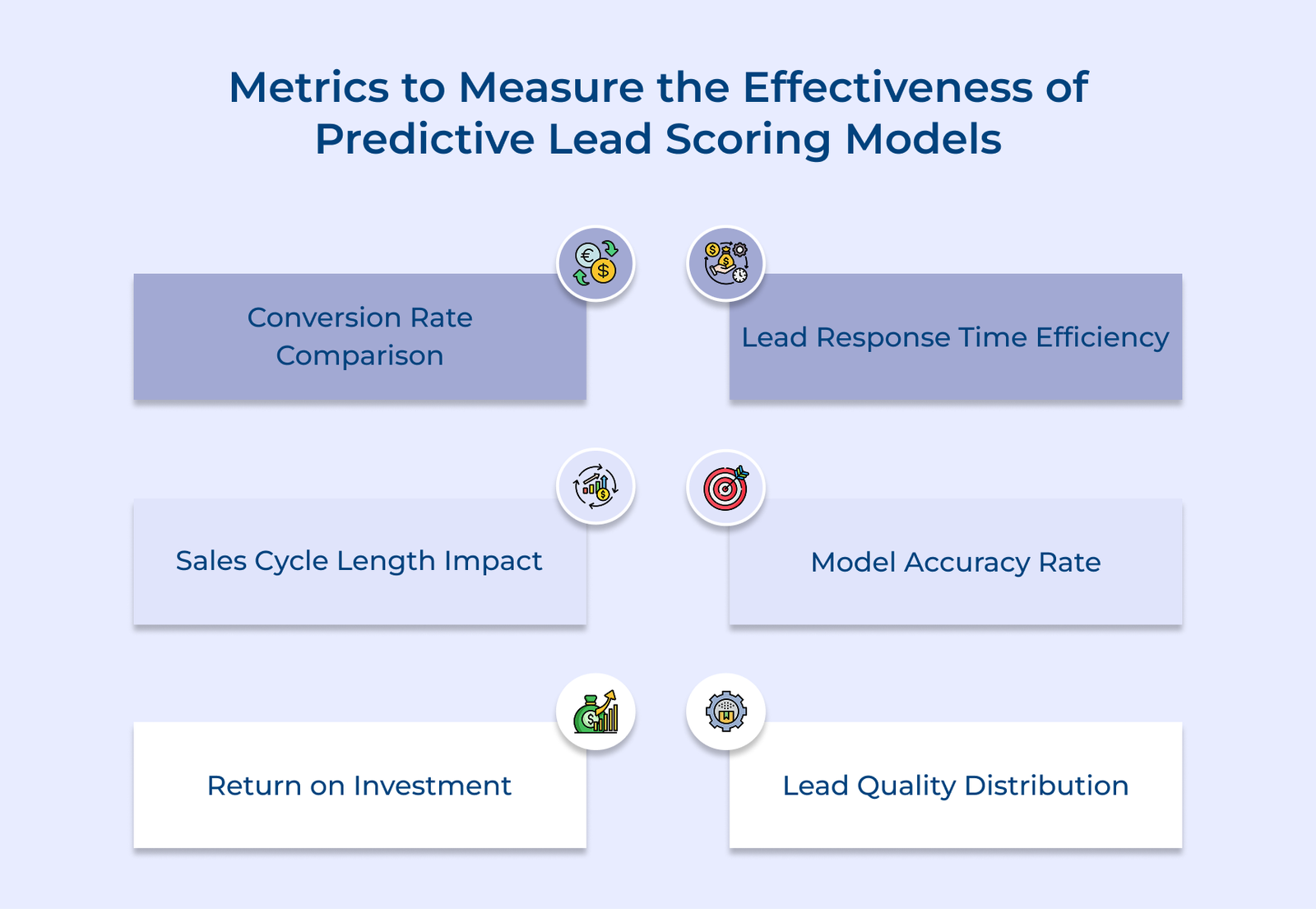
Track key performance indicators (KPIs) like prediction accuracy, conversion rates and sales efficiency to measure effectiveness. Regular reviews help identify improvement areas, allowing you to fine-tune the model and scoring criteria for sustained success.
How to implement:
- Build a dashboard to monitor key metrics and set up automated alerts for any significant performance shifts, ensuring quick adjustments when needed.
- Schedule quarterly review meetings with stakeholders to assess model performance and gather feedback for potential improvements.
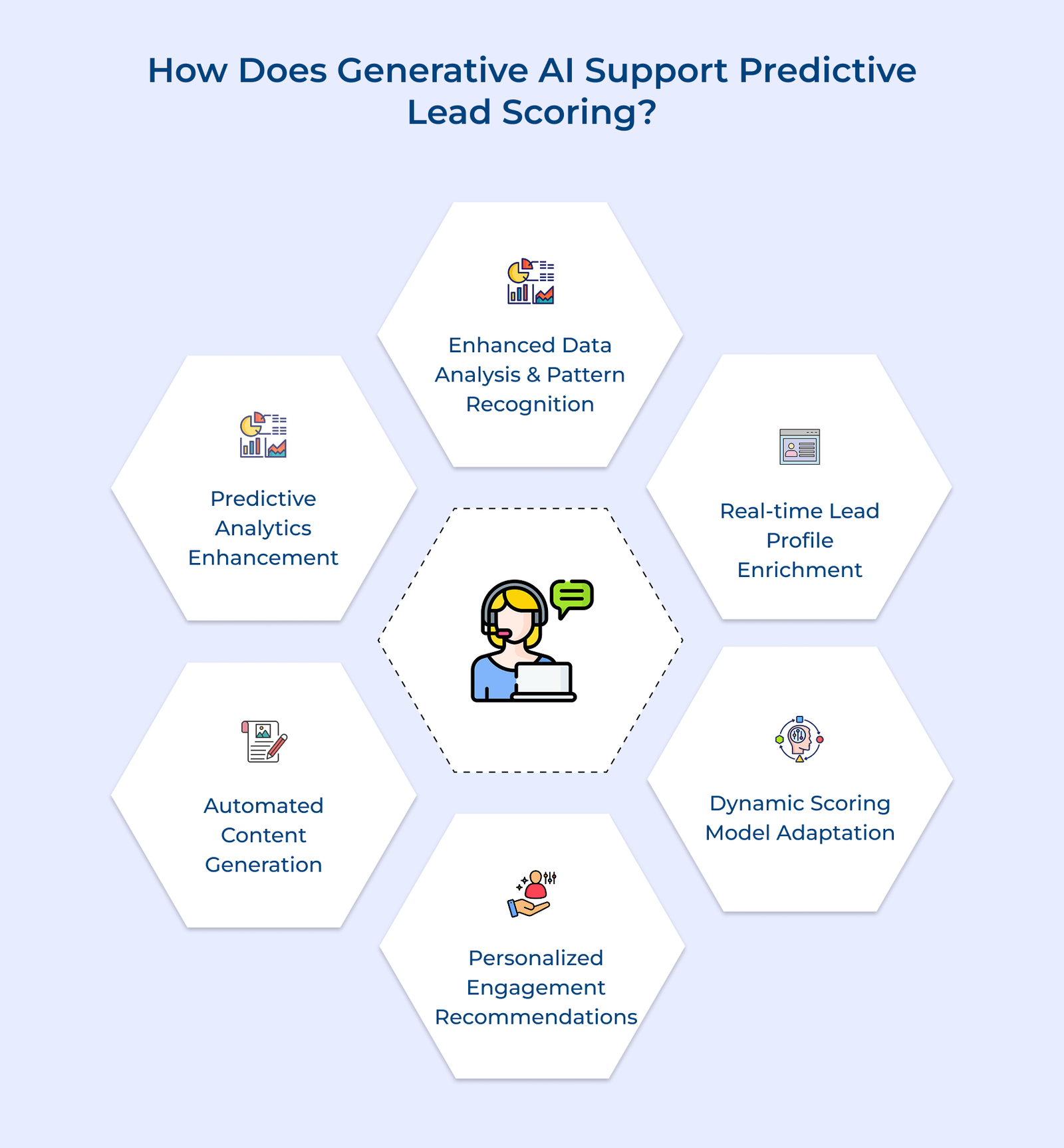
How Generative AI Support Predictive Lead Scoring?
If you’re looking to enhance your lead-scoring strategy, let’s explore how generative AI can be a powerful tool in predicting which leads are most likely to convert.