A Comprehensive Guide on Lead Scoring Model
Discover the importance of lead scoring models in sales and marketing. Learn how to develop, implement and optimize lead scoring to prioritize high-quality leads.

Discover the importance of lead scoring models in sales and marketing. Learn how to develop, implement and optimize lead scoring to prioritize high-quality leads.
Businesses often struggle with an overload of leads, unsure which ones are worth pursuing. Their marketing teams waste time chasing prospects that won’t convert, while their sales teams struggle at identifying high-value opportunities. The inefficiency arises from outdated lead qualification processes that rely on gut instinct or basic criteria, missing key signals of purchase intent.
A well-designed lead scoring model can change it. Businesses that use B2B lead scoring experience a 77% lift in lead generation ROI. You can quickly pinpoint your most promising leads and optimize efforts for maximum impact by tailoring a scoring system to match your business goals. We’ll walk you through building a lead ranking system that fits your business.
A lead scoring model refers to a structured method used by businesses to assess and rank potential customers based on their likelihood of converting into paying clients. It assigns numerical values to various lead attributes and behaviors, helping prioritize the business strategies.
The model analyzes two key data categories: explicit and implicit information. Explicit data includes details like company size and job title, while implicit data tracks behavioral signals such as website visits. The data points are weighted and combined to create a final score, typically on a 0-100 scale.
Fundamental principles:
Let’s go through the numerous benefits of adopting a lead scoring model and how it can streamline your sales approach, enhancing your business outcomes.
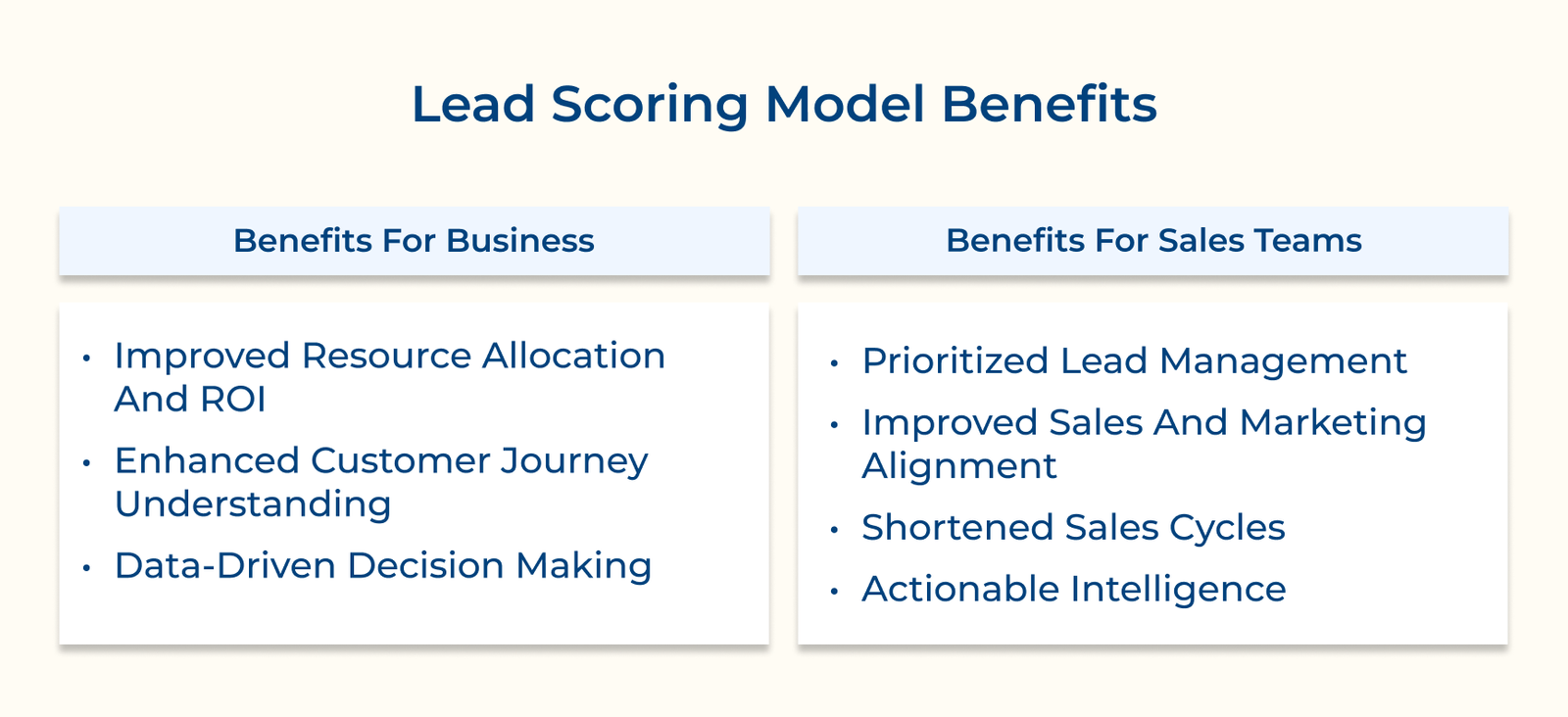
Improved Resource Allocation and ROI
Lead scoring helps businesses prioritize high-potential prospects, reducing time spent on low-value leads. The focus boosts ROI by allowing marketing and sales teams to invest resources in engaging qualified opportunities.
Enhanced Customer Journey Understanding
The model offers valuable insights into prospect interactions across touchpoints, enabling refined marketing strategies, more relevant content and personalized experiences that better engage your target audience.
Data-Driven Decision Making
Lead scoring turns subjective judgments into measurable data, enabling objective decision-making. The evidence-driven approach helps businesses spot patterns, predict trends and fine-tune sales as well as marketing strategies.
Prioritized Lead Management
Sales teams can prioritize high-potential leads, optimizing their efforts and boosting efficiency. The focus on the most promising prospects increases close rates and keeps momentum strong.
Improved Sales and Marketing Alignment
Lead scoring enhances alignment between sales and marketing, creating clear lead qualification criteria. The shared understanding reduces friction and ensures both teams work towards common goals.
Shortened Sales Cycles
Lead scoring enables sales teams to move prospects through the sales funnel more quickly. Representatives can focus on engaged prospects with less time spent on qualification, leading to quicker closures and boosted productivity.
Actionable Intelligence
Sales teams gain valuable insights into each lead’s behavior and interests. The information helps representatives tailor their approach, address pain points and engage in more impactful, personalized conversations.
Following are the different types of lead scoring models that can transform your approach and maximize your revenue potential. Let’s check them out.
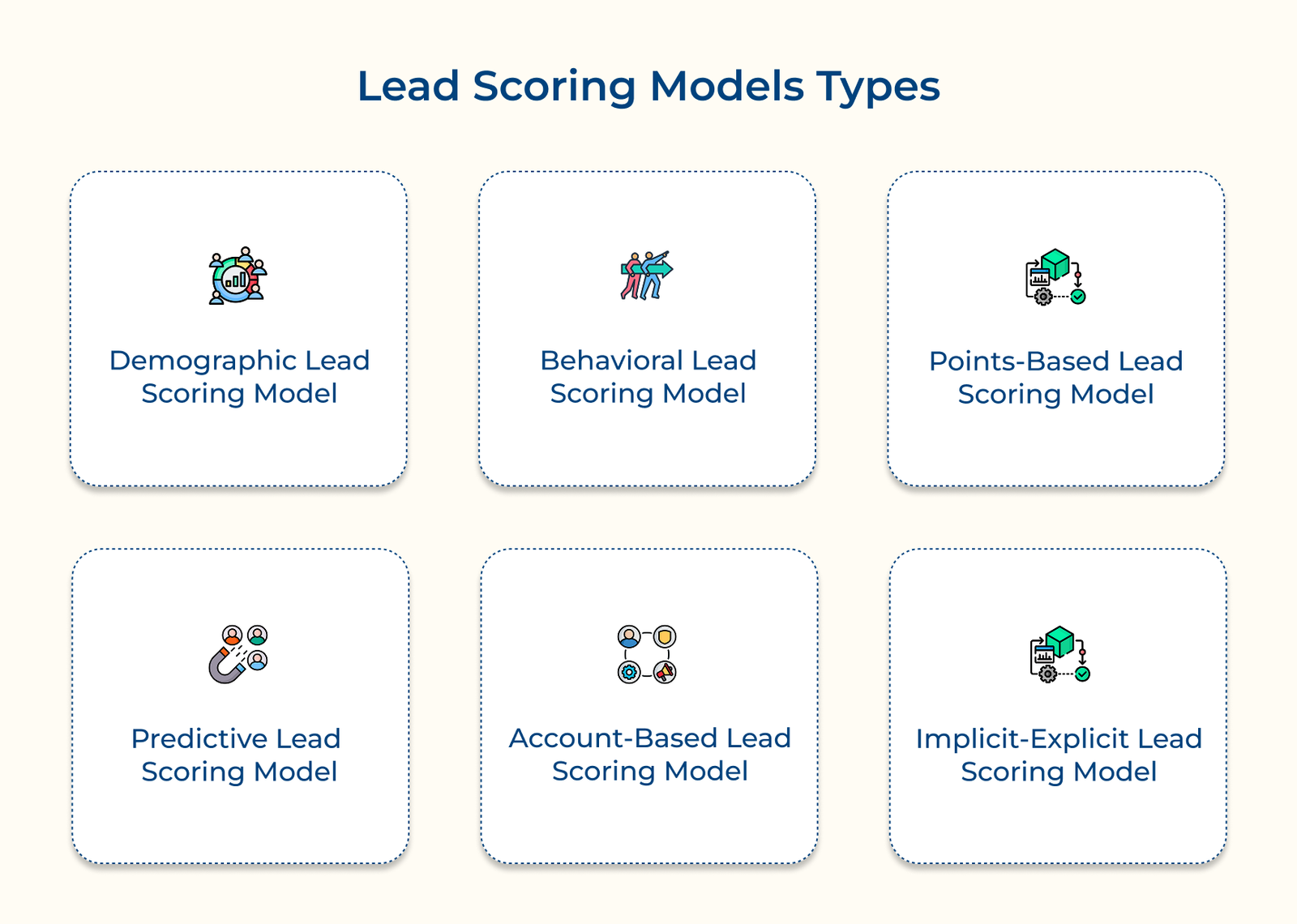
The demographic lead scoring model evaluates prospects based on characteristics like age, job title, income, company size and industry. It helps businesses identify leads that align with their ideal customer profile.
The system generates an overall demographic score for each lead by assigning point values to various attributes, such as higher scores for C-level executives or specific revenue brackets.
Key takeaways:
The behavioral lead scoring model evaluates potential customers based on their interactions with your brand, such as website visits, emails opens, social media activity and content downloads. The approach measures engagement patterns to assess purchase intent and lead quality.
Each action is assigned a score based on its significance in indicating readiness to buy. Over time the scores build a dynamic engagement profile that evolves with customer behavior.
Pro tips:
A points-based lead ranking system assigns specific numerical values to interactions and characteristics, transforming qualitative data into clear, quantifiable scores that determine sales readiness.
The model allocates points for both demographic traits and behaviors, such as 10 points for downloading a whitepaper or 20 for completing a contact form. The points accumulate, providing a total score that reflects the lead’s quality and purchase intent.
Actionable tips:
Predictive lead scoring uses AI and machine learning to analyze historical data, identifying patterns that signal a lead’s likelihood to convert. The model continuously refines itself based on past outcomes, improving its accuracy over time.
The system uncovers hidden correlations and automatically adjusts scoring criteria by examining large datasets, ensuring better predictions for future leads.
Best practices:
Account-based lead scoring evaluates entire organizations, not just individual contacts. The model looks at the collective behavior and characteristics of all key stakeholders within a target account to assess its conversion potential.
The system aggregates engagement data and demographics from multiple contacts, factoring in company-wide attributes like technology stack and growth trajectory. The result is a unified score that represents the account’s overall value.
Key takeaways:
The hybrid model blends explicit data (direct preferences) with implicit data (observed behaviors), offering a comprehensive evaluation of leads based on both what they say and how they engage with your brand.
The model assigns scores based on two tracks. The explicit track considers self-reported data, while the implicit track analyzes behavior patterns. The scores are combined to generate a well-rounded lead quality assessment.
Pro tips:
Check out the key steps to build an effective lead scoring model tailored for your business, helping you prioritize high-potential leads.
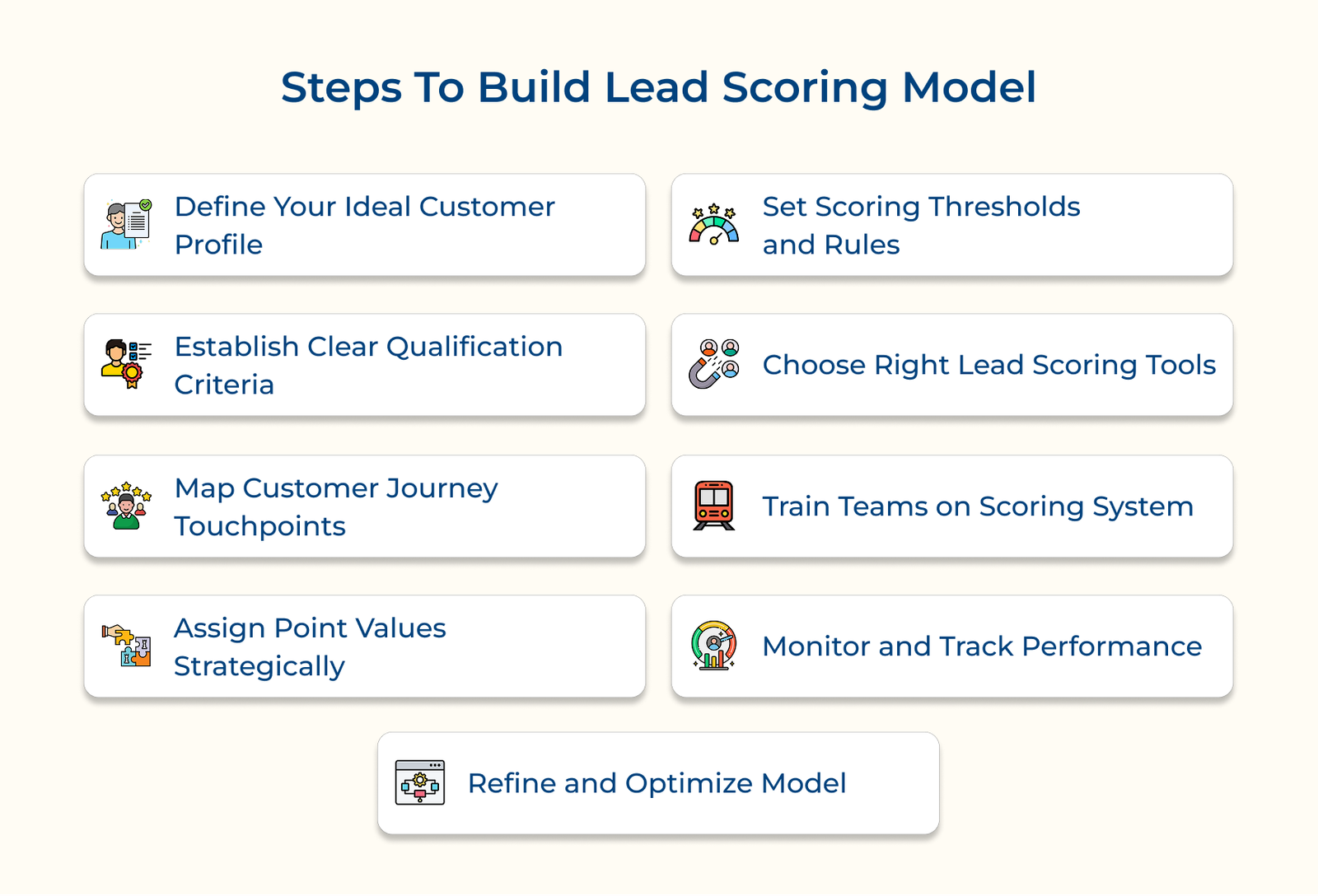
Defining your ideal customer profile (ICP) is the cornerstone of an effective lead-scoring model. It ensures you’re targeting the right prospects and maximizing resources effectively on high-value leads.
Buyer personas combine demographic data with behavioral patterns, detailing roles, responsibilities and pain points within target organizations. Understanding the factors helps your team spot top leads while also revealing key motivations behind purchase decisions.
Pro tips:
Qualification criteria establish clear standards for assessing lead quality and purchase readiness, ensuring consistent evaluations across teams. Both sales and marketing can align on which leads to prioritize by setting the criteria.
Defining minimum requirements involves setting baseline standards that every qualified lead must meet. It includes factors like budget, authority, timeline and specific need for your solution. The requirements help filter out leads, saving time and resources.
Actionable tips:
Mapping customer journey touchpoints gives a clear view of how prospects interact with your brand, helping identify key moments that indicate purchase intent. The step ensures your scoring model reflects the full customer journey.
Creating a timeline helps visualize how leads typically progress through their buying journey. The chronological mapping reveals patterns in behavior and helps identify key decision points. Understanding the typical progression allows you to adjust scoring weights based on lead interactions at each stage.
Best practices:
Strategic point assignment quantifies lead quality by turning interactions into measurable data. Properly weighed actions ensure your model highlights significant engagement without overvaluing minor interactions.
Assign higher points to high-intent actions like demo requests and adjust for timing or frequency. Recent or repeated interactions often signal stronger interest, influencing lead priority.
Pro tips:
Setting clear scoring thresholds and rules ensures leads are properly qualified and prioritized for sales outreach. The step prevents wasting resources on unqualified leads and ensures timely follow-up with high-potential prospects.
Set clear lead routing rules and score decay timeframes to maintain lead quality. Businesses also ensure there’s smooth, automated handling over time. Adjust scores based on engagement and set rules for automatic lead reassignment.
Actionable tips:
Choosing the right lead scoring tools is essential for effectively managing your scoring model. The right technology can automate processes and deliver valuable insights, while the wrong tools can create inefficiencies.
Consider integration capabilities and robust reporting features when selecting a platform. Ensure it connects seamlessly with your existing systems and provides actionable analytics to measure scoring effectiveness.
Pro tips:
Training ensures teams effectively use the lead scoring system, crucial for successful implementation. Without proper understanding, even the best model can fail. Training maintains consistency in lead evaluation across the organization.
Comprehensive documentation, including clear guidelines and practical examples serves as a helpful resource for teams. It clarifies scoring criteria and processes, ensuring accuracy as well as consistency.
Actionable tips:
Performance monitoring reveals how effectively your lead scoring model identifies and qualifies leads. Regular tracking ensures the system stays accurate and effective, helping you spot areas for improvement.
Clear KPIs such as conversion rates and time to qualification helps measure success. Focusing on the outcomes ensures your model accurately predicts lead quality.
Pro tips:
Let’s go through some leading companies that have implemented the models to enhance their customer acquisition and retention efforts.
Amazon
Amazon uses an advanced predictive lead scoring model that combines behavioral data and purchase history. It analyzes browsing patterns, cart abandonment and product interactions. The model also considers factors like Prime membership status and return frequency to assess customer lifetime value.
The system has revolutionized Amazon’s ability to personalize experiences and target marketing efforts. The company has seen significant improvements in customer engagement and purchase frequency. Their targeted recommendations based on lead scores have become a benchmark in the e-commerce industry.
Zappos
Zappos employs a hybrid scoring model that combines customer service interactions with purchase behavior. Their unique approach weighs factors like support engagement, product returns and social media activity with a strong focus on loyalty indicators.
The customer-centric approach has strengthened Zappos’ reputation for exceptional service. Zappos has boosted satisfaction and increased repeat purchases on its platform by identifying high-value customers early.
Nike
Nike uses an account-based lead scoring model that centered on digital engagement and lifestyle indicators. It tracks interactions across mobile apps, online tools and fitness platforms, giving higher scores to deeply engaged customers.
The strategy had transformed Nike’s marketing, enabling personalized campaigns that drive higher digital engagement and strengthen connections with their most valuable customers.
Below are the best practices for refining your lead scoring model over time, ensuring continuous improvement and enhanced lead qualification for optimal sales results.
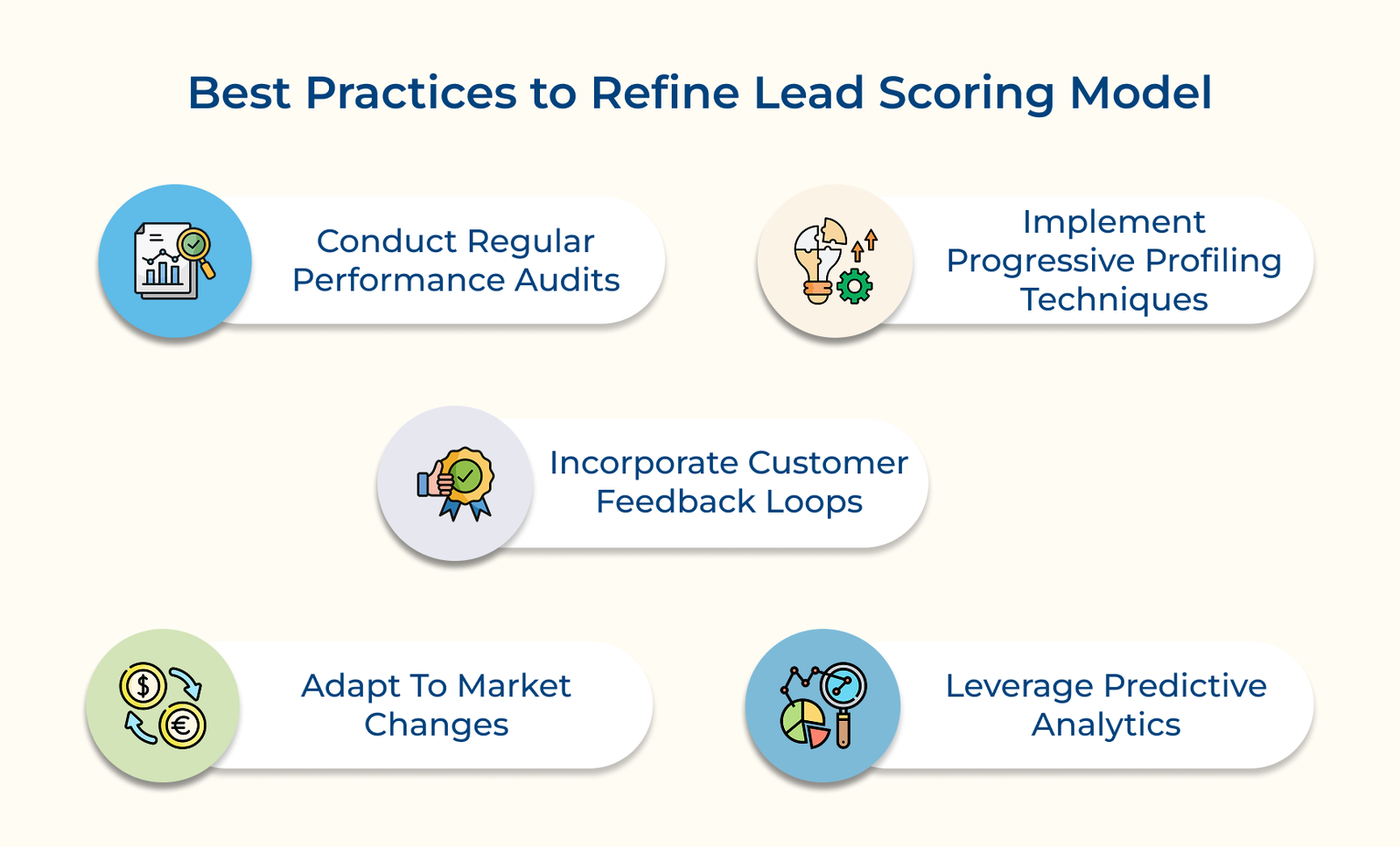
Regularly evaluating your lead scoring model’s performance highlights areas for improvement. Analyze conversion rates, compare predictions with actual outcomes and assess if scoring thresholds align with sales readiness.
Progressive profiling helps gather detailed information over time, avoiding overwhelming prospects. You can refine your scoring criteria with richer customer insights by collecting data through ongoing interactions.
Establish a feedback loop from both won and lost sales. Analyze why high-scoring leads didn’t convert and identify key traits in successful conversions. Use the insights to refine your scoring model.
Keep your scoring model aligned with industry trends. Regularly reassess if your criteria match evolving market conditions, such as new tech, shifting buying behaviors or competitor moves.
Boost your scoring model with predictive analytics. Leverage machine learning to spot patterns in historical data and forecast lead behavior, adjusting scoring weights based on key conversion indicators.
Lead scoring models have transformed how businesses identify and nurture potential leads. Companies can streamline their sales and marketing efforts for better efficiency by ranking leads based on conversion likelihood. The models integrate demographic, behavioral and engagement data to understand each prospect’s true value.
The real strength of lead scoring lies in its ability to evolve. As businesses gain more data on successful conversions, they can refine scoring criteria to better predict future outcomes. The dynamic approach ensures sales teams focus on the highest-potential leads while marketing drives more targeted campaigns.
Key takeaways:

A strong lead scoring model evaluates both explicit and implicit factors. Explicit factors include demographics, company size, industry and budget. Implicit factors encompass behaviors like website visits, content downloads and email engagement. Consider negative scoring factors that might indicate poor fit or lack of interest.
A lead scoring model creates a shared language between sales and marketing teams by establishing agreed-upon criteria for lead quality. It ensures marketing delivers qualified leads that sales will actually pursue, reducing friction between departments. When both teams contribute to and believe in the scoring methodology, they work as partners rather than adversaries.
Major marketing automation platforms like HubSpot, Marketo and Salesforce Pardot offer built-in lead scoring capabilities that integrate with CRM systems. These tools can track behavior across websites, emails and social interactions. If it’s about sophisticated implementations, dedicated predictive lead scoring solutions like MadKudu or 6sense leverage AI to identify patterns from historical data. Some businesses also build custom solutions using business intelligence tools like Tableau or Power BI for visualization.
A lead scoring model transforms lead management from guesswork to strategic prioritization. The sales teams can focus on high-value prospects first by assigning numeric values to leads based on demographic fit and engagement signals. It prevents wasting time on unqualified leads while ensuring promising opportunities don’t slip through the cracks. The model creates a systematic approach to the sales pipeline, allowing for more accurate forecasting and efficient resource allocation.
Implementing a lead scoring system often faces resistance from teams accustomed to their existing workflows. Another challenge is determining the right scoring criteria without reliable historical data to validate assumptions. Technical integration between marketing automation and CRM systems can be complex, causing data synchronization issues. Organizations also struggle with maintaining the system over time, as market conditions change and buyer behaviors evolve.
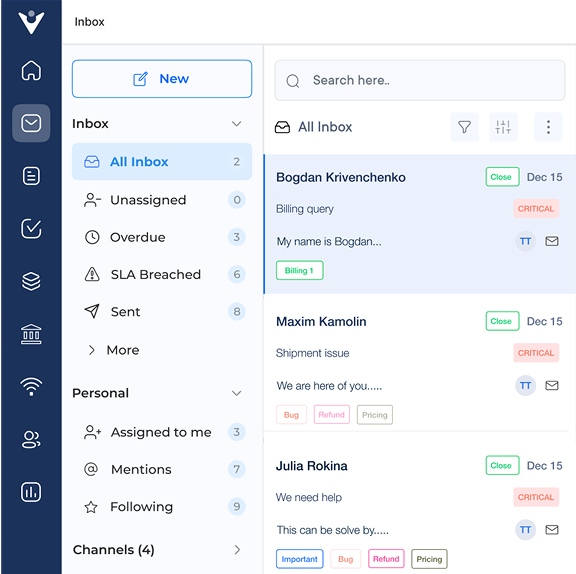
Grow Customer Relationships and stronger team collaboration with our range of products across the Conversational Engagement Suite.
Omnichannel Customer Support & Help Desk Software
AI Enabled Business Messaging and Chatbot Software
Sales Engagement & CRM Software
Call Center Software & Virtual Phone System
Product Marketing & Experience Platform
Customer Experience & Feedback Management Software

 What is Customer Retention Survey? Questions and Examples
Scroll to top
What is Customer Retention Survey? Questions and Examples
Scroll to top