What is Sales Funnel? Stages, Benefits and Examples
A sales funnel guides potential customers through stages, from awareness to purchase. Understanding its stages, benefits and real-world examples helps optimize sales strategies.
A sales funnel guides potential customers through stages, from awareness to purchase. Understanding its stages, benefits and real-world examples helps optimize sales strategies.
Businesses often face the challenge of turning website visitors into paying customers. Even with great products, many struggle to guide prospects effectively through the buying journey. The old “one size fits all” marketing approach no longer works.
Customers now expect personalized, meaningful interactions before making a purchase decision. Without a structured system to nurture the relationships, businesses often lose prospects at various stages. That’s where a well-crafted sales funnel comes in. 48% of marketers stated that improving the efficiency of their sales funnel has become their top priority.
You can create a smooth journey that leads prospects from awareness to purchase with the right strategy. We’ll break down what makes an effective sales pipeline and offer practical tips for turning visitors into loyal customers.
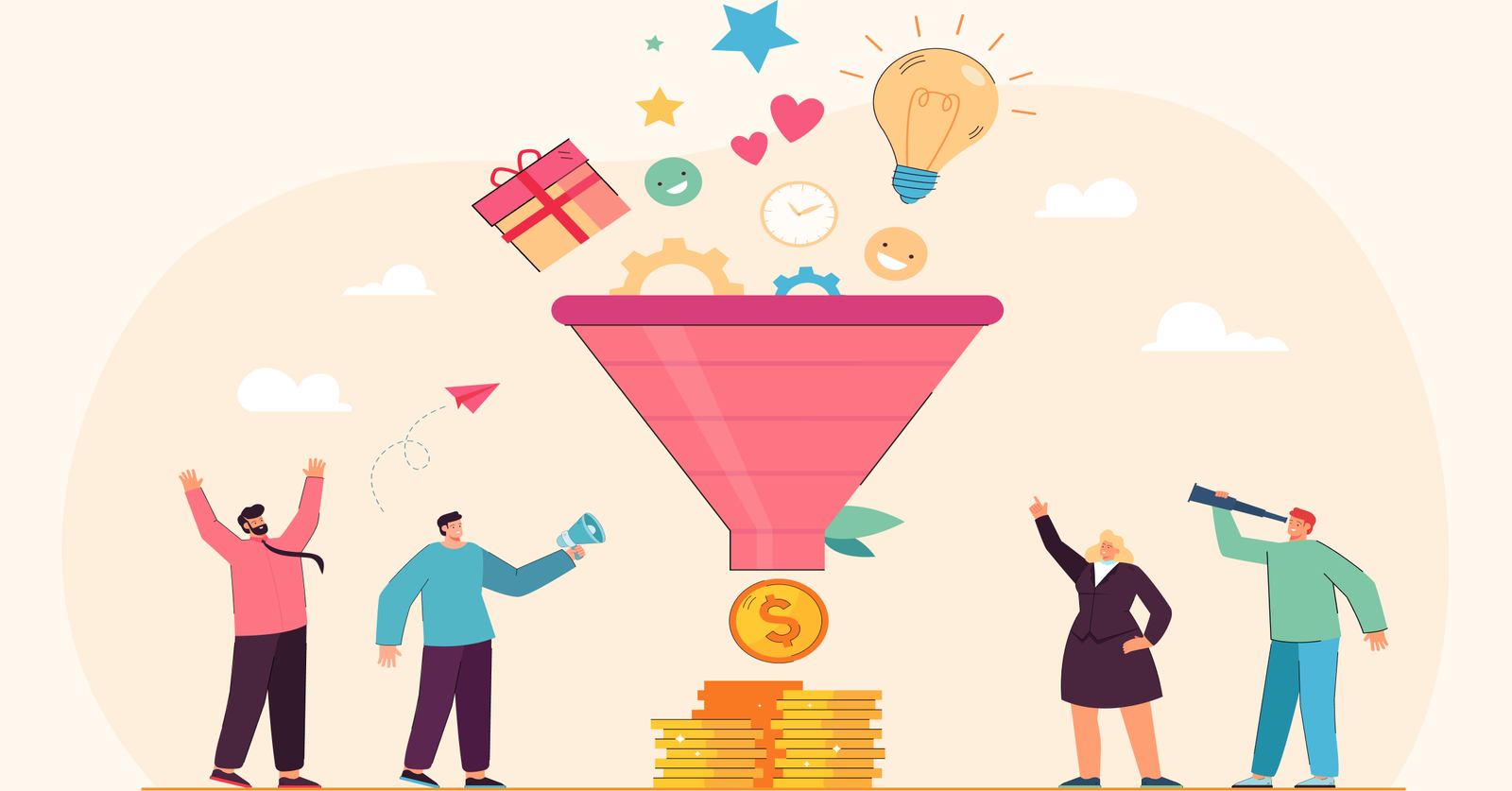
A sales funnel refers to the theoretical journey a customer takes from first discovering your product or service to making a purchase. It visualizes the stages of the buying process, with fewer prospects moving forward as they progress – creating a funnel-like shape when shown graphically.
The sales funnel functions like a real funnel: it starts wide, with many potential customers entering at the top and narrows as they move through stages. People learn about your product at the awareness stage. Some move to the interest stage, engaging with your brand. While fewer progress to the consideration stage, where they compare your offering with alternatives. A smaller group reaches the intent stage, showing strong purchase intent and at the purchase stage the most qualified leads convert into customers.
Key principles:
Check out the benefits of a sales funnel and understand how it transforms the way you convert customers while making your marketing efforts more strategic.
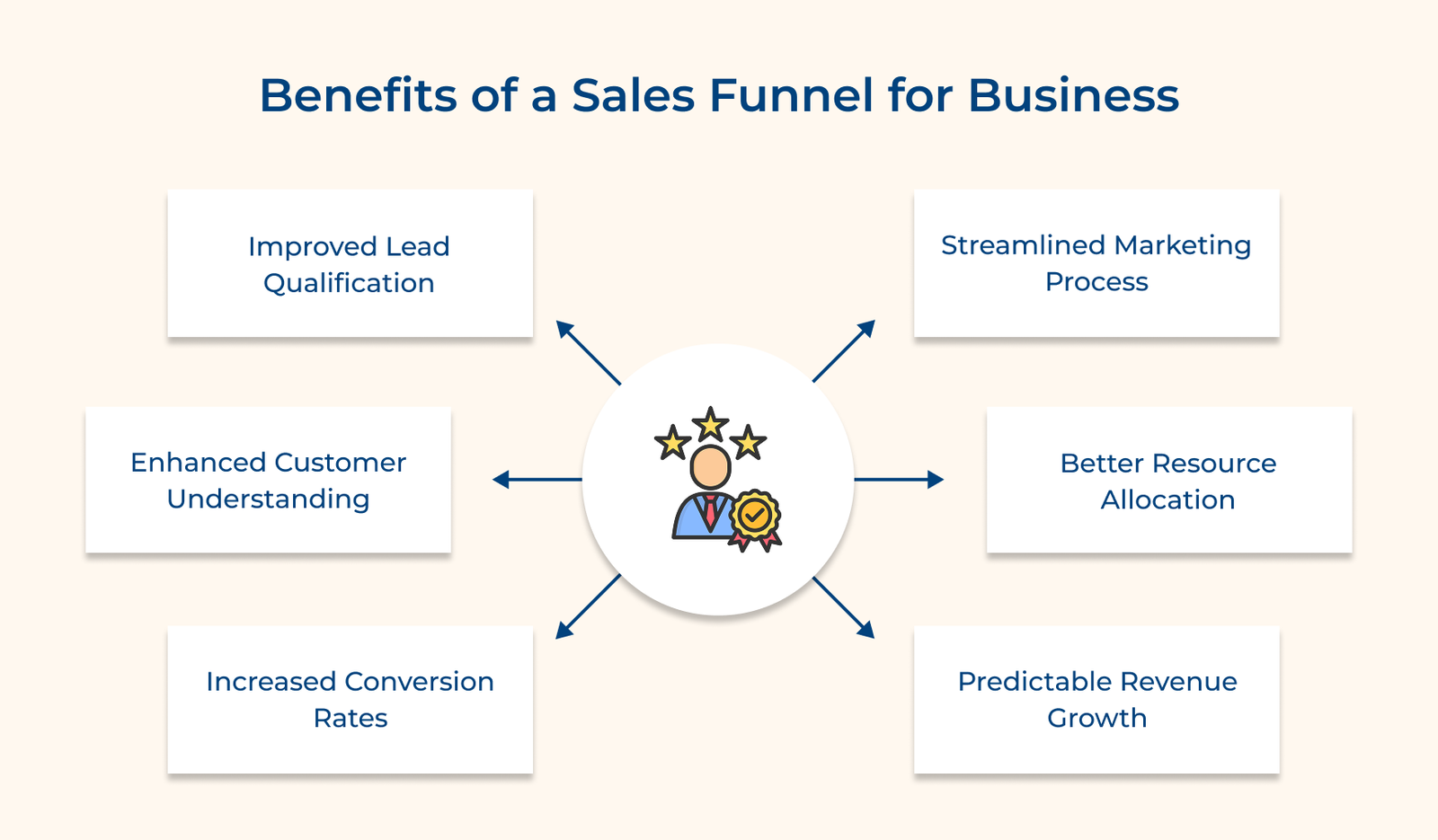
1. Improved Lead Qualification
A sales funnel helps you focus on leads that truly matter by tracking their engagement with your content. The targeted approach ensures you’re investing time and resources into prospects genuinely interested in your products.
2. Enhanced Customer Understanding
Tracking how prospects move through your funnel gives you valuable insights into their decision-making. You’ll learn which messages resonate most and the typical time it takes for customers to commit.
3. Increased Conversion Rates
A well-designed funnel takes prospects through a clear, step-by-step process that builds trust and eases concerns. The smooth journey naturally boosts conversions by guiding them closer to making a purchase. The top-performing sales funnels can reach a conversion rate of 5.31% or more.
4. Streamlined Marketing Process
Sales funnels provide a clear roadmap for your marketing efforts, breaking down strategies into distinct stages. It helps your team know exactly what content and messaging to use at each step.
5. Better Resource Allocation
The data from your sales pipeline reveals where prospects drop off or convert. It lets you focus your marketing budget and team efforts on the stages that need the most improvement, maximizing your ROI.
6. Predictable Revenue Growth
A sales pipeline makes revenue forecasting easier by showing your conversion rates at each stage. You can better estimate how many leads you need to hit your sales goals and plan more effectively with the insights.
Let’s go through the various stages of a sales funnel organized by their position in the customer journey.
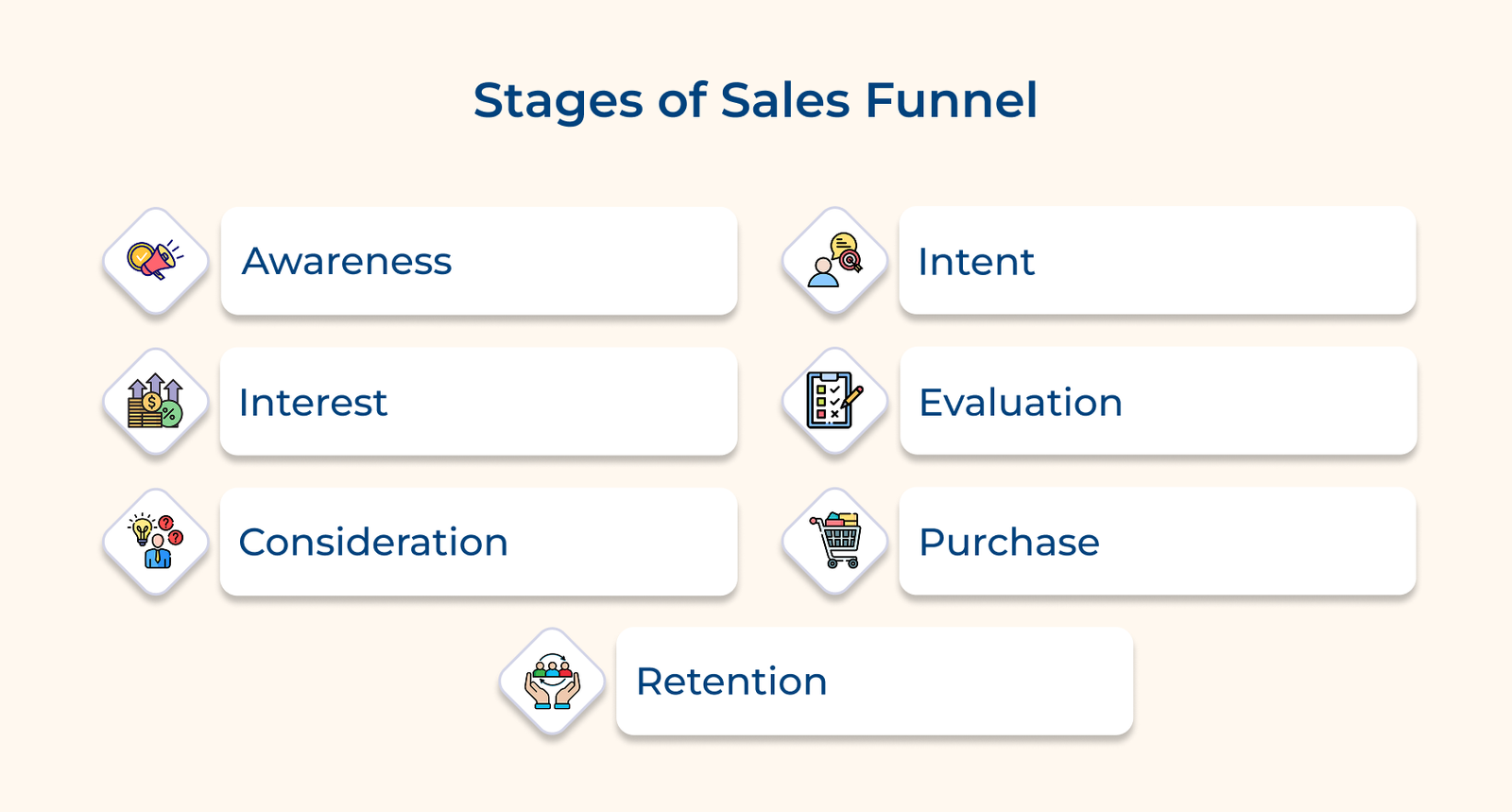
People first come across your brand through a blog post, a social media share or maybe an online ad. They’re not looking for a product yet, they’re just starting to realize they have a problem or need. Your job here isn’t to sell—it’s to help them understand their situation better.
Focus on creating useful, easy-to-understand content that answers broad questions. Whether it’s a how-to guide or an explainer article, aim to be helpful, not salesy. Done well, it builds trust and puts you on their radar for when they’re ready to take the next step.
They’ve read a few of your posts, maybe downloaded a resource or signed up for your newsletters. They’re starting to explore possible solutions and your brand is one of the names they remember.
Show them you get what they’re going through. Offer deeper content like case studies, comparison guides or practical tips that help them weigh their options. It is your chance to earn credibility and gently show how your solution fits into the picture without pushing for a sale.
Your potential customers are now weighing their options. They’ve identified their problem, explored possible solutions and are starting to compare you with your competitors. They’re asking: “Which one will actually work for me?”.
It is your moment to stand out. Share real examples, like case studies, customer stories, side-by-side comparisons–anything that shows how your product has solved the same problems they’re facing. Keep it honest, practical and specific. Help them picture how your solution fits into their world, not just how it works in theory.
Now, they are serious. They’ve requested a demo, booked a call or filled up their cart. They’re picturing themselves as a customer, but they might still have a few questions or doubts.
Offer clear, specific answers. Give them product trials, walkthroughs or tailored advice. Make sure they feel supported, not pressured, so they can move forward with confidence. It’s less about persuasion now and more about clarity and reassurance.
The customer is nearly there but they still need to feel confident about what they’re committed to. They’re looking at pricing, reviewing terms and asking, “What happens after I sign up?”.
Now’s the time to be upfront and practical. Share exactly what they’ll get, how onboarding works, what kind of support they can expect and how much everything will cost. Be ready to answer detailed questions, and don’t leave room for confusion. Your job here is to remove hesitation, not apply pressure.
They’ve decided to buy, don’t make them second-guess it. The stage is all about keeping the process smooth and setting them up for success from the start.
Make the checkout or sign-up process simple and stress-free. Follow up quickly with next steps, a warm welcome and clear guidance on what to expect. The goal here isn’t just to complete a transaction—it’s to make the customer feel like they made the right choice.
The sale is done here, but the relationship is just beginning. Keeping your customers happy and coming back matters more than ever.
Check in regularly, not just when you want to upsell. Offer help before they ask for it. Send tips, updates or resources that matter to them. Loyal customers aren’t just repeat buyers, they’re the people who recommend you to others.
Check out critical steps that will help you construct a robust sales funnel tailored to your business needs, ensuring that you maximize every opportunity along the way.
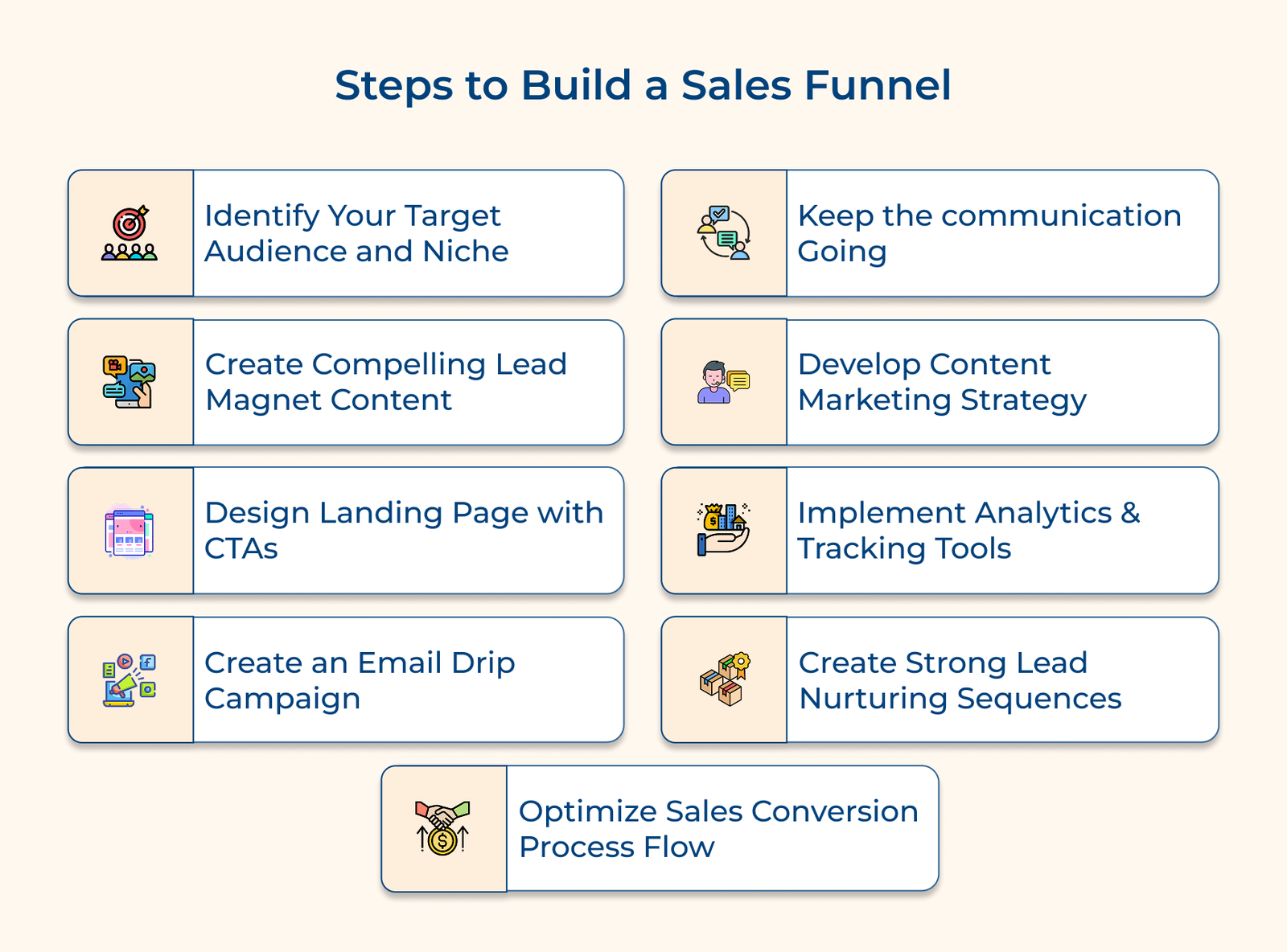
Before you build any part of your sales funnel, you need to figure out who it’s for. If you don’t know your audience, you’re just guessing and it leads to wasted time, effort and money. Research basic details, like age, income, locations and online habits. Use tools like Google Analytics, Instagram insights or even surveys to gather real information.
Go beyond numbers and create profiles called buyer personas that reflect real people. Give them names, goals, problems they want to solve, and how they make decisions. The more detail, the better.
Pro tips:
A lead magnet is a simple, useful resource you give away in exchange for someone’s contact info. It’s often the first real interaction someone has with your brand, so it needs to be worth their time. Think about what your audience is struggling with right now. Your lead magnet should tackle one specific challenge and offer a quick, practical fix.
Keep the content focused and simple to act on. Your goal is to give people something they can use right away, not something they’ll “get around to” next week. When your free resource actually helps, people are more likely to trust you with their time and money in the future.
Actionable tips:
Your landing page is often the first place people land when they’re interested in what you offer. It needs to hold their attention, make your value clear and help them take the next step, whether that’s signing up, booking a call or downloading something useful. Your headline should tell people what they’ll get and why it matters.
Include honest feedback from real people who’ve used what you offer. It could be a short testimonial, a simple quote or even a number. Sprinkle it throughout the page to build trust as the visitor scrolls.
Best practices:
Email drip campaigns help you stay in touch with potential customers by sending the right message at the right time. Instead of relying on one big pitch, you slowly build trust and guide people toward a decision without pressure. Think of your emails as steps in a conversation. Each one should do a specific job: welcome the reader, share something useful, answer a common question or point them to the next step.
Not everyone on your list wants the same thing. Group your subscribers by what they’ve clicked on, what they’ve downloaded or how active they are. It helps you send content they actually care about and keeps your messages from feeling generic or off-track. Try out different subject lines, layouts and send times to see what gets the best response. Just changing a subject line or tweaking the tone can make a big difference.
Key takeaways:
If you stop talking to your leads, they’ll stop thinking about you. Maintaining customer relationships is like staying in touch with a friend – regular, thoughtful check-ins build trust and keep the connection strong. Without it, people drift away or find what they need somewhere else. Use a simple content calendar to plan ahead.
Automated emails are helpful, but don’t let them be the only touchpoints. Small gestures, like a personal check-in, a birthday note or a “thought you’d like this” message, stand out. It doesn’t have to be fancy. It just needs to feel real. Use a simple system like CRM or even a spreadsheet to remind yourself when to follow up.
Pro tips:
When your content actually helps people solve real problems, they start to see you as someone worth listening to, not just someone trying to sell them something. The trust is what turns readers into customers down the line.
Useful content builds credibility. If you’re offering accounting software, don’t lead with features–lead with help. Try things like:
Thought leadership isn’t about big words—it’s about original thinking. Share honest opinions. Talk about what’s working and what isn’t. Break down complex trends. Use real examples, stories and data from your own experience.
Actionable tips:
Tracking tools are the only way to really understand how your sales funnel is performing. Without them, you’re guessing and that means missed opportunities to improve and grow.
Let’s consider that in an online course business, your tracking might look like:
User behavior tracking tools like scroll tracking to see how far users scroll, where they click and how long they stay. The clues tell you what’s working and what needs fixing.
Best practices:
Lead nurturing is about helping people make confident buying decisions, not just pushing for a quick sale. When done right, it feels like a helpful conversation–one that meets your prospects where they are, answers their questions and earns their trust over time.
Not every lead needs the same message. Someone who just downloaded a beginner’s guide isn’t ready for a product demo. Segment your audience and tailor your emails to match what they’ve done, what they’re interested in and where they are in the decision process.
Key takeaways:
The optimization phase is about making your sales funnel work better, step by step. It’s not a one-time fix, but a continuous process of finding what slows people down, removing obstacles and improving how your funnel converts visitors into customers.
Look at the purchase process from your customer’s point of view. Small frustrations can cause people to abandon their purchase. Cut unnecessary steps, offer clear instructions and confirm everything with clean, simple messages. Sometimes how you present your product matters as much as what it costs. Try offering a monthly payment plan, bundling related products or testing slightly different price points.
Pro tips:
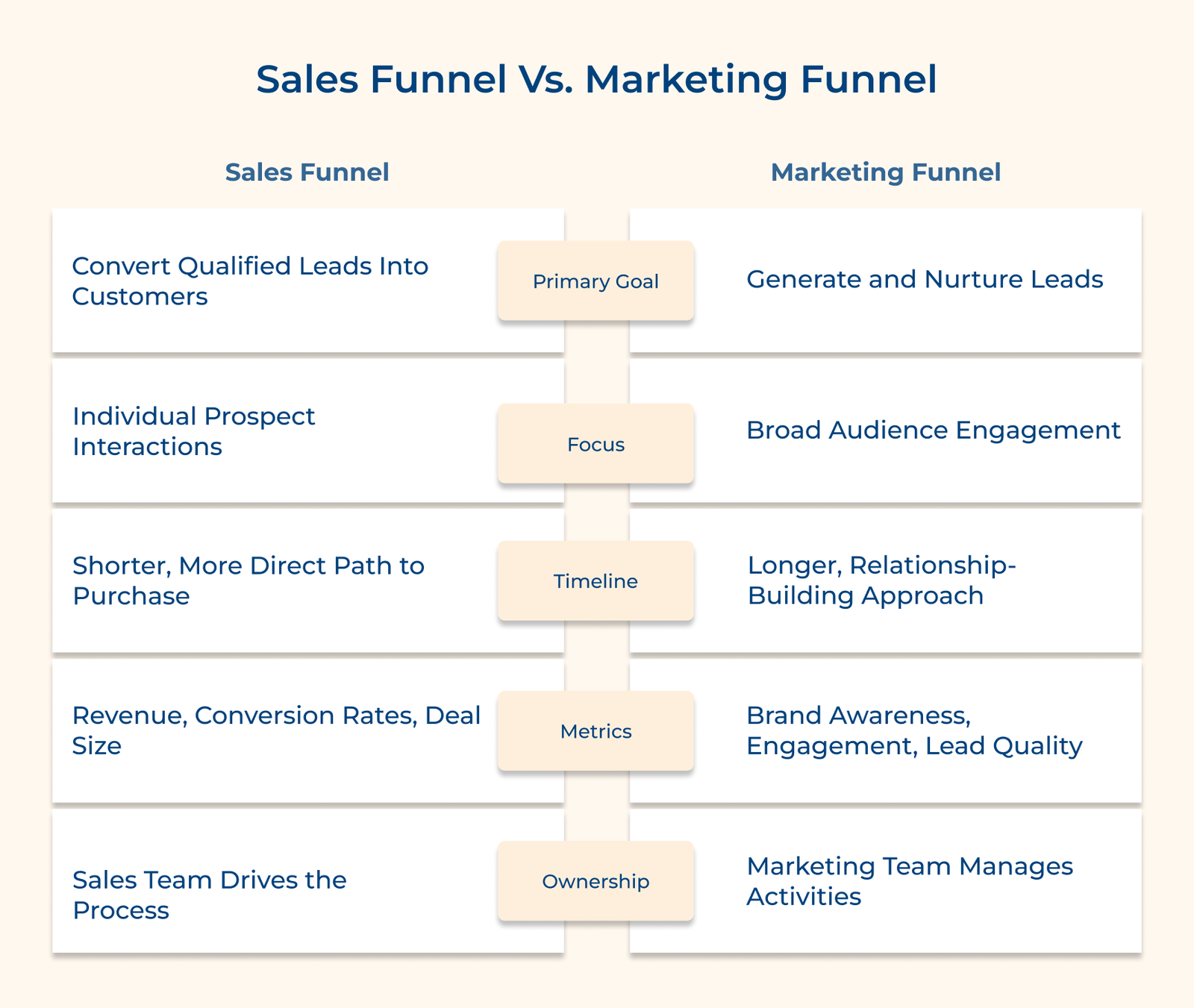
Following are the key differences between sales funnels and marketing funnels. While both are essential tools for business growth, they serve distinct purposes.
1. Primary Goal and Purpose
Sales funnels are built to guide qualified leads toward a clear outcome: a purchase. Each step is designed to overcome objections, answer specific questions and help someone make a confident buying decision.
Marketing funnels work earlier in the process. They aim to attract attention, build interest and help people understand their problems as well as potential solutions. The goal here isn’t to sell right away, it’s to earn trust and stay top-of-mind.
2. Approach to Prospect Interaction
Sales funnels rely on direct, personal conversations. Sales reps speak one-on-one with prospects, tailoring their approach to that individual’s needs, concerns and situation.
Marketing funnels use broader communication like emails, blog posts, videos and social media to connect with many people at once. The messaging is crafted to speak to common traits or pain points within a larger audience segment.
3. Timeline and Process Flow
The sales process usually moves faster. Once someone enters the sales funnel, the focus shifts to helping them make a decision soon. Each step is more hands-on and intentional.
Marketing funnels work over a longer period. Prospects might read articles, download resources or watch videos over weeks or months before they’re ready to talk to sales. It’s a slower build with more autonomy for the prospect.
4. Success Metrics and Measurement
Sales funnels track results that tie directly to revenue: how many deals closed, how long it took and the value of each sale.
Marketing funnels measure earlier signals: email clicks, content views and lead quality. The numbers show how well the funnel is generating interest and identifying good-fit leads.
5. Team Ownership and Management
The sales team manages the sales funnel. They handle personal outreach, meetings and follow-ups, all aimed at closing deals.
The marketing owns the marketing funnel. They produce content, run campaigns and nurture leads until they’re ready to hand off to sales.
Check out some major brands that have successfully implemented sales funnels in their business models.
1. Amazon
Amazon starts by meeting people where they are—on search engines, social media or browsing the web. Once they’re on site, smart algorithms take over: personalized recommendations, reminders about viewed items and targeted emails keep products in front of users. One-click ordering and saved info make checking out nearly effortless.
Amazon has mastered the art of reducing friction. Their funnel converts browsers into buyers quickly and features like Prime keep customers coming back again. It has resulted in repeat purchases, high loyalty and a customer base that rarely shops anywhere else.
2. Nike
Nike doesn’t just sell shoes, it sells inspiration. Their funnel starts with powerful stories featuring athletes and everyday fitness goals. Apps like Nike Run Club help users build habits and get personalized customer experiences.
Whether online or in-store, Nike focuses on making each touchpoint meaningful. Nike’s funnel is built around connection. It doesn’t just lead to purchases, it leads to people identifying with the brand. It turns customers into fans and fans into advocates.
3. Puma
Puma blends culture with commerce. Their funnel uses influencers, athlete tie-ins and exclusive product drops to drive excitement. Social content pulls people in, while their app along with the stores create a mix of digital and physical experiences.
Puma creates urgency and emotional engagement—two key triggers that move people from interest to action. Their funnel keeps customers coming back for what’s new and what’s next.
4. Netflix
Netflix starts its funnel with a free trial offer and compelling content previews. They use sophisticated recommendation algorithms, personalized show suggestions and smooth streaming experiences. Their algorithm learns fast, making sure people always have something new to dive into. Netflix’s funnel isn’t just about signing up—it’s about staying engaged. Their ability to make content feel personal is what keeps subscribers around month after month.
5. Apple
Apple starts with buzz as their product launches create anticipation and their clean, intuitive digital and retail experiences guide customers from curiosity to checkout. Post-purchase, Apple focuses on support, tutorials and device integration to keep customers locked into the ecosystem. Apple’s funnel is all about experience. They make each step, from discovery to use, feel polished and purposeful, which keeps customers loyal to invest in more devices over time.
Check out how to measure the effectiveness of your sales funnel through key metrics. Understanding the measurements helps you identify areas for improvement and optimize your funnel.
Essential questions:
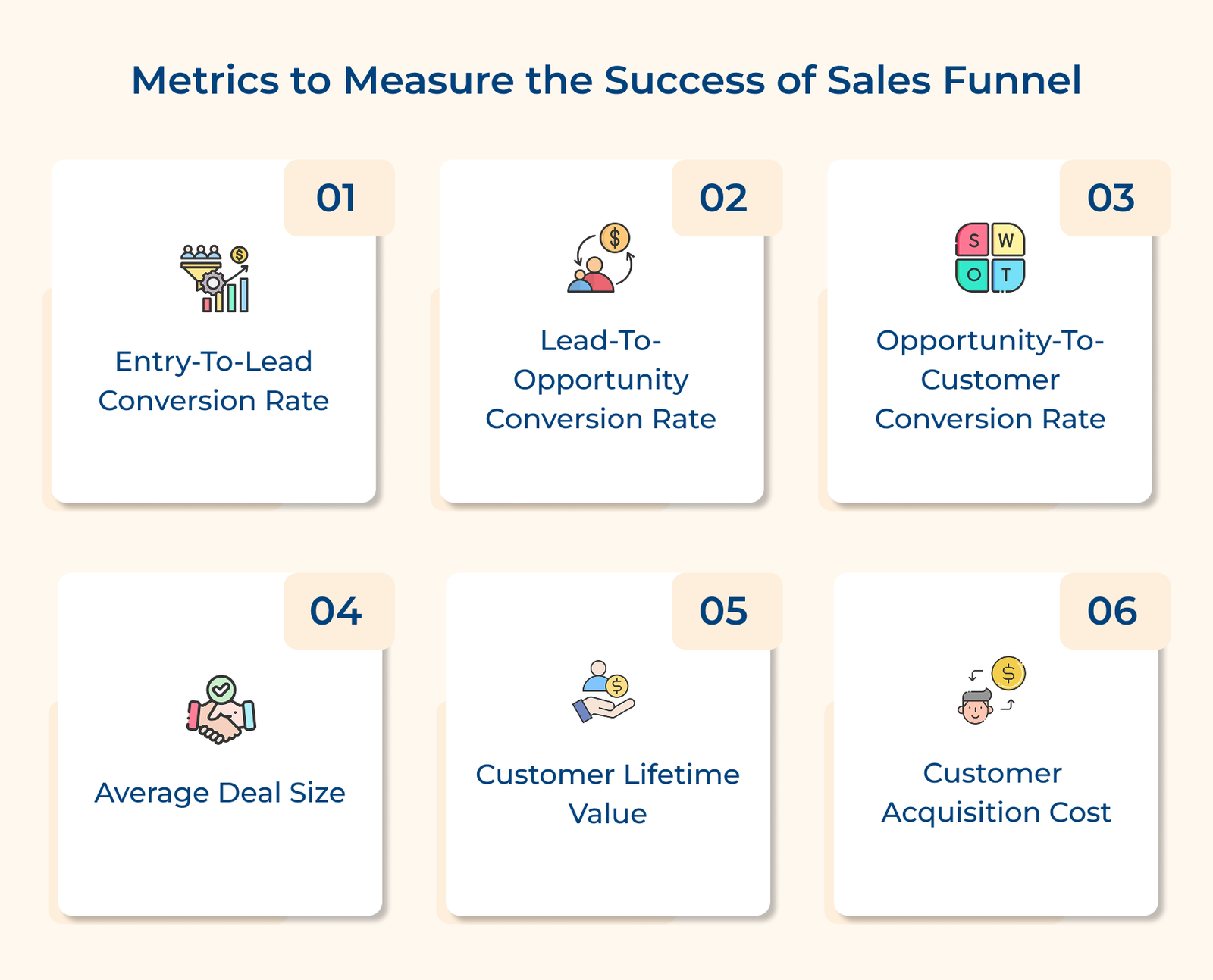
The metric measures how many of your site visitors turn into potential customers. It tells you if your homepage, landing pages or lead magnets are doing their job in grabbing attention and convincing people to share their info.
The metric shows how many leads turn into serious interest. It shows whether your emails, follow-ups and mid-funnel content are moving people from curiosity to real consideration.
Opportunity to conversion rate reveals how strong your pitch, pricing and close are. If the number is low, it might be time to rethink how you’re sealing the deal.
Average deal size measures the typical purchase value when someone converts through your funnel. It helps you see not just how many customers you’re winning but how much each one is worth. It can also reveal upsell or bundling opportunities.
CLV looks beyond the initial purchase to measure the total value a customer brings over time. It helps you understand the long-term effectiveness of your funnel in attracting quality customers. A high CLV means you’re not just making one-time sales–you’re earning trust, repeat business and customer loyalty.
CAC measures how much you spend to acquire each new customer through your funnel. It includes all marketing and sales expenses divided by the number of new customers gained. Understanding CAC helps you optimize your spending and ensure your funnel is financially sustainable in the long run.
A well-built sales funnel turns your marketing into a step-by-step process that helps people go from “just looking” to “ready to buy.” When each stage of the funnel is done right, you’re not just selling but you’re helping people make confident decisions by giving them what they need along the way.
The real key to making a funnel work isn’t a fancy tool or trend, it’s consistency. Track what’s working, spot where people drop off and keep adjusting. The more you understand your audience and how they move through the process, the better your results.
Key takeaways:

A well-structured sales funnel gives you a clear view of how people move through your sales process. It shows you where they get stuck, where they drop off and where things are working well. You can focus your time and resources where they’ll make the biggest difference, whether that’s fixing weak spots or doubling down on what’s already working.
If you’re trying to turn interested people into paying customers, you need a sales funnel. It doesn’t matter if you’re running a small startup, an online shop or a large company, a sales funnel helps you stay organized and focused. It’s especially important if your sales take time or involve big decisions, like high-priced products or services. Instead of guessing what to do next, you follow a clear process that keeps your efforts on track and your goals in sight.
Building a basic sales funnel usually takes around 2-4 weeks. It includes outlining your customer journey, creating the right content and setting up tools to track what’s working. But getting it just right doesn’t happen overnight. You’ll need to keep testing and making changes based on real feedback. The more you tweak and improve it, the better it performs.
B2B sales pipelines tend to move more slowly. They often involve several people in the decision-making process and rely on detailed information along with one-on-one conversations. B2C funnels usually move faster. The focus is on grabbing attention, tapping into emotions and making it easy for someone to buy on the spot.
The cost of building a sales funnel depends on how complex you want it to be. If you’re just starting, you can create a basic funnel with low-cost or even free tools you already use. But if you need something more advanced with automation, custom design and expert support, it’ll require a bigger investment.
Track a few key numbers: how many people convert at each stage, how much it costs to gain a customer and how much money your funnel brings in overall. Watch where leads tend to drop off and how long it takes them to make a purchase. Looking at the data regularly helps you spot what’s working and where things need to improve.
Grow Customer Relationships and stronger team collaboration with our range of products across the Conversational Engagement Suite.
Omnichannel Customer Support & Help Desk Software
AI Enabled Business Messaging and Chatbot Software
Sales Engagement & CRM Software
Call Center Software & Virtual Phone System
Product Marketing & Experience Platform
Customer Experience & Feedback Management Software
 A Comprehensive Guide on Lead Scoring Model
Scroll to top
A Comprehensive Guide on Lead Scoring Model
Scroll to top