7 Best Sales Qualification Frameworks for Businesses in 2026
Explore top sales qualification frameworks that help businesses identify high-quality leads. Learn to streamline sales processes and improve conversion rates, driving better outcomes.

Explore top sales qualification frameworks that help businesses identify high-quality leads. Learn to streamline sales processes and improve conversion rates, driving better outcomes.
Many sales teams waste time on leads that were never a good fit to begin with. Valuable prospects slip through the cracks while reps chase dead ends. The core issue? Outdated qualification methods that rely too much on guesswork and vague criteria.
The buyer behavior has become more complex and self-directed than ever. Buyers expect relevant, timely communication and not generic sales pitches. Traditional approaches simply don’t keep up. It can only be fixed when the sales teams have clear, flexible frameworks that help them qualify leads based on real signals, not assumptions. Using the right sales lead qualification frameworks can increase your chances of closing deals by up to 67%.
The right sales qualification frameworks can save time, focus effort where it matters and improve close rates. Let us go through the breakdown of practical frameworks that help you quickly identify high-potential prospects and stop wasting time on the rest.
A sales qualification framework refers to a practical, step-by-step approach that helps sales teams assess if a potential customer is a good fit for the company’s products or services. It’s a straightforward method that ensures resources are spent on the prospects most likely to convert, boosting efficiency and improving conversion rates.
The framework works by guiding sales professionals through a set of clear qualification criteria and questions. Sales reps gather key information about the prospect’s needs, challenges, budget, decision-making process and timeline. The data is then compared to established benchmarks to determine if it’s worth pursuing the opportunity further or moving on to other leads.
Key objectives:
Let’s go through the benefits of a sales qualification framework, highlighting how it ensures sales teams focus on high-potential prospects.
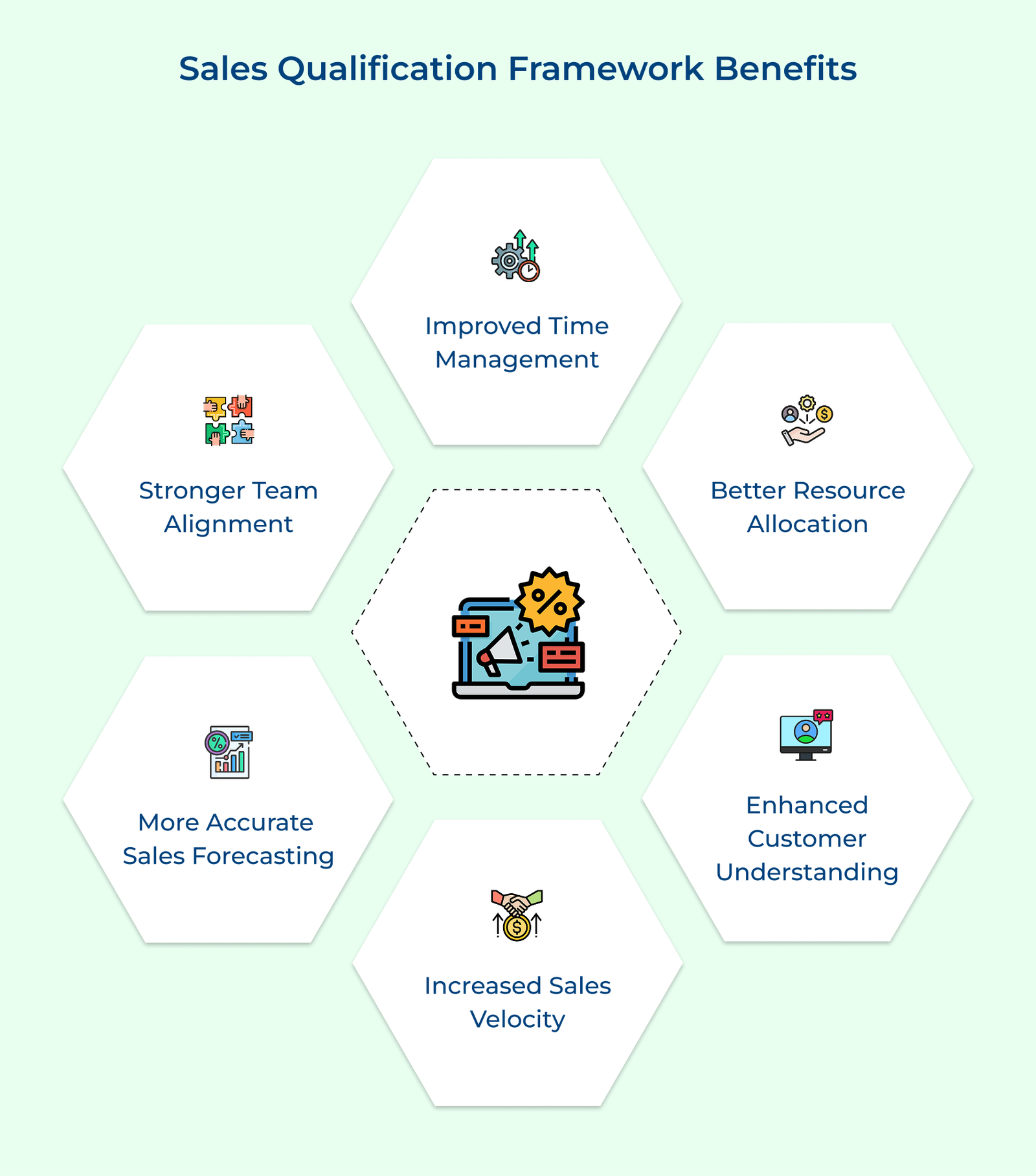
Improved Time Management
Sales teams can concentrate their efforts on leads with the highest potential to convert. It means spending less time on unqualified prospects and more time nurturing relationships with those who truly need your solution. As a result, your team can achieve more in less time, focusing on work that truly matters.
Better Resource Allocation
The framework helps organizations focus their resources on opportunities with the greatest potential return. It allows you to make smart decisions about where to allocate your team’s time and the company’s budget, leading to better results.
Enhanced Customer Understanding
Your team gains a clearer understanding of customer needs and challenges by following a structured qualification process. You get to know their pain points, buying criteria and decision-making process, allowing you to offer real value to potential customers.
Increased Sales Velocity
The framework simplifies the sales process by identifying qualified prospects early on. Your sales cycle shortens with prospects who are genuinely interested and ready to buy, leading to quicker deal closures.
More Accurate Sales Forecasting
You can more accurately predict which deals will close by systematically evaluating opportunities. Sales forecasts become more dependable, based on clear qualification criteria instead of gut instincts, leading to better business planning.
Stronger Team Alignment
The framework enhances a shared understanding across your organization. Everyone knows what defines a qualified lead, from marketing to sales to customer success. The alignment cuts down on confusion and boosts efficiency in generating revenue.
Below are the best sales qualification frameworks that can help your team identify and nurture leads effectively, driving more successful outcomes.
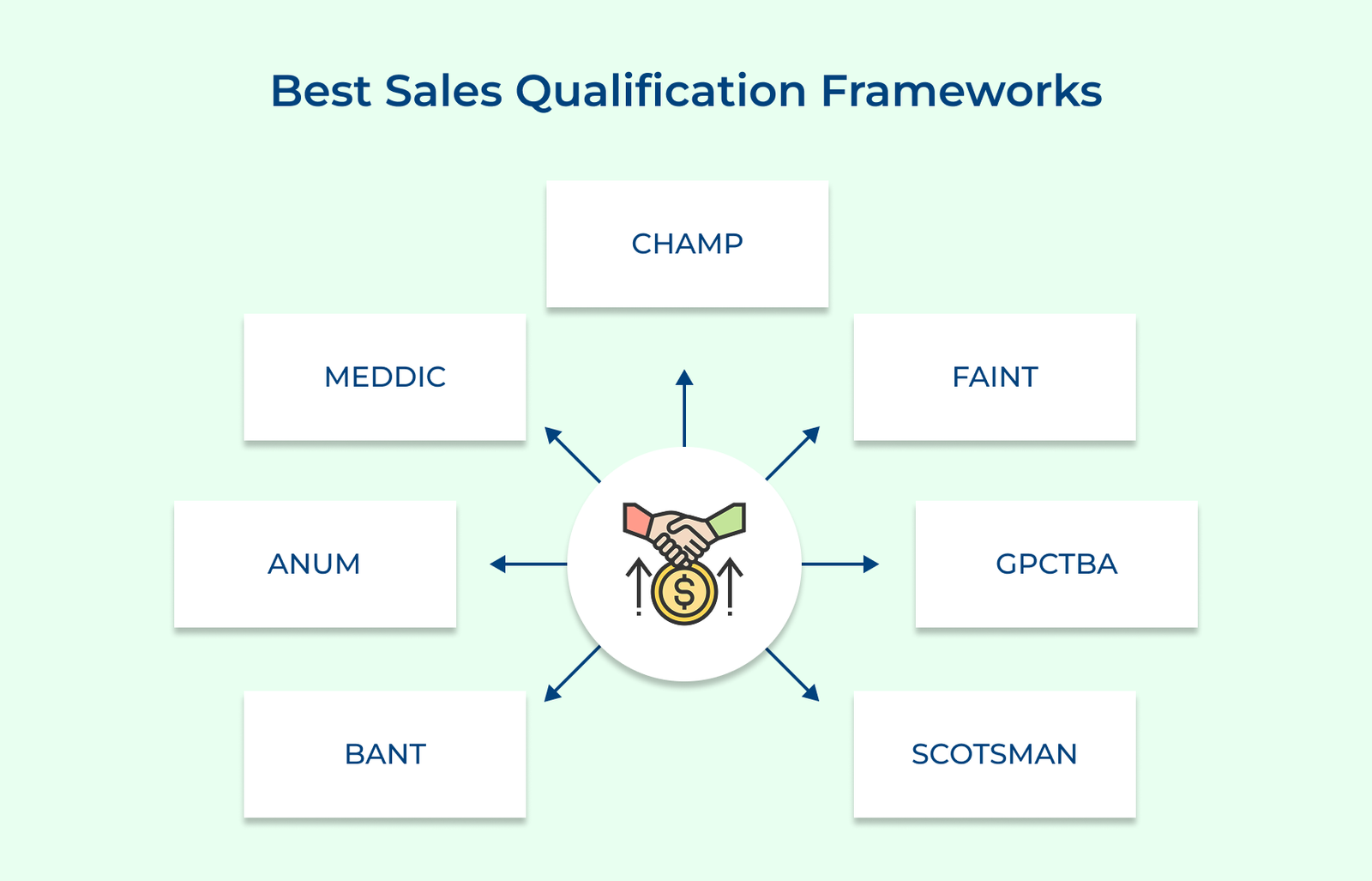
BANT is a traditional sales qualification framework created by IBM, designed to help sales teams evaluate prospects based on four key factors. It’s especially effective for enterprise sales teams who need a structured approach to identify high-value opportunities and allocate resources efficiently.
Key components:
BANT is ideal for large enterprise sales with complex buying processes. It works well for companies selling high-value solutions that require significant investment and multiple decision-makers.
Actionable tips:
ANUM is a modern take on BANT that adjusts qualification priorities to align with modern buying behaviors. It emphasizes connecting with decision-makers first, before diving into budget discussions, making it a natural fit for consultative selling.
Components:
ANUM works best for B2B companies with longer sales cycles and multiple stakeholders. It’s particularly effective for those offering solutions that require significant change management or organizational buy-in.
Pro tips:
MEDDIC is an advanced qualification framework designed for complex enterprise sales cycles. It helps sales teams gain a deep understanding of a prospect’s business, decision-making process and economic drivers. It’s particularly useful when dealing with multiple stakeholders and long evaluation periods.
Components:
MEDDIC helps sales teams focus on high-value, complex deals that require thorough analysis and stakeholder buy-in. While it requires time and effort to gather necessary information, it ensures a structured approach to closing deals effectively.
Best practices:
CHAMP is a customer-centric qualification approach that focuses on understanding customer challenges first. It builds strong relationships through problem-solving before discussing solutions or budgets.
Key features:
CHAMP is ideal for businesses selling innovative solutions that require customer education and trust-building. It builds deeper relationships by focusing on challenges but can lead to longer sales cycles and risk pursuing deals that aren’t financially viable.
Key takeaways:
FAINT is a modern qualification system designed for businesses selling to prospects who may not have a fixed budget. It’s particularly valuable in the modern market where many companies don’t allocate specific budgets for innovative solutions but can find funds when they see clear value.
Components:
FAINT is ideal for companies selling innovative solutions or entering new markets where traditional budget planning doesn’t apply. It works well in environments where prospects are open to new ideas but may not have set funds allocated.
Actionable tips:
The GPCTBA/C&I framework offers a structured approach to assessing not just whether a prospect can buy your solution, but if they are genuinely prepared to implement and see value from it. It’s a tool that helps sales teams focus on the entire picture, ensuring alignment between what a prospect wants to achieve and how your solution fits into their larger goals.
Key features:
GPCTBA works best for enterprise-level sales with complex implementation requirements. It’s particularly effective for companies selling solutions that require significant organizational change or resource commitment.
Pro tips:
SCOTSMAN is a practical qualification framework designed to give sales teams a thorough understanding of both the prospect’s ability to purchase and their readiness for successful implementation. It’s particularly useful in complex sales cycles, where multiple factors need careful assessment beyond just budget and authority.
Key features:
SCOTSMAN is particularly effective for businesses selling high-value solutions with long-term implications. It’s ideal for industries where market competition is fierce and differentiation is key.
Best practices:
Below are some major companies that have adapted different frameworks to optimize their sales processes and drive growth.
Amazon
Amazon has adopted the MEDDIC framework to suit its B2B services, like AWS and Amazon Business. It creates a method that focuses on understanding customer metrics and pinpointing the economic buyers within organizations. The tailored approach emphasizes tracking key decision-making elements and working closely with technical champions to demonstrate the value of Amazon’s enterprise solutions.
Amazon has transformed its enterprise sales strategy by refining the process. Sales teams are equipped to navigate complex, multi-stakeholder deals while staying true to Amazon’s customer-first mindset. The focus enables them to quickly identify high-value opportunities, ensuring that resources are allocated efficiently across Amazon’s broad product ecosystem.
Apple
Apple uses a hybrid approach that blends elements of the BANT and CHAMP frameworks, focusing on understanding customer challenges as well as use cases before diving into technical details or pricing. Their sales teams, both in retail and enterprise settings, are trained to explore customer needs deeply, aligning them with Apple’s ecosystem of offerings.
Apple strengthens its premium brand positioning by prioritizing customer needs over immediate sales goals. The strategy allows their teams to guide customers toward comprehensive, integrated solutions rather than individual products. It resulted in higher average transaction values and enhanced stronger long-term customer loyalty.
Zappos
Zappos adopts the FAINT framework with a strong focus on customer interest and needs, moving away from traditional budget-based qualification. Sales reps take the time to understand individual preferences and lifestyle factors, ensuring each recommendation aligns with the customer’s unique needs rather than just focusing on price.
The personalized approach enhances deeper customer relationships. It helps Zappos identify not only immediate sales opportunities but also long-term customer value potential leading to higher customer lifetime value.
Nike
Nike uses a tailored version of the GPCTBA framework for its B2B wholesale and corporate partnerships. The focus is on understanding each retailer’s unique growth goals, challenges and overall business direction. The sales teams take care to align with key timelines, especially for seasonal product launches and marketing activities, ensuring smoother collaboration.
The hands-on approach helps Nike build deeper, more meaningful relationships with retailers. Nike can craft more effective merchandising plans by gaining a clear understanding of their partners’ needs, strengthening its position as a top choice for retailers.
Let’s go through the key steps of how to choose a framework that aligns with your business goals and sales methodology.
Key questions:
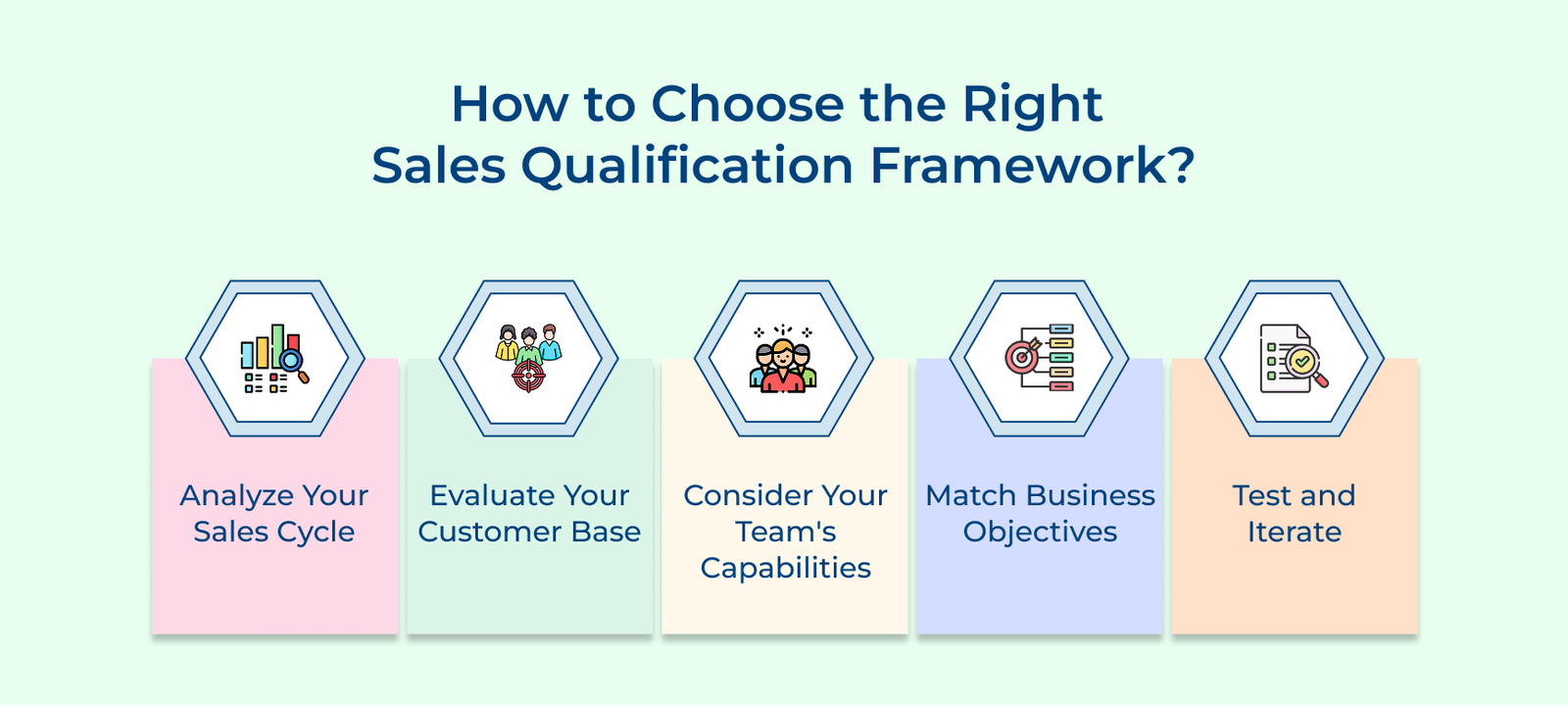
Start by taking a close look at your current sales process, from first contact to closing the deal. Think about deal size, average closing time and how many people are involved in the decision-making. You might need a thorough framework like MEDDIC for larger, more complex deals. Something simpler like BANT could be more effective for shorter cycles. Your sales lead qualification should align with how your customer naturally moves through their buying process.
Understanding how your target customers make decisions is key. Take into account their industry, budget planning and company structure. Some customers follow formal purchasing processes, which work well with structured frameworks like SCOTSMAN. Others may need a more flexible approach, focusing on building relationships and uncovering needs over time.
Evaluate your sales team’s experience and skill set. A complex framework could be too much for newer team members, while experienced reps might find simpler frameworks restrictive. The right sales qualification approach should build on your team’s strengths while offering clear direction for areas that need improvement.
Your sales framework should match your company’s growth goals and priorities. If you’re aiming for quick expansions, choose a framework that helps make fast qualification decisions. If building lasting customer relationships is more important, opt for one that focuses on understanding your customers better and aligning with their needs.
Begin by testing your chosen framework with a small team or a select group of leads. Track key metrics like qualification accuracy, close rates and the length of your sales cycle. Adjust your approach based on feedback and results. Keep in mind that the best sales lead qualification frameworks often blend elements from different methods to create a solution that fits your unique needs.
Let’s explore how the sales qualifications frameworks are transforming to meet the demands of the modern sales landscape.
Recent Statistics:
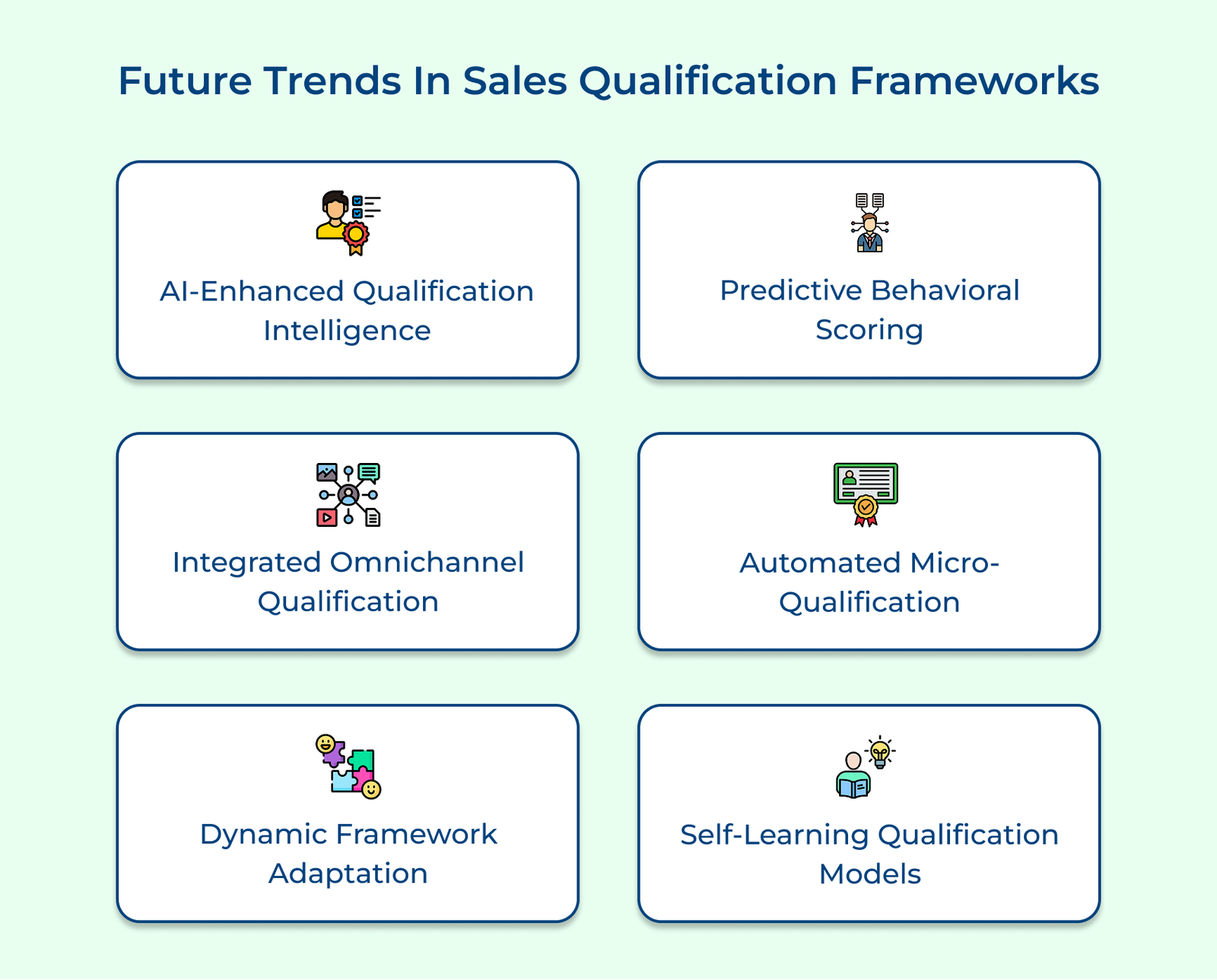
Artificial intelligence is changing the way sales teams qualify leads. Smart algorithms analyze data like digital behavior, social media activity and company growth trends. The systems give sales teams real-time insights, helping them spot high-potential opportunities early and suggest tailored engagement strategies based on how prospects behave.
Advanced behavioral analytics are reshaping how leads are qualified. Instead of focusing just on clear factors like budget and authority, modern frameworks also consider subtle signals. The systems track prospect engagement, digital activity and company-wide buying signals to create dynamic qualification scores that update in real-time.
Future frameworks will bring together data from all customer touchpoints. Sales teams will have a clear view of how prospects engage across digital channels, social media and in-person interactions. The complete picture allows for better qualification decisions, based on a full customer journey rather than just isolated moments.
We’re shifting to continuous micro-qualification, where prospects are automatically assessed throughout their journey. Instead of qualifying leads at set stages, automated systems constantly track actions, behaviors and shifts in circumstances, adjusting qualification scores.
Today’s rigid frameworks are giving way to flexible systems that adjust qualification criteria based on market shifts, industry trends and past successes. The adaptive systems use machine learning to fine-tune qualification factors in real-time, ensuring sales teams are always working with the most relevant criteria for their specific market.
Future qualification frameworks will include self-learning capabilities. The systems analyze both successful and unsuccessful deals to refine qualification criteria. They get better at predicting which opportunities are most likely to turn into successful customers by learning from real outcomes.
Sales teams waste time and effort when they chase the wrong leads. That’s why lead qualification frameworks matter as they help teams focus on prospects who are actually worth pursuing.
A good framework gives structure to how you evaluate leads: Do they need your solution? Can they afford it? Are they ready to buy? But no single framework fits every business. The most effective companies combine parts of different models to fit their specific sales process, customer base, and market.
As buyer behavior and markets shift, these frameworks need to evolve too. Businesses that regularly revisit and refine their qualification methods stay ahead because they’re not just working harder, they’re working smarter! The goal isn’t just more leads but it’s better ones, leading to consistent, long-term growth.

The best framework depends on the complexity of your sales cycle and your customers’ buying behaviors. Detailed frameworks like MEDDIC or GPCTBA may work best for enterprise software companies. Meanwhile, retail and direct-to-consumer businesses might find BANT or CHAMP more effective. When selecting a framework, think about factors like your average deal size, sales cycle length and the number of decision-makers involved.
A solid sales qualification process should be consistent, scalable and tailored to your business needs. It should help salespeople gather key information without making the process overwhelming for prospects. The system needs clear evaluation criteria, measurable milestones and the flexibility to work with different types of buyers, all while staying aligned with your company’s sales goals.
The time it takes to fully implement a sales qualification framework depends on your organization’s size and complexity but typically ranges from three to six months. It includes time for selecting the right framework, training the team, documenting processes and conducting initial tests. Expect additional time for refining the system based on early results and feedback from the team about what works in real sales scenarios.
Success should be measured by both short-term and long-term indicators. Track changes in sales cycle length, lead-to-opportunity conversion rates and win rates. Keep an eye on the accuracy of sales forecasts, deal quality scores and how resources are being used. Gather feedback from sales teams about how useful the framework is in their daily interactions with prospects.
Update your framework when there are noticeable shifts in buyer behavior, market conditions, or your business model. Make adjustments if sales cycles consistently deviate from expectations, win rates drop, or if sales team feedback points out gaps in the process. Regular quarterly reviews ensure your framework stays relevant and aligned with your business’s evolving needs.
A sales qualification framework brings structure to how you evaluate prospects. It helps sales teams spot promising opportunities early, saving time by steering clear of unqualified leads. The frameworks lead to smarter decisions on where to allocate resources and improve sales efficiency with a clear process for gathering key information.

Grow Customer Relationships and stronger team collaboration with our range of products across the Conversational Engagement Suite.
Omnichannel Customer Support & Help Desk Software
AI Enabled Business Messaging and Chatbot Software
Sales Engagement & CRM Software
Call Center Software & Virtual Phone System
Product Marketing & Experience Platform
Customer Experience & Feedback Management Software

 Customer Emotion: Types, Best Practices & Examples
Scroll to top
Customer Emotion: Types, Best Practices & Examples
Scroll to top