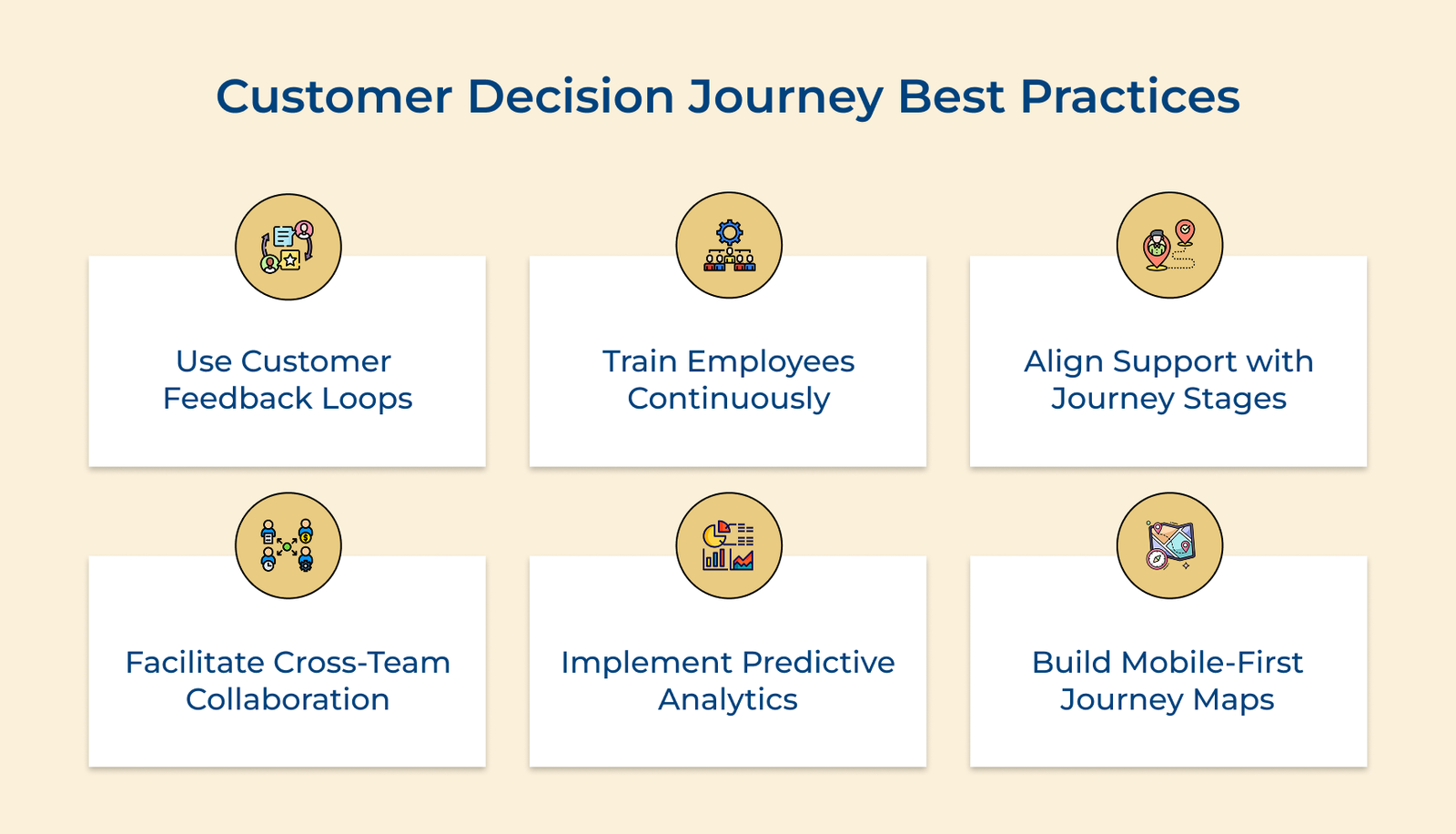
1. Embrace Customer Feedback Loops
Organizations should create ongoing feedback loops throughout the customer journey. Actively collecting and responding to customer input, companies can make real-time adjustments. It includes using surveys, conducting focus groups and monitoring social media to stay in tune with customer needs and expectations.
2. Invest in Employee Training
Customer-facing employees are key in shaping the decision journey. Companies should offer training that helps staff understand the full customer journey and their role in it. It empowers employees to provide more informed empathetic support while making each interaction more meaningful.
3. Create Journey-Based Customer Service Protocols
Support teams should adjust their approach based on where customers are in their journey. Each stage requires different support and understanding. They help create more relevant and helpful support experiences. The focus should be on offering proactive help and not just reacting to issues.
4. Develop Cross-Departmental Collaboration Systems
Breaking down silos between departments leads to a smoother customer experience. Marketing, sales and customer service teams should share insights to work together. The collaboration ensures a unified approach making sure no opportunities for improvement are overlooked.
5. Implement Predictive Analytics
Advanced analytics tools allow businesses to anticipate customer needs. Studying behavior patterns enables companies to predict issues or opportunities and address them proactively. It creates a smoother, more personalized customer experience.
6. Build Mobile-First Journey Maps
Businesses must make sure the entire customer journey works smoothly on smartphones. From researching products to getting help after purchase, every step should be easy and intuitive on a small screen. A simple mobile experience helps customers make decisions faster and reduces frustration.
7. Create Journey-Based Success Metrics
Traditional success metrics often miss the full picture of the customer decision journey. Companies should create measurement frameworks that look at both immediate results and long-term relationships. It includes tracking metrics like journey completion, customer effort and lifetime value.
What are the Consumer Decision Journey Examples?
Check out the notable examples of companies that have effectively mapped and optimized their customer journeys to create exceptional experiences.
1. Apple
Apple designs its customer journey with detailed attention from initial product discovery to long-term ownership. They create demand through carefully staged product launches and provide extensive pre-purchase knowledge. The Genius Bar concept strategically supports the post-purchase phase.
The impact of Apple’s journey-focused approach has dominated a loyal customer base that anticipates new products. The emphasis on customer education and support has resulted in increased brand recommendation. Customers often feel more confident making larger purchases because they trust the support ecosystem.
2. Nike
Nike’s customer journey strategy focuses on personalization through its digital ecosystem. The Nike+ platform blends shopping, fitness tracking and exclusive content. Leveraging customer data by providing personalized recommendations and creating community-driven experiences, they keep customers engaged throughout their journey.
The approach has transformed Nike from a product company to a lifestyle brand. The focus on building loyalty through digital touchpoints has increased customer engagement and repeat purchases. The community aspect of their platform helps maintain long-term relationships.
3. Starbucks
Starbucks creates a seamless customer journey by blending digital convenience with personalized in-store experiences. Their mobile app streamlines ordering, payment and rewards. While store layouts cater to both quick service and relaxed visits. Regular customer feedback helps refine both digital and physical experiences.
The focus on customer journeys has strengthened loyalty and increased visits. Blending of digital convenience and personalized service has created an experience that customers value. The reward program keeps customers engaged and maintains customer relationships.
4. Amazon
Amazon focuses on removing obstacles from all stages of the customer journey. The one-click personalized recommendations and detailed information make decision-making easier. They continuously improve their delivery and post-purchase support to enhance customer satisfaction.
The need for journey optimization has resulted in high customer retention and increased purchase frequency. Focus on convenience and reliability has built strong customer trust. The seamless shopping experience encourages customers to expand their purchasing across different product categories.
5. Disney
Disney creates magical customer journeys by connecting physical and digital experiences. The My Disney Experience app helps customers plan visits, navigate parks and access exclusive content. They use technology to personalize experiences while maintaining the human touch that makes their brand special.
The attention to detail has uplifted its position as a premier entertainment destination. Guest satisfaction remains consistently high due to their focus on creating unique experiences. The ability to blend technology with personal touches creates memorable experiences that encourage repeat visits.
Discover Clarity In Complexity With The Right Consumer Decision Journey
The consumer decision journey is a flexible roadmap that helps businesses understand how customers make purchases. Recognizing that buying decisions are no longer straightforward but influenced by various touch points, businesses can craft strategies that meet customers’ needs.
Understanding the customer decision journey gives businesses an edge in today’s competitive market. It helps companies offer personalized experiences, create genuine connections and build lasting relationships. When done right, the approach becomes a powerful driver of growth and loyalty.
Key takeaways:
- Success in modern business requires understanding the complex and non-linear nature of customer decision-making processes.
- Businesses that optimize their customer journey across all touchpoints create stronger connections and drive better results.
- Continuous monitoring and adaptation of the customer journey ensures long-term success in an evolving marketplace.