Scope and Focus
Brand experience is about the overall emotional connection people form with a brand over time. It shapes how people feel about the brand, influenced by visuals, messaging, values and even how the brand fits into broader cultural conversations.
Customer experience focuses on the practical side of interacting with a business. It looks at specific moments like buying a product, using a service, talking to support and asks if each one was clear.
Pro tips:
- Brand experience builds emotional depth while customer experience ensures things work smoothly.
- Brand experience is wide-ranging and long-term, while customer experience is about specific, measurable moments.
Strategic Approach
Brand experience works at a strategic level. It’s about shaping how people recognize and relate to a brand. It means carefully planning things like your visual style, tone of voice, messaging and the overall impression you want to leave. The goal is to create a consistent, recognizable presence that reflects what your organization stands for.
Customer experience focuses on the day-to-day. It’s about making sure offerings are easy to use, support systems work smoothly and every customer interaction is handled with care. It’s less about image and more about getting things right in real time.
Actionable tips:
- Brand experience is long-term and strategic, while customer experience is practical.
- The two work best when aligned—people connect with brands that feel both meaningful and reliable.
Timeline and Impact
Brand experience builds slowly over time. It develops through repeated exposure across different moments and channels. As people interact with the brand, they form impressions that stick, shaped by how it looks, sounds and behaves. Even when someone isn’t directly engaging, the impressions continue to shape how they feel about the brand.
Customer experience happens in the moment. It’s about meeting needs as they arise, whether through a purchase, a support call or a website visit. Each interaction is an opportunity to make things clear, easy and helpful. The goal is to create immediate value and show customers they can rely on you.
Key takeaways:
- Brand experience influences how people feel and think about a brand long-term.
- Customer experience focuses on solving problems and delivering value in the short term.
Target Audience
Brand experience is about connecting with a wider group of people, not just current customers, but anyone who might relate to what the brand stands for. It’s about shaping how the brand is seen and felt by the public, planting the seeds of future connection. If someone’s bought anything yet or not, the goal is to make the brand feel familiar and meaningful.
Customer experience zeroes in on those already interacting with the business. It’s about making sure current customers feel heard, supported and well taken care of. Every interaction is a chance to build trust and keep people coming back.
Best practices:
- Brand experience reaches broadly, while customer experience focuses on delivering value to active customers.
- Success requires understanding how to balance resources between attracting new audiences and serving existing customers effectively.
Communication Style
Brand experience leans into emotion. It uses storytelling, design and thoughtful messaging to make people feel something. The goal is to create a connection that sticks, even after the ad ends or the page is closed. Every detail, from color to tone of voice, helps express the brand’s character and values.
Customer experience is all about clarity. It focuses on giving people the information and support they need – fast, direct and without confusion. Be it solving a problem or answering a question, the goal is to make every interaction smooth and useful.
Key takeaways:
- Brand experience taps into emotion to build long-term connections, while customer experience prioritizes clear, actionable communication.
- Successful organizations maintain consistency between their communication styles to create a seamless brand presence.
Resource Allocation
Brand experience investments go into creating things that make your brand recognizable and memorable over time. It includes visual identity, storytelling, design and understanding your audience deeply. It’s like buying a great camera and learning how to use it, not just to take pictures, but to tell a story through them.
Customer experience investments focus on the day-to-day tools and systems that make things work smoothly. Think of it like setting up a well-run kitchen – training your team, choosing the right equipment and organizing the workflow so everything runs efficiently, even when it’s busy.
Pro tips:
- Brand experience is about long-term recognition and emotional impact, while customer experience needs operational resources for immediate service excellence.
- Finding the right balance between the investments ensures both emotional connection and practical satisfaction.
Success Criteria
Brand experience is successful when people feel a genuine emotional connection to the brand. It’s about creating positive associations that last beyond a single interaction, connections that reflect shared values, identity and lifestyle. When customers speak about the brand with pride or choose it even when cheaper alternatives exist, that emotional bond shows the brand experience is working.
Customer experience is about consistently getting the basics right. It’s measured by how smoothly things go, if the questions are answered quickly, problems are resolved easily and services feel seamless. High satisfaction, low effort and reliability are the signals of a strong customer experience.
Actionable tips:
- Brand experience builds long-term emotional loyalty and customer experience ensures everyday satisfaction.
- Both are essential: one earns the heart, the other earns trust through consistent delivery.
Innovation and Adaptability
Brand experience stays fresh by embracing creativity and cultural shifts without losing sight of the brand’s core identity. Just like a filmmaker experimenting with new styles while preserving their unique voice, brands must evolve their messaging, design and storytelling to stay emotionally engaging in a changing world.
Customer experience improves through ongoing, practical adjustments. It’s about listening to what customers say, observing how they interact and refining systems accordingly. Like tuning a machine for smoother performance, the approach focuses on removing friction and delivering a better, more intuitive experience over time.
Key takeaways:
- Brand experience evolves through creative expression and cultural relevance; customer experience evolves through consistent feedback.
- Both require attention and adaptation. One to inspire loyalty, the other to ensure satisfaction.
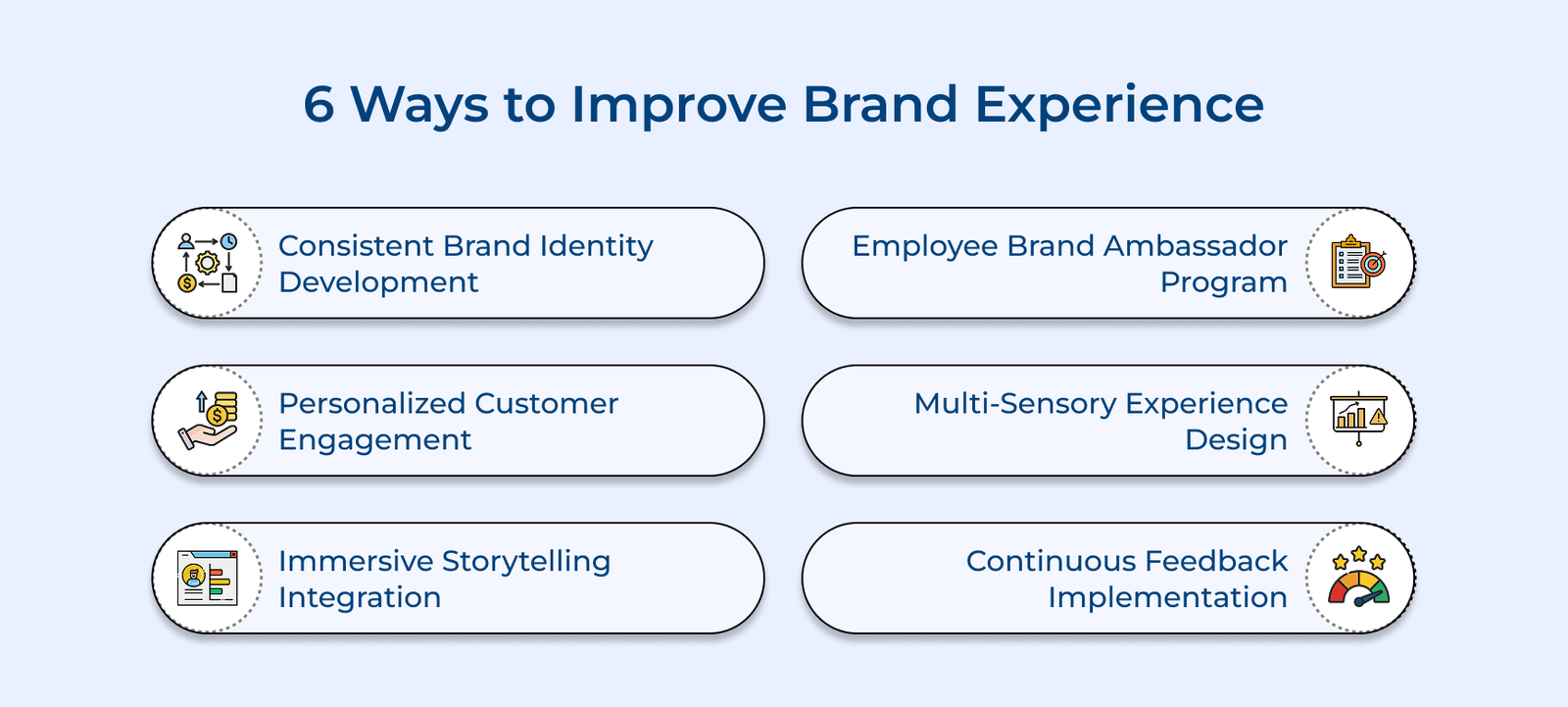
Ways to Improve Brand Experience
Below are some actionable strategies that will elevate your brand experience and truly resonate with your audience, driving growth.