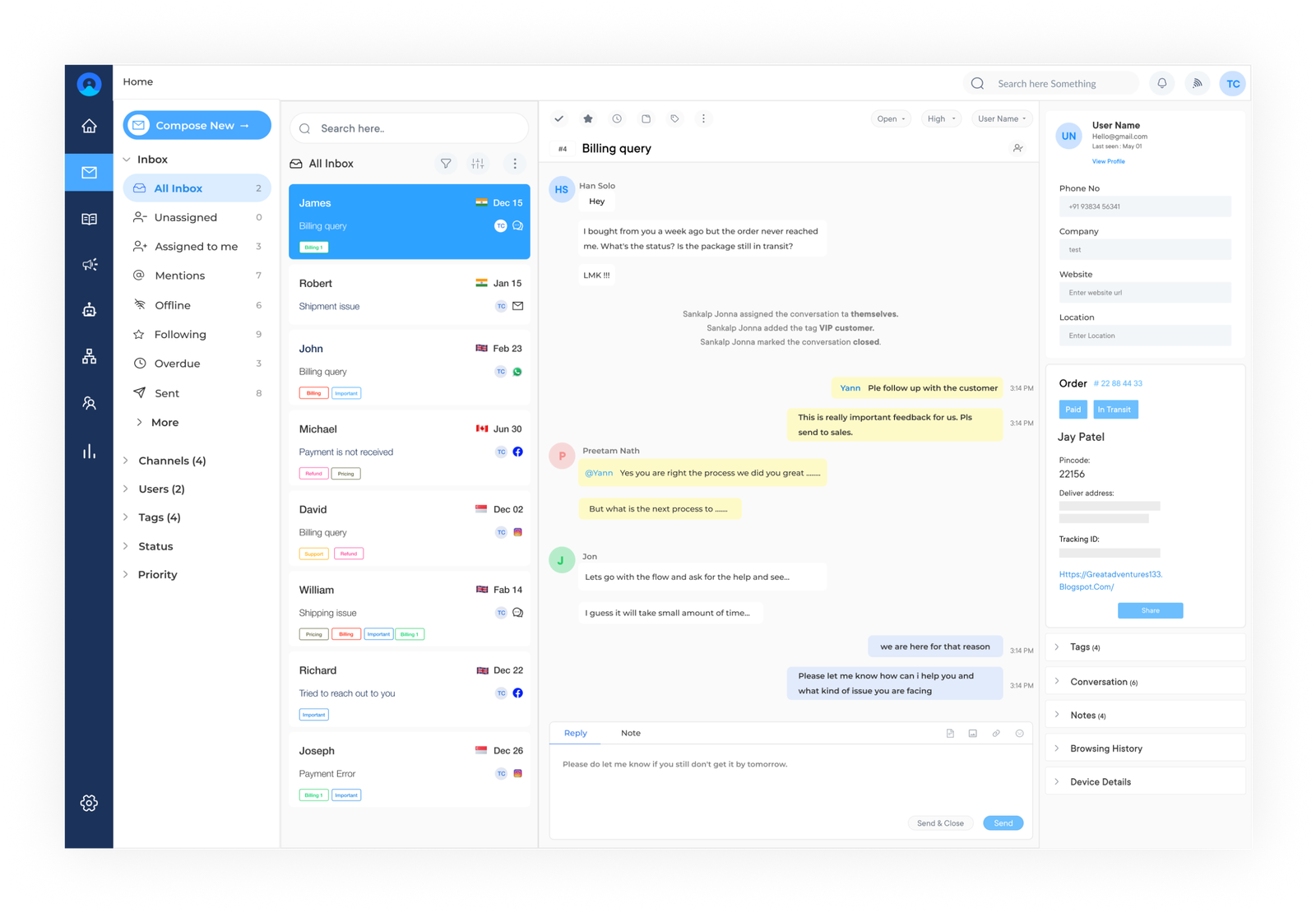
Omni24 is a customer support platform built specially for ecommerce teams that need to manage conversations across multiple channels without losing context. It brings live chat, AI chatbots and messaging capabilities into a unified interface. The system learns from each interaction and improves over time, helping your team give quicker, more accurate responses without repeating the same work.
What makes Omni24 stand out is how it blends automation with human support. The AI knows when to answer a simple question and when to loop in a real person. The system routes the customer to the right team member based on availability and expertise for more complex issues. It’s built to make support faster and more helpful without sacrificing the personal touch.
Key features:
- Learning chatbots that improve over time by studying past conversations to better answer everyday questions.
- Intelligent routing that sends tougher queries to the right agent automatically— no manual triaging needed.
- Live visitor tracking that shows what customers are doing on your site in real time, so agents have context before responding.
- Automation for routine tasks like sending tracking info or answering shipping questions, freeing up your team for more involved support.
3. Gorgias
Gorgias is a support platform built for ecommerce teams that want to manage all customer conversations in one place without the chaos. It connects email, live chat, social media and other channels into a single, easy-to-use dashboard. It means your team doesn’t need to bounce between platforms to reply to customers and everything stays organized.
What makes Gorgias especially useful is how it handles repetitive work. It spots what customers are asking based on past interactions, then suggests replies or triggers automation to handle it. You can set up rules for common issues like tracking info or returns, and the system takes care of the rest.
4. Zapier
Zapier is a simple yet powerful tool that connects the different apps you use to run your ecommerce business. Instead of writing code or jumping between platforms, you can set up automated workflows called “Zaps” that handle tasks for you in the background. Whether it’s moving customer info from your store to your CRM or creating tasks when orders come in, Zapier helps keep things flowing without manual effort.
The platform stands out for its huge list of supported apps and how easy it is to build automation. The drag-and-drop editor lets you link actions together based on triggers, so you can tailor workflows to your specific needs. It also gives you visibility into each automation’s activity with detailed logs and tools for handling errors when something goes wrong.
5. Klaviyo
Klaviyo is a marketing automation platform built with ecommerce in mind. It takes customer data, like browsing behavior, purchase history, and engagement, and uses it to send timely, relevant messages that feel personal without requiring constant manual effort. Klaviyo helps businesses stay connected with their customers in a way that feels natural from welcome emails to post-purchase check-ins.
Where Klaviyo really shines is in how it uses real-time data to drive smarter marketing. It automatically groups customers by behavior, sends follow-ups when carts are abandoned and even recommends products based on past activity. Everything updates on the fly, so campaigns stay aligned with what your customers are actually doing, not just what you hope they’ll do.
Examples of Ecommerce Automation
Below are the real-world examples of automation eCommerce that can propel your business forward and keep you ahead of the curve.
1. Amazon: Predictive Inventory Management
Amazon uses machine learning to forecast what products people are likely to buy and where, so it can restock warehouses before items even start running low. The predictive system relies on constant streams of purchasing data, adjusting inventory levels in real time based on customer behavior. The result is faster shipping and fewer out-of-stock messages, even during high-demand periods.
Amazon reduces the need for manual checks by automating inventory tracking and restocking. The system adapts quickly to changing trends, helping warehouses operate more efficiently and ensuring products are where they need to be before customers even click “buy.”
2. Zappos: Personalized Customer Service Automation
Zappos uses AI-driven chatbots to manage common customer requests like tracking orders and handling returns. The tools are built to respond quickly while still reflecting the company’s friendly and approachable support style. When an issue needs more attention, the system immediately routes it to the right human rep without causing delays.
The setup helps Zappos cut down on wait times and deliver a more consistent support experience. It also frees up their human agents to focus on the kinds of problems that need real conversation and problem-solving, keeping the personal touch where it matters most.
3. Nike: Dynamic Marketing Personalization
Nike leverages automation to craft highly personalized marketing experiences by analyzing customer behavior, purchase history and preferences. The system tailors email campaigns and product recommendations to each individual, ensuring that content feels relevant to their interests.
Nike turns broad marketing efforts into one-on-one conversations with their customers by automating segmentation. The approach leads to more engaged shoppers, as they receive product suggestions and promotions that match their unique tastes.
4. Walmart: Omnichannel Order Fulfillment
Walmart’s automation connects both their digital and physical stores, seamlessly syncing inventory in real-time. It allows customers to check product availability, make online purchases and choose between delivery or convenient pickup options, with updates flowing smoothly across platforms.
The integrated system streamlines the shopping experience, offering flexibility and transparency. Customers can easily shop across channels, while Walmart reduces manual coordination efforts and improves overall convenience for its shoppers.
5. Sephora: AI-Powered Beauty Recommendation
Sephora uses AI and machine learning to provide personalized beauty recommendations. Their virtual try-on technology and automated product suggestions assess factors like purchase history to offer tailored advice. The automated quizzes guide customers toward the right products.
The automation makes beauty shopping more intuitive and engaging, turning what can be a confusing process into a personalized experience. Sephora enhances the overall shopping journey and boosts confidence in their purchasing decisions by helping customers find the best products with ease.
Transform Chaos into Control with E-Commerce Automation
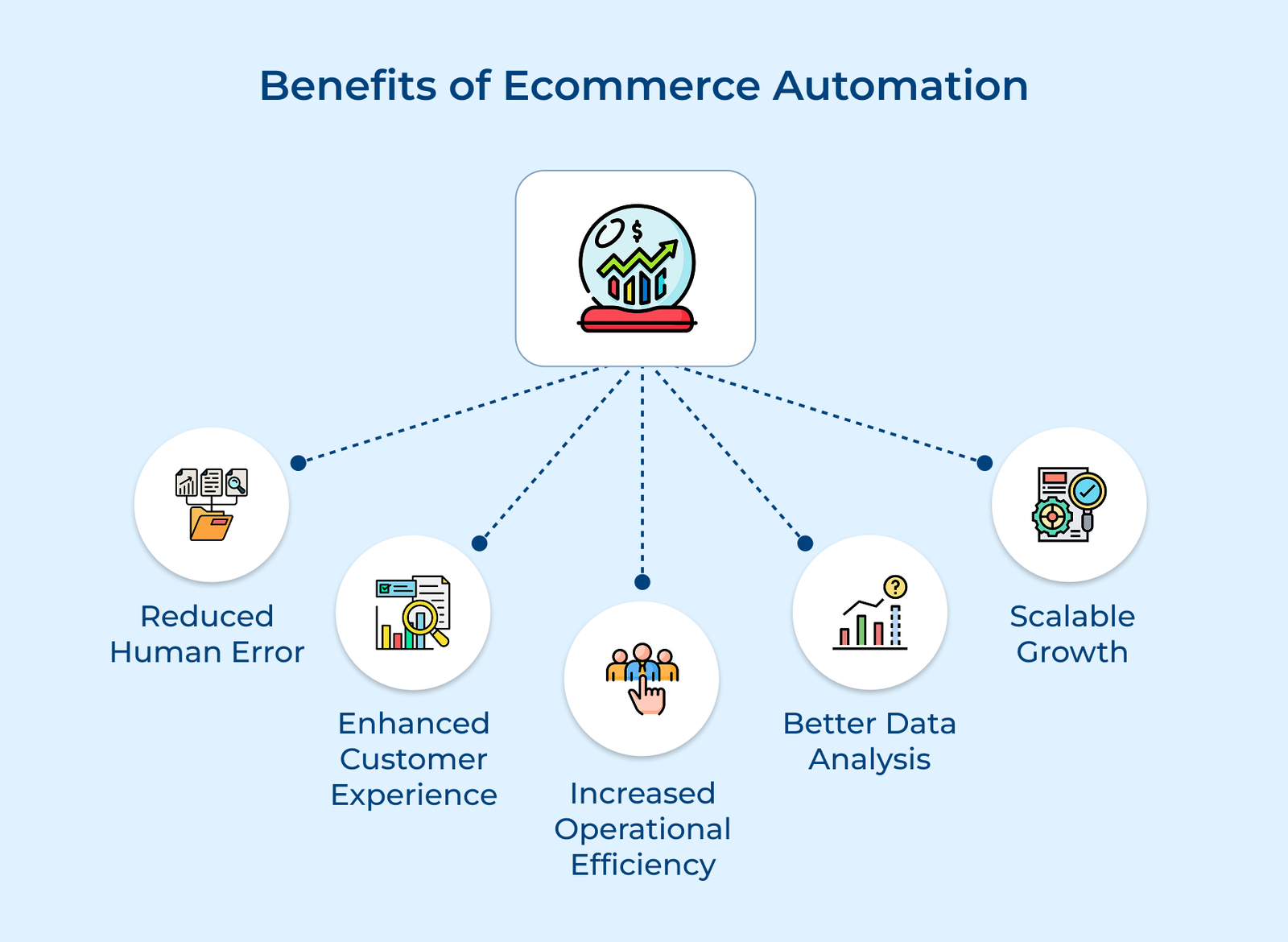
Ecommerce marketing automation simplifies complex operations, helping businesses to navigate digital markets with greater efficiency. Businesses can streamline processes, cut down on manual tasks and create an agile system that responds to shifting market needs by utilizing smart technologies.
The technological integration allows businesses to move past traditional limitations, turning chaotic workflows into efficient, data-driven operations. Automation provides the foundation for growth, enabling companies to focus on innovation while leaving the details of daily operations to the system.
Key takeaways:
- Automation turns complex operations into smooth, scalable processes.
- Technology brings precision and flexibility to ecommerce workflows.
- Intelligent systems allow businesses to innovate while keeping operations running smoothly.