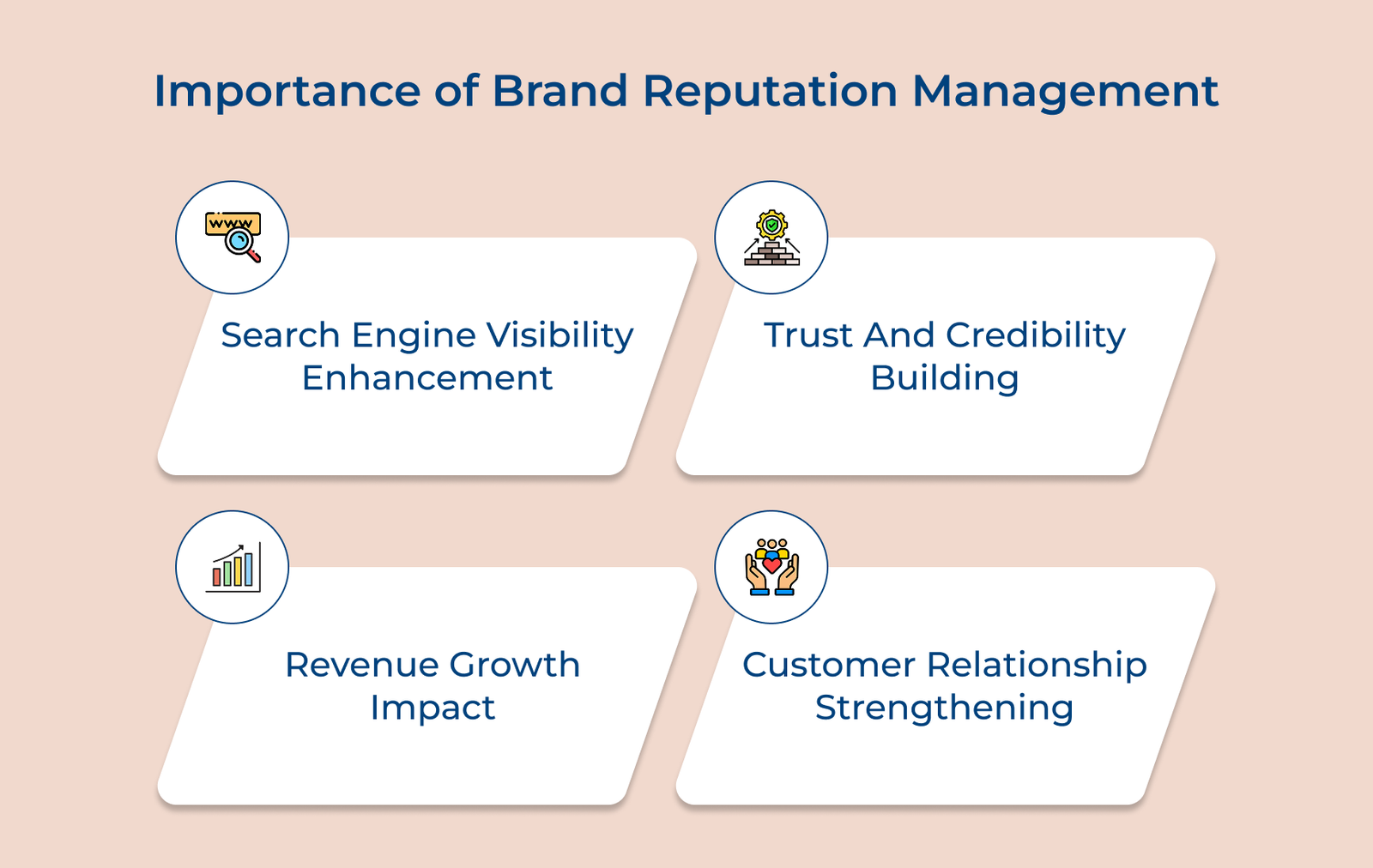
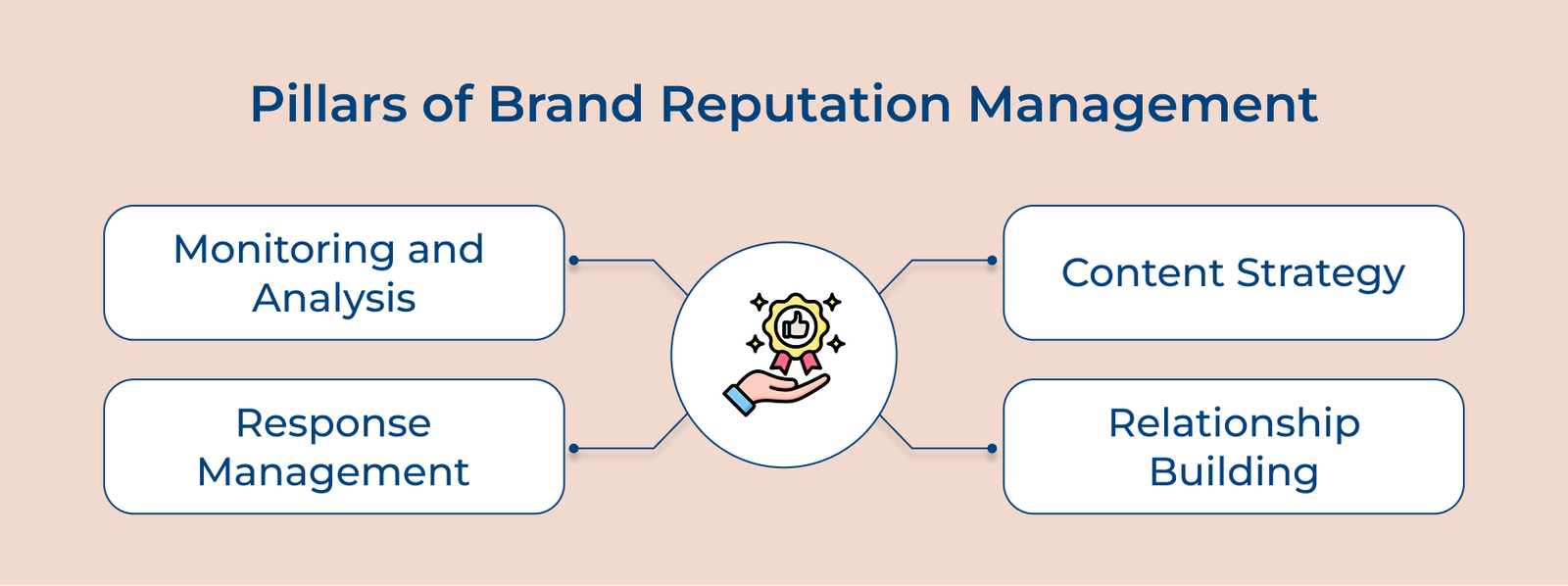
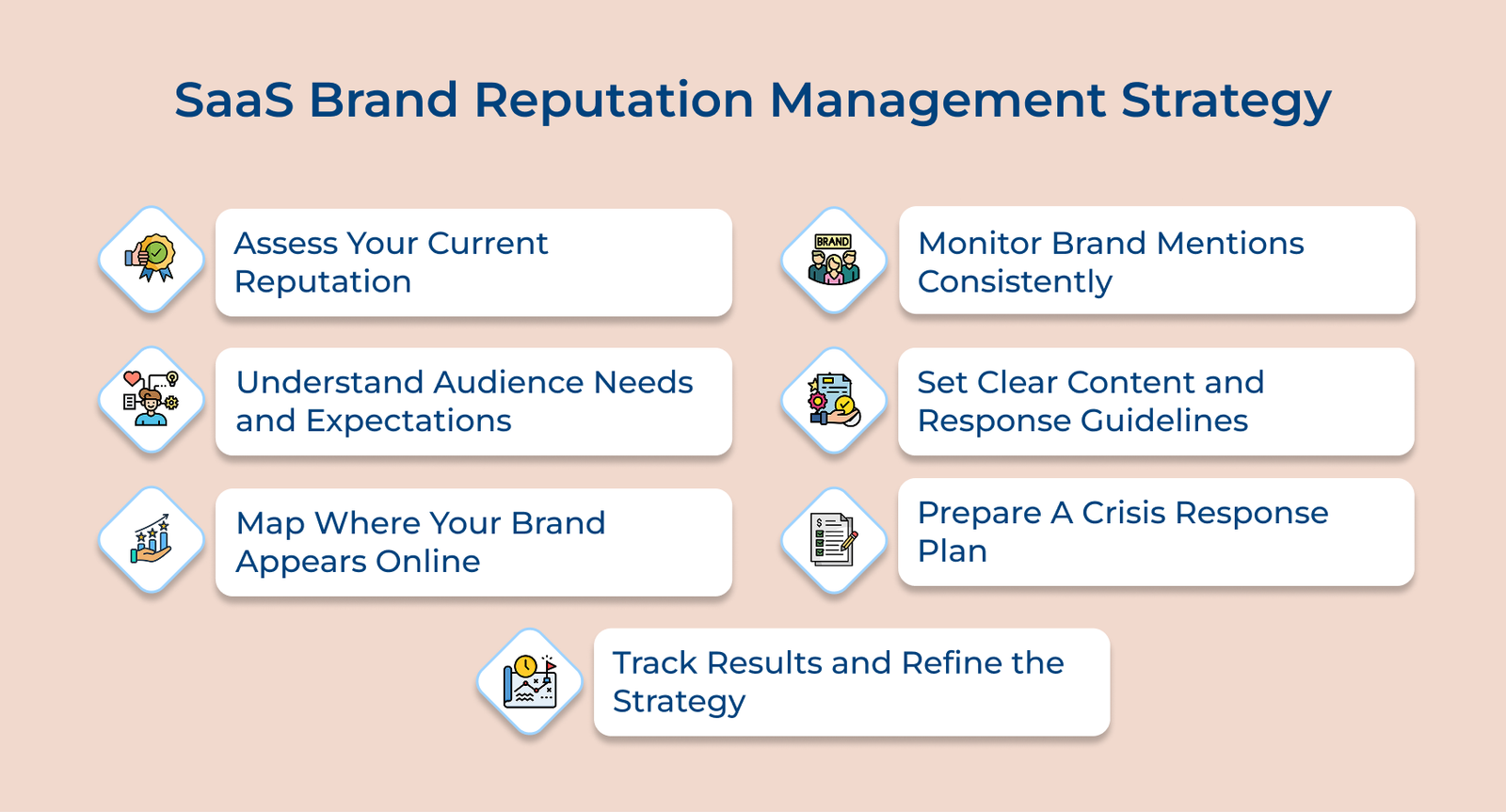
1. Assess Your Current Brand Reputation
Assessing your current brand reputation is the starting point for any effective reputation management strategy. It helps you understand how your brand is currently perceived and where things may be falling short. The honest evaluation reveals gaps that need fixing and sets a baseline for measuring future progress, giving you a clear direction instead of guessing what to improve.
Key sources:
- Social media analytics: Monitor how people are talking about your brand across platforms by tracking sentiment, mentions and engagement.
- Review platforms: Look at customer reviews on platforms like G2 or Capterra. It gives you direct feedback on what your users appreciate and where they’re frustrated.
- Customer support data: Review support tickets, chat logs and call notes to spot recurring complaints. It helps highlight weak spots in your service or product that may be damaging your reputation.
- Industry forums: The discussions can surface technical complaints or praise that don’t always make it to official feedback channels.
Implementation starts by collecting data from each of the sources and sorting it into clear categories. Use simple tools like keyword analysis or sentiment tracking to organize the feedback. The result is a practical, fact-based snapshot of your brand’s current standing and a list of clear, actionable areas that need your attention.
2. Research Target Audience Needs and Expectations
You need to start with a clear understanding of what they care about. It means going beyond assumptions and digging into real behavior. When you know what your users value and where they’re frustrated, you can tailor your support to meet those needs.
One way to get valuable insights is by studying how people move through your digital spaces. Watch how they interact with your website, which posts they respond to on social media and what kind of content gets ignored. The patterns give you a realistic picture of what matters to them and highlight areas where you may be falling short.
Pro tips:
- Use short, well-placed micro-surveys instead of long forms to get better feedback at critical points in the user journey.
- Separate your research by user type as the enterprise clients often need very different things than small business users.
3. Map Your Digital Presence Landscape
Understanding where your brand appears and interacts online is essential if you want to stay on top of your reputation. Mapping your digital presence means taking a close look at all the places like websites, social media accounts, forums and review platforms. It is supposed to include everywhere your customers talk about or engage with your product.
Key takeaways:
- Start with a complete audit of your own channels. List every site, blog, noting how responsive each is.
- Identify third-party platforms using monitoring tools, and establish benchmarks for comparison over time.
- Build a dashboard that pulls the data together for quick insights and easier decision-making.
4. Monitor Brand Mentions Across Platforms
Monitoring brand mentions means keeping an eye on what people are saying about your brand online – be it praise, criticism, or general discussion. Staying on top of the conversations allows you to respond quickly to feedback, spot potential problems before they escalate and stay connected with your audience.
Set Up Comprehensive Monitoring Tools
Use tools like Mention or Brandwatch to monitor brand mentions across multiple platforms simultaneously. The tools can recognize different spellings of your brand name and related keywords, helping you catch conversations you might otherwise miss.
Fine-tuning your setup is essential. Regularly review your keyword filters, adjust them to reflect new features or shifts in customer language and tweak your alert settings to cut out the noise while still catching what matters.
Create a Real-Time Notification System
Set your notifications to prioritize alerts based on source and tone. If a customer with a large following posts a negative review, your team should know about it immediately. Define clear protocols for how different types of mentions are handled and who needs to be involved in each case.
Refine your notification rules regularly. It includes re-evaluating which channels need the most attention, changing how sensitive your alerts are and customizing categories so they reflect your brand’s unique challenges.
Establish Daily Sentiment Tracking
Sentiment tracking helps you understand not just what people are saying, but how they feel. Tools that analyze tone and emotion can reveal if the general sentiment is shifting in a positive or negative direction. Tracking it daily allows you to catch small changes before they grow into bigger problems.
Use sentiment reports that highlight both data patterns and real customer conversations. Pair charts with direct examples so your team sees not just the numbers but the actual experiences shaping your brand each day.
5. Create Engaging Content and Response Guidelines
Creating engaging content and response guidelines builds the backbone of consistent brand communication. It ensures that no matter who’s speaking on behalf of your brand, the tone, message and values stay aligned.
Develop Brand Voice Communication Rules
Define the traits that shape how your brand speaks such as friendly, professional, direct or empathetic. Break down what that looks like in practice: which words to use or avoid, how formal or casual the tone should be and how emotion should be expressed in different types of interactions.
Include examples across scenarios like answering product questions, addressing complaints or celebrating milestones. It gives your team a clear guide on how to stay true to the brand voice while adjusting to the emotional tone of each situation.
Plan Strategic Content Calendar Themes
Start by identifying topics that matter to your audience and align with your product and industry. Mark important dates like product launches, updates or events your audience cares about. Use them as anchors around which you can build content that informs, supports or sparks conversation.
Balance your calendar with different formats like how-to guides, behind-the-scenes looks, customer spotlights or commentary on industry trends. Each piece should offer something useful or meaningful, not just fill space.
Design Response Templates for Engagement
Templates help teams respond quickly and consistently to common situations, such as resolving issues or acknowledging compliments. Keep them flexible—each message should sound like a person, not a script. Build in space for personalization so replies feel tailored, not robotic.
Review and refine templates regularly. Look at what kinds of responses lead to better outcomes and adapt them as customer expectations evolve. Use real interactions to guide improvements.
6. Build Crisis Management Response Framework
A crisis management response framework acts as your organization’s safety net when reputation is at risk. Rather than scrambling to react under pressure, the structured system helps your team respond with clarity and speed.
Key types:
- Product performance crisis: Unexpected outages, severe bugs or data security issues that directly disrupt user experience.
- Social media crisis: Rapid backlash from viral posts, employee behavior or poor public responses that spread quickly.
- Customer service crisis: Failures in support delivery, unresolved complaints from major customers or delays that paint your service as unreliable.
- Industry compliance crisis: Breaches of regulation, privacy or legal standards that carry risks of penalties and long-term credibility loss.
7. Act on Opportunities for Improvement
Turning feedback into concrete improvements is what keeps your brand reputation strategy relevant and resilient. Instead of reacting only when problems surface, acting on improvement opportunities lets you refine processes, address gaps and meet customer expectations before issues escalate.
Start by regularly analyzing performance metrics and customer feedback to spot recurring themes or problem areas. Prioritize changes by weighing their potential benefits against available resources and create focused action plans with clear goals.
Key takeaways:
- Create a scoring system that ranks improvement areas by customer impact, resource demand and fit with broader brand objectives.
- Run monthly improvement sprints to tackle selected issues without burdening your team, ensuring continuous progress.
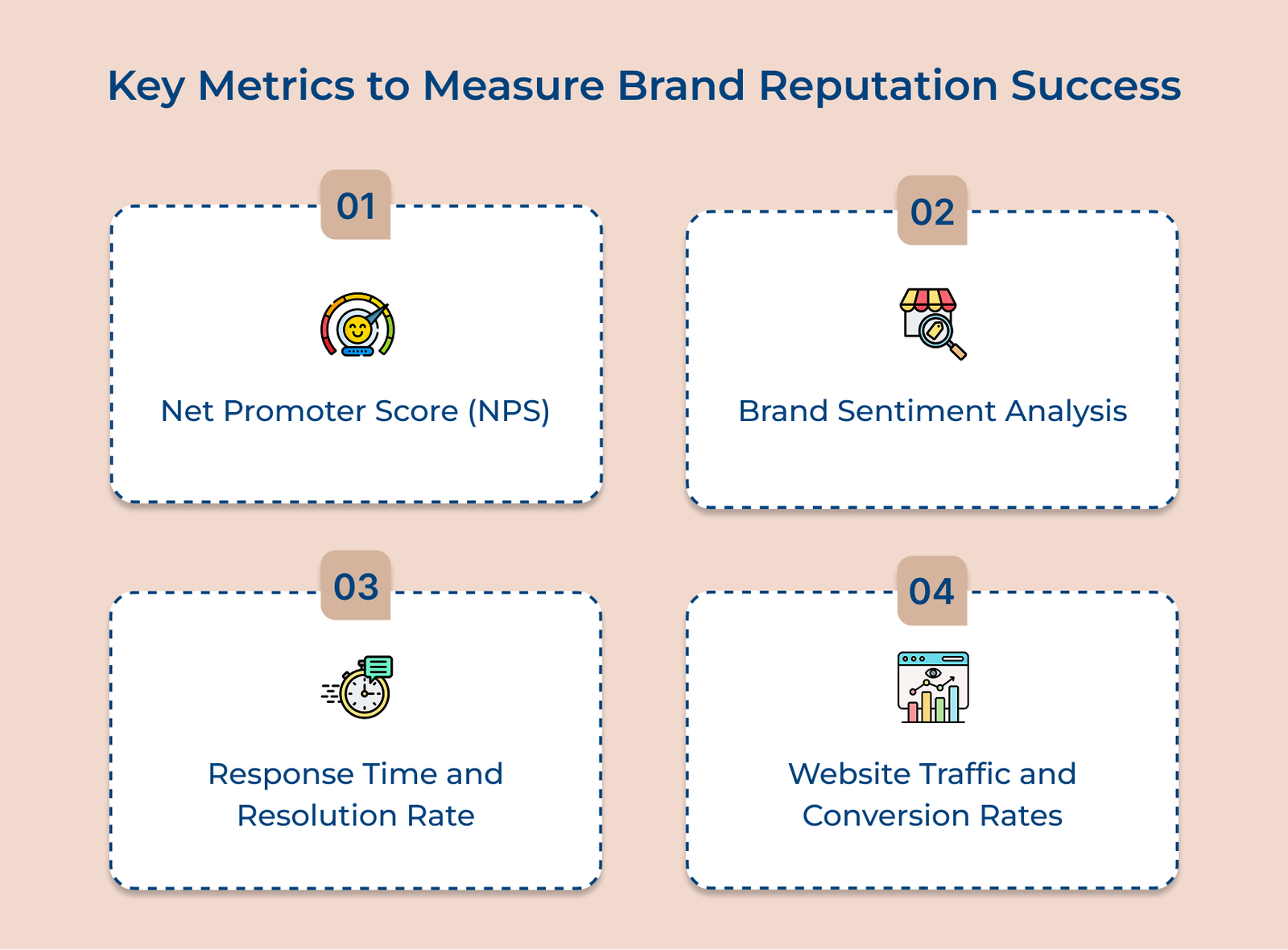
Metrics to Measure the Success of Brand Reputation Management Strategy
Check out the essential metrics you should track to ensure your brand not only survives but also flourishes through the ever-changing tides of public perception.
Key questions:
- How has customer sentiment changed since we rolled out the strategy?
- What effect has our reputation management had on attracting and keeping customers?
- How well are we handling customer issues when they arise?
- How much of the conversation in our space is centered on us versus competitors?
- Has our standing as a trusted brand in our industry improved?