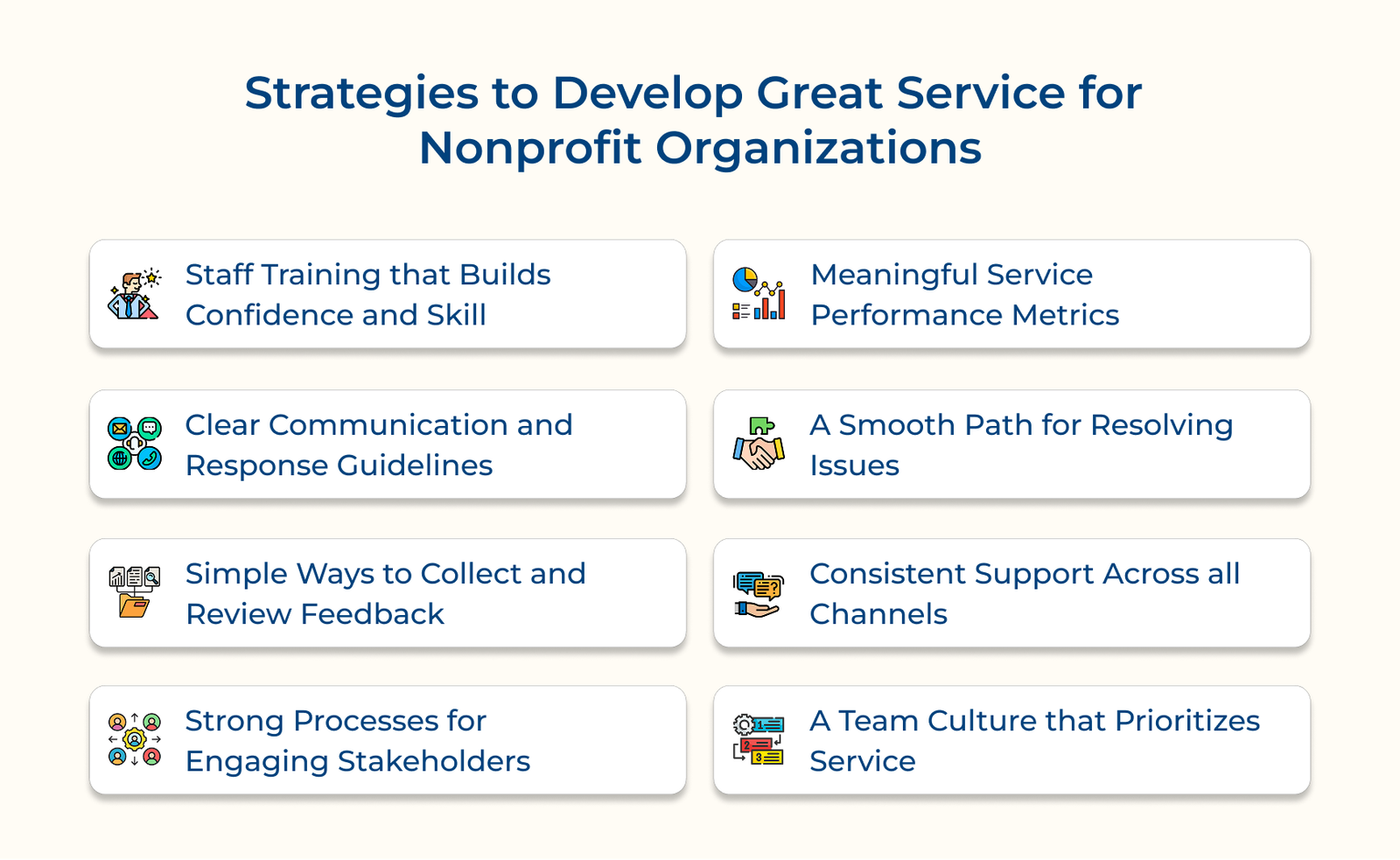
1. Implement Comprehensive Staff Training Programs
Strong service starts with preparation. A well-structured training program helps your team handle real situations with clarity and care. It also ensures everyone understands the organization’s mission and how their work supports it. When staff know what to expect and what’s expected of them, they deliver more consistent, respectful support.
Give each new team member a clear picture of their responsibilities and how they’ll interact with the people you serve. Tailor onboarding to their role so they know what tools they’ll be using, who to go to with questions and how to communicate with stakeholders effectively.
Pro Tips:
- Record great service moments and use them as teaching tools. Real interactions are more relatable and more useful than made-up scenarios.
- Let experienced staff guide newcomers. It’s an easy way to pass down practical tips and build trust across the team.
2. Develop Clear Communication Response Guidelines
Solid communication starts with clarity and consistency. Guidelines give your team a shared approach to handling questions, concerns and updates – no matter who’s speaking or the topic. When everyone knows how to respond and what tone to use, your organization comes across as trustworthy.
Templates save time, but they shouldn’t sound robotic. Create a library of pre-written responses for common questions like how to donate, volunteer or request help. Encourage staff to personalize the messages by adding names, context or a kind note. It keeps your responses quick, but still warm and genuine.
Actionable tips:
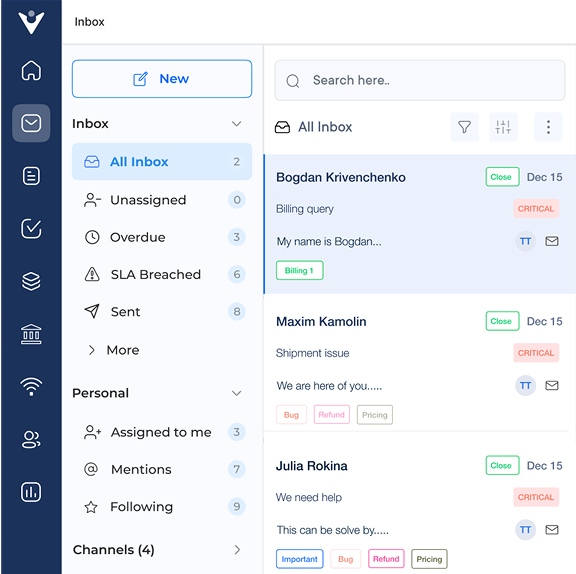
- Use color codes or tags so your team can spot high-priority messages and respond faster.
- Hold short weekly check-ins where staff share what worked and what didn’t, so you can fine-tune your templates as a team.
3. Create Efficient Feedback Collection Systems
Good service starts with listening. A feedback system helps you understand what’s working and what’s not, from the people who matter most: your stakeholders. Be it from a donor, volunteer or program participant, asking for honest input shows respect and helps you stay aligned with real needs, not just assumptions.
Use short surveys with a mix of rating scales and open-ended questions. Ratings give you a quick snapshot, while written responses explain what’s behind the numbers. It gives you both the data and the stories needed to make thoughtful changes.
Key takeaways:
- Keep one in your office with colorful comment cards to invite feedback from walk-ins and volunteers.
- Turn key insights into simple visuals or quick summaries to keep your team and your community in the loop.
4. Build Strong Stakeholder Relationship Processes
Strong relationships don’t happen by chance; they’re built through consistent effort. Having a system in place helps you stay in touch with donors, volunteers, program participants and partners. Think of it like tending a garden where each person needs the right kind of attention to stay engaged and feel valued.
Use detailed profiles to track what matters to each stakeholder. If a donor casually shares their interest in youth education, jot it down. When you start a new program that fits their interest, you already know who to tell. The little connections show you’re paying attention and that matters more than you might think.
Best practices:
- Schedule casual “coffee chats” with one or two stakeholders each month to check in and informally hear their thoughts.
- Use a shared celebration calendar to remember birthdays, anniversaries or special milestones. It’s a small gesture that leaves a big impression.
5. Establish Quality Service Performance Metrics
Metrics are like a compass as they help your nonprofit stay on course. You get a clear picture of what’s working or where to adjust by measuring how well you serve donors, volunteers and program participants. Just like checking vital signs tells a doctor about a patient’s health, your service data gives honest feedback about your organization’s well-being.
Choose a few key goals tied to your mission. If you work in youth education, for instance, you might track how quickly you respond to parent questions, how many students join your programs or how satisfied families are with the experience. The numbers give your team direction and help them see how their work makes a difference.
Pro tips:
- Start meetings with a “service win of the week”, highlight someone who went above and beyond in a way that reflects your values.
- Use a big, colorful wall chart to show weekly progress toward service goals. It’s a low-tech but powerful way to keep your team informed and motivated.
6. Design Streamlined Issue Resolution Procedures
Every nonprofit faces bumps in the road, but what matters most is how you respond. A clear issue resolution process gives your team the tools to handle problems calmly and consistently. Think of it like a GPS for challenges: when everyone knows the steps to take, issues don’t spiral or get ignored.
Simple checklists or flowcharts can guide staff through frequent problems. If a donor notices a billing mistake, for example, your team should know exactly who to notify, how to follow up and what to say. The clarity means fewer dropped balls and more trust from your community.
Actionable tips:
- Practice with real-life examples during team lunches or meetings, so staff feel ready when something goes wrong.
- Create a shared “solutions log” where staff can document smart fixes they’ve used. Others can learn from them and apply similar customer ideas when new problems come up.
7. Maintain Consistent Multi-Channel Support Systems
People don’t all communicate the same way; some prefer email, others message you on Facebook and some still want to pick up the phone. That’s why nonprofits need support systems that work smoothly across multiple channels. When you’re easy to reach in the ways your stakeholders already use, you build stronger, more reliable connections.
Your communication tools should talk to each other. If a volunteer asks a question over social media and then follows up by email, your team should see the full conversation in one place. It helps you respond faster and with better context, so you don’t need to ask someone to repeat themselves.
Best practices:
- Do a quick monthly test of each contact method (email, phone, chat, etc.) to check for slow responses, broken links or confusing menus.
- Rotate team members through different platforms because it helps everyone stay sharp and share useful tips on what works best where.
8. Enhance a Positive Team Service Culture
Great nonprofit service doesn’t come from checklists; it comes from a team that cares. When your staff feels respected and supported, they pass that same care along to donors, volunteers and community members. A strong internal culture makes great service something people want to give, not just something they’re told to do.
Simple acts of appreciation can go a long way. When someone handles a touch call with kindness or helps a volunteer feel welcome, take a moment to recognize it. The small celebrations build habits and set a clear example for the rest of the team.
Key takeaways:
- Start a “service shout-out” wall where teammates leave sticky notes calling out everyday moments of great service.
- Run monthly themes like “Listening Month” or “Follow-Up February” with friendly peer challenges that keep things fun and focused.
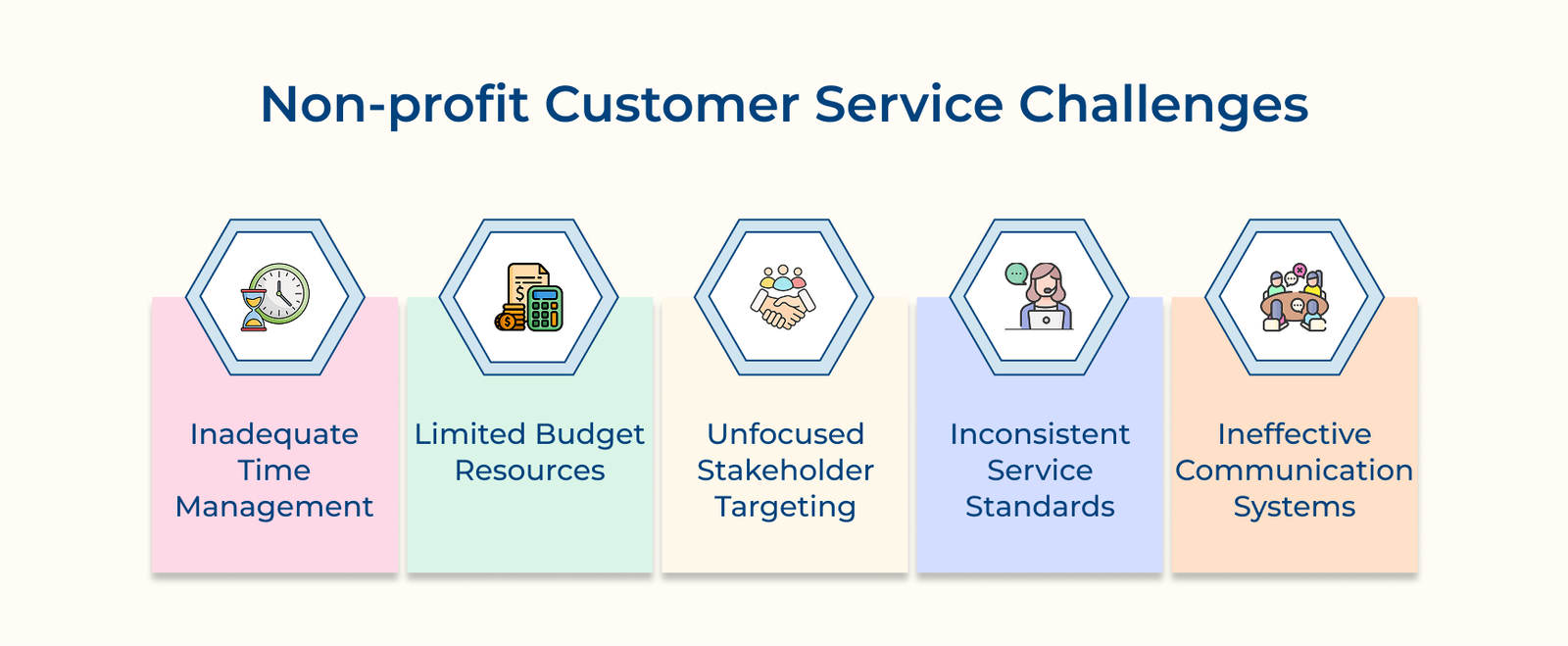
Non-Profit Customer Service Challenges
Check out the common challenges nonprofits face when delivering customer service and learn how to navigate them without compromising your mission or impact.