Top 9 Customer Engagement Ideas for Businesses in 2026
Explore some practical customer engagement ideas. Learn how businesses connect more meaningfully with customers, improve loyalty and stay relevant in a rapidly changing market.

Explore some practical customer engagement ideas. Learn how businesses connect more meaningfully with customers, improve loyalty and stay relevant in a rapidly changing market.
Keeping customers interested and loyal isn’t easy. With endless options and shrinking attention spans, many businesses struggle to hold on. The way forward is straightforward: focus on genuine engagement. That means moving past generic tactics and creating interactions that feel personal at every step of the journey. Fully engaged customers represent a 23% higher share of profitability and revenue.
In this guide, we’ll be going through the practical customer engagement ideas that have proven effective across industries. The ideas range from using AI to deliver personalized experiences to cultivating communities that keep customers connected. Each approach is straightforward and actionable, so let’s dive in to understand how these strategies will help you create loyalty that lasts.
Customer engagement refers to building a real connection with the people who use your products or services. It’s not just about making a sale; it’s about creating a relationship that keeps people coming back. Engagement happens across every touchpoint: emails, support calls, social media, your website and even in-store visits. What makes it effective is when each interaction feels relevant, consistent and useful.
Take a coffee shop, for example. If it notices someone always orders oat milk lattes on Friday mornings, it can send a timely offer or a small reward. The small act builds loyalty because it shows the business is paying attention.
Key principles:
Let’s go through the key ideas that demonstrate why investing in customer engagement should be a priority for your business.
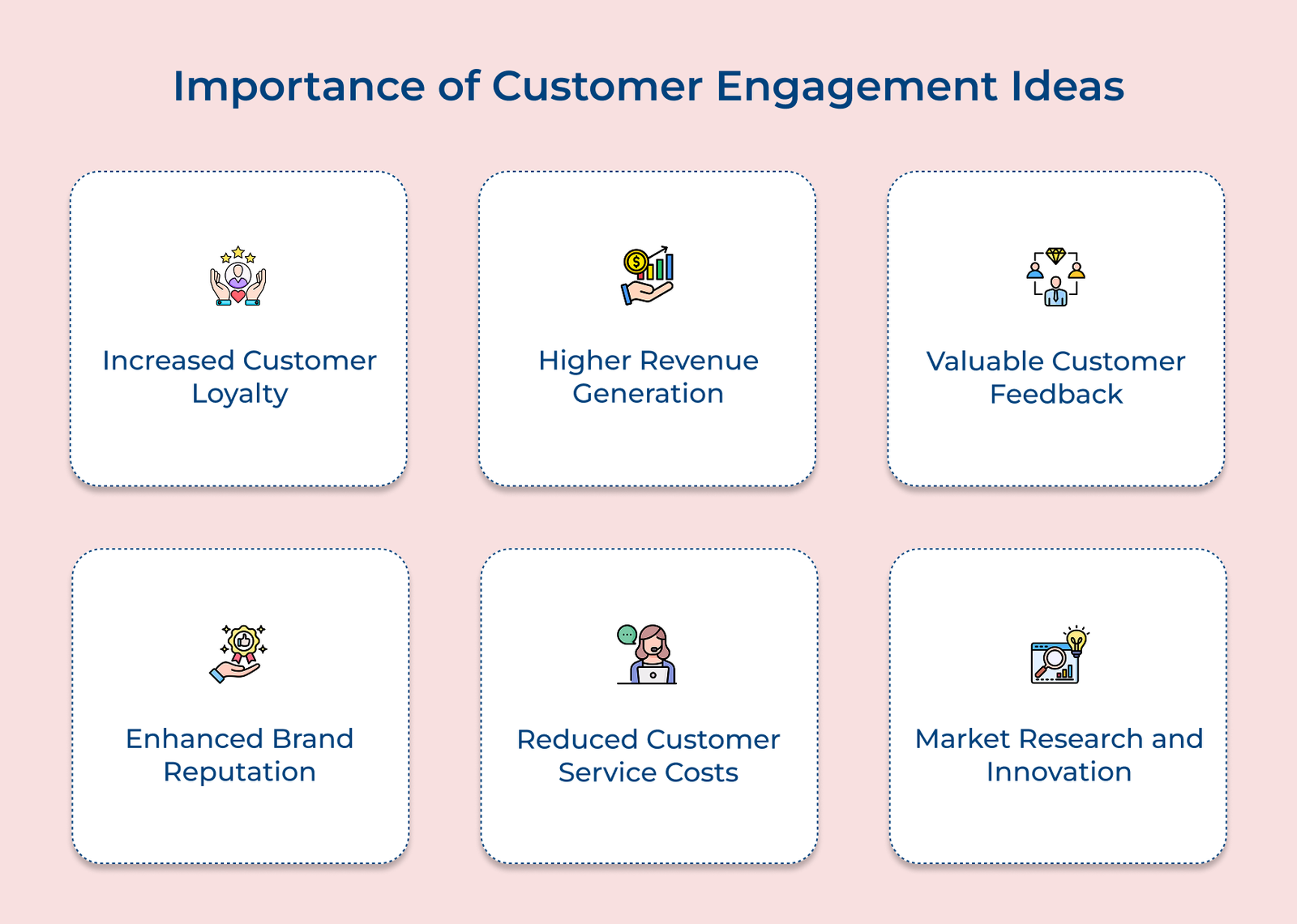
Increased Customer Loyalty
When you stay in regular, meaningful contact with your customers, be it through a quick check-in email or a reply on social media, it helps build trust. The ongoing connections make people more likely to stick with your brand, even if a cheaper option comes along.
Higher Revenue Generation
Engaged customers don’t just buy once, they come back. When you understand what they like and recommend things they need, they’re more likely to make repeat purchases. It’s like getting advice from someone who knows you well, it just makes sense and it often leads to better decisions.
Valuable Customer Feedback
People who feel connected to your business are more likely to tell you what’s working and what isn’t. Instead of guessing what your customers want, you can hear it directly from them. The feedback helps you make smarter decisions and fix problems before they grow.
Enhanced Brand Reputation
When customers are happy, they talk. They tell friends, leave reviews and share their experiences online. They do it not because they were asked to, but because they want to. Word-of-mouth is powerful and it brings in new customers who already trust you before they’ve even bought anything.
Reduced Customer Service Costs
When you’re engaged with your customers, problems get spotted and solved faster. A quick message or helpful reply can prevent a small issue from becoming a big complaint. It saves time, money and stress for everyone.
Market Research and Innovation
Your most engaged customers can help you see what’s coming. Their questions, comments and ideas often point to trends before they show up in market reports. If you’re listening, you can stay one step ahead and adapt before your competitors even see the change coming.
Below are the essential elements that can transform your customer interactions from simple transactions into meaningful relationships.
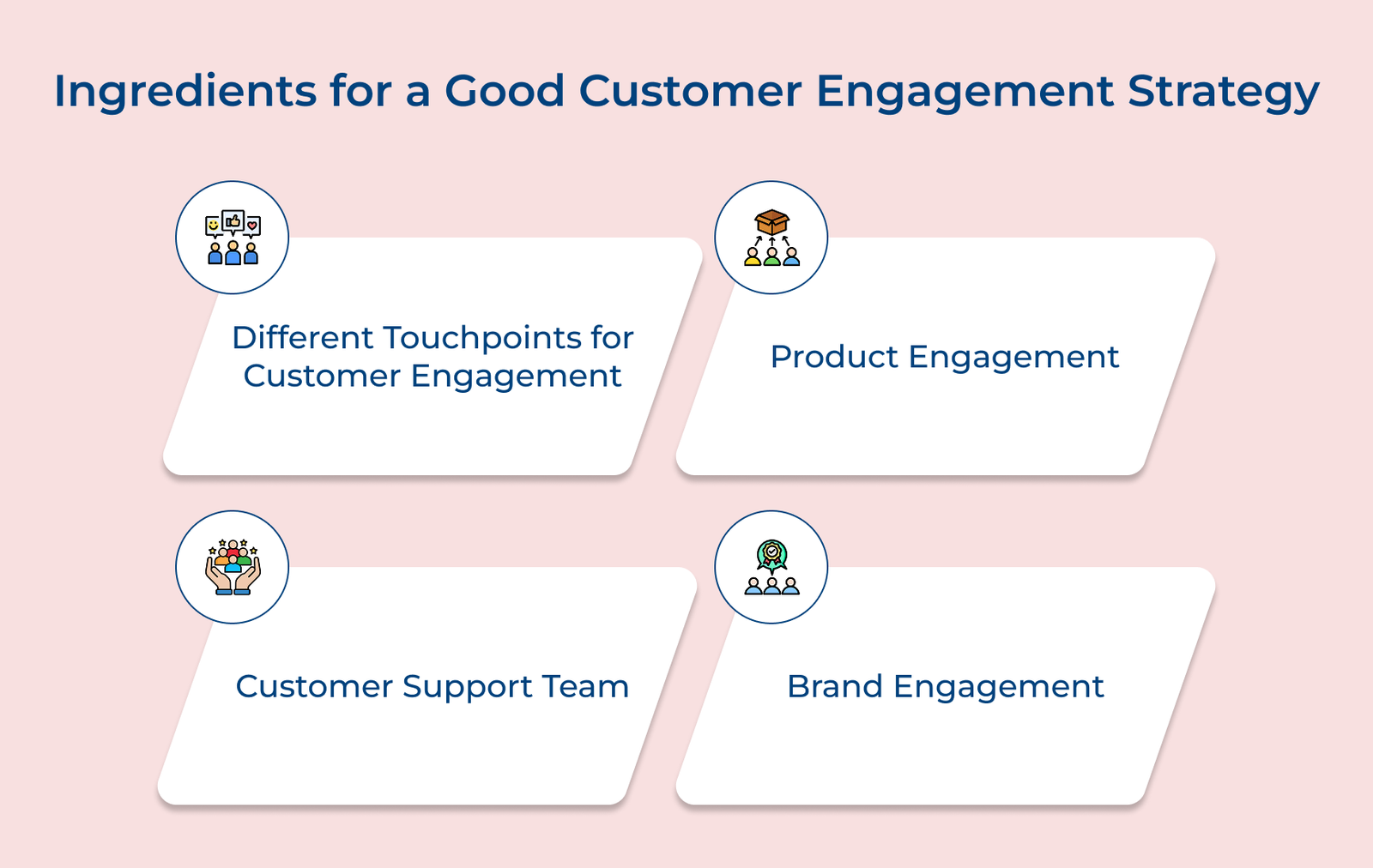
Different Touchpoints for Customer Engagement
Customers connect with your brand in many ways like online, in person, through apps, support chats or social media. Each of the moments is a chance to strengthen the relationship. Think of them as chapters in a shared story.
All channels need to work together to make that happen. When someone comments on Instagram, sends an email or walks into your store, they should get the same thoughtful, consistent experience. It’s how trust is built.
Product Engagement
The core of your relationship with customers often begins and grows with how they experience your product or service. It’s not just about if the product works, but how it fits into their daily lives and meets real needs.
Paying close attention to how customers use your product, what they love and where they get stuck helps you improve. You can make updates that matter – whether that means simplifying a feature or adding something new by reviewing feedback and usage patterns regularly.
Customer Support Team
Support teams are often the voice customers hear when they need help most. It’s not just about solving problems but about doing it with empathy and clarity. The moments can turn frustration into loyalty.
That’s why your support team needs more than just answers. They need tools, training and the trust to make decisions that prioritize the customer’s experience. When done right, support becomes a lasting positive memory instead of a temporary fix.
Brand Engagement
Your brand isn’t just a logo or a slogan; it’s how people feel when they interact with you. Every touchpoint should reflect your personality and values. The emotional connection can be the difference between a one-time customer and a long-term supporter.
Keep your tone, messaging and visual style consistent. Whether it’s a tweet, a product page or an email, customers should always feel like they’re talking to the same “person.”
Marketing Communications
Marketing is how you keep the conversation going. But it’s not just about promotions, it’s about sharing something meaningful. Useful tips, new features, a thank-you note as small messages can deepen the connection.
A strong communication plan doesn’t just ask for attention—it respects it. It means sending the right message at the right time and making every interaction count.
Let’s go through the best customer engagement ideas that can transform your approach and help you enhance lasting connections.
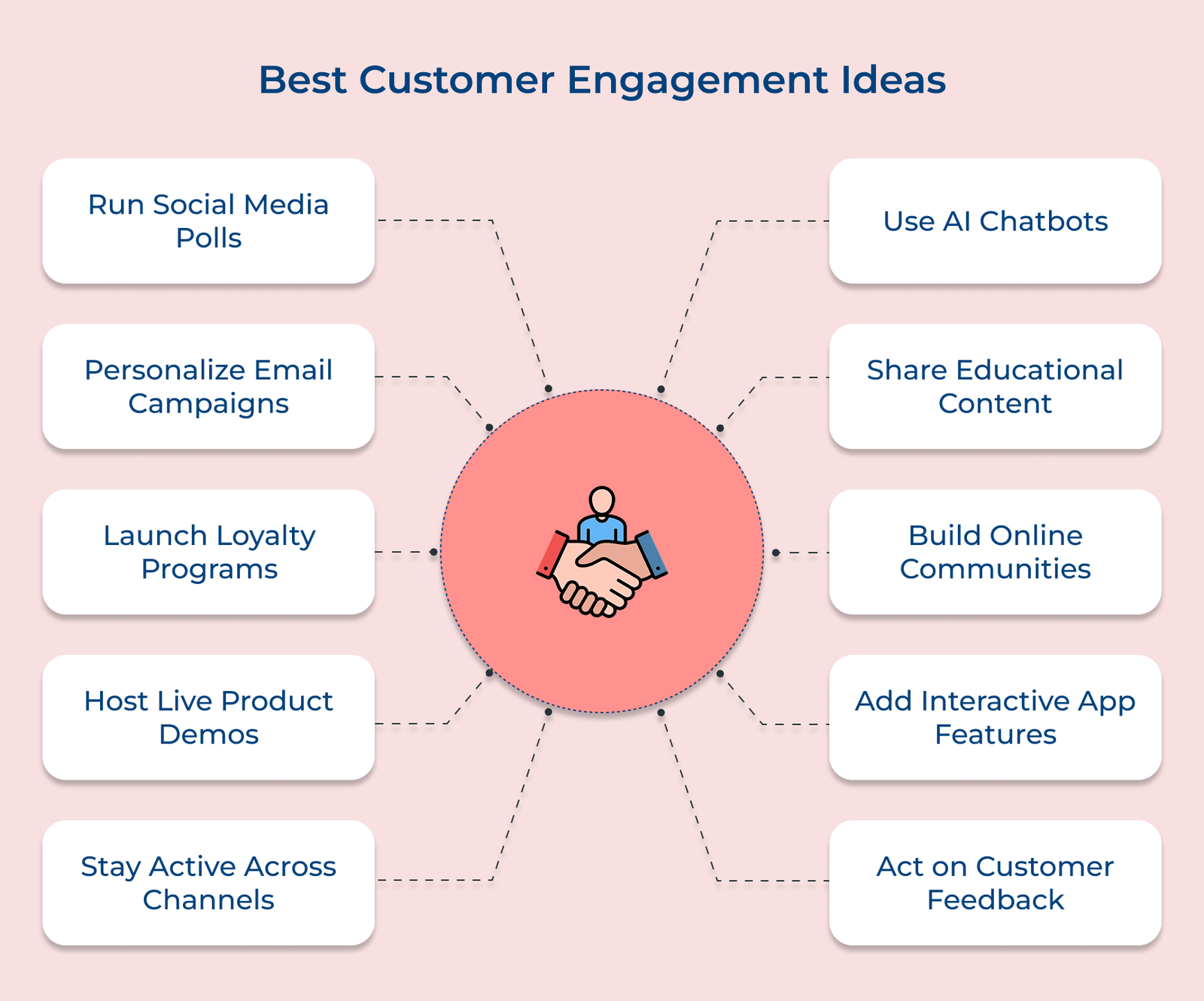
Polls can be a simple and effective way to hear directly from your audience. They invite quick responses while opening the door to deeper conversations. The answers can guide small but smart changes in your messaging or product offerings.
Design Questions That Matter Most
Skip the generic stuff. Instead, ask about topics your audience cares about, talks about or struggles with. Good poll questions reflect real curiosity and encourage people to weigh in, not just tap an answer or scroll away.
Schedule During Peak Engagement Time
Timing matters. Use your platform’s analytics to figure out when your followers are most active and schedule your polls accordingly. A well-crafted poll won’t do much if no one sees it.
Track Poll Performance Metrics Daily
Don’t just collect responses; make sure to learn from them. Look at which polls get people talking and what choices stand out. Use it to shape future posts, campaigns or even product tweaks. The more your audience sees their input reflected in what you do, the more likely they are to keep engaging.
Personalized email marketing focuses on sending the right message to the right person at the right time. Instead of blasting the same email to everyone, you tailor the content based on what each customer cares about. It makes your emails feel more like helpful suggestions than sales pitches and that’s what keeps people interested.
Key considerations:
1. Customer segmentation strategy: Start by sorting your audience into meaningful groups. Look at what they’ve bought, how often they shop or what pages they visit most. Let’s assume that a sports gear store might separate weekend hikers from marathon runners so each gets updates that match their interests.
2. Content personalization approach: Go beyond just using someone’s name. Change up subject lines, images or product suggestions based on what that group likes. It makes each email feel like it was crafted specifically for the recipient.
3. Timing and frequency planning: Not everyone wants to hear from you all the time. Some people love regular updates, while others only open emails when there’s a big sale. Pay attention to their habits and adjust how often and when you send messages. It shows you’re listening and it pays off in better open or click rates.
Creating a loyalty program is a practical way to turn one-time buyers into regular customers by offering rewards that matter to them. When people feel recognized, they’re more likely to stick around and tell others why they did.
Key ideas:
Live webinars offer a hands-on way to connect with your audience, letting them see your product in action and ask questions as they come up. The direct interaction builds clarity as people walk away with a better understanding of what you offer and how it fits their needs.
Think of webinars as informal, virtual workshops. You can walk customers through a process, explain a tricky feature or offer real-world tips they can apply right away. Since the format is live, you’re not stuck to a script. You can adjust based on the questions people ask or the areas they’re most interested in.
Best practices:
AI-powered chatbots work like digital front-desk assistants available 24/7 to help customers get quick answers, find what they need or start a conversation. They fill the gap when human agents aren’t available, offering real-time responses that keep things moving and show customers they’re being looked after, no matter the time of day.
Strategic Conversation Design
Start by identifying the most common questions or tasks customers bring up and build clear, logical conversation paths around those. The goal is to make the interaction feel as natural as talking to a real person. Include memory of past interactions so follow-up conversations feel connected and thoughtful, not like starting over each time.
Personality and Brand Voice Integration
Your chatbot should sound like a part of your team. Use your brand’s tone, be it casual, friendly, formal or quirky and carry it through in the bot’s responses. The consistency helps customers feel like they’re still engaging with you, not just some generic tool.
Seamless Human Handoff Protocol
Make sure your chatbot knows its limits. Set up clear points where it can recognize when a human should step in, especially if the question is complex or the customer is frustrated. When it hands over the conversation, it should bring the context along so customers don’t have to start from scratch again.
Educational content helps customers feel more confident and capable when using your product or service. When you regularly share useful, easy-to-understand information, you’re not just answering questions; you’re helping people get the most out of what they’ve already invested in. It builds trust, encourages loyalty and turns satisfied users into advocates.
Key types:
When customers regularly engage with educational content, they become more confident and successful with your products. It leads to increased satisfaction, higher retention rates and customers who actively recommend your brand to others based on the value they’ve received.
An online community platform gives customers a place to connect, exchange ideas and support each other. It’s a space where real conversations happen, where people share what’s worked for them, ask questions and learn from others who use your products or services too.
Building a strong community takes more than just launching a forum. You need to actively encourage participation, highlight helpful voices and create a welcoming environment. Think of it like an ongoing meetup where customers can swap tips, share wins and help each other get more out of what they’re already using.
Pro tips:
A customer feedback loop system is a practical way to gather, analyze, understand and act on what customers have to say. It creates a clear path from their opinions to real changes in your business. When done right, it shows customers that their voices shape the experience and that builds trust over time.
Create Simple Feedback Collection Methods
Make it easy for people to share their thoughts. Use short, clear surveys with straightforward questions and offer multiple ways to give feedback, like in-app forms, post-purchase check-ins or follow-up emails. When feedback feels easy and natural, more customers are willing to share.
Build Quick Response Action Plans
When someone gives feedback, they expect to see that it leads to something. Set up a system that quickly sends their input to the right team, organizes ideas based on urgency and tracks follow-through. A visible response. not just a thank you- shows customers that their feedback matters and keeps them engaged.
An omnichannel approach creates a consistent and connected customer experience across all touchpoints. It makes sure they get the same level of service and messaging, no matter where or how they interact with your brand. The steady experience helps build trust and makes each step of the customer journey feel smoother.
The customer engagement idea works by linking customer data, actions and conversations across all platforms. Think of it like weaving a net as customers can move from one point to another without starting over or feeling disconnected.
Below are the notable examples of companies that have mastered the art of customer engagement through innovative approaches.
1. Starbucks
Starbucks uses its mobile app and rewards program to make the customer experience fast, personal and consistent. Every visit becomes a little more convenient with features like mobile ordering, customized drink suggestions.
What started as a place to grab coffee has become part of many people’s daily ritual. The personalized offers and easy app experience encourage larger orders, all while making the customer feel like the brand knows them.
2. Nike
Nike connects with customers through its fitness apps and online communities. They offer free workouts, training tips and progress tracking, all while bringing people together around shared fitness goals.
Nike has become a partner in people’s fitness journeys by offering more than just products. The mix of motivational content, expert advice and group challenges keeps users engaged as well as turns regular customers into loyal fans.
3. Sephora
Sephora blends digital tools with in-store perks through its Beauty Insider program. Customers can try-on products virtually, get tailored suggestions, watch tutorials and attend exclusive events—all connected through the app.
The mix of useful features and community interaction builds a strong sense of trust and keeps customers coming back. Be it them browsing online or walking through a store, shoppers feel like they’re part of something and get real help finding what works for them.
4. Amazon Prime
Amazon keeps customers engaged through its Prime membership, which includes fast shipping, special discounts, streaming content and exclusive shopping events like Prime Day. They continue to add new perks to keep members interested.
The setup keeps customers shopping with Amazon instead of looking elsewhere. Prime members buy more often and try out more services. It makes the subscription feel worthwhile and hard to give up.
5. Spotify
Spotify uses data to make each listening experience feel personal. Playlists like Discover Weekly and Wrapped highlight users’ tastes. The social features, like sharing and collaborative playlists, keep things interactive.
The tools help Spotify feel like more than just a streaming service, it becomes part of users’ daily lives. The personal touch and social engagement lead to lots of word-of-mouth promotion.
Selecting the right customer engagement idea is crucial for your business success as it impacts your customer relationships. Check out how to make an important decision effectively.
Key questions you can consider:
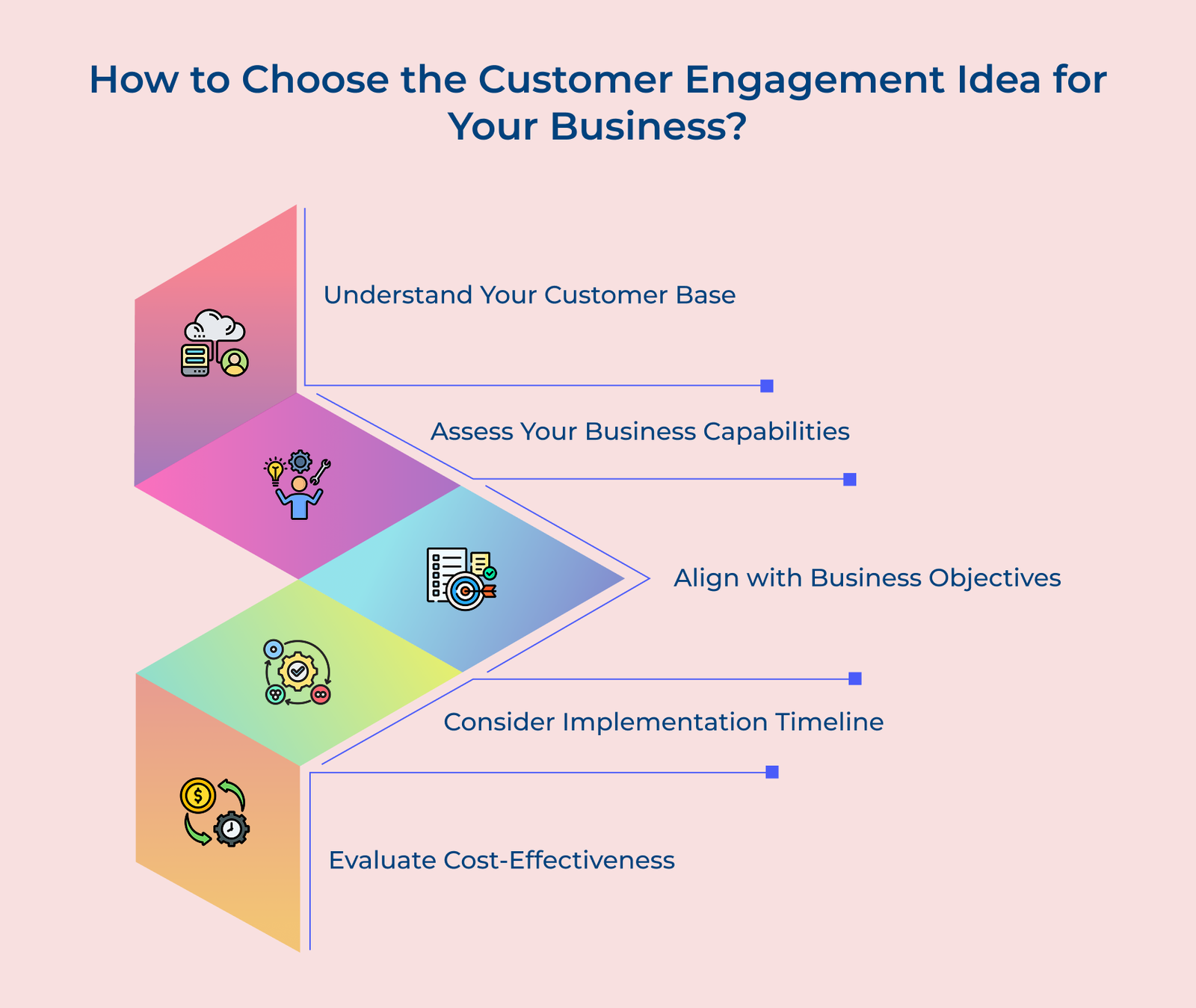
Start by digging into your customer data to understand their behaviors, preferences and pain points. Consider their age, demographics, digital literacy and communication preferences. The more you know how your customers think and behave, the easier it is to engage them in ways that feel natural.
Before jumping into any new idea, take a hard look at your current setup. A great idea isn’t much help if you can’t follow through. Choose strategies that fit with your current abilities or that you can realistically build toward.
Make sure your engagement efforts support what you’re trying to achieve overall. If your goal is to keep more customers coming back, pick ideas that help build relationships over time. If you’re focused on driving sales, look for approaches that guide customers toward making a purchase.
Some things can get off the ground quickly, like starting an email newsletter. Others, like building an online community, take more time to plan and grow. Choose a mix that gives you some quick wins while still setting you up for long-term impact.
Be practical about what each idea will cost—not just money, but time and effort too. Include things like tools, training and ongoing support. Then compare the costs to what you expect in return, whether that’s more repeat business, happier customers or higher sales.
Implementing customer engagement strategies isn’t about chasing the latest trend – it’s about building real connections that matter. As we’ve seen, small, thoughtful actions like personalizing communication, listening to feedback and creating a consistent experience across channels can change how people feel about your brand.
What makes engagement work is staying close to your customers. It means paying attention to what they need, being honest in how you communicate and showing up for them in meaningful ways. Tools and technology help, but it’s your ongoing effort to stay connected that builds trust. Customer engagement isn’t something you check off a list – it’s a continuous process. The more you listen, learn and adapt, the stronger your relationships will become.

Focus on listening, not just talking. Start by learning what your customers care about—look at their behavior, ask for feedback and use what you learn. Then build on that with helpful emails, real conversations on social media and rewards that feel worthwhile. The goal isn’t to push messages, it’s to create a back-and-forth that makes people feel seen and supported.
Personalization begins with understanding who your customers are. Use what you know about their habits and preferences to offer things that make sense for them—np matter it’s a product suggestion, a reminder or a thank-you note. Small touches go a long way when they’re timely and thoughtful. Tools can help scale it, but the key is to keep it feeling personal.
Smart companies use chatbots for quick answers, apps that make shopping easier and recommendation systems that feel spot-on. Others use virtual tools to help people see how something works before they buy it or community forums where customers help each other out. It’s not about having the latest gadget, it’s about using tech to make things easier and more human.
Keep it simple. Use free tools to send useful emails, reply to messages on social media and thank your customers regularly. A friendly, helpful response goes further than fancy software. What small businesses often do best is being personal by showing up, following through and making people feel appreciated.
Enough to stay connected, not so much that it gets annoying. The right frequency depends on your audience and what you’re sharing. Pay attention to what your customers respond to. If they’re opening, clicking or replying, you’re probably on the right track. If not, it may be time to slow down or adjust the message. Think quality over quantity. Remember that quality and relevance matter more than quantity in building lasting customer relationships.
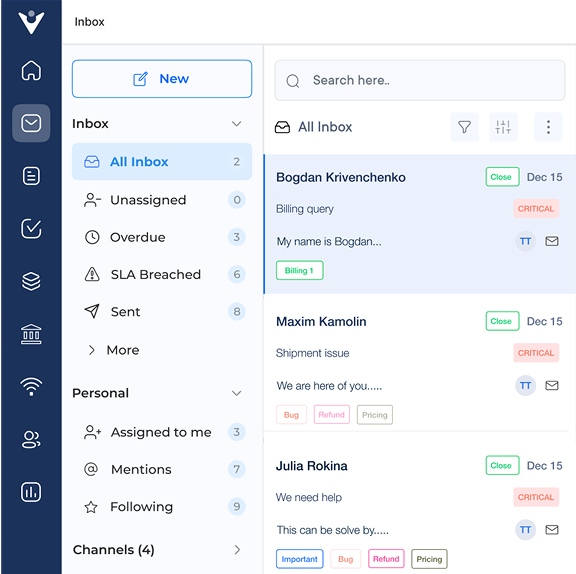
Grow Customer Relationships and stronger team collaboration with our range of products across the Conversational Engagement Suite.
Omnichannel Customer Support & Help Desk Software
AI Enabled Business Messaging and Chatbot Software
Sales Engagement & CRM Software
Call Center Software & Virtual Phone System
Product Marketing & Experience Platform
Customer Experience & Feedback Management Software

 Top 9 Customer Service Initiatives Ideas to Use in 2026
Scroll to top
Top 9 Customer Service Initiatives Ideas to Use in 2026
Scroll to top