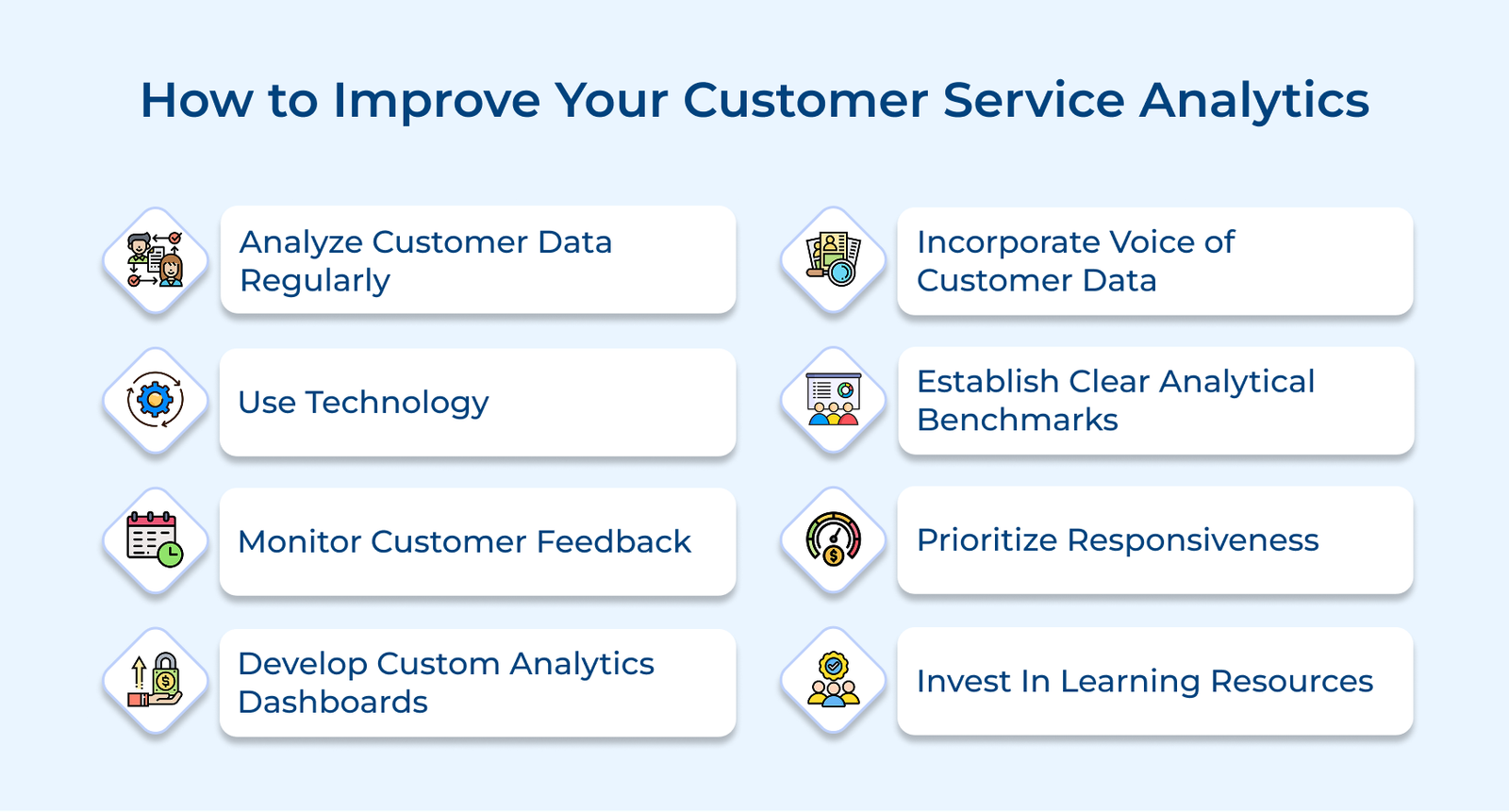
1. Analyze Customer Data on Schedule
Scheduled data analysis allows teams to understand customer behavior over time, not just when something goes wrong. Reviewing data regularly helps to identify patterns early, address potential issues before they escalate and make more informed decisions rooted in evidence rather than assumptions.
Teams can set up scheduled analysis by reviewing key metrics every week and examining long-term trends more closely each month. Each session should have clear objectives and designated team members responsible for action recommendations from the data.
Take a retail company’s example here. They saw a drop in customer satisfaction after introducing weekly performance reviews. On closer look, they found that limited staff on Fridays led to longer wait times. When they shifted their schedules to cover peak hours, they saw better feedback the next month.
Pro tips:
- Set up a rotating schedule so that different team members take turns leading the analysis sessions. It will yield fresh insights and avoid missing patterns that a single reviewer might overlook.
- Document insights and actions from each review cycle in a shared knowledge base. New team members can quickly understand historical patterns and the effectiveness of previous interventions.
2. Use Technology to Enhance Analytics
Technology serves as a powerful multiplier for customer service analytics by processing vast amounts of data beyond human capacity. Modern tools can identify patterns humans might miss and handle repetitive tasks at scale.
Organizations that use technology well can access insights more quickly and reduce the time spent on repetitive data tasks. It allows analysts to focus on solving problems and making informed decisions instead of handling routine work.
Implement smart pattern recognition tools
Analytics powered by AI can spot patterns in customer interactions that are easy to miss with manual review. They help flag potential problems early and highlight what’s working well, so teams can take action faster. As these systems process more data, their ability to detect trends and anomalies becomes more reliable.
Automate regular data collection tasks
Automation transforms data collection from a manual burden into a seamless background process that happens without human intervention. Scheduled reports are pulled directly from service platforms, key metrics are shared via email and unusual data patterns are flagged automatically—all without needing constant attention from your team.
Connect different data source systems
When systems work in isolation, it’s easy to miss how issues in one channel affect another. Integrating CRM data with call center metrics, social media mentions and website analytics brings together scattered insights into a single, connected view. It makes it easier to trace problems to their root cause and understand the full customer experience.
3. Monitor All Types of Feedback
Monitoring feedback across all customer communication channels gives you a clearer picture of what your customers are really saying. Instead of relying on a small sample, the approach captures insights from every touchpoint so you don’t miss critical patterns or concerns.
Teams can monitor customer feedback effectively by tracking review platforms, analyzing post-interaction surveys, recording service calls and using social listening. Bringing all the data together in one place helps spot patterns across channels, making it easier to see if the problems are tied to specific touchpoints or signal larger issues in your service process.
Best practices:
- Create a standardized categorization system that applies across all feedback channels so you can accurately compare sentiment and issues regardless of where the feedback originated.
- Establish significance thresholds for each feedback channel based on their typical volume and customer demographics to avoid overreacting to isolated complaints that don’t represent broader trends.
4. Develop Custom Visual Analytics Dashboards
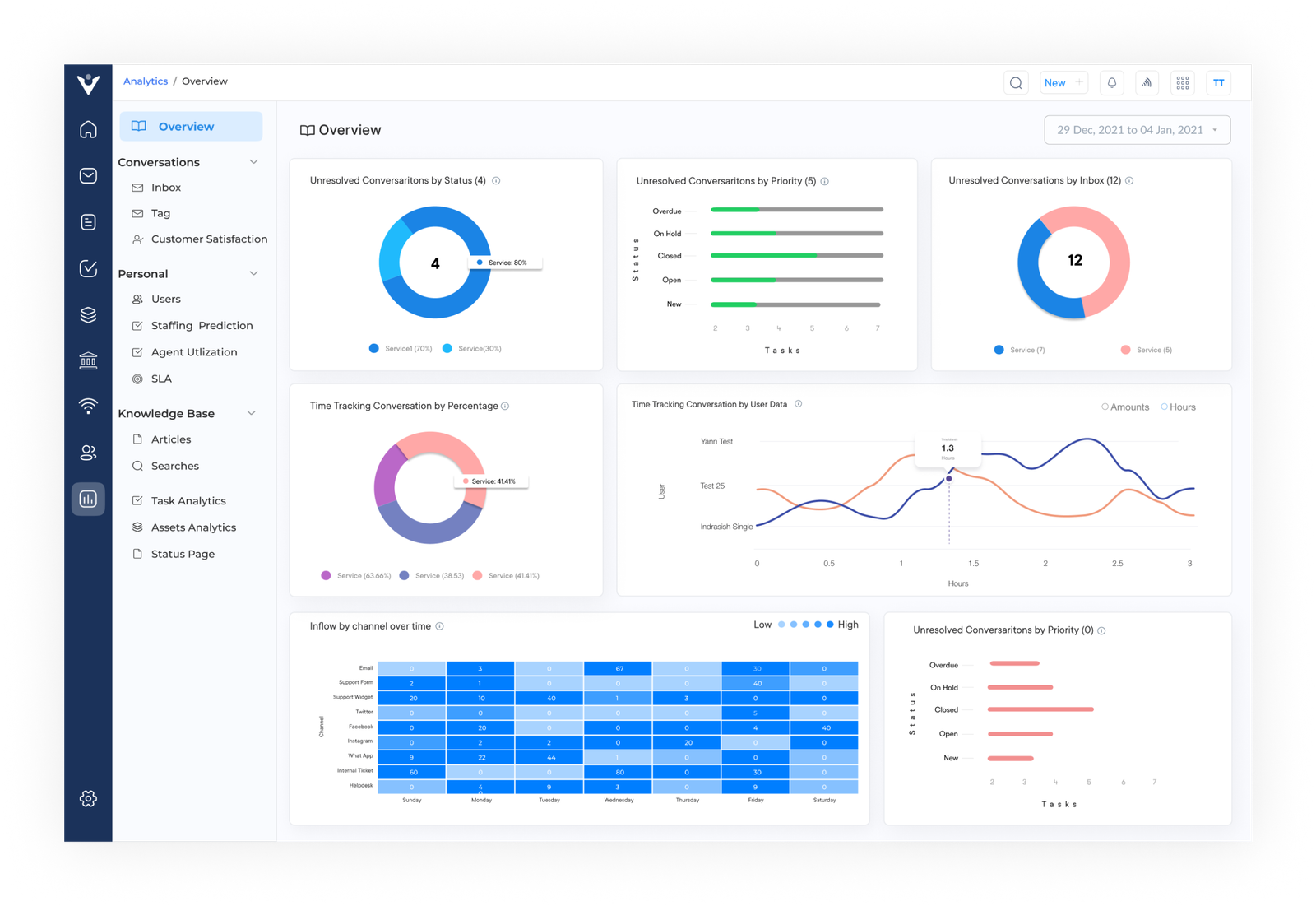
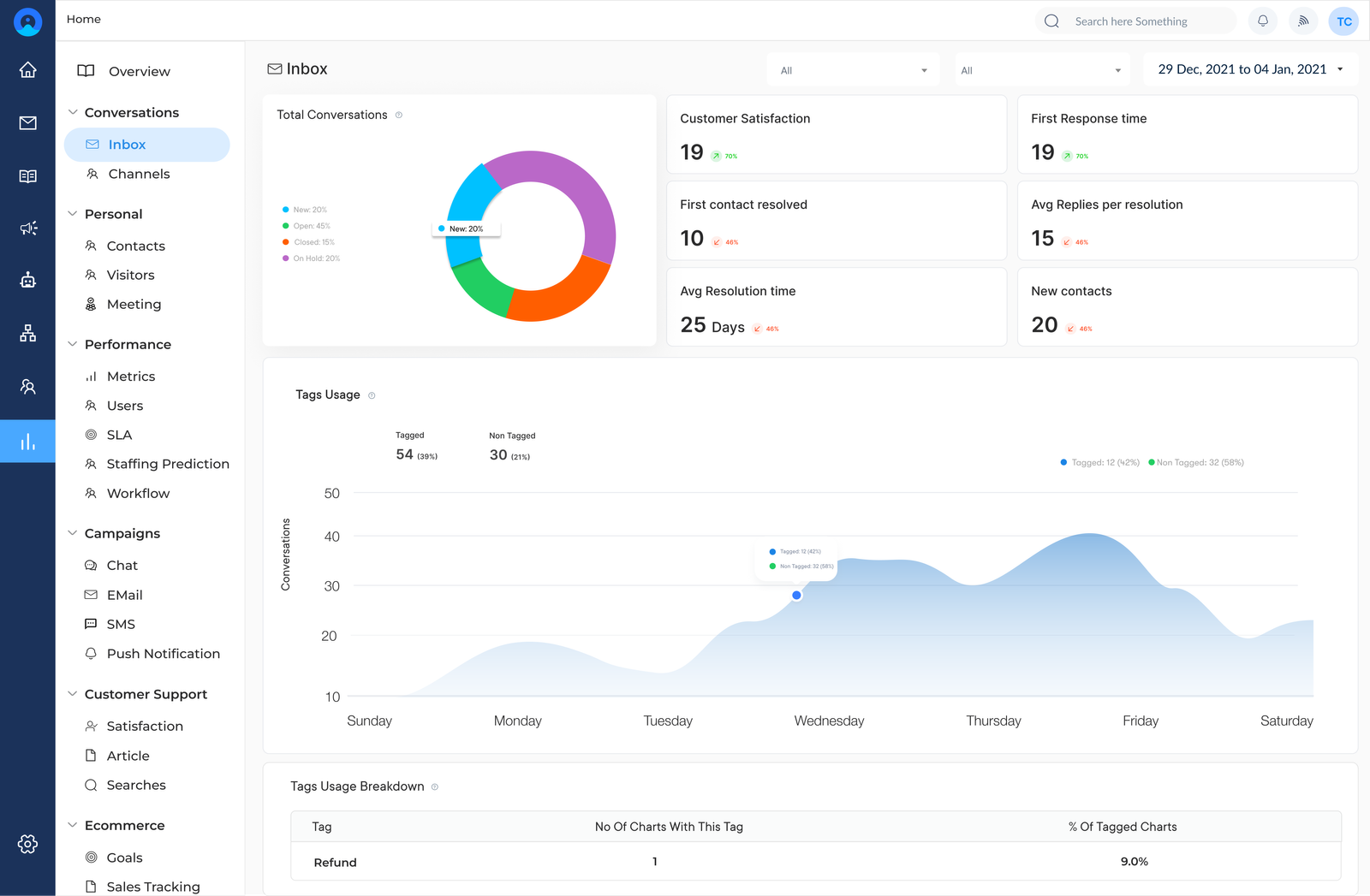
Custom dashboards turn raw service data into clear visuals that are easy to read and act on. As they highlight the key metrics and reveal patterns quickly, the teams can focus on what matters most, without getting lost in endless spreadsheets.
Teams need to focus on the metrics that matter most to their industry and goals to build dashboards that support better service outcomes. The most useful dashboards are those that update in real time, offer relevant views for different roles and are easy for everyone on the team to understand.
One of the biggest issues with dashboards is overloading them with too much information. When too many metrics are crammed in, it becomes harder to spot what really needs attention, turning a useful tool into a cluttered one that slows decision-making instead of helping it.
Pro tips:
- Include both lagging indicators that show past performance and leading indicators that predict future issues. Your team can simultaneously address current problems and prevent upcoming ones.
- Review your dashboard every quarter to see which visuals are being used to make decisions and which are overlooked. Adjust the layout to highlight the metrics that directly contribute to better service outcomes.
5. Incorporate Voice of Customer Data
Voice of Customer (VoC) data helps make sense of customer feedback by showing what people are actually saying about their experiences. It captures the context, tone and specifics that numbers often miss, giving a clearer picture of what matters to customers. When used well, VoC data sharpens customer service analysis by revealing the real reasons behind satisfaction scores.
Analyze verbatim customer comments carefully
Verbatim comments contain nuances that quantitative scores often miss and reveal specific pain points in customer experiences. Direct quotes highlight exact moments of delight or frustration in customers’ own words.
Identify emotional response patterns regularly
Emotional patterns in customer feedback reveal what truly affects people, what confuses them, frustrates them, or earns their appreciation. Analyzing these emotions will help the teams spot which parts of the service are causing the strongest reactions and focus on fixing what matters most.
6. Establish Clear Analytical Success Benchmarks
Benchmarks offer clear reference points to assess service performance with accuracy instead of relying on guesswork. When expectations are defined upfront, teams can track progress more effectively and focus on making measurable improvements. The shared clarity helps align service efforts and brings consistency to how performance is evaluated across the organization.
Set achievable improvement target goals
Realistic targets create motivation while keeping goals achievable, so they don’t feel overwhelmed or give up. Progressive goals acknowledge that sustainable improvement happens incrementally rather than overnight. These staggered targets create a focused plan of action and make it easier to track real progress at each step.
Compare performance against industry standards
Industry benchmarking shows you where your customer service truly stands compared to others in your field. It helps you see if your efforts are making a real impact or just keeping you in place while others move ahead. Even solid performance can fall short if competitors are improving faster so the benchmarks help you stay alert to that.
7. Prioritize Responsiveness in All Channels
Responsiveness analytics track how quickly and effectively your organization addresses customer inquiries across different communication platforms. The time-sensitive dimension has a direct impact on customer perception of service quality and reveals operational bottlenecks. Monitoring response metrics helps identify which channels deliver the best customer experiences and where resources should be reallocated.
- Email responsiveness requires tracking both first reply time and total resolution time since customers expect acknowledgment within hours, even for complex issues.
- Social media demands nearly immediate response, especially for public complaints, which can quickly damage brand reputation if left unaddressed.
- Phone systems should monitor hold times, abandoned call rates and first-call resolution metrics to prevent customer frustration.
- Live chat platforms need to track both queue wait times and in-conversation response speed to maintain the feeling of real-time communication.
The method sets clear response time targets for each channel, aligned with how quickly customers expect replies and how competitors perform. Teams track real-time performance against these targets, flagging delays for immediate attention. Ongoing analysis helps identify where slowdowns happen, when they happen and if they happen due to staffing, time of day, or the nature of the issue.
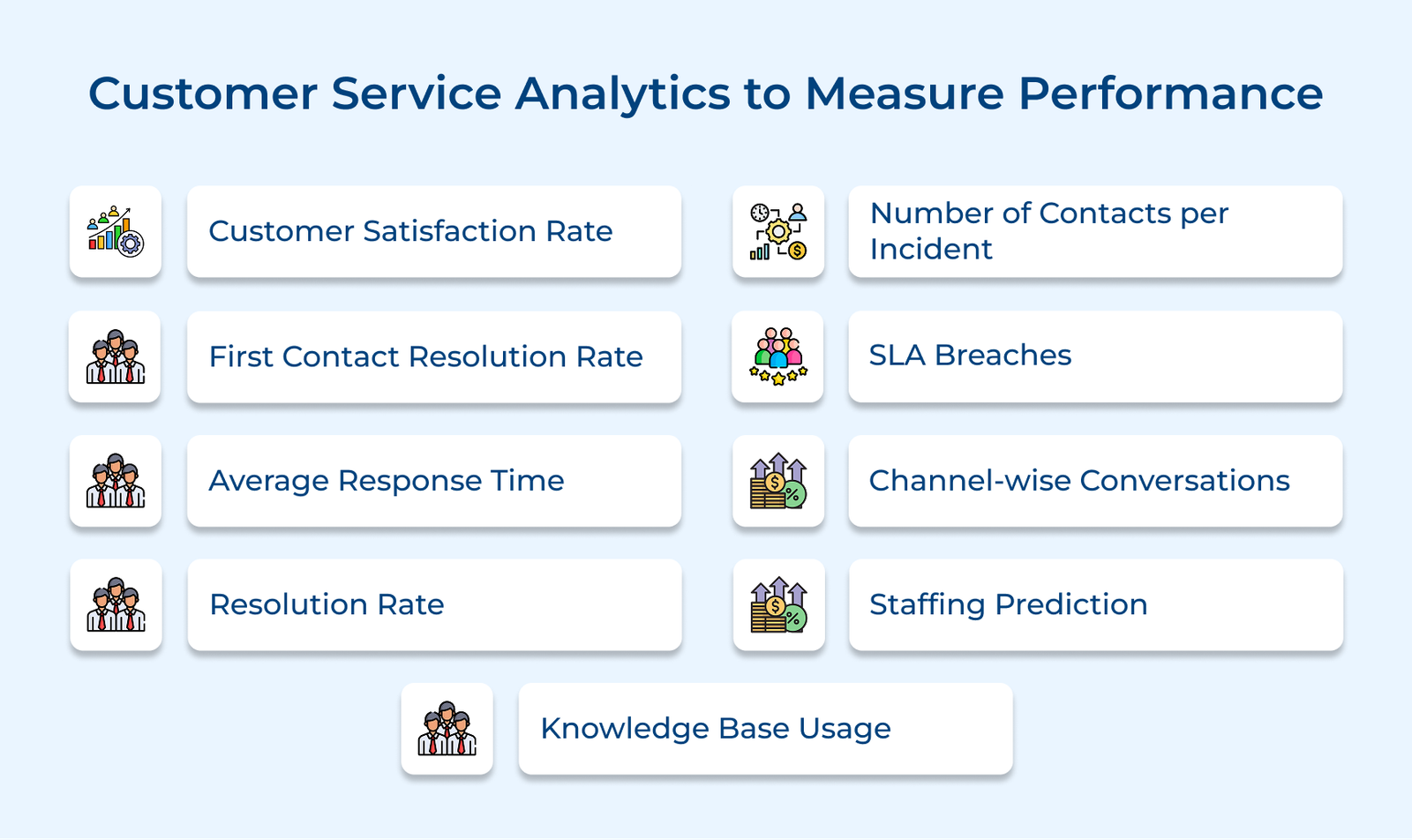
Customer Service Analytics to Measure Performance
Let’s go through the key aspects of customer service analytics that can elevate your performance and enhance the customer experience.