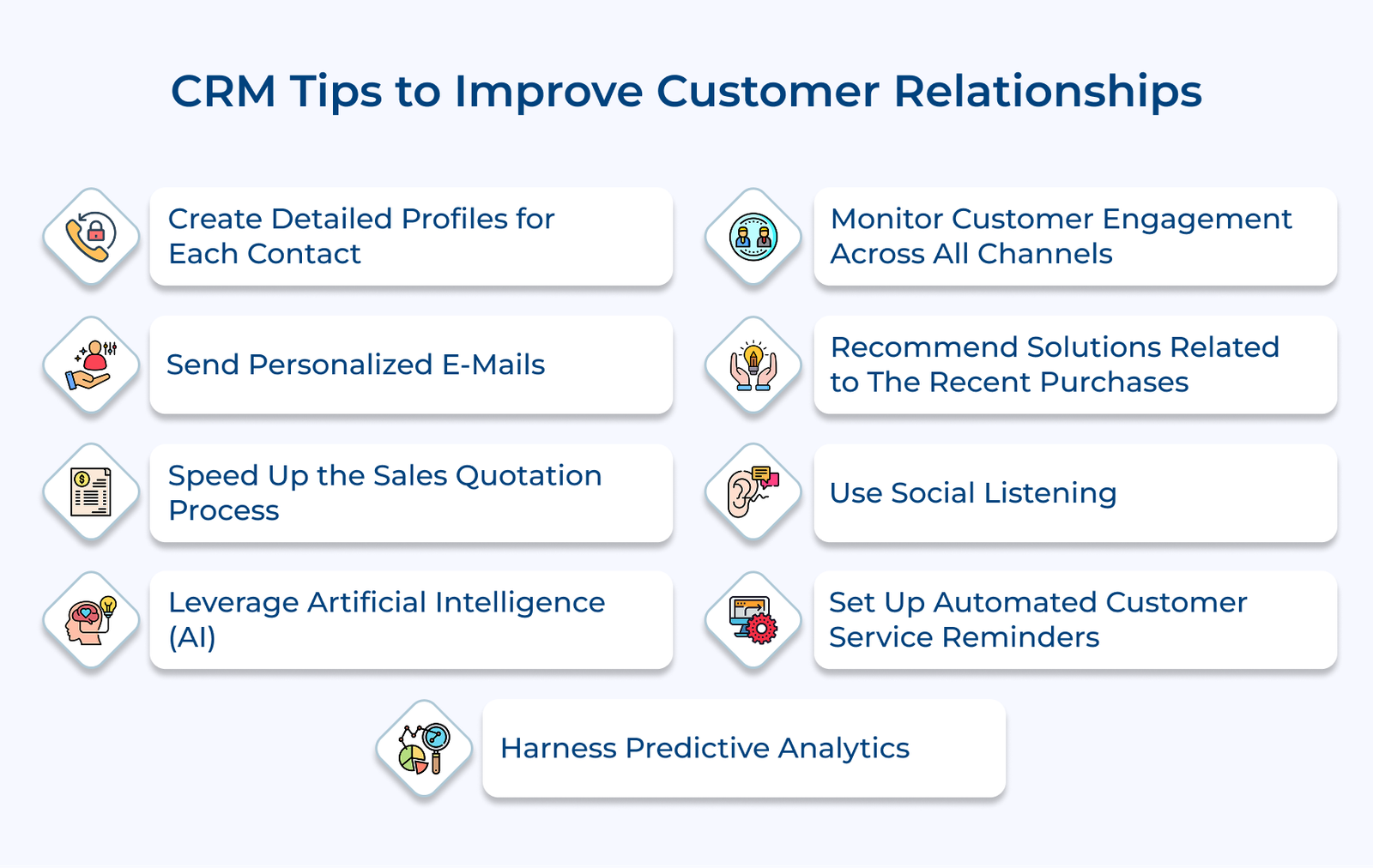
1. Create Detailed Profiles for Each Contact
Building thorough customer profiles is essential for effective CRMs use. Going beyond basic contact details, include job titles, company size, industry and decision-making roles to give your team the context needed for tailored interactions. Keeping the data clean, current and accessible ensures everyone working with the customer has the full picture.
Capture communication preferences and purchase history to understand how each customer interacts with your business. Note preferred contact times, channels and past conversations to anticipate needs. The deeper insight enhances more meaningful, relevant conversations that strengthen relationships.
Pro tips:
- Set a clear, consistent process for entering and train your team to follow it for every new contact.
- Regularly update profiles to keep information accurate and useful for ongoing engagement.
2. Send Personalized Emails
Personalized email communication is essential for effective customer engagement. Instead of sending generic mass emails that get overlooked, personalized emails show customers you recognize their individual needs and value their business. The focused approach boosts open rates, engagement and builds stronger relationships.
- Use dynamic content integration: Use your CRM data to automatically add customer-specific details like their name, company and recent purchases. It makes each email feel personally crafted instead of a generic broadcast.
- Segment your email lists effectively: Divide your customers into groups based on behavior, purchase history and engagement levels. It helps create content that speaks directly to each group’s unique interests and needs.
- Time your sends strategically: Identify when customers are most likely to open and engage with emails, then schedule your campaigns accordingly. Different groups may respond better at different times.
3. Speed up the Sales Quotation Process
Streamlining your quotation process can greatly cut down the time between customer interest and closing a sale. Fast, accurate quotes show professionalism and respect for your customers’ time, giving you an edge in competitive markets. An efficient quoting system can be the key to winning deals.
- Build a template library: Keep an updated set of quote templates tailored to different products, services and customer types. Make sure the templates are easy to find and reflect current pricing.
- Streamline approvals: Set up a clear approval process that avoids delays but keeps necessary checks in place. Identify who approves what and establish firm timelines for each step.
- Monitor quote performance: Keep track of which quotes lead to sales and look for trends in successful bids. Use the insights to refine your quoting approach and update your templates.
A major challenge with automating quoting is managing complex, custom requests that don’t fit standard templates. Balancing flexibility as well as speed often means using a hybrid system – automation for routine quotes and human oversight for unique cases.
4. Leverage Artificial Intelligence (AI) in CRM
Integrating AI into your CRM strategy changes how you understand and engage with customers. AI-powered CRMs can process huge volumes of data to spot patterns and predict customer actions that would otherwise go unnoticed. It gives your team a clearer view of what customers need and when they need it.
Deploy smart customer service solutions
Use AI chatbots inside your CRM to handle everyday questions around the clock. The bots can answer FAQs, walk users through simple fixes and collect the basics before passing more complex cases to your support team.
Enhance lead scoring accuracy
AI tools in your CRM can look at web visits, email clicks and social activity to score leads more accurately. It helps your sales team focus on the people most likely to buy when it matters most, without wasting time on cold leads.
Predict customer behavior patterns
Machine learning models can scan past behavior to flag when a customer might be about to leave. The early warnings give your team a chance to step in, fix issues and keep the relationship strong before it’s too late.
5. Monitor Customer Engagement Across Channels
Tracking customer interactions across every touchpoint isn’t optional, it’s the foundation of effective CRM. Without a complete picture of the customer journey, it’s easy to miss signals, deliver inconsistent experiences and lose trust. A unified approach helps you stay clear on what’s working and where the gaps are.
Track all platform interactions
Your CRM should log every interaction, including social media, email, calls, chat conversations and website visits in one place. It gives your team a full view of each customer, no matter how or where they connect with you. It’s the difference between guessing and knowing what matters to them.
Measure content performance metrics
Look closely at how people respond to your content across channels. Track open rates, clicks and conversions to see what gets attention. The numbers help you fine-tune your messaging so it speaks to the right people in the right way.
Map complete customer journeys
Pull all that data together to see the full path each customer takes, from first click to final decision. It helps you spot where people drop off or get stuck and figure out how to smooth things out. Small fixes at the right stage can make a big difference.
6. Recommend Products/Services Related to Recent Purchases
Product recommendations based on purchase history are a practical, low-effort way to keep customers engaged and increase the value of each relationship. They show you’re paying attention, offering what your customers might need next, not just throwing random options at them. The process works by analyzing patterns in customer purchase data stored in your CRM.
When a customer buys a product, the system automatically identifies complementary items or services based on what similar customers have purchased. The recommendations are then delivered through personalized communications at strategic moments in the customer journey.
7. Use Social Listening in CRM
Social listening turns your CRM into more than just a storage space for contacts—it becomes a window into what people are saying about your brand in real-time. You get a clearer sense of how customers feel, what they want and what’s changing in your space by tracking conversations on social media or other public forums.
Monitor brand conversations effectively
Your CRM should pull in mentions of your brand, product names and key topics from social platforms. Watching it stream regularly helps spot patterns, like rising frustration with a product feature or growing excitement around a campaign. Set up alerts so important posts don’t fall through the cracks.
Track industry changes continuously
Keeping an eye on social chatter beyond your brand gives you a heads-up on broader trends. Maybe a competitor just launched something new or customers are buzzing about a challenge your product could solve. The awareness helps you shift strategy before the market moves too far ahead.
Engage in meaningful conversations
Social listening isn’t just about collecting data, it’s about knowing when to speak up. A quick reply to a complaint, a thank-you for positive feedback or a thoughtful comment in an industry thread can go a long way.
8. Set Up Automated Customer Service Reminders
Automated service reminders take a simple idea: checking in at the right time and turn it into a consistent, reliable part of how you care for customers. Instead of waiting for issues to pop up, your CRM helps you stay one step ahead by sending helpful reminders exactly when they’re needed.
Your CRM tracks key milestones, like the time since purchase or last service date and automatically sends a reminder when it’s time for maintenance, a check-in or a renewal. The messages are personalized, timely and relevant, without requiring your team to remember every detail.
9. Harness Predictive Analytics in CRM
Predictive analytics turns your CRM into more than a record of what’s happened; it becomes a tool that helps you see what’s coming. You can spot warning signs, anticipate needs or make smarter choices about what to offer, when to offer it and to whom by studying patterns in your customer data.
Best practices:
- Start with clean, high-quality data by regularly auditing and updating your CRM records. Poor data quality leads to inaccurate predictions and misguided business decisions.
- Focus on actionable insights by identifying specific metrics that directly impact your business goals. Don’t get lost in analyzing data that won’t influence your decision-making process.
Examples of CRM Tips That Work
Let’s go through the real-world examples of companies that have transformed their customer relationships through effective CRM implementation.
1. Starbucks Loyalty Program
Starbucks uses its CRM to power the mobile-based rewards program many customers rely on. The system tracks things like drink preferences, order frequency and store visits. Based on that data, customers get offers tailored to what they actually buy, like a free espresso on a Monday afternoon if that’s your usual pick-me-up.
The approach has led to more frequent visits, higher order values and customers trying new items they might’ve skipped otherwise. It’s not just a loyalty program—it’s a habit builder.
2. Amazon’s Recommendation Engine
Amazon’s CRM keeps tabs on your browsing history, what you’ve bought, what you’ve saved for later, even what you’ve clicked and backed away from. It uses the data to fuel features like “Recommended for you” or “Frequently bought together.”
The suggestions cut down search time and introduce you to products you likely need, but didn’t know existed. It’s simple: the more relevant the site feels, the more likely you are to stay and shop.
3. Netflix Content Recommendations
Netflix watches how you watch. What you binge, what you skip, what you rate and even what time you watch it. The data shapes not only what shows up in your recommendations, but also what kind of content they choose to produce.
The focus on what people watch, not what they say they like, helps reduce decision fatigue and keeps subscribers coming back for more, minimizing cancellations.
4. Sephora’s Beauty Insider Program
Sephora’s CRM connects the dots between online browsing, in-store purchases and individual beauty profiles. It remembers what shades you’ve tried, what brands you like and what products you’ve interacted with.
Sephora is able to seamlessly give tailored beauty tips, offer meaningful samples and suggest products you’re more likely to buy. The approach helps customers feel less overwhelmed by choice and more confident in their purchases.
5. Nike’s Mobile App Experience
Nike’s CRM strategy extends beyond selling products. They collect data on your workouts, gear preferences and usage patterns through their apps. The data is then used to deliver custom workouts, product tips and gear suggestions that fit your training style.
Rather than just selling sneakers, Nike positions itself as part of your fitness routine, which keeps users coming back to the app and the brand.
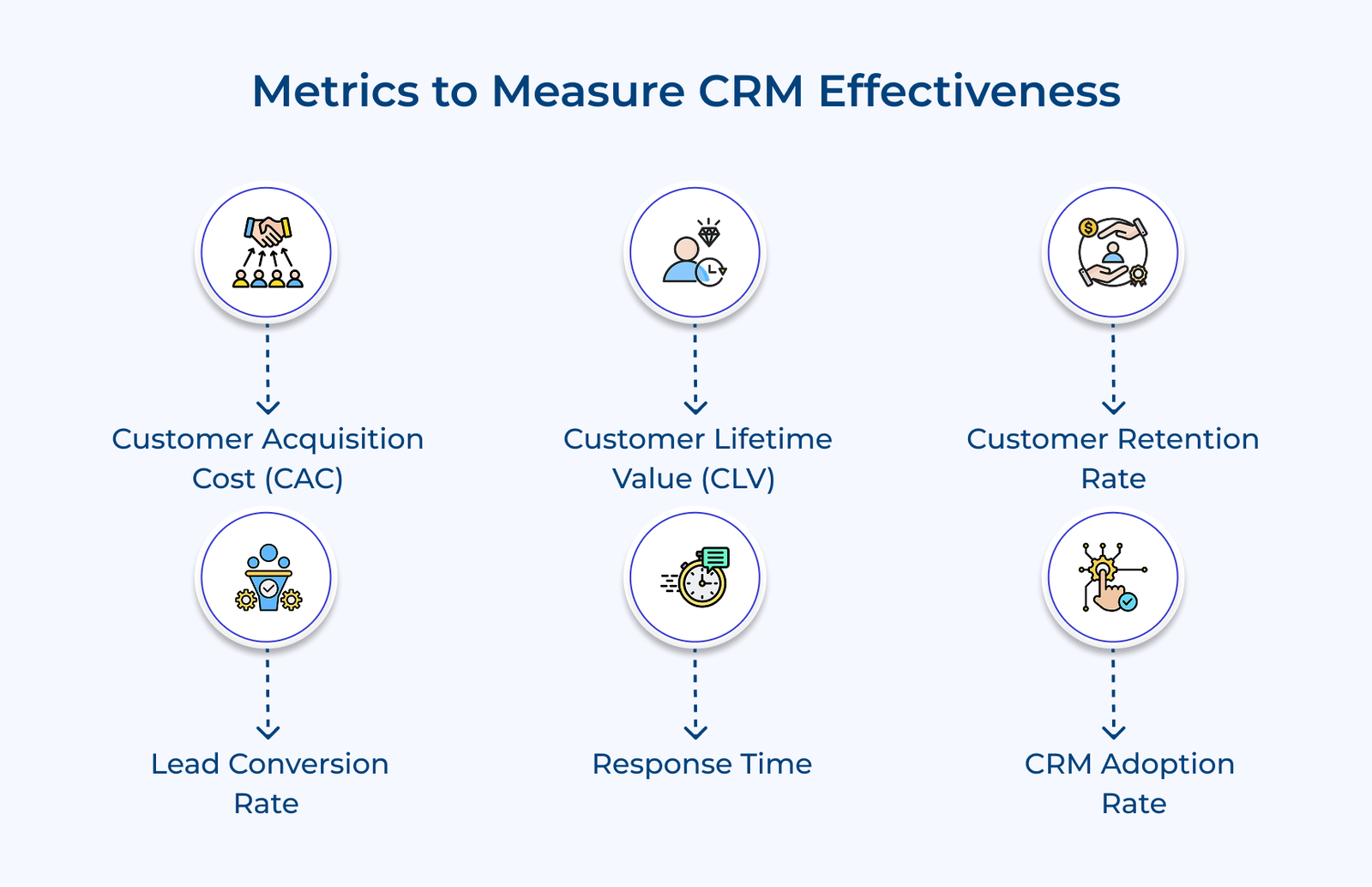
What Metrics Should be Tracked to Measure CRM Effectiveness?
Below are the key metrics that help measure CRM effectiveness and drive better business decisions. Let’s check them out in more detail.
Key questions you should consider:
- Are we turning enough leads into paying customers?
- Are our customer service responses meeting expected standards?
- Are people paying attention to what we send them?
- What is the return on our CRM investment?
- How efficiently is our sales team using the CRM system?