What is Customer Attention? Strategies, Best Practices & Examples
Uncover everything you need to know about customer attention. Learn why it’s crucial for business success and practical strategies to grow customer interest over time.

Uncover everything you need to know about customer attention. Learn why it’s crucial for business success and practical strategies to grow customer interest over time.
Standing out in the market isn’t as easy as before now, owing to the cut-throat competition. People scroll past ads and messages without a second thought, leaving businesses struggling to connect with the very customers they want to reach. Attention is limited, competition is constant and simply showing up isn’t enough anymore. 50% of websites get just 15 seconds of attention.
Missed customer attention means missed opportunities, lost customers and more ground for competitors to claim. The real challenge isn’t just getting seen, it’s staying relevant. With the right approach, businesses can not only capture attention, keep it and turn it into trust. So, let’s take a comprehensive look at how you can transform casual attention into long-term customer relationships.
Customer attention refers to the mental focus people give to a brand, product or service when they come across it. Attention has become one of the most valuable and limited resources businesses compete for. Consumer attention isn’t something one can get automatically. Initially, something needs to grab it, such as an ad, a review or a personal recommendation.
Think of it like a spotlight. It shines on specific parts of an experience while ignoring others. Let’s take the example of a customer browsing an online store. They might zero in on product images and prices but skip over shipping policies. Knowing where that spotlight lands and how to direct it is key to getting noticed and remembered.
Key principles:
Let’s go through the importance of customer attention to understand what makes it a vital asset for sustainable business growth and success.
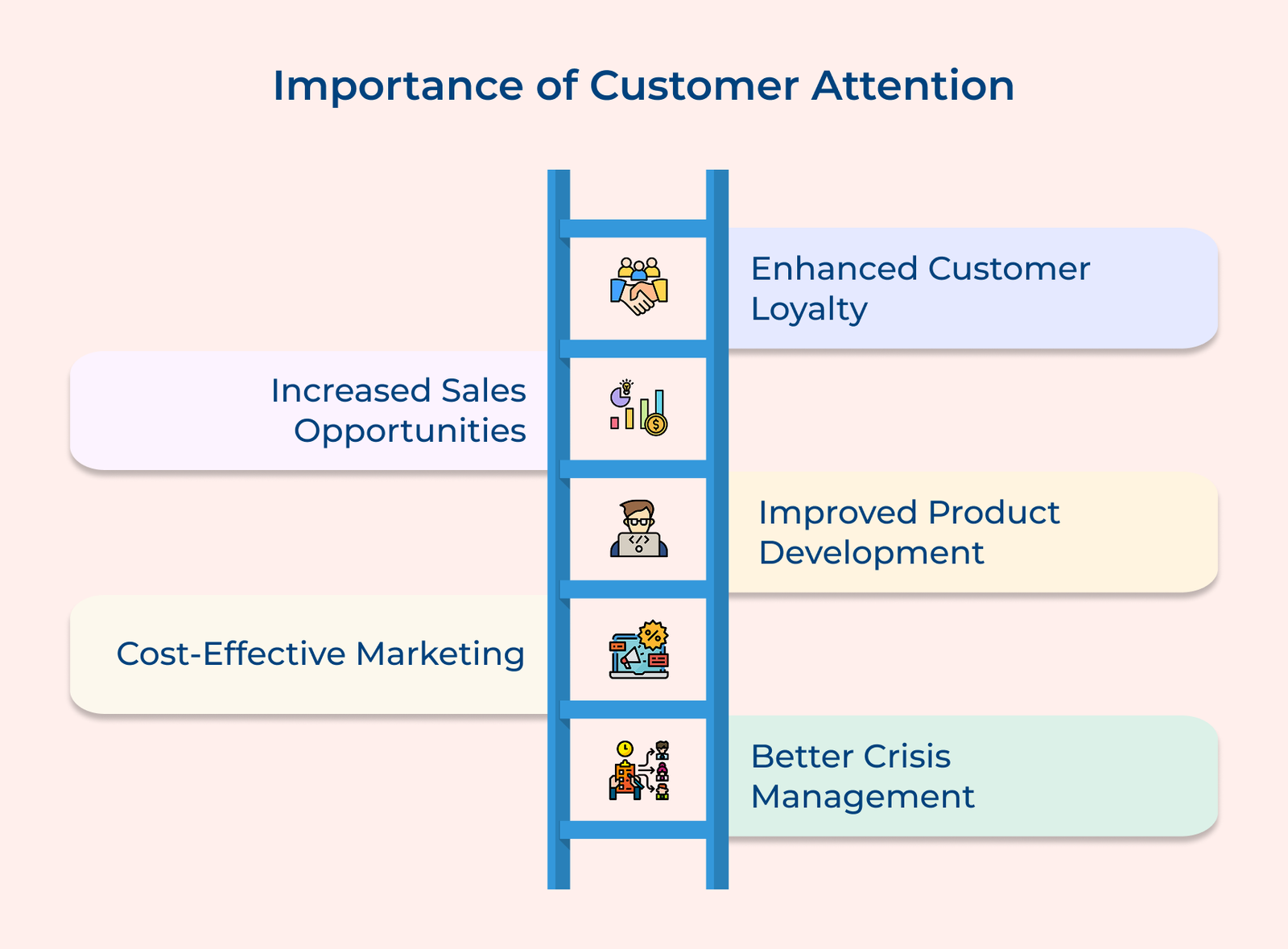
1. Enhanced Customer Loyalty
When you truly pay close attention to your customers in listening to their concerns, preferences and feedback, they notice. The attention builds trust and makes people feel valued. Over time, the trust leads to long-term loyalty and turns customers into advocates who are happy to recommend your brand.
2. Increased Sales Opportunities
When you’re tuned in to how customers behave and what they’re saying, it becomes easier to spot when they’re ready to buy or when they need help. You can step in at the right time with the right solution, increasing the chances they’ll say yes.
3. Improved Product Development
Watching how people use your products and what they say about them gives you actual insight into what’s working as well as what’s not. It helps you improve what you offer based on real needs, not assumptions. It’s a more efficient way to build things people want.
4. Cost-Effective Marketing
When you understand what your audience pays attention to, you can focus your messaging and content on what matters to them. It means less guesswork and better results because you’re not shouting into the void, you’re speaking directly to people who are already listening.
5. Better Crisis Management
When you’re actively listening, you’re more likely to catch small issues before they turn into big ones. You can respond quickly to concerns, clear up confusion and fix problems before they do lasting damage. The responsiveness builds credibility and keeps customers on your side.
The following are the best strategies that businesses use to capture customer attention and watch your brand flourish in ways you never thought possible.
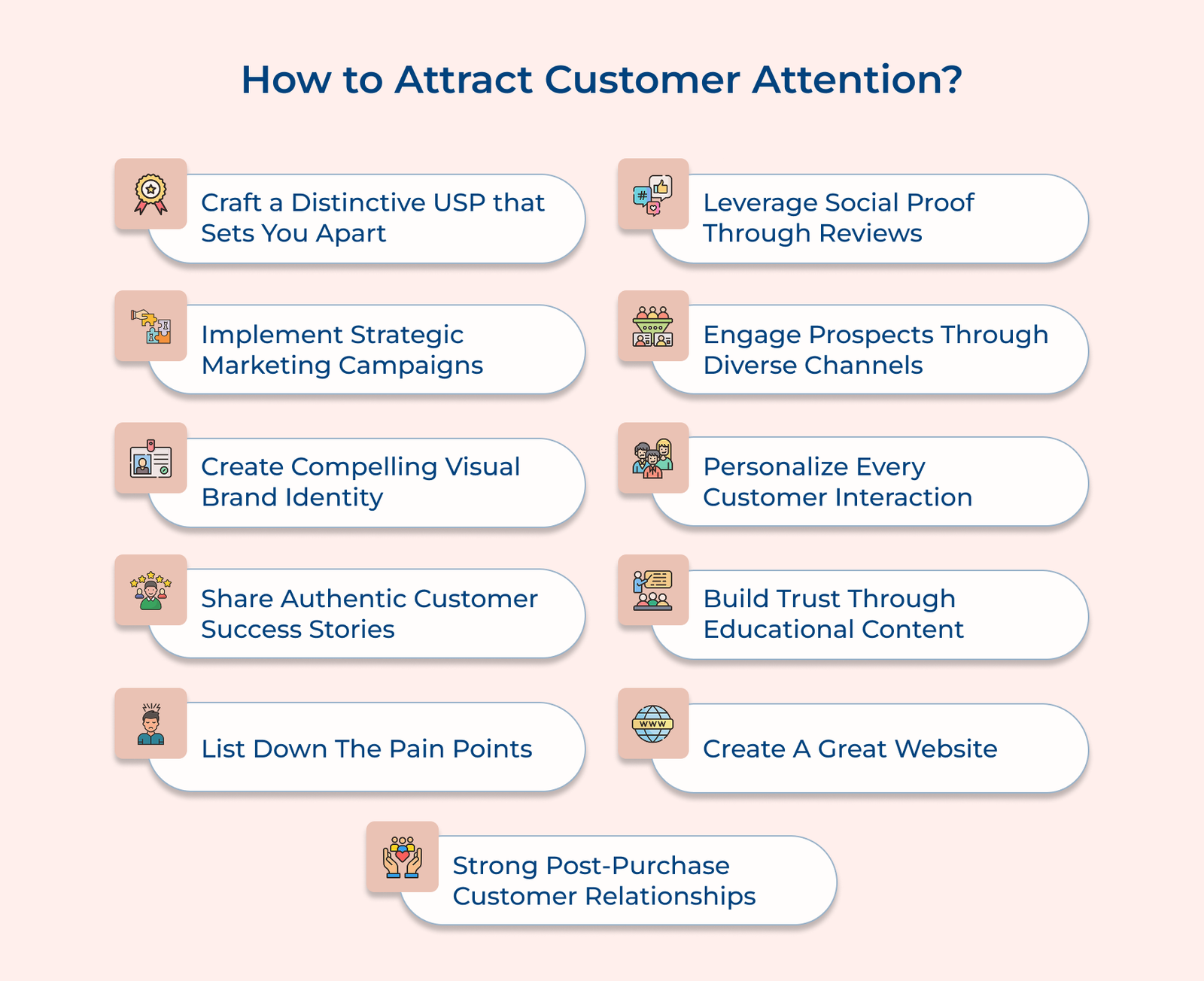
A sharp, unique selling proposition tells customers what makes you different and why people should pick you. Companies with an effective USP see a 20% increase in customer acquisition and a 33% increase in customer retention. Start by talking to real users and studying the market to uncover the single benefit only you provide, then translate that benefit into plain language that matters to your audience.
Pair the insight with a quick scan of competitors to spot unmet needs and highlight the gap you fill. Once you’ve nailed the core idea, craft a brief statement that is easy to repeat and hard to ignore. Keep it rooted in outcomes rather than vague claims. The result is a message that cuts through noise and instantly signals your value.
Pro tips:
Email is still one of the most dependable ways to get and keep a customer’s attention. A smart email strategy lets you reach people directly, on their own, with content that feels personal. The key is consistency and relevance. So show up with something useful and readers will keep opening your messages.
A strong subject line makes all the difference: it should speak to real interests or problems and hint at a benefit or insight worth clicking for. Break your list into smaller groups based on how people behave or what they care about. Then test different versions of subject lines, layouts, and timing to see what works best for each group.
Actionable tips:
A strong visual identity is your brand’s first impression; it signals who you are before a single word is even read. The consistent visual presence builds trust and makes your brand memorable. Elements like color, type and imagery work together as a visual shorthand, helping people trust you quickly.
Consistency is what you should aspire to have. When every touchpoint, from your website to a social post, looks and feels on‑brand, customers remember you. Building that consistency starts with understanding what resonates with your audience and what already works in your industry. Then, translate the insights into clear design rules everyone can follow.
Best practices:
Customer success stories turn abstract promises into concrete proof. When people see how someone like them solved a real problem and can measure the change, they’re far more likely to trust you.
Focus on clear results
Show the before and after in numbers: hours saved, revenue gained, errors reduced. Walk readers through the challenge, the specific fix and the outcome so they can picture the same win for themselves.
Show a range of examples
Include stories from different industries, company sizes and use cases. Variety lets prospects find a match and think, “It could work for us, too.”
Documenting Detailed Transformations
Don’t stop at the final metric. Share the hurdles, the rollout and the long‑term benefits. A detailed, honest narrative feels real and real stories are what earn trust.
Customer reviews aren’t just nice-to-haves; they’re often what makes or breaks a purchase decision. When people see real experiences from others like them, it eases doubts and builds confidence in your brand. The peer validation often matters more than anything you say about yourself.
Encouraging regular customer feedback
Ask for reviews regularly and make it simple. The easier it is, the more likely people are to share. Set up prompts after purchases or support interactions so feedback becomes a natural part of the process.
Displaying reviews across platforms
Don’t bury them on a single testimonial page. Place them where decisions happen on product pages, checkout screens and in follow-up emails. Seeing a positive review at the right moment can nudge someone from “maybe” to “yes.”
Responding to customer comments
Thank people for good feedback and respond respectfully to criticism. Showing that you listen and act keeps attention. Customers notice when their words matter.
Reaching your customers through more than one channel isn’t just smart, it’s necessary. People bounce between apps, devices or platforms constantly and if your brand isn’t there when they need you, you’re easy to forget. Meeting customers where they already spend time helps keep your message visible without being pushy.
Each platform brings something different to the table, so it’s not one-size-fits-all. Instagram might be perfect for quick product snapshots, while YouTube lets you go deeper with how-to videos. Live chat and messaging apps let customers talk to you in real-time when they have questions.
Key channels:
Personalization turns everyday interactions into moments that feel real and relevant. Whether it’s a product suggestion that fits their needs or an email that reflects their past choices, personal touches make customers feel understood and valued. 90% of customers are more willing to invest in businesses that provide personalized services.
Businesses need to pay attention to what people do, not just what they say. Track how customers browse, what they buy and which content they click on. Use that information to send timely messages that match where they are in their journey, not just where you want them to be. It’s about being helpful, not intrusive.
Key takeaways:
Your website is often a customer’s first impression and it needs to work hard to keep their attention. If visitors can’t quickly find what they’re looking for, or if the experience feels clunky, they’ll move on. A clean, easy-to-navigate site that works well on any device and loads fast isn’t a luxury but a bare minimum for keeping people engaged.
Mobile browsing is now the norm, not the exception. A site that adjusts smoothly to phones and tablets helps you hold attention wherever customers happen to be. Just as important is speed: long load times cause people to click away before they even see what you offer. And once they’re in, clear navigation is key. Simple menus and well-organized pages help visitors find what they need quickly, without guesswork.
Pro tips:
Below are some illustrative examples across various sectors that demonstrate innovative approaches to capturing and maintaining customer attention.
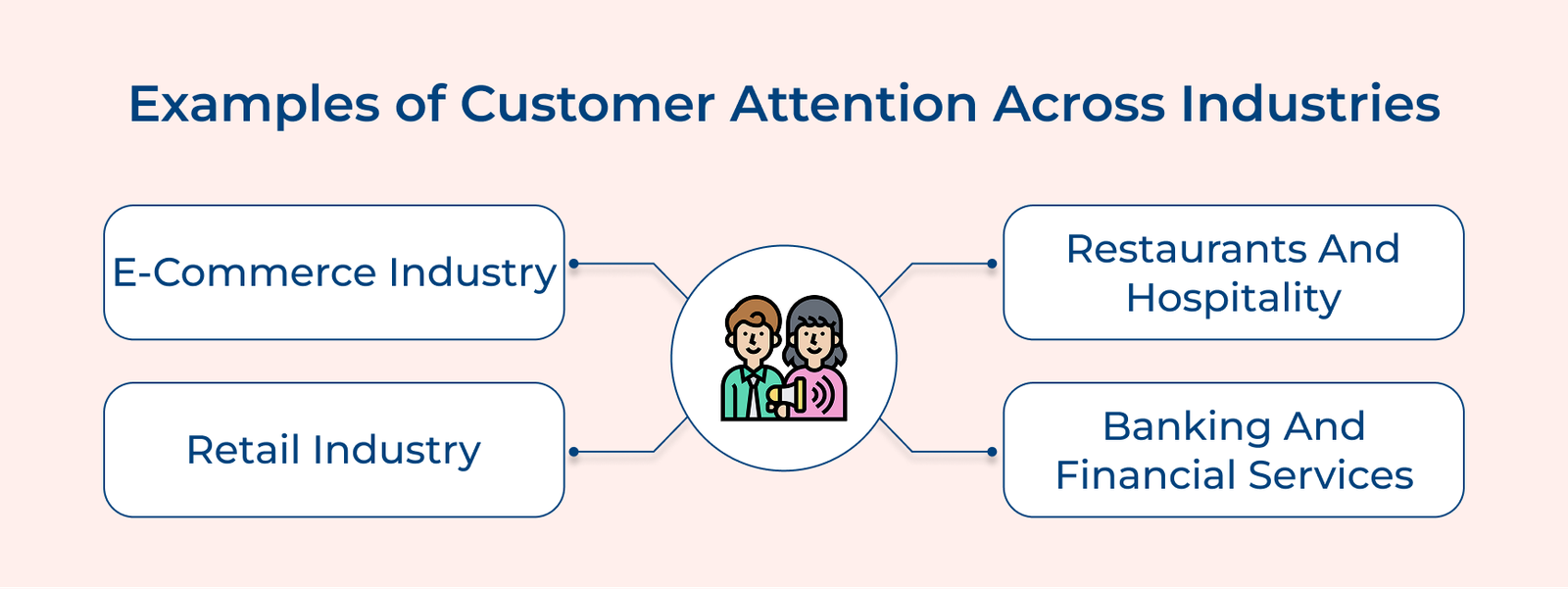
Hyper-Personalized Recommendations
A fashion retailer uses browsing history, color choices and past purchases to create a custom shopping page for each visitor. When a user logs in, they are greeted with handpicked outfits in their size and preferred colors. The personal touch keeps them engaged and makes it more likely to make a purchase.
Abandoned Cart Reminders
When a customer adds a few skincare items to his cart but doesn’t check out, the site doesn’t flood his inbox. Instead, it sends one polite reminder, followed a day later by a gentle nudge offering a small discount. The timing and tone feel helpful, not pushy, just enough to bring him back without turning him off.
The Personal Touch
A boutique clothing store uses customer profiles to track preferences and purchase history. When a potential client walks in, a sales associate greets them by name and shows them new arrivals in their preferred styles. The personalized attention makes her feel valued and increases her likelihood of returning.
Interactive Experiences
A home improvement store creates interactive display zones where customers can test products hands-on. They can handle tools at demo stations or use virtual reality to see how a couch or wall color would look in their living room. It’s hands-on, it’s practical and it helps shoppers feel confident before making a decision.
Anticipating Needs
A fine dining restaurant maintains detailed profiles of regular customers’ preferences and dietary restrictions. When a user makes a reservation, they automatically prepare their preferred corner table and inform the chef about their gluten sensitivity. The staff also remembers his favorite wine, making an experience that makes him feel specially attended to.
Proactive Financial Guidance
A consumer uses a digital bank that quietly watches out for her without overstepping. When their monthly spending spikes, the app doesn’t scold them; it simply sends a low-key alert and offers tailored tips to help them get back on track. It’s a quiet reminder that someone’s looking out for her wallet.
Life Event Banking
A traditional bank creates a “Life Moments” program that anticipates customers’ financial needs during major life changes. After the customer updates their marital status, the bank doesn’t just congratulate them; it offers a practical, easy-to-understand guide on managing money as a couple. The bank helps him take the next financial step without having to ask, from setting up joint accounts to exploring mortgage options.
Preventive Care Communication
A medical clinic implements a smart appointment reminder system that goes beyond basic scheduling. Ahead of a patient’s annual check-up, the clinic sends more than just a reminder. The message includes simple, relevant health tips and recommends preventive screenings based on her age or history. It feels like care that extends beyond the exam room, quietly supporting her in staying ahead of potential issues.
Digital Health Monitoring
A consumer uses a health app that helps them track their blood pressure and medications. When the readings start to drift into the danger zone, the app doesn’t just log the numbers; it schedules a telehealth visit. It shares clear, helpful info about managing his condition. The user feels seen, even outside the clinic.
Below are the best practices that can enhance your customer attention strategies. Let’s check them out in more detail.
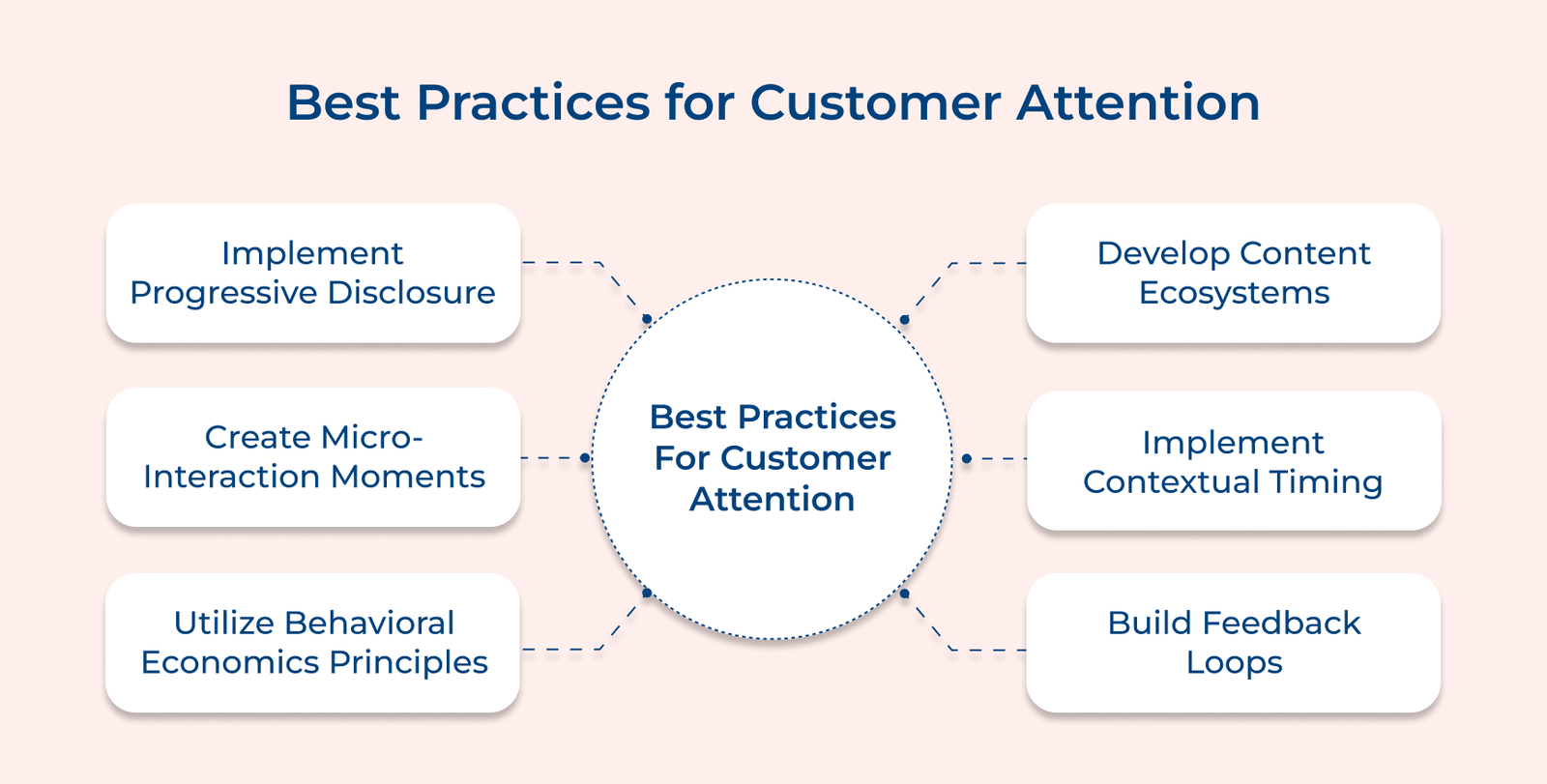
1. Implement Progressive Disclosure
Rather than presenting everything upfront, offer key details first, then let customers choose when to explore more. The step-by-step reveal keeps their interest alive and avoids overwhelming them with too much at once.
2. Create Micro-Interaction Moments
Small design touches, like a satisfying click when a button is pressed or a gentle animation during loading, can keep people engaged. The little interactions create a rhythm that makes the overall experience smoother and more enjoyable.
3. Utilize Behavioral Economics Principles
People tend to focus more when something feels scarce or popular. Letting customers know an item is running low or showing how many others have purchased it can draw their attention and prompt action.
4. Develop Content Ecosystems
Link simple content to deeper materials. Start with easily snackable content and lead customers toward more comprehensive resources. The ecosystem approach maintains attention by always having relevant next steps available while respecting different levels of customer interest and commitment.
5. Implement Contextual Timing
Pay attention to when people tend to open emails, browse your site or respond to notifications. Timing your outreach to match those habits increases the chance your message will be seen and acted on.
6. Build Feedback Loops
Make it easy for people to share thoughts on their experience, be it through short surveys or subtle prompts. Use what you learn to tweak and improve how you keep their attention moving forward.
The following are the key metrics that help track and measure customer attention effectively.
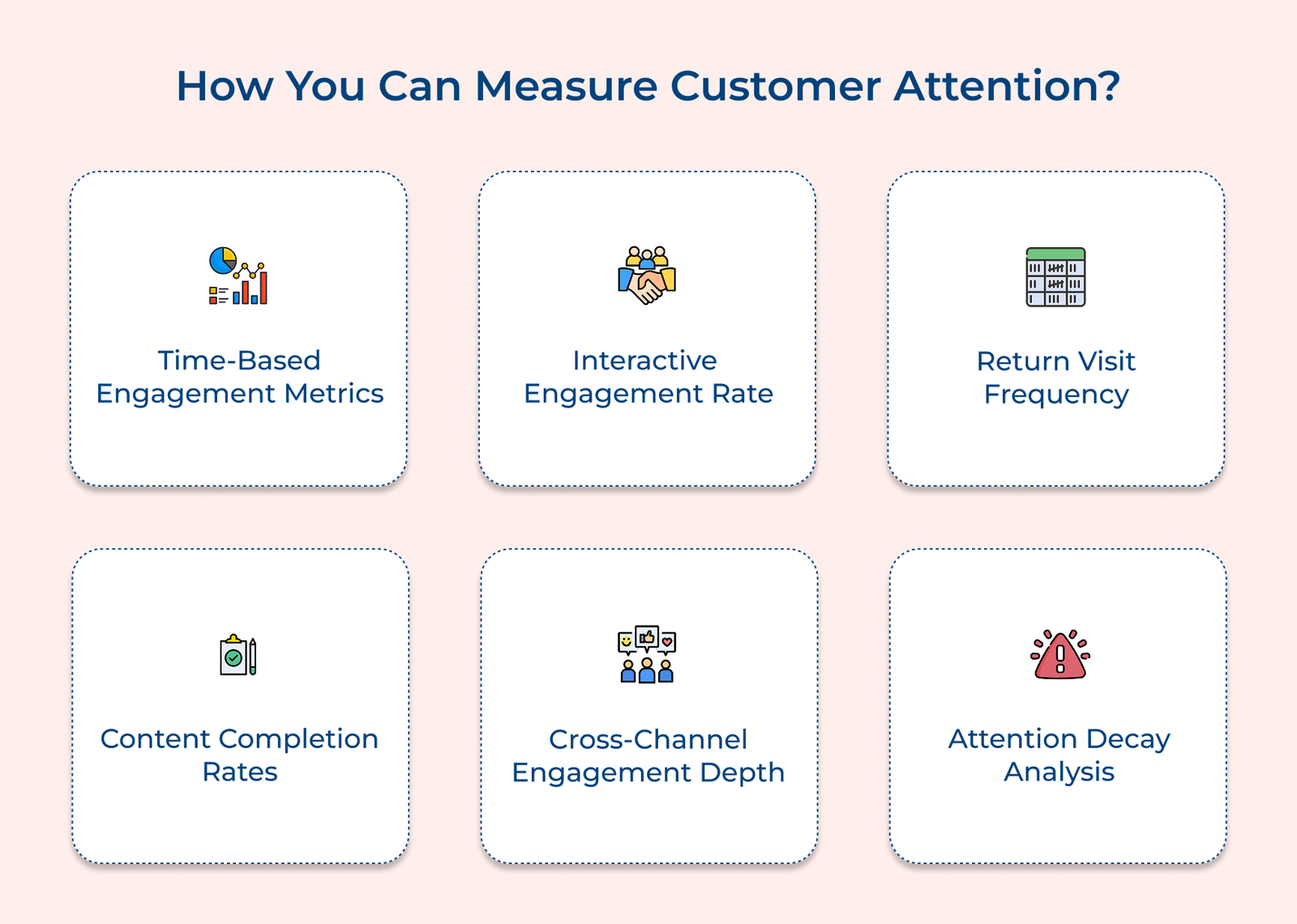
1. Time-Based Engagement Metrics
Measure how much time visitors spend on your site or app. If product pages hold their attention longer than category pages, that’s a signal that those specific items are working harder to engage them.
2. Interactive Engagement Rate
Clicks, comments and shares tell you much more than pageviews. If people are engaging with your content, not just glancing at it, it means you’re holding their attention in a meaningful way.
3. Return Visit Frequency
Repeat visits are a strong sign of interest. If users are returning regularly, you’re doing something right. Dig into what’s bringing them back and build on it to deepen the connection.
4. Content Completion Rates
Track how many customers complete viewing or reading your content from start to finish. The metric helps understand if your content maintains attention throughout. Completion rates show if your content holds attention from beginning to end.
5. Cross-Channel Engagement Depth
Look at how customers move between your platforms. A customer who finds you on Instagram, visits your site and then signs up for updates is showing a deeper level of attention than someone who just browses once.
6. Attention Decay Analysis
Track how attention shifts over time. If engagement starts to dip after a few weeks, it’s time to act. Knowing when people lose interest lets you re-engage before they disappear for good.
Below are the significant consequences businesses can face when they fail to maintain customer attention effectively.
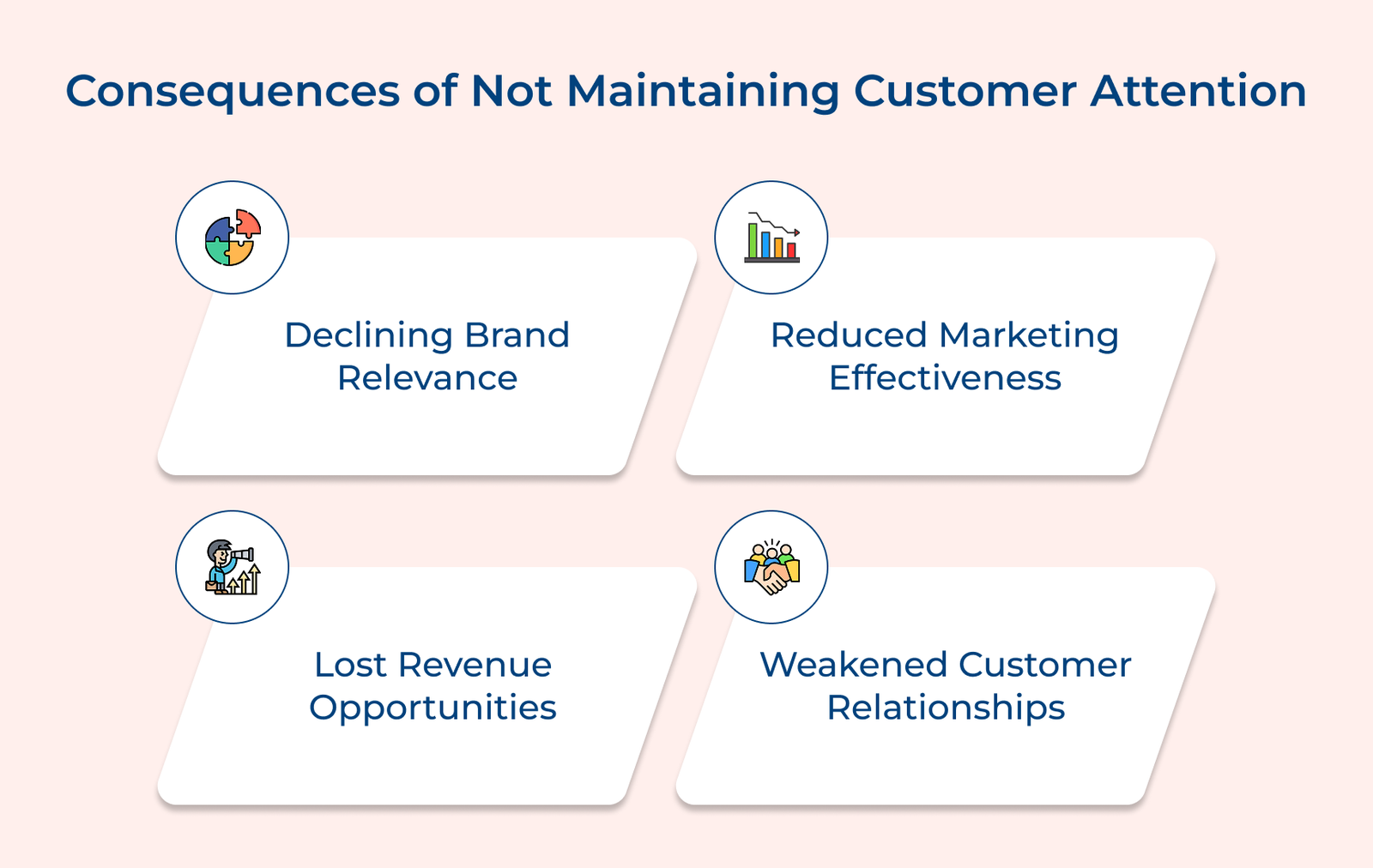
When people stop paying attention to your brand, you slowly slip from their minds. Even loyal customers start forming new habits with other options. And when it’s time to launch something new, you’re not even part of the conversation because they’ve already looked elsewhere.
Even the best ads fall flat when the audience isn’t paying attention. You end up spending more to get noticed and still get fewer results. Over time, it means pouring more money into campaigns that simply don’t land like they used to.
If customers aren’t tuned in, they won’t see your latest offer, product or upgrade. You might have something valuable, but it gets ignored. It’s how promising ideas go unnoticed and revenue slips away without you even realizing it.
Without steady engagement, the relationship weakens. Customers start exploring other options, not because you did something wrong, but because you stopped showing up in a way that mattered. Rebuilding that trust is harder once it’s been lost.
Getting and keeping your customers’ attention isn’t just nice to have; it’s essential. The businesses that thrive are the ones that know how to earn focus and keep it. When you consistently show up with clarity, relevance and value, casual browsers start to pay closer attention.
The real strength of client attention is in what it leads to: stronger relationships, better retention and more room to grow. Businesses set themselves apart by staying present, listening and offering something useful. Put simply, if you can hold their attention, you have a real shot at earning their trust and that’s where lasting success begins.

Branding captures attention by giving your business a clear, recognizable identity. Strong branding makes it easier for people to spot you, from colors to tone. When your look and voice consistently reflect what your audience cares about, they’re more likely to notice.
Social media keeps attention by offering space for real conversation and timely content. The platforms let you share updates, respond to feedback and show personality in ways that feel real. When used well, social media turns passive audiences into active participants in your brand’s story.
Personalized marketing gets noticed because it speaks directly to the person receiving it. When people see content that reflects their interests, habits or needs, they’re more likely to stop scrolling and pay attention. The relevance turns routine communication into something worth engaging with.
You can track attention by looking at what people do. Check how long they stay, how often they come back, what they click and if they take action. The numbers help you see what’s working and what’s not. Over time, it lets you fine-tune your approach to better hold your audience’s interest.
Good content earns attention by being useful or interesting or both. Whether it teaches something, solves a problem or simply makes someone pause and think, high-quality content rewards people for paying attention. If you consistently deliver that, they’ll keep coming back for more.
First figure out what caused the drop-off. Then, use thoughtful outreach, be it through a well-timed email, a relevant offer or a genuine check-in to reestablish connection. People notice when brands pay attention to them, especially after a quiet spell.
Grow Customer Relationships and stronger team collaboration with our range of products across the Conversational Engagement Suite.
Omnichannel Customer Support & Help Desk Software
AI Enabled Business Messaging and Chatbot Software
Sales Engagement & CRM Software
Call Center Software & Virtual Phone System
Product Marketing & Experience Platform
Customer Experience & Feedback Management Software
 7 Customer Experience Lessons Businesses Need to Know (2026)
Scroll to top
7 Customer Experience Lessons Businesses Need to Know (2026)
Scroll to top