Customer Engagement Platform vs CRM: What’s the Difference?
Check out the key differences between customer engagement platform vs CRMs. It highlights their features, functions and how each supports stronger customer relationships.
Check out the key differences between customer engagement platform vs CRMs. It highlights their features, functions and how each supports stronger customer relationships.
Many businesses struggle to decide if they need a customer engagement platform or a CRM. Both aim to improve customer relationships, but they do it in very different ways. The confusion leads to wasted resources and missed opportunities. Without clarity, you risk choosing the wrong solution for your business. A CRM manages customer data and sales, while engagement platforms focus on real-time interactions and experiences.
Understanding the distinctions between customer engagement platform vs CRM helps you make informed decisions about customer technology investments. We’ll explore how each platform works and when to choose one over the other. Let’s dive in to ensure you select the right tool for sustainable growth.
Customer relationship management refers to a structured way for businesses to manage and strengthen relationships with customers at every stage of their journey. Think of it as a central hub where businesses store customer information and track every interaction. CRM systems turn scattered customer data into actionable insights for better business decisions.
CRM platforms collect customer data from multiple touchpoints, like emails and phone calls, then organize the information in one accessible location. The system tracks interactions and purchases to help teams understand customer needs. The centralized approach enables personalized communication and more effective relationship building across your entire organization.
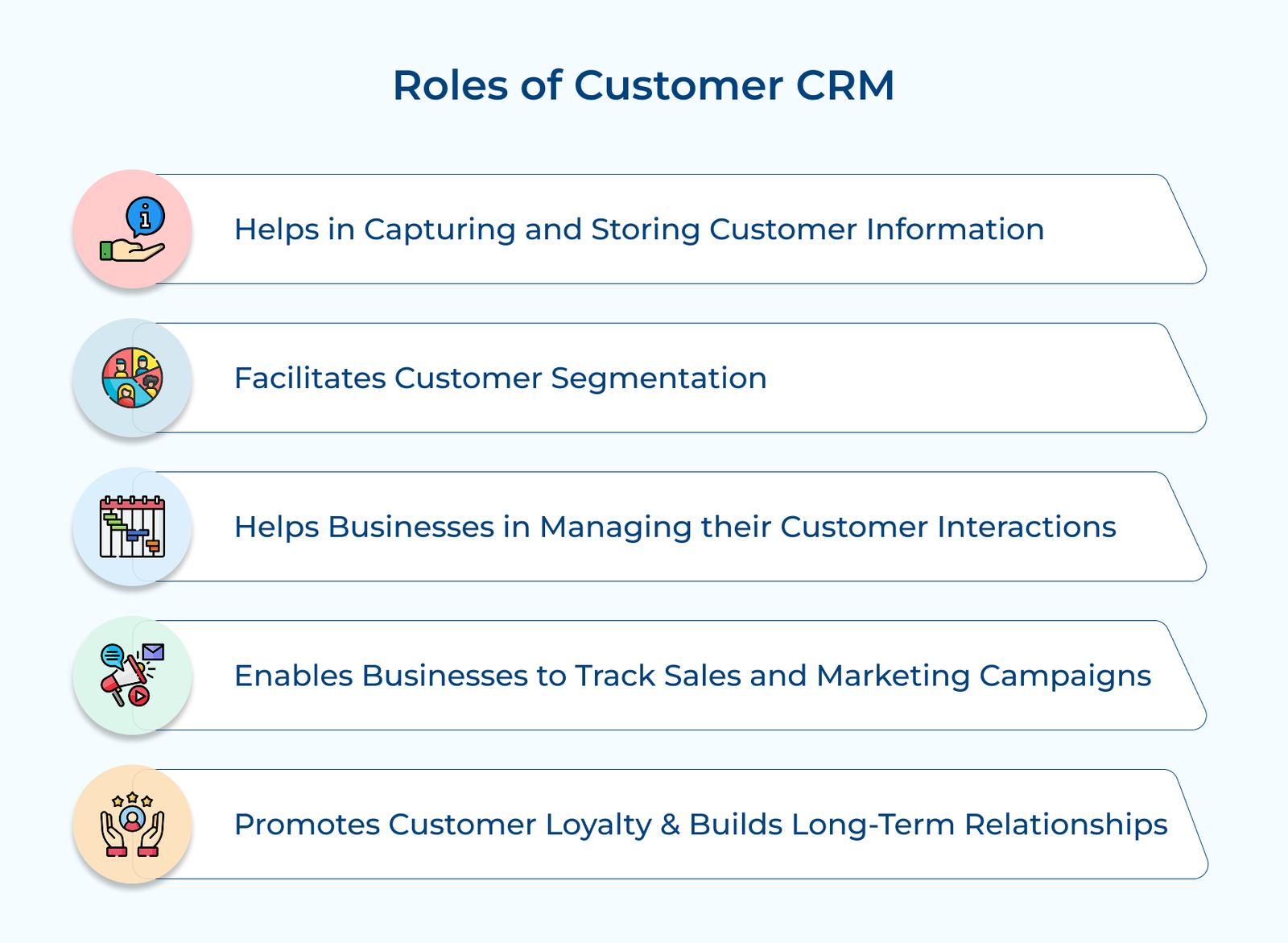
Key roles:
A customer engagement platform refers to a system designed to manage real-time interactions across every customer touchpoint. Unlike traditional tools that mainly store data, the platforms focus on active communication and personalized experiences. They help businesses connect with customers when it matters most, be it answering a question, offering support or guiding a purchase.
The platforms enable companies to shift from reactive service to proactive engagement, using automation to deliver relevant, human-centered experiences at scale. The result is stronger relationships, greater trust and lasting loyalty.
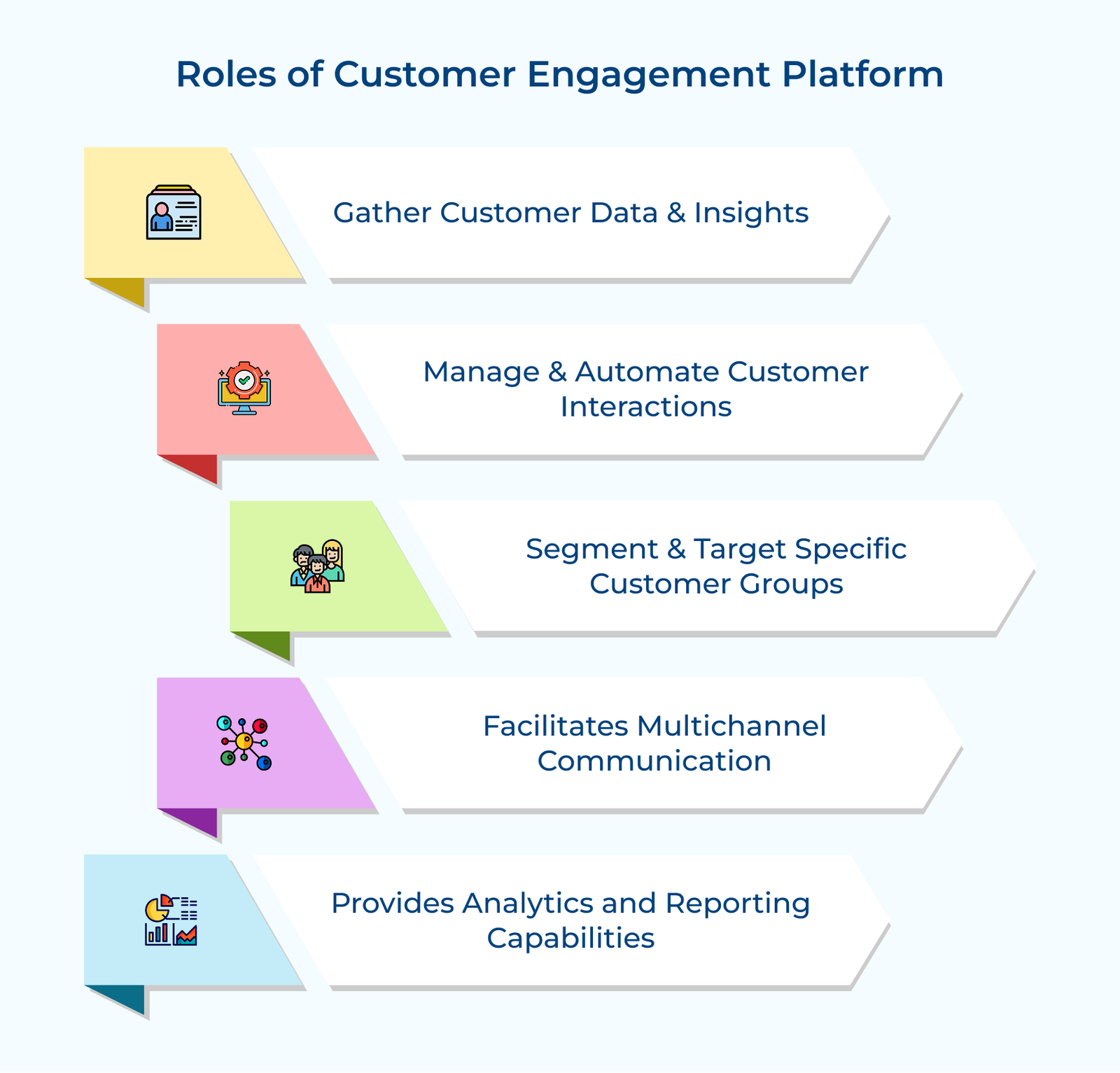
Key roles:
Let’s go through the crucial layers that constitute an effective customer engagement platform and how businesses lead towards deeper connections.
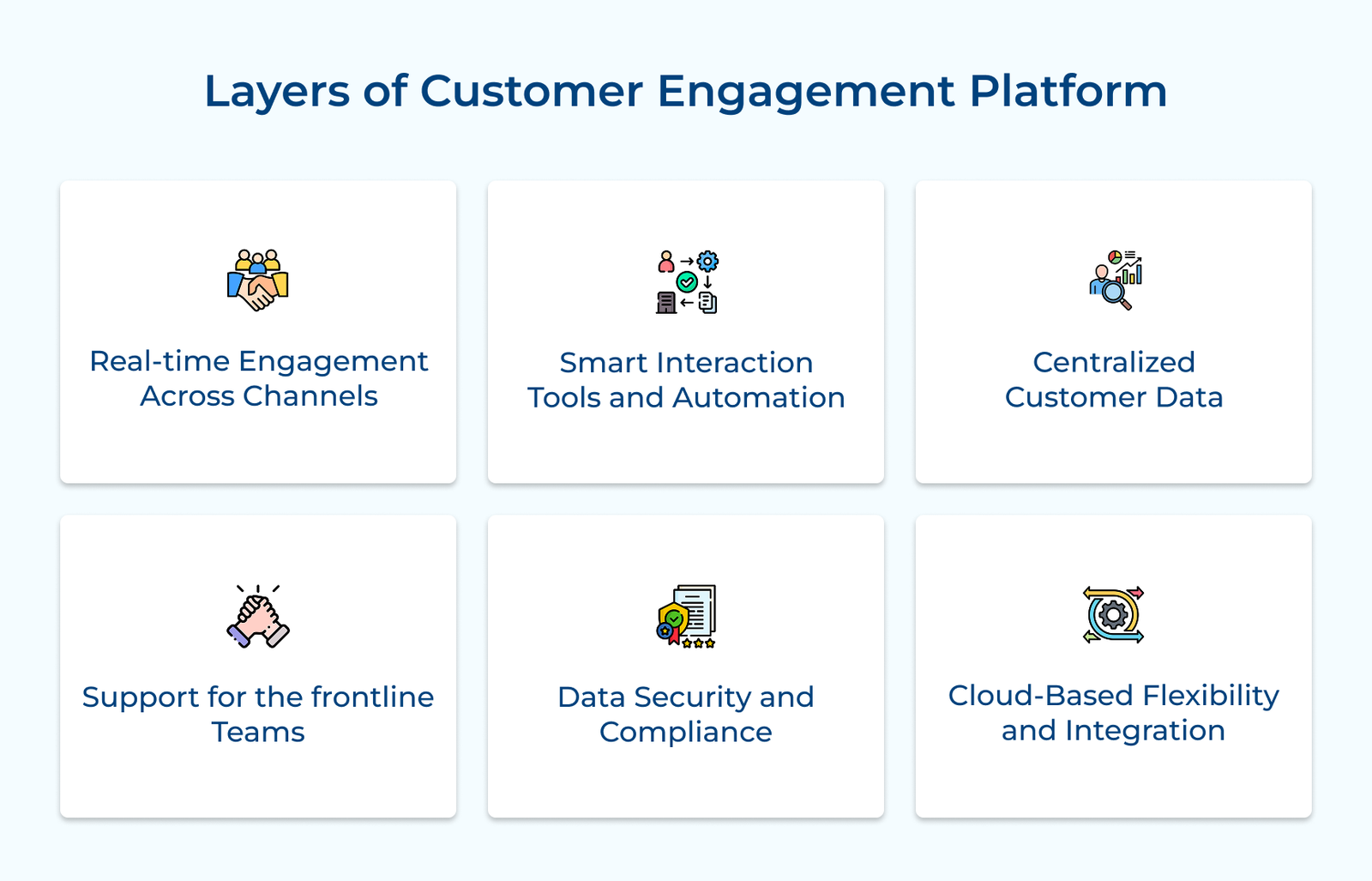
Customer engagement platform (CEP) connects all your customer touchpoints, including email, social media, apps and websites into one seamless experience. It ensures every interaction feels consistent and timely, no matter where it happens.
CEP uses tools like chatbots, personalized messages and recommendation engines to keep conversations relevant. Routine tasks are automated so teams can focus on creative problem-solving and meaningful customer connections.
Businesses need a centralized system for managing customer data. The layer includes a robust customer data platform (CDP) that collects, cleans and organizes data from various sources. It enables marketers to gain a comprehensive view of each customer and make data-driven decisions.
CEP provides functional support for front-line teams, including marketing, commerce, sales, service and billing. It equips the teams with tools and resources to engage with customers at every stage of the customer journey. It aligns their efforts and ensures a seamless experience across all touchpoints.
Protecting customer information is essential. CEPs include strict data security and privacy controls that comply with regulations like GDPR or CCPA. Secure systems build trust and keep customer relationships strong.
Modern CEPs run on cloud infrastructure, allowing businesses to scale quickly and connect with other systems through APIs. The flexibility helps companies adapt easily to new tools, technologies and customer needs.
Check out the core differences between CRM vs customer engagement platform to understand which one can help you build stronger, longer-lasting customer relationships.
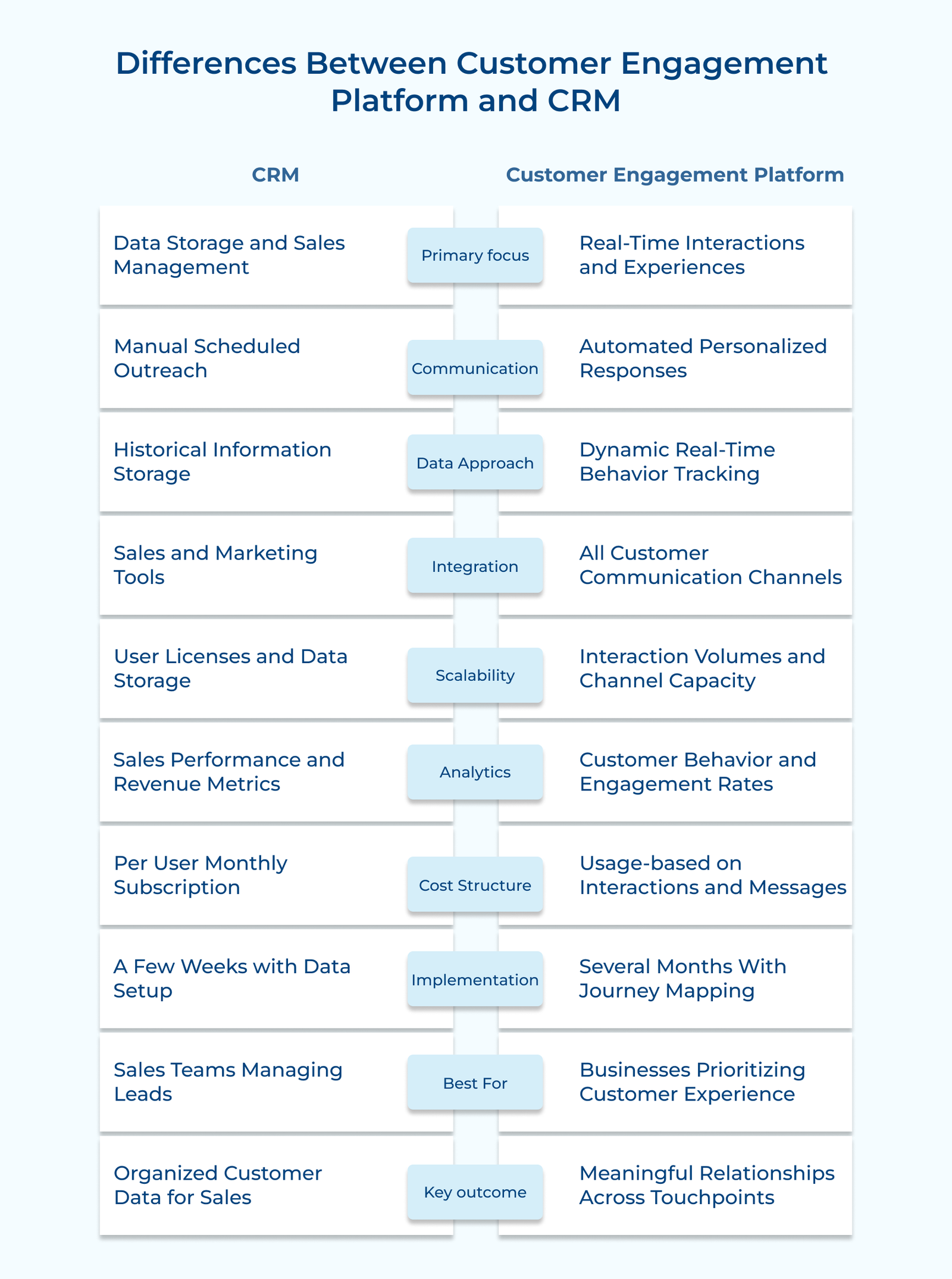
A CRM focuses on managing customer data and helping sales teams track leads, follow up and close deals. Think of it as a well-organized filing cabinet that keeps every customer detail in one place.
A customer engagement platform (CEP) focuses on interaction. It helps businesses have real-time, personalized conversations with customers across different channels, making every interaction timely and relevant.
Pro tips:
CRM systems excel at storing historical customer data in structured formats that help sales teams understand past interactions and purchasing patterns. The approach creates comprehensive customer profiles that serve as reference points for future sales activities and relationship management.
Key aspects:
Customer engagement platforms use real-time customer behavior to trigger instant, personalized interactions. Instead of just storing information the platforms actively use data to create timely and relevant customer interactions.
CRM systems focus on planned, scheduled communication. Sales teams reach out to prospects manually, using stored information and predetermined timelines. It works well for structured sales processes that require personalized conversations.
Customer engagement platforms deliver automated, personalized responses to customer actions in real-time across multiple channels. The platforms create conversation flows that feel natural and timely rather than forced or overly promotional.
Actionable tips:
CRM systems excel at integrating with sales-focused tools like email marketing platforms and lead generation software to create streamlined sales processes. The integrations help sales teams manage the pipeline from lead capture to deal closure.
Key factors:
Customer engagement platforms connect social media, chat, apps and websites to deliver unified customer experiences. The comprehensive integration approach ensures customers receive consistent messaging regardless of how they choose to interact with your business.
CRM systems scale by expanding storage, licenses and user access as your team grows. The approach supports larger sales operations but focuses mainly on managing data and user access efficiently.
Key questions:
Customer engagement platforms scale by managing higher interaction volumes across channels while keeping experiences personal. As your audience grows, the platforms ensure every message, alert or response still feels relevant and human.
CRM systems track sales metrics like conversion rates, deal progress and revenue forecasts to help teams refine their strategies. The reports typically show historical trends that inform future sales planning and territory management decisions.
Key differences:
Customer engagement platforms provide real-time analytics on behavior, engagement and interactions across all channels. The feedback helps businesses quickly adjust strategies based on customer responses.
CRM systems use predictable subscriptions based on user count and required features. Most CRM platforms charge per user per month with clear tiers that scale based on storage capacity and advanced features like automation or custom reporting capabilities.
Customer engagement platforms are priced based on interaction volume, channel use and automated messages. They may charge per message, email or active customer profile. Let’s assume that a small business might pay fifty dollars monthly for a basic CRM with five users. The same business could pay based on sending ten thousand personalized emails and handling five hundred live chat conversations through an engagement platform.
Key takeaways:
CRM implementation usually takes several weeks to set up data fields, import customer records and train your sales team. Complexity grows when integrating with existing tools like email systems or accounting software.
Key questions:
Implementing a customer engagement platform can take months, involving journey mapping, automated flows and multi-channel integration. The platforms require more strategic planning because they affect how customers experience your brand across every single touchpoint and interaction.
The following are the essential features that will help you evaluate platforms effectively. Let’s check them out in more detail.
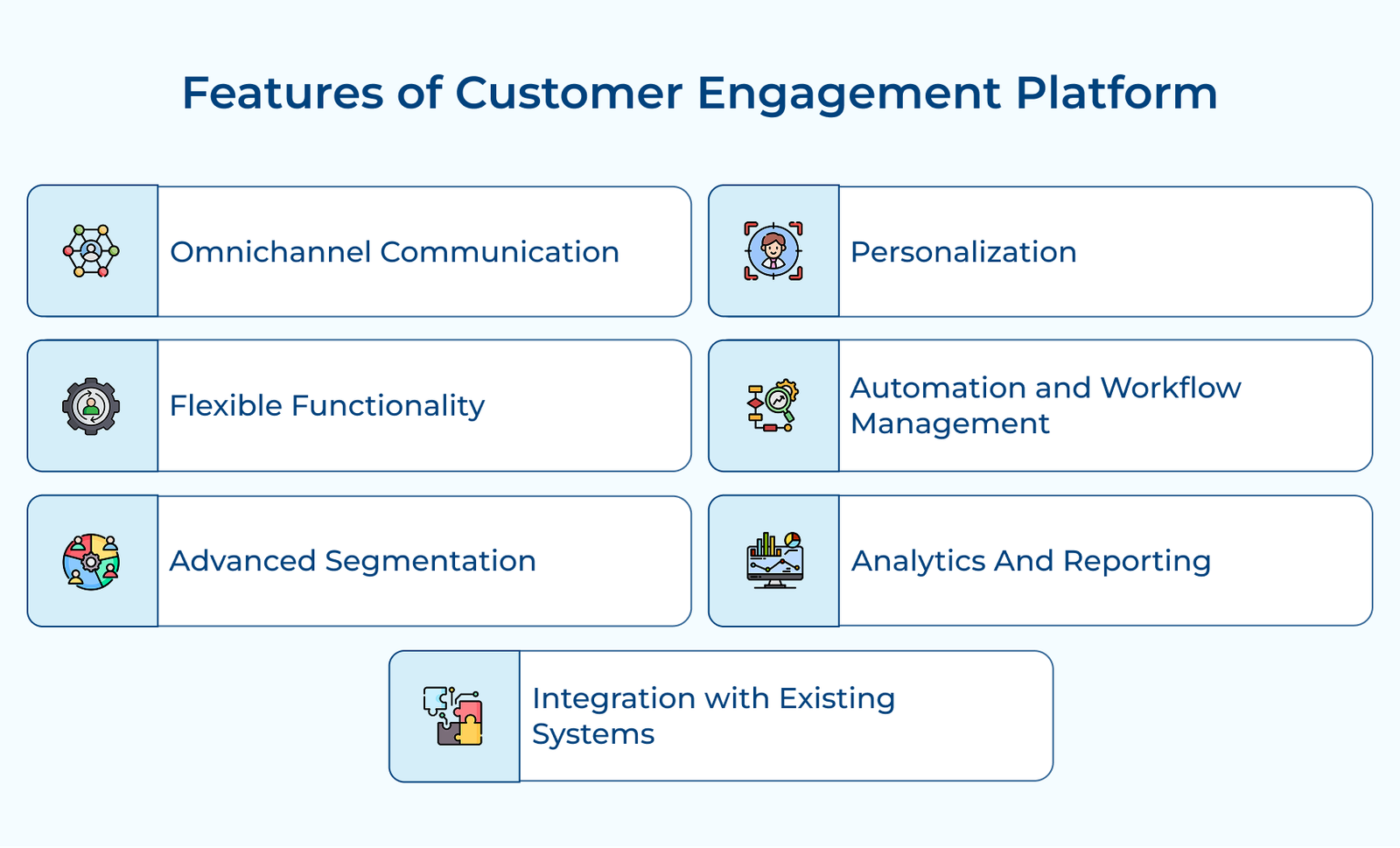
1. Omnichannel Communication
Your platform should seamlessly connect email, social media, live chat, SMS and phone calls into one unified conversation thread. It ensures customers experience consistent messaging regardless of how they choose to contact your business.
2. Flexible Functionality
Choose a platform with modular features you can enable based on your business needs and budget. It avoids paying for unused tools while allowing easy growth.
3. Advanced Segmentation
The platform must allow you to group customers based on behavior patterns, purchase history, demographics and engagement levels for targeted communication. Effective segmentation enables more relevant messaging that resonates with specific customer groups.
4. Personalization
Your chosen platform should dynamically customize content, timing and communication channels based on individual customer preferences. True personalization goes beyond using someone’s name to delivering genuinely relevant experiences.
5. Automation and Workflow Management
Platforms should trigger responses based on customer actions while keeping interactions natural and human. Smart automation should enhance the experience, not feel robotic.
6. Analytics and Reporting
The platform must provide real-time insights into customer engagement rates, communication effectiveness and behavior patterns across all channels. The analytics help you continuously optimize your engagement strategies for better results.
7. Integration with Existing Systems
Choose platforms that connect seamlessly with your CRM, marketing tools, e-commerce systems and other business applications. Integration ensures consistent customer data and prevents silos.
Veemo’s customer engagement platform is a game-changer in the world of customer relationships. The innovative platform offers a wide range of features and capabilities that can truly elevate the way businesses engage with their customers.
Businesses can create personalized and targeted marketing campaigns. The platform’s analytics and AI provide insights into customer preferences, helping businesses tailor their offerings. The tool integrates smoothly with existing CRMs, centralizing customer data and simplifying operations. Veemo’s customer engagement platform empowers businesses to take their customer relationships to new heights. Businesses can create meaningful connections, drive customer satisfaction and achieve long-term success by leveraging the innovative solution.

The choice between a customer engagement platform and a CRM system depends on your specific business goals. If your goal is to boost engagement and deliver personalized experiences, choose a customer engagement platform. If your priority is organizing customer data, optimizing sales processes and improving service, a CRM system is the better option.
Yes, many customer engagement platforms offer integrations with popular CRM systems. Such integration allows businesses to leverage the strengths of both tools, combining customer data management with engagement strategies. Businesses can have a comprehensive solution that covers customer data, interactions and engagement in one place.
A customer engagement platform can help businesses improve customer satisfaction and retention. It is done by delivering personalized and meaningful experiences. It enables businesses to build strong relationships and enhance brand advocacy. A CRM system streamlines sales, boosts efficiency and provides customer insights to improve sales outcomes.
The best approach for many businesses is to integrate a customer engagement platform with their existing CRM system. You can leverage the customer data stored in your CRM to enhance customer engagement strategies and create more meaningful interactions.
Industry needs can shape the choice between customer engagement platforms and CRM systems. E-commerce businesses may focus on personalized recommendations and cart recovery, while sales-driven businesses prioritize CRM features like lead tracking or sales forecasting.
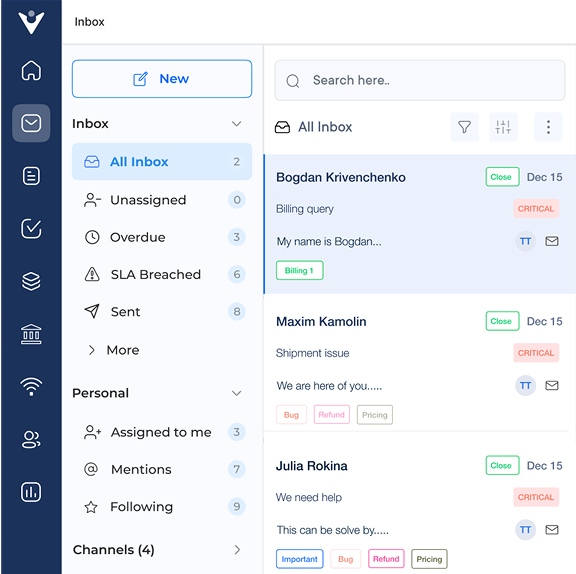
Grow Customer Relationships and stronger team collaboration with our range of products across the Conversational Engagement Suite.
Omnichannel Customer Support & Help Desk Software
AI Enabled Business Messaging and Chatbot Software
Sales Engagement & CRM Software
Call Center Software & Virtual Phone System
Product Marketing & Experience Platform
Customer Experience & Feedback Management Software
 Top 25+ Chatbot Statistics for 2026: Usage, Demographic & Trends
Scroll to top
Top 25+ Chatbot Statistics for 2026: Usage, Demographic & Trends
Scroll to top