Customer Service vs Customer Support: What’s the Difference?
Customer service vs customer support may sound similar, but their roles have differences. Knowing when to deploy each is crucial for optimizing customer interactions.

Customer service vs customer support may sound similar, but their roles have differences. Knowing when to deploy each is crucial for optimizing customer interactions.
When it comes to providing excellent customer care, customer service vs customer support can be a confusing topic. They seem similar, right? Both approaches revolve around helping customers. There is a distinct difference between them.
Providing exceptional customer care has become a top priority for companies in the highly competitive business environment. Numbers suggest that 90% of customers pick their brand based on customer service. The success of a business largely depends on the level of customer satisfaction it can achieve.
Many businesses still struggle with the differences between customer service and customer support. Let us delve into the key differences and explore why both are essential for delivering exceptional customer care.
Customer service refers to the vital process of supporting and assisting customers before, during, and after they purchase products or services. It encompasses all business interactions with its customers, aiming to ensure satisfaction, resolve issues and build lasting relationships. Think of it as the bridge that connects companies with their customers, promoting trust and loyalty through meaningful engagement.
The customer service process operates through multiple channels including phone, email, social media, live chat and in-person interactions. Service representatives actively listen to customer needs, provide solutions to problems, answer questions and guide customers through various processes. They serve as the company’s front-line ambassadors, equipped with deep product knowledge and communication skills to handle diverse customer situations effectively. 60% of consumers consider excellent customer service as a key differentiator when choosing between brands.
Key benefits:
Customer support is a specialized branch of business operations focused on providing technical and practical assistance to customers using a company’s products or services. It goes beyond basic customer service by offering in-depth technical knowledge, troubleshooting expertise and detailed product guidance to ensure customers can effectively utilize what they’ve purchased.
The support process operates through a structured system that typically begins with ticket creation when a customer reports an issue. Support teams categorize and prioritize these tickets based on urgency and complexity, then work methodically to resolve them.
They often employ a tiered approach, where Level 1 handles basic issues, Level 2 addresses more complex problems and Level 3 tackles the most technically challenging situations. The systematic approach ensures efficient problem resolution while maintaining clear communication with customers throughout the process.
Key benefits:
Explore the essential tips for providing outstanding customer service and support that will not only meet but exceed your customers’ expectations.
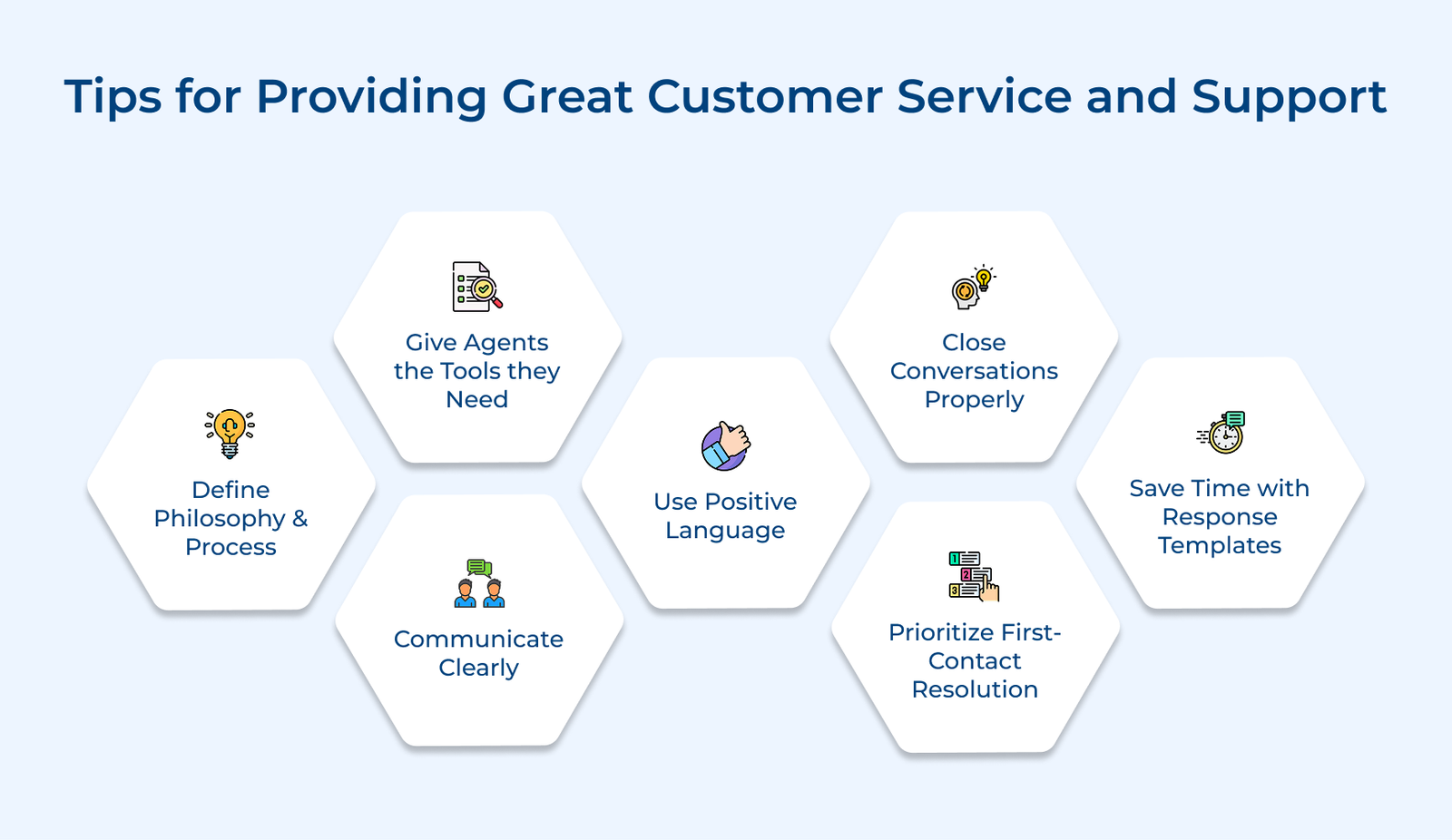
Before one can deliver outstanding customer service, one needs to have a clear understanding of the company’s philosophy and establish a well-defined process for handling customer inquiries. It will ensure consistency and a unified approach across the team.
Equip the customer service agents with the necessary tools and resources to effectively assist customers. It includes access to a comprehensive knowledge base, customer relationship management (CRM) software and other tools that enable them to provide accurate solutions.
Clear and effective communication is essential for providing great customer service. Ensure that the agents are trained to listen actively, ask relevant questions and provide easy-to-understand information. Make sure to avoid jargon or technical terms that customers may not be familiar with.
The language you use when interacting with customers can greatly impact their perception of your brand. Choose phrases that convey empathy, understanding and a willingness to help. Make sure the agents are trained to use positive language and avoid negative or confrontational tones.
Properly closing customer conversations is crucial to ensuring customer satisfaction. Always confirm that the customer’s issue has been resolved, ask if there is anything else you can assist them with and thank them for their patience. It helps to create a positive final impression and leaves the customer feeling valued.
Strive to resolve customer issues during their initial contact whenever possible. It reduces customer frustration and eliminates the need for them to contact you multiple times for the same problem. Empower the agents with the authority and resources to address concerns efficiently.
Develop a library of response templates for common customer inquiries or issues. It can save the agents valuable time by providing them with pre-written, customized responses. Make sure the templates are not generic and still convey a personalized touch.
Check out the key differences between customer service and customer support to understand how each plays a unique role in building loyal, satisfied customers.
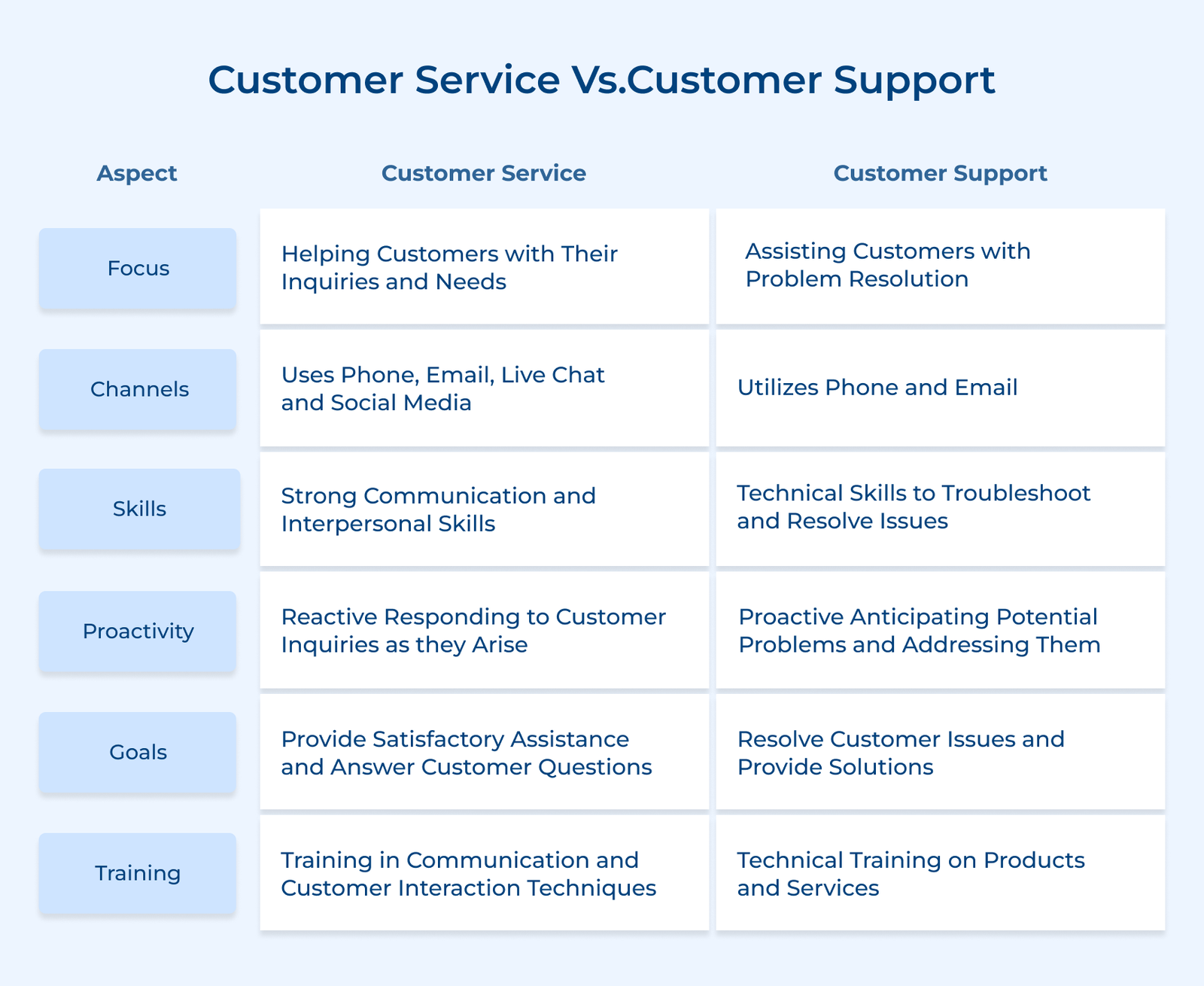
Customer service is focused on meeting the needs of customers before, during and after a purchase. It involves handling inquiries, resolving issues and ensuring customer satisfaction.
Customer support is more focused on technical assistance and troubleshooting for products or services. It involves helping customers use a solution effectively and addressing any technical problems they may encounter.
Customer service can be provided through various channels such as phone, email, live chat, social media and in-person interactions. It is typically more broad in terms of communication channels and is aimed at providing general assistance to customers.
Customer support is more focused on resolving technical issues and providing solutions to problems that customers may encounter with an offering through channels like technical support hotlines, online support forums and remote desktop services.
Customer service representatives are often trained in communication, problem-solving and conflict resolution skills. They are responsible for managing customer interactions and addressing general inquiries.
Customer support representatives are typically more specialized in technical knowledge and troubleshooting skills. They are trained to handle more complex technical issues and provide detailed instructions on resolving technical problems.
Customer service is often more proactive, focusing on building relationships with customers, anticipating their needs, and providing personalized assistance. Customer service representatives may reach out to customers to offer assistance or inform them of new products or services.
Customer support is more reactive, responding to customer inquiries and technical issues as they arise. It involves actively anticipating and addressing potential customer needs before they become problems, taking a more reactive approach to assisting.
The primary goal of customer service is to ensure customer satisfaction, loyalty and retention. Customer service representatives are focused on providing a positive customer experience and resolving issues in a timely effective manner.
Customer support is more focused on ensuring the offering’s functionality and addressing technical problems. The goal of customer support is to help customers effectively use a solution and troubleshoot any technical issues they may encounter.
Customer service representatives are often trained in soft skills such as communication, empathy and active listening. They are trained to interact with customers professionally and helpfully.
Customer support representatives are typically trained in technical skills related to the product or service they are supporting. They receive training on troubleshooting techniques, product knowledge and technical support tools.
Below are the real-life examples that illustrate the differences between customer service and customer support, empowering you to make informed choices when seeking assistance in your purchasing journey.
What sets Zappos apart is its commitment to going above and beyond for its customers. Their customer service representatives are known for their friendliness, patience and willingness to go the extra mile. They are empowered to make decisions and solve problems on the spot, ensuring a hassle-free shopping experience.
Zappos also puts great emphasis on building long-term relationships with its customers. They prioritize customer loyalty over short-term profitability, often surprising and delighting customers with unexpected gestures.
Anglian Water utilizes a state-of-the-art digital platform that provides customers with instant updates on any disruptions or issues with their water supply. Customers receive personalized messages via text or email, keeping them informed about repair work or any potential water quality concerns in their area. The proactive approach lets customers plan their day accordingly, minimizing inconvenience and frustration.
Anglian Water encourages open and transparent communication with its customers. They provide real-time updates on social media platforms such as Twitter and Facebook, ensuring that customers have easy access to the latest information. The level of engagement not only enhances customer satisfaction but also builds trust and loyalty.
One notable aspect of Amazon’s customer service is its emphasis on preemptive actions. The company uses advanced algorithms and data analysis to proactively identify potential issues before they arise. Let’s say a customer’s package gets delayed. Amazon will take the initiative to notify them in advance and provide alternative delivery options.
Amazon’s customer service teams are available round-the-clock, ensuring that customers receive timely assistance. Their representatives are well-trained and equipped to handle various issues, from product inquiries to returns. Amazon prioritizes convenience and simplicity in its customer service processes. The company streamlines the resolution process, saving both customers and employees valuable time by offering self-service options.
Asana’s knowledge base is a prime example of excellent customer support. Asana recognizes the importance of providing its users with comprehensive and accessible information on how to use their platform effectively. The knowledge base is a centralized hub that contains a wealth of resources such as tutorials, guides, FAQs and troubleshooting tips.
What sets Asana’s knowledge base apart is its user-friendly interface and search functionality. Users can easily navigate through various topics and find the specific information they need quickly. The articles are well-written and concise, ensuring that users can grasp the concepts easily. Asana regularly updates its knowledge base to incorporate new features and improvements, ensuring that users always have the most up-to-date information available.
Agile CRM understands the importance of listening to their customers and incorporating their feedback into the development of their products. They actively encourage their users to provide feedback, whether it’s through surveys, online forums or direct communication channels.
Once the feedback is gathered, the Agile CRM team carefully analyzes and prioritizes the suggestions. They take into account the needs and preferences of their customers to evaluate the impact of each suggested improvement. The next step involves implementing the feedback. Agile CRM’s development team is quick to respond to customer suggestions and they continuously release new features based on the feedback they receive.
Canyon understands that effective communication is the key to providing exceptional customer support. Offering chat support in multiple languages ensures that customers from different parts of the world can easily connect with a support representative who speaks their native language. It breaks down barriers, eliminates misunderstandings and enhances the overall customer experience.
Canyon’s multilingual chat support is available around the clock, ensuring that customers can seek assistance at their convenience, regardless of their time zone. The knowledgeable and friendly customer support team at Canyon provides precise answers to customer queries, resolving issues efficiently.
Check out the key reasons why customer service and customer support interrelate to understand how you can leverage both to facilitate stronger connections with your customers.
1. Issue resolution
Customer service representatives are usually the first point of contact for customers. They listen to their problems, provide basic troubleshooting and try to resolve issues. If the problem requires technical expertise or in-depth support, they escalate it to the customer support team.
2. Technical Expertise
Support agents have specialized knowledge and skills to handle complex technical issues. They work closely with customer service representatives to gather all the necessary information and provide detailed solutions.
3. Product Knowledge
Both customer service and support teams need to be well-versed in the products or services they offer. The knowledge helps them answer customer queries accurately, offer appropriate solutions and provide helpful guidance.
4. Training and Development
Continuous training is vital for both teams to stay updated with the latest product features, industry trends and customer service best practices. Training sessions can be conducted jointly to improve collaboration and ensure consistent service standards.
5. Feedback Loop
Customer service and support teams should have a feedback mechanism in place. They can share feedback on recurring customer issues, common pain points and suggestions for product or service improvements. The collaboration enables the company to address customer concerns effectively.
6. Shared Tools and Systems
Customer service and support teams typically use the same customer relationship management (CRM) system or ticketing system to work cohesively. The shared interface allows them to access customer information, track interactions and collaborate efficiently.
7. Customer Advocacy
Both teams play a crucial role in advocating for the customer within the organization. They gather insights from customer interactions, identify areas for improvement and provide valuable input to the product development or marketing teams.
The truth is both customer service and customer support are essential for a well-rounded customer care strategy. While customer service focuses on the broader customer experience and relationship-building, customer support provides the problem-solving capabilities required to address specific issues.
Businesses can create a seamless customer care experience that encompasses both proactive assistance and effective issue resolution. Customers appreciate having access to knowledgeable support representatives who can address their concerns promptly and professionally.
Instead of viewing customer service and customer support as competing functions, businesses should recognize their complementary nature. Incorporating both into the customer care strategy allows you to provide a comprehensive and satisfying experience for your customers.

Improving customer service skills involves several key aspects alongside being clear on customer service vs customer support. Companies should train their customer service representatives to have excellent communication skills, empathy and problem-solving abilities. Providing comprehensive product knowledge and empowering employees to make decisions that benefit the customer is essential. Regular feedback and performance evaluations can also help identify areas of improvement.
Handling customer complaints effectively is crucial to maintaining a positive relationship with customers. Businesses should ensure that complaints are taken seriously and acknowledged promptly. Active listening and empathy are vital during this process. It’s important to gather all necessary information and work towards finding a satisfactory solution. Keeping customers updated on the progress and following up after a resolution can also enhance customer satisfaction.
Customer loyalty can be established through exceptional customer service. Businesses can create loyal customers by consistently providing a positive experience and resolving issues promptly. Personalization, loyalty programs and proactive communication can also increase customer loyalty.
Measuring customer support and service is crucial for businesses to ensure they are meeting customer expectations. Some common metrics to measure customer support include response time, resolution time, customer satisfaction surveys and Net Promoter Score. Monitoring them can help businesses identify areas of improvement and provide better customer experiences.
The role of customer support is to assist customers with their inquiries, concerns and issues regarding a solution. It involves providing timely accurate information, resolving problems, and ensuring customer satisfaction. Customer support representatives are the direct link between the company and its customers, serving as the voice of the brand. Their eventual goal is to build strong relationships and enhance the overall customer experience.
Customer service is a critical aspect of many industries, including retail, hospitality, telecommunications and healthcare. These industries focus on providing assistance and resolving customer issues to ensure satisfaction. Customer support is commonly found in technology-based industries, such as IT, software development and telecommunications. They offer specialized assistance to customers with technical problems or inquiries.
Grow Customer Relationships and stronger team collaboration with our range of products across the Conversational Engagement Suite.
Omnichannel Customer Support & Help Desk Software
AI Enabled Business Messaging and Chatbot Software
Sales Engagement & CRM Software
Call Center Software & Virtual Phone System
Product Marketing & Experience Platform
Customer Experience & Feedback Management Software

 Customer Success vs Customer Support: The Key Differences
Scroll to top
Customer Success vs Customer Support: The Key Differences
Scroll to top