Customer Success vs Customer Support: The Key Differences
The blog explains the difference between customer success vs customer support. It highlights their roles, goals and impact on long-term business growth.

The blog explains the difference between customer success vs customer support. It highlights their roles, goals and impact on long-term business growth.
Many companies blur the line between customer success and customer support. The result? Confusion, overlapping roles, and wasted effort. When the distinction isn’t clear, support teams stay stuck reacting to problems, while success efforts get sidelined. Customers end up with uneven experiences, retention drops and teams operate in isolation instead of working toward shared goals.
Understanding the differences between customer success vs customer support can change how you approach the entire customer journey. Support focuses on solving immediate issues. Success is about guiding customers toward lasting results and growth.
Customer support refers to the reactive function that helps customers resolve issues with your product or service. Think of it as your company’s problem-solving team, responding when customers need help. Support teams act like firefighters, addressing urgent problems and technical difficulties.
Customer support provides immediate relief, builds trust, and reassures customers that help is always available. Quick, reliable assistance reduces frustration, encourages confidence in using your product and shows your commitment to standing behind it.
Key benefits:
Customer success refers to a proactive strategy aimed at helping customers achieve their goals with your product or service. Think of it as a trusted guide, ensuring customers gain real value from their investment. Rather than just selling a product, the focus is on helping customers succeed and grow with it.
Customer success strengthens business growth by reducing churn and increasing customer lifetime value. When customers achieve their objectives, they become loyal advocates, driving referrals and long-term growth.
Key objectives:
Understanding how the differences between customer support vs customer success will help you build stronger relationships, reduce churn and create a smoother customer experience overall.
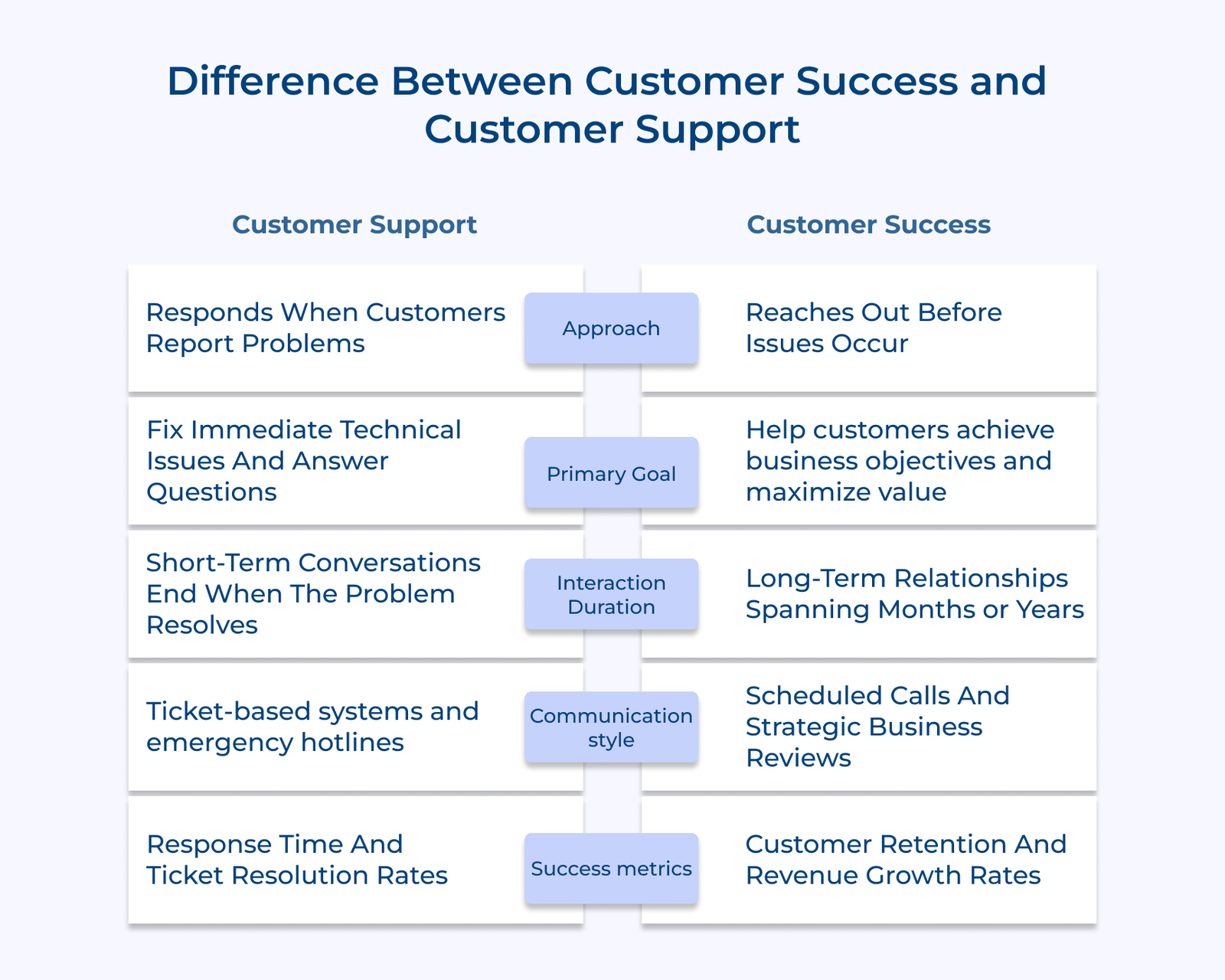
Customer support reacts to problems as they arise. The team waits for customers to report issues and steps in to fix them, a break-fix model focused on restoring functionality.
Customer success takes a proactive path. The team reaches out before problems occur, helping customers make steady progress toward their goals and preventing frustrations down the road.
Pro tips:
Customer support focuses on solving immediate technical issues and answering specific questions that customers bring to the support team. The goal is to solve problems efficiently and keep customers satisfied.
Customer success focuses on helping customers achieve their business objectives and extract maximum value from the product or service. The goal involves driving long-term customer satisfaction and business growth.
Actionable tips:
Customer support interactions typically last for short periods, focused on specific problems that need immediate attention. The conversations end once the issue is resolved successfully.
Customer success relationships last much longer. Success managers check in regularly, review progress and help customers plan for continued improvement.
Best practices:
Customer support relies heavily on ticket systems and reactive communication channels where customers initiate contact when they need help. Think of support as your emergency hotline that customers dial when something breaks.
Key methods for customer support:
Key methods for customer success:
Customer success uses proactive outreach through scheduled calls and strategic touchpoints to maintain regular communication with customers. Successful teams create structured communication plans that keep relationships warm and productive.
Customer support measures performance through operational metrics like response times and ticket resolution rates that focus on efficiency. The numbers tell you how quickly problems get solved.
Key metrics:
Key metrics:
Customer success tracks business outcomes like retention rates and account growth that demonstrate long-term customer health. The metrics reveal whether customers achieve their desired business results.
Customer support teams need strong technical troubleshooting abilities to diagnose problems and provide accurate solutions quickly. Support agents excel at breaking down complex technical issues into manageable steps.
Key strengths:
Customer success requires business acuity and strategic thinking to guide customers toward achieving their desired outcomes. Success managers think like business consultants who happen to know your product well.
Customer support interactions conclude upon immediate problem resolution, allowing the customer to continue product use unassisted. The conversation naturally ends once the technical issue disappears and normal functionality returns.
Customer success aims to position customers to achieve their business goals and maximize their investment value. The conversations enhance future growth and deeper product adoption instead of merely closing tickets.
Key takeaways:
Customer support requires staffing models that can handle unpredictable ticket volumes with quick response times during peak periods. Think of support like an emergency room that must stay ready for whatever walks through the door.
Customer success requires strategic resource planning to align team capacity with high-value accounts and growth opportunities. Success teams operate more like consulting firms that carefully choose where to invest their expertise for maximum impact.
Key questions:
The resource allocation mindset shapes everything from hiring decisions to daily priorities. Support teams scale based on customer volume and complexity, while success teams scale based on account value and strategic importance to business growth.
Below are the examples where customer support and customer success join forces to create unparalleled customer satisfaction.
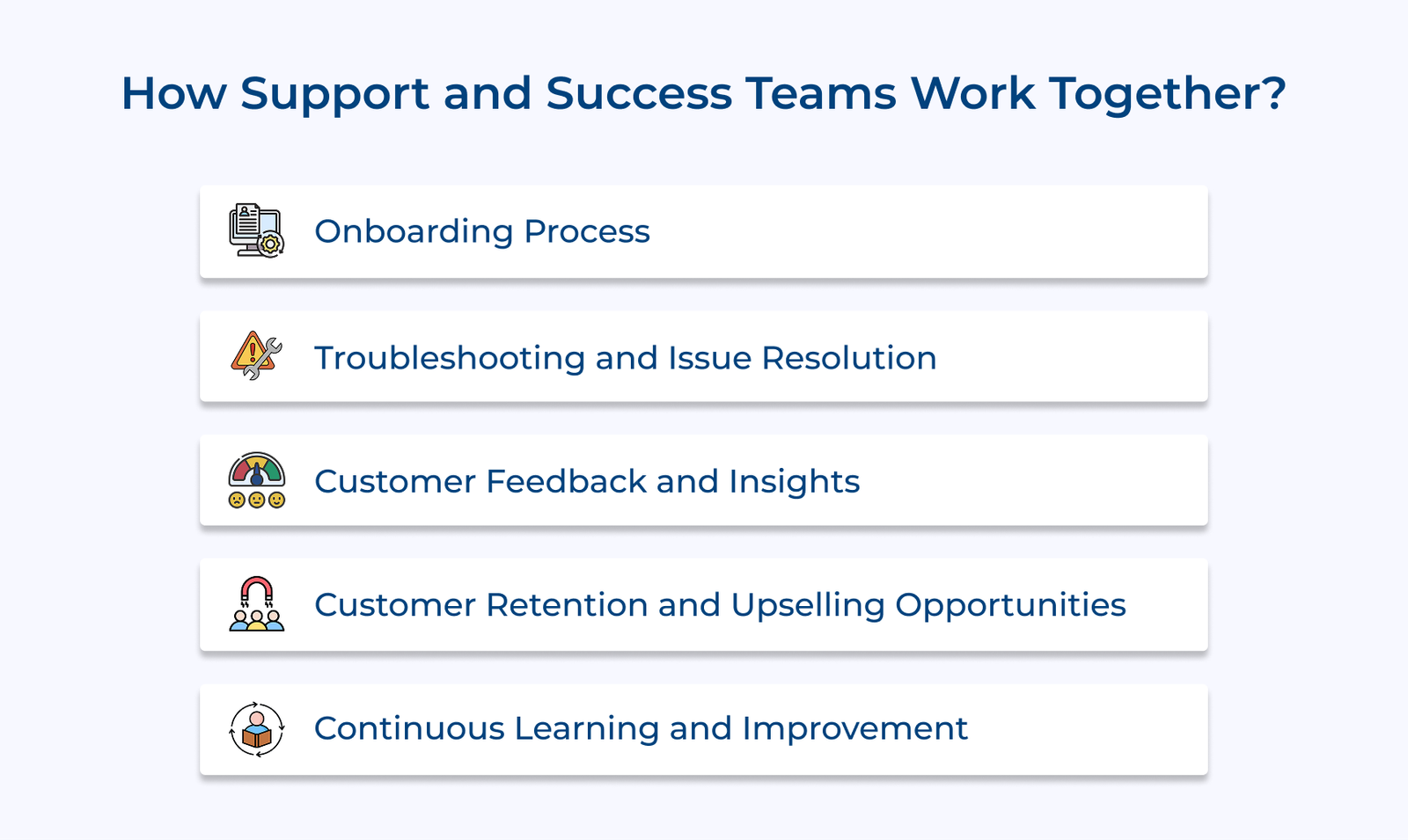
Customer support and customer success can collaborate during onboarding to ensure a smooth transition and a positive initial experience. Customer support can provide technical assistance and answer any questions that arise. Customer success guides the customer through the onboarding journey, ensuring they understand how to maximize the value of the product.
When customers encounter problems, support and success teams can collaborate for prompt resolution. Customer support can handle the technical aspects and provide immediate assistance. Meanwhile, customer success focuses on addressing underlying concerns and ensuring the customer remains satisfied with the overall experience.
Both customer support and customer success teams interact regularly with customers, giving them valuable insights into their needs. The teams can contribute to the development of new features, product improvements and even marketing strategies by sharing the information. Customer support can provide feedback from individual customer interactions, while customer success can offer broader insights based on their understanding of customer goals.
Customer support and customer success teams can collaborate to identify customers who may be at risk of churning. Customer support gathers frustrated customer feedback and escalates it to customer success, who can then proactively retain the customer with solutions. Customer support can identify upselling opportunities and pass them on to customer success for further nurturing.
Both customer support and customer success teams can benefit from each other’s knowledge and expertise. Regular knowledge-sharing sessions, team meetings and collaborative problem-solving can foster a learning culture within the organization. Customer support can share insights into common customer pain points, while customer success can provide strategies for driving customer engagement.
Check out the strategies that can help you harness the full potential of your customer success and support teams, driving your organization’s success.
Customer success focuses on proactively supporting customers throughout their entire journey, from onboarding to continued success. Modeling growth in customer success involves the following steps:
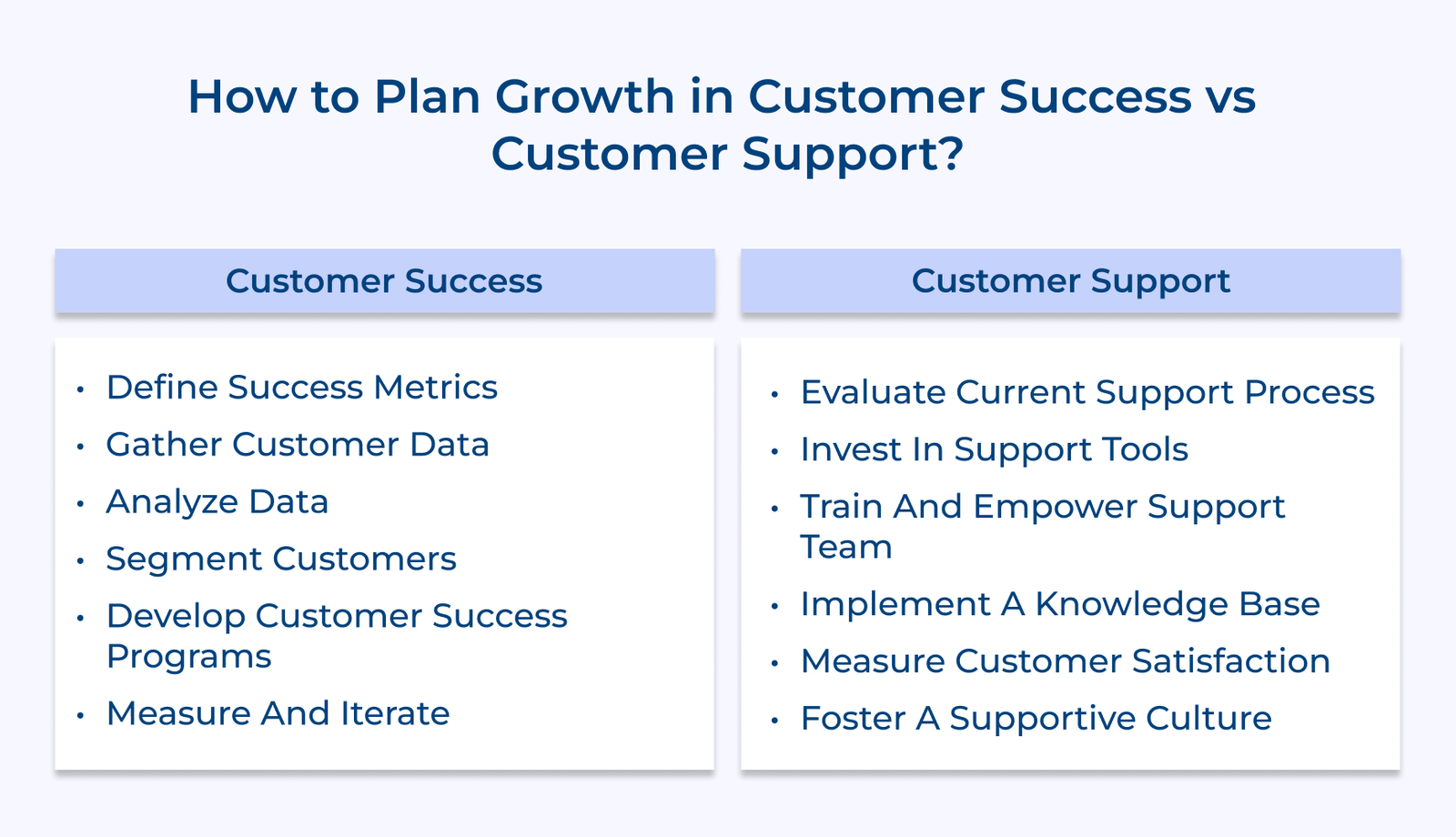
1. Define success metrics: Start by identifying the customer support metrics that are indicators of customer success. It can include customer retention rates, product adoption rates, customer satisfaction scores or any other relevant metrics for your business.
2. Gather customer data: Collect data from various touchpoints, including customer surveys, usage analytics and support interactions. It will provide insights into customer behavior and help identify areas for improvement.
3. Analyze data: Analyze the collected data to identify trends and customer pain points. It will help you understand what actions or changes are needed to improve customer success.
4. Segment customers: Segment your customer base based on needs, usage patterns or demographics. It will allow you to tailor your customer success strategies to each segment’s specific requirements.
5. Develop customer success programs: Based on the insights, create proactive customer success programs focused on education, training and personalized support. The programs should aim to empower customers to achieve their goals with your product.
6. Measure and iterate: Continuously measure your customer success program effectiveness and iterate based on feedback. It will ensure that your strategies remain relevant for your customers.
Customer support is reactive and focuses on addressing customer issues promptly. Modeling growth in customer support involves the following steps:
1. Evaluate current support process: Take a close look at your existing customer support process. Identify any bottlenecks that require improvement, such as response times, ticket resolution rates or customer satisfaction levels.
2. Invest in support tools: Utilize customer support software that streamlines and automates support processes. It can include ticket management systems, live chat platforms or knowledge bases to provide self-service options.
3. Train and empower support team: Provide comprehensive training to your support team to ensure they have the necessary product knowledge. Empower them to handle customer issues and provide personalized support.
4. Implement a knowledge base: Create a knowledge base or FAQ section to address common queries and enable self-service. It will reduce the number of support tickets and empower customers to find solutions on their own.
5. Measure customer satisfaction: Implement customer satisfaction surveys to gauge the effectiveness of your support efforts. Use the feedback to identify areas for improvement and take necessary actions.
6. Foster a supportive culture: Encourage a culture of continuous improvement within your support team. Enhance collaboration, knowledge sharing and regular feedback to enhance the support experience for your customers.
Unlocking the true potential of customer support can be achieved through the implementation of customer success strategies. Businesses can build long-lasting relationships with their customers and drive customer loyalty by shifting the focus from reactive support to proactive engagement.
Customer success aims to understand the needs and goals of customers. It also aims to provide them with the resources to achieve success with the product or service. Businesses can enhance customer satisfaction, increase retention rates and drive business growth by prioritizing customer success. So, embrace the power of customer success and watch your customer support reach new heights.

Customer support professionals need excellent communication and problem-solving skills. They should be able to listen attentively, empathize with customers and find effective solutions to their problems. Technical knowledge related to the product is crucial for troubleshooting and providing accurate guidance.
Customer success professionals need strong interpersonal and relationship-building skills. They should be able to understand customers’ goals, identify growth opportunities and provide customized solutions. They also need a deep knowledge of the product and the ability to communicate its value to customers.
Customer support is not limited to resolving issues; it also plays a crucial role in creating positive experiences for customers. Support teams can provide guidance, offer product demonstrations and educate customers to ensure they make the most of the product.
While customer success can involve upselling or cross-selling, its primary focus is on helping customers achieve their goals and derive value from the product. Successful implementation, adoption and ongoing support are essential aspects of customer success.
No, customer support and customer success often work hand in hand to ensure customer satisfaction. Customer support resolves immediate issues, while customer success focuses on long-term customer success. Collaboration between the roles can lead to improved customer experiences.

Grow Customer Relationships and stronger team collaboration with our range of products across the Conversational Engagement Suite.
Omnichannel Customer Support & Help Desk Software
AI Enabled Business Messaging and Chatbot Software
Sales Engagement & CRM Software
Call Center Software & Virtual Phone System
Product Marketing & Experience Platform
Customer Experience & Feedback Management Software

 Customer Success vs Customer Experience: The Key Differences
Scroll to top
Customer Success vs Customer Experience: The Key Differences
Scroll to top