Live Chat ROI: How to Track & Increase It?
Live chat ROI has become an integral part of analyzing the organizational experience. Let's learn how, directly and indirectly, live chat proves to be a resource for enhancing retention.

Live chat ROI has become an integral part of analyzing the organizational experience. Let's learn how, directly and indirectly, live chat proves to be a resource for enhancing retention.
Many businesses find it hard to measure the real financial impact of live chat. It’s often seen as just another support cost, rather than a tool that can increase sales and keep customers coming back.
Without tracking live chat ROI, companies lose valuable insight into how chat contributes to revenue. They miss chances to improve performance, secure budgets and show the true value of their support team, leaving potential profits untapped.
Measuring the ROI with the right metrics and strategies can change that. When used effectively, live chat helps convert visitors into customers, lowers support costs and drives steady, measurable growth.
Live chat ROI refers to the financial return your business generates from investing in live chat technology and support staff. Think of it as comparing the money you spend on chat tools and agents against the revenue those conversations directly create. It’s a simple way to see if your chat system, including tools and staff, actually brings in more money than it spends.
When tracked effectively, live chat turns customer support into a source of revenue. It shows how real-time conversations help convert visitors into customers, reduce support costs and strengthen relationships. Businesses that understand this data can make smarter decisions about expanding chat programs and improving service.
Key objectives:
Let’s go through the transformative impact of automation on live chat ROI, shedding light on how technology can propel your customer service strategy to new heights.
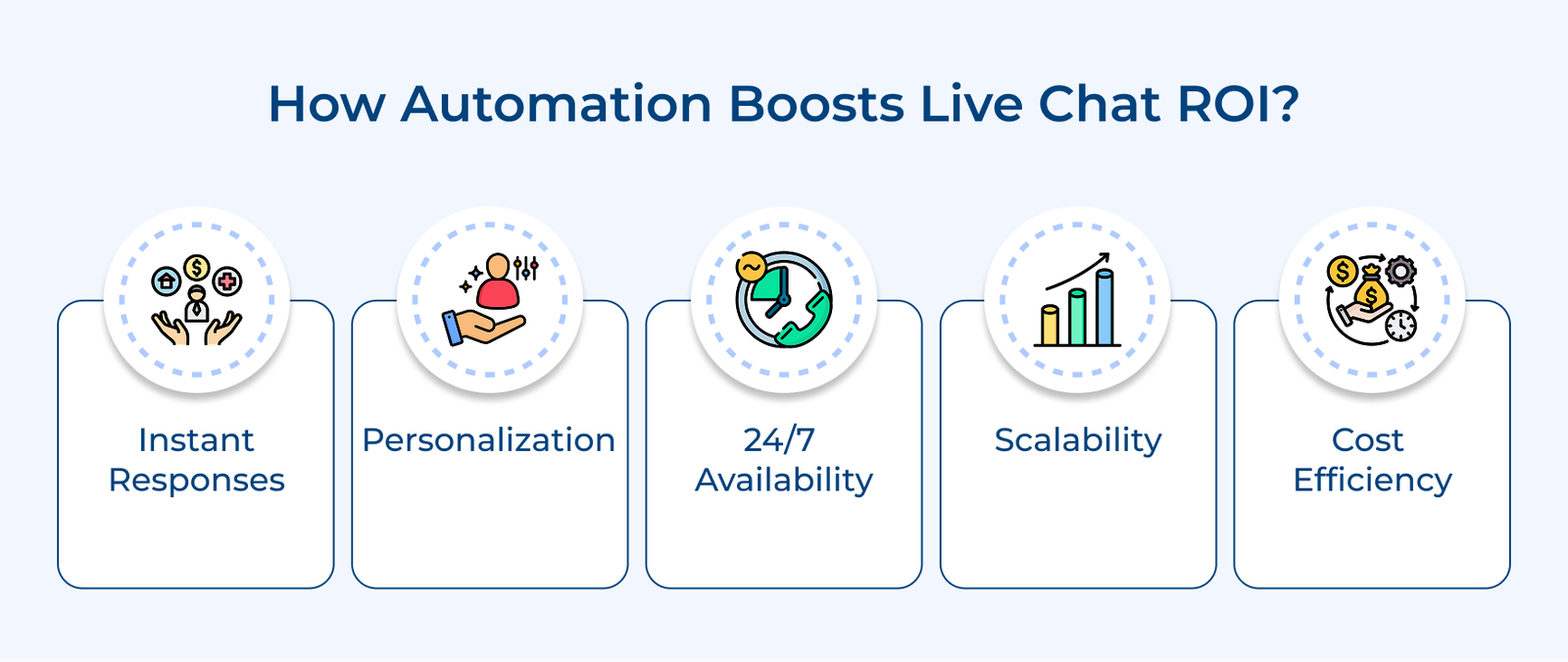
AI-powered live chat gives customers quick answers without the wait. Chatbots handle common questions and guide users to the right solutions instantly. It reduces frustration, keeps conversations flowing and improves satisfaction, all while saving time.
AI algorithms can collect and analyze customer data, allowing a business to personalize its interactions. AI-powered chatbots can offer tailored suggestions, knowing a customer’s preferences, purchase history and browsing behavior. The personal touch enhances the customer experience, increasing the likelihood of conversions and repeat purchases.
AI chat never sleeps. Be it midnight or a holiday, customers can still get help whenever they need it. The constant availability not only improves convenience but also captures sales that might otherwise be lost after business hours without increasing staffing costs.
As customer demand grows, AI chat scales effortlessly. It can manage hundreds of conversations at once with the same level of consistency and accuracy. The flexibility helps businesses grow without stretching support teams too thin.
Implementing AI and automation in live chat systems can significantly reduce costs associated with customer support. AI-powered chatbots free up human resources for more complex and high-value activities. The cost-efficient approach translates to improved ROI by eliminating the need for extensive human support teams.
The following are the six best ways to increase your live chat ROI and transform customer engagements into profitable opportunities.
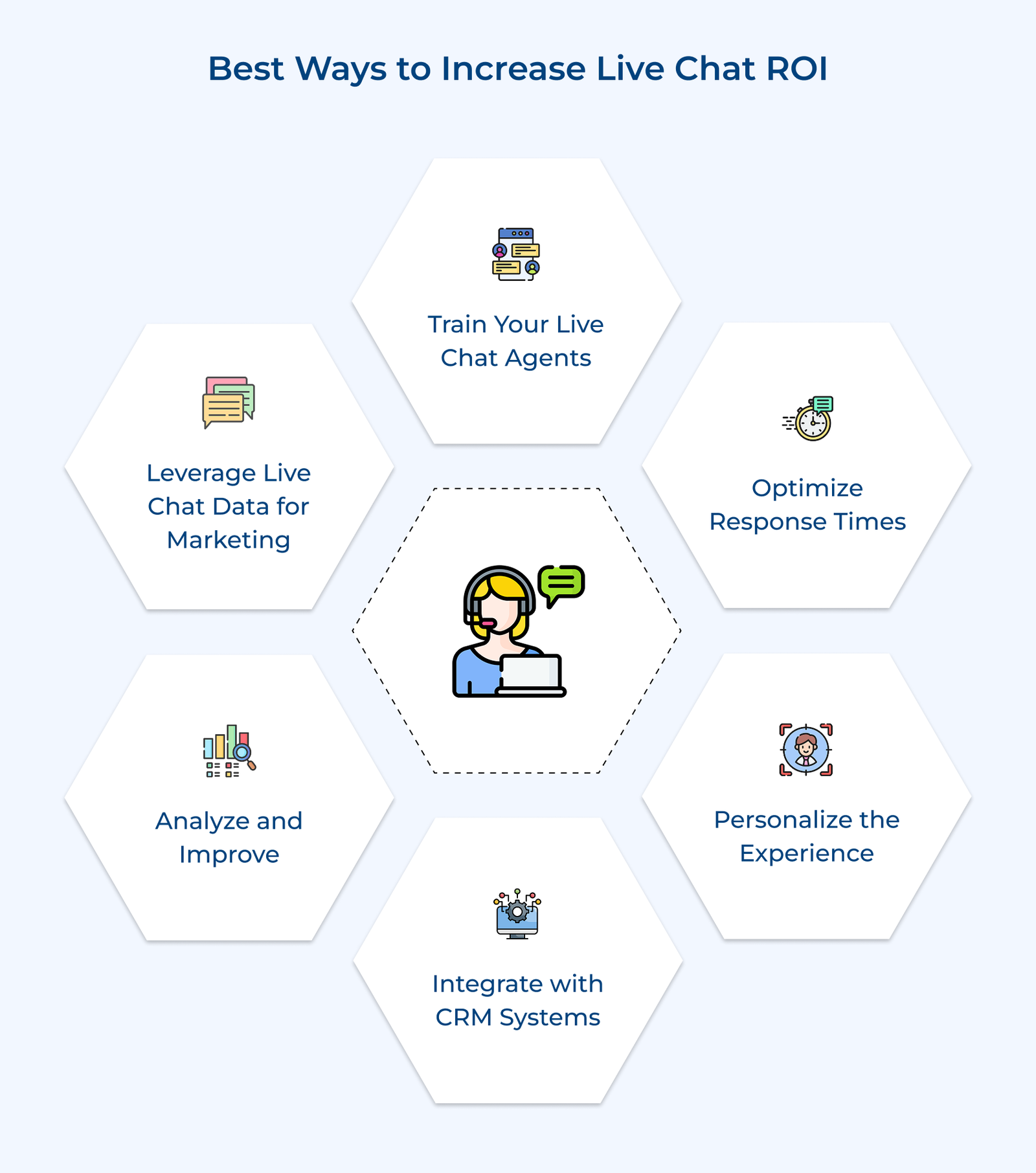
The importance of training your live chat agents lies in their ability to effectively communicate with customers and provide timely responses. Proper training ensures that agents are equipped with the necessary skills to handle various customer inquiries and resolve issues.
Businesses can provide exceptional customer experiences, increase customer loyalty and drive revenue growth. Training live chat agents benefits industries like e-commerce, software, healthcare and online services. Businesses can enhance their live chat ROI and gain a competitive edge by investing in agent training.
Pro tips:
1. Product and service knowledge: Agents should have a solid grasp of your business offers so they can answer questions confidently and accurately. Regular refreshers help them stay current on updates or new releases.
2. Communication skills: Effective communication is essential in live chat interactions. Agents should be trained to use clear language. Be empathetic towards customers and adapt their tone to match the customer’s demeanor.
3. Problem-solving abilities: Every customer issue is a chance to earn trust. Training agents to think critically, troubleshoot efficiently and make sound decisions helps them provide fast resolutions.
The importance of optimizing response times lies in its ability to increase customer satisfaction. Customers who get quick responses are more likely to stay loyal, boosting retention and ROI.
Customers crave instant gratification and quick solutions to their queries. Slow response times can lead to frustration and a negative perception of your brand. Fast response times create a sense of trust and reliability, building a positive reputation for your business.
Actionable tips:
1. Implement chatbots: Automate common questions so customers get immediate answers any time of day.
2. Route chats smartly: Direct customers to the right agent based on their issue or availability to cut down waiting time.
3. Keep ready responses: Prepare clear, friendly replies for frequent questions to help agents respond faster while keeping the conversation personal.
When customers engage in live chat, they expect a tailored experience that caters to their specific needs. Businesses can offer relevant solutions and tailored recommendations by personalizing the experience. Personalization builds trust, enhances customer satisfaction, and ultimately leads to higher conversion rates.
A use case of personalizing the live chat experience is in e-commerce. Businesses can suggest products during live chats based on customers’ browsing and purchase history. It not only increases the chances of a sale but also enhances the shopping experience for the customer.
Best practices:
1. Know your customers: Collect information about preferences, demographics and past interactions to understand what each customer values most. Use the insights to guide your chat conversations.
2. Make it personal: Address customers by name and refer to previous purchases or issues. Small details show that you remember them and care about their experience.
3. Be proactive: Don’t wait for customers to ask for help. If someone lingers on a product page or seems hesitant, start a chat to offer guidance or suggest options that fit their needs.
The importance of integrating live chat with CRM systems cannot be overstated. It helps businesses capture real-time customer data to deliver personalized support. Companies can easily track customer interactions, preferences and behavior.
A prime use case of integrating live chat with CRM systems is lead generation and nurturing. Businesses can capture leads directly from live chat conversations and automatically add them to their CRM database. It ensures seamless communication and follow-up, resulting in increased sales.
Key takeaways:
1. Pick the right CRM: Choose a CRM that easily connects with your live chat platform and supports smooth data sharing.
2. Collect key details: Use the integration to automatically record relevant data like chat history, preferences or purchases, so agents can personalize every interaction.
3. Automate lead creation: Set up automatic lead creation from live chats to help your sales team focus on high-potential customers without missing follow-ups.
Analyzing live chat performance is crucial to understanding what works and what doesn’t. Businesses can make data-driven decisions by tracking chat metrics such as response times, customer satisfaction ratings and conversion rates. The analysis allows businesses to identify patterns, optimize agent performance and increase ROI.
One important use case for analyzing and improving live chat is reducing customer wait times. Long response times can lead to frustration and decreased customer satisfaction. Businesses can identify peak chat times and ensure that they have enough agents available to handle customer inquiries promptly.
Pro tips:
1. Track key metrics: Regularly monitor metrics such as response time, satisfaction scores and conversion rates. Look for trends that reveal what needs to change.
2. Review chat transcripts: Chat logs can uncover recurring issues, common questions or missed opportunities. Use the insights to refine your FAQs and train agents more effectively.
3. Be proactive: Use analytics to spot visitors who may need help and reach out before they ask. Timely, relevant support keeps customers engaged and satisfied.
Live chat provides instant support, but it also holds a wealth of valuable data that can be leveraged for marketing purposes. Businesses can maximize their live chat return on investment (ROI) and gain a competitive edge by analyzing and utilizing live chat data.
The live chat data allows businesses to better understand their customers, their preferences and pain points. It can then be used to tailor marketing campaigns and strategies, resulting in increased conversions.
Actionable tips:
1. Track common questions and trends: Review chat transcripts to find recurring topics or concerns. Use the insights to shape your marketing content and address real customer needs.
2. Spot upselling and cross-selling opportunities: Chat data often highlights what customers are already interested in. Use that knowledge to suggest complementary products or upgrades naturally during or after conversations.
3. Measure and refine campaigns: Live chat data allows businesses to measure the effectiveness of their marketing efforts. Businesses can spot gaps and refine their marketing strategies by tracking metrics like response time, satisfaction, and conversion rates.
Let’s go through the effective metrics to track live chat ROI and measure its impact on your business:
Key questions you can consider:
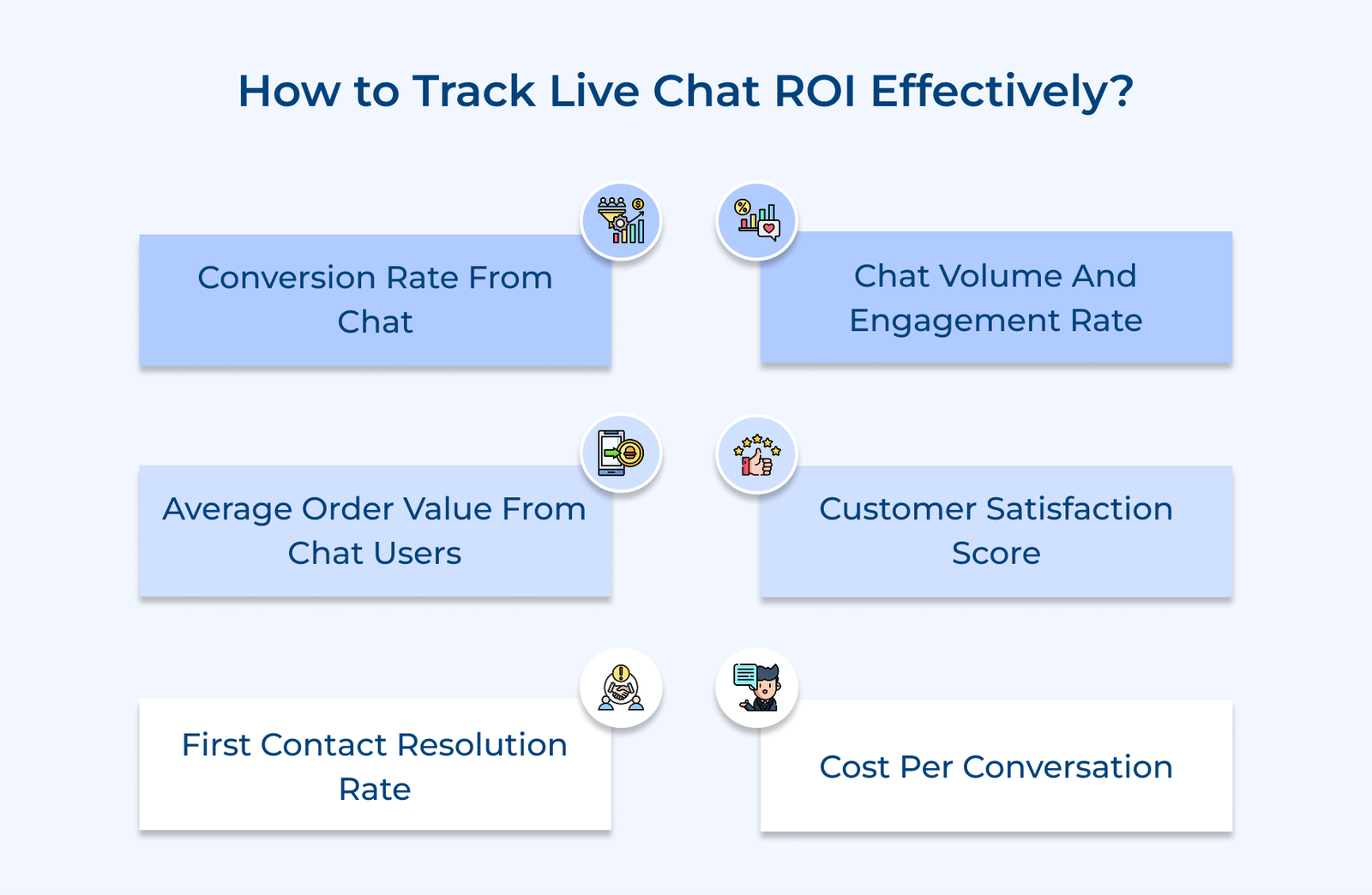
1. Conversion Rate from Chat
The metric measures how many chat interactions lead to sales or other desired actions. A higher rate shows that agents are successfully guiding customers through the buying process.
2. Chat Volume and Engagement Rate
The metric shows what percentage of your website visitors actually start chat conversations when the feature is available. It reveals if the customers find your chat accessible and valuable. Low engagement might indicate poor placement or timing of your chat widget.
3. Average Order Value from Chat Users
Compare the spending of customers who use live chat versus those who don’t. Chat users often spend more because agents can suggest relevant products or upsell services, directly affecting revenue per customer.
4. Customer Satisfaction Score
Measure customer happiness after each chat through surveys or feedback forms. Higher satisfaction encourages repeat business and referrals, contributing to long-term growth.
5. First Contact Resolution Rate
The metric tracks how many customer issues get completely resolved in a single chat session without follow-up needed. Efficient resolution saves time and money while improving customer experience. It reduces the cost per support interaction significantly.
6. Cost Per Conversation
The metric calculates the total expense of running your chat program divided by the number of conversations handled monthly. Include software costs, agent salaries and training expenses. Lower costs per conversation while maintaining quality indicate better operational efficiency and higher ROI.
Live chat can turn your support team from a cost center into a tool that drives real revenue. When used effectively, it improves conversions, resolves issues faster and lowers operational costs, all contributing to measurable business growth.
The key lies in tracking the right metrics and continuously optimizing your chat strategy based on real performance data. Start measuring the essential metrics today to unlock your live chat’s full potential and watch your ROI climb steadily upward.

Yes. Websites with live chat see higher conversion rates because it removes barriers to purchase. Immediate assistance and quick resolution of concerns help turn visitors into customers, boosting sales.
Ensure that your live chat feature is prominently displayed on your website so that visitors can easily find it. Design your chat window to match your brand and provide a clear greeting message. Train your live chat agents to respond promptly, providing personalized and relevant assistance. Regularly review chat transcripts and customer feedback to identify areas for improvement.
Live chat allows agents to handle multiple conversations at once, lowering staffing needs. Automating common questions with chatbots further reduces operational costs while maintaining fast, quality support.
Live chat is a versatile tool and can benefit businesses across various industries. It is important to consider your target audience and their preferences. Live chat works best for customers who prefer text and expect quick responses. If your customers prefer phone or email interactions, live chat may not be as successful. Conduct market research and analyze customer behavior to determine if live chat is the right fit for your business.
Absolutely. Live chat provides instant answers, eliminating the frustration of waiting on hold or for email responses. A study by eConsultancy shows 73% of online consumers prefer live chat for its speed and convenience, leading to higher satisfaction.

Grow Customer Relationships and stronger team collaboration with our range of products across the Conversational Engagement Suite.
Omnichannel Customer Support & Help Desk Software
AI Enabled Business Messaging and Chatbot Software
Sales Engagement & CRM Software
Call Center Software & Virtual Phone System
Product Marketing & Experience Platform
Customer Experience & Feedback Management Software
 What is a Customer Experience Program? Benefits & Key Steps
Scroll to top
What is a Customer Experience Program? Benefits & Key Steps
Scroll to top