How to Design a Post Purchase Experience? 9 Effective Ways
Post purchase experience refers to interactions and satisfaction levels customers encounter after buying a solution. It influences brand loyalty and future purchasing decisions.

Post purchase experience refers to interactions and satisfaction levels customers encounter after buying a solution. It influences brand loyalty and future purchasing decisions.
Ever bought something online and felt disappointed once it arrived? Or maybe received excellent customer service but the product itself was not what you expected. The post purchase experience plays a crucial role in customer satisfaction and loyalty.
Where online shopping has become the norm, businesses must prioritize the purchase experience to ensure customer retention. 86% of buyers are willing to pay more for a great customer experience. Every interaction with the buyer must be positive from the moment a purchase is made to the delivery and beyond.
The best post purchase experience encompasses everything from packaging, shipping and product quality to customer service. Businesses need to focus on building a loyal customer base and creating brand advocates. Here we will explore what is post purchase experience and ways businesses can enhance it to drive customer satisfaction.
The post-purchase experience refers to all interactions and touchpoints a customer has with a brand after making a purchase. It encompasses the period from the moment a transaction is completed to the time the customer decides to make another purchase or disengage from the brand.
The experience works by maintaining engagement with customers beyond the initial sale. It involves various elements such as order confirmation, shipping updates, product delivery, customer support, follow-up communications and loyalty programs. Brands use multiple channels and dedicated apps to stay connected with customers to ensure their get maximum satisfaction.
Key objectives:
Let us explore why the post-purchase experience is important for your business and how it can transform one-time buyers into lifelong advocates.
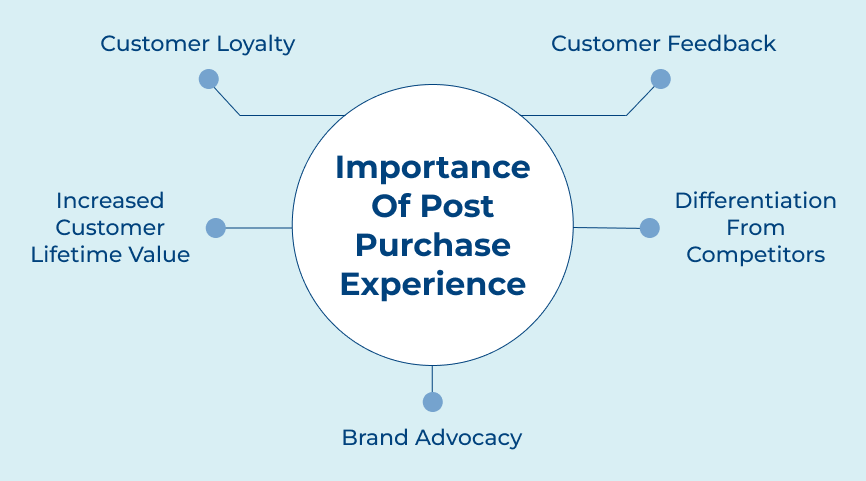
1. Customer loyalty: Providing a positive post purchase experience can help create customer loyalty. When customers feel valued and cared for after making a purchase, they are more likely to return to the company for future purchases. It can lead to repeat business and even word-of-mouth recommendations.
2. Increased customer lifetime value: Focusing on post purchase experience allows companies to increase the lifetime value of their customers. Satisfied customers who have had a positive experience post purchase are more likely to continue buying from the company over a longer period.
3. Brand advocacy: A great post purchase experience can turn customers into brand advocates. When customers are happy with their purchase and the follow-up service they receive, they are more likely to recommend the company to others. It can lead to new customers and increased brand awareness.
4. Customer feedback: Post purchase customer experience provides an opportunity for companies to receive valuable feedback from their customers. Following up with customers after purchase allows companies to learn about any issues or concerns. The feedback can be used to improve products and services in the future.
5. Differentiation from competitors: Providing a top post purchase experience can help companies stand out from their competitors. 90% of consumers say the post-purchase experience is just as important as the quality of the products. Customers are more likely to choose a company that goes above and beyond in terms of customer service, even if it means they have to pay a little more.
Check out the most effective ways to enhance your post-purchase experience, ensuring that your customers feel valued and eager to engage with the brand long after their initial purchase.
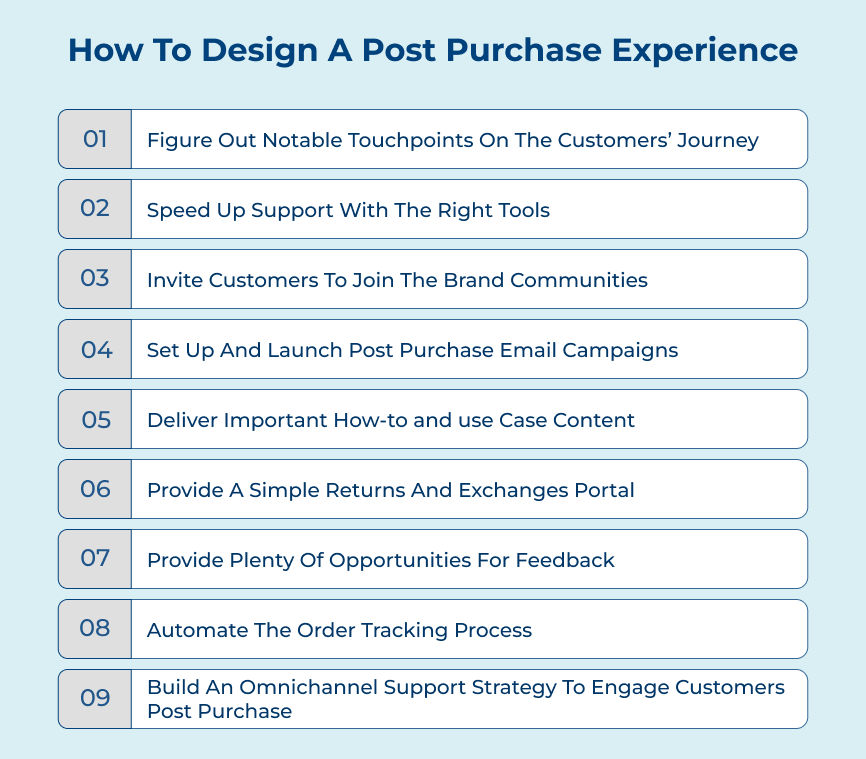
One of the most effective strategies for designing a post purchase experience is to figure out notable touchpoints on the customers’ journey. Identifying key interactions that customers have with the brand before, during and after a purchase allows organizations to optimize these touchpoints to enhance their overall experience.
The strategy helps to design a post purchase experience by ensuring that customers have a seamless and enjoyable journey with the brand. Let’s explore an example. If a customer often visits the website to track their order status, a business can optimize this touchpoint by providing real-time updates and personalized recommendations for future purchases.
Actionable tips:
Providing efficient and effective support is essential for creating a positive post purchase experience. Having the right tools in place allows businesses to streamline communication, resolve issues quickly and ultimately enhance customer satisfaction.
Implementing tools such as chatbots, customer support software or ticketing systems can help businesses in multiple ways. Let’s take an example, integrating a chatbot on a website can instantly address common customer concerns, reducing wait times and increasing customer engagement.
Actionable tips:
When it comes to designing a post purchase experience, inviting customers to join the brand communities can be an effective strategy. Creating a sense of belonging among the customers allows businesses to promote loyalty and encourage repeat purchases. One way the strategy helps to design a post purchase customer experience is by providing customers with a platform to engage with the brand and with each other. According to 85% of businesses, communities have positively impacted their business.
Let’s take an example here to have a better understanding. A clothing company could create a Facebook group for customers to share styling tips and photos of themselves wearing the brand’s clothing. It not only encourages customers to continue shopping with the brand but also creates a space for them to connect with like-minded individuals.
Actionable tips:
Setting up and launching email campaigns is a key strategy in designing a successful post purchase experience for customers. The campaigns aim to engage with customers after they have purchased, encouraging repeat sales, building brand loyalty and gathering feedback.
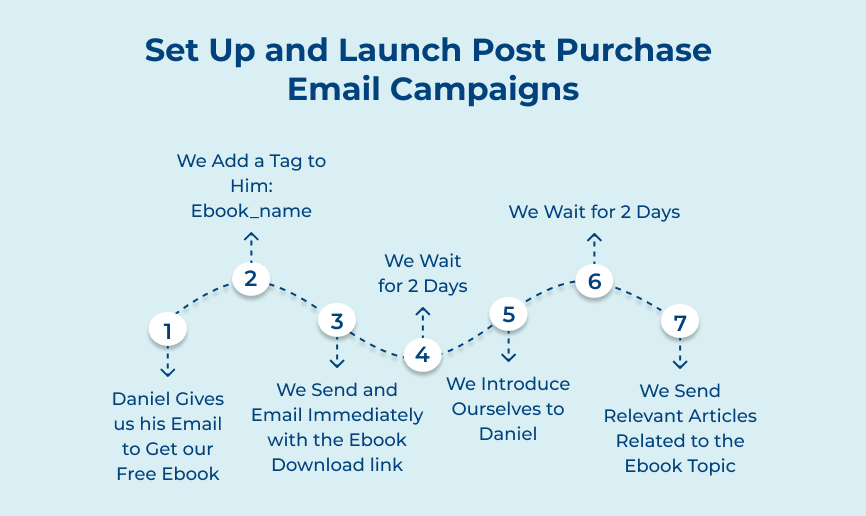
One example of a post purchase email campaign is a thank-you email sent immediately after purchase, followed by a series of emails with product recommendations, exclusive offers and customer reviews to keep the customer engaged with the brand. The strategy helps to create a seamless experience for the customer, increasing their satisfaction and likelihood of returning for future purchases.
Actionable tips:
Delivering important how-to and use case content is a crucial strategy when designing a post purchase experience for customers. The strategy involves providing customers with valuable information on how to effectively use their purchase and real-life examples of how others have benefited from the solutions.
Businesses can help build trust, as customers feel supported and knowledgeable about their investments. Let’s take an example of a skincare company. They may provide tutorials on how to properly use their products for maximum effectiveness, along with testimonials from satisfied customers who have achieved glowing skin.
Actionable tips:
A simple returns and exchanges portal is an effective strategy that can significantly improve customer satisfaction to design a seamless post-purchase experience. Implementing a user-friendly returns and exchanges portal allows customers to feel confident in their purchase decisions. It leads to increased loyalty towards the brand.
The strategy also demonstrates a commitment to customer satisfaction, showing that the company values its customers’ needs even after the initial sale. A clothing retailer could offer a straightforward online portal where customers can initiate a return or exchange by simply inputting their order number and selecting the desired option. It streamlined process not only saves time for both the customer and the company but also enhances the overall shopping experience.
Actionable tips:
Providing plenty of opportunities for feedback and asking for feedback directly are effective strategies to design a post purchase experience that can lead to customer satisfaction. Actively seeking feedback from customers allows businesses to gain valuable insights into what customers liked or didn’t like about their product or service.
The feedback can help businesses make improvements, address any issues and enhance the overall customer experience. Sending out post purchase surveys or emails asking customers to rate their experience can provide businesses with direct feedback. It can be on how they can better meet customer needs and expectations.
Actionable tips:
Automating the order tracking process is a crucial strategy in designing a seamless post purchase experience for customers. Providing real-time updates on the status of their orders allows businesses to increase transparency and build trust with their customers. It can lead to higher customer satisfaction and loyalty in the long run.
Sending automated emails or text messages with tracking information as soon as an order is placed can keep customers informed throughout the shipping process. Providing easy access to tracking information on the company website or through a mobile app can further enhance the post purchase experience.
Actionable tips:
An effective strategy to design a post purchase experience is to build an omnichannel support strategy. It involves engaging with customers across multiple channels such as email, social media or phone to provide support and assistance after they have made a purchase. The strategy helps to enhance the overall customer experience by ensuring that customers feel supported and valued even after they have completed their transaction.
Being available on different channels allows customers to reach out for help or guidance easily, increasing their satisfaction and loyalty towards the brand. A clothing retailer could implement an omnichannel support strategy by sending personalized follow-up emails after a purchase. It offers assistance through social media messages and providing a customer service hotline for any inquiries.
Actionable tips:
Following are the five types of emails that can elevate your post-purchase strategy, ensuring that your customers feel appreciated and excited to continue their journey with your brand.
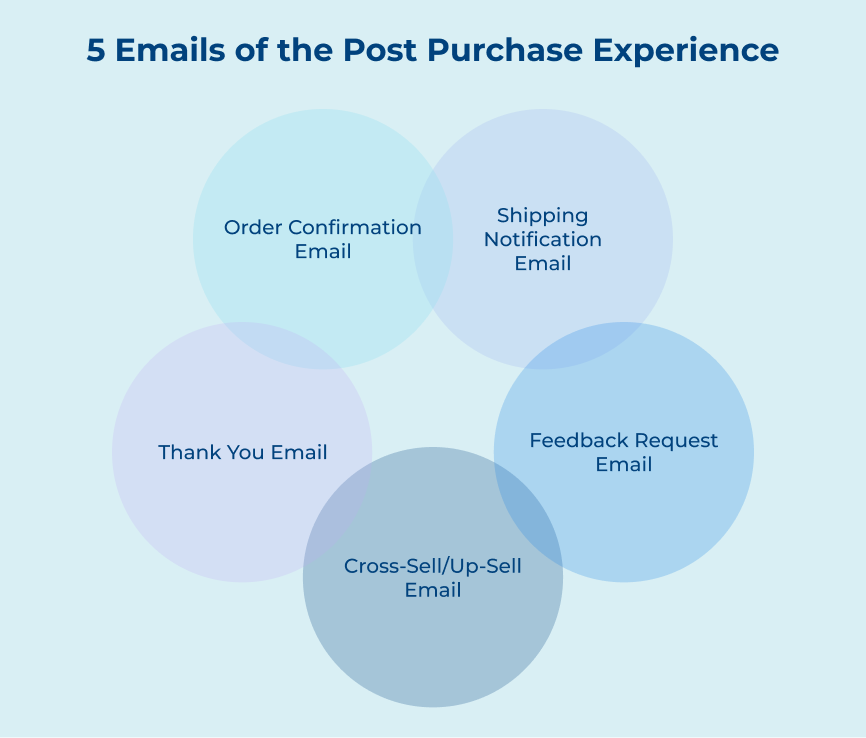
1. Order confirmation email: A confirmation email is the first email a customer receives after making a purchase. The email should include details such as the order number, items purchased, shipping address and estimated delivery date. It reassures the customer that their order was successful and provides them with important information about their purchase.
2. Shipping notification email: Once the customer’s order has been shipped, it’s important to send them a shipping notification email. The email should include the tracking number and a link to track the status of their shipment. Keeping customers informed about the status of their order helps build trust and ensures they are aware of when to expect their delivery.
3. Feedback request email: After the customer has received their order, send them a feedback request email. The email can include a brief survey asking about their satisfaction with their purchase, the shipping process and overall experience with the business. Gathering feedback from customers can provide valuable insights for improving the products and services.
4. Cross-Sell/Up-Sell email: A cross-sell or up-sell email can be sent to customers after they have made a purchase. The email can recommend related products or accessories that complement their original purchase. If a customer bought a dress, the business could suggest matching shoes or jewelry. Suggesting additional products allows businesses to increase the average order value and encourage repeat purchases.
5. Thank you email: A thank you email is a simple yet powerful way to show appreciation to the customers. The email can express gratitude for their purchase, including a discount code for their next order and encourage them to follow the business on social media or subscribe to the newsletter. A sincere thank you can leave a lasting impression on customers and make them feel valued.
Brands that focus on post purchase customer experience can build loyalty, increase retention rates and generate positive word-of-mouth. Here are five real-life examples of brands that have successfully prioritized post purchase customer experience and the incredible results they achieved:
Zappos is known for its exceptional customer service even after the purchase has been made. One of their notable practices is their hassle-free returns policy. The customers can return items within a generous timeframe with no questions asked. Their commitment to customer satisfaction has earned them a loyal following and glowing reviews from satisfied customers. Zappos has built a strong reputation for excellent customer service, leading to high customer retention rates and positive word-of-mouth marketing.
Apple is another brand that excels in post purchase customer experience. They offer personalized follow-up emails, customer support through various channels and easy access to product manuals or tutorials. Apple’s commitment to providing ongoing support and assistance to customers has helped them maintain a loyal customer base. Apple has a high customer satisfaction rate, leading to repeat purchases and brand loyalty among its customers.
Starbucks goes beyond just selling coffee they focus on creating a positive customer experience even after the purchase. Their loyalty program, mobile app and personalized offers tailored to customer preferences are all examples of how they prioritize post purchase customer experience. Starbucks has a dedicated customer base with many customers returning frequently and participating in their loyalty program.
Amazon is a prime example of a brand that prioritizes post purchase customer experience. They offer fast delivery, easy returns and personalized product recommendations based on past purchases. Amazon’s commitment to making the post purchase experience seamless and convenient has contributed to its success as a customer-centric company. Amazon has become a leading e-commerce platform with a loyal customer base and high levels of customer satisfaction.
Nike is known for its innovative approach to post purchase customer experience. They offer personalized product recommendations, exclusive access to new releases and interactive apps that help customers track their fitness goals. Nike’s focus on engaging with customers after they make a purchase has helped them build a strong community of brand advocates. Nike has a loyal customer base that actively engages with the brand, leading to increased sales and brand loyalty.
Check out the key metrics businesses can track and enhance to ensure their customers feel valued long after they’ve made their purchase.
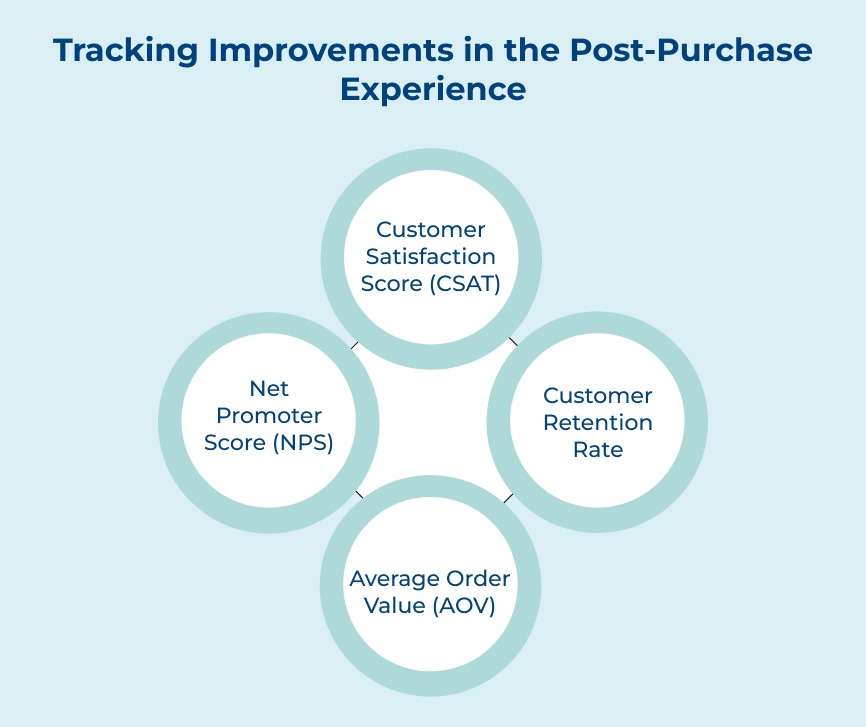
One of the most common metrics used to measure customer satisfaction is the CSAT score. The metric typically involves asking customers to rate their satisfaction with their purchase experience on a scale of 1-5 or 1-10. Regularly monitoring CSAT scores allows businesses to quickly identify any issues or trends that may be impacting customer satisfaction and take steps to address them.
The Net Promoter Score (NPS) is a metric that measures the likelihood of customers recommending a company or product to others. Customers are typically asked to rate their likelihood of recommending the company on a scale of 0-10. Those who give a score of 9 or 10 are considered promoters, while those who give a score of 6 or below are detractors. Tracking NPS allows businesses to gauge customer loyalty and identify areas where they can improve the post purchase experience to increase customer advocacy.
The customer retention rate measures the percentage of customers who make a repeat purchase from a company within a certain period. A high retention rate indicates that customers are satisfied with their post purchase experience and are likely to continue doing business with the company. Tracking the customer retention rate allows businesses to identify strategies to increase customer loyalty and encourage repeat purchases.
The Average Order Value (AOV) is the average amount of money customers spend on each purchase. Tracking changes in AOV allows businesses to gauge the effectiveness of their post-purchase strategies in increasing customer spend. Analyzing AOV data allows businesses to identify opportunities to improve the post purchase experience and drive revenue growth.
Ready to transform your post-purchase interactions into powerful moments of delight? Here’s a guide to the best practices that will revolutionize your approach and keep your customers coming back for more.
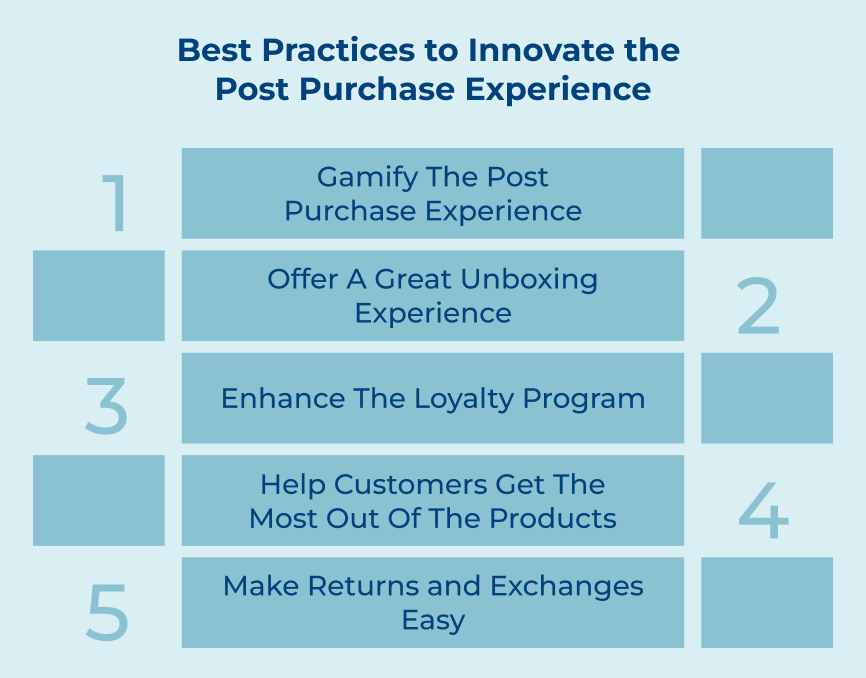
One way to make the post purchase experience more engaging and fun for customers is to gamify it. It can involve adding elements such as loyalty points, challenges or rewards for completing certain tasks. Gamifying the experience allows businesses to increase customer engagement and loyalty.
The unboxing experience is often overlooked, but it can have a big impact on how customers perceive the brand. Packaging the products appealingly and thoughtfully allows businesses to create a memorable experience for customers. It enhances their overall satisfaction with their purchases.
A loyalty program is a great way to incentivize repeat purchases and reward customers for their loyalty. Offering exclusive discounts, rewards or special offers to loyal customers allows businesses to encourage them to continue buying from their brand. It leads to strengthening their relationship with the business.
Providing customers with resources, guides or tutorials on how to use and get the most out of the products can help enhance their overall experience. Offering valuable support enables organizations to increase customer satisfaction and build trust with their audience.
One of the biggest factors that can influence a customer’s post purchase experience is the ease of returning or exchanging a product. Having a clear and hassle-free returns policy allows companies to provide customers with peace of mind and show that they value their satisfaction.
The post purchase experience is a crucial aspect of customer satisfaction and loyalty for every type of business. Leaders must ensure their CX remains top-notch by providing hassle-free returns and personalized follow-ups.
Focusing on enhancing the journey allows businesses to build long-lasting relationships with their customers and differentiate themselves from competitors. A happy customer is more likely to become a loyal advocate for the brand. Prioritize the post purchase experience to drive a successful business and a loyal customer base.

Understanding and elevating the post purchase experience is crucial for building customer loyalty or increasing customer retention rates. Providing a positive and seamless experience after purchase allows organizations to turn one-time buyers into loyal customers who will return for repeat purchases. It can lead to increased revenue and long-term success for the business.
After a customer makes a purchase, the post purchase phase is crucial for building brand loyalty. It is the time to follow up with excellent customer service, gather feedback and offer personalized recommendations. Maintaining communication and providing a positive experience after the sale allows businesses to increase customer satisfaction.
The post purchase experience is important because it can greatly impact customer satisfaction, brand loyalty and repeat business. It is the final impression a customer has of the brand and can determine whether they will recommend the products to others. Providing a positive post purchase customer experience can lead to long-term customer relationships and increased revenue.
The post purchase customer journey is crucial because it determines customer loyalty and advocacy. It’s the phase where customers evaluate their experience and decide if they will buy from the brand again. Providing exceptional post purchase support and follow-up allows businesses to enhance customer satisfaction, encourage repeat purchases and increase word-of-mouth referrals. It ultimately leads to long-term business success.
After a customer makes a purchase, it is essential to optimize their post purchase experience to increase retention and loyalty. Engage with customers through personalized thank you emails, offer exclusive discounts for future purchases and provide exceptional customer service. Encourage customers to leave reviews and feedback to improve the products or services. Focusing on the post purchase experience allows businesses to turn one-time buyers into loyal customers.
Grow Customer Relationships and stronger team collaboration with our range of products across the Conversational Engagement Suite.
Omnichannel Customer Support & Help Desk Software
AI Enabled Business Messaging and Chatbot Software
Sales Engagement & CRM Software
Call Center Software & Virtual Phone System
Product Marketing & Experience Platform
Customer Experience & Feedback Management Software

 11 Customer Service Email Etiquettes for Businesses in 2026
Scroll to top
11 Customer Service Email Etiquettes for Businesses in 2026
Scroll to top