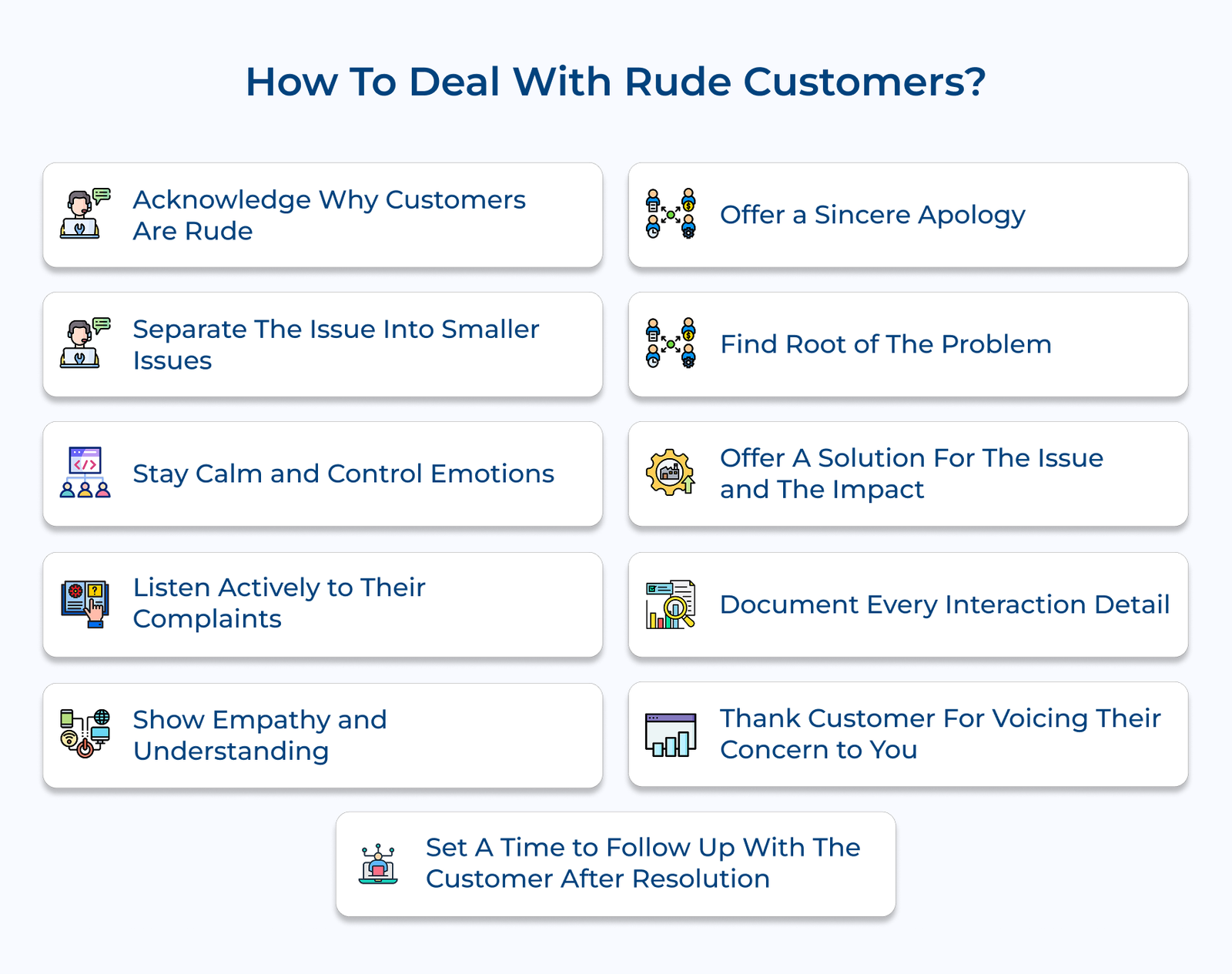
1. Separate The Issue Into Smaller Issues
Breaking down complex issues into smaller parts is key when handling angry customers. It keeps both you and the customer from feeling overwhelmed, and makes the situation more manageable.
When a customer raises multiple concerns, address them one by one, prioritizing urgency and impact. Assume a customer complains about a late delivery, wrong items and poor packaging. Businesses should tackle each issue separately—starting with the delay, followed by the incorrect items and finally the packaging. The approach keeps the conversation focused and the solutions more effective.
Actionable tips:
- Use a notepad or digital tool to jot down each issue as the customer speaks, numbering them to organize their concerns.
- Create a visual checklist and mark off resolved issues, sharing it with the customer to show progress or demonstrate your attentiveness.
2. Stay Calm And Control Emotions
Staying calm is key when handling angry customers. Your composure can de-escalate the situation, allowing for clear thinking and better decision-making. A calm demeanor often encourages the customer to mirror your behavior and settle down.
Practice emotional detachment by focusing on the facts, not personal feelings to maintain control. Use deep breathing and maintain a steady tone. Remember, the anger is usually directed at the situation, not you. Let’s consider that if a customer yells about a faulty product, respond calmly: “I understand your frustration. Let’s focus on resolving the issue with your product.”
Pro tips:
- Practice the 5-second rule: take five deep breaths before responding to any heated comment.
- Keep a stress ball or similar item to channel nervous energy discreetly, helping maintain a calm, composed demeanor.
3. Listen Actively to Their Complaints
Active listening shows respect and helps anger by ensuring customers feel heard. It allows you to gather the right information and find the best solution.
Maintain eye contact (in person) or use verbal cues (on the phone), avoid interrupting and take notes. Repeat key points back to confirm understanding. Let’s assume, Customer: “I’ve called three times about the issue!” Response: “I understand your frustration. You’ve reached out three times about it and it’s still unresolved. When did the calls happen?”
Actionable tips:
- Use confirming phrases like “I understand that…” to summarize key points and show you’re actively listening.
- Take note of specific dates, times and refer back to them during the conversation.
4. Show Empathy and Understanding
Empathy creates a connection and eases tension by validating the customer’s feelings, turning confrontation into collaboration. When customers feel understood, they’re open to solutions and loyal despite the issue.
Acknowledge their frustration sincerely, using phrases that validate their experiences without agreeing with their complaint. Choose words and tone that reflect an understanding of the impact. Let’s consider: “I can imagine how frustrating this must be, especially with your professional commitments. Let’s work together to ensure this doesn’t happen again.”
Best practices:
- Use personalized phrases like “I can see why it would be frustrating” to show genuine understanding, avoiding generic responses.
- Mirror the customer’s concern while staying professional, demonstrating that you recognize the importance of their issue.
5. Offer A Sincere Apology
A sincere apology acknowledges the concern of the frustrated customers, takes responsibility and helps defuse tension. It shows integrity and can turn an upset customer into a loyal one by demonstrating your commitment to their satisfaction.
Offer a specific apology that directly addresses the issue and its impact. Avoid vague or defensive statements. Express genuine regret for the inconvenience caused and ensure your tone matches the sincerity of your words. Let’s consider “I apologize for the delay in your order and the stress it’s caused. We should have kept you updated and I take full responsibility for making it right.”
Best practices:
- Avoid generic apologies, be specific about what you’re addressing.
- Immediately follow your apology with a clear action step to show you’re not just apologizing, but actively working to resolve the issue.
6. Find the Root of the Problem
Identifying the root cause is key to preventing future issues and delivering lasting solutions. You ensure more effective resolutions and improve overall service quality by addressing the core problem.
Ask probing questions to uncover the sequence of events and analyze patterns. Use systematic problem-solving to trace symptoms back to their origin. Let’s assume that if a customer reports a website crashes, instead of just apologizing, investigate: “When does it happen? What actions led up to it?” The approach reveals the underlying issue, like browser compatibility during checkout.
Actionable tips:
- Use the “5 Whys” technique to dig deeper into the problem by asking “why” five times, uncovering the root cause.
- Create a timeline of events to spot triggers and patterns that lead to the issue.
7. Offer A Solution For The Issue And The Impact
Providing clear solutions demonstrates professionalism and assures the customer that their concerns are being addressed. It shifts the focus from the problem to actionable resolutions, building trust. Provide a specific, actionable solution that addresses both the immediate issue and its impact. Outline how the solution will work and what the customer can expect. If possible, offer alternatives to give them more control.
Let’s assume: I can expedite a replacement to arrive tomorrow morning and offer a 20% discount on your next purchase to resolve the delayed delivery. I’ll also assign a shipping coordinator to oversee your future orders.”
Pro tips:
- Present solutions clearly in a step-by-step format, outlining what will happen and when.
- Offer both an immediate fix and a long-term solution to prevent recurrence, ensuring the customer feels confident in the resolution.
8. Document Every Interaction Detail
Thorough documentation ensures accountability, consistency and better service. It helps track issue resolution, prevents miscommunication and provides valuable insights for future interactions. Clear records also protect both the company and the customer by maintaining a reliable history of actions.
Use a systematic approach, including contact information, issue specifics and agreed actions. Keep records chronological and easy to reference for team members. Let’s consider: “2:15 PM call from John Smith – login failure on Chrome (version 96.0). Solutions attempted: cleared cache, reset password. Escalated to IT, follow-up scheduled for 10 AM tomorrow.”
Actionable tips:
- Use a standardized template for documentation to maintain consistency and ensure all key details are captured.
- Set up automated reminders for follow-up actions based on the records to stay organized and on track.
9. Thank The Customer For Voicing Their Concern
Thanking customers for their feedback, even when negative, shows professionalism and values their input. It turns complaints into opportunities for growth, enhancing positive relationships and encouraging future communication.
Express genuine gratitude for their feedback, acknowledging their effort and patience. Highlight how their input contributes to improving the service for everyone. An example can be a phrase like “Thank you for sharing the issue with us. Your feedback helps us improve and we appreciate your patience while we resolve it. Your input will help prevent similar problems for others.”
Pro tips:
- Personalize your thank you by highlighting specific feedback that was particularly helpful.
- Briefly explain how their feedback will directly contribute to service improvements.
10. Set A Time To Follow Up
Setting a clear follow-up time shows your commitment to customer satisfaction and reassures them that their issue is being actively addressed. It builds trust and ensures the solution is working effectively.
Establish a specific follow-up date and time, offering multiple contact methods for any immediate needs. Set reminders and gather relevant information for the follow-up interaction. Let’s assume: “I’ll check in with you next Tuesday at 2 PM to confirm everything’s resolved. Here’s my direct line and email if you need assistance in the meantime.”
Pro tips:
- Implement an automated reminder system for follow-up calls and document key discussion points.
- Create a concise checklist to ensure all items are verified during the follow-up conversation.
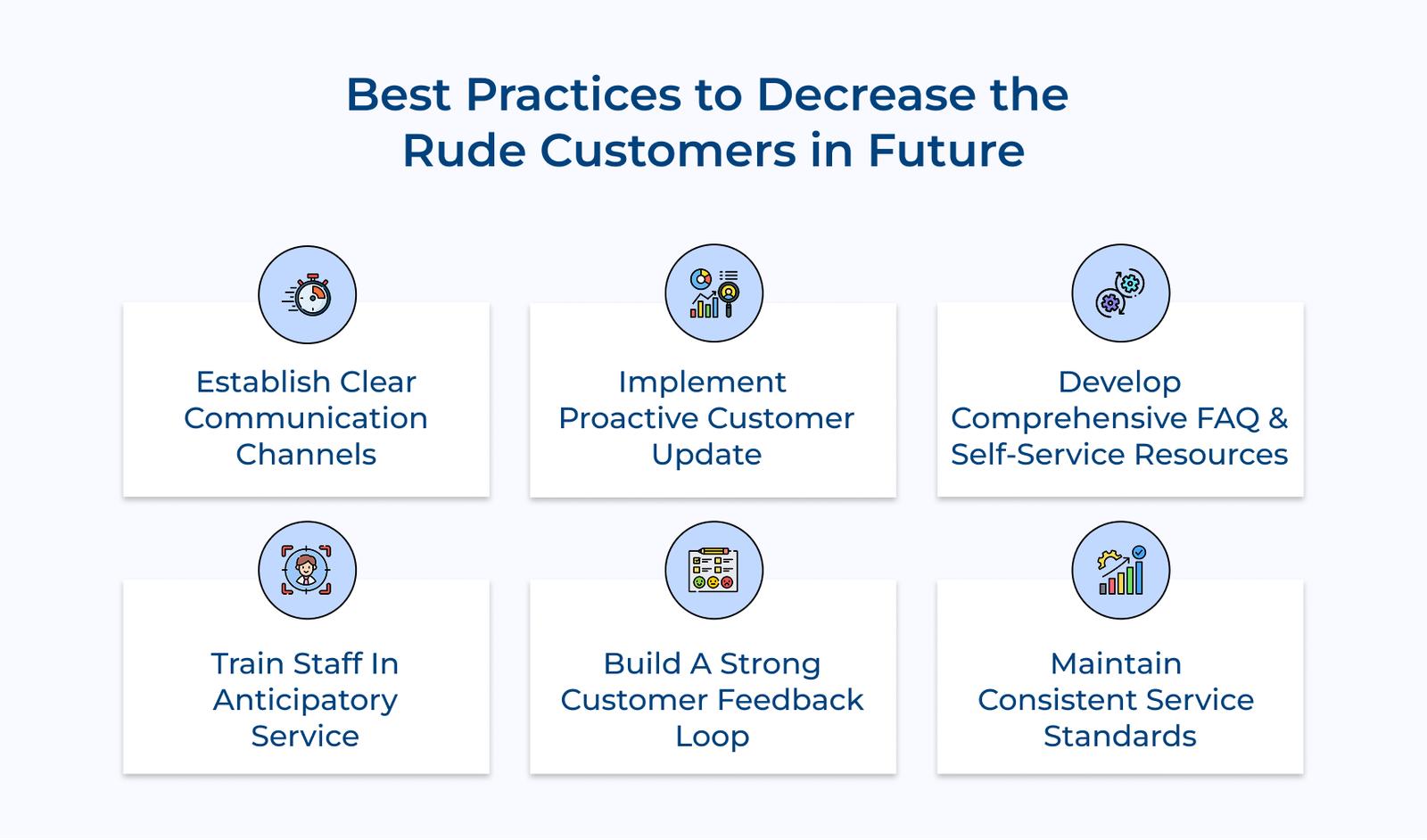
Best Practices to Decrease the Likelihood of Rude Customers in the Future
Let’s explore the key practices that help create positive customer experiences and minimize confrontational situations.