A. Sales Process Optimization Strategies
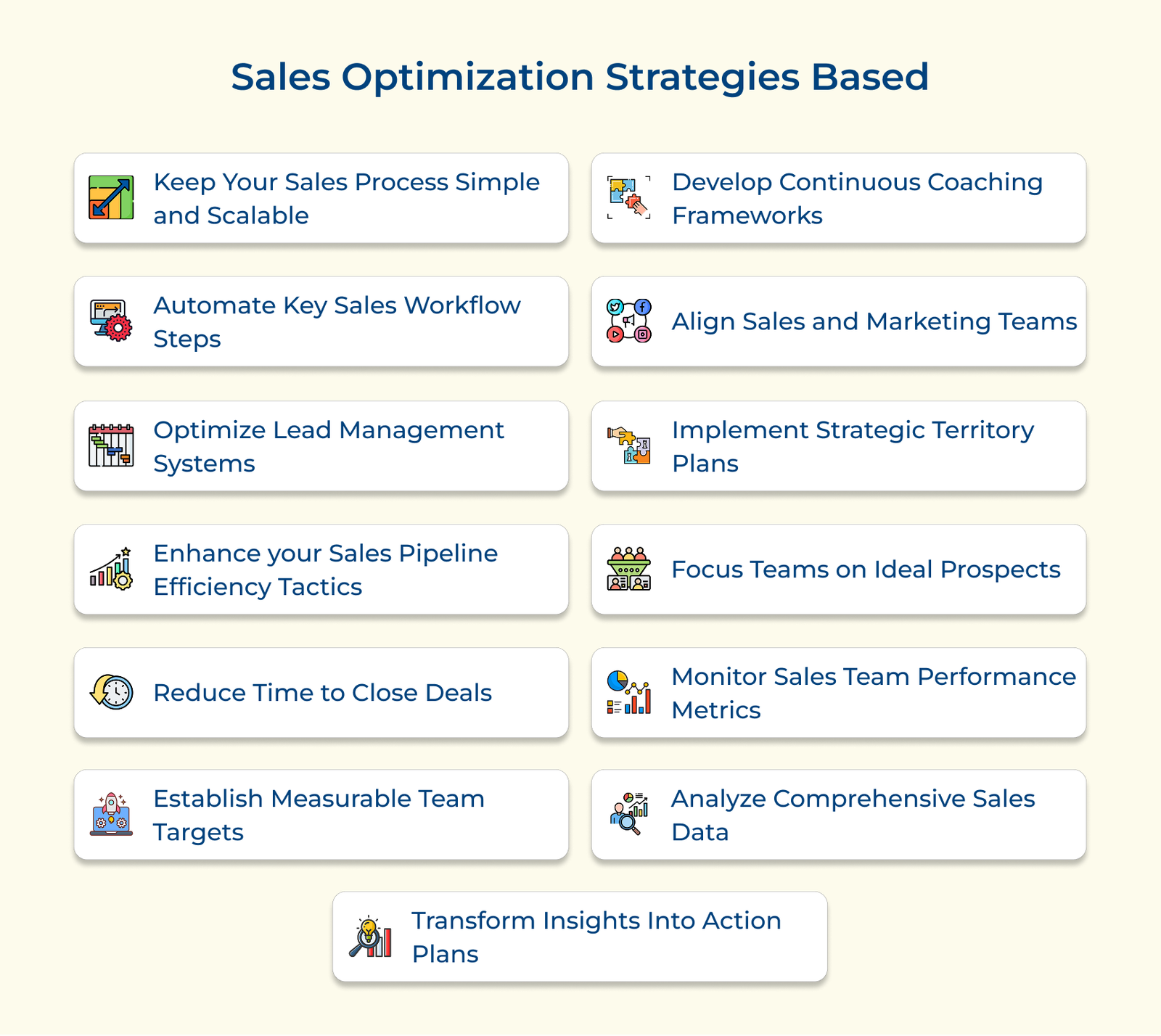
1. Keep Your Sales Process Simple and Scalable
A streamlined, scalable sales process lays the groundwork for long-term growth without complicating operations. Your team needs a clear framework to handle increasing sales volumes efficiently, ensuring steady performance as you tap into new markets and segments.
Businesses with a standardized sales process see up to a 28% increase in revenue as compared to those that do not. Start by mapping your current process, identifying key steps that drive conversion and eliminating redundant tasks. Document best practices for each critical stage of the sales cycle.
Best practices:
- Align your sales process with the customer buying journeys to pinpoint gaps and areas for improvement.
- Build flexibility into the process to adapt to different product lines or market segments without major changes.
2. Automate Key Sales Workflow Steps
Sales automation removes repetitive tasks and minimizes manual intervention. Your teams can shift their focus to high-value interactions instead of administrative work. The strategic shift boosts productivity and ensures consistent task execution.
Modern automation tools can handle lead routing, email follow-ups and meeting scheduling. Start by identifying time-consuming tasks, choose appropriate tools that integrate with your existing systems and gradually expand coverage.
Actionable tips:
- Run manual and automated processes in parallel at first to ensure a smooth transition and identify issues.
- Track time saved and redirect it toward relationship-building activities.
3. Optimize Lead Management Systems
An effective lead management system ensures valuable prospects stay on track throughout the sales process. The sales teams work better when they’re given a structured approach to categorize, score and nurture leads.
Begin by defining specific lead qualification criteria aligned with your ideal customer profile. It’s recommended to use automated lead scoring so you prioritize prospects based on their engagement and fit. Develop targeted nurture sequences for each lead segment and track their journey through the sales funnel to ensure no opportunity is missed.
Best practices:
- Use predictive analytics to identify leads most likely to convert based on past patterns
- Design dynamic lead scoring models that adapt to changing market conditions and customer preferences.
4. Enhance Sales Pipeline Efficiency Tactics
Pipeline efficiency is key to maximizing revenue potential and resource utilization. Sales teams need clear visibility into pipeline stages to spot bottlenecks and optimization opportunities, improving forecast accuracy.
Start by analyzing pipeline metrics to identify stages with high drop-off rates or slow processing times. Make sure to have regular pipeline reviews to assess deal health and provide guidance on advancing opportunities. There should be clear criteria for moving deals between stages.
Pro tips:
- Color-code pipeline stages by deal velocity so that you can quickly identify stalled opportunities and take action.
- Focus pipeline reviews on specific actions needed to move deals forward, not just status updates.
5. Reduce Time to Close Deals
Shortening the sales cycle is vital for staying competitive and improving cash flow. Long deal closures risk losing momentum and customer interest. A streamlined closing process is needed to ensure there’s continuous engagement and better resource use.
Identify and remove common delays in your closing process by mapping out each step from proposal to contract. Cut redundant approvals, use ready-to-go templates and switch to digital signatures to speed things up. Train your team in closing tactics that match the size and complexity of each deal.
Actionable tips:
- Schedule joint calls with decision-makers early, rather than waiting until the final stages.
- Package common solution combinations into ready-to-go proposals that require minimal customization.
B. Sales Team Specific Sales Optimization Tips
6. Establish Clear Measurable Team Targets
Clear sales targets keep your team focused and accountable. They help strike the right balance between what’s possible and what’s needed while ensuring every effort supports your broader business goals. When you have measurable metrics, it makes it easier for you to track progress and adjust course when necessary.
Break annual revenue goals into realistic quarterly and monthly milestones. Set individual targets based on territory size, customer base, or past performance. Use a shared tracking system so everyone can see progress in real-time.
Best practices:
- Tie compensation to both individual performance and team collaboration.
- Celebrate milestones to keep motivation high during longer sales cycles.
7. Develop Continuous Coaching Frameworks
A structured coaching system helps your sales team build skills consistently by pinpointing what each rep does well and where they need support. As it ensures everyone follows the same effective methods, you can create a team that’s always learning and improving.
Structure your coaching around regular one-on-ones and team workshops. You must create specific skill-building plans for each team member. Use role-plays, peer feedback and real sales calls for hands-on learning. Make sure to track progress with clear metrics to see what’s working and where to adjust.
Pro tips:
- Record successful sales calls to create a library of best practices for team learning.
- Pair experienced reps with newer team members in buddy systems to promote knowledge sharing.
8. Align Sales and Marketing Teams
A strong alignment between sales and marketing, leads are more qualified, messaging stays consistent and customers move through the funnel with less friction. When the teams collaborate seamlessly, it improves the overall buying experience and directly increases conversions. Companies with strong sales and marketing alignment see a 36% boost in customer retention.
Set up clear communication between sales and marketing, starting with shared definitions of qualified leads and success metrics. Take regular feedback from the sales team as it will help you refine marketing content and target the right prospects. Plan together to ensure both teams are working toward the same goals with aligned strategies and resources.
Actionable tips:
- Have marketing team members join sales calls regularly to better understand customer questions, objections and needs
- Develop unified customer journey maps that integrate both marketing touchpoints and sales interactions.
9. Implement Strategic Territory Plans
Territory planning helps divide sales regions clearly so teams avoid overlap, cover more ground and manage their workload better. It ensures no area is neglected and reps can focus on the right prospects.
Design your territory plan by analyzing historical sales data, customer concentrations and market potential. Create balanced territories based on account value, growth potential and service requirements. Assign reps based on expertise in specific industries or customer types and review territory assignments quarterly to maintain peak performance.
Best practices:
- Layer territory maps with customer lifetime value data to identify high-potential areas.
- Plot customer locations alongside competitor presence to find underserved regions with growth potential.
10. Focus Teams on Ideal Prospects
When you focus on ideal prospects, it not only increases conversion rates but also saves time by avoiding unqualified leads. When teams understand their ideal customer profile, they can allocate resources more effectively and engage with the right prospects.
Start by analyzing your top customers to identify common traits and buying patterns. Create detailed profiles based on industry, size, budget and pain points. Train your team to prioritize prospects that match the profiles and craft tailored value propositions for each segment.
Key takeaways:
- Develop prospect scoring matrices that consider multiple factors beyond basic firmographics.
- Identify key decision-makers and influencers involved in successful deals with ideal customers.
C. Data-driven Sales Optimization strategy
11. Monitor Sales Team Performance Metrics
Comprehensive performance monitoring offers valuable insights into both individual and team effectiveness. Tracking the key sales metrics helps businesses identify their top performers, successful strategies and areas for improvement.
Set up dashboards that track key sales metrics like conversion rates, deal velocity, and average deal size. Develop performance scorecards for your team that directly align with company goals. Use these insights to identify areas for improvement, target specific training needs and reinforce the behaviors that drive success.
Best practices:
- Combine quantitative metrics with qualitative feedback from customer interactions for a holistic performance view.
- Focus weekly performance reviews on specific behaviors that drive successful outcomes.
12. Analyze Comprehensive Sales Data
Sales data analysis uncovers hidden patterns, trends and opportunities that drive better decision-making. You can predict outcomes, identify market shifts and optimize strategies for more effective sales operations by analyzing data.
Start by consolidating data from CRM systems, customer interactions and market intelligence. Try to see if there are any correlations between successful deals and specific sales activities or customer traits. Use predictive analytics to spot deals likely to close and customers at risk of churning. Share the insights across your teams to enhance sales effectiveness.
Pro tips:
- Cross-reference win rates with communication channels to refine outreach strategies.
- Analyze lost deals for patterns that can improve future qualifications.
13. Transform Insights into Action Plans
Turning data insights into actionable plans drives real performance improvements. Action plans connect strategy with execution, ensuring that insights directly drive measurable improvements in performance.
Develop specific action plans from key data insights by breaking large initiatives into smaller, manageable tasks with clear owners and deadlines. Set up regular check-ins to assess progress and make adjustments as needed, ensuring everything stays aligned with your sales goals.
Best practices:
- Create feedback loops between action plan outcomes and future data analysis priorities.
- Gamify implementation to encourage team engagement and sustain momentum.
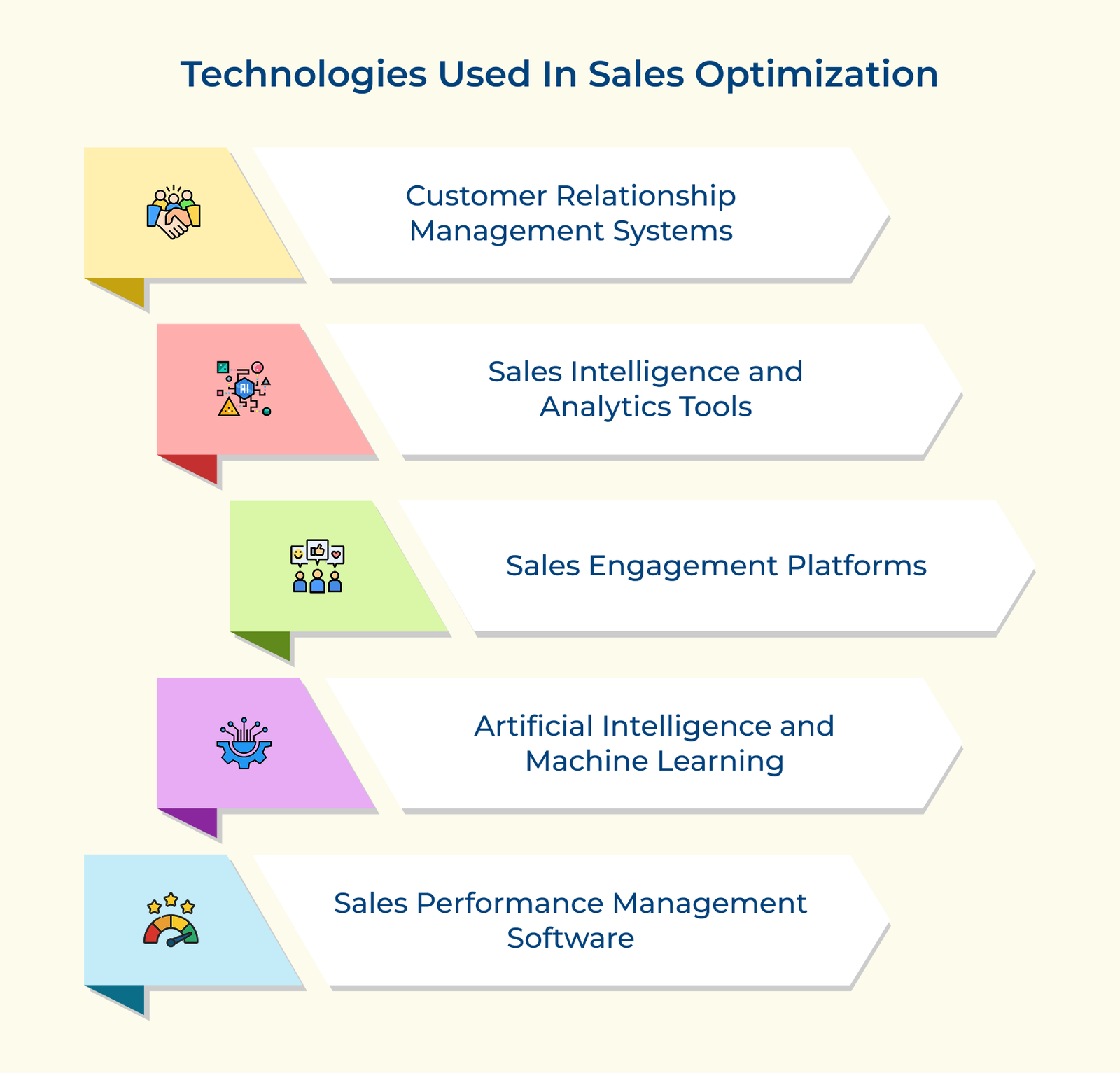
Technologies Used In Sales Optimization
Check out the latest technologies used in sales optimization, which help enhance team performance through advanced tools and data-driven strategies.