B2B Sales

B2B Sales Guide: Stages, Techniques and Best Practices

Elevate your sales game with actionable strategies that will streamline your process, enhance client relationships and maximize your revenue potential. Discover the keys to thriving in the competitive B2B landscape!

No credit card required. Easy setup

B2B Sales

Trusted by Leading Brands

B2B Sales Builds Strong Partnerships for Mutual Growth and Success

B2B sales involve building and nurturing relationships between businesses. It’s all about understanding a company’s unique challenges and offering solutions.

Strategic Growth

B2B sales laser-focus on high-value clients, unlocking targeted efforts that boost revenue and accelerate business growth. It’s all about honing in on key accounts that deliver big returns.

Long-term Partnerships

Build strong, lasting relationships with clients that stand the test of time. Establishing long-term partnerships means trust, mutual benefits and a steady stream of revenue for sustainable growth.

Scalable Solutions

B2B sales adapt seamlessly to evolving customer needs, offering scalable solutions that grow as your business expands. Stay flexible and meet demand while optimizing efficiency every step of the way.

High-value Deals

Close deals that count! B2B sales thrive on high-value contracts, driving profitability and propelling substantial growth. These major transactions offer a significant return on investment.

Industry Expertise

Capitalize on your specialized industry knowledge to solve complex business challenges. Your expertise doesn’t just deliver solutions—it builds trust, credibility and positions you as a go-to partner.

Streamlined Procurement

Simplify decision-making and optimize procurement with an efficient process that benefits both parties. Say goodbye to bottlenecks and hello to smoother, resource-saving cycles!

Imagine running a business where the potential customer base is limited, decision-making processes are complex and sales cycles stretch for months. The challenges of selling to other businesses can be overwhelming, leading to missed opportunities and stagnant growth. But what if the business could navigate the complexities with confidence, turning obstacles into opportunities? What if it had a clear roadmap to B2B sales success?

Companies can transform their sales approach by understanding the nuances of b2b transactions and implementing proven techniques. Let us explore the B2B landscape in detail, examine real-world examples and uncover strategies that can revolutionize business interactions.

What is B2B Sales?

B2B sales, or business-to-business sales, refers to the process of selling products or services from one business to another. Unlike B2C (business-to-consumer) sales, B2B transactions typically involve larger orders, longer sales cycles and more complex decision-making processes.

Companies identify potential business clients, understand their needs and offer tailored solutions in B2B selling. The process involves multiple touchpoints, including initial outreach, presentations, negotiations and ongoing account management. Sales representatives should build relationships with key decision-makers and demonstrate how their offerings can solve specific business problems or improve operations.

Key objectives:

  • Generate qualified leads to build a robust b2b sales pipeline.
  • Establish long-term partnerships with clients for recurring revenue.
  • Maximize deal value through upselling and cross-selling opportunities.
  • Shorten sales cycles by streamlining the decision-making process.
  • Enhance customer retention through excellent post-sale support and account management.

How to Create a B2B Sales Process

Learn the key steps to design a B2B sales cycle process that aligns with your business goals and delivers measurable success.

How to Create a B2B Sales Process

1. Conduct Market Research

Conducting market research is a crucial first step in creating a B2B sales process. The step involves analyzing industry trends to understand the current market landscape and anticipate future developments. The analysis helps businesses stay ahead of the curve and adapt their strategies.

Identifying potential customers is another key aspect, allowing companies to focus their resources on the most promising prospects. Businesses can tailor their offerings by determining market needs and pain points. It helps them to address challenges faced by their target audience, increasing the likelihood of successful sales.

Pro tips:

  • Utilize data analytics tools to gather and interpret industry data efficiently.
  • Conduct interviews with existing clients to gain insights into their needs and challenges.
  • Regularly attend industry events to stay informed about emerging trends and network with potential customers.

2. Determine the Ideal Buyer Persona

Determining the ideal buyer persona is a crucial step in creating an effective B2B sales process. The step involves analyzing the target market to understand who the most valuable customers are and what drives their purchasing decisions. Begin by defining demographics such as company size, industry, location and annual revenue.

Create detailed buyer profiles that go beyond basic demographics. Delve into their pain points, challenges, goals and motivations. Consider their preferred communication channels, content consumption habits and decision-making criteria. The comprehensive understanding allows businesses to tailor their sales approach and messaging effectively.

Pro tips:

  • Conduct in-depth interviews with existing clients to gather real-world insights.
  • Regularly update personas based on market trends and customer feedback.
  • Ensure all teams (sales, marketing, product) utilize personas for consistent messaging.

3. Map Out the Buyer’s Journey

Mapping the buyer’s journey is a crucial step in creating a B2B sales process. The step involves understanding the stages a potential customer goes through before making a purchase decision. The process is important because it allows sales teams to align their strategies with the customer’s needs and pain points at each stage, improving conversion rates.

Use cases include tailoring content marketing efforts, personalizing sales pitches and identifying key touchpoints for customer engagement. Companies can create more targeted sales and marketing strategies by understanding the journey. The strategy leads to improved lead nurturing and higher success rates.

Pro tips:

  • Conduct thorough research through customer interviews and data analysis to accurately identify each stage of the journey.
  • Create detailed buyer personas to better understand the motivations and challenges of the target audience.
  • Regularly update the buyer’s journey map to reflect changing market conditions and customer behaviors.

4. Perform Effective Lead Qualification

Qualifying leads is a crucial step in creating an effective B2B selling process. It involves systematically evaluating potential customers to determine their likelihood of making a purchase. Businesses can assign values to various attributes such as company size, budget and level of interest by developing lead scoring criteria.

Categorizing leads into groups such as hot, warm and cold allows for tailored approaches. Hot leads are ready to buy, warm leads show interest but may need nurturing and cold leads require further development.

Pro tips:

  • Align lead qualification criteria with the ideal customer profile.
  • Train sales teams to ask targeted questions during initial interactions.
  • Regularly review and refine the qualification process based on conversion data.

5. Meet Face-to-face with Prospect

Face-to-face meetings are crucial in B2B sales for building strong relationships and closing deals. Scheduling initial meetings allows salespeople to make a personal connection with potential clients. Preparing personalized presentations demonstrates dedication and understanding of the client’s business, setting the stage for productive discussions.

Face-to-face interactions provide an opportunity to build rapport and trust, which are essential in B2B relationships. Non-verbal cues and personal chemistry play a significant role. They often influence decision-making more than written communications. Salespeople can gauge reactions, adjust their approach in real time and create a lasting impression by meeting in person that may be difficult to achieve through digital means alone.

Pro tips:

  • Research the client thoroughly before the meeting to demonstrate industry knowledge and personalize the approach.
  • Prepare open-ended questions to encourage dialogue and uncover deeper client needs.
  • Follow up promptly after the meeting with a summary and next steps to maintain momentum.

6. Close the Deal

Closing the deal is a critical step in the B2B sales process, marking the culmination of the efforts to convert a prospect into a customer. Start by presenting tailored solutions that directly address the customer’s needs and pain points. It demonstrates the understanding of their business and the value it can provide.

Handle objections effectively by actively listening, empathizing and providing clear responses that alleviate concerns. Teams must be prepared to negotiate terms, finding a balance between the client’s requirements and the company’s interests. Secure commitment by summarizing the agreed-upon terms, highlighting the benefits and guiding the client through the necessary paperwork.

Pro tips:

  • Develop a closing checklist to ensure all key points are covered systematically.
  • Practice objection-handling scenarios regularly to improve the responses and confidence.
  • Use digital signature tools to streamline the contract signing process and reduce delays.

7. Track the Results and Improve

Tracking results and improving is a crucial step in creating an effective B2B sales process. Organizations can measure their performance objectively by implementing sales metrics and KPIs. The metrics may include conversion rates, average deal size and sales cycle length. Analyzing performance data provides insights into strengths and weaknesses, allowing teams to identify improvement areas.

Gathering customer feedback is equally important, as it offers valuable perspectives on the sales experience and product satisfaction. The information can be used to refine the sales approach and enhance customer relationships. Continuously refining the sales process based on the inputs ensures that it remains effective and adapts to changing market conditions.

Pro tips:

  • Choose 3-5 key metrics aligned with business goals and track them consistently.
  • Schedule monthly performance review meetings to analyze data and brainstorm improvements.
  • Implement a systematic feedback collection process, such as post-sale surveys or quarterly check-ins.

7 Stages of B2B Sales Funnel

Let’s explore the seven stages of the B2B sales funnel to guide businesses from identifying potential prospects to closing deals and facilitating long-term relationships.

Stages of B2B Sales Funnel

1. Awareness
Potential customers become aware of the company and its offerings in the initial stage. They may encounter the brand through various channels such as social media, content marketing, or industry events. The focus here is on creating visibility and establishing presence in the market. Key activities include developing a strong brand identity, creating informative content and leveraging multiple marketing channels to reach the target audience.

2. Interest
Once prospects are aware of the brand, they move into the interest stage. Here, they begin to explore the solutions more deeply, seeking information that aligns with their needs. They may engage with the content, visit the website, or reach out for initial inquiries. Provide valuable resources such as whitepapers, case studies and educational content to nurture the interest.

3. Decision
Prospects are actively evaluating the solution against competitors at the decision stage. They are weighing the pros and cons, considering factors such as pricing, features and potential return on investment. Decision-makers are involved and detailed discussions often take place. Focus on providing detailed product information, conducting demos and addressing specific concerns.

4. Purchase
The purchase stage is where the prospect decides to become a customer. They have chosen the solution and are ready to move forward with the transaction. The stage involves finalizing agreements, negotiating terms and completing the necessary paperwork. Ensure a smooth purchasing process by having clear contracts, responsive sales representatives and efficient onboarding procedures.

5. Evaluation
After the purchase, customers enter the evaluation stage. They begin using the product or service and assess its performance against their expectations. The period is crucial for customer satisfaction and long-term retention. Provide excellent customer support, offer training resources and maintain open communication channels. Regularly check in with customers to ensure they are getting the most value from the solution and address any issues promptly.

6. Dissatisfaction
Based on their experience during the evaluation stage, customers will either be delighted or dissatisfied. Delighted customers are more likely to become advocates for the brand, while dissatisfied ones may consider alternatives. Focus on deepening the relationship through personalized support, exclusive offers and continued value-adding interactions for delighted customers.

7. Repurchase
The final stage determines if a customer will continue their relationship with the company or leave. Satisfied customers may repurchase, upgrade, or expand their use of the products or services. Dissatisfied customers may choose not to renew or actively seek alternatives. Implement win-back strategies, gather feedback on why the client is considering leaving and make genuine efforts to address their concerns for potential attrition.

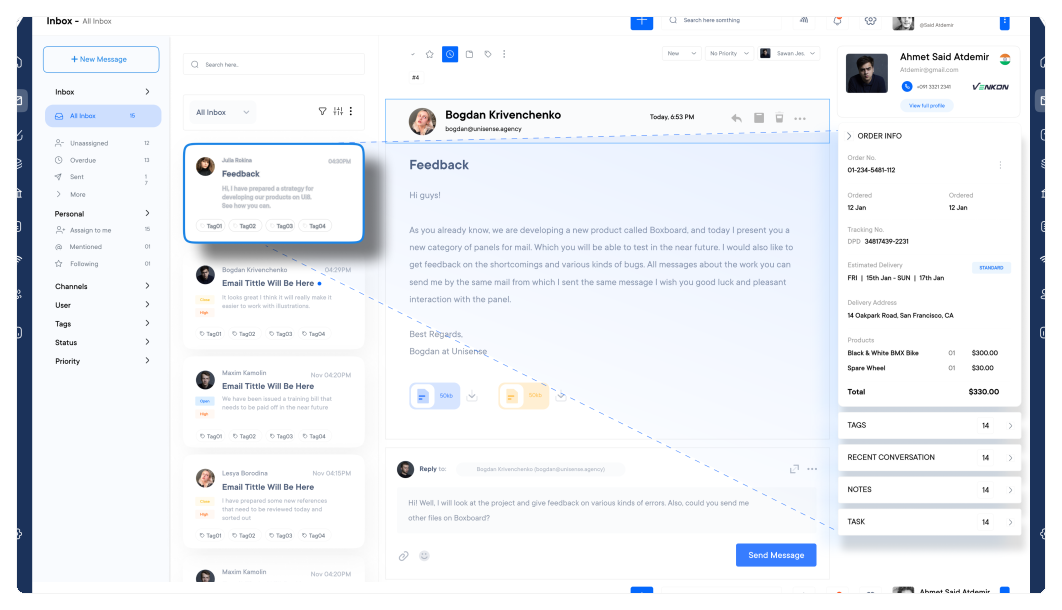
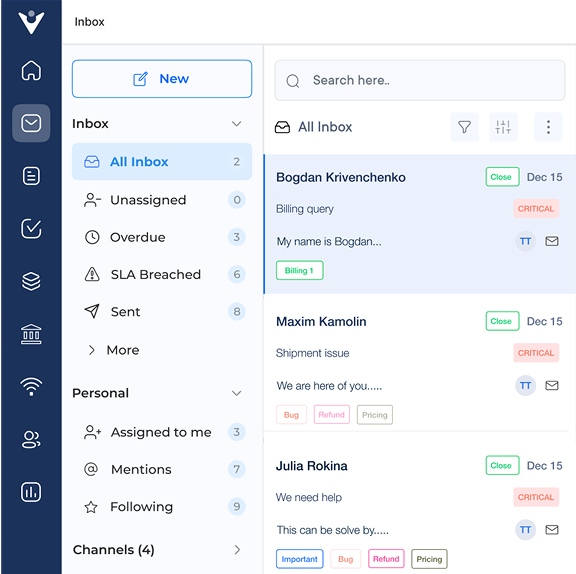
Omnichannel Helpdesk and Ticketing System

Turn Every Support Issues into Personalized Conversations with Veemo’s Omnichannel Helpdesk and Ticketing System. Make customer happiness your top priority with a digital first customer experience (CX) approach

Radically new solutions for data

Sed ut perspiciatis unde omnis iste natus error sit voluptatem accusantium doloremque laudantium, totam rem aperiam, eaque ipsa quae ab illo inventore veritatis et quasi architecto beatae vitae dicta sunt explicabo.

Radically new solutions for data

Sed ut perspiciatis unde omnis iste natus error sit voluptatem accusantium doloremque laudantium, totam rem aperiam, eaque ipsa quae ab illo inventore veritatis et quasi architecto beatae vitae dicta sunt explicabo.

5 B2B Sales Techniques and Frameworks

The following are the most effective B2B sales techniques for navigating complex sales environments and closing high-value deals.

B2B Sales Techniques and Frameworks

1. Solution Selling

Solution Selling focuses on identifying and addressing specific customer pain points. Rather than pushing products, salespeople act as consultants, diagnosing problems and proposing tailored offerings. Solution Selling builds trust and positions the salesperson as a valuable partner in the customer’s success. The approach involves:

  • Asking probing questions to uncover underlying issues
  • Demonstrating how the product or service solves the problems
  • Quantifying the value of the solution in terms of ROI

2. The Challenger Sale

The Challenger Sale model, based on extensive research, identifies five salesperson profiles, with the “Challenger” being the most effective. Challengers push customers out of their comfort zones, encouraging them to think differently about their needs and potential solutions. The approach involves:

  • Teaching customers new perspectives about their business
  • Tailoring the message to resonate with different stakeholders
  • Taking control of the sale by constructively tensioning the conversation

3. Account-based Sales

Account-Based Sales (ABS) is a highly targeted approach that treats each high-value account as a market of one. ABS aligns sales and marketing efforts to create a cohesive, tailored experience for key accounts, often resulting in larger deals. Key elements include:

  • Identifying and prioritizing high-potential accounts
  • Developing a deep knowledge of each account’s business, challenges and goals
  • Coordinating personalized outreach across multiple touchpoints and decision-makers

4. Value Selling

Value Selling emphasizes the unique value the solution brings to the customer’s business. Salespeople can justify premium pricing and differentiate themselves in competitive markets by focusing on value rather than features or price. The framework involves:

  • Understanding the customer’s definition of value
  • Quantifying the financial impact of the solution
  • Demonstrating how the offering outperforms competitors in delivering value

5. The Sandler Selling System

The Sandler Selling System flips traditional sales approaches by emphasizing qualification and buyer commitment. Sandler emphasizes equal business stature between buyer and seller. It encourages salespeople to qualify out prospects who aren’t a good fit early in the process. Key principles include:

  • Building rapport and trust before diving into business discussions
  • Using a consultative approach to uncover pain points and budget
  • Letting the prospect convince themselves of the need for the solution

B2B vs. B2C Sales: How They’re Different

B2B (Business-to-Business) and B2C (Business-to-Consumer) sales differ significantly in their approach, complexity and process. Here are five key differences between the two sales models:

B2B vs. B2C Sales How They’re Different

1. Decision-making Process
The decision-making process in B2B sales is typically longer and more complex. The process often involves multiple stakeholders, each with their concerns and priorities. Decisions may require approval from various departments such as finance, IT and upper management. The process can take months or even years for large contracts.

Consumer decision-making is generally faster and more straightforward. Individuals usually make purchases based on personal preferences, needs, or impulses. The decision cycle is shorter, sometimes happening within minutes or days.

2. Relationship Building
Relationship building is crucial in B2B sales. Sales professionals often develop long-term relationships with clients, becoming trusted advisors. The relationships can span years and involve multiple transactions. The focus here is on creating partnerships rather than one-time sales.

While customer relationships are important in B2C, they’re typically less personal and long-term. Interactions are often transactional, with less emphasis on ongoing engagement between purchases.

3. Value of Transactions
B2B transactions generally involve higher monetary values and longer-term commitments. Contracts can be worth millions of dollars and span several years. The higher stakes mean more scrutiny in the buying process and often require detailed proposals.

Consumer purchases are usually of lower value and more frequent. While there are exceptions (like luxury goods or real estate), most B2C transactions are smaller and don’t require extensive negotiation or long-term commitments.

4. Product Knowledge and Expertise
B2B sales require deep product knowledge and industry expertise. Salespeople often need to understand complex technical specifications, integration requirements and how the solution fits into the client’s business strategy. They may need to customize solutions for specific client needs.

While product knowledge is important in B2C sales, it’s generally less technical. Consumers typically require more basic information about features, benefits and how the product meets their personal needs.

5. Marketing and Sales Approach
Marketing in B2B is often highly targeted, focusing on specific industries or even individual accounts (in account-based marketing). Content marketing, trade shows and personalized outreach are common strategies. The sales process often involves detailed presentations, product demonstrations and proof of concept trials.

B2C marketing casts a wider net, often using mass media, social media and broad advertising campaigns. Emotional appeals and brand identity play a significant role. The sales process is more focused on attracting customers to the product through advertising and promotions rather than personal selling.

B2B Sales Challenges

Let’s delve deeper into the common B2B sales challenges faced by sales professionals and explore actionable insights on how to overcome them.

B2B Sales Challenges

Sales and Marketing Misalignment
The challenge stems from conflicting goals between sales and marketing teams. Organizations should implement regular cross-functional meetings, establish shared KPIs and create a unified customer journey map. Encouraging collaboration on content creation and lead scoring can also help bridge the gap between the departments.

Competition for a Limited Number of Potential Customers
The pool of potential clients is often smaller and more specialized in B2B markets. Companies should focus on developing a strong value proposition, leveraging account-based marketing strategies and nurturing relationships with existing customers. Expanding into adjacent markets or diversifying product offerings can also help broaden the customer base.

Resistance to Technology Adoption
Many B2B sales teams struggle with adopting new technologies that could streamline their processes. Organizations should prioritize change management, provide training programs and demonstrate the tangible benefits of new tools to combat the challenge. Gradual implementation and seeking input from sales teams can help ease the transition.

Entrenched but Outdated Sales Culture
Traditional sales approaches may no longer be effective in the rapidly changing B2B landscape. Companies should promote a culture of continuous learning and adaptation to address it. Encouraging experimentation with new sales methodologies, promoting success stories and rewarding forward-thinking behaviors can help shift the organizational mindset.

Seller Skills/Training Deficiencies
As B2B selling becomes increasingly complex, many salespeople find themselves ill-equipped to meet modern challenges. Organizations must invest in comprehensive, ongoing training programs that cover not only product knowledge but also soft skills and emerging technologies. Implementing mentorship programs, role-playing exercises and regular skill assessments can help address gaps in seller capabilities.

B2B Sales Best Practices

We will explore the top B2B sales best practices that can help businesses boost the sales performance and achieve targets efficiently.

B2B Sales Best Practices

Subscribe to the Prospect’s Content

Stay informed about the prospects by following their social media accounts, newsletters and press releases. It helps to understand their current challenges, priorities and recent achievements. The information provides valuable insights for personalizing the approach and demonstrating genuine interest in their business.

Skip Straight to the Real Decision-Makers

Identify and target key decision-makers early in the sales process. While building relationships at various levels is important, focusing on those with actual purchasing power can shorten the sales cycle. Research the company structure and use networking tools to connect with the right individuals who can make or influence buying decisions.

Sell Actual Business Results and Outcomes

Instead of focusing solely on product features, emphasize the tangible business results the solution can deliver. Quantify the potential ROI, productivity gains, or cost savings. Use case studies and success stories to illustrate how similar businesses have benefited from the product or service.

Be Crystal Clear About the Value Proposition

Clearly articulate what sets the product or service apart from competitors. Develop a concise, compelling value proposition that addresses the prospect’s specific pain points. Ensure that every interaction reinforces the unique value, making it easy for decision-makers to understand and communicate internally.

Stand Behind the Premium Pricing

If the product commands a premium price, confidently explain its value. Highlight the superior quality, advanced features, or exceptional service that warrant the higher cost. Demonstrate how the long-term benefits and ROI outweigh the initial investment, focusing on value rather than engaging in price wars.

Dig Deep to Discover Challenges

Go beyond surface-level problems and uncover the root causes of the prospect’s challenges.
Ask probing questions, listen actively to understand their business objectives, pain points and desired outcomes. The deeper understanding allows representatives to position the solution more effectively and address underlying issues.

Keep Emotions in Check

Maintain a professional demeanor throughout the sales process, regardless of the outcome. Don’t take rejections personally and avoid becoming overly excited about potential deals. Emotional stability helps to make rational decisions, negotiate effectively and maintain long-term relationships, even if a particular sale doesn’t close.

B2B Sales Examples

B2B sales involve selling products or services to other businesses. Let’s delve into some compelling B2B sales examples that showcase the power of effective sales approaches.

Manufacturing
B2B sales often involve the sale of raw materials, components, or equipment to other manufacturers in the manufacturing sector. Let’s assume that a steel manufacturer might sell its products to automobile manufacturers for use in car production. Another instance could be a company that produces industrial machinery selling its equipment to factories across various industries.

The sales typically involve long sales cycles due to the high-value nature of the products and the complexity of the purchasing decision. Negotiations often focus on factors such as product specifications, volume discounts, delivery schedules and long-term supply agreements.

Retail
While retail is primarily associated with B2C sales, there’s a significant B2B component in the sector. Wholesalers sell products in bulk to retailers, who then sell to end consumers. Let’s consider that a clothing manufacturer might sell its products to department stores or boutiques.

Another example is the sale of point-of-sale systems, inventory management software, or store fixtures to retail businesses. The sales often require a deep understanding of retail operations and the ability to demonstrate how the product can improve efficiency or boost sales for the retailer.

Government
B2B sales to government entities, also known as B2G (Business-to-Government), involve selling products or services to local, state, or federal government agencies. It could include office supplies, IT infrastructure, consulting services, or specialized equipment for public works projects.

Government sales often involve navigating complex procurement processes, understanding regulations like the Federal Acquisition Regulation and participating in formal bidding processes. Success here often requires patience, attention to detail and the ability to comply with strict documentation.

Software-as-a-Service (SaaS)
SaaS is a rapidly growing area of B2B sales, where companies sell cloud-based software solutions to other businesses. Examples include customer relationship management (CRM) systems, project management tools, accounting software, or industry-specific applications.

SaaS sales often involve a consultative approach, where salespeople need to understand the client’s business processes and demonstrate how the software can solve specific problems. The sales typically include product demonstrations, free trials, discussions about implementation, integration with existing systems and ongoing support.

How to Measure B2B Sales Performance?

Measuring B2B sales performance involves tracking key metrics to evaluate effectiveness and drive growth.

B2B Sales Performance Metrics

1. Conversion Rate
The metric measures the percentage of leads that convert into actual customers. It helps assess the effectiveness of the sales process and the quality of the leads. Calculate it by dividing the number of closed deals by the total number of leads, then multiplying by 100. A higher conversion rate indicates a more efficient sales funnel.

2. Average Deal Size

The metric represents the average value of closed deals over a specific period. It’s crucial for forecasting revenue and understanding the typical scope of the sales. Calculate it by dividing total revenue by the number of deals closed. Tracking the metric can help identify opportunities to upsell or focus on higher-value prospects.

3. Sales Cycle Length

The sales cycle length measures the average time it takes to close a deal, from initial contact to signing. Cycles can be lengthy in B2B sales, so understanding the metric helps in resource allocation and sales forecasting. A shorter sales cycle often indicates a more efficient process.

4. Customer Acquisition Cost (CAC)
CAC represents the total cost of acquiring a new customer, including marketing and sales expenses. Calculate it by dividing total sales and marketing costs by the number of new customers acquired in a given period. The metric is crucial for assessing the efficiency of the sales and marketing efforts.

5. Customer Lifetime Value (CLV)
CLV estimates the total revenue a business can expect from a single customer account throughout the business relationship. It is calculated by multiplying the average purchase value by the average purchase frequency rate and the average customer lifespan. Comparing CLV to CAC helps ensure that the acquisition costs are justified by long-term customer value.

B2B Sales: Where Relationships Turn Into Revenue

Building and nurturing relationships is the cornerstone of success in the complex world of B2B sales. Unlike B2C transactions, B2B selling often involves longer cycles, higher stakes and multiple decision-makers. The environment necessitates a deep understanding of the client’s business, challenges and goals. Solid relationships often lead to repeat business, referrals and long-term relationships, significantly boosting revenue over time.

Personal connections can be the differentiator that sets a company apart. B2B sales teams can create a sustainable competitive advantage, turning connections into contracts and interactions into income by focusing on relationship-building. Revenue is not just a transaction in B2B sales– it’s the result of carefully cultivated relationships.

FAQs about B2B Sales

The future of B2B sales is heading towards increased personalization, automation and data-driven decision-making. Sales teams will rely heavily on machine learning to identify leads, tailor messaging and optimize sales processes. Virtual selling tools, such as video calls and virtual demos, will become the norm, as businesses adapt to a more digital-first approach.

Sales representatives or account managers conduct B2B sales. The professionals are responsible for building relationships with other businesses, understanding their needs and offering solutions. They use their sales skills to negotiate deals, close contracts and ensure customer satisfaction. The sales teams often work collaboratively to meet sales targets and drive business growth.

Essential B2B sales activities include identifying prospects, conducting research, creating customized solutions, delivering compelling presentations and building long-term relationships. The team needs to understand the needs of their clients, provide value-added solutions and consistently follow up to ensure customer satisfaction.

Data is crucial in B2B sales as it helps businesses understand their target audience, track customer behavior and make informed decisions. Companies can personalize their sales approach, identify potential leads and optimize their sales strategy by analyzing data. Utilizing data effectively can lead to increased sales and stronger customer relationships in a competitive B2B market.

Technology like customer relationship management (CRM) systems, email marketing software and data analytics tools can greatly assist in B2B selling. CRM systems help manage client interactions, email marketing software helps automate outreach and data analytics tools provide valuable insights for targeted sales strategies. Businesses can streamline their sales processes and achieve greater success by utilizing the technologies.