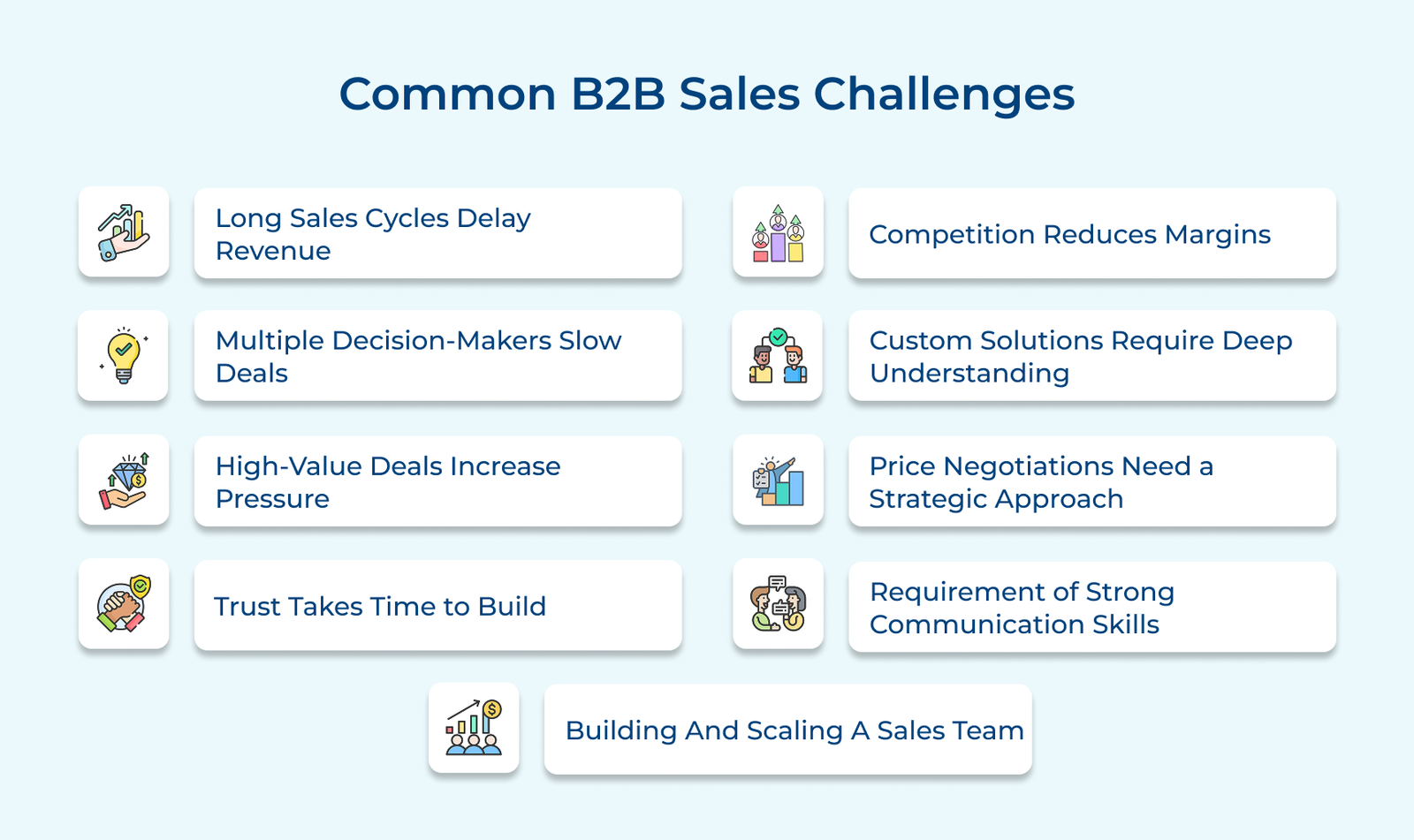
1. Long Complex Sales Cycles Delay Revenue
B2B sales cycles can span months or even years due to the need for extensive research and multiple approval stages. The lengthy process often leads to challenges in maintaining momentum, with sales and marketing teams needing to nurture prospects while managing resources across various pipeline stages.
A software company cut its sales cycle from 8 months to 4 by simplifying its process. As a result, they closed twice as many deals and increased annual revenue.
Ways to overcome:
- Create a structured playbook with clear milestones and timelines for each stage of the process.
- Use automated systems to maintain consistent engagement and reduce the need for manual follow-ups.
2. Multiple Decision Makers Complicate Deal Process
B2B sales often involve multiple stakeholders with differing priorities and concerns, making it essential to tailor your approach for each decision-maker. The challenge grows when stakeholders have conflicting goals or when key decision-makers change during the b2b sales process.
Take the example of a manufacturing equipment supplier that struggles to sell a new production line due to conflicting priorities between IT and Operations. They tailor their sales pitch, highlighting system integration for IT and efficiency gains for operations to close the deal. The strategy works, helping them secure a major contract. Over time, it becomes their go-to approach, improving their success rate in enterprise sales.
Implementation tips:
- Identify each decision-maker’s role and motivations in the purchase process.
- Customize materials to address the specific pain points of different organizational levels and departments.
3. High-Value Deals Create Greater Sales Pressure
High-value B2B transactions raise the stakes for both sales teams and organizations, with each deal representing a significant portion of revenue targets. The pressure mounts as sales reps navigate extensive due diligence, lengthy negotiations and complex technical evaluations. Effectively managing the pressure allows for clearer thinking, more strategic decisions and better outcomes in high-stakes situations.
Let’s assume that a technology consulting firm pursues a $2 million digital transformation project with a major retailer. Initially, the sales team struggled with anxiety during executive presentations. After implementing stress management techniques and thorough preparation, they not only closed the deal but also won three similar-sized contracts the following quarter.
Ways to overcome:
- Regularly simulate high-pressure negotiation scenarios with your sales team to build confidence and composure.
- Divide large deals into smaller, milestone-based phases to reduce pressure and make the process more manageable.
4. Building Trust Requires Substantial Time Investment
Building trust in B2B relationships requires time, effort and a deep understanding of both your industry as well as customer needs. Sales professionals must not only demonstrate expertise but also show genuine commitment to customer success. The challenge is heightened by modern buyers, who are more informed and often skeptical of traditional sales tactics.
Let’s consider that a cloud services provider spends six months understanding a healthcare organization’s security concerns before offering solutions. Their patient approach and in-depth security compliance demonstrations not only secured the initial contract but also led to implementations across the entire hospital network, generating five times the expected revenue.
Actionable tips:
- Position yourself as an expert by offering valuable insights without focusing on immediate sales.
- Stick to a consistent follow-up schedule, emphasizing value and support over deal status updates.
5. Competition Drives Down Profit Margins Significantly
Organizations are often under constant pressure to justify their pricing while proving unique value. Sales teams often face the challenge of matching competitor prices while protecting profit margins, especially when competitors introduce innovative features or aggressive pricing strategies. Successfully differentiating from competitors helps organizations maintain healthy margins, invest in innovation and avoid price wars.
Imagine there’s a manufacturing equipment supplier facing pressure from lower-cost competitors. They were able to maintain premium pricing by developing a total cost of ownership analysis and offering predictive maintenance features. The approach resulted in securing three major contracts, despite being priced 15% higher than competitors.
Pro tips:
- Create tools that highlight long-term cost savings beyond the initial purchase price.
- Use proven case studies to demonstrate the value you deliver and justify premium pricing.
6. Custom Solutions Need Detailed Technical Knowledge
B2B sales often require a deep technical understanding to tailor solutions to specific client needs. Sales teams must bridge the gap between technical capabilities and business requirements, especially when dealing with integration or industry-specific compliance challenges.
An enterprise software company struggled to sell its automation platform because the sales team couldn’t explain its technical features clearly. After introducing technical training and solution architect roles, their win rate increased by 40%, leading to better solutions.
Implementation tips:
- Pair junior sales representatives with experienced technical experts for complex client meetings.
- Document common technical questions and develop easy-to-understand response templates to streamline communication.
7. Price Negotiations Demand Strategic Sales Approach
B2B price negotiations are often complex due to procurement teams’ advanced buying strategies and detailed cost analysis. Sales teams must defend their pricing while managing relationships with multiple stakeholders, especially when dealing with professional procurement specialists.
A software company negotiating with an enterprise client faces pressure to lower prices. Instead of cutting costs, they steer the discussion toward customization and implementation support. This strategy helps them maintain their pricing while setting a precedent for future deals.
Ways to overcome:
- Shift focus to value before price becomes the main point of discussion.
- Develop pricing structures that cater to different customer segments and their unique needs.
8. Stakeholder Management Requires Advanced Communication Skills
Managing diverse stakeholder groups in B2B sales requires advanced communication skills and careful coordination. Sales teams must tailor their communication style and content to different organizational levels, ensuring consistency in the core message while addressing each group’s unique concerns. Effective stakeholder management improves deal closure rates and ensures smoother implementation. Strong communication enhances consensus among decision-makers, reducing internal resistance and speeding up the approval process.
Take the example of an IT services provider faced with challenges in bridging the communication gap between technical teams and executives during a digital transformation pitch. When they tailored their messaging to each role, they secured executive approval without losing technical accuracy. The method became their go-to strategy for enterprise sales.
Ways to overcome:
- Identify communication preferences and priorities for each group early on in the sales process.
- Establish regular feedback loops to ensure your messaging is effective and engage stakeholders throughout the process.
9. Building a Sales Team
Building or maintaining an effective B2B sales team is challenging, particularly when it comes to recruitment and skill development. Finding professionals with the right balance of industry knowledge and sales expertise is tough. The lengthy onboarding process and high turnover rates only add to the complexity.
Assume there’s a professional services firm that launched a structured mentoring program, pairing experienced sales reps with new hires. As a result, their ramp-up time dropped from six months to three, first-year revenue increased and early-stage turnover decreased.
Actionable tips:
- Design clear career growth plans that combine skill development with performance-based incentives.
- Encourage team members to share successful sales strategies and experiences, enhancing a collaborative learning environment.
Examples of B2B Sales Challenges
Below are examples of organizations that faced B2B sales challenges, showcasing key obstacles that can affect sales performance and the strategies they used to overcome them.
Amazon
Amazon Web Services (AWS) faced the challenge of convincing enterprises hesitant about cloud migration. They launched a comprehensive education program focused on security and cost benefits. Their sales teams collaborated with technical experts to create proof-of-concept implementations, showcasing tangible value to skeptical IT departments.
The strategy transformed AWS into a trusted enterprise partner and positioned cloud computing as a mainstream solution. Their educational approach became a model for selling complex services, helping AWS build long-lasting relationships with major corporations across industries.
Nike
Nike’s B2B division faced challenges in maintaining consistent brand representation and managing complex wholesale relationships with diverse retail partners. They introduced a digital platform to streamline product cataloging and ordering, allowing sales teams to focus on creating tailored merchandising strategies for different retail segments.
The digital transformation strengthened Nike’s relationships with retail partners, improved brand consistency and set a new industry standard. It significantly boosted their market position in the premium retail segment.
Puma
Puma faced challenges in standing out in a highly competitive wholesale market and managing diverse retail relationships. They created a specialized partner program offering exclusive product lines and market support to key retailers. Their sales team focused on collaborative merchandise planning.
The strategy strengthened Puma’s position in key accounts, enhancing valuable partnerships. It led to better shelf space allocation, increased brand visibility and more efficient inventory management while reducing markdown rates across retail channels.
Future Trends In B2B Sales
Let’s go through the future trends in B2B sales, exploring emerging technologies, shifting buyer behaviors and innovative strategies that will drive success in the coming years.