1. Define Your Ideal Customer Profile (ICP)
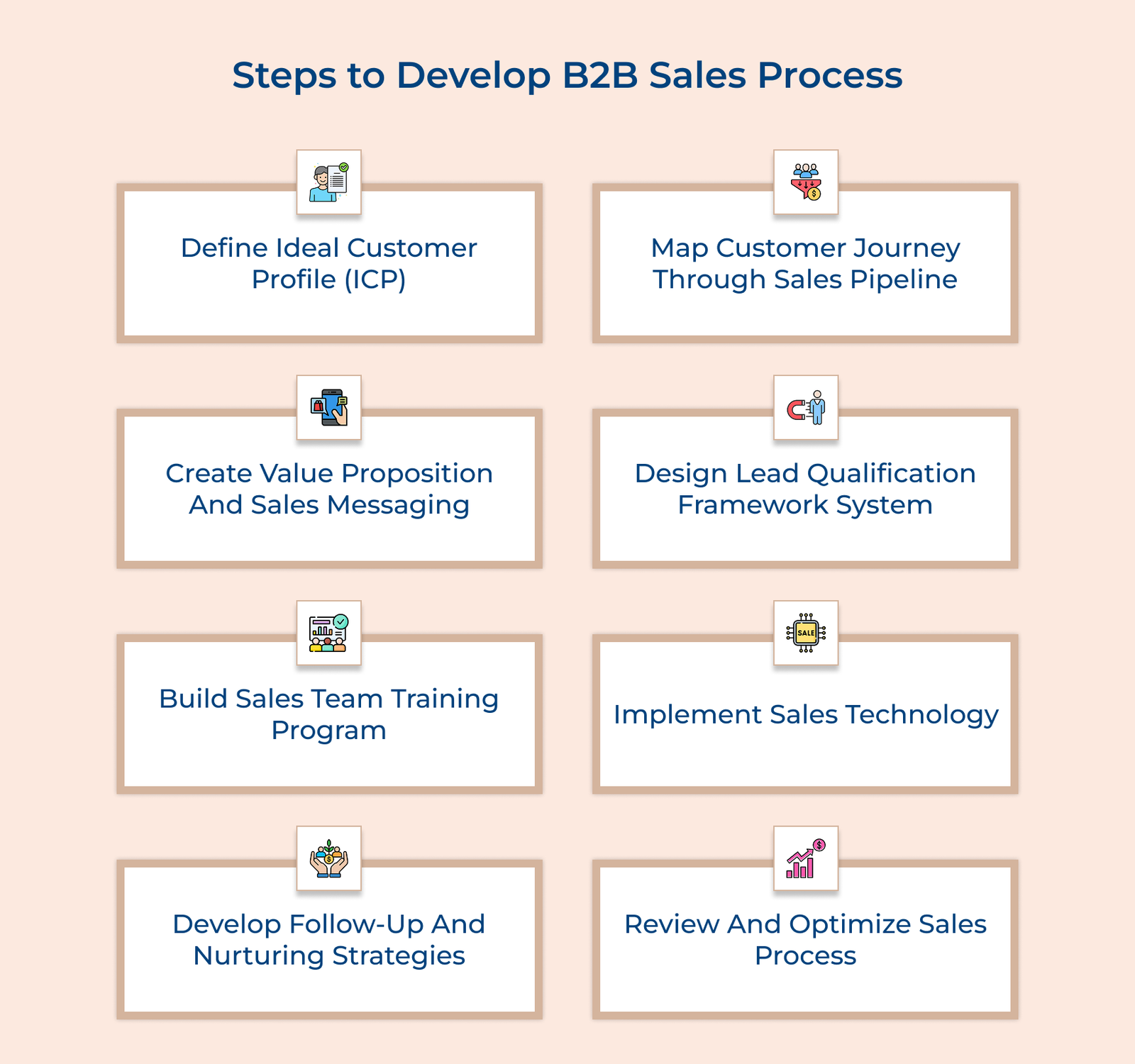
Creating an ideal customer profile (ICP) is the foundation of your B2B sales process. It involves crafting a detailed description of the perfect customer who will benefit most from your product or service. Understanding your ICP helps focus sales efforts on prospects most likely to convert and become long-term customers.
Start by analyzing your current successful customers, identifying common traits like company size, industry, revenue and challenges. Build a profile that includes decision-maker roles, budget authority and specific pain points your solution addresses. It becomes your guide for prospecting and lead qualification.
Pro tips:
- Update your ICP quarterly based on new customer insights and market trends to keep it effective.
- Create negative personas to help your team avoid wasting time on unqualified prospects.
2. Map Customer Journey Through Sales Pipeline
Customer journey mapping visually represents every interaction a prospect has with your company from awareness to purchase. The process helps your team understand the buying experience from the customer’s perspective and highlights key touchpoints to provide value, ensuring a seamless experience.
Start by documenting the stages successful customers went through before purchasing. Track their interactions such as content consumption, sales calls and proposal reviews. Identify key decisions at each stage, breaking it down into clear pipeline stages like awareness, consideration, evaluation and decision. Note the prospect’s needs, concerns and the resources your team should provide for each stage.
Actionable tips:
- Track the average time spent in each pipeline stage to identify potential bottlenecks.
- Create separate journey maps for different buyer personas, as decision-makers and technical users often follow distinct paths.
3. Create Value Proposition and Sales Messaging
A strong value proposition explains why potential customers should choose your solution over competitors or the status quo. It clearly defines the unique value your solution provides, ensuring a consistent and compelling message across all customer interactions. The alignment helps build trust, engagement and a stronger connection with your audience.
Analyze your ICP’s pain points and align them with your solution’s key benefits. Start by listing the challenges you solve and the specific outcomes you deliver, then craft statements connecting the benefits to customer priorities. Test variations with your sales team and current customers to find the most compelling version. Once finalized, create supporting messages for each sales stage to address concerns at different points in the buying journey.
Best practices:
- Tailor industry-specific value propositions for the different market segments to increase relevance.
- Create a “message matrix” to align value propositions with different stakeholder roles, as technical users and executives care about different benefits.
4. Design Lead Qualification Framework System
A lead qualification framework offers a structured way to evaluate prospects based on criteria that predict their likelihood to buy and succeed with your solution. It ensures resources are wasted on unqualified leads, keeping your sales funnel focused on high-potential opportunities.
Start by defining clear qualification criteria using your ICP and historical customer data. Set minimum requirements for budget, authority, timeline and technical fit, then create a scoring process to prioritize the factors. Develop targeted questions for each criterion guide discovery calls and document the framework in your CRM for consistent use.
Pro tips:
- Use negative scoring factors to automatically disqualify leads, helping your team quickly spot deal-breakers.
- Regularly review and adjust qualification criteria based on win-loss analysis to keep your framework accurate.
5. Build a Sales Team Training Program
A comprehensive sales training program equips your team to execute every step of your sales process consistently, ensuring high performance across all members. The foundation is key to scaling your sales organization and maintaining success. A well-structured program reduces ramp-up time for new hires and keeps experienced reps up-to-date with best practices.
Start by developing modules that cover each stage of the sales process, from product knowledge to advanced techniques. Incorporate role-playing, practical assignments and regular assessments. Implement a certification process to validate mastery before reps engage with prospects.
Actionable tips:
- Record successful sales calls to create a library of best practice examples for training.
- Pair experienced reps with new hires through a mentorship program for hands-on learning.
6. Implement Sales Technology and Tools
Sales technology streamlines and scales your sales process, providing visibility into pipeline activities. The right tech stack helps standardize processes, boost performance, and allow your team to focus more on meaningful customer interactions rather than administrative work.
Start by selecting core tools that meet your process needs, focusing on CRM, sales engagement, and analytics. Evaluate solutions based on ease of use, integration and scalability. Map out workflows for each tool to support various stages and create standardized templates to maintain consistency while reducing manual effort.
Best practices:
- Develop an onboarding checklist to ensure thorough training for all team members.
- Appoint power users for each tool to act as internal champions and troubleshooters.
7. Develop Follow-up and Nurturing Strategies
Regular follow-ups and meaningful engagement keep prospects engaged in long B2B sales cycles, ensuring smooth communication. The strategies maintain deal momentum and show your commitment to solving their challenges, even when they’re not ready to buy.
Start by mapping content and outreach to specific buying stages. Create a blend of automated and personalized touchpoints, delivering relevant information based on prospect interests. Build content libraries for sales reps to easily access and support various nurturing scenarios. Set clear guidelines for follow-up frequency and timing to avoid overwhelming prospects.
Pro tips:
- Develop industry-specific nurturing tracks with case studies and solutions tailored to pain points.
- Implement a lead scoring system that adjusts based on engagement with nurturing content.
8. Review and Optimize Sales Process
Regularly optimizing the B2B sales process keeps it relevant, effective and in sync with market needs. Continuous evaluation helps spot emerging opportunities, fix inefficiencies and adapt to customer needs. preventing your process from becoming outdated.
Start by establishing regular review cycles for each sales component. Gather feedback from sales representatives, customers and support teams, then analyze performance data against KPIs to spot trends. Prioritize improvements based on impact and effort. Create action plans for implementation and communicate to ensure consistent adoption.
Actionable tips:
- Perform quarterly win-loss analyses to uncover patterns and inform process improvements.
- Create a structured feedback loop for sales reps to submit process improvement ideas.
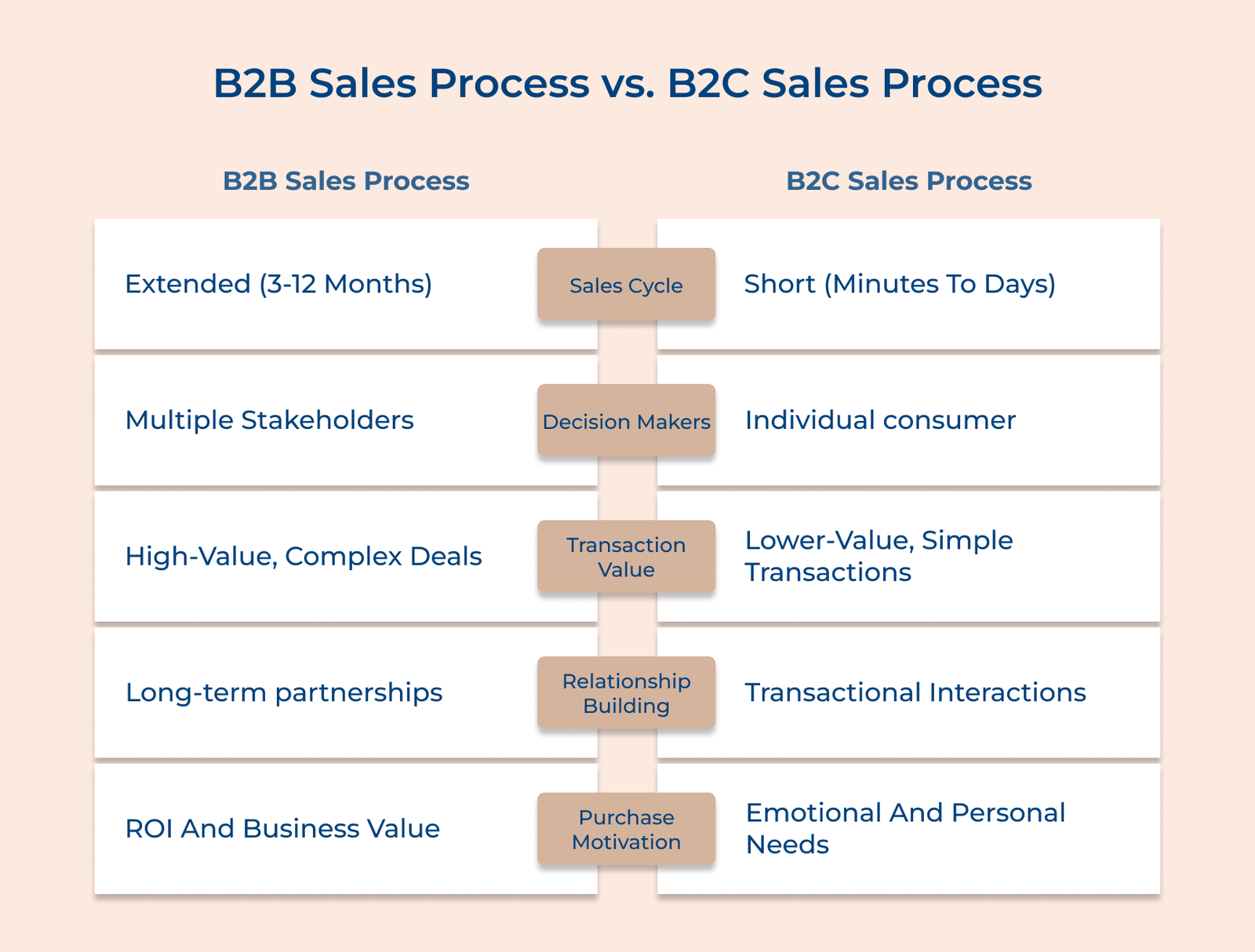
B2B Sales Process vs. B2C Sales Process: The Difference
Check out the key differences between B2B and B2C sales processes, from longer sales cycles in B2B to quicker transactions in B2C.