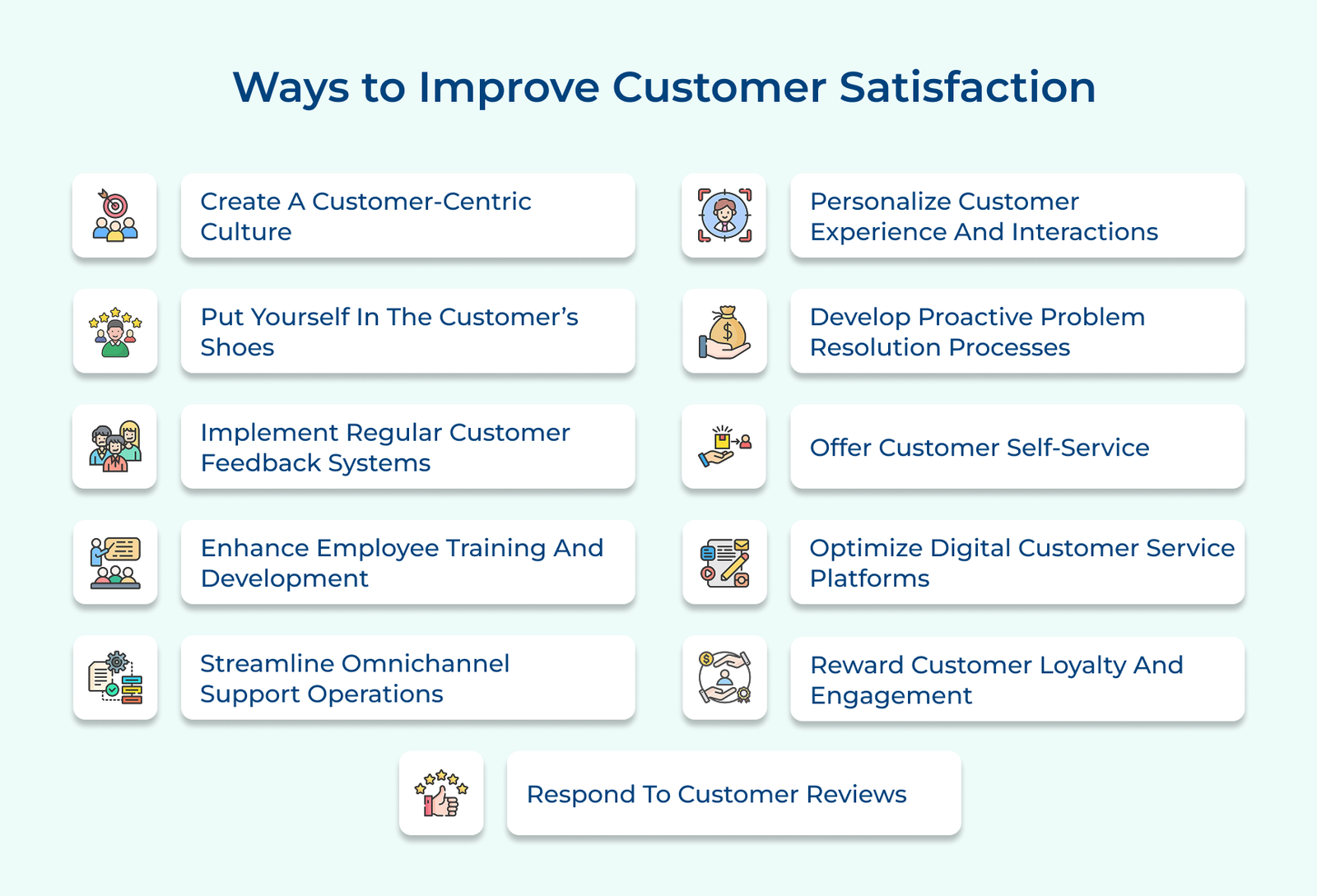
1. Create a Customer-Centric Culture
Building a customer-centric culture is key to exceptional customer satisfaction. The approach ensures customer needs guide every decision, from product development to service delivery. When implemented properly, it shifts how employees engage with customers, boosting satisfaction and loyalty. Aligning values with customer needs starts with clear communication.
Customer-focused performance metrics drive accountability and continuous improvement. Organizations can make informed decisions to enhance experience by aligning KPIs with satisfaction and incorporating customer feedback into strategy.
Best practices:
- Hold monthly workshops to reinforce customer-centric values and share success stories.
- Create a customer advocacy program where employees directly engage with customers.
2. Put Yourself in the Customer’s Shoes
Understanding the customer perspective is key to delivering exceptional service. Organizations can proactively identify and address pain points before they affect satisfaction by examining offerings from the customer’s point of view.
Regular customer journey mapping sessions offer valuable insights into the experience across all touchpoints. The sessions bring cross-functional teams together to document every customer interaction, from awareness to post-purchase support, highlighting areas for improvement.
Pro tips:
- Implement monthly mystery shopping to experience the service as customers do.
- Create a customer advisory board for ongoing feedback on new initiatives.
3. Implement Regular Customer Feedback Systems
Regular customer feedback systems are essential for continuous improvement in customer satisfaction. Businesses can stay responsive to evolving customer needs by establishing structured methods for gathering and acting on feedback.
Automated satisfaction surveys, sent post-interaction, capture real-time insights while the experience is fresh, enabling quick service adjustments. Quarterly in-depth interviews and diverse feedback channels such as email, SMS and social media ensure a comprehensive understanding of customer needs.
Best practices:
- Implement a closed-loop feedback system to ensure every critical response is addressed.
- Create a customer feedback dashboard accessible to all employees for transparency and shared responsibility.
4. Enhance Employee Training and Development
Employee training and development directly impact customer satisfaction. A well-trained workforce equips staff with the knowledge, skills and confidence to deliver exceptional service, handling complex customer issues more effectively.
Comprehensive product knowledge ensures employees provide accurate information, solve problems efficiently and create value for customers, building trust. Ongoing coaching sessions focused on soft skills and emotional intelligence help employees respond with empathy.
Actionable tips:
- Implement peer-to-peer learning programs, where experienced employees mentor newer team members.
- Create simulation-based training to help employees practice handling complex situations.
5. Streamline Omnichannel Support Operations
Omnichannel support has become crucial, where customers expect seamless interactions across multiple platforms. A well-executed strategy ensures consistent service, boosting satisfaction and retention. Businesses must standardize messaging and communication protocols, ensuring a unified brand voice across all channels.
Unified customer service management and smooth channel transitions enhance the experience by allowing representatives to offer personalized, efficient support without customers having to repeat information.
Best practices:
- Conduct regular cross-channel performance reviews to maintain service consistency.
- Use real-time monitoring tools to manage service levels across all platforms effectively.
6. Personalize Customer Experience and Interactions
Personalization is a key differentiator in customer service, significantly boosting satisfaction and loyalty. Tailoring interactions to individual customer needs enhances emotional connections and demonstrates a commitment to unique services.
Customer segmentation allows businesses to categorize customers by behavior, preferences and needs, enabling more targeted communications. It leads to more effective, meaningful interactions. Customized communication and personalized service recovery protocols show attention to individual needs, turning negative experiences into opportunities to strengthen customer relationships.
Pro tips:
- Implement AI-powered recommendation systems to suggest products based on customer behavior.
- Develop personalized customer success programs aligned with specific customer goals.
7. Develop Proactive Problem Resolution Processes
Proactive problem resolution shifts customer service from reactive to preventive, focusing on identifying and addressing potential issues before they affect customers. The approach boosts satisfaction and reduces support costs.
Organizations can spot early warning signs in customer behavior, product usage and historical data by using predictive analytics, allowing for proactive action. It ensures consistent service and minimizes disruptions. Early warning systems and preventive maintenance work together to monitor key metrics, triggering alerts for quick issue resolution.
Best practices:
- Create cross-functional response teams to address emerging issues promptly.
- Use health checks and automated monitoring tools for early problem detection.
8. Offer Customer Self-Service
Self-service options are key to meeting customer demand for fast, convenient solutions. A well-crafted self-service system allows customers to resolve issues independently, improving satisfaction and reducing support costs. 47% of businesses reported an increase in sales after implementing self-service.
A robust knowledge base provides the foundation for effective self-service, offering easily accessible and up-to-date documentation. Intuitive FAQs and AI-powered chatbots enhance the experience by delivering immediate, relevant responses, freeing agents to focus on more complex inquiries.
Pro tips:
- Add video tutorials and interactive guides to enrich written content.
- Collect user feedback to continuously improve self-service tools.
9. Optimize Digital Customer Service Platforms
Optimizing digital platforms enhances customer access to support and information across preferred devices, reducing friction. Mobile-first designs and automated ticket routing ensure quick, efficient service delivery, no matter how or when customers reach out.
Real-time performance monitoring is essential for maintaining high service levels and ensuring a seamless customer experience. Continuously tracking system performance enables the businesses to detect and address potential issues before they escalate into major disruptions.
Best practices:
- Perform regular usability tests to identify and resolve friction points.
- Incorporate progressive web app features for app-like mobile browser experiences.
10. Reward Customer Loyalty and Engagement
A well-crafted loyalty program enhances customer connections by rewarding engagement and encouraging repeat business. Tiered programs with exclusive benefits, like priority boarding or upgrades, create a sense of progression and motivate continued loyalty.
Personalized rewards go beyond generic discounts as they create meaningful connections by acknowledging each customer’s unique preferences and loyalty. Special offers tailored to purchase history, early access to new arrivals, or customized loyalty perks, make customers feel valued and appreciated.
Actionable tips:
- Surprise loyal customers with random rewards.
- Host exclusive events to build a community for your most dedicated customers.
Example Of Brands Improving Customer Satisfaction
Check out the examples of a few brands improving customer satisfaction through innovative strategies and setting new standards for customer-centric business practices.
1. Amazon
Amazon’s customer-centric strategy prioritizes personalization, fast delivery and easy returns, all driven by their “customer obsession” philosophy. Amazon has set a new standard for customer service with innovations like Prime membership and one-click ordering. The efforts have fueled impressive growth in loyalty, market share and customer lifetime value, making Amazon the top choice for online shopping.
2. Ritz-Carlton
Ritz-Carlton’s “Gold Standards” empower businesses to resolve guest issues up to $2000 without manager approval and personalize stays with detailed guest profiles. The dedication to service excellence has solidified Ritz-Carlton’s luxury brand, ensuring premium pricing and high customer retention, as guests return for both leisure as well as business travel.
3. Apple
Apple has built a seamless ecosystem of products and services, enhanced by expert support through the Genius Bar. Apple has cultivated unmatched customer loyalty by prioritizing user experience and comprehensive post-purchase support, maintaining high retention rates.
4. Zappos
Zappos transformed customer service with a no-questions-asked return policy and in-depth support, empowering reps to prioritize relationships over metrics. The approach fueled word-of-mouth growth, higher customer satisfaction and strong repeat business.
5. Starbucks
Starbucks strengthened its market position with a personalized loyalty program, mobile ordering and regular customer feedback. The customer-centric approach has cultivated a loyal base, driving growth and market expansion.
Unlocking the Secrets of Customer Satisfaction: A Strategic Imperative
Customer satisfaction is key to long-term growth. Businesses can build lasting loyalty by understanding customer needs, offering personalized experiences and ensuring consistent service across all touchpoints.
Achieving exceptional satisfaction requires blending technology with a human-centered approach. Companies that invest in feedback systems, employee development and proactive problem-solving while focusing on personalization will exceed customer expectations.