What is Sales Cadence: Examples, Tips and Benefits
A sales cadence is a structured approach to outreach, involving a series of touchpoints with prospects. The blog explores examples, tips and benefits to optimize sales effectiveness.
A sales cadence is a structured approach to outreach, involving a series of touchpoints with prospects. The blog explores examples, tips and benefits to optimize sales effectiveness.
Inconsistent outreach and poor follow-up processes often result in missed opportunities. Sales reps struggle with unclear contact strategies, leading to frustration and decreased conversion rates. Without a structured approach, valuable prospects slip through the cracks and managers lack insight into their team’s performance.
A well-designed sales cadence addresses the issues by providing a systematic, repeatable process for prospect engagement. You can streamline outreach and improve results by adopting proven cadence strategies. We’ll show you how to optimize your sales workflow for maximum efficiency and impact.
A sales cadence refers to a structured sequence of planned interactions between a sales rep and a prospect over a set period. It defines the timing, frequency, channels and messaging for each touchpoint in the sales process.
A well-crafted sales workflow orchestrates contact attempts across multiple channels- email, phone calls, social media and direct mail. Let’s assume that it might begin with an introductory email, followed by a LinkedIn connection request, a phone call and so on. Each interaction builds on the last, creating a seamless experience that moves prospects through the sales funnel.
Key principles:
Following are the key benefits of implementing a sales cadence. Let’s explore them in detail for better lead engagement and optimized sales process.
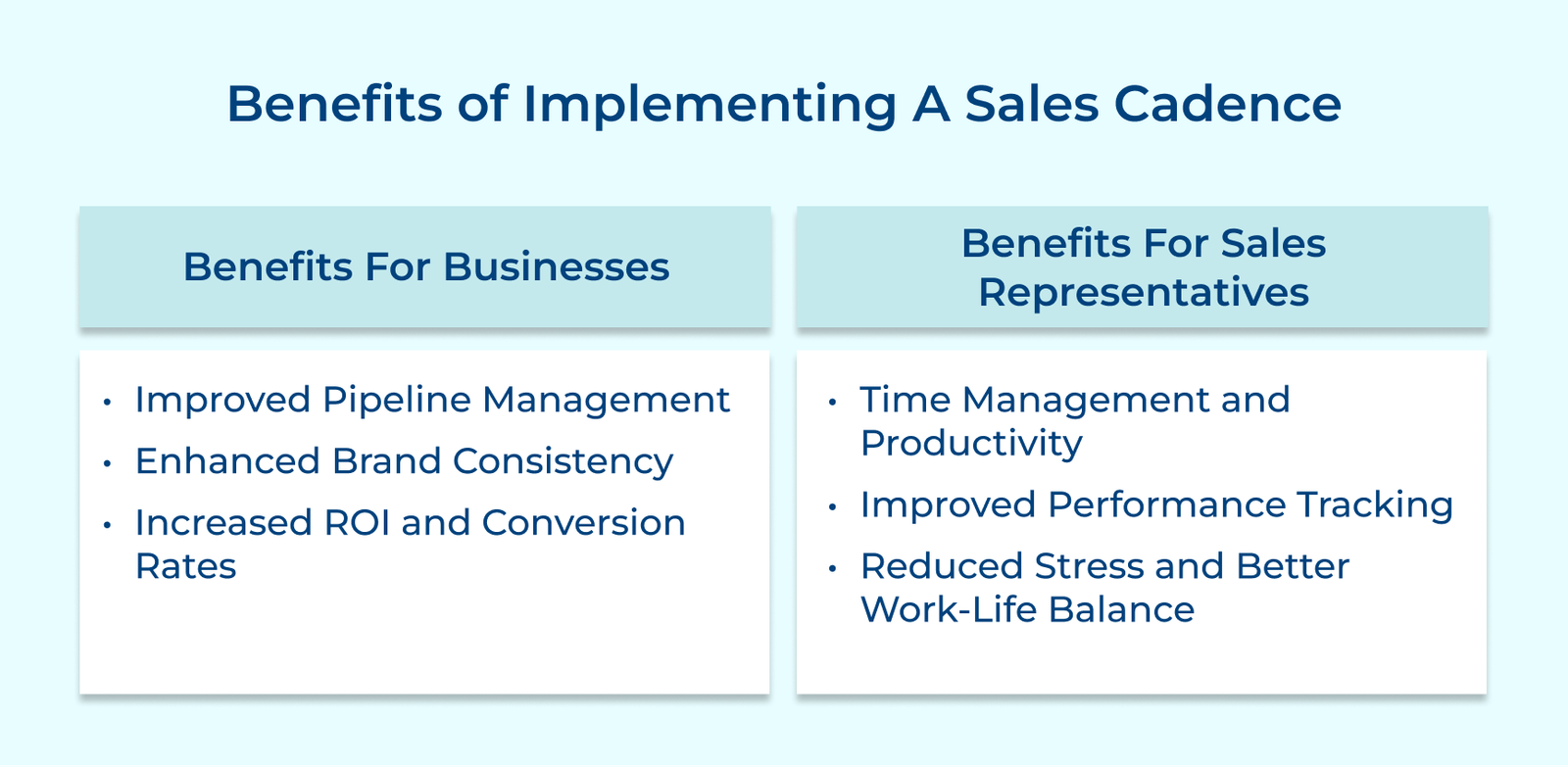
1. Improved Pipeline Management
A structured sales offers clear visibility into the pipeline, improving forecast accuracy, identifying bottlenecks and optimizing resource allocation. The approach enables data-driven decisions and strategy refinement.
2. Enhanced Brand Consistency
A standardized sales approach ensures consistent brand messaging and customer experience. The uniformity builds trust, reinforces brand values and creates a professional image that resonates with prospects across all touchpoints.
3. Increased ROI and Conversion Rates
A well-optimized communication sequence boosts conversion rates and ROI by reducing wasted efforts. It targets high-potential prospects and shortens the sales cycle.
1. Time Management and Productivity
A defined cadence removes the guesswork from follow-ups, allowing sales reps to plan their day efficiently. The structure reduces decision fatigue, enables better task prioritization and ensures no potential opportunities fall through the cracks.
2. Improved Performance Tracking
Sales reps can track their performance at each stage, identify effective strategies and refine their approach. The data-driven method highlights strengths and areas for improvement.
3. Reduced Stress and Better Work-Life Balance
A clear engagement framework helps sales reps manage their workload, reduce follow-up stress and maintain a better work-life balance- all while meeting their targets effectively.
Below are the differences between a sales cadence and a sales script, providing a detailed understanding of how each enhances the sales process.
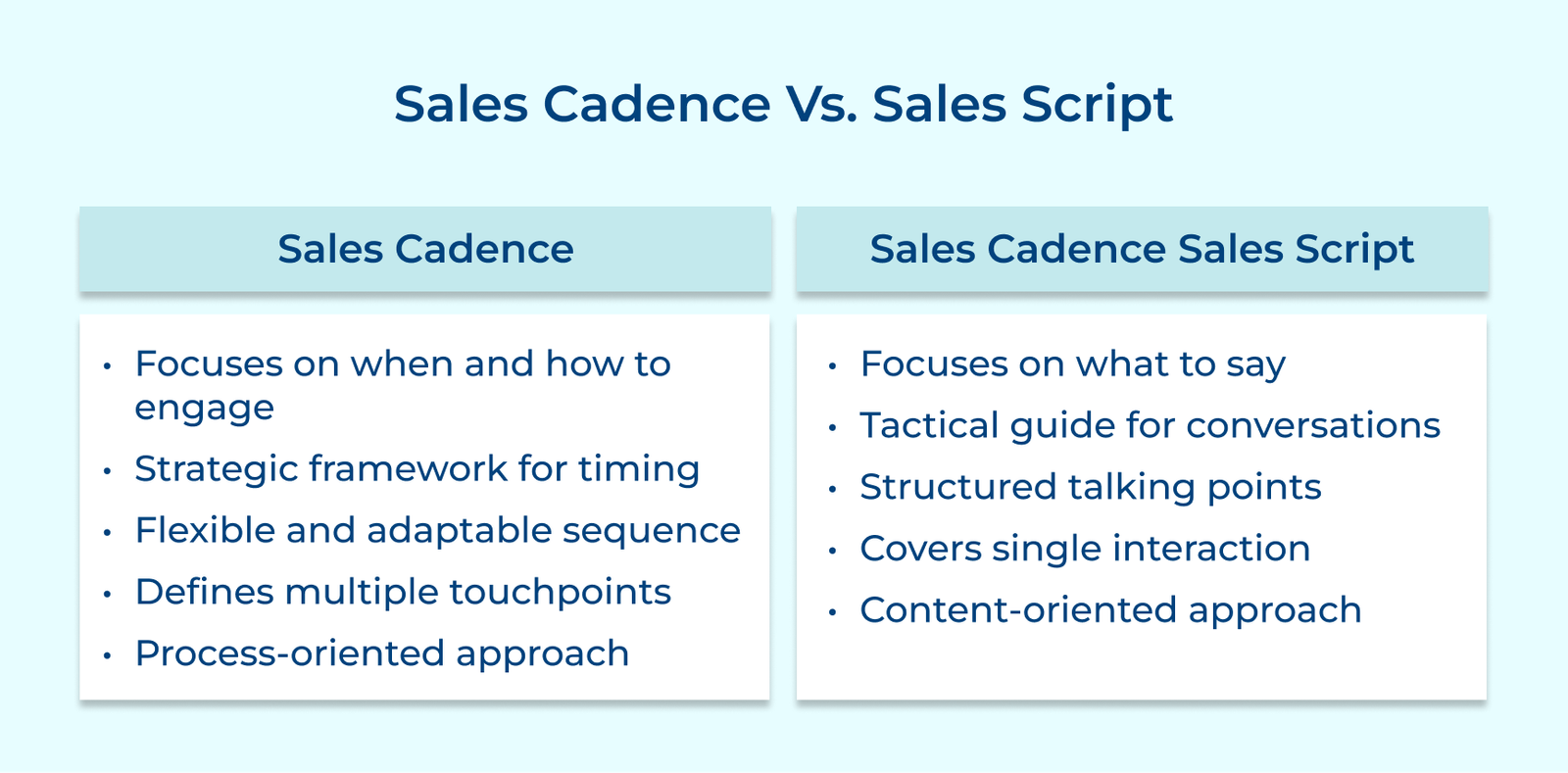
1. Purpose and Focus
A sales cadence is a strategic blueprint that defines the entire prospect engagement journey, detailing the timing, channels and frequency of touchpoints. It serves as a comprehensive guide for managing the sales process and ensuring consistent customer interactions.
A sales script is a tactical tool designed for individual conversations. It offers specific language, responses and talking points to guide sales reps through a single interaction, focusing on the immediate conversation rather than the broader engagement strategy.
2. Flexibility and Adaptation
Sales cycles offer flexibility, allowing adjustments based on prospect responses, market trends or evolving business priorities. They enable customization of timing and approach for each prospect while the structure remains consistent.
Sales scripts are more rigid and focused on predefined language for specific situations. Though they can be adapted, scripts generally follow a fixed format to ensure consistency and clarity in communication.
3. Scope of Implementation
A sales workflow spans multiple channels and touchpoints, coordinating communication across emails, calls, social media and direct mail over time. It offers a comprehensive view of the entire sales journey, ensuring a cohesive engagement strategy.
Sales scripts are more focused on individual interactions, such as phone calls or meetings. They provide step-by-step guidance for specific conversations but don’t manage the broader engagement process.
4. Time Orientation
Sales cadences are long-form and process-driven strategies that outline the sequence of interactions over days, weeks or months. They guide sales teams in coordinating efforts throughout the sales cycle, ensuring a structured approach to prospect engagement.
Sales scripts are focused on the present moment, offering real-time guidance for specific conversations. They help sales reps manage individual interactions, navigate objections and stay on message during each touchpoint.
5. Measurement and Analytics
The sales cycle is assessed through broader metrics such as response rates, engagement patterns and conversion rates at each touchpoint. The indicators offer valuable insights into the overall effectiveness of the sales strategy and process.
Sales scripts are evaluated based on specific conversion metrics, including call outcomes, success in handling objections and closing rates. The metrics measure the impact of individual interactions and communication tactics.
Check out nine essential steps to help you develop an effective sales cadence that not only optimizes your outreach but also enhances your sales performance.
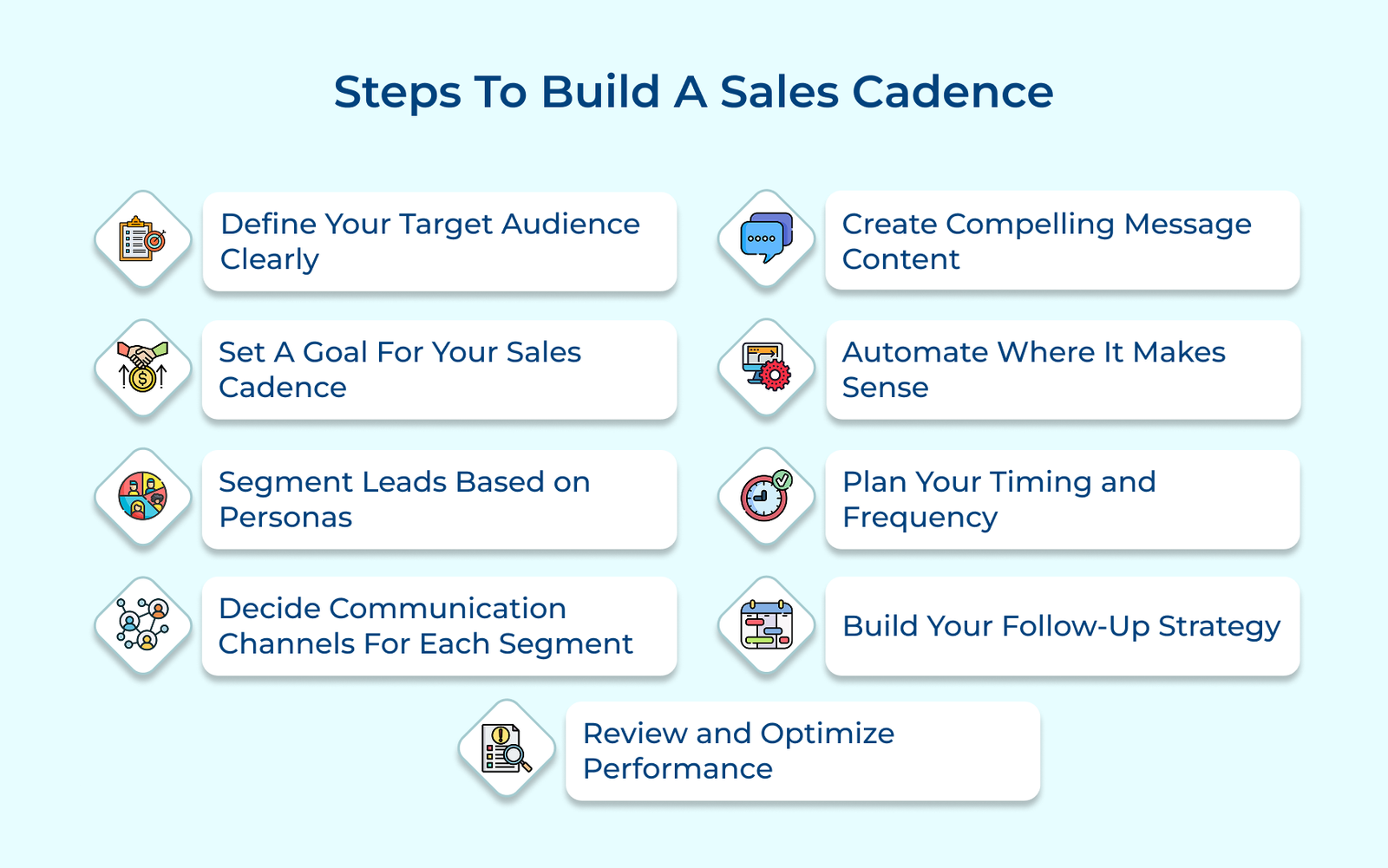
Defining your target audience is crucial to a successful sales cadence. Without a clear audience, your outreach can become unfocused, wasting resources and decreasing conversion rates. A well-defined audience enables more personalized, effective engagement with the right prospects, maximizing your sales efforts.
Start by researching your ideal customer profile, analyzing successful past customers to identify common traits and buying behaviors. It includes factors like company size, industry, revenue, pain points and decision-maker roles. Understanding the details helps target the right prospects, refine messaging and align your sales approach with the sectors where your solution has the greatest potential for success.
Actionable tips:
Clear sales cadence goals provide direction, ensuring outreach efforts are purposeful and measurable. Without specific objectives, it’s impossible to track success or pinpoint areas for improvement. The goals align the team and create performance benchmarks, driving consistency across sales efforts.
Setting conversion targets such as meetings booked, opportunities created or deals closed helps gauge progress. The targets should be realistic yet ambitious, informed by historical data and market potential. Defining timelines for each stage of the cadence, including response expectations and pipeline movement, ensures resources are managed effectively.
Pro tips:
Lead segmentation is key to crafting targeted and relevant communications. You can tailor your outreach to each segment by grouping prospects based on shared traits and behaviors.
Start by developing detailed buyer personas that go beyond basic demographics, incorporating factors like goals, values and communication preferences. Segment leads based on behaviors such as past interactions, website visits or content downloads, allowing you to personalize your approach and align messaging with their specific needs.
Best practices:
Choosing the right communication is crucial, as different audiences engage better through specific methods. You ensure your messages reach prospects where they’re most receptive by selecting the most effective channel mix.
Research your target audience’s preferred communication methods, considering factors like industry norms, generational habits and platform usage. Align your outreach with personal preferences- using a mix of traditional (phone, email) and digital platforms (LinkedIn, forums)—and plan a coordinated, multi-channel approach for consistent, impactful messaging.
Actionable tips:
Content is the heart of your sales cadence, driving engagement and response. Without compelling, relevant messaging, even the well-timed outreach through the right channels will fall flat. Your content must capture attention and offer clear value to prospects.
Identify each segment’s pain points and show how your solution solves their unique challenges. Tailor messages to resonate with each persona’s priorities, adapting tone, technical detail and examples to their role. Message templates should be flexible yet consistent, allowing for customization while maintaining alignment with your core message.
Actionable tips:
Automation is key to scaling your sales cycle while maintaining consistency and minimizing manual effort. It’s important to strike a balance between automation and personalization to ensure your outreach stays authentic rather than feeling robotic.
Examine your sales process for repetitive tasks like regular follow-ups, data entry and basic research that can be automated without compromising quality. Set up well structured email sequences that flow naturally throughout the cadence and use tracking tools to monitor the effectiveness of these automated processes. You can fine tune your approach by analyzing metrics like open rates, click-through rates and responses.
Pro tips:
Timing is key to effective outreach—too early or too late and your messages may go unnoticed, while over-communicating can overwhelm prospects. Finding the right balance ensures your outreach stays relevant and engaging without causing fatigue.
Research when your target audience is most active, considering time zones, industry schedules and typical business hours. Develop a flexible contact schedule that spaces out touch points across different channels, keeping momentum while adapting to response patterns for a consistent, impactful presence.
Best practices:
A solid follow-up strategy is crucial since most sales require multiple interactions to close. You can ensure no opportunities are overlooked and that prospects receive timely, targeted attention to progress them through the sales journey by establishing a systematic follow-up process.
Design response frameworks for different prospect reactions, from initial interest to objections or requests for more info. Set clear next steps for each scenario and develop escalation protocols to guide prospects to higher levels of engagement or the right team members. Implement re-engagement tactics to revive stalled conversations and reignite interest among prospects who’ve gone cold.
Best practices:
Regular performance reviews are crucial to keep your sales cadence effective and continuously improve its impact. Without ongoing analysis, you risk using outdated strategies or missing opportunities to refine your approach.
Tracking key metrics like response rates, conversion rates and time to conversion provides valuable insights into your cadence’s performance. You can fine-tune aspects like timing, messaging and channel selection by analyzing response patterns ensuring your sales strategy evolves based on real results rather than assumptions.
Actionable tips:
Let’s explore the right tools that can greatly improve your team’s efficiency and conversion rates, offering detailed insights into their impact on performance.
How to choose the right software?
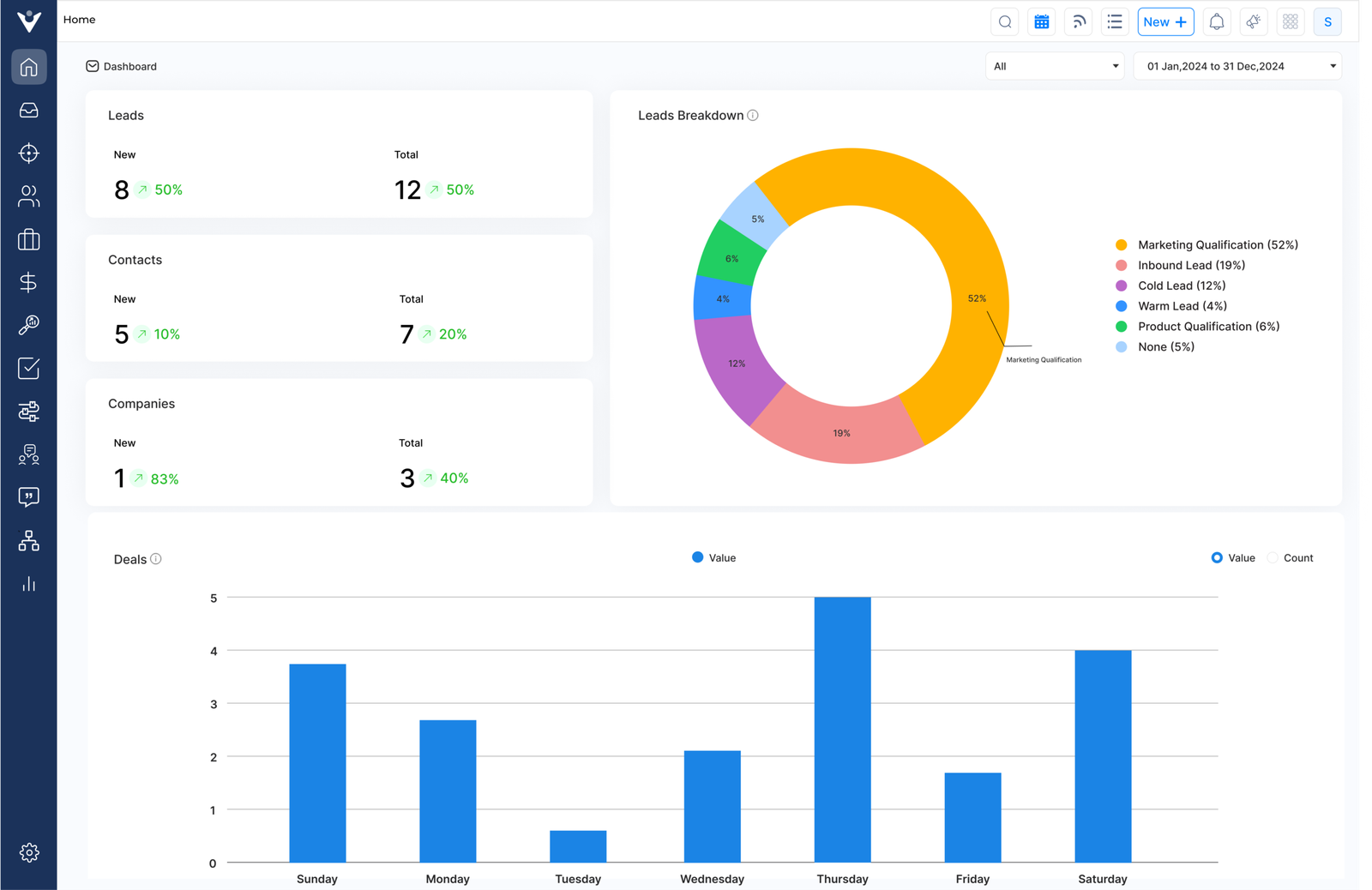
Veemo Sales is a powerful CRM and engagement platform designed for small to medium-sized businesses. Known for its user-friendly interface, it enables personalized, multi-channel outreach sequences with ease, while offering built-in communication tools and seamless integrations.
Key features:
Pricing: Veemo offers flexible plans starting at just $29/month. Sign up today for a 14-day free trial and experience how it can transform your sales operations.
Outreach.io is a powerful sales engagement platform that blends AI-driven automation with advanced sequencing features, ideal for enterprise-level business. It optimizes the sales process with AI-guided selling, customizable workflows, A/B testing, prospect insights and performance tracking while offering machine learning recommendations for optimal engagement timing.
Pricing: The software offers three pricing plans: engage, call and meet. All the plans are custom-based. Get in touch with the team for a customized quote.
SalesLoft is an all-in-one sales engagement platform that empowers teams to create personalized, multi-channel outreach. It delivers powerful analytics to optimize prospect engagement and sales team performance while ensuring scalability with features like cadence automation, email tracking, phone dialer integration and social selling tools.
Pricing: Salesloft offers two plans: advanced and premier. The prices for the plans are custom-based. Contact the team for personalized pricing.
Apollo.io merges an extensive B2B database with advanced sales engagement tools, making it ideal for teams focused for prospecting and lead generation. It offers powerful prospecting features like advanced filtering for precise, targeted outreach with access to over 200 million contacts, automated sequencing and smart routing.
Below are some real-life sales cadence examples. Let’s take a closer look at them in detail to understand their effectiveness and potential impact.
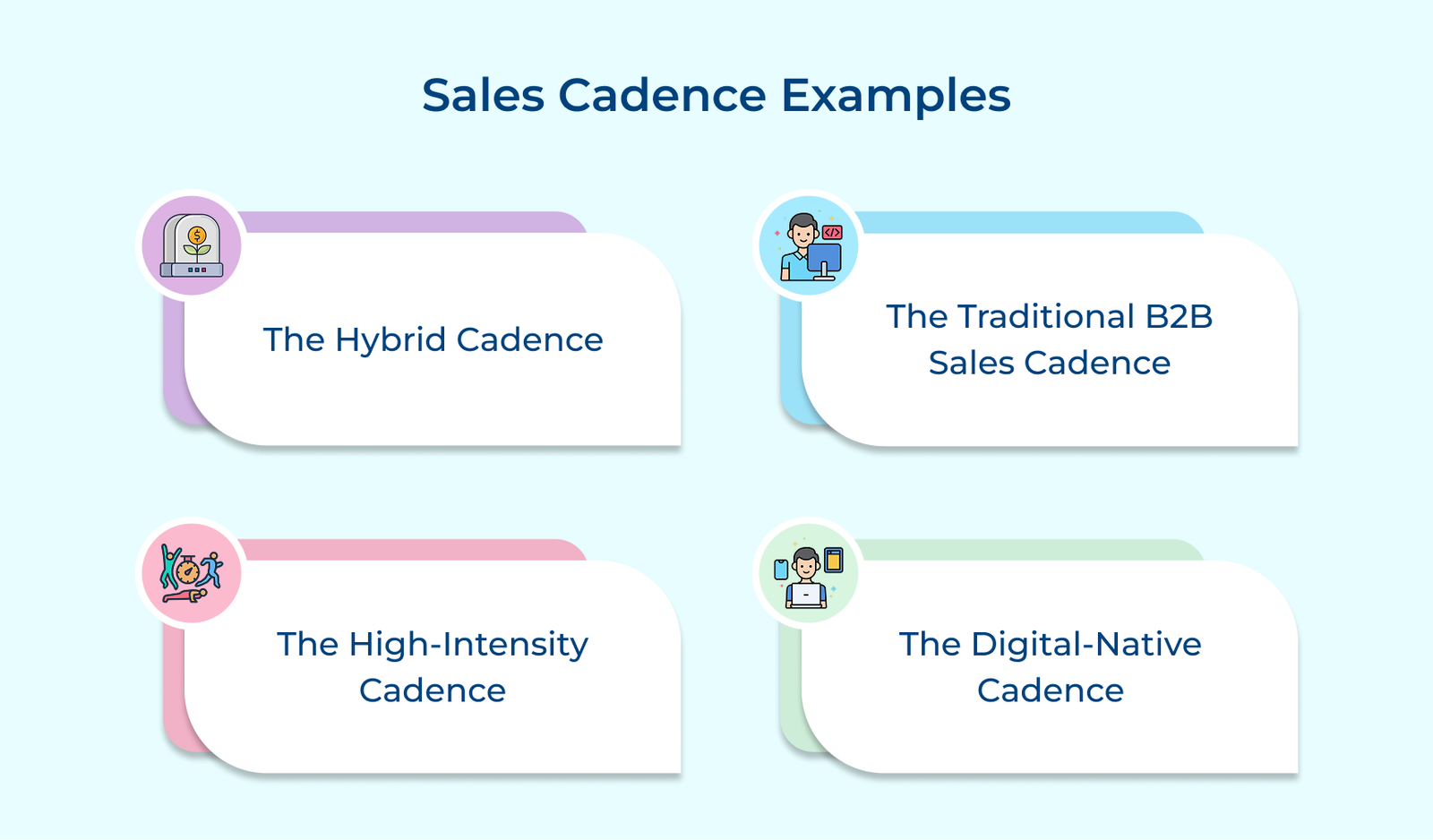
The Traditional B2B Sales Cadence
The proven approach emphasized building strong professional relationships through a strategic mix of communication channels, ideal for complex B2B sales with lengthy decision cycles and multiple stakeholders. Spanning 2-3 weeks, the traditional cadence focuses on quality over quantity, with personalized, value-driven touchpoints that align closely with the prospect’s business needs.
Day 1: Personalized email introduction
Day 2: LinkedIn connection request
Day 6: Follow-up email with valuable content
Day 8: LinkedIn message/engagement
Day 12: Final value proposition email
Day 14: Breakpoint – evaluate response
The High-Intensity Cadence
The high energy approach targets fast-paced markets with shorter sales cycles and urgent decision-making, making it ideal for competitive industries where quick engagement is key to closing deals. Featuring frequent touch points across multiple channels within a tight timeframe, it works well for time-sensitive offers or decision-makers who value direct, efficient communication.
Day 1 AM: Initial email
Day 1 PM: Phone call
Day 2: LinkedIn connection + message
Day 3 AM: Follow-up email
Day 6: Final email
Day 7: Final call + breakpoint
The Account-Based Marketing (ABM) Cadence
The focused approach targets high-value accounts with multiple stakeholders, emphasizing deep personalization and tailored insights. It involves engaging several decision-makers within the same organization, providing customized content and solutions that address their unique challenges.
Week 1: Initial research and personalized outreach to key stakeholders
Week 2: Industry-specific content distribution
Week 6: Executive-level engagement
Week 7: ROI-focused communication
Week 8: Final coordinated outreach
The Warm Lead Cadence
The nurture-driven approach targets leads with initial interest, enhancing relationships and gradually guiding them toward a decision. It builds on past interactions to create relevant, value-focused touchpoints, providing deeper insights into solutions and benefits.
Cadence Structure:
Day 1: Personalized follow-up email referencing initial interest
Day 3: Phone call
Day 7: Case study relevant to their industry
Day 9: ROI calculator or value proposition
Day 13: Product demo invitation
Day 15: Decision facilitator email
The Digital-Native Cadence
The digital-native cadence targets tech-savvy prospects, particularly for SaaS and digital services using automated yet personalized outreach. It emphasizes social proof, interactive content and tailored timing to engage younger decision-makers effectively.
Day 1: Personalized email with video
Day 2: LinkedIn connection + comment
Day 3: Twitter engagement
Day 6: Follow-up email with a case study
Day 8: Webinar invitation
Day 10: Final digital touchpoint sequence
Let’s go through some best practices for sales cadence, focusing on strategies that can optimize engagement and boost sales performance.
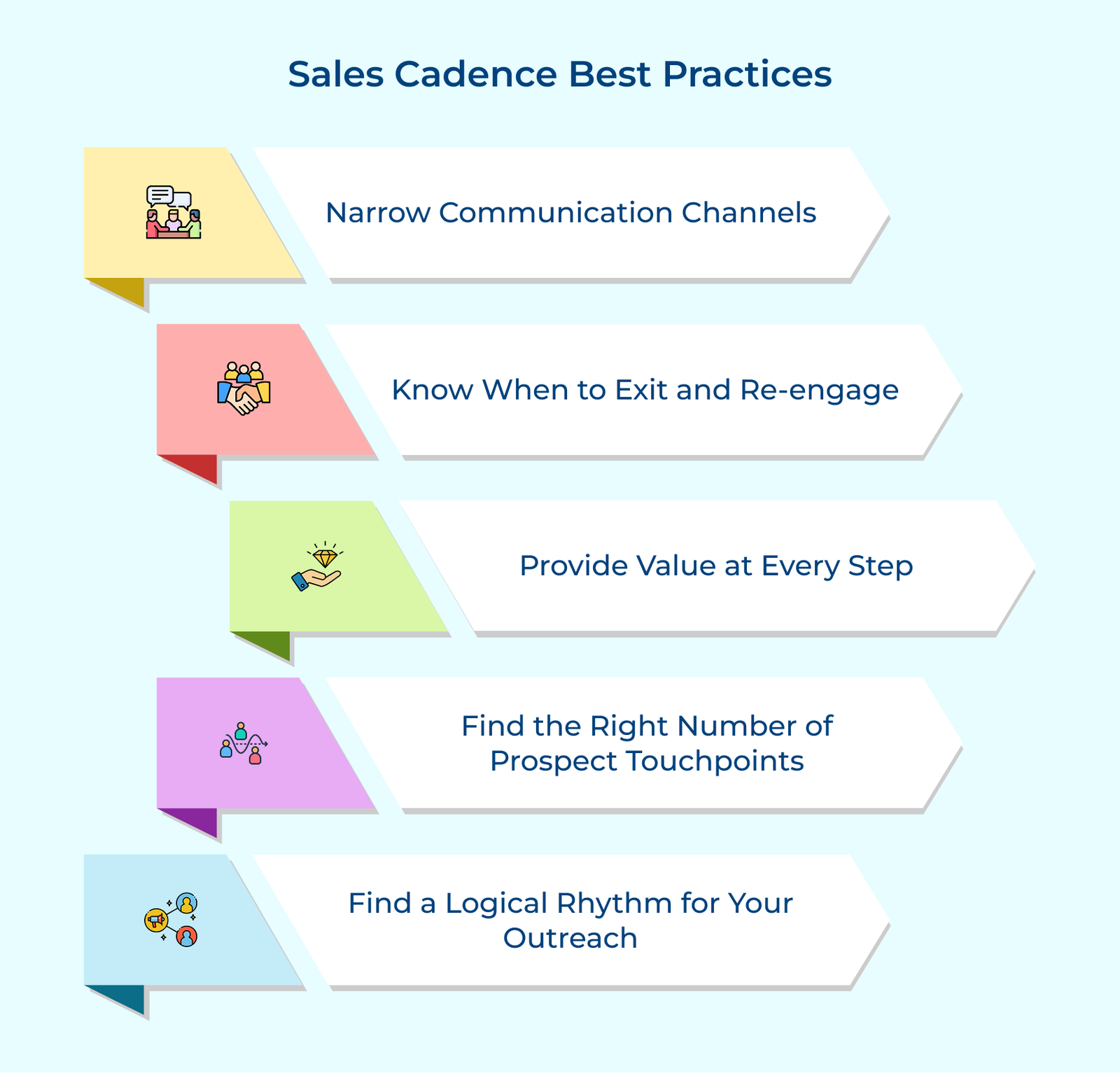
Tailor every interaction using prospect data, behavior and engagement history. Reference company challenges, recent news or industry trends and leverage insights from social media to make each connection more relevant.
Prioritize quality over quantity by selecting 2-3 key channels where your prospects are most active and responsive. The focused approach ensures consistent messaging and simplifies tracking engagement.
Identify when prospects are not ready to engage and establish a clear exit strategy. Use criteria like response patterns, engagement levels and feedback to decide when to move them to a nurture campaign.
Every touchpoint should deliver value by addressing the prospect’s needs– whether through industry insights, solving pain points, or offering educational content- helping them understand how your solution drives success.
Strike the right balance between persistence and respect by analyzing response data to determine the ideal touchpoint frequency typically 6-8 touches over 2-3 weeks. Adjust your outreach based on prospect behavior, fine-tuning the cadence for maximum engagement.
Create a steady, well-timed cadence that gives prospects time to respond while keeping momentum. Strategically space your touchpoints, factoring in business hours, time zones and industry response patterns for a smooth flow.
Check out the key metrics to evaluate the success of your sales cadences, providing insights into performance and effectiveness in driving conversions.
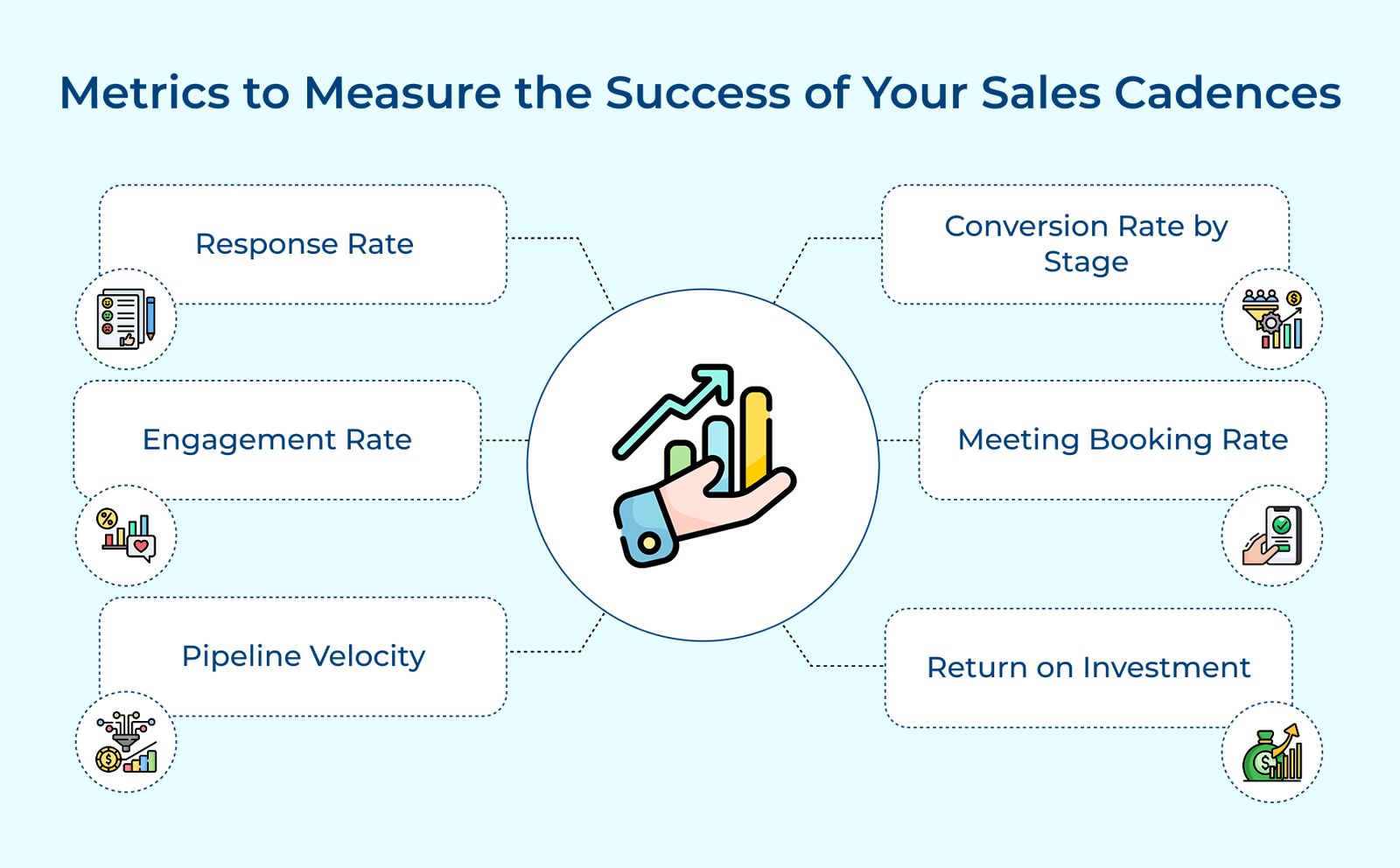
1. Response Rate
Track response rates across all channels, including both positive and negative replies. Analyze patterns by channel, message type and timing, then assess each cadence step to identify top-performing touchpoints.
2. Engagement Rate
Measure how prospects engage with your content- email opens, clicks, social media interactions and website visits- across different channels. Analyzing the patterns reveals what content resonates most and the optimal timing for engagement.
3. Pipeline Velocity
Track how long prospects take to move from initial contact to a closed deal, noting time spent at each stage. Identifying bottlenecks helps optimize cadence timing and streamline the process for faster conversions.
4. Conversion Rate by Stage
Monitor the percentage of prospects advancing through each stage of your sales process. Analyzing conversion rates at each touchpoint reveals which steps drive progress and where improvements are needed.
5. Meeting Booking Rate
Track the percentage of prospects who schedule meetings or demos after your cadence. Analyzing the touchpoint and messaging combinations that drive the outcomes helps gauge your cadence’s effectiveness in generating valuable sales opportunities.
6. Return on Investment (ROI)
Measure the ROI of your sales cadence by comparing costs such as time, tools and resources against revenue generated. Track ROI by campaign, segment and channel to identify which strategies yield the highest returns.
A streamlined sales workflow is crucial for success. It ensures consistent, effective prospect engagement, boosting the likelihood of converting leads into customers.
A well-defined cadence removes uncertainty by outlining when and how to reach out, reducing decision fatigue or administrative burden. Automation and tracking tools further enhance efficiency, allowing reps to focus on building relationships instead of managing routine tasks.
Key takeaways:

The ideal cadence length is usually 2-4 weeks, depending on your industry and target audience. B2B sales with longer decision cycles may need 3-4 weeks, while B2C or simpler sales can often succeed in 2 weeks. Tailor the cadence length to your prospect’s buying timeline and decision-making process.
An effective sales workflow typically includes 8-12 touchpoints spaced evenly over the cadence. The balance keeps prospects engaged without overwhelming them. Aim for 2-3 touches per week, using a mix of communication channels for maximum impact.
The most effective cadences blend email, phone calls, social media (especially LinkedIn), and direct mail, tailoring channels to prospect preferences. While email and phone are the core, social media adds a personal touch.
Studies show that Tuesday to Thursday, between 9-11 AM and 2-4 PM in the prospect’s time zone, are the most effective times. It may vary by industry, so it’s important to test different times and track response rates.
End a cadence when you get a clear response (positive or negative), complete the sequence without engagement or detect strong disinterest. Set clear exit criteria and document the reason to refine future re-engagement strategies.
Update your sales cadence every quarter by closely analyzing performance metrics and customer response patterns. Look at which channels, timings and messaging are driving real engagement. Identify the areas where prospects are dropping off or losing interest. Use the data to make focused adjustments rather than broad changes, testing new strategies on smaller groups before applying them more widely.
Grow Customer Relationships and stronger team collaboration with our range of products across the Conversational Engagement Suite.
Omnichannel Customer Support & Help Desk Software
AI Enabled Business Messaging and Chatbot Software
Sales Engagement & CRM Software
Call Center Software & Virtual Phone System
Product Marketing & Experience Platform
Customer Experience & Feedback Management Software
 What is Omnichannel Ecommerce: 5 Trends for Businesses in 2026
Scroll to top
What is Omnichannel Ecommerce: 5 Trends for Businesses in 2026
Scroll to top