1. Use a Priority Matrix That Works for Your Needs
A priority matrix is a practical tool that helps businesses sort customer needs by urgency and importance. The approach helps teams stay focused and avoid being overwhelmed by numerous requests. It ensures that critical needs get addressed first while still maintaining a clear overview of all customer requirements.
Start by creating a four-quadrant matrix, dividing tasks into urgent-important, urgent-not important, not urgent-important and not urgent-not important categories. Place each customer’s needs in the appropriate quadrant based on clear criteria. Teams should tackle tasks starting with the urgent-important quadrant, then work through the other sections systematically.
Pro tips :
- Color code the quadrants to make the matrix visually intuitive for your team. Visual cues speed up decision-making and reduce confusion about what needs attention first.
- Ensure to review the matrix weekly to adjust the categories as needed. Customer needs can change quickly, and what’s urgent today may not be tomorrow.
2. Go for the Classic First In First Out (FIFO) Tactic
FIFO is a simple yet effective method for handling customer needs in the order they arrive. The approach ensures fairness and creates a clear system for managing requests. It’s particularly effective when dealing with similar priority levels and helps prevent newer issues from pushing older ones aside.
Set up a ticketing system that automatically timestamps each request and adds it to the queue. Your team can then address the requests in the order they came in, ensuring transparency with regular status updates, so customers know their position in the queue and when to expect a resolution.
Actionable tips :
- Set up automated acknowledgment messages that include the customer’s position in the queue and an estimated wait time. It keeps customers informed and reduces the need for follow-up inquiries.
- You can also combine FIFO with priority levels for critical issues. While your standard queue follows FIFO, create a separate fast track for urgent issues that need immediate attention.
3. Design Proactive Customer Support Programs
Proactive support means addressing customer issues before they even arise. The approach shifts from reactive problem-solving to preventive problems, reducing frustration and building trust by showing customers you’re looking out for their success. You can spot potential issues early by tracking customer behavior and usage data.
Let’s consider that a cloud storage service notices users tend to hit storage limits near the end of the month. They proactively send alerts when users reach 75% of their storage capacity, along with optimization tips. They also schedule check-ins with heavy users to discuss upgrade options before they hit their limits.
Best practices:
- Map out common customer pain points and set up automated check-ins at critical moments. Timing is key to making your proactive support more effective.
- Keep an eye on social media mentions and industry trends to spot potential issues before your customers even raise them. The broader view allows you to prepare solutions in advance.
4. Develop Clear Customer Communication Channels
Clear communication channels create organized pathways for customers to reach your business and get timely responses. The approach ensures no inquiry is overlooked, maintains consistent response times and enhances accountability within your support team while making customers feel valued.
Start by identifying all possible touchpoints where customers might need to contact your business. Set up dedicated channels for different types of inquiries such as technical support, billing questions and feature requests. Clearly define response time expectations and assign team members to monitor each channel.
Pro tips:
- Track common customer inquiries and create templated responses that can be easily personalized. It helps maintain quality while speeding up response times.
- Regularly audit message response times and resolution rates across your channels. Use the insights to optimize how resources are allocated and improve any weak areas in your communication system.
5. Align Product Development With User Needs
Aligning product development with user needs means making product decisions based on real customer requirements, not assumptions. The approach ensures your product evolves in a way that genuinely serves your customers. It helps you avoid wasting resources on features that won’t add value and instead focus on improvements that truly matter.
Start by creating a structured process for collecting and analyzing customer feedback on product features. Set up a feedback loop where customer insights directly influence your product roadmap. Regularly review usage data, customer suggestions and support tickets to spot patterns that should shape development priorities.
Key takeaways:
- Track feature adoption rates and user engagement to see if new developments are truly solving customer problems. The data-driven approach ensures future development decisions are spot-on.
- Run beta testing programs where engaged customers can preview new features before they’re fully released. Their feedback often uncovers key improvements needed before the wider launch.
6. Use Automation to Streamline Common Needs
Automation streamlines repetitive customer service tasks, turning them into efficient automated processes that run without constant human input. It frees up your support team to focus on more complex issues. 77% of marketers using automation saw an increase in conversions.
Begin by identifying repetitive tasks in your customer service workflow that follow predictable patterns. Use tools like chatbots, automated email responses and self-service knowledge bases to handle the tasks. Set up triggers that activate automated processes based on specific customer actions or inquiries.
Pro tips:
- Monitor automated responses with random quality checks and customer satisfaction scores to ensure your automation is helpful.
- Start with a small pilot program for automation, then expand based on success metrics. The approach helps identify and address issues before they impact your entire customer base.
7. Train Teams in a Customer-First Approach
A customer-first approach transforms every team member into a customer advocate, regardless of their role. The mindset ensures customer needs drive all business decisions, from product updates to policy changes, creating a company culture where putting customers first becomes second nature.
Develop comprehensive training programs that help teams understand customer challenges and needs. Include role-playing, real customer feedback sessions and case studies. Make customer impact a key consideration in decision-making and regularly reinforce the mindset through team performance reviews.
Actionable tips:
- Share customer success stories during team meetings to highlight the positive effects of a customer-first approach. Real-life examples make it more relatable and motivating.
- Rotate team members through customer-facing roles to keep fresh perspectives on customer needs. The hands-on experience strengthens empathy and deepens understanding.
8. Use the Right Tools to Keep Track of Metrics, Health Scores, and Tasks
The right tracking tools create an efficient system to monitor customer satisfaction, performance metrics and team productivity in real-time. The data-driven approach helps spot trends, identify potential issues and make informed decisions about resource allocation. You can act on insights quickly with the right tools, preventing small issues from becoming major problems.
Choose tools that integrate seamlessly with your existing systems and provide actionable insights. Set up dashboards to display key metrics such as customer satisfaction scores, response times and resolution rates. Configure alerts for when metrics fall below acceptable thresholds and establish regular reviews to analyze trends.
Key takeaways:
- Customize dashboards for each team role so everyone sees the metrics most relevant to their responsibilities. The targeted view makes decision-making more efficient.
- Review and update your tracking metrics quarterly to ensure they align with the biggest goals and customer needs. After all, what you measure shapes what you prioritize.
9. Create Cross-Functional Customer Experience Teams
Cross-functional teams unite members from different departments to work together on improving the customer experience. The collaborative approach ensures customer needs are viewed from various perspectives, breaking down silos and leading to faster problem resolution.
Create teams with representatives from customer support, product development, sales, marketing and technical departments. Schedule regular meetings to review customer feedback, address challenges and brainstorm solutions. Empower the teams with the authority to make changes and hold them accountable for enhancing the customer experience.
Pro tips:
- Rotate leadership roles within the team to encourage fresh perspectives and ensure no single department dominates the decision-making process.
- Set up shared communication channels for quick collaboration on urgent customer issues. Direct access to diverse expertise helps resolve problems more efficiently.
10. Establish Regular Customer Feedback Collection Systems
A systematic feedback collection process ensures you consistently gather and act on customer input. The ongoing dialogue helps identify emerging needs, track satisfaction trends and keep your business aligned with evolving customer expectations.
Use multiple feedback channels, such as surveys, in-app feedback forms, customer interviews and social media monitoring. Create a schedule for gathering different types of feedback and establish clear processes for acting on the insights. Make feedback collection an integral part of the customer journey.
Actionable tips:
- Combine quantitative and qualitative feedback methods. Numbers show you what’s happening, while stories explain why.
- Follow up with customers who provide detailed feedback to show you value their input and understand their suggestions. The engagement enhances trust and encourages future participation.
Challenges in Prioritizing Customer Needs for SaaS Businesses
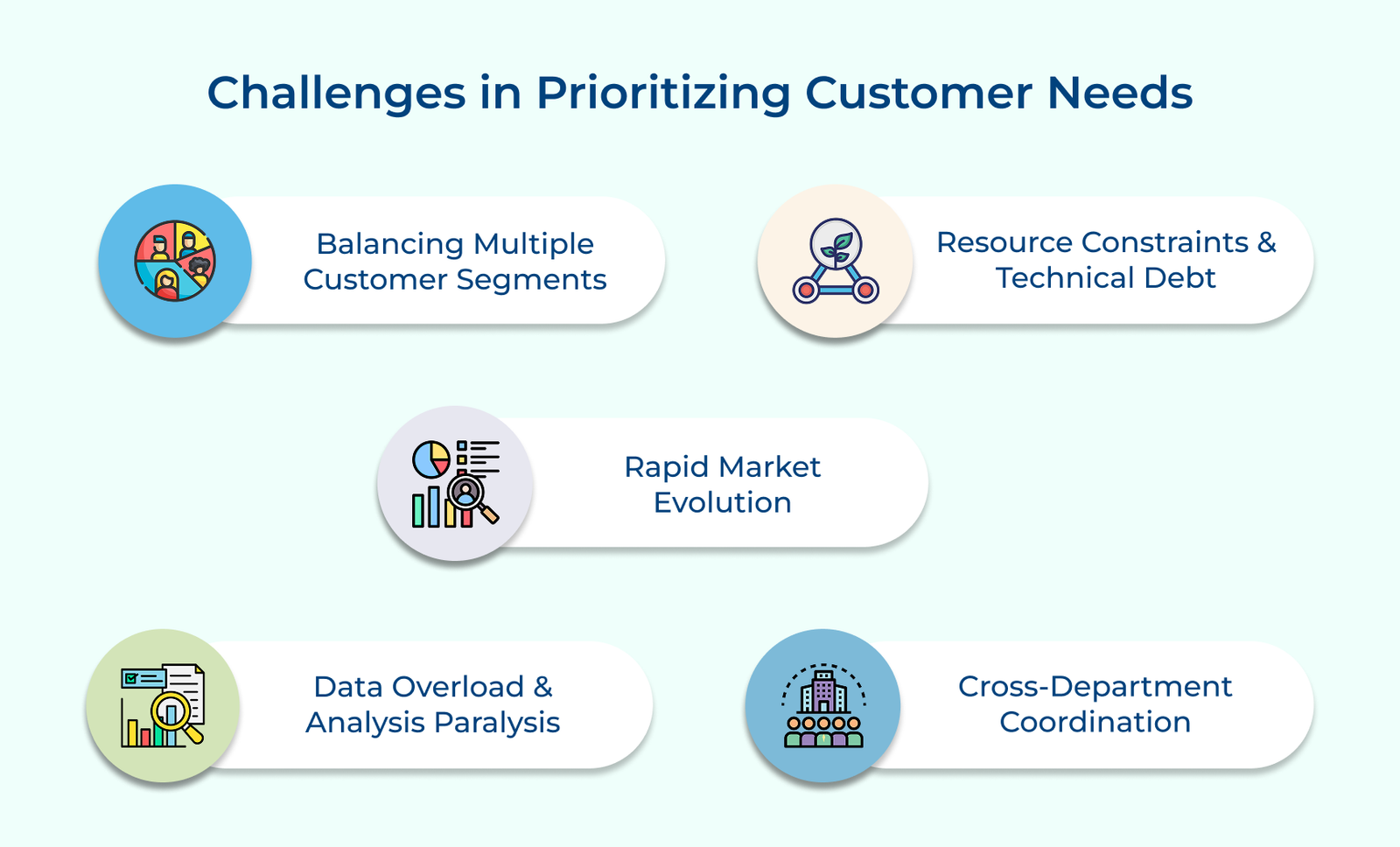
The following are the challenges that organizations often face while prioritizing customer needs. Let’s check them out and their potential solutions.