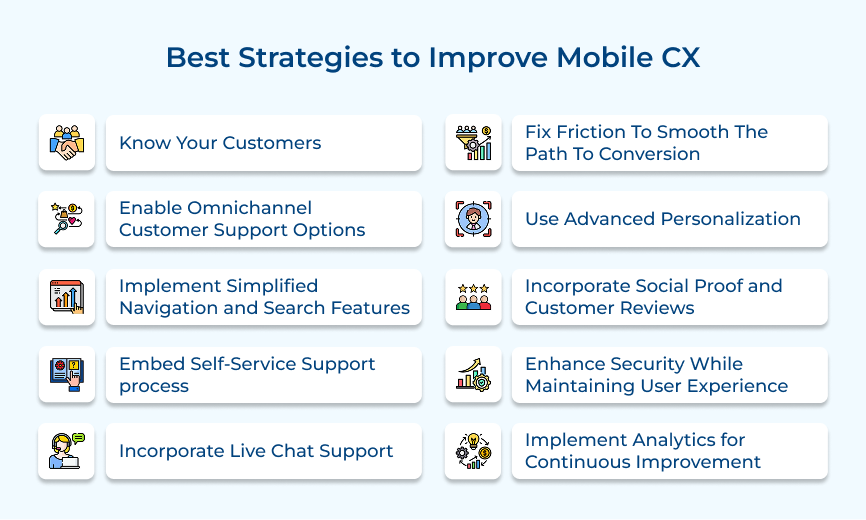
1. Know Your Customers
Understanding your customers is the foundation of delivering exceptional mobile experiences. The strategy focuses on gathering and analyzing data to create solutions that meet their specific needs, preferences and issues. It helps businesses make informed decisions about their mobile CX improvements.
Deep analysis of customer behavior reveals valuable ideas about how users interact with your platforms. Tracking metrics like session duration, page views and conversion rates businesses can identify areas that need improvement. Creating detailed user personas helps teams understand different segments and their unique requirements.
Regular feedback collection through surveys, interviews and analytics provides real-time insights into customer satisfaction. Continuous feedback loop enables businesses to adapt their experience based on actual user needs rather than assumptions.
Best Practices:
- Use heat mapping tools to understand how users navigate through your mobile interface and identify areas of high engagement or frustration.
- Set up customer advisory boards that meet quarterly to provide direct feedback about your mobile experience improvements.
2. Enable Seamless Omnichannel Customer Support Options
Holistic support ensures customers receive consistent, high-quality assistance regardless of their chosen means of communication. The approach recognizes that modern customers expect smooth transitions between mobile web, socials and traditional support channels.
Unified support systems connect all customer interfaces into a single cohesive platform. Support agents can access histories including past interactions, purchase records and preferences, which enables more effective assistance. The system maintains conversation context even when customers switch between channels.
Best Practices:
- Synchronize customer data across all support channels in real time to prevent information gaps during customer interactions.
- Train support teams to maintain consistent tone and messaging standards across all communication channels.
3. Implement Simplified Navigation and Search Features
Navigation simplicity directly impacts how users interact with your platform. A well-designed navigation system reduces user frustration, increases engagement and helps customers find what they need quickly. The fundamental aspect of mobile CX can make or break the user experience.
Clear menu structures form the backbone of intuitive navigation. The hierarchy should reflect how users naturally think about and search for information. Smart organization of categories, subcategories and related items helps users build a mental map of your mobile interface.
Smart search functionality with autocomplete suggestions and error tolerance transforms the way users find content. When users type their queries the system anticipates their needs, offers relevant suggestions and helps them discover related items they might be interested in. Prominent action buttons guide users toward their goals.
Best Practices:
- Place the most frequently used navigation elements within thumb-reaching distance on mobile screens.
- Simplify the search experience by prioritizing recent searches and popular items in autocomplete suggestions.
4. Embed Self-Service Support Process
Self-service support empowers customers to find solutions independently. The strategy reduces support costs, improves customer satisfaction and provides instant assistance 24/7. It’s essential for meeting customers’ expectations for immediate problem resolution.
A searchable knowledge base serves as the foundation of self-service support. Articles, guides and FAQs should be organized logically with clear headings, descriptive titles and relevant tags. The content must be mobile-optimized with easy-to-follow instructions and visual aids when necessary.
Interactive troubleshooting guides powered by AI chatbots provide step-by-step assistance for common issues. The automated systems can handle common issues, answer frequently asked questions and escalate complex issues to human agents when needed. It creates a balanced support ecosystem.
Best Practices:
- Structure your knowledge base articles with expandable sections to help mobile users digest information easily.
- Monitor chatbot interactions to identify common user pain points and update your self-service content accordingly.
5. Incorporate Live Chat Service
Live chat has become essential for immediate customer support in the mobile environment. The real-time communication channel bridges the gap between self-service and traditional support methods. It significantly reduces customer effort and improves satisfaction rates.
Imagine a customer browsing through an e-commerce app who’s unsure about product sizing. Instead of abandoning their cart they can tap the chat bubble with the relevant questions. The agent can then share a size guide and recommend best-fitting items based on their preferences.
Screen sharing capabilities take support to the next level. If customers face complex issues, support teams can guide them visually. Teams can highlight specific elements on their screen or demonstrate the correct steps. The visual guidance significantly reduces misunderstandings and speeds up problem resolution.
Best Practices:
- Position chat triggers at critical points in the customer journey where users commonly need assistance.
- Equip chat agents with quick-access response templates that maintain a personal touch while ensuring speed.
6. Fix Friction to Smooth the Path to Conversion
Strife in the mobile customer experience (CX) can significantly impact conversion rates. Every unnecessary step, extra form or confusing process increases the chances of abandonment. Addressing these tension points is important to maintain customer engagement.
Smart form design focuses on collecting only essential information. Auto-filling capabilities remember user details while smart defaults and dropdown menus reduce typing. The checkout process should feel effortless with minimal steps between selection and purchase confirmation.
Cart abandonment requires a strategic approach combining immediate and follow-up actions. It includes exit-intent notifications, offering assistance and maintaining cart contents across devices. The goal is to make it easy for customers to complete their purchases when they’re ready.
Best Practices:
- Allow guest checkout options while highlighting the benefits of creating an account post-purchase.
- Save user progress automatically throughout their journey, enabling seamless continuation across sessions.
7. Use Advanced Personalization
Modern mobile CX personalization has evolved beyond basic name recognition. The strategy uses AI to create unique experiences that adapt to user preferences, behaviors and needs. It transforms generic mobile interactions into meaningful personal connections.
AI-powered recommendation engines analyze user behavior, past purchases and browsing patterns to suggest relevant products or content. The system learns from each interaction, continuously refining its understanding of user preferences.
Dynamic content adaptation ensures that every user sees the most relevant information for their needs. The interface adjusts based on user behavior, showing different layouts, content and calls-to-action. Contextual notifications arrive with personalized messages that consider factors like location, time and recent interactions.
Best Practices:
- Adjust the frequency and timing of notifications based on individual user engagement patterns.
- Blend historical data with real-time behavior to create more accurate personalization models.
8. Incorporate Social Proof and Customer Reviews
Social proof has become a cornerstone of successful mobile customer service strategies. It builds trust, credibility and confidence in decisions by showcasing real experiences from other customers. The strategy leverages the power of the community to influence decision-making and build brand authenticity.
Verified customer feedback appears strategically throughout the journey. Product pages display star ratings, recent reviews and detailed feedback that helps customers make informed decisions. The verification process ensures authenticity while photo and video reviews provide visual confirmation of product quality.
User testimonials and social sharing create a sense of community around your brand. When customers share their positive experiences, it encourages others to engage with your mobile platform. The organic promotion often leads to increased trust and higher conversion rates among new users.
Best Practices:
- Mix different types of social proof like expert endorsements, user reviews and usage statistics throughout the mobile journey.
- Launch a rewards program that incentivizes customers to share authentic experiences on your mobile platform.
9. Enhance Security While Maintaining User Experience
Security in mobile customer experience (CX) requires a delicate balance between protection and usability. While robust security measures are essential, they shouldn’t create tension or frustration in the journey. The goal is to build trust while keeping the mobile experience smooth and intuitive.
Biometric authentication methods like fingerprint scanning and facial recognition provide strong security without compromising convenience. The interactions feel smooth to users while offering superior protection compared to traditional passwords. Modern devices support these features natively, making implementation straightforward and user-friendly.
Transparent security measures work quietly in the background, protecting user data without disrupting the experience. Clear privacy policies and data handling information help users understand how their information is protected. Regular security updates and proactive fraud prevention systems maintain a secure environment while building customer confidence.
Best Practices:
- Layer security measures strategically start with less intrusive methods and escalate only when necessary.
- Display trust indicators and security certificates prominently during sensitive transactions.
10. Implement Analytics for Continuous Improvement
Analytics form the backbone of evolving mobile customer experience strategies. Analyzing user data can help businesses make informed decisions about improvements, optimizations and new features. The data-driven approach ensures that changes truly benefit the user experience rather than following assumptions.
Key performance indicators provide data into user behavior, satisfaction and issues. The measurements track everything from page load times to conversion rates identifying areas that need attention. Real-time monitoring allows quick responses to emerging issues while historical data reveals long-term trends.
Best Practices:
- Establish a regular rhythm of analyzing user feedback alongside quantitative data to guide improvements.
- Set up automated alerts for unusual patterns in user behavior that might indicate experience issues.
Mobile Customer Experience Across Industries
Understanding the industry-specific nuances helps businesses tailor their mobile strategies to meet the distinct needs and expectations of their customers. Let’s explore some of them.