Top 10 Branding Trends of 2026 (With Examples & Tips)
Branding trends evolve with consumer behavior and technology. Learn why branding matters, recent key trends and real examples of how businesses are staying ahead.

Branding trends evolve with consumer behavior and technology. Learn why branding matters, recent key trends and real examples of how businesses are staying ahead.
It’s getting harder for brands to stay relevant, not just visible. AI, voice search, and constantly shifting digital habits have changed how people find, trust, and stick with businesses. A survey found that 40% of marketers plan to increase brand-building budgets. The old tactics such as blanket ads, generic emails and surface-level engagement, don’t cut it anymore. Many brands are chasing every new platform or trend without a clear idea of what actually builds loyalty.
The branding trends shaping 2026 aren’t about jumping on the next big thing. They’re about doing fewer things that actually work – building trust, showing up with purpose and speaking to people like humans. These shifts give small businesses and growing teams practical ways to stay clear, consistent, and memorable, all without adding extra noise.
Branding trends refer to the evolving patterns and strategies in how companies maintain their brand identity in response to shifting consumer preferences, technology and cultural changes. The trends influence everything from design to messaging, helping brands stay relevant in competitive markets.
Companies track consumer behavior, social media interactions and market research to spot emerging trends. They then adjust their branding through visuals, communication or customer experience while staying true to their core identity. Let’s assume that if sustainability gains traction, a brand might redesign packaging, highlight eco-friendly practices and adjust operations to reflect the commitment.
Key goals:
Below are the reasons branding trends matter. They help businesses stay relevant and create stronger connections. Let’s check them out.
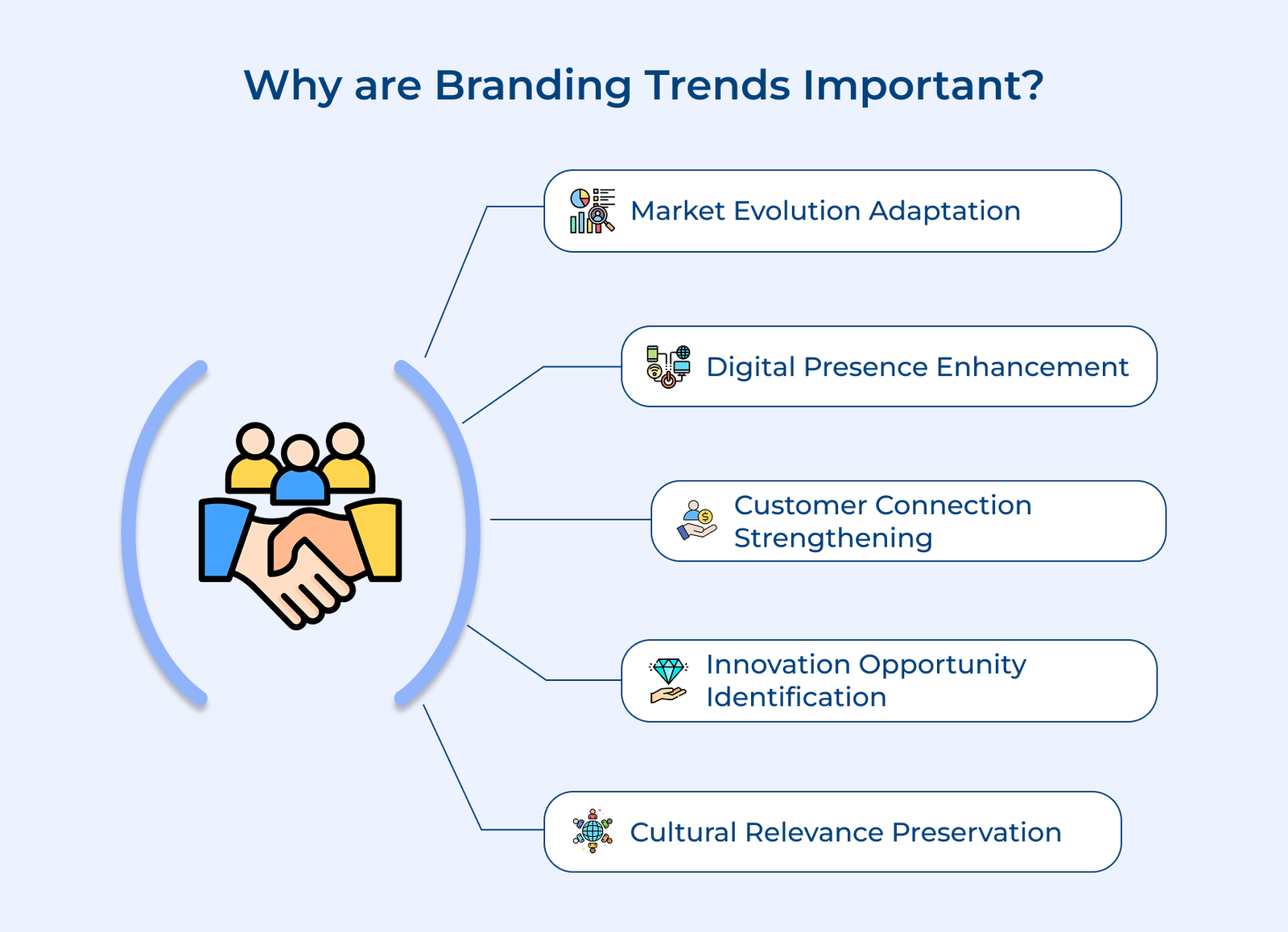
1. Market Evolution Adaptation
Brands must adapt to keep up with customer expectations in the modern-day business. Companies that follow brand trends can better understand what their audience values and adjust accordingly. It helps them maintain their market position and prevents them from becoming outdated in their customers’ minds.
2. Digital Presence Enhancement
Modern branding trends revolve around digital platforms and social media. Keeping up with them helps businesses create better online experiences, reach more people and build stronger connections with their audience.
3. Customer Connection Strengthening
Modern brand strategy trends focus on building genuine connections with audiences. Businesses can create content that feels more relevant and personal by understanding the shifts, leading to stronger customer relationships.
4. Innovation Opportunity Identification
Brand design trends highlight new opportunities for growth. Companies that track the shifts can identify emerging markets and evolving customer needs early. It allows them to create products and services that truly resonate.
5. Cultural Relevance Preservation
Keeping up with branding trends helps businesses stay culturally relevant. Understanding shifting values allows companies to adjust their messaging and maintain strong connections with their audience over time.
Let’s go through the 10 brand design trends. The trends will shape how businesses connect with audiences and create visually compelling experiences.
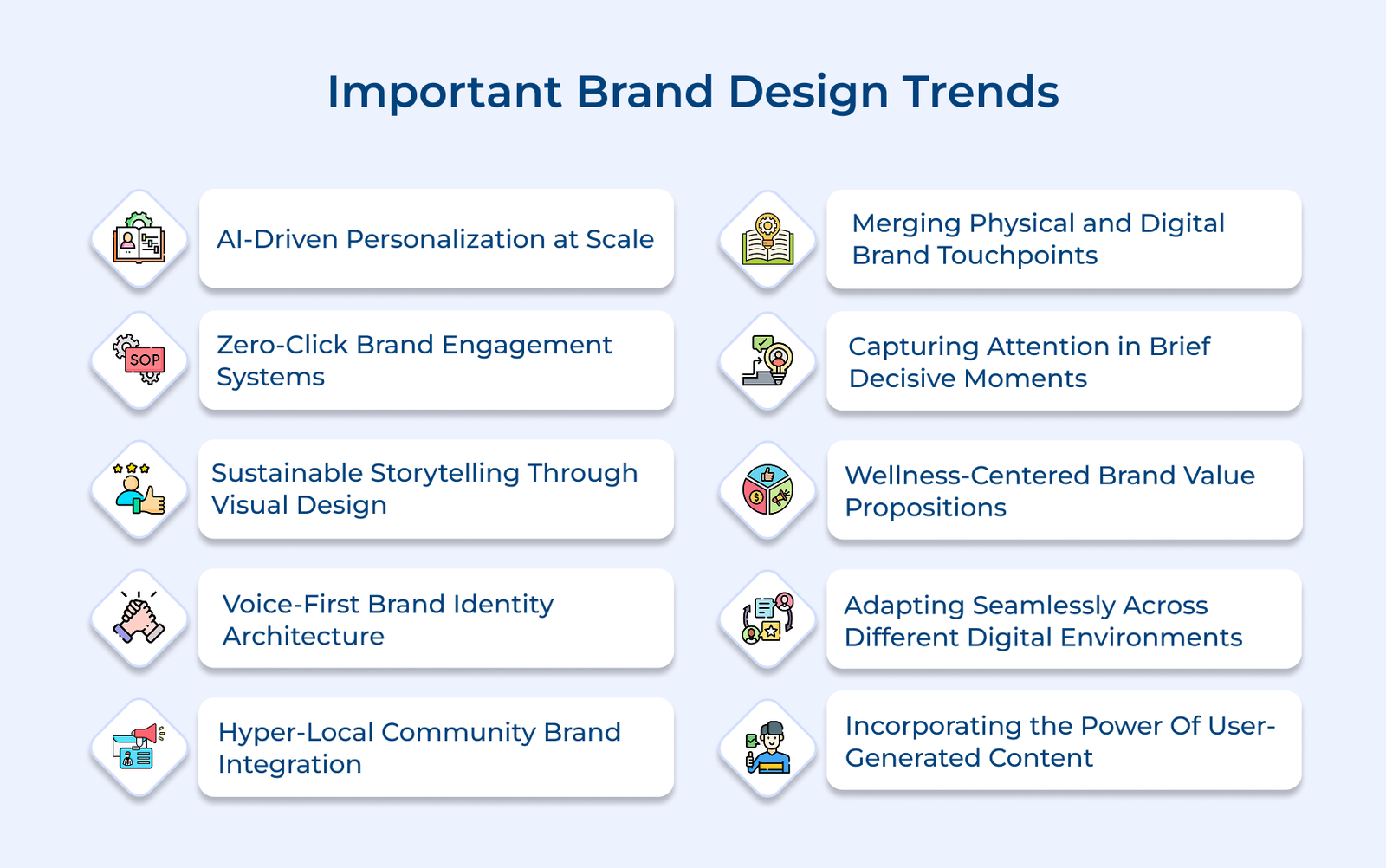
AI-driven personalization is transforming how brands connect with people. AI helps create tailored experiences that feel natural and relevant by analyzing customer data. Brands can now adjust content in real-time based on user behavior. Websites and apps automatically adapt, ensuring each visitor sees information that matches their interests.
AI also fine-tunes messaging based on performance data, keeping brand communication fresh and effective. Predictive customer journey mapping takes it a step further, anticipating customer needs before they even express them. It allows brands to offer relevant content and experiences proactively.
Best practices:
Zero-click engagement is redefining how people interact with brands by removing the need for manual input. Smart devices and ambient computing enable seamless experiences, making brand interactions feel effortless.
Ambient computing takes it further by integrating brand interactions into daily life without requiring direct action. It ensures brands remain present and helpful without disrupting the user experience.
Pro tips:
Sustainable storytelling in design seamlessly integrates environmental responsibility into a brand’s visual identity. As consumers become more eco-conscious, they expect brands to showcase their commitment to sustainability in an authentic way.
The shift has led to a move away from polished, commercial aesthetics toward natural visuals that highlight sustainability. Technology now plays a direct role in how logos and branding assets are designed. They’re no longer static; they adjust, respond and evolve based on how people actually interact with them.
Actionable tips:
Hyper-local community brand integration focuses on building genuine connections with specific neighborhoods by aligning with their culture, values and daily experiences. Consumers are increasingly drawn to brands that actively engage with their communities rather than taking a one-size-fits-all approach.
Feedback systems allow residents to directly influence product offerings, making them feel heard and valued. Local partnerships with small businesses and influencers further strengthen a brand’s presence creating authentic engagement rather than corporate detachment.
Best practices:
Voice-first brand identity is reshaping how businesses engage with consumers. As voice-activated devices become more common, brands must create distinctive sonic experiences that resonate without relying on visuals. Sonic branding now goes beyond simple jingles. Brands are crafting unique sound signatures that establish instant recognition across different platforms.
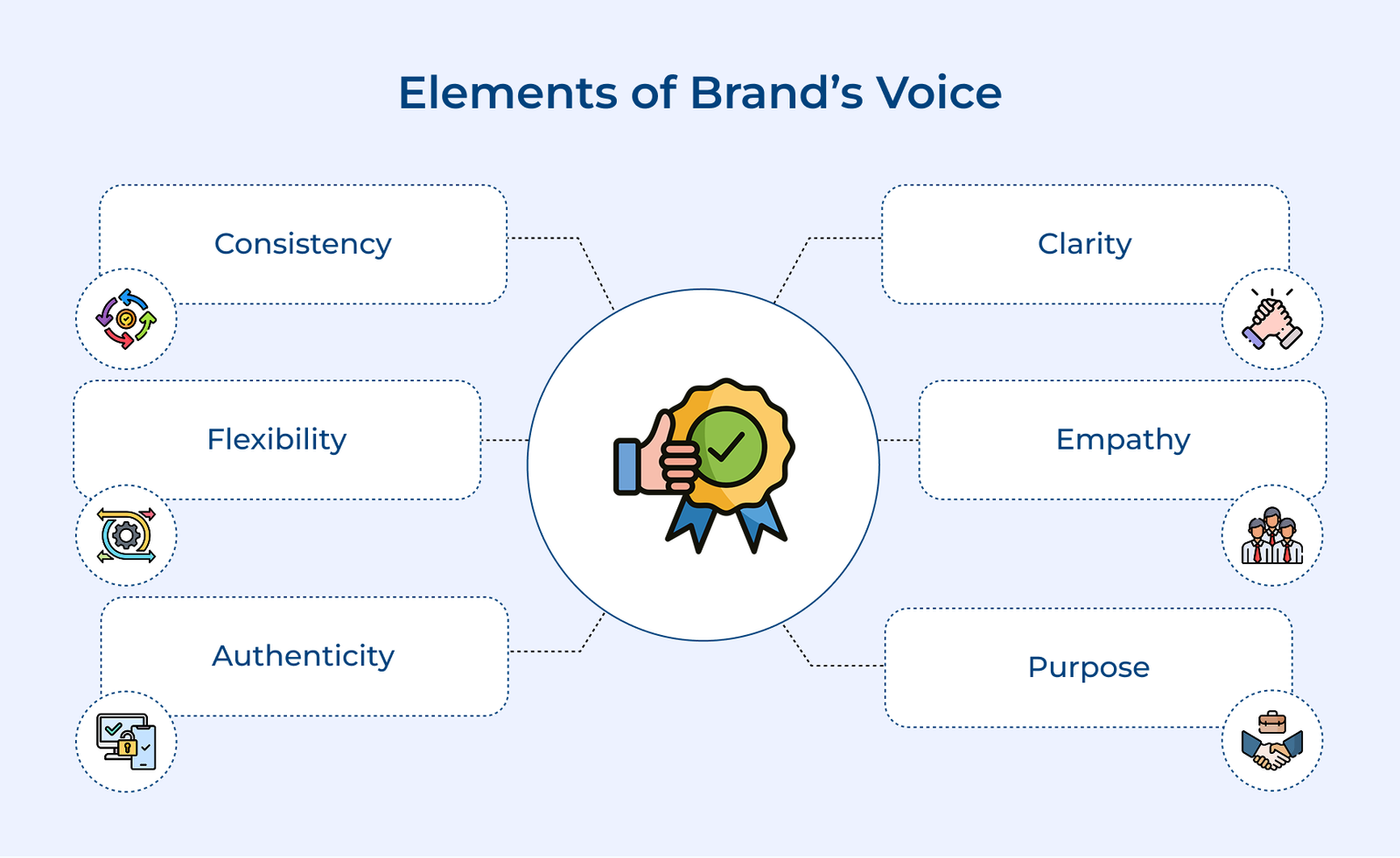
Voice-activated interactions are no longer just a convenience but a key touchpoint. Brands are creating unique voice personas that reflect their identity and ensuring voice commands feel natural to users. It enhances user experience and strengthens emotional connections.
Key takeaways:
Augmented Reality (AR) brand experiences seamlessly merge digital elements with the real world, offering customers interactive ways to explore products before buying. As consumer expectations grow, AR is transforming how brands showcase their offerings. Start by identifying key customer touchpoints where AR can add value.
Establish a content management system to handle traditional and AR-based brand assets. Train your team to create and manage AR content efficiently. Implement analytics to track engagement, gather feedback and refine the experience based on real user interactions. A great example is IKEA’s AR app, which allows customers to place true-to-scale 3D models of furniture in their homes.
Pro tips:
Micro-moment marketing captures those brief but crucial instances when consumers turn to their devices for quick answers or solutions. The strategy has become vital in our fast-paced digital world where attention spans are shorter and decisions are made in split seconds.
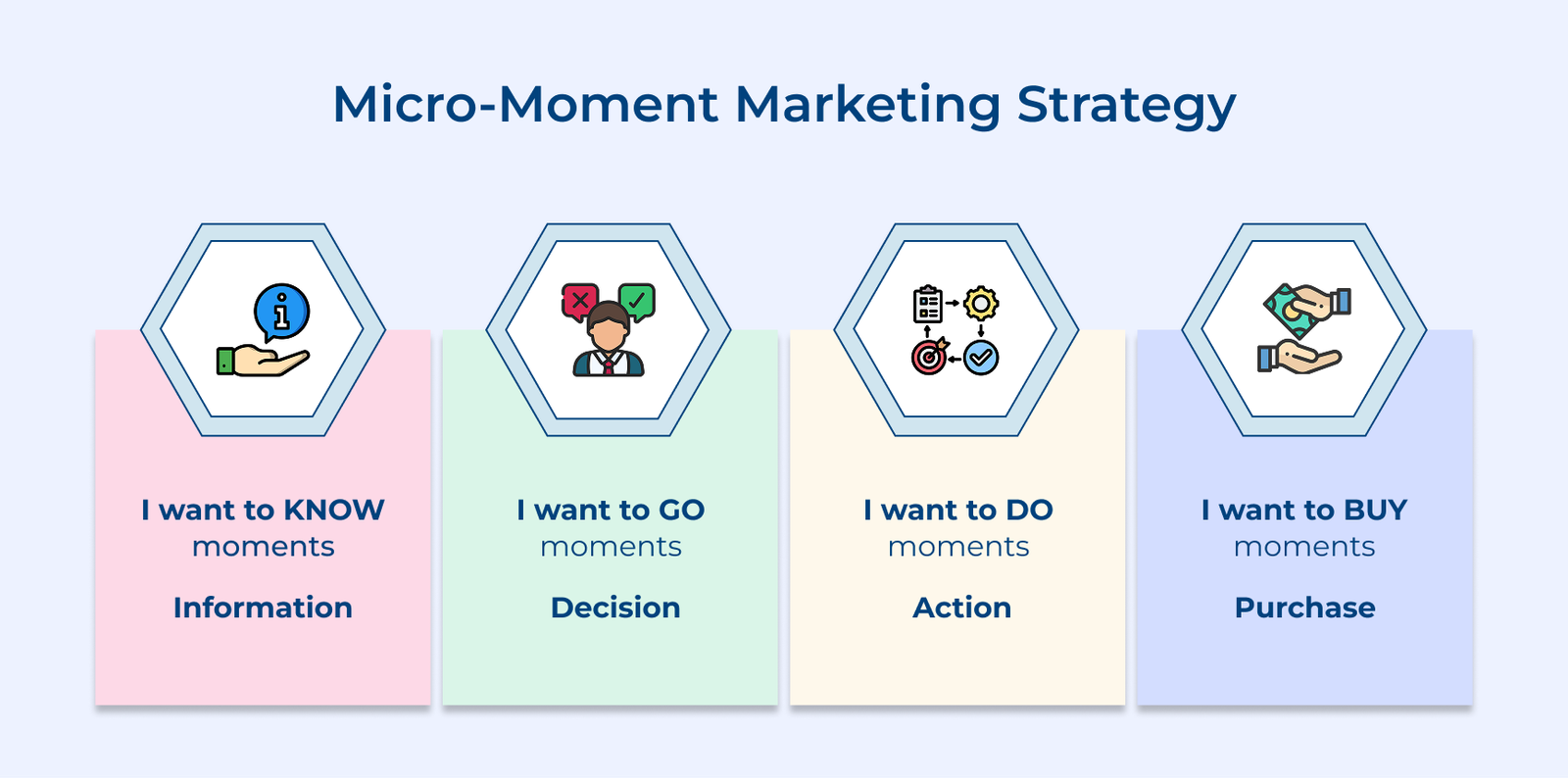
Quick-decision touchpoints are key moments when users actively search for information. Brands need to optimize their presence across search engines, social media and other digital spaces, delivering exactly what users need at the right time. Instant brand recognition is essential in split-second interactions.
Actionable tips:
Wellness-centered branding integrates health and well-being into every aspect of a brand’s identity, reflecting the growing consumer focus on physical, mental and emotional well-being. Mental health awareness now plays a key role in brand messaging and product development. Companies are crafting experiences that support well-being, from stress-relief products to content that promotes mindfulness.
Brand interactions are evolving to enhance a sense of comfort and balance. Brands are creating environments that promote overall wellness through calming design elements or customer experiences that prioritize ease. Health-focused initiatives are expanding beyond products to include educational content and community-driven programs.
Best practices:
Cross-platform brand identity fluidity ensures that a brand remains recognizable and engaging across different devices. As consumers move between smartphones, tablets, desktops and smart devices, they expect a seamless brand experience.
A strong brand adapts without losing its essence. It means creating design systems that adjust effortlessly to different screen sizes and interaction methods. The experience should feel natural and optimized for the platform, be it’s on a smartphone or a billboard. Instead of a one-size-fits-all approach, brands are embracing platform-specific strategies.
Pro tips:
User-generated content (UGC) has evolved into a powerful branding tool that enhances trust and authenticity. Brands create deeper emotional connections and relatable narratives by showcasing real customer stories. Instead of simply featuring testimonials, brands now integrate customer voices across multiple platforms, turning authentic experiences into compelling social proof.
Community-driven content takes UGC a step further. Brands actively collaborate with their audience to co-create content, from user-designed products to community-led marketing campaigns. A prime example is Glossier, which thrives on customer content to shape its brand identity. Brands can enhance stronger loyalty and engagement by empowering users to share their experiences.
Key takeaways:
Check out the leading companies that have successfully adapted their branding strategies to stay relevant and engage their audiences effectively.
1. Nike’s Voice-First Brand Identity
Nike has seamlessly integrated voice-first branding, creating a recognizable sonic identity across all platforms. Their Nike App features voice-activated shopping, allowing users to browse and purchase products hands-free. Distinctive audio signatures now accompany their iconic “swoosh” logo, reinforcing brand recognition in digital content.
The approach has strengthened customer engagement, making interactions more intuitive and accessible. It particularly appeals to younger audiences who favor voice commands and audio-driven experiences, enhancing convenience.
2. Patagonia’s Sustainable Storytelling
Patagonia has woven sustainability into every aspect of its brand identity, from product descriptions to advertising campaigns. Their visual storytelling highlights real environmental efforts, reinforcing their commitment beyond just words.
The transparency has earned them strong customer trust, positioning Patagonia as a leader in environmental responsibility. As a result, they’ve built lasting loyalty and attracted consumers who prioritize sustainability in their purchasing decisions.
3. Starbucks’ Hyper-Local Integration
Starbucks seamlessly blends into local communities by designing stores that reflect each neighborhood’s architecture, culture and identity. Every location feels like a natural extension of its surroundings while maintaining the brand’s signature experience from unique artwork to thoughtfully designed spaces.
The approach has transformed Starbucks into more than just a coffee shop—it’s a familiar and welcoming community hub. They’ve built deeper connections with customers by making each store feel locally rooted, encouraging loyalty and repeat visits.
4. IKEA’s Augmented Reality Experience
IKEA’s AR-powered Place app lets customers visualize furniture in their homes before buying, ensuring a perfect fit in both style and space. The hands-on experience eliminates guesswork, making shopping more intuitive and personalized.
IKEA has reduced uncertainty by allowing shoppers to see products in real-world settings, leading to more confident purchases and fewer returns. The seamless integration of technology has reshaped how customers interact with home furnishings, reinforcing IKEA’s reputation for practical, user-friendly solutions.
5. Glossier’s User-Generated Content Strategy
Glossier has redefined beauty marketing by putting real customers at the core of their brand. Instead of polished ads with professional models, they showcase everyday people using their products, sharing honest experiences and shaping the brand’s identity.
The customer-driven approach has built a loyal community where people see themselves reflected in the brand. Glossier has enhanced deeper connections by valuing authenticity over perfection, turning satisfied customers into enthusiastic advocates who naturally spread the word.
Branding in 2026 sits at the crossroads of creativity, technology and cultural awareness. As consumer expectations shift and technology advances, brands must find ways to innovate without losing their authenticity. Success lies in blending data-driven insights with compelling storytelling to create genuine, lasting connections.
The future of branding isn’t just about keeping up with trends but about using them intentionally. Brands that integrate AI, AR and other emerging technologies while staying true to their identity will stand out. The challenge is not just adopting new tools but ensuring they enhance the brand’s story and purpose.
Key takeaways:

Businesses will need to create highly personalized experiences driven by AI and smart data use in 2026. Customers will expect brands to deliver tailored content effortlessly across different platforms. Companies must also show a genuine commitment to sustainability and community involvement while embracing technology in a way that feels natural.
Brand positioning in 2026 will be about offering real value that speaks to socially aware consumers. Success will come from blending digital innovation with genuine human connection. Brands must go beyond selling products or services—they need to be seen as trusted partners that understand individual needs and make a positive impact on society.
New product branding in 2026 will be about making interactions more engaging across both physical and digital spaces. Augmented reality will let customers see products in their environment before buying, while voice-activated features will enhance usability. Sustainable packaging will play a key role and unboxing experiences will be designed to be just as impactful online as they are in person.
Small businesses can build a strong brand by starting with a solid digital presence and genuine community connections. Using AI tools for smarter customer interactions, engaging with local audiences and adopting sustainable practices can make a big impact. The key is to focus on strategies that fit both their resources and their customers’ expectations.
Technology doesn’t replace human connection; it helps make it more relevant. Tools like AI, machine learning, and AR aren’t just gimmicks; they let brands understand people better, respond faster and deliver experiences that actually make sense. The result? Interactions that feel less like marketing and more like real conversations.
Success in 2026 isn’t just about numbers. It’s about real impact. Beyond sales and clicks, brands measure engagement depth, sustainability efforts and community influence. Key metrics include how well personalization resonates, the effectiveness of voice interactions and AR-driven experiences. The focus is on both measurable results and the quality of customer relationships.
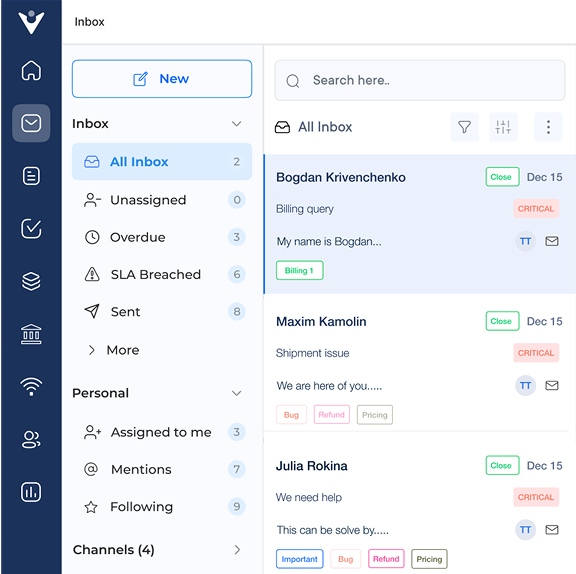
Grow Customer Relationships and stronger team collaboration with our range of products across the Conversational Engagement Suite.
Omnichannel Customer Support & Help Desk Software
AI Enabled Business Messaging and Chatbot Software
Sales Engagement & CRM Software
Call Center Software & Virtual Phone System
Product Marketing & Experience Platform
Customer Experience & Feedback Management Software

 Average Response Time: Formula, Steps and Examples
Scroll to top
Average Response Time: Formula, Steps and Examples
Scroll to top