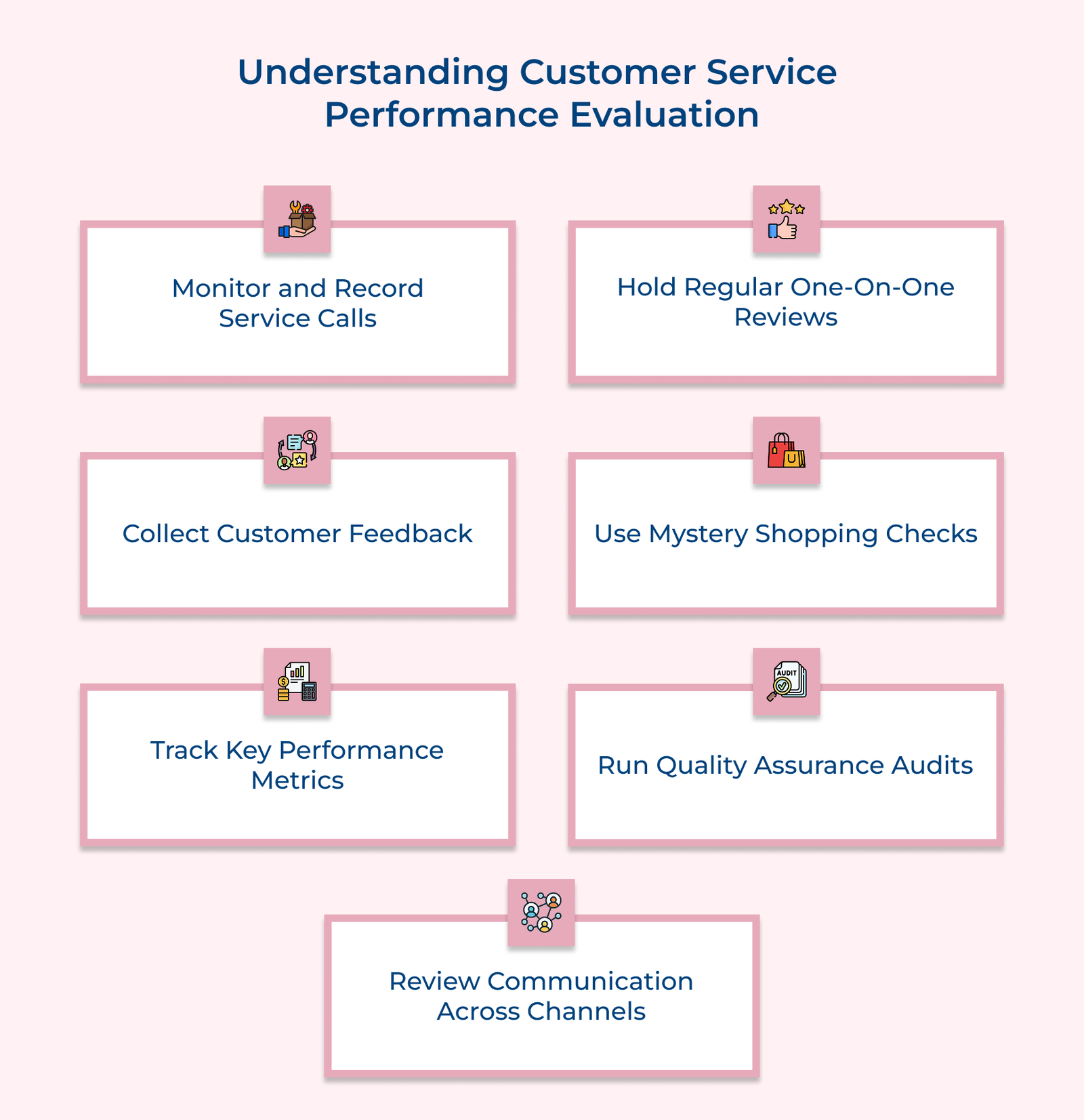
1. Monitor and Record Customer Service Calls
Listening to recorded customer calls gives a clear look at how reps handle real situations, making it a key way to evaluate their performance. The practice helps maintain service quality standards and identifies areas where additional training or support may be needed.
The analysis of tone and language reveals how effectively representatives build rapport with customers while solving their problems. Evaluators focus on communication clarity, professional language and how well reps adjust their approach to different customer personalities. They also see how well representatives navigate challenging situations while maintaining a positive and helpful demeanor.
Best practice:
- Create a balanced scorecard that evaluates both technical compliance and soft skills giving equal weight to each aspect of the interaction.
- Schedule regular calibration sessions with evaluators to ensure consistent scoring and feedback across all assessments.
2. Conduct Regular One-on-One Performance Reviews
One-on-one performance reviews create dedicated spaces for meaningful dialogue between managers and representatives about their professional growth. Structured conversations build trust, offering chances for both recognition and feedback that lead to real improvement.
In these sessions, reps review real customer interactions, highlighting strengths and areas for improvement. They discuss what went well and explore better ways to handle tough situations. The detailed review helps representatives understand their impact on customer experience.
Best practice:
- Prepare detailed examples and specific metrics before each review session to ensure discussions are based on concrete evidence rather than general impressions.
- Document action items, then set up regular check-ins between reviews to track progress and offer support.
3. Gather Direct Customer Feedback Surveys
Customer feedback surveys provide unfiltered insights directly from those who experience the service firsthand. Evaluations help organizations understand customer views, spot service gaps, and make improvements based on real data.
After a technical support call, a customer might get a quick survey about their experience. It could ask how clearly the representative explained the solution and if they felt valued. The client might mention that while the issue was fixed, they appreciated the agent’s effort in sharing preventive maintenance tips.
Best practice:
- Keep surveys brief and focused, asking only essential questions that provide actionable insights.
- Follow up on negative feedback promptly to show customers their opinions matter and to prevent similar issues.
4. Implement Mystery Shopping Assessment Programs
Mystery shopping offers an unbiased view of service quality through trained evaluators posing as regular customers. The method helps organizations assess their service delivery in real-world scenarios without representatives knowing they’re being evaluated.
Mystery shoppers follow carefully designed scenarios to test specific aspects of customer service. They might assess how teams handle product returns, explain features, or resolve customer complaints. The assessments help ensure service consistency across different situations and locations.
Pro tips:
- Rotate mystery shopping scenarios regularly to evaluate different aspects of service and prevent representatives from spotting patterns.
- Use mystery shopping results for coaching rather than punishment, focusing on improvement opportunities.
5. Track Key Performance Metrics Dashboard
A comprehensive metrics dashboard serves as the backbone of customer service performance evaluation by providing quantifiable data on service delivery effectiveness. The data-driven approach helps organizations make smarter choices about where to focus training and improve processes.
Teams track key performance metrics like handling times and resolution rates to gauge service efficiency. Assume a customer service team noticed longer resolution times. So they dug into the data and found that new product features were slowing calls. The insight led to the creation of quick-reference guides, boosting efficiency.
Best practice:
- Create customized dashboards for different roles, ensuring each team member sees metrics relevant to their responsibilities.
- Schedule regular metric review sessions to discuss trends, identify success patterns and address concerning indicators early.
6. Perform Regular Quality Assurance Audits
Quality assurance audits are thorough checks that ensure customer service stays consistent and meets high standards in every interaction. The structured assessments help organizations identify gaps in service delivery and verify that all representatives follow established best practices.
Auditors review service documentation for accuracy, completeness and correct handling of customer information. They also check interaction records to ensure reps document solutions, follow-up actions and customer preferences properly. The thorough documentation review ensures compliance while identifying opportunities for process improvement.
Best practice:
- Develop clear audit checklists that outline specific criteria for each aspect of service delivery being evaluated.
- Share audit findings with the entire team regularly using successful examples as learning opportunities.
7. Analyze Customer Communication Across Channels
Communication channel analysis checks the quality as well as consistency of service across platforms like email, chat, phone and social media. The comprehensive assessment ensures organizations deliver seamless experiences regardless of how customers choose to connect.
Evaluators monitor how effectively representatives adapt their communication style and approach to different channels. They assess if the responses maintain consistent quality and tone while leveraging the unique advantages of each platform. The analysis helps identify where additional training or resources might be needed to strengthen service delivery.
Pro tips:
- Create channel-specific guidelines that maintain brand voice while accounting for platform differences and limitations.
- Implement cross-channel tracking systems to monitor customer journeys and ensure smooth transitions between platforms.
Useful Customer Service Evaluation Phrases
Here’s a list of useful customer service evaluation phrases that you can incorporate into real performance reviews to give feedback that is specific, practical and actionable.
Positive Evaluation Category
The phrases acknowledge and highlight excellent performance, pointing out the specific skills that drive great customer service. They help boost morale and encourage the continuation of positive practices while setting examples for others.
1. “Consistently demonstrates excellent problem-solving skills with challenging customer situations”
The phrase highlights a representative’s ability to think critically and creatively when solving complex issues, recognizing their skill in finding solutions while staying composed in tough situations.
2. “Exhibits exceptional empathy while maintaining efficient service delivery standards”
The evaluation highlights the representative’s ability to balance emotional intelligence with productivity. It recognizes their skill in making customers feel understood while still managing time and resources.
3. “Takes proactive steps to prevent potential issues and ensure satisfaction”
The phrase acknowledges representatives who anticipate customer needs and take initiative. It commends their ability to address potential problems before they escalate, demonstrating strategic thinking.
4. “Maintains consistently high quality in communication across all channels”
The evaluation highlights a representative’s skill in adapting communication, ensuring professionalism, clarity along effectiveness across all platforms and mediums.
Constructive Evaluation Category
The phrases address areas that need improvement professionally and constructively. They focus on specific actions instead of personal criticism, offering guidance for improvement while respecting the employee’s dignity.
1. “Needs to improve response time while maintaining quality standards”
The phrase addresses efficiency concerns without undermining the quality of work. It suggests a need for better time management while acknowledging the importance of maintaining service standards.
2. “Should focus on developing more thorough product knowledge application”
The evaluation identifies gaps in product knowledge implementation. It suggests that basic knowledge might be present. The representative also needs to apply the information in customer interactions.
3. “Must work on following established protocols more consistently”
The phrase directly addresses compliance issues, emphasizing the importance of consistently following company guidelines to improve service delivery.
4. “Requires development in handling escalated customer situations professionally”
The evaluation points out the need for stronger conflict management skills, encouraging professionalism during tough interactions and highlighting these situations as opportunities for growth.
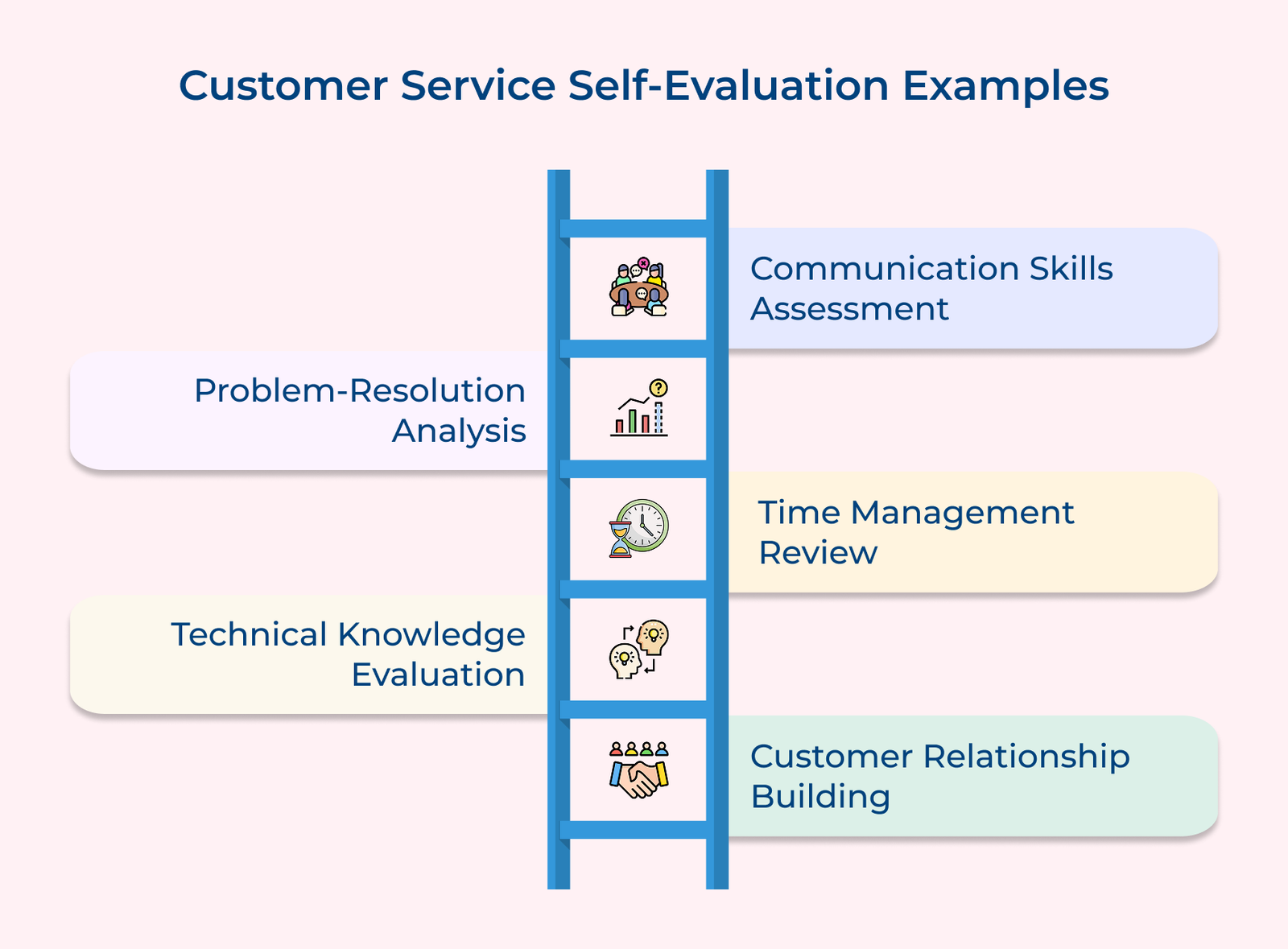
Customer Service Self-Evaluation Examples
Below are practical examples of how to assess your performance in key areas like communication, problem-solving, empathy and responsiveness without vague statements or guesswork.