Preparation Stage
1. Research and Strategic Information Analysis
Research and information gathering serve as the foundation for any successful customer meeting. This important step helps you grasp your client’s situation and challenges before the meeting. It sets you up for meaningful conversations and shows you’re well prepared.
Analyzing client history means looking at past conversations, buying habits and support issues to get a full picture of their experience with your company. The knowledge helps identify issues and areas where you can provide additional value. Industry trends research provides context about market challenges and opportunities that might impact your client.
Pro Tips:
- Set up Google Alerts for your client’s company to stay updated about their recent developments and achievements automatically.
- Look up your client’s team members on LinkedIn to find common connections or shared interests that can help break the ice.
2. Meeting Strategy Development and Planning
Meeting strategy turns your research into a clear plan for the conversation. It helps keep the meeting focused, on track and respectful of everyone’s time.
Clear objectives help guide the conversation toward specific outcomes you want to achieve. A detailed agenda with set times helps make sure all key topics get enough attention without feeling rushed. The agenda acts as your roadmap but should remain flexible enough to accommodate unexpected but valuable discussions.
Pro Tips:
- Share the agenda with all participants two days before the meeting to allow them time to prepare and suggest additions.
- Keep a buffer of 15-20% in your time allocation to handle unexpected but important discussion points that may arise.
3. Comprehensive Material Preparation and Organization
Material preparation focuses on creating compelling content that supports your meeting objectives. The step turns your research plus plan into clear materials that guide the conversation and show your client what you bring to the table.
Well-prepared materials boost your credibility and make complex information easier to understand. Let’s understand if the material preparation is correct or not.
How do you ensure your presentation materials and handouts effectively communicate your message?
Your presentation should tell a clear story, moving smoothly from the challenges to the solutions. Using visuals like charts and diagrams helps make complex ideas easier to understand. The goal is to create materials that encourage conversation, not just deliver information.
What makes case studies and supporting documentation truly valuable for your client’s context?
The most impactful case studies are those that closely align with your client’s industry and specific challenges. Choosing examples that show real results in similar situations helps build trust and shows you understand their world. Each piece of documentation should serve a purpose in supporting your messages and discussion points.
How can you organize supporting materials to enhance meeting effectiveness?
Supporting materials need to be arranged in a logical sequence that mirrors your meeting agenda. Being organized means having the right data ready for expected questions and extra examples on hand for unexpected turns in the conversation. The goal is to create a smooth flow of data that enhances rather than disrupts the natural conversation.
Customer Meeting Stage
1. Opening Dialogue and Relationship Building
Opening and rapport building set the tone for your entire customer meeting. The first few minutes set the tone and create a space where honest, productive conversations can happen. A strong opening helps participants feel comfortable and engaged while setting clear expectations for the meeting ahead.
When establishing personal connections, the key lies in finding genuine common ground. It can come from shared work experiences, industry trends or even casual comments about what’s happening in the world. The goal isn’t just small talk but rather creating authentic connections that make everyone feel valued and heard.
Pro Tips:
- Look up a recent achievement from your client’s company and bring it up naturally at the start of your conversation to show you’re paying attention.
- Maintain a digital notecard with key personal details from previous meetings like their preferred communication style which helps personalize future interactions.
2. Information Exchange
Information exchange is the heart of your customer meeting, where effective presentation and active listening work together. This key part of the meeting lets you share your ideas while also hearing your client’s thoughts and getting real-time feedback. Let’s explore the active Listening Techniques:
- Mirror your client’s key phrases to show understanding and encourage them to elaborate further.
- Use thoughtful nodding and maintain appropriate eye contact to demonstrate full engagement.
- Take brief notes while maintaining conversation flow to capture important points.
- Ask clarifying questions that dig deeper into their underlying needs and concerns.
- Paraphrase their main points to confirm your understanding and show you value their input.
Good conversations strike a balance between talking and listening. Share your points in a way that encourages back-and-forth, not just a presentation. As the discussion unfolds, note important feedback while staying fully engaged.
3. Professional Discussion Facilitation and Management
Managing the discussion means keeping the conversation focused, useful while making sure everyone stays involved and comfortable. The crucial skill helps you address concerns, build consensus and keep the meeting on track without making it feel overly rigid or controlled.
Handling questions and concerns means being open to input while keeping the conversation on track. When participants raise questions, you need to address them thoroughly while keeping the bigger picture in mind. It means responding to concerns right away, showing you’re listening and giving clear answers that keep the conversation moving.
Pro Tips:
- Create natural transition points in your discussion by linking client concerns back to your prepared agenda topics and solutions.
- Keep a mental stopwatch for each discussion point. If a topic runs long, say “Let’s note this for a deeper dive later” rather than cutting it off abruptly.
4. Conclusive Summary and Future Planning
The meeting conclusion is your opportunity to solidify understanding and establish clear next steps. The final part of the meeting turns the conversation into clear next steps and makes sure everyone agrees on what comes next. A strong conclusion prevents misunderstandings and maintains momentum after the meeting ends.
The key to an effective conclusion lies in smooth orchestration. Start wrapping up about 10–15 minutes before the meeting ends by shifting into summary mode. Go over the main points, agree on next steps and set clear timelines while keeping the tone collaborative. The close should feel like a smooth transition, not a sudden stop.
Pro Tips:
- Use the “parking lot” technique to acknowledge important but off-topic items that came up during a discussion. This shows you value all input while keeping the conclusion focused.
- Save your calendar app during the meeting conclusion while discussing next steps. This subtle action often prompts others to do the same, ensuring follow-up meetings get scheduled immediately.
Post-Meeting Follow-up Stage
1. Documentation
Documentation transforms your meeting discussions into organized, actionable records. The step serves as the base for follow-up activities, ensuring no valuable insights get lost. Good notes help keep everyone accountable. They make things clear and give you something to look back on later.
Creating meeting minutes
Meeting minutes capture the essence of your discussion, including key decisions and action items. Instead of just taking notes, call out the key insights that came up during the conversation. Your minutes should tell a story that both present attendees and future readers can easily follow and understand.
Updating CRM systems
Enter all relevant details into your customer relationship management system promptly. Include clear facts, like decisions made, along with softer details like client preferences or concerns. This helps keep future conversations consistent and builds stronger relationships.
2. Action Item Management
Action item management transforms meeting outcomes into tangible progress. The systematic approach ensures that discussed initiatives move forward while maintaining accountability. Keeping track of action items ensures nothing gets missed and helps the project keep moving even after the meeting ends.
A well-structured action item management system starts with clear task assignments and realistic deadlines. If the meeting covered a new reporting system, you might ask your technical team to check if it’s doable within two weeks.
Meanwhile, your client’s team agrees to provide their reporting requirements by the end of the week. Each task gets tracked in a shared project management tool with regular status updates and automated reminders.
Pro Tips:
- Color-code your action items based on priority and dependencies to create visual urgency without constant reminders.
- Schedule quick 15-minute stand-ups with task owners before major deadlines to prevent last-minute surprises.
3. Strategic Communication and Engagement Follow-through
Communication follow-through maintains engagement and demonstrates professionalism after the meeting ends. This step connects meetings, conversations to real action, keeping everyone involved and up to date. It shows your commitment to the relationship beyond the meeting room.
Effective follow-up pairs clear notes with a personal touch. For example: “Thanks for the great conversation about your expansion plans. I’ve attached the meeting notes with the three main initiatives we covered, plus some extra details on the success metrics we talked about. Would Tuesday at 2 PM work to dive deeper into the implementation timeline?”
Pro Tips:
- Set up email templates with customizable sections to maintain consistency while adding personal touches for each client.
- Create a “48-hour rule” where you check in on any unclear items within two days while the discussion is still fresh.
4. Comprehensive Progress Tracking and Evaluation
Progress monitoring acts as the quality control system for your post-meeting activities. The final step makes sure promises from the meeting turn into real actions. Through systematic tracking and evaluation, you can identify potential roadblocks early. Adjust approaches as needed and demonstrate the value delivered from your customer meetings.
Key Questions for Timeline Monitoring:
- How are we tracking against our established milestones and what might cause delays?
- Which dependencies between tasks could impact our timeline adherence?
- What resources or support do team members need to meet their deadlines?
- How can we proactively address potential bottlenecks in our timeline?
Keeping track of completed tasks and checking how well the meeting went gives a full picture of progress. Your tracking system should flag items approaching deadlines while measuring the actual impact of completed tasks.
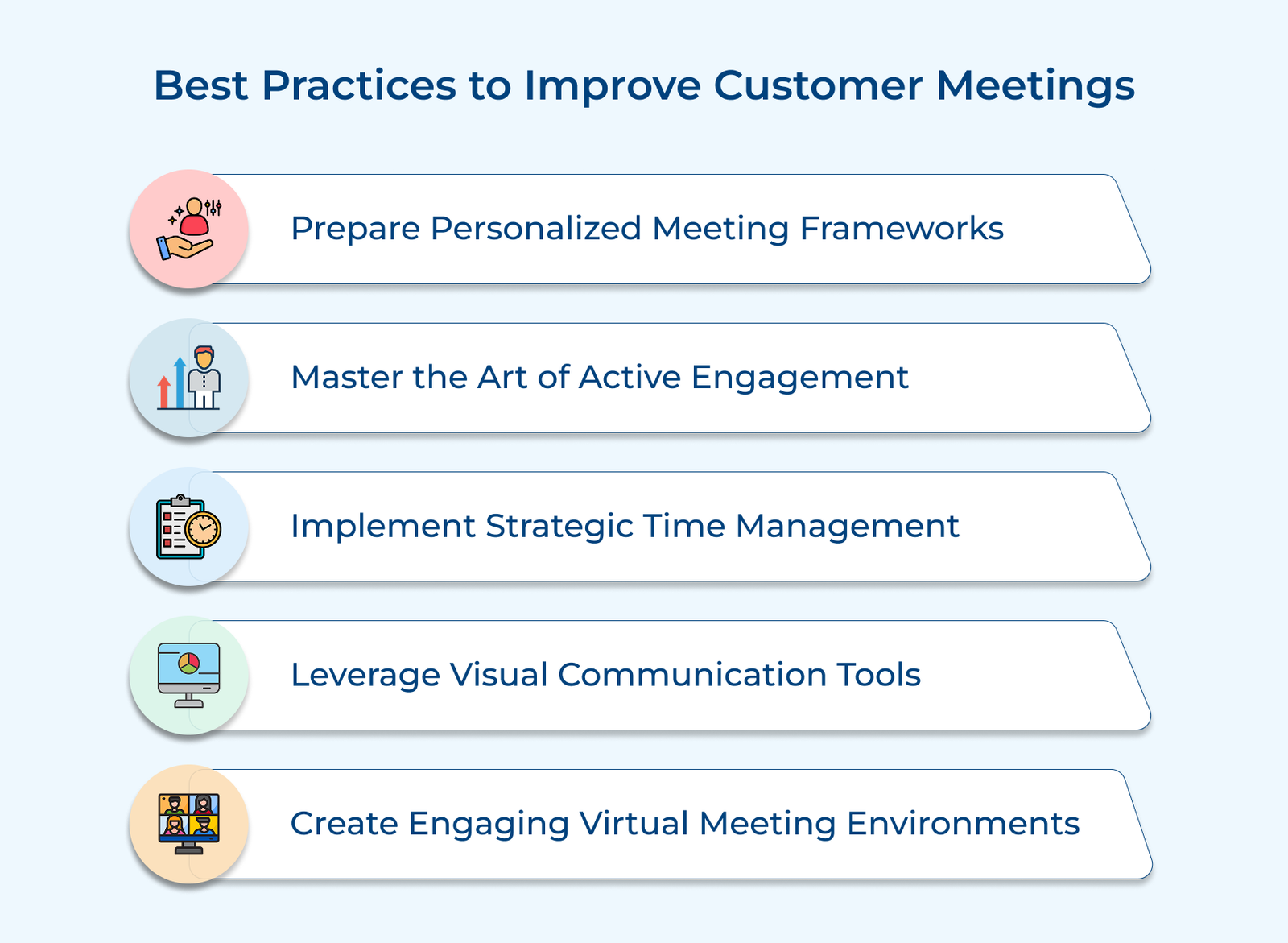
Best Practices to Improve Customer Meetings
Check out the essential best practices that can transform your customer meetings from routine interactions into valuable strategic sessions.