Initial Contact Phase
The following are the powerful empathy statements that help create a welcoming atmosphere and demonstrate your genuine commitment to assisting customers from their very first contact.
1. “Thank you for reaching out. I’m here to help.”
The simple, direct statement sets a welcoming tone right from the start. It shows appreciation for the customer’s effort and immediately reassures them that they’re in good hands. Especially when people reach out feeling uncertain or stressed, hearing the statement can ease tension and build a sense of trust.
What makes it effective is its clarity, as it doesn’t overcomplicate things. It combines warmth with a promise to assist, which can shift the mood of the conversation in a positive direction from the first message.
2. “I appreciate you bringing this to our attention and allowing us to assist you.”
Businesses can use the statement to reframe a potential complaint or problem as a valuable opportunity to help. It makes customers feel their feedback is important and positions the interaction as a collaborative effort rather than a confrontation.
The effectiveness comes from shifting the dynamic from problem-focused to solution-oriented. Customers who hear this feel valued and understand that their input helps improve service, which often leads to more constructive customer service conversations.
3. “I understand this is a challenging situation and I’m committed to helping you resolve it.”
The statement is used to acknowledge the difficulty of the customer’s situation while immediately offering hope. It works best when customers are noticeably frustrated or have described a complex problem that needs solving.
You can recognize the customer’s struggle and show a clear intent to help through such statements. It tells the customers they are heard and the support is there to do something about it.
4. “I’m here to listen and understand your concerns completely.”
You can leverage such statements to create a safe space for customers to share their experiences. It’s particularly effective when customers seem hesitant to explain their situation or when dealing with sensitive issues.
The power lies in being focused on listening rather than immediate problem-solving. The approach helps customers feel comfortable sharing all relevant details which leads to better understanding and more effective solutions.
Listening and Understanding Phase
Below are the empathy statements specifically designed to open the door for effective problem-solving by validating customers’ experiences.
5. “I can hear how frustrating this experience has been for you.”
The statement is most effective when customers express clear signs of frustration in their voice or writing. You should use it when they’ve described a series of failed attempts to resolve an issue or when they’ve experienced repeated problems. The timing is crucial, so make sure to wait until they’ve had a chance to express their frustration before acknowledging it.
The statement works because it directly validates their emotional experience. Using the word “hear” helps you to show that you’re actively listening and picking up on emotional cues. The validation often helps customers feel more understood and can help them move from expressing frustration to focusing on solutions.
6. “That sounds like a really difficult situation to be in.”
The statement is perfect for scenarios where customers are dealing with circumstances beyond their control. Use it when they describe how a solution’s issue has impacted their personal or professional life. It’s particularly powerful when the customer seems overwhelmed or apologetic about their emotional response.
The effectiveness lies in its simplicity and sincerity. Instead of minimizing their experience, you’re acknowledging the genuine difficulty they’re facing. The acknowledgment helps build trust and shows that you understand the human impact of the technical problem they’re experiencing.
7. “I completely understand why you’d feel this way about what happened.”
Businesses use such statements when their customers are seeking validation for their emotional response to a situation. It’s especially useful when they might be feeling uncertain if their reaction is justified. The statement works best after they’ve fully explained their perspective and the impact of the issue.
The approach succeeds because it removes any doubt about the legitimacy of their feelings. The word “completely” emphasizes your full support of their perspective which helps them feel more confident in their position and more open to working toward a solution.
8. “You’re absolutely right to be concerned about this issue.”
Use the statement when customers raise legitimate concerns about security, privacy or potential risks. It’s particularly effective when they might be feeling dismissed by previous support interactions or when they’re hesitant about expressing their worries.
The power of this statement comes from its direct agreement with the customer’s perspective. When you use the term “absolutely”, you remove any ambiguity about the validity of their concerns. The clarity in support helps establish you as an ally in resolving their issue rather than someone they need to convince.
Problem Acknowledgment Phase
Below are the effective empathy statements that help validate customer experiences while paving the way for constructive problem-solving.
9. “What you’re describing shouldn’t have happened and I understand your disappointment.”
The statement here is most effective when addressing clear service failures or situations where company standards weren’t met. Use it when customers describe experiences that genuinely fall below your organization’s service expectations or when established procedures weren’t followed correctly.
The power of the acknowledgment comes from its directness and honesty. When businesses openly admit that the situation isn’t acceptable, they validate the customer’s experience while showing accountability. Transparency helps rebuild trust and shows that your organization values honest communication even in difficult situations.
10. “This definitely isn’t the experience we want our customers to have.”
When any of your customers encounter systematic issues or when their experience significantly differs from your intended service standards, you can use such statements. It’s particularly effective when addressing problems that impact the customer’s overall impression of your brand or service quality.
The statement works because it aligns your perspective with the customer’s expectations. The emphasis on the word “definitely” shows strong conviction about your service standards. It helps customers understand that their negative experience is an exception rather than the norm and demonstrates your commitment to better service.
11. “I recognize how this delay has impacted your plans.”
Use the empathy statement specifically when dealing with timing-related issues that have disrupted the customer’s schedule or plans. It’s most effective when customers explain how delays have caused cascading effects in their personal or professional lives.
The effectiveness lies in acknowledging not just the technical delay but its real-world consequences. When you focus on the impact rather than just the delay itself, you show an understanding of the broader implications. The deeper level of acknowledgment helps customers feel truly understood.
12. “You’ve been very patient throughout this situation.”
The statement works best when addressing long-standing issues or situations requiring multiple interactions. Use it when customers maintain composure despite facing ongoing challenges or when they’ve shown understanding during extended resolution processes.
The acknowledgment of their patience serves two purposes. First, it recognizes their positive approach to a difficult situation. Second, it subtly reinforces constructive behavior while building rapport. The positive reinforcement often encourages continued cooperation.
Solution Proposal Phase
Let’s go through the powerful empathy statements that not only validate customer emotions but also pave the way for constructive problem-solving that builds lasting trust and satisfaction.
13. “Let me take personal responsibility for resolving this for you.”
The statement here is for the scenario when customers are frustrated because of being transferred between departments or having to repeat their story multiple times. It’s most effective when they need reassurance that someone will own their issue through to resolution.
The power lies in the personal commitment you’re making. The phrase “personal responsibility” here shows you’re establishing yourself as their dedicated advocate. It creates a sense of relief and builds confidence that their issue will finally get proper attention.
14. “Here’s what I’m going to do immediately to help address this.”
Deploy the statement when customers need immediate action and clear next steps. It’s particularly effective after acknowledging their situation and when you’re ready to transition from empathy to concrete solutions.
The statement works because it signals a shift to action. The word “immediately” shows urgency and commitment while setting up clear expectations. It helps reduce anxiety by providing a concrete path forward.
15. “I’ll work with you to find the best possible solution.”
Use the statement when the solution might require collaboration or when multiple options need to be explored. It’s especially effective when customers have specific preferences or constraints that need to be considered.
The collaborative approach implied by “work with you” creates a partnership. It empowers customers by making them active participants in finding solutions rather than passive recipients of help. The phrase “best possible” acknowledges that you’re committed to optimal outcomes.
16. “I’m committed to making this right for you.”
The statement is most powerful when addressing situations where trust has been damaged or when customers are skeptical about resolution. Businesses often use it when they need to rebuild confidence in their service commitment.
The effectiveness comes from its unambiguous promise. The word “committed” shows determination, while “making this right” acknowledges that the current situation needs correction. This clear commitment helps restore faith in your service.
17. “Let’s explore what options would work best for your situation.”
Use it when multiple solution paths are available or when customization might be needed. It’s particularly effective when customers have unique circumstances that might require tailored solutions.
The statement works by acknowledging that solutions aren’t one-size-fits-all. The word “explore” suggests thoroughness, while “your situation” emphasizes personalization. The approach shows respect for their unique circumstances while maintaining a problem-solving focus.
Follow-up and Assurance Phase
Let us now go through the empathy statements that create confidence during the follow-up phase.
18. “I’ll keep you updated every step of the way.”
The statement works best when handling issues that require time to resolve or involve multiple steps. Use it when customers show anxiety about being left in the dark or when previous experiences have made them concerned about follow-through.
The effectiveness comes from addressing the common fear of being forgotten after initial contact. The phrase “every step” provides reassurance of continuous communication. The proactive commitment to updates helps reduce anxiety and builds trust in your ongoing support.
19. “Please know that I’ll personally oversee this until it’s resolved.”
The statement is for handling complex issues requiring coordination across teams. It’s especially powerful when customers have previously experienced communication gaps or when their issue needs sustained attention over time.
The word “personally” creates accountability and shows dedicated attention. Customers feel reassured knowing someone is taking ownership through the entire process. The commitment helps them feel more secure about the eventual resolution.
20. “I’ll make sure this gets the attention it deserves.”
Use such statements when customers feel their issue hasn’t been properly prioritized before. It works particularly well after they’ve explained the importance or urgency of their situation to validate their concerns.
The phrase “attention it deserves” acknowledges the significance of their issue. The validation, combined with a clear commitment, helps restore confidence. Customers feel reassured that their concerns will be treated with appropriate priority.
Empathy Tips to Improve Customer Service
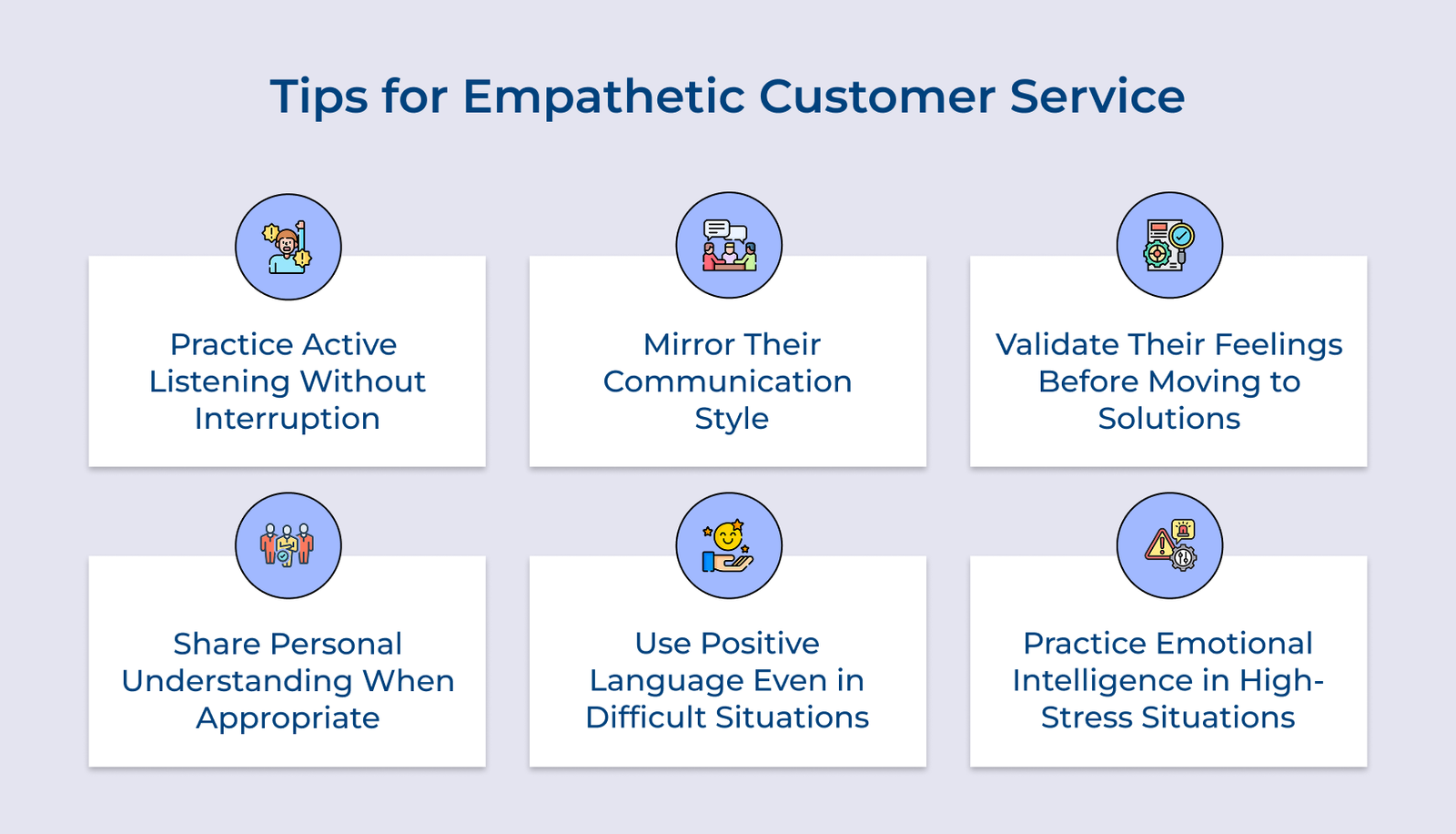
Let’s go through the practical tips that can help you develop authentic empathy in your customer service interactions.