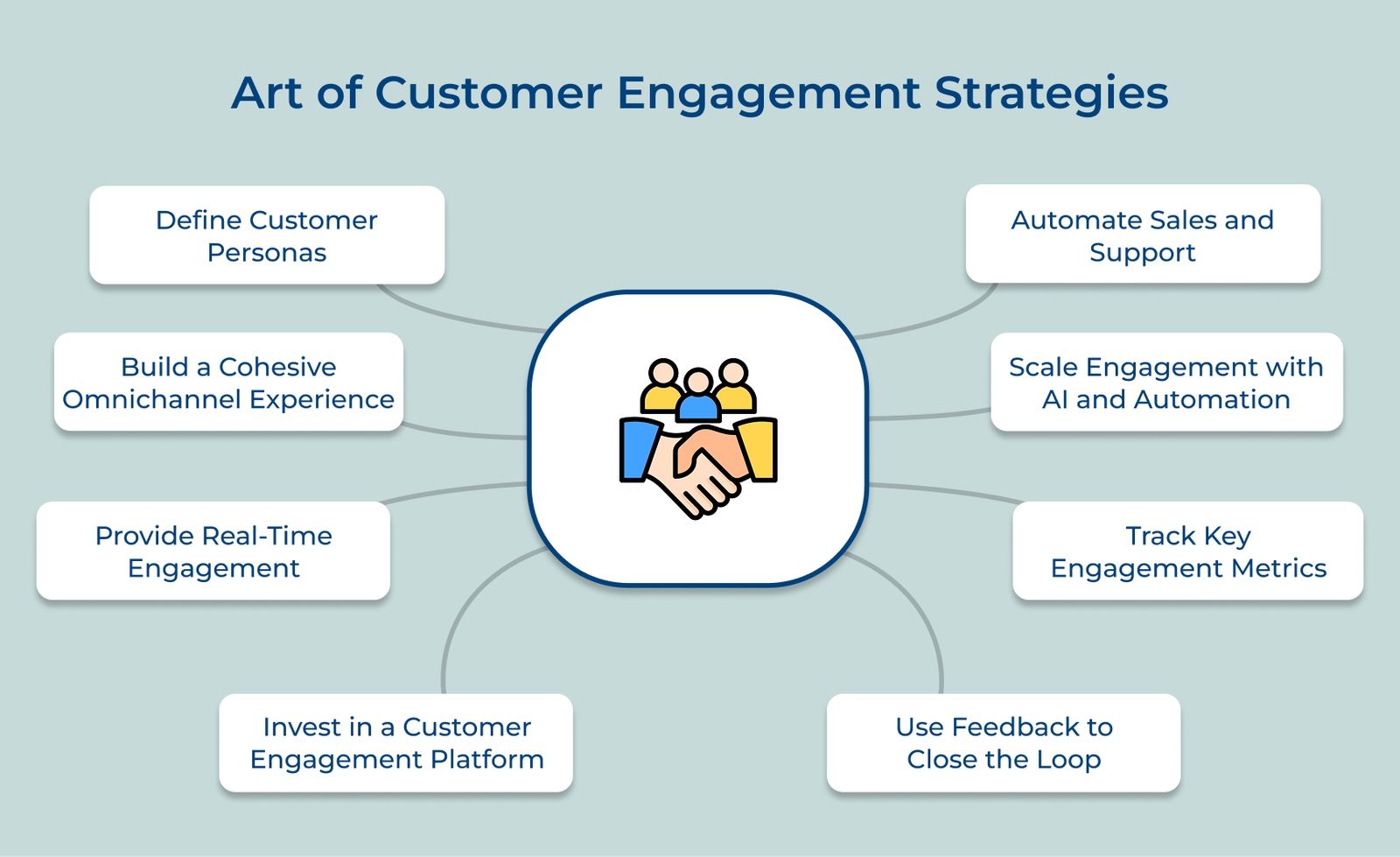
Use cases for measuring customer engagement metrics include monitoring customer satisfaction and loyalty levels to identify pain points for improvement. Customer retention rates and churn rates must also be analyzed to understand the factors driving customer behavior.
Best practices:
- Define relevant metrics aligned with the business goals and customer engagement objectives.
- Implement robust data collection and analysis systems to ensure accurate metric tracking.
- Establish benchmarks and targets for each metric to measure progress.
8. Ask for Feedback or Reviews to Close the Feedback Loop
Asking for feedback or reviews and closing the feedback loop is a critical component of mastering the art of customer engagement. It not only demonstrates a business’s commitment to continuously improving the customer experience but also provides invaluable insights.
Use cases for collecting feedback and reviews include:
- Post-purchase or post-interaction surveys to gauge customer satisfaction.
- Online review platforms to gather honest feedback and address concerns publicly.
- Social media monitoring to track sentiment and respond to customers in real time.
Best practices:
- Provide feedback: Make it easy for customers to provide feedback through multiple channels, such as email, in-app surveys, or dedicated feedback forms.
- Respond promptly: Respond promptly to feedback, acknowledging both positive and negative comments and outlining steps to address concerns.
- Closed loop: Close the loop by communicating changes or improvements made based on customer feedback, demonstrating that their voices are heard and valued.
The Best Examples of the Art of Customer Engagement
Let us check out the examples that demonstrate how businesses can create memorable experiences, promote loyalty and turn customers into enthusiastic advocates.
1. Starbucks
Starbucks is known for its excellent customer engagement strategies. One example of them is their loyalty program, Starbucks Rewards.
Customers earn points for every purchase they make, leading to free drinks and other rewards. It not only incentivizes customers to continue buying from Starbucks but also creates a sense of exclusivity and belonging among members.
2. Glossier
Glossier, a beauty brand, is another great example of effective customer engagement. The brand regularly interacts with customers on social media, responding to comments and messages.
Glossier also encourages user-generated content, reposting customer photos and reviews on their own social media accounts. It not only strengthens the bond between the brand and its customers but also helps in building authenticity.
3. Airbnb
Airbnb has revolutionized the travel industry with its unique approach to customer engagement. The platform allows hosts and guests to communicate directly, enhancing personalized interactions.
Airbnb also offers personalized offers based on previous bookings and preferences, creating a more tailored experience for customers. The personalization and customer-centric approach has made Airbnb a preferred choice for travelers worldwide.
4. Nike
Nike is a powerhouse in the sportswear industry and excels in customer engagement. One of their standout initiatives is the Nike Run Club app, which provides personalized training plans, challenges and motivation for runners.
The app allows users to connect with other runners, track their progress, and receive coaching tips from Nike experts. Nike creates a community of loyal customers who feel supported and motivated in their fitness journey by offering value beyond their products.
Think Omni Channel CX to Truly Master The Art of Customer Engagement
Mastering the art of consumer engagement is essential for businesses to tailor their offerings and interactions, enhancing stronger connections and loyalty. Leveraging AI can help brands personalize interactions, streamline processes and engage with customers at scale.
Investing in the right customer engagement strategies can have a profound impact on both the top line and bottom line. Simultaneously, optimized processes and operational efficiencies resulting from effective engagement can positively impact profitability and the bottom line.