How to Build a B2B Buyer Journey? A Detailed Guide
Explore the B2B buyer journey, outlining key stages, strategies and actionable tips. Learn to guide prospects from awareness to decision-making and enhance long-term business relationships.

Explore the B2B buyer journey, outlining key stages, strategies and actionable tips. Learn to guide prospects from awareness to decision-making and enhance long-term business relationships.
The B2B buying space isn’t what it used to be. As there’s a plethora of information available online, buyers now take their time researching, comparing and evaluating options long before they ever talk to a sales rep. 80% of B2B buyers complete most of their decision-making before they ever speak to a sales rep.
The shift has made the buying process more complex and harder for businesses to manage. As a result, many companies lose potential customers simply because they can’t keep up with what today’s buyers expect. The problem? Too many businesses are still using rigid, outdated sales approaches that don’t reflect how real buyers behave.
The solution starts with mapping the B2B buyer journey. When you take the time to understand how prospects move from first contact to final decision, you can identify where they get stuck and how to help. Let’s dive in to understand how the approach can help win more deals and build stronger, longer-lasting relationships.
The B2B buyer journey refers to the path business customers take from recognizing a need to making a final purchase decision and becoming loyal clients. Unlike B2C journeys, B2B processes typically involve multiple decision-makers, longer timelines and more complex evaluations since business purchases often require significant investments.
The business-to-business buyer journey unfolds in several stages. It starts with recognizing a problem, followed by researching and evaluating solutions. Buyers compare their options, build consensus among decision-makers and make a purchase. Along the way, they engage with various content and touchpoints while vendors guide them toward a decision.
Key use cases:
Let’s go through the key benefits that make the B2B buyer journey mapping an essential framework for business success in a modern complex marketplace.
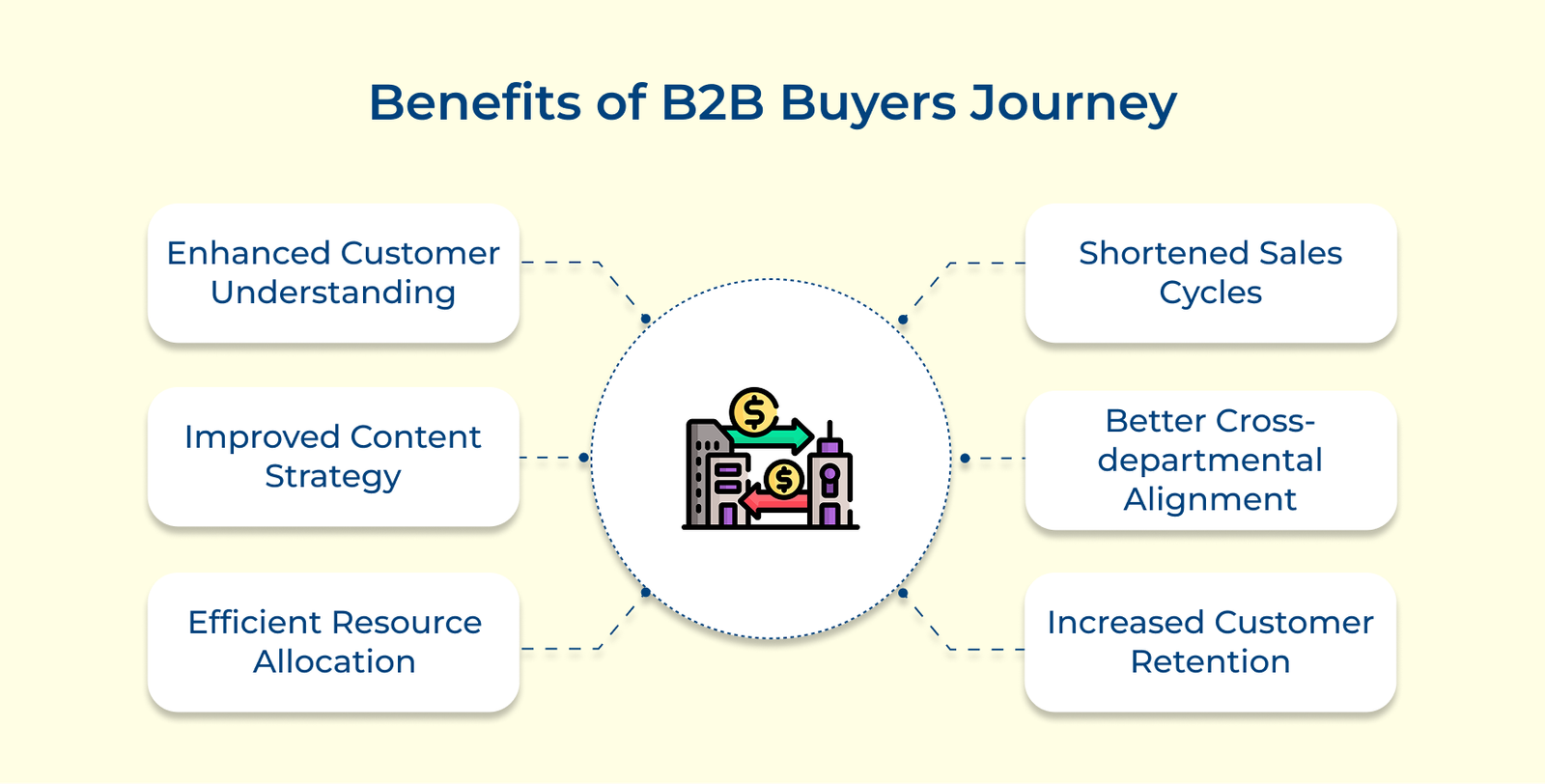
1. Enhanced Customer Understanding
A clearly mapped B2B buyer journey gives teams valuable insights into customer behavior. Companies can connect with prospects more effectively during their decision-making process by understanding the pain points that drive purchasing decisions and identifying crucial touchpoints.
2. Improved Content Strategy
Understanding the buyer journey allows marketing teams to create content tailored to each stage. Teams provide valuable information exactly when buyers need it most by offering educational resources for early awareness and comparison guides for evaluation.
3. Efficient Resource Allocation
Companies can allocate resources more efficiently by understanding where buyers invest their time. Focusing the budget on key points and tools that meet customer needs boosts marketing ROI.
4. Shortened Sales Cycles
Understanding the buyer journey allows sales teams to spot potential roadblocks early. They can shorten the time from initial contact to purchase by anticipating concerns and offering proactive solutions.
5. Better Cross-departmental Alignment
The buyer journey framework aligns marketing and sales teams, ensuring everyone knows their role in guiding prospects. The unity leads to smoother customer experiences and avoids mixed messages.
6. Increased Customer Retention
Understanding the full buyer journey allows companies to spot opportunities for continued engagement and identify signs of dissatisfaction early. The approach helps build lasting relationships and increase customer loyalty.
Below are the key stages of the B2B buyer journey, where businesses move from recognizing a need to making a purchase decision.
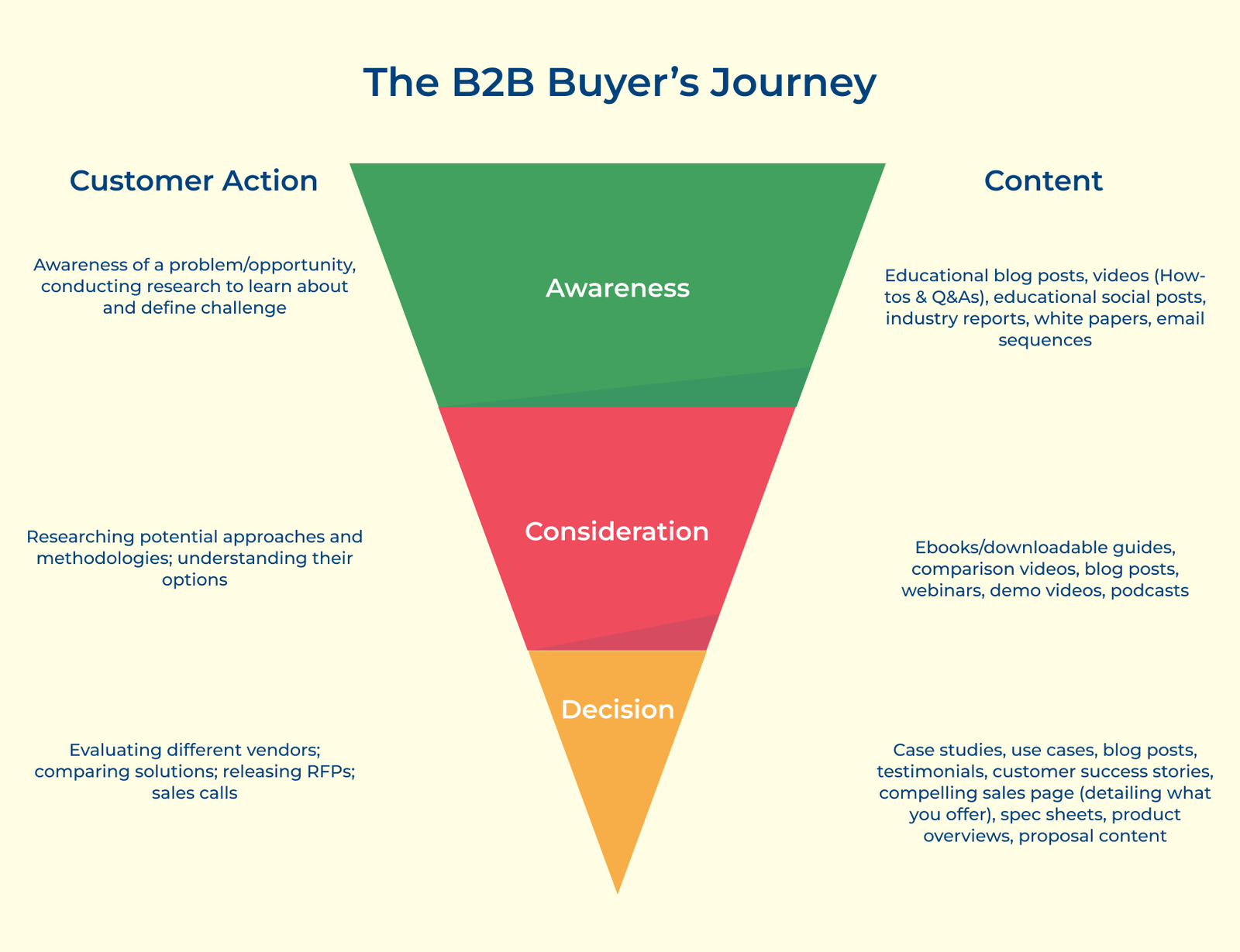
Prospects recognize a business challenge or opportunity in the awareness stage but may not yet fully grasp its extent. They begin to explore potential solutions, often through internal discussions and gathering data to define their needs for a solution.
Businesses thoroughly explore different solutions to address their identified problem. They gather information from industry reports, vendor sites and peers while developing evaluation criteria. Decision-makers assess budgets, identify key stakeholders and begin shaping their approach for the final decision.
Businesses evaluate specific vendors and solutions in the decision stage based on their established criteria. It includes comparing options, attending product demos and discussing pricing, implementation as well as service teams. Technical teams assess functionality, while financial stakeholders analyze ROI and total cost of ownership. Often, pilot programs or trials are conducted to validate solutions in real-world scenarios.
After selecting a vendor, the focus shifts to the smooth implementation of the solution. Organizations collaborate with their chosen partner to create detailed plans, set milestones and develop training programs. Effective change management strategies are put in place and success metrics are established. The stage requires strong coordination between internal teams and external partners to ensure seamless integration.
The final stage focuses on assessing results and identifying areas for improvement. Organizations gather feedback, analyze performance metrics and measure the solution’s impact on their operations. Teams work to maximize the investment’s value through ongoing refinements. Successful organizations stay engaged with their vendors, evaluating new features and capabilities as they emerge.
Below are the key changes that have reshaped how businesses make purchasing decisions in today’s digital-first environment. Let’s check them out.
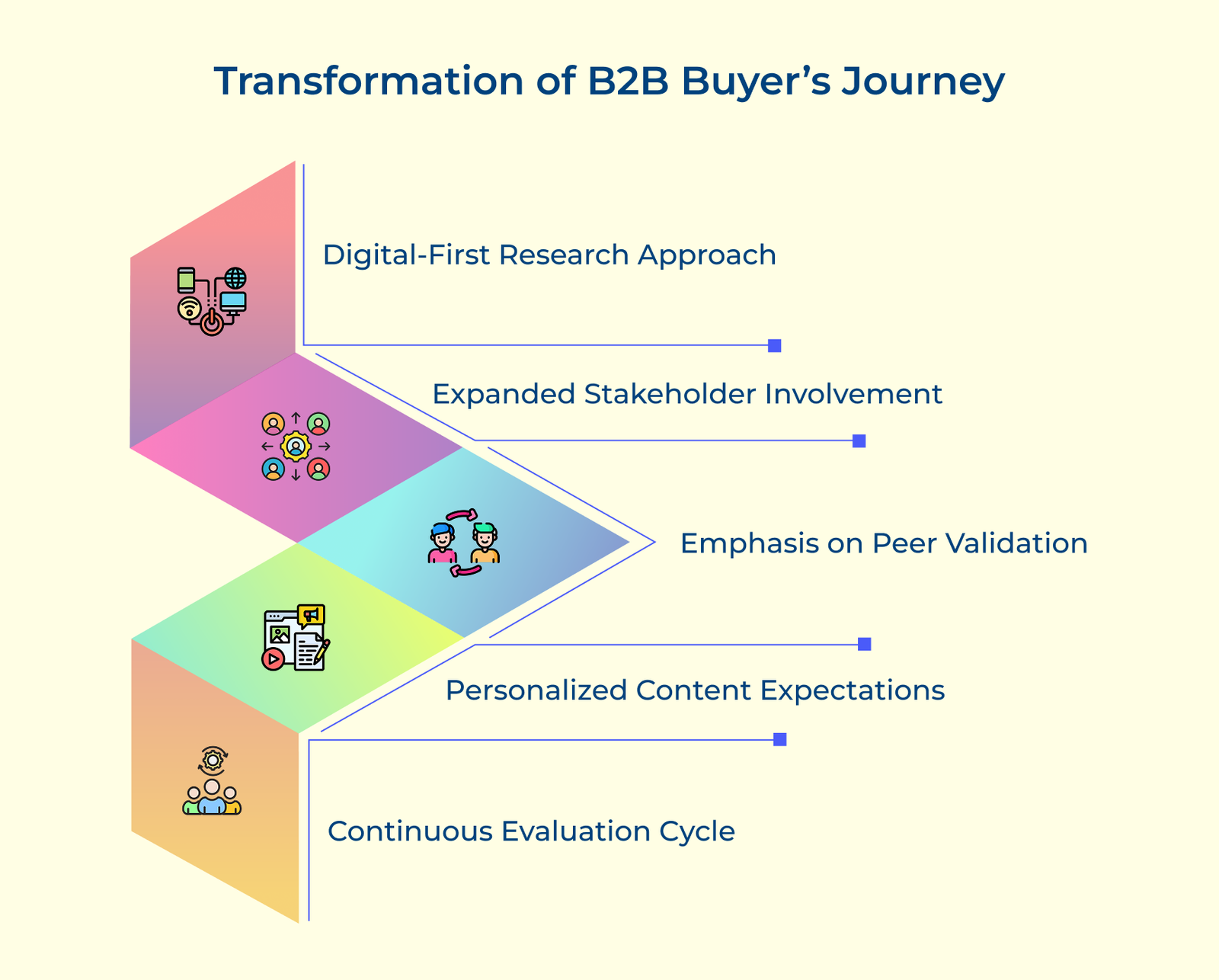
1. Digital-first Research Approach
Modern B2B buyers research extensively online before reaching out to vendors. They spend significant time reviewing websites, product documentation and customer reviews, completing 70-80% of their evaluation independently. As a result, the role of sales teams has shifted from simply providing information to offering strategic guidance.
2. Expanded Stakeholder Involvement
The decision-making process is more complex today, with multiple stakeholders involved in purchase decisions. Teams often include technical experts, finance leaders and end-users, reflecting the broader impact of modern solutions. Each stakeholder brings their own concerns and evaluation criteria to the table.
3. Personalized Content Expectations
Modern B2B buyers want content that speaks directly to their industry challenges and unique needs. Generic materials no longer cut it—decision-makers expect detailed insights into how solutions solve their specific problems. Successful vendors craft industry-focused content that shows a clear understanding of sector challenges and regulatory requirements.
4. Emphasis on Peer Validation
Business buyers are placing more value on peer recommendations and real-world experiences. They seek out case studies, customer testimonials and direct conversations with current clients to understand practical challenges. The growing reliance on social proof reflects their desire to learn from others who have tackled similar issues.
5. Continuous Evaluation Cycle
The buyer journey has shifted from a linear path to a continuous evaluation process. Organizations now regularly revisit their tech stack and vendor relationships to ensure they’re getting the best performance. It means vendors need to keep proving their value and maintain strong, ongoing engagement well after the initial purchase.
The following are the effective steps to help you not only map the B2B buyer journey but also ensure you are equipped to drive conversions.
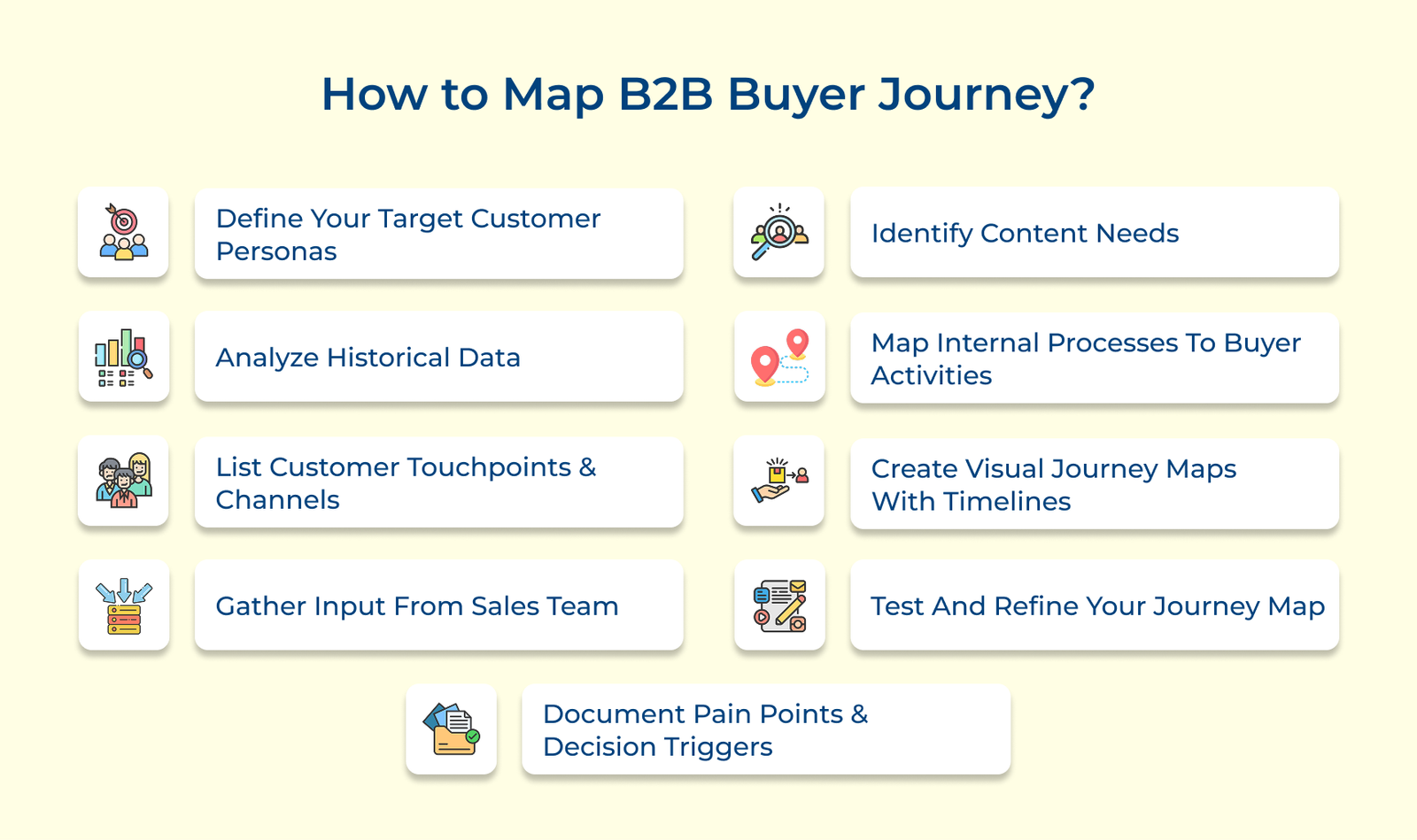
Building a strong business-to-business buyer journey map starts with creating detailed customer personas. The essential step helps teams understand their ideal customers, what influences their decisions and how to engage them effectively. A well-defined persona allows companies to tailor their strategies and content throughout the journey.
Let’s assume that a SaaS company might target “growth-stage tech startups with 50-200 employees and $5-20M in annual revenue”. Next, teams identify key roles within target organizations, including decision-makers, influencers and end-users. Companies can craft personalized engagement strategies that resonate with each group by understanding their pain points, goals, and success metrics.
Pro tips:
The step uncovers real-world trends in how customers navigate their decision-making process, revealing key triggers, obstacles and opportunities to speed up the cycle. Sales teams can dive into CRM data to identify patterns in successful deals, like common touchpoints, objections and moments that either accelerated or delayed decisions.
Let’s consider that analyzing win/loss data might show that deals with early executive buy-in close 40% faster than those without senior leadership involvement. The analysis also includes studying both successful and unsuccessful deals to learn what worked and what didn’t. Teams can identify best practices by evaluating factors like deal velocity, resource allocation and engagement patterns.
Actionable tips:
The step helps teams optimize every touchpoint, ensuring they support customers at each stage of their decision-making journey. Digital touchpoints, like, website visits, social media engagement and email interactions form the backbone of the modern B2B buying experience. Teams can see how buyers consume information by tracking the interactions, identifying popular content and measuring engagement.
Let’s assume that a tech company might find that their product comparison guides are particularly popular among senior decision-makers during the evaluation phase. Physical touchpoints, like sales meetings, trade shows and support calls offer valuable context. Understanding when and how personal interactions affect purchasing decisions adds depth to the overall picture.
Best practices:
Sales teams have unique, firsthand insights into how buyers think, decide and act throughout their journey. The perspective is essential for creating a more accurate, practical journey map based on real-world customer interactions. Organizations can tap into the insights through structured interviews with top-performing sales reps. They can document common questions, objections and decision criteria that surface during customer conversations.
Assume there’s a sales team that highlights their technical buyers and often request detailed integration documentation before considering deeper evaluations. Sales teams provide valuable knowledge about internal dynamics within customer organizations. They learn about typical approval processes, budget cycles and political factors that affect purchase decisions.
Pro tips:
Understanding the key drivers and barriers that influence is essential for creating an effective journey map. Organizations can develop more empathetic strategies by identifying what motivates customers to seek solutions and what holds them back.
The process starts by recognizing trigger events that prompt businesses to explore new solutions. The triggers could range from broader goals like digital transformation to more immediate challenges like system failures. Knowing when potential customers enter the buying process allows teams to engage at the right moment. Next, organizations need to understand the obstacles buyers face. It might include concerns over budget, internal resistance or hesitations about making a change.
Pro tips:
Content is the key to guiding buyers through their decision journey. Understanding what information buyers need at each stage ensures that organizations provide relevant, timely resources to move prospects forward confidently.
The process starts by identifying the content needs during the awareness stage. It is where buyers are trying to understand their challenges and potential solutions. Teams focus on creating educational content that fills these gaps and helps establish credibility. As buyers move into the evaluation and decision stages, content becomes more solution-focused.
Actionable tips:
Aligning internal processes with the buyer’s journey ensures a smoother, more coordinated experience for prospects. Organizations can provide timely support that aligns with the buyer’s decision-making process by synchronizing teams and operations with buyer activities.
Teams first assess how their sales efforts correspond to each stage of the buyer’s journey. It helps identify moments when they can offer the most relevant information, resources and expertise. The goal is to enhance the natural flow of the buyer’s research and evaluation without interrupting it. Marketing and support teams also need to work together to align efforts around key decision points.
Best practices:
Visualizing the buyer journey simplifies complex processes, making them easier to understand and act on. Clear, engaging maps turn insights into actionable steps, helping teams support customers effectively throughout their journey.
Teams begin by creating straightforward, visual representations of the buyer’s progression through each stage. The maps outline key activities, decision points and transitions, providing a clear overview of the process. Incorporating estimated time frames helps set realistic expectations, ensuring that resources are allocated effectively. Teams can better plan strategies that align with buyer behavior by marking critical moments and transition points.
Key takeaways:
A buyer journey map needs to evolve over time to stay relevant and effective. The final step ensures continuous improvement by using real-world feedback and performance data to keep the map aligned with current market dynamics. Teams validate the journey map by gathering feedback from current customers.
The conversations reveal how well the map reflects actual buying experiences, helping identify gaps, misalignments and areas for improvement. Tracking key metrics like conversion rates, cycle times and customer satisfaction provides insights for ongoing refinement. The data-driven approach ensures that the journey map stays effective in guiding and supporting buyers at every stage.
Pro tips:
Check out the key differences between the B2B and B2C buyer’s journey, where B2B involves longer decision cycles, while B2C is typically quicker.
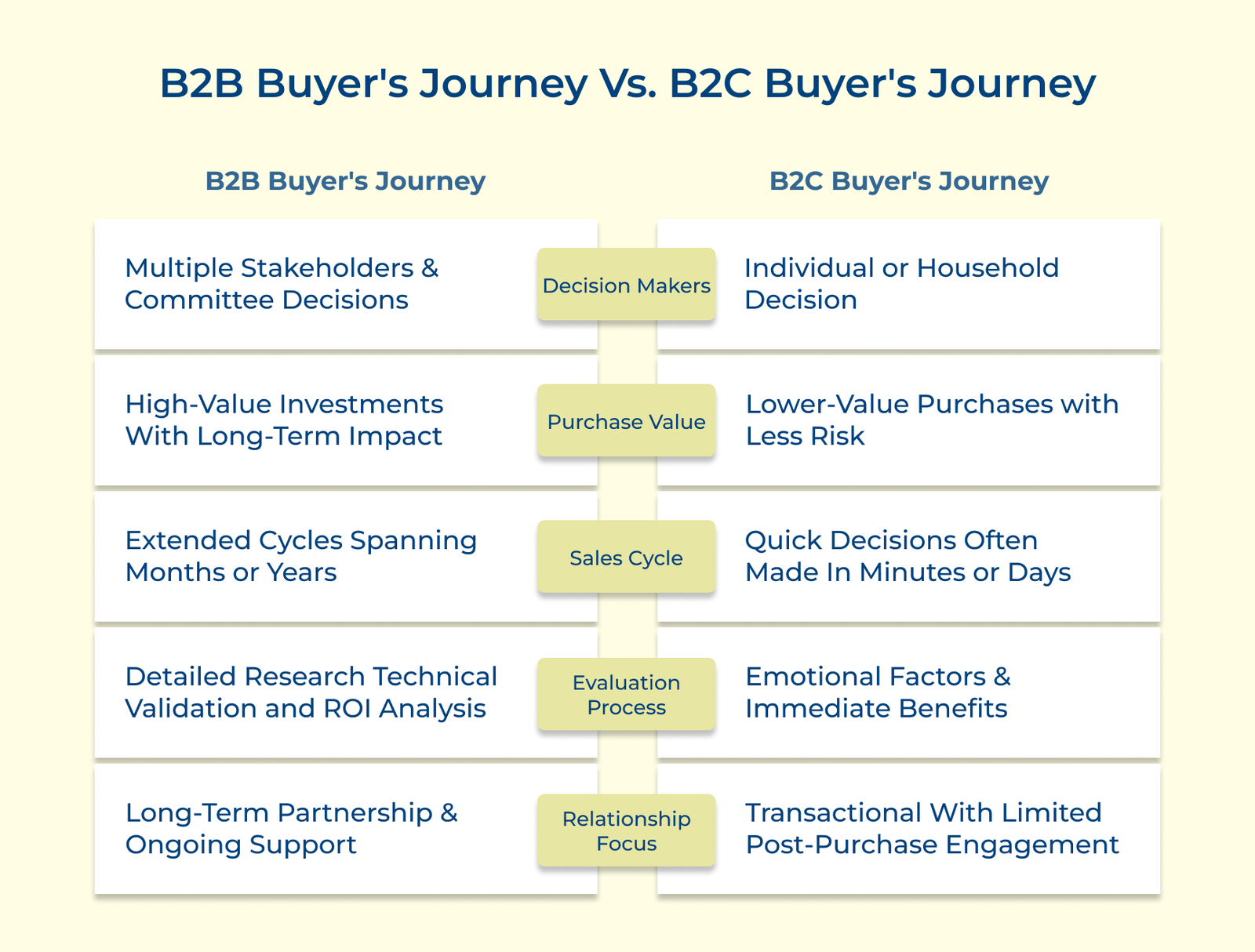
1. Multiple Stakeholders vs Individual Decision Making
B2B purchases involve a range of stakeholders from various departments, each with their own concerns, requirements and evaluation criteria. It adds complexity, requiring coordination and consensus-building for a unified decision.
B2C decisions are more straightforward, usually involving individual consumers or small families. Personal preferences and immediate needs often drive choices, with fewer conflicting priorities to consider.
2. Purchase Value and Risk Assessment
B2B purchases are often major investments that can influence an entire organization. The decisions carry high financial stakes, affecting operations, productivity and competitive positioning. Companies thoroughly assess options to reduce risk and ensure returns.
B2C purchases tend to involve smaller financial commitments and personal risk. Consumers make decisions based on individual budgets and immediate needs, with the consequences of a poor choice mostly limited to personal dissatisfaction rather than broader disruption.
3. Sales Cycle Duration and Complexity
B2B buying cycles can stretch over months or even years, driven by the complexity of the solution. Companies follow a structured process, involving evaluations, vendor comparisons and contract negotiations, with each step requiring detailed documentation.
B2C purchases are typically made quickly, with minimal formal evaluation. Consumers might research, read reviews and make decisions within a matter of hours or days. The process is more flexible, often driven by personal emotions, with no need for formal approvals.
4. Evaluation Criteria and Process
B2B buyers go through technical evaluations, compliance checks and ROI analyses. They often request proof of concepts, pilot programs and detailed documentation, prioritizing long-term value.
B2C buyers tend to focus on immediate benefits, personal preferences and emotional factors. Decisions are often influenced by brand perception, peer recommendations and desired features, with little to no deep technical analysis involved.
5. Relationship Development and Support
B2B relationships are built on long-term partnerships, extending far beyond the initial purchase. Vendors provide ongoing support, implementation services and account management, ensuring continued value for their clients.
B2C relationships are generationally more transactional, with limited post-purchase interaction. Support usually focuses on basic product issues or warranties and the relationship often concludes once the transaction is complete, unless the consumer returns for future purchases.
Below are the proven best practices that can help organizations optimize their buying journey and achieve better outcomes.
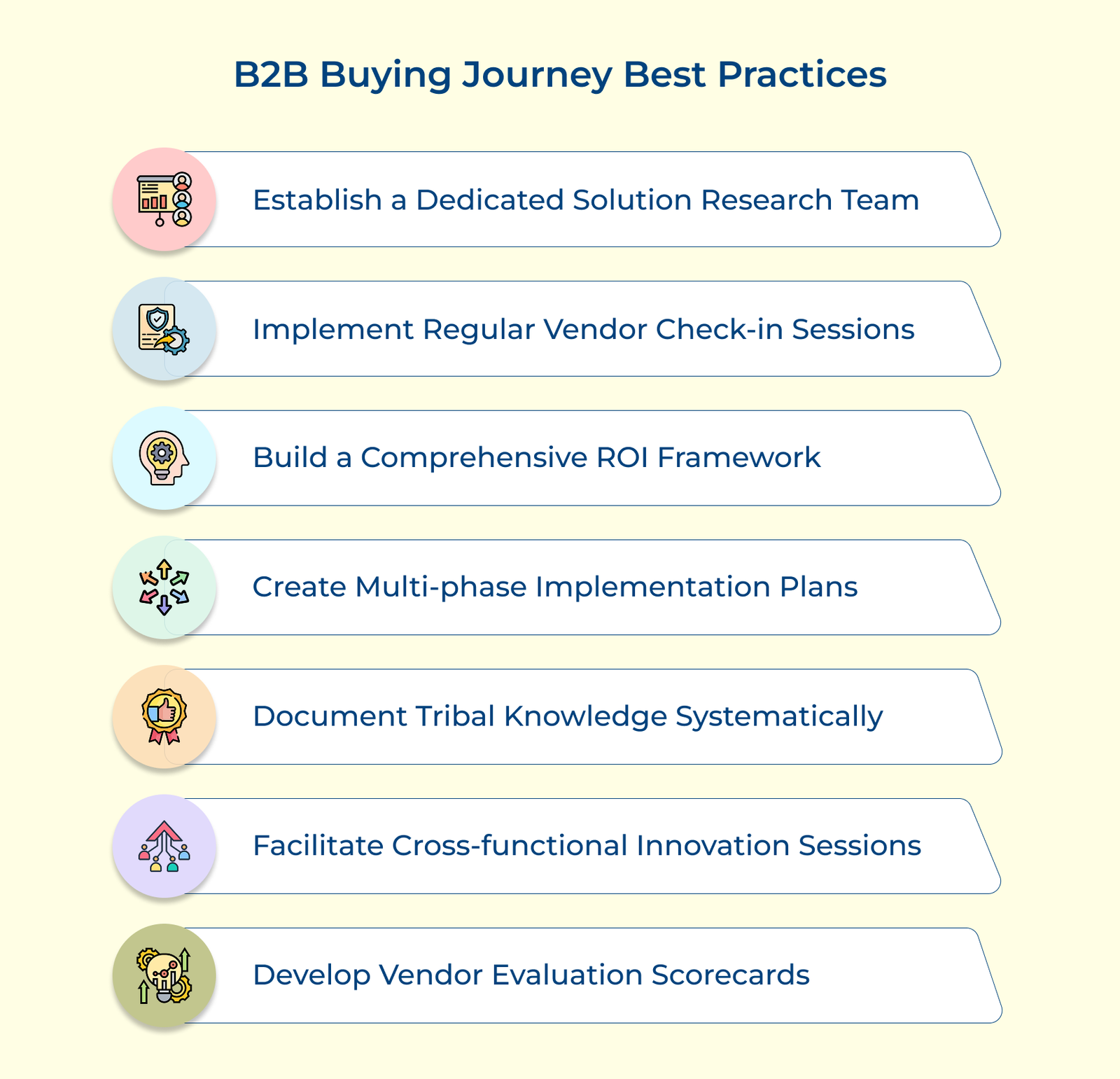
Form a dedicated team focused solely on evaluating solutions and vendors. Include members from various departments who can commit time to in-depth research and assessment. The approach ensures consistent evaluation and keeps the process moving forward.
Set-up regular check-ins with potential vendors during the evaluation phase. The meetings ensure clear communication, set expectations and address concerns early, keeping both sides aligned on needs, timelines as well as potential obstacles.
Create a clear framework for calculating return on investment that includes more than just the purchase price. Factor in productivity improvements, operational efficiencies and potential revenue growth to provide a solid justification for investment for measuring success after implementation.
Divide large purchases into smaller, manageable phases with clear milestones and success markers. It reduces risk, encourages early success and allows for learning from initial rollouts. Phased approaches also make it easier to gain budget approval and show value step by step.
Create a central hub to store insights, learnings and decisions made during the buying process. It keeps valuable knowledge easily accessible, reduces repetitive work and streamlines decision-making in future purchases.
Hold regular cross-departmental meetings to exchange experiences, challenges and ideas on potential solutions. The discussions can reveal hidden needs, new opportunities and areas for improvement that may otherwise go unnoticed.
Develop standardized scorecards that balance both hard data and qualitative insights to evaluate vendors. Consider factors like technical fit, support, cultural alignment and long-term potential to help make clear, justifiable decisions.
Let’s go through the emerging trends that are reshaping the way businesses make purchasing decisions in an increasingly digital-first world.
Future statistics:
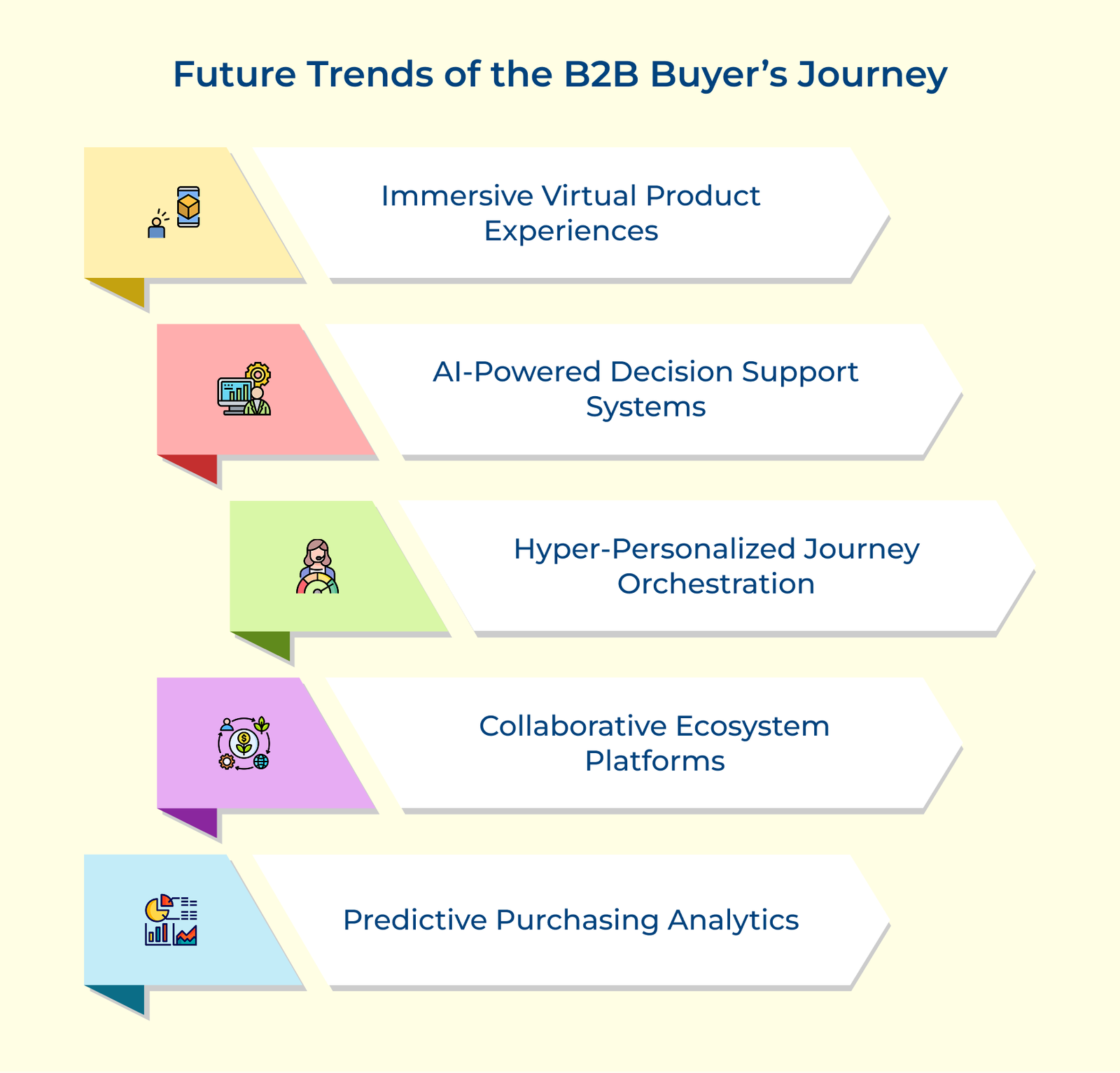
1. Immersive Virtual Product Experiences
Virtual and augmented reality will change the way businesses assess solutions. Buyers will be able to experience product demos, test complex systems and simulate implementations in risk-free settings, giving them a clearer picture of how solutions will work in practice before committing to major investments.
2. AI-Powered Decision Support Systems
Artificial intelligence will reshape the buying process by analyzing data to offer tailored recommendations. AI will help buyers find the best solutions, predict challenges and estimate realistic ROI timelines by considering industry trends, company needs as well as past performance.
3. Hyper-Personalized Journey Orchestration
Advanced data analytics will create highly personalized buying experiences, tailored to each industry, role and organization’s needs. Content, product options and pricing will automatically adjust based on buyer behavior, ensuring a seamless, relevant experience at every touchpoint.
4. Collaborative Ecosystem Platforms
Integrated platforms will bring together buyers, vendors and industry experts in collaborative spaces. The ecosystems will enhance peer reviews, shared experiences and problem-solving, helping organizations make smarter decisions based on real-world results.
5. Predictive Purchasing Analytics
Machine learning will analyze past purchases, market trends and organizational behavior to predict future needs. The systems will highlight potential requirements, forecast budgets and suggest the best times for new investments, helping organizations plan more effectively.
Mapping the buyer journey is now crucial for organizations looking to turn prospects into long-term partners. A well-constructed journey map offers valuable insights into customer needs, challenges and decision-making, helping businesses create more meaningful experiences. Companies can build stronger relationships with potential clients by understanding and optimizing each touchpoint.
Looking ahead, B2B buyer journey mapping will continue to evolve with new technologies and shifting business dynamics. Organizations that embrace the changes will be in a better position to form lasting partnerships. The key to success will be balancing digital advancements with personal connection, creating a flexible approach that adapts to both the changing landscape and the human side of business.

The B2B buyer journey usually lasts between 3 to 12 months, depending on the complexity of the purchase and the size of the organization. Enterprise-level deals tend to take longer due to the involvement of multiple stakeholders, thorough evaluations and formal approval processes. The journey can stretch well beyond a year for high-value, custom solutions.
Modern B2B websites are designed to empower buyers with self-service options. They feature user-friendly navigation, resource hubs and interactive tools like ROI calculators or product configurators. The sites make it easy for buyers to access technical documentation, pricing details and implementation guides, allowing them to conduct their research on their terms.
Content plays a key role in guiding buyers through their decision-making journey. Content ensures buyers have what they need at each stage from educational resources that help identify challenges, to in-depth technical details that aid in solution evaluation. Case studies, ROI analyses and implementation guides address specific concerns, helping buyers feel confident in their choices.
Organizations track key metrics such as engagement rates, content downloads and time spent at each stage of the journey. They also analyze how opportunities move through the pipeline, conversion rates and the sales cycle duration. Customer feedback, satisfaction scores and post-implementation success offer further insights into how well the journey is supporting buyers.
Advanced technologies such as AI-driven recommendations, predictive analytics and journey orchestration platforms help personalize the buying process. Marketing automation tools track buyer interactions, while virtual demos offer hands-on evaluations. Interactive resources guide buyers through complex decisions, making the journey smoother and more informed.

Grow Customer Relationships and stronger team collaboration with our range of products across the Conversational Engagement Suite.
Omnichannel Customer Support & Help Desk Software
AI Enabled Business Messaging and Chatbot Software
Sales Engagement & CRM Software
Call Center Software & Virtual Phone System
Product Marketing & Experience Platform
Customer Experience & Feedback Management Software

 What is Human Experience: Types, Benefits & Examples
Scroll to top
What is Human Experience: Types, Benefits & Examples
Scroll to top