What is Human Experience: Types, Benefits & Examples
Explore the concept of human experience, its various types, benefits and real-world examples. Learn how it influences perceptions, decisions and personal growth in everyday life.

Explore the concept of human experience, its various types, benefits and real-world examples. Learn how it influences perceptions, decisions and personal growth in everyday life.
As businesses become more digital, many are losing touch with the people they serve. Customers feel unheard and employees feel disconnected! the result? A decline in engagement, weak loyalty and missed opportunities. Even with heavy investments in technology, many businesses still struggle to create experiences that feel personal and meaningful. 59% of all consumers feel companies have lost touch with the human element of customer experience.
The problem isn’t the tools but it’s the lack of human connection! Standard approaches to customer service and employee engagement often miss this point. They focus on processes, not people. Businesses prioritizing the human experience (HX) for customers and employees see better results. Let us understand how focusing on humanizing your customer experience should be a core part of your strategy moving forward.
Human experience in customer service refers to the entire journey and emotional connection customers build through their interactions with a company, its services, products as well as employees. Unlike traditional customer service, which is mainly about solving problems, HX prioritizes creating real, personalized connections that treat customers as unique individuals with distinct needs and emotions.
The approach works by infusing emotional intelligence and empathy into every customer touchpoint. Service reps are trained to understand both spoken and unspoken cues, listen actively and engage in genuine conversations rather than relying on scripts.
Key principles:
Let’s go through six key benefits that showcase why focusing on human-centric experiences creates lasting value for both organizations and their customers.
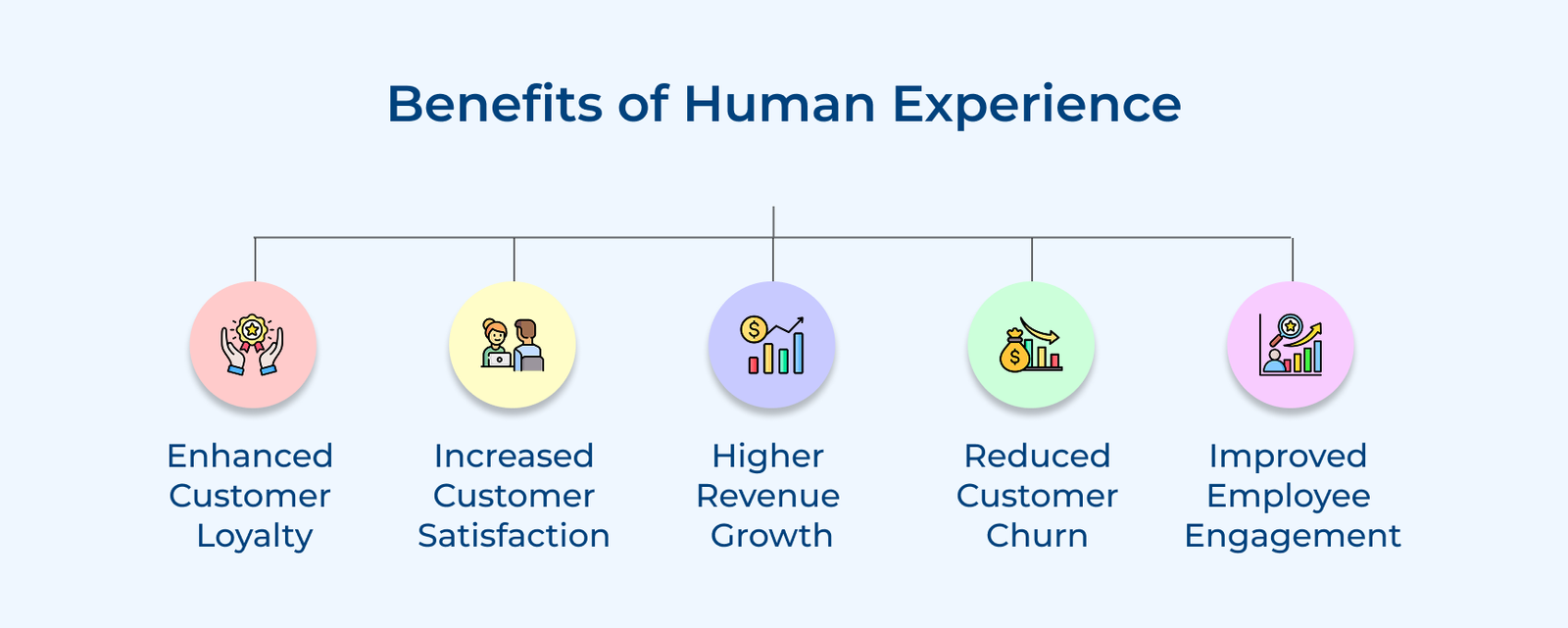
Enhanced Customer Loyalty
Creating genuine human connections through personalized interactions helps enhance deeper emotional bonds with customers. When customers feel truly understood and valued, they’re more likely to stay loyal over time. The emotional investment turns ordinary customers into passionate supporters, who naturally share their positive experiences with others in their circle.
Increased Customer Satisfaction
A human-centered approach helps businesses meet customer needs by understanding the context behind their requests. Service reps who engage with true empathy can uncover unspoken needs and offer solutions that go beyond the obvious issues, leading to more meaningful resolutions.
Higher Revenue Growth
Companies that focus on human experience often see stronger financial results because satisfied customers tend to spend more. When customers feel a genuine connection to a brand, they’re more likely to offer products and services, leading to more frequent purchases.
Reduced Customer Churn
A strong focus on HX helps spot potential issues before they push customers away. Businesses can address concerns early by staying proactive and showing real concern for customer success.
Improved Employee Engagement
When employees are empowered to build genuine connections with customers, their job satisfaction rises. The positive work environment motivates staff to go the extra mile, creating a cycle where better customer experiences.
Below are the various types of human experience interactions that shape the customer journey and help build lasting, trust-based relationships.
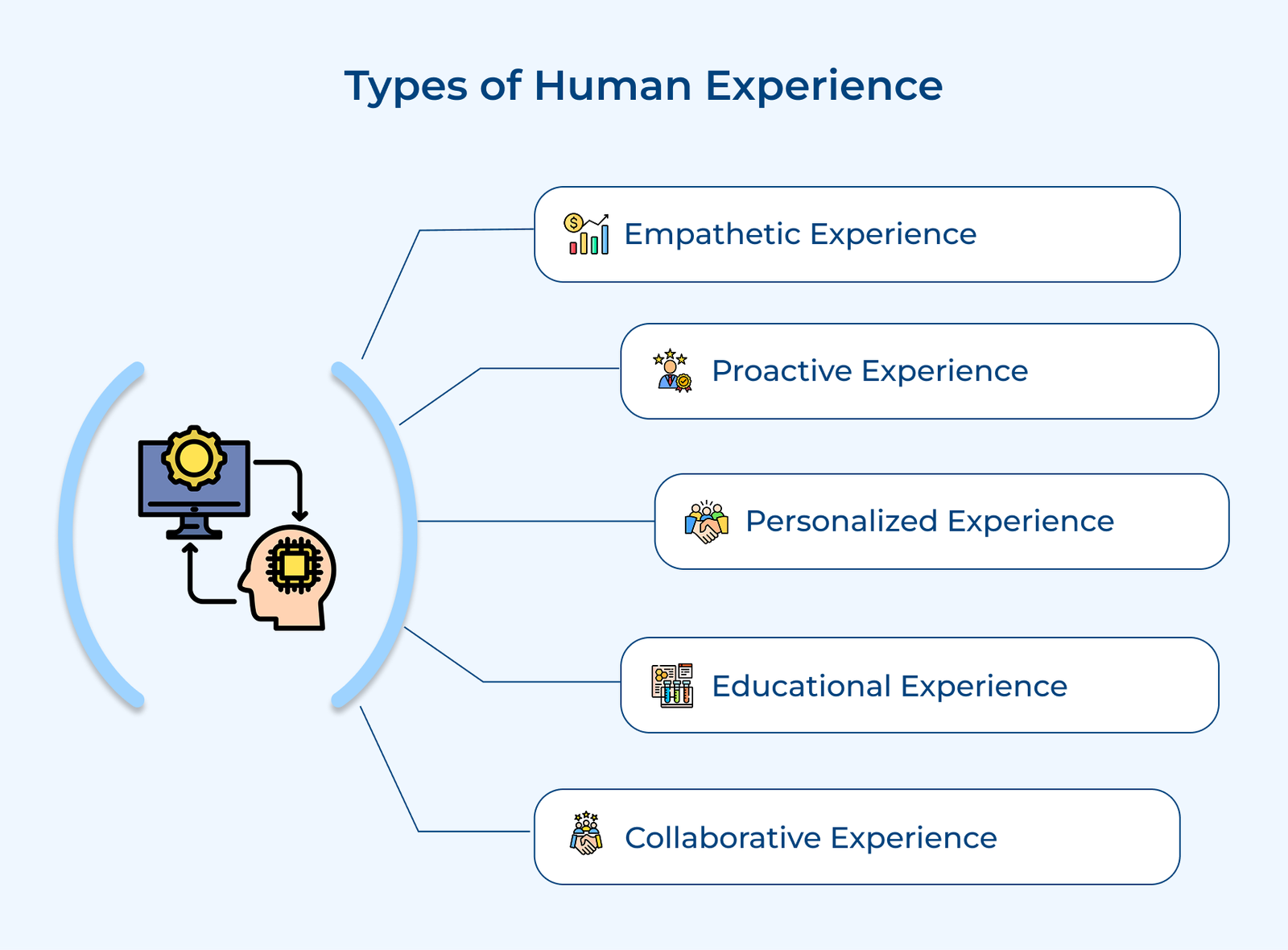
The approach is all about understanding and acknowledging customer emotions through active listening as well as genuine care. Service reps use emotional intelligence to pick up on subtle cues in customer communication. They respond with real empathy to make customers feel truly heard and supported throughout their experience with the brand.
The service representatives proactively reach out with helpful information or solutions based on a clear understanding of common challenges. The forward-thinking attitude not only prevents problems but also shows customers that the business truly cares about their success. 95% of proactive customer experience efforts improve retention rates.
The approach customizes every interaction to suit each customer’s preferences and history. Service reps use customer data and context to offer relevant solutions. They adjust their communication style to match the customer’s personality which creates a more natural and effective service experience.
The interaction style empowers customers by sharing knowledge and building their skills. Service reps take the time to explain processes and solutions clearly, helping customers gain a deeper understanding of offerings. It leads to more confident, independent use moving forward.
The approach sees customers as active partners in solving problems, not just passive recipients of service. Representatives collaborate with customers to find solutions that meet their unique needs. They create an environment where customers feel comfortable sharing feedback and offering ideas for improvement.
Explore the key elements of human experience management which ensure every interaction is designed to build deeper connections.
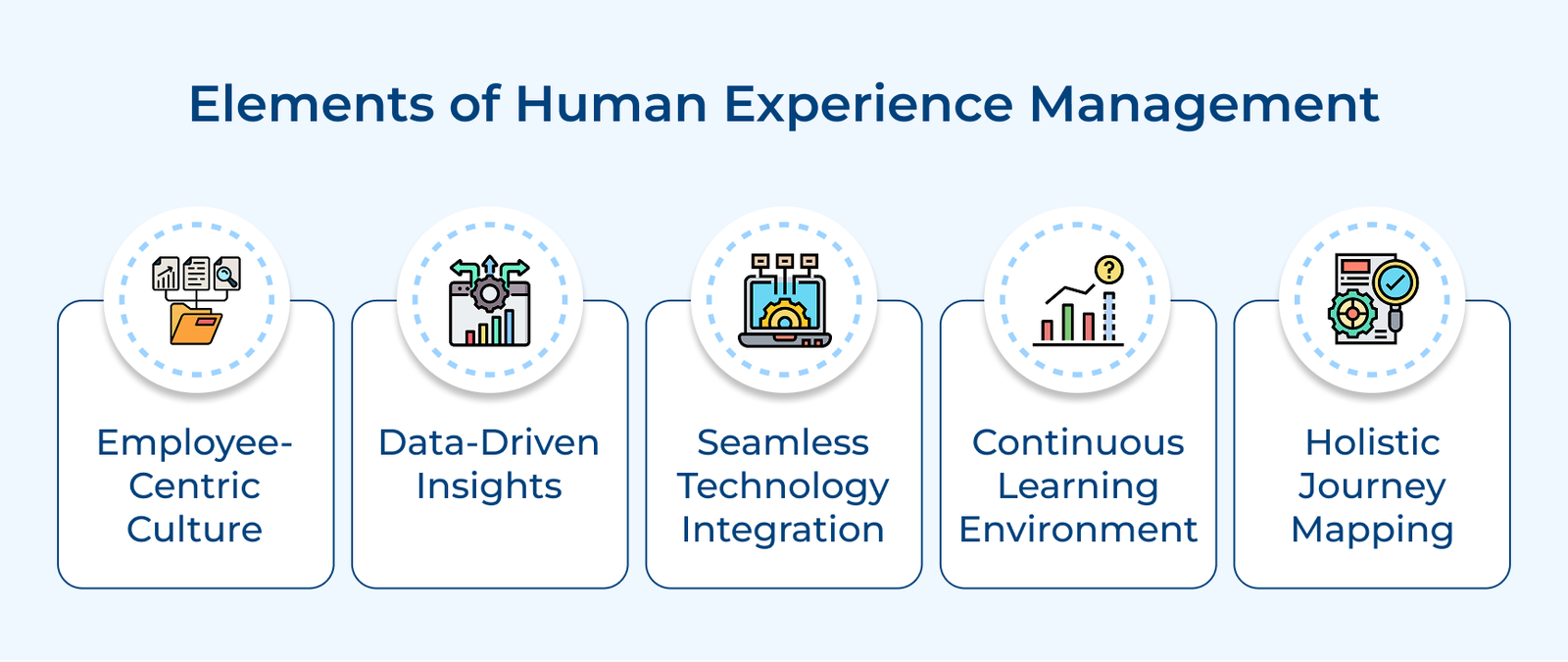
Employee-Centric Culture
Creating a workplace that prioritizes employee well-being and growth is key to successful human experience management. Organizations must adopt policies that treat employees as individuals with unique needs and goals. Leaders show their commitment by offering mentoring programs and regular feedback to support employee development.
Data-Driven Insights
Understanding HX requires advanced data collection and analysis that goes beyond traditional metrics. Organizations should use tools to capture both performance data and feedback on emotional responses. The approach helps spot patterns and trends that guide informed decisions to improve experiences.
Seamless Technology Integration
Modern human experience management depends on technology that connects different touchpoints across the organization. The systems should support natural interactions while gathering insights on user behavior and preferences. The technology should enhance rather than replace human connections creating a balance between efficiency and authenticity.
Continuous Learning Environment
Organizations must build a culture of continuous improvement where feedback flows openly at all levels. It means creating spaces for honest conversations and putting systems in place to act on the insights gathered. Regular training helps employees develop the skills to deliver outstanding experiences.
Holistic Journey Mapping
Understanding the full journey of both customers and employees helps organizations pinpoint key moments that shape experiences. It means documenting each touchpoint and assessing its emotional impact. Regularly updating journey maps ensures they stay relevant and aligned with evolving needs.
Let us understand how customer service has transformed from transactional interactions to deeply human connections that prioritize emotional understanding and authentic relationships.
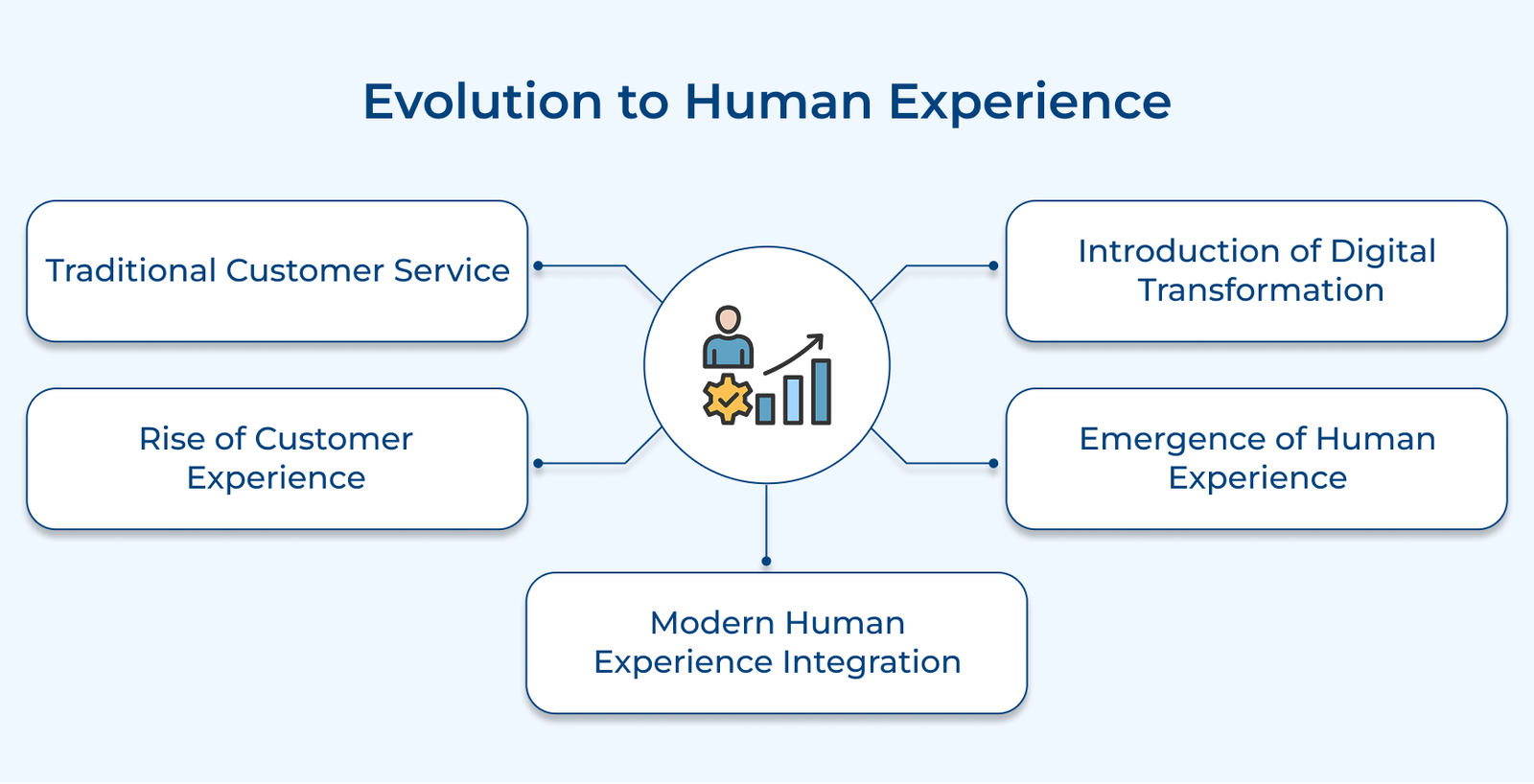
Traditional Customer Service
Customer service used to focus on resolving problems quickly through standardized processes. Representatives followed strict scripts to handle inquiries efficiently. The primary goal was to close tickets quickly without much consideration for the emotional side of customer interactions or building long-term relationships.
Rise of Customer Experience (CX)
As competition increases, businesses realize the need to stand out through better service. They started mapping customer journeys and collecting feedback more systematically. The shift highlighted the importance of understanding customer satisfaction beyond simply resolving issues, leading to more well-rounded service strategies.
Introduction of Digital Transformation
New channels for customer interaction emerged, with technological advancements including social media, chatbots and self-service portals. Organizations faced the challenge of balancing automation with personal connections, striving to meet the demand for fast service without losing the human touch.
Emergence of Human Experience
Businesses took a more thoughtful approach to customer service as awareness of emotional intelligence grew. Companies started training representatives in empathy, active listening and authentic communication, recognizing that customers value genuine human connections even in routine interactions. The shift helped build deeper emotional bonds.
Modern Human Experience Integration
The modern HX approach blends emotional intelligence with data and advanced technology. Organizations focus on creating meaningful moments throughout the customer journey. It recognizes that long-term success comes from building genuine relationships while using modern tools for efficiency.
Below are the effective ways to enhance the human experience in CX, ensuring that your customers feel valued, understood and empowered.
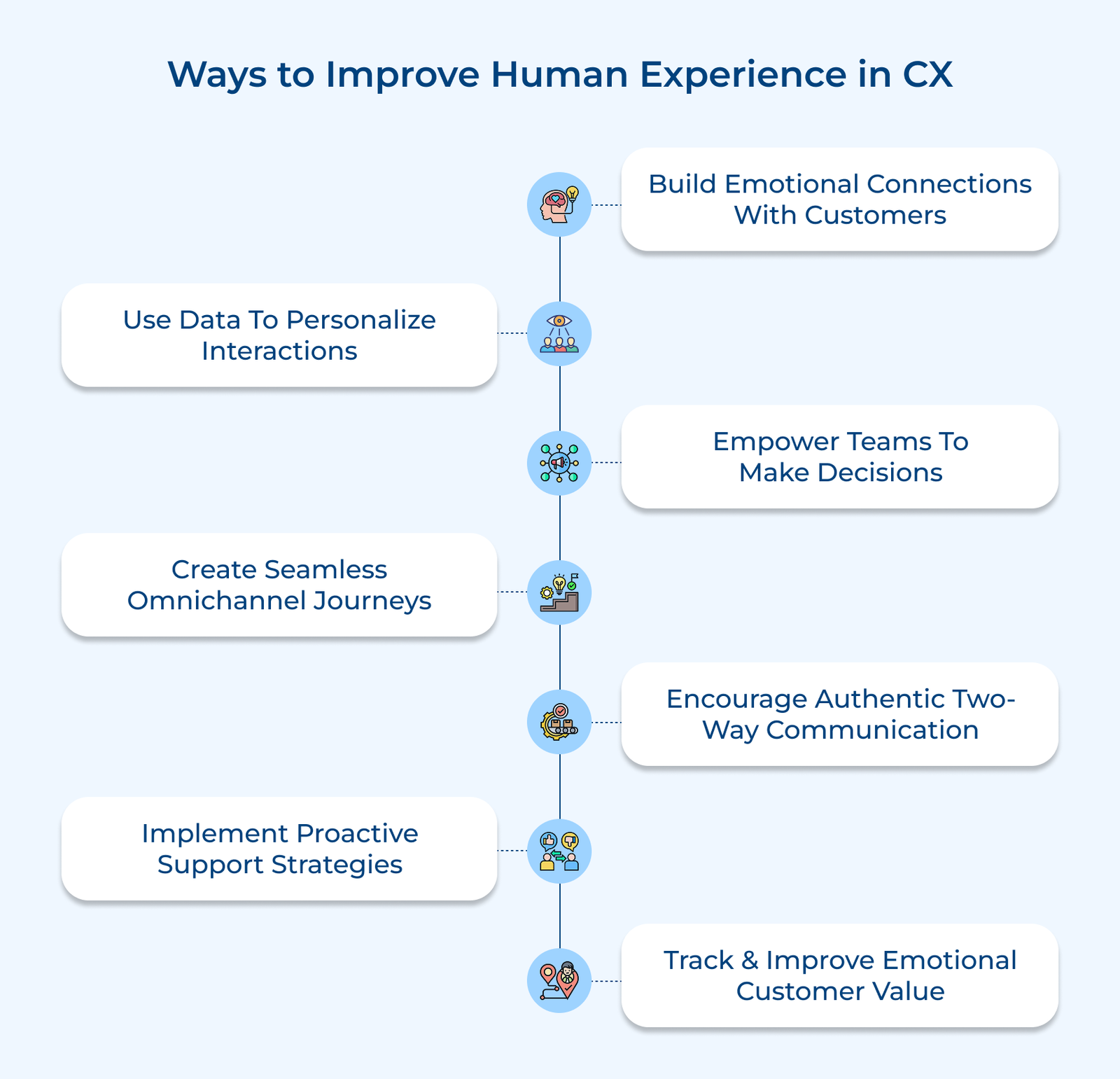
The approach goes beyond simple transactions, enhancing bonds where customers feel valued and understood. Service teams practice active listening by giving customers their full attention, recognizing both their spoken words and unspoken emotions. They ask thoughtful follow-up questions to understand the customer’s perspectives fully before offering solutions.
During challenging situations, representatives show true empathy by acknowledging frustrations and demonstrating a real commitment to resolution. They aim to create positive, memorable moments, going beyond expectations and adding personal touches that delight customers throughout their journey.
Pro tips:
Personalization driven by data insights allows businesses to craft experiences that truly resonate with individual customer preferences. The approach combines customer information with advanced analytics to create interactions that feel thoughtful and proactive, rather than generic or reactive.
Teams track customer behavior across various touchpoints to identify preferred communication channels and common journey patterns. Representatives can then use the profiles to offer tailored recommendations that align with the customer’s interests and needs. They can anticipate potential questions or concerns and proactively provide relevant solutions by understanding customer patterns.
Actionable tips:
Empowering service teams with decision-making authority is key to improving the human experience in customer service. The approach removes bureaucratic hurdles that often frustrate customers and lets representatives take ownership of solutions, leading to more satisfying experiences.
Teams are encouraged to come up with creative solutions that focus on customer satisfaction, without fear of negative consequences. Leadership recognizes and celebrates exceptional decisions, which builds confidence in decision-making across the organization.
Best practices:
Creating seamless omnichannel experiences is crucial to enhancing human experience in customer service, as customers expect smooth interactions across all touchpoints. The strategy ensures consistent, high-quality service, no matter how customers choose to engage with the organization.
The focus also extends to enabling easy transitions between channels, so customers don’t have to repeat themselves or lose context. Each interaction feels like a continuation of the last, rather than a fresh start by preserving customer history and preferences across touchpoints.
Key takeaways:
Enhancing authentic two-way communications is key to improving the human experience in customer service, as it builds trust and collaboration. The approach turns traditional one-sided service into meaningful conversations, helping organizations better understand and meet their customers’ changing needs.
When customers offer suggestions, representatives explain how their input will be considered and used. They keep customers in the loop with regular updates on improvements made based on their feedback, showing that their voices are truly valued.
Pro tips:
Implementing proactive support strategies is crucial to improving the human experience in customer service, showing customers that the organization is committed to their success even before issues arise. Support teams use data and customer insights to identify potential challenges before they affect customers.
Regular check-ins with key customers help maintain strong relationships and identify early signs of potential problems. The scheduled touchpoints offer opportunities to gather feedback, share updates and ensure customers are fully benefitting from the products or services.
Actionable tips:
Understanding and measuring emotional customer value is key to improving the human experience in customer experience, as it reveals the true impact of service efforts. The approach focuses on capturing and analyzing the emotional side of customer interactions to build stronger connections. Teams track emotional resonance by monitoring customer sentiment and gathering feedback on how interactions make customers feel. Using specialized tools and training, representatives learn to recognize emotional cues, making each interaction more meaningful.
Organizations assess the effectiveness of experience improvements by tracking emotional connection metrics over time. They combine quantitative data with qualitative feedback to understand how service changes impact customer relationships as well as identify areas for further growth.
Pro tips:
Following are the actionable strategies that can elevate the human experience, making every encounter not just a transaction, but a meaningful journey.
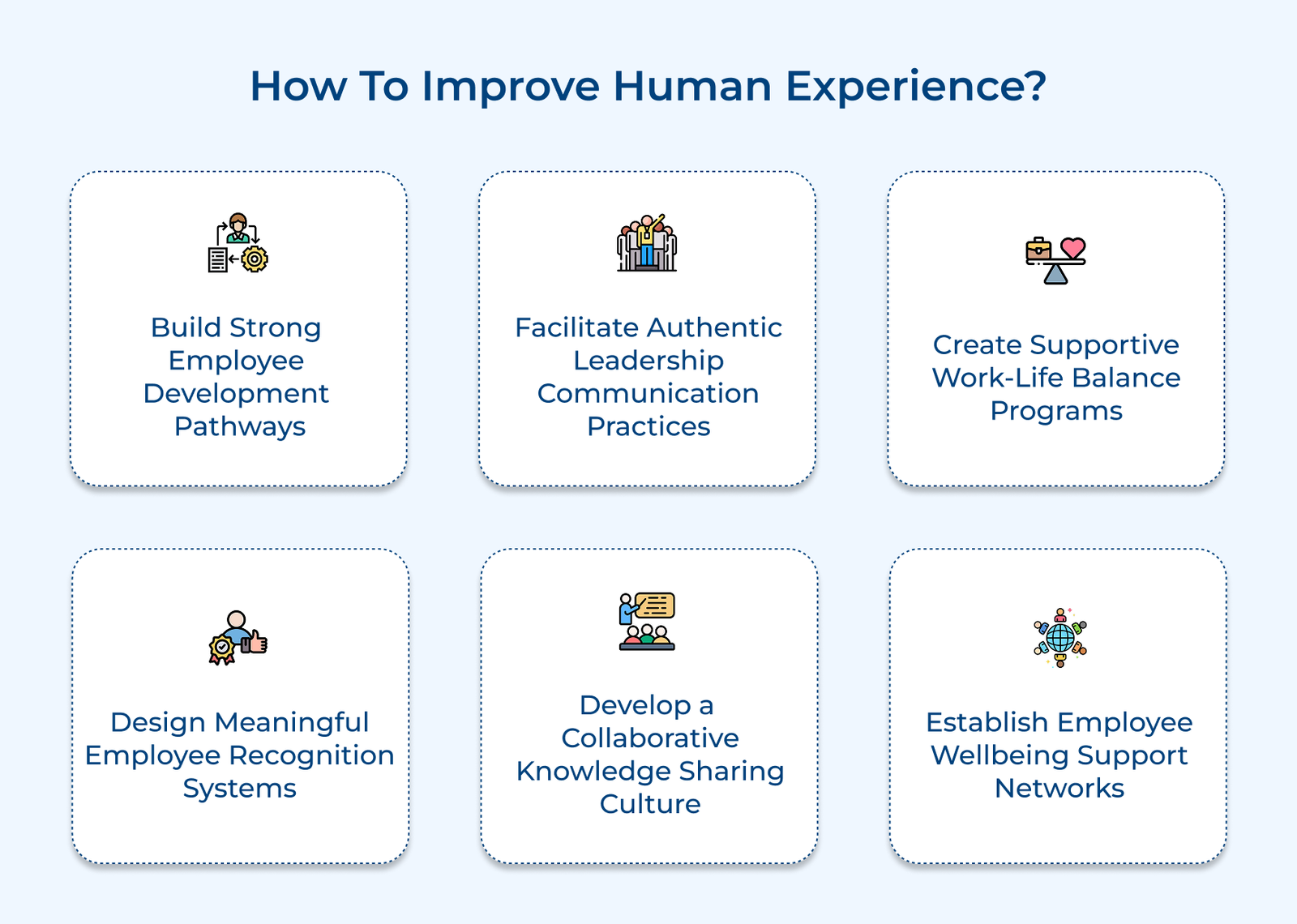
Employee development pathways offer clear opportunities for growth and career advancement within the organization. The approach helps employees see a future with the company and understand how to reach their career goals through structured progression.
Organizations can create personalized development plans that align employees’ career ambitions with business objectives. It includes offering targeted training, mentorship and hands-on project experiences that help employees develop the skills needed for their desired roles.
Pro tips:
Authentic leadership communication enhances trust, strengthening the bond between leaders and employees. The approach breaks down barriers, encouraging open dialogue that helps employees feel heard and valued within the organization.
Leaders can embrace the strategy by holding regular town halls, one-on-one meetings and informal check-ins that encourage honest conversations. They focus on being open about company decisions, sharing both successes as well as challenges and actively seeking employee feedback on issues that impact their work.
Actionable tips:
Building supportive work-life balance programs is key to improving the human experience in employee engagement. It acknowledges employees as whole individuals with lives beyond work. The program helps to prevent burnout, boost job satisfaction and allow them to bring their best selves to the job while maintaining personal well-being.
Businesses can offer flexible work arrangements, wellness days and family-friendly policies, giving employees more control over their time. The programs should set clear boundaries around work hours, protect personal time and provide resources to help employees manage both work as well as personal commitments.
Best practices:
Creating meaningful recognition systems is vital for enhancing the human experience in employee engagement. It not only validates employee contributions but also reinforces their sense of purpose. The approach moves beyond typical rewards, creating genuine moments of appreciation that acknowledge both professional accomplishments and human aspects of work.
Organizations can develop recognition programs that celebrate various forms of success, including peer-to-peer recognition, leadership appreciation and team achievements. The key is to personalize recognition, tailoring it to individual preferences and ensuring it feels authentic rather than generic.
Key takeaways:
Building a culture of collaborative knowledge-sharing enhances an environment where learning is seamlessly integrated into everyday work, breaks down silos, accelerates problem-solving and strengthens connections between teams while valuing each employee’s unique expertise.
Organizations can promote knowledge sharing through mentoring programs, cross-functional projects and platforms for exchanging insights. Teams should regularly present their learnings, showcase successful projects and teach others in engaging, informal ways.
Pro tips:
Creating strong well-being support networks is crucial for enhancing human expertise in employee engagement. It shows that the organization cares about employees’ holistic health. The strategy acknowledges that employee well-being involves mental, emotional, physical and social health all of which impact workplace experience.
Organizations can offer peer support groups, mental health resources and wellness champions to promote healthy workplace practices. The goal is to create safe spaces where employees can discuss challenges, access support and prioritize their wellbeing.
Actionable tips:
Check out the following examples of human experience in action, showcasing how organizations successfully create meaningful connections with customers and employees.
Starbucks
The coffee giant has made personal connections a priority, encouraging baristas to remember customer names and preferences. Their employee training focuses on emotional intelligence and authentic interactions, while their mobile app blends digital convenience with a personal touch. Employee benefits, including support for education and wellbeing, further enhance the experience.
The approach built stronger customer loyalty and improved employee retention. Their stores have become community hubs where both customers and staff feel valued, creating a workplace culture that attracts top talent.
Ritz-Carlton
The luxury hotel chain gives employees the authority to make decisions that create unforgettable guest experiences. Their “Ladies and Gentlemen serving Ladies and Gentlemen” philosophy ensures mutual respect between staff and guests with thorough emotional intelligence training.
The commitment to human experience has positioned them as a leader in luxury hospitality. High employee satisfaction leads to exceptional guest service, fueling a cycle of positive interactions and strong brand loyalty.
Southwest Airlines
The airline enhances genuine, friendly interactions by encouraging employees to bring their personalities into customer service. They make both flying as well as working more personal with a company culture that celebrates individuality and supports work-life balance.
The approach has led to high customer satisfaction and strong employee engagement. Their reputation for friendly service has set them apart in the competitive airline industry, solidifying their position in the market.
Trader Joe’s
The grocery chain creates a distinct shopping experience by encouraging employees to be authentic and connect genuinely with customers. They invest in thorough training, great employee benefits and a fun workplace culture, with store layouts designed to facilitate personal interactions.
The focus on human experience has built a loyal customer base and boosted employee retention. The welcoming store atmosphere not only makes shopping more enjoyable but also makes it an attractive place to work.
Zappos
The online retailer removes time limits on customer service calls, allowing representatives to form genuine connections. They prioritize company culture and employee well-being through wellness programs along with career growth opportunities. The focus is on making both customers and employees feel truly valued.
The people-first approach has led to stronger customer loyalty and high employee satisfaction. Their commitment to authentic service has raised the bar for online retail experiences while creating a workplace where employees truly enjoy their roles.
Human experience in customer service marks a shift from traditional approaches to creating genuine emotional connections. Organizations can build lasting relationships that go beyond resolving issues by seeing customers as individuals with unique needs and feelings. The transformation requires a balance of empathy, technology and strategic efforts focused on creating authentic human connections.
Customers increasingly crave real, human interactions as automation becomes more prevalent. Organizations that embrace the human-centered approach often enjoy stronger customer loyalty, higher employee engagement and more robust business relationships. The future of customer service lies in blending efficiency with the human touch.
Key takeaways:

Human experience centers on creating emotional connections and authentic interactions that recognize people as unique individuals with complex emotions. Unlike customer or user experience, which often focuses on transactions, HX emphasizes building genuine relationships through empathy, understanding and personalized engagement at every touchpoint.
Human experience comprises the emotional, cognitive, behavioral and sensory factors that influence how people engage with organizations. It includes the quality of interactions, personalization, emotional impact, empathy, authenticity and the overall feeling of being truly valued in every exchange.
Organizational culture significantly shapes human experience by defining the values, behaviors and practices that drive interactions. A culture focused on people empowers employees to build genuine connections, emphasizes emotional intelligence in service and enhances the well-being of both customers as well as employees through thoughtful policies
Understanding HX allows organizations to build deeper connections with both customers and employees. It leads to better product development, more impactful service, higher employee engagement and stronger customer loyalty. It also helps organizations adapt to changing needs and expectations to stay agile.
Empathy is key to improving the human experience, allowing organizations to grasp people’s true needs, emotions and viewpoints. It enhances deeper connections, drives better problem-solving and builds stronger, more authentic relationships based on understanding.
Grow Customer Relationships and stronger team collaboration with our range of products across the Conversational Engagement Suite.
Omnichannel Customer Support & Help Desk Software
AI Enabled Business Messaging and Chatbot Software
Sales Engagement & CRM Software
Call Center Software & Virtual Phone System
Product Marketing & Experience Platform
Customer Experience & Feedback Management Software

 9 Best B2B Customer Retention Strategies in 2026
Scroll to top
9 Best B2B Customer Retention Strategies in 2026
Scroll to top