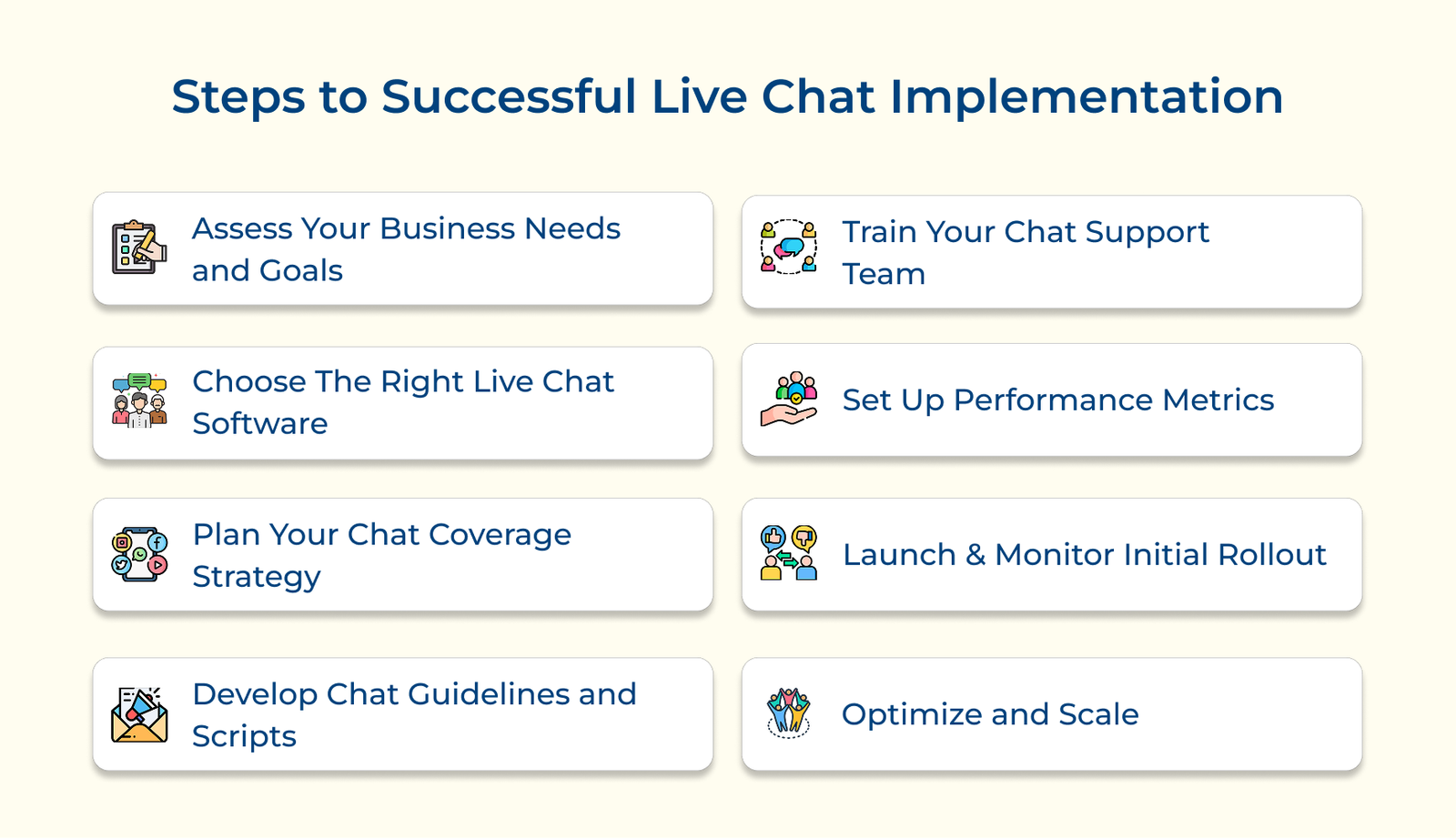
1. Assess Your Business Needs And Goals
A thorough evaluation of your organization’s live chat needs is essential. Start by defining clear objectives—whether it’s boosting customer satisfaction or reducing response times and set measurable targets that align with your customer service goals.
Let’s assume that an e-commerce company discovered that 70% of cart abandonment was due to product questions. They significantly improved conversion rates by adding live chat to assist during checkout.
Actionable tips:
- Develop a detailed implementation roadmap with monthly milestones and assign team members to monitor progress on each goal.
- Conduct surveys with both your customer service team and customers to pinpoint pain points that live chat can resolve effectively.
2. Choose The Right Live Chat Software
Choosing the right live chat software requires a thorough evaluation of your specific needs. Compare features such as chatbot integration, real-time visitor tracking, multi-chat handling and customization. Ensure the platform is user-friendly for both agents and customers while offering strong security.
Next, evaluate pricing models for scalability as your business grows. Check compatibility with your existing tech stack, including CRM, help desk software and website platform. Finally, assess the vendor’s reputation, support quality and platform reliability through reviews.
Pro tips:
- Request extended trial periods from your top three software choices and test them with a small team to evaluate real-world performance.
- Build a feature comparison matrix that evaluates each capability based on your business’s specific needs.
3. Plan Your Chat Coverage Strategy
A well-planned coverage strategy ensures consistent customer support. Start by analyzing peak interaction times, determining staffing needs and creating efficient schedules to optimize resources while maintaining service quality.
Begin by studying customer behavior across time zones and peak periods to define ideal operating hours. Account for seasonal trends, special events and typical patterns. Imagine there’s a global software company that has adopted a follow-the-sun model with teams in three time zones. It will help them provide 24/7 coverage without night shifts and ensure consistent support quality worldwide.
Best practices:
- Create a rotating schedule to ensure peak-hour coverage while balancing agents’ workloads.
- Develop a backup staffing plan to handle unexpected volume spikes or agent absences.
4. Develop Chat Guidelines And Scripts
Clear guidelines provide agents with direction while allowing room for personalized responses based on individual customer needs. Develop standardized response templates for common scenarios, such as welcome messages, troubleshooting flows and closing statements, while maintaining a consistent brand voice.
Define clear escalation procedures to help agents manage complex issues. Set triggers for escalation, routing channels, response time expectations and create templates for gathering information before handover.
How to implement:
- Develop a dynamic chat script document that evolves with real customer interactions and agent feedback.
- Set up a regular review cycle to update templates based on customer input and evolving business needs.
5. Train Your Chat Support Team
The effective training program emphasizes both technical proficiency with chat platforms and the soft skills needed for clear, empathetic communication. Agents are taught the essentials of chat etiquette, including professional writing, tone and how to balance formality with friendliness.
Ongoing refresher courses ensure consistent service excellence. Let’s assume that an airline’s chat support team used real past customer interactions to practice handling complex issues like flight delays, cancellations and booking changes, preparing them to tackle actual customer concerns with confidence.
Actionable tips:
- Launch a mentorship program that pairs experienced agents with new hires, providing real-time guidance to accelerate learning.
- Incorporate regular simulation exercises that present complex scenarios, pushing agents to think critically and develop problem-solving skills.
6. Set Up Performance Metrics
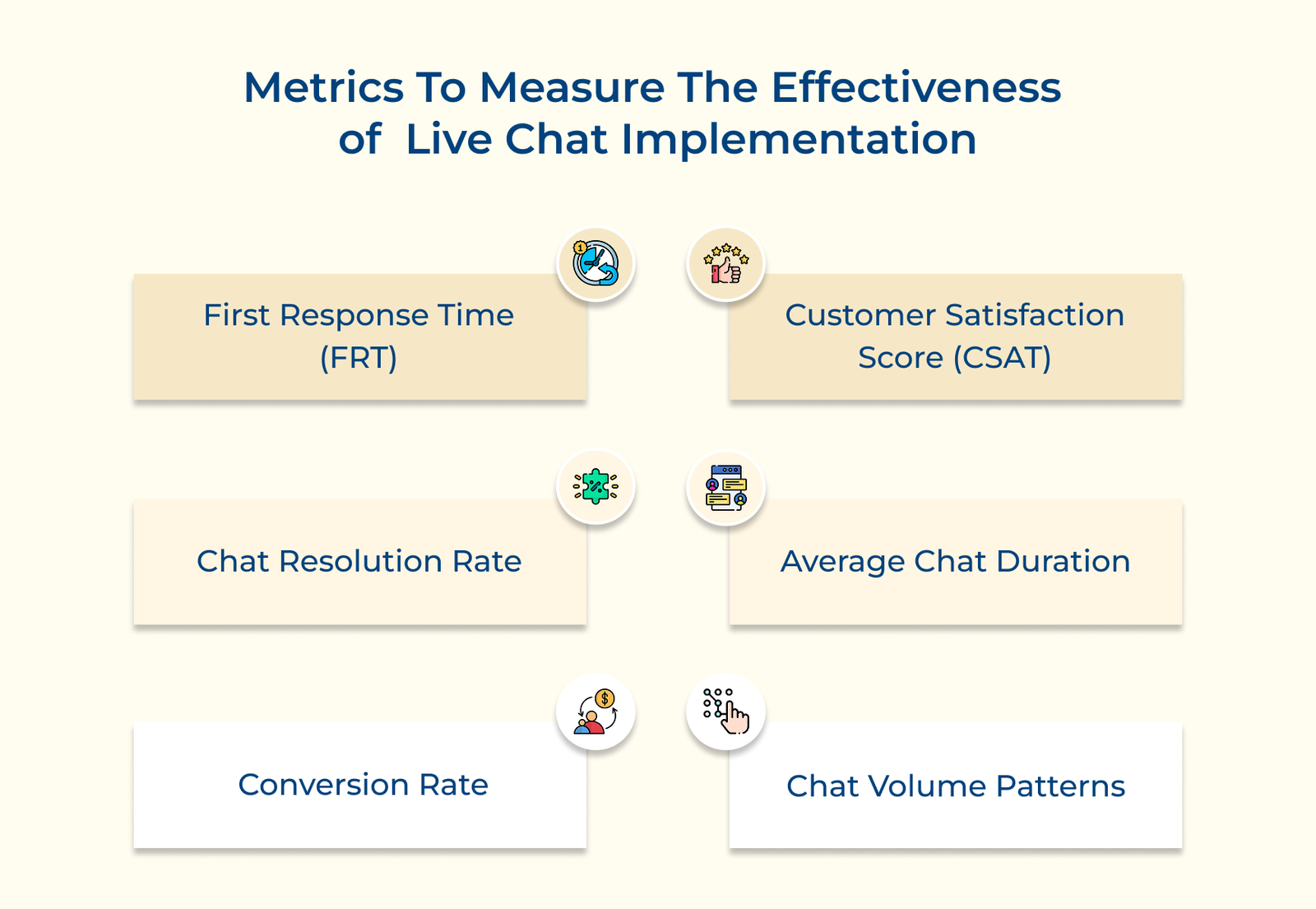
Establishing clear performance metrics is crucial for measuring success and identifying areas for improvement. Start by defining KPIs that align with business goals, such as response time, resolution rate, customer satisfaction and chat duration. Set benchmarks for each metric and implement regular monitoring schedules to ensure continuous progress.
Use tracking tools to capture both quantitative and qualitative data from chat interactions, allowing for a comprehensive analysis of performance. Develop reporting systems that offer insights at the individual, team and organizational levels, with automated reports for efficient performance reviews. It ensures a data-driven approach to maintaining high service standards.
Pro tips:
- Create a balanced scorecard that prioritizes key metrics according to their impact on overall service quality.
- Set up automated alerts for metrics that fall below acceptable thresholds to enable quick intervention.
7. Launch And Monitor Initial Rollout
The phase focuses on collecting feedback, identifying issues and making adjustments to optimize performance. The pilot targets specific customer segments or departments, enabling controlled testing of the chat system, workflows and team readiness. Performance is closely monitored and feedback helps pinpoint process gaps.
Adjustments are made to scripts, workflows and procedures based on real-world usage, with lessons documented for future growth. Let’s consider that a software company initially launched live chat support with premium customers, refining their service with a smaller, engaged group before expanding to their entire customer base.
Actionable tips:
- Develop a detailed feedback system that gathers insights from customers, agents and technical teams during the pilot phase.
- Implement a daily review process during the first week of launch to swiftly address any emerging issues and make necessary adjustments for smoother operations.
8. Optimize And Scale
Continuous improvement and strategic growth are key to the long-term success of your chat implementation. Focus on analyzing performance data, refining processes and expanding capabilities to meet evolving business needs.
Optimization involves regularly reviewing customer feedback, agent input and operational metrics to identify trends for enhancement. Let’s assume that an e-commerce platform began with basic product support, then expanded to pre-sale and post-purchase assistance. They gradually introduced chatbots for common inquiries, allowing human agents to focus on more complex issues.
Best practices:
- Conduct monthly performance reviews to spot trends and prioritize improvements based on impact or feasibility.
- Develop a technology roadmap that supports your business growth and meets evolving customer expectations.
Challenges Faced After Live Chat Implementation
Let’s go through the common challenges faced after live chat implementation and how to address them effectively.