Opportunity Management System: The Ultimate Guide
Discover key strategies for effective opportunity management, from identifying and tracking prospects to closing deals. Get the best insights to maximize your business growth.

Discover key strategies for effective opportunity management, from identifying and tracking prospects to closing deals. Get the best insights to maximize your business growth.
Too many deals, too little clarity? That’s a common problem as sales pipelines grow. Leads pile up, follow-ups slip through the cracks and promising opportunities stall. It’s not because the team isn’t working hard, but because the process isn’t built to scale.
Sales opportunity management is about cutting through that noise. It gives structure to how you track, prioritize, and move deals forward so your team focuses on what actually drives revenue. This isn’t about adding more steps. It’s about tightening what already exists and making better decisions, faster. In this guide, we’ll walk through what the process really looks like, why it’s worth your time and how to put it into practice without overcomplicating things.
Sales opportunity management refers to a structured approach to identifying and tracking potential sales from initial contact through closing the deal. It helps teams stay focused, prioritize the right leads and move deals forward with purpose. Rather than chasing every possible lead, it’s about knowing which ones are worth the time and energy.
A well-organized CRM process allows teams to make smarter choices, stay in sync and avoid letting potential deals slip through the cracks. It also gives leadership a more accurate view of what’s in the pipeline and what’s likely to close.
Key principles:
Let’s go through the key benefits of the opportunity management framework. Learn how the systematic approach transforms the way organizations handle potential sales.
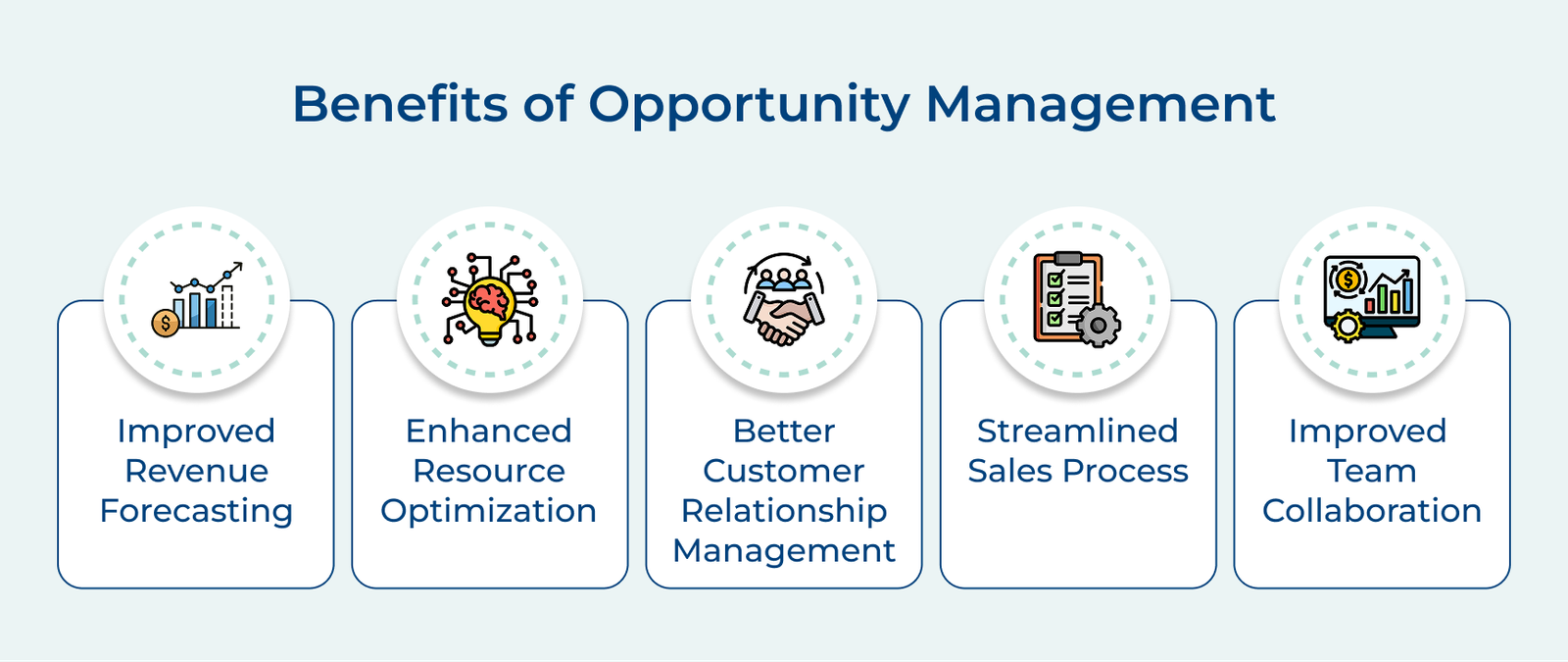
Clearer Revenue Forecasts
A well-organized opportunity management tracking system gives sales leaders a better grip on what’s likely to close and when. It’s easier to spot patterns, project revenue accurately and plan ahead with more confidence with real-time visibility into each deal’s progress.
Enhanced Resource Optimization
When every lead is evaluated using the same criteria, it’s easier to know which ones deserve the most attention. It helps sales teams avoid wasting effort on long shots and instead focus where it counts, on the opportunities with the highest chance of closing.
Stronger Customer Relationships
Keeping detailed notes on customer interactions means reps always have the full picture. They can tailor follow-ups, remember preferences and build a more personal connection, making the sales experience smoother for the buyer.
Streamlined Sales Process
A clearly defined sales pipeline keeps everyone on the same page. Each stage has its own criteria, so deals can move forward for the right reasons. It keeps things organized, avoids bottlenecks and helps teams work more efficiently.
Improved Team Collaboration
Everyone involved in a deal has access to the same up-to-date information with a shared system in place. It makes it easier to jump in, take over or collaborate without missing a beat or repeating steps.
The following are the key differences between opportunity management and lead management, highlighting how each plays a distinct role in guiding prospects through the sales funnel.
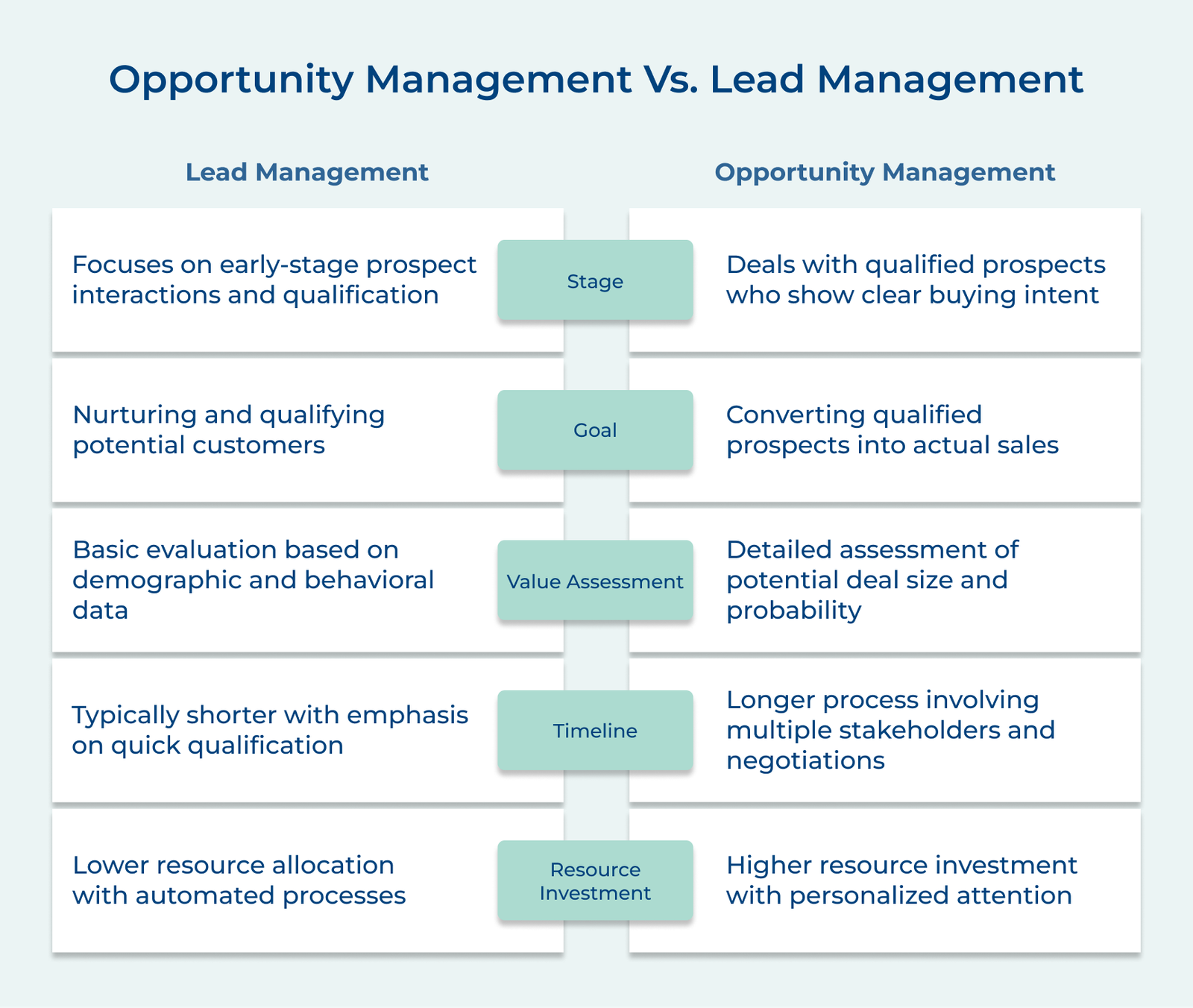
Stage and Process Focus
Lead management is all about the early steps, spotting potential customers, gathering basic details and figuring out if they’re a good fit. It’s where interest turns into possibility.
The opportunity management process takes over once that interest becomes serious. The stage digs deeper, focusing on understanding what the customer truly needs, tailoring solutions and making sure the value lines up with their goals. It’s where conversations become commitments.
Goal Orientation
Lead management is about filtering through a wide pool of potential customers to find the ones worth your time. It often relies on tools like scoring systems, email outreach and quick discovery calls to sort out who’s genuinely interested.
CRM opportunity kicks in once you’ve got a qualified lead. The focus shifts to winning the deal, building tailored proposals, showing the value, managing internal dynamics and guiding the conversation through a decision.
Value Assessment Approach
Lead management uses straightforward scoring things like job title, company size or website clicks to measure if someone fits your target customer profile. It’s a quick filter to decide who might be worth a closer look.
Opportunity management digs deeper. It’s about evaluating the full scope of a potential deal – how big it could be, what it would take to deliver, how likely it is to close and what resources it would need. The assessment helps teams focus their time where it matters most.
Timeline Management
Lead management is fast-paced. The goal is to quickly sort, qualify and either nurture or filter out prospects based on fit. It’s about speed and efficiency in the early stages.
CRM opportunity unfolds over a longer stretch. It involves deeper conversations, multiple decision-makers and more back-and-forth. The longer timeline allows for stronger relationships to form and complex needs to be thoroughly addressed.
Resource Allocation Strategy
Lead management leans on automation and streamlined processes to manage large numbers of potential customers with minimal hands-on effort. It’s about casting a wide net and managing volume efficiently.
Opportunity management is more hands-on. It often calls for one-on-one attention from skilled team members like sales reps, technical experts and even senior leaders. Each deal gets the time and care it needs to move forward.
Let’s go through eight essential steps that can transform your sales opportunity management process, empowering you to close more deals and boost your success.
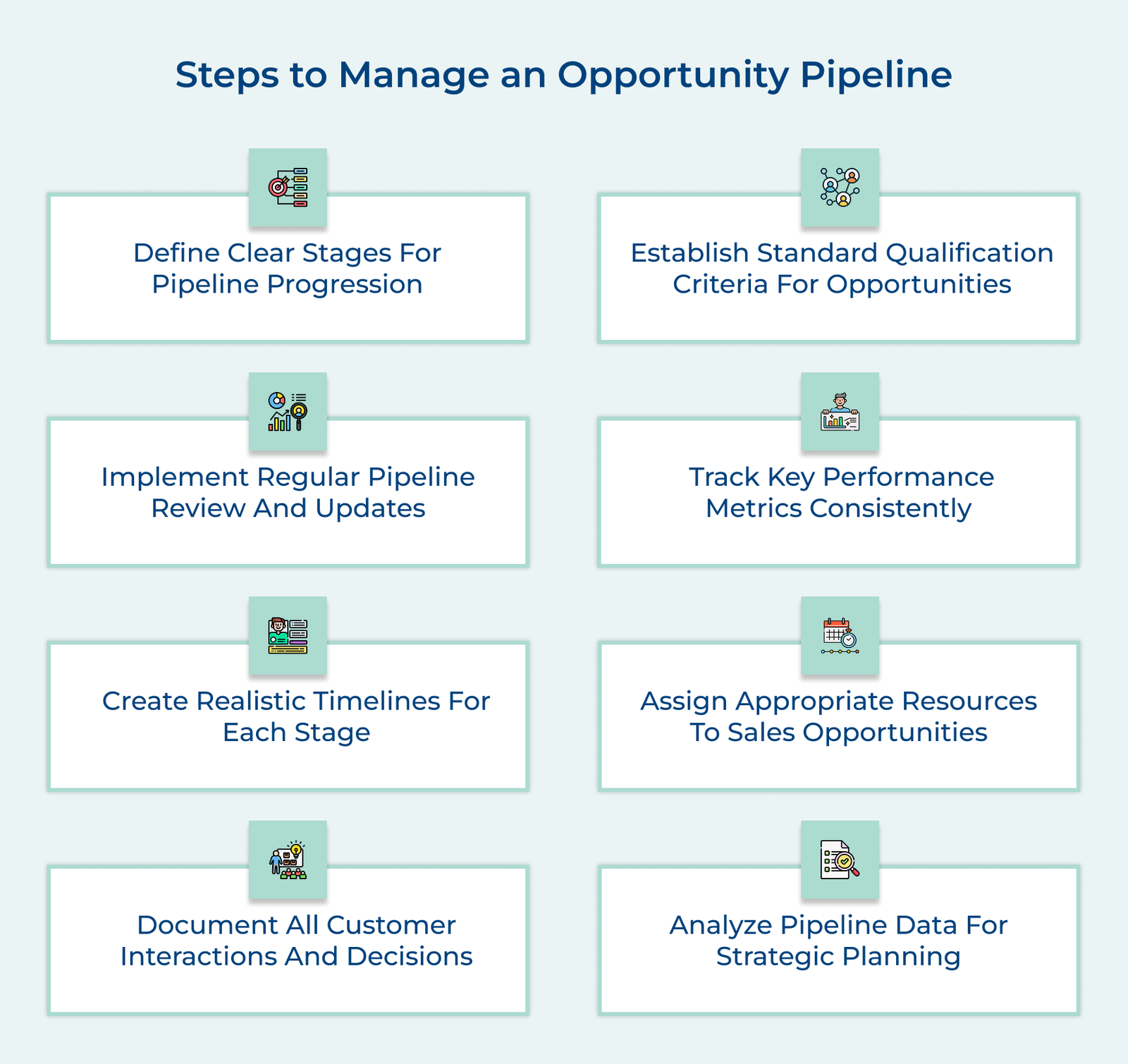
Defined sales stages help your team to move deals forward with purpose. When everyone follows the same structure, it’s easier to track progress, spot issues early and collaborate across the board. Think of it as giving your sales process a shared playbook.
Each stage should have clear entry and exit points on real actions, not just vague assumptions. A deal shouldn’t move past discovery unless a full call has been completed and notes are logged. Your CRM can help enforce it by requiring certain fields before advancing an opportunity.
Pro tips:
Having clear qualification standards keeps your sales teams from chasing dead ends. Instead of spreading energy thin, reps can focus on deals that are more likely to close and actually matter to the business.
The BANT method of budget, authority, need and timeline is a simple way to get the basics right early on. Add in your ideal customer profile (ICP) to filter for things like industry fit, company size or tech readiness you’ve got a solid foundation for good decision-making.
Actionable tips:
Pipeline reviews aren’t just another meeting, they’re your team’s way of staying sharp, focused and aligned. The regular check-ins help spot what’s working, flag what’s stuck and make sure deals are moving forward with purpose.
Weekly reviews are especially useful. They space to go through each active deal, figure out the next steps and talk through any roadblocks. They’re also a great chance to make sure your CRM reflects what’s actually happening, not what people hope is happening.
Best practices:
Tracking the right sales metrics isn’t about filling dashboards but about making sharper decisions. When your team pays attention to real performance data, it becomes much easier to fine-tune the sales process and use your time where it counts.
Start by looking at how deals move between stages. The friction spots are goldmines for improvement. Be it a lack of clarity, poor follow-up or missing info, the numbers help you find and fix what’s slowing progress.
Key takeaways:
Clear, achievable timelines help sales teams stay on track and avoid letting good opportunities go cold. When reps know how long each stage typically takes, they can keep deals moving and manage both internal as well as customer expectations more effectively.
Factors like the client’s internal approval process, budget timing or availability of decision-makers can either speed things up or slow everything down. That’s why it helps to track the outliers, those rare fast-moving deals and figure out what made them click. Maybe a well-timed executive intro or a pre-approved budget helped shave off a week or two.
Pro tips:
Not every stage needs the same kind of support and not every rep is the right fit for every opportunity. When you match people to deals based on their strengths, you give each opportunity a better shot at closing.
As deals get bigger or more complex, it’s not just about the rep anymore. Larger opportunities often need input from technical experts or even executive sponsors. Setting up clear guidelines for who steps in and when helps teams avoid confusion.
Actionable tips:
Good documentation isn’t just paperwork; it’s how you keep deals from slipping through the cracks. Every note, every update, every commitment made during a sales conversion should live in one place so anyone on the team can step in and know exactly where things stand.
When you log meeting takeaways, outline decisions and capture next steps with owners, you’re building a reliable timeline that keeps momentum going. It also makes handoffs between team members smooth and helps avoid misunderstandings with prospects down the line.
Key takeaways:
Analyzing your pipeline isn’t about tracking numbers for the sake of it, it’s about learning what works, what doesn’t and where to focus your energy next. You can spot patterns: what kind of prospects are more likely to convert, which signals showed up early and how decisions were actually made by digging into the details of past wins.
Looking at the full timeline from first contact to closed deal gives you a clearer picture of the turning points that matter. The insights don’t just explain past outcomes; they help shape smarter decisions going forward, from how you allocate team resources to where your process might be slowing down..
Pro tips:
Check out the six clear signs that your current sales process may be holding you back and see if it’s time to put an opportunity management system in place.
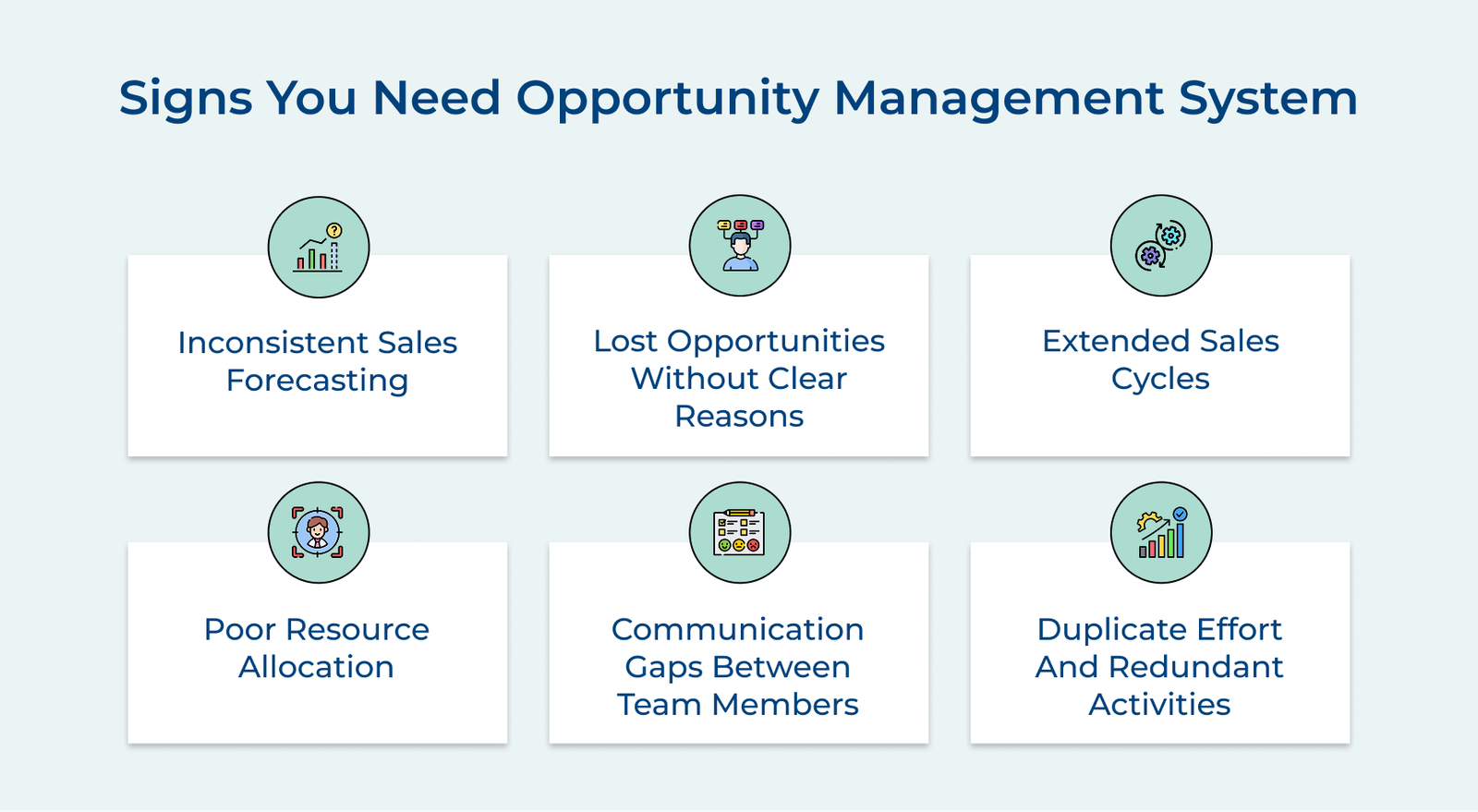
1. Inconsistent Sales Forecasting
If your revenue predictions often fall short or swing wildly, it’s a sign your team is relying more on guesswork than consistent data. Without a clear way to measure progress, planning becomes a shot in the dark.
2. Lost Opportunities Without Clear Reasons
When deals are lost and no one knows why, it’s hard to improve. A lack of structured tracking makes it nearly impossible to spot patterns or learn from mistakes.
3. Extended Sales Cycles
If closing deals takes longer than it should, chances are that opportunities are getting stuck without anyone noticing. Without a system to flag bottlenecks, it’s tough to keep things moving.
4. Poor Resource Allocation
When every lead gets the same attention, high-potential deals don’t get the focus they need. Without clear prioritization, time and effort are wasted on opportunities that were never a good fit.
5. Communication Gaps Between Team Members
Important information gets lost between handoffs. When everyone tracks deals their own way, confusion follows and collaboration on complex opportunities becomes harder than it needs to be.
6. Duplicate Effort and Redundant Activities
Without a shared view of who’s doing what, your team may double up on tasks or contact the same prospect twice. It wastes time and can damage your credibility with potential customers.
The following are the key features of an opportunity management tool that helps sales teams stay organized, track deal progress efficiently and make informed decisions.
Key questions:
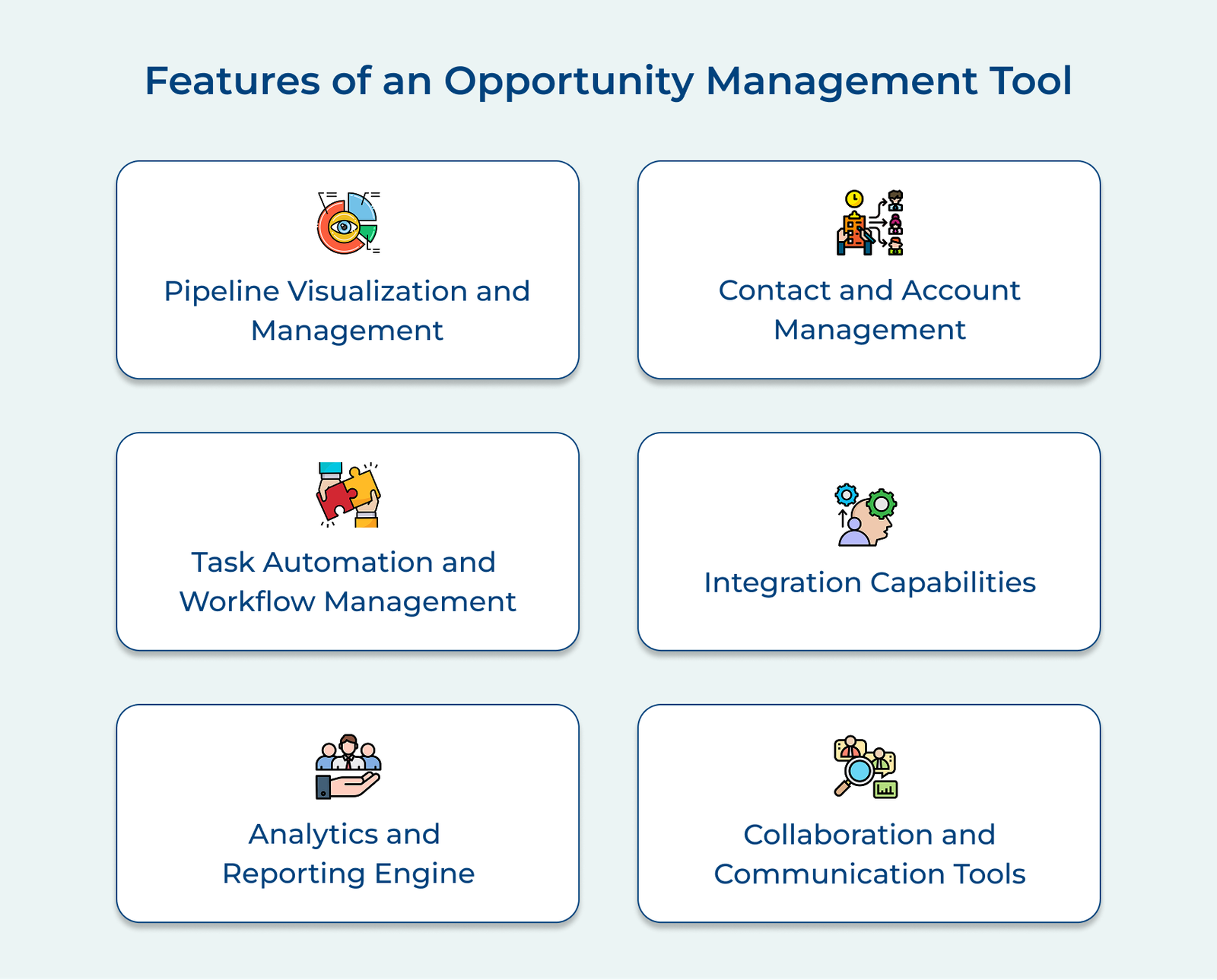
1. Pipeline Visualization and Management
Good opportunity management tools show your entire pipeline at a glance. You can drag and drop deals between stages as well as instantly see important details like deal size, win probability and how long each one’s been open. It helps reps focus on what needs attention right now.
2. Contact and Account Management
You need more than just names and numbers. A solid system keeps track of everyone involved in the deal about who they are, how you’ve interacted and where they fit in the decision-making chain. It helps your team always know who to engage and how.
3. Task Automation and Workflow Management
Let the tool handle the busywork. Automated reminders, task lists tied to deal stages and built-in approval flows keep deals moving. It reduces the chances of something slipping through the cracks.
4. Integration Capabilities
Your opportunity tool should work well with what you already use. Use your CRM, email platform, file storage and so on. The less copy-pasting and manual entry your team has to do, the better.
5. Analytics and Reporting Engine
The best systems don’t just collect data, they help you learn from it. Look for tools that show patterns in win/loss rates, highlight slow-moving deals and offer customizable views so leaders can make smart calls based on real numbers.
6. Collaboration and Communication Tools
When deals involve multiple people, coordination matters. Messaging, shared notes, file storage and activity timelines keep everyone in sync, even across long or complicated sales cycles.
Let’s go through the additional best practices that can elevate your opportunity management strategy.
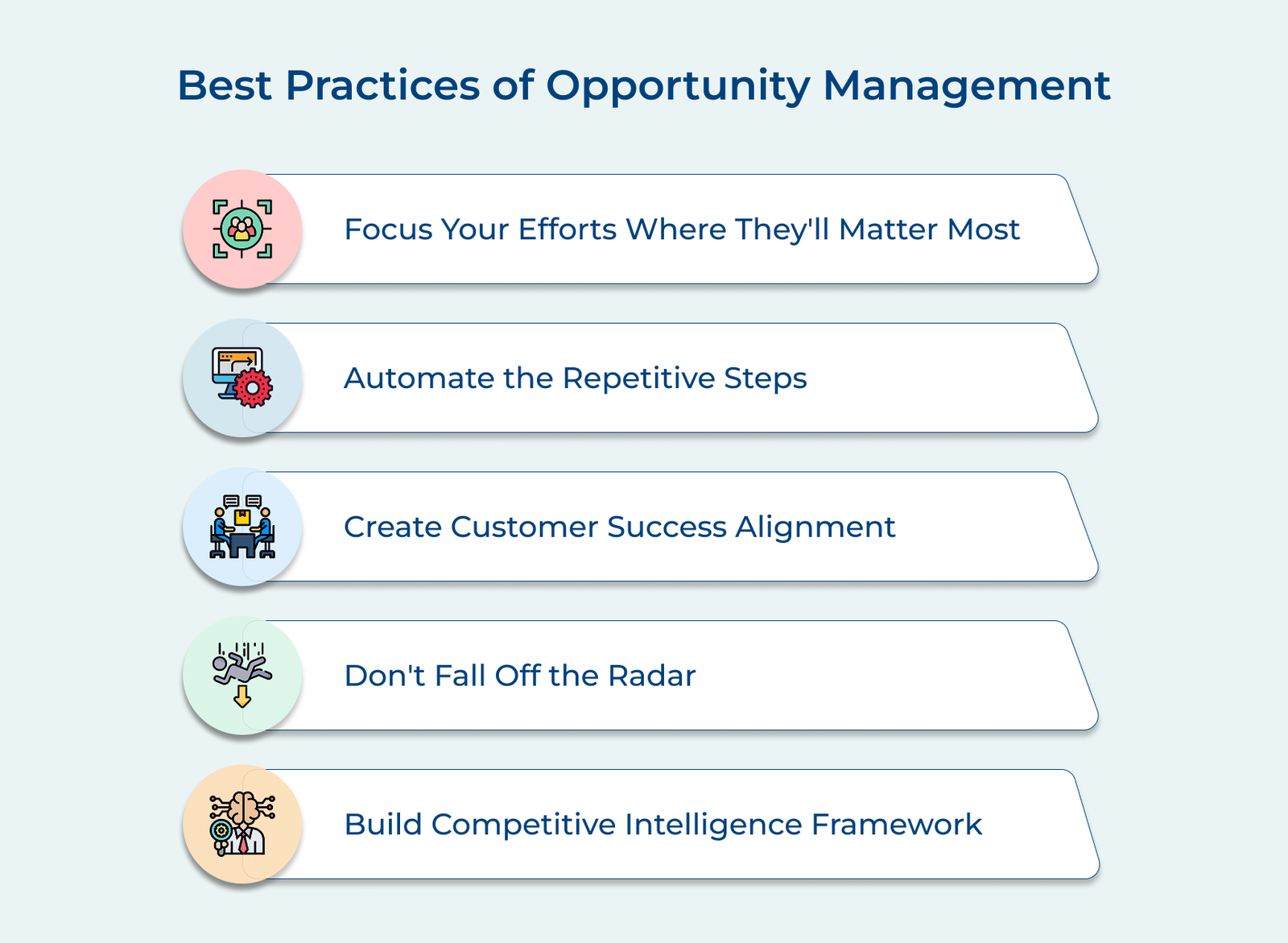
Strategic prioritization helps your team focus on the deals that matter most. Set clear criteria like deal size, fit with company goals and long-term value to spot high-potential opportunities. Check in regularly to make sure time and effort are going where they’ll count the most.
Automation takes care of the repetitive stuff like sending follow-up emails, logging data or updating opportunity status so your sales team can focus on conversations, not clicks. Identify which tasks eat up time and let your system handle them in the background.
When sales and customer success teams work in sync, deals are more likely to stick. Bring customer success into the sales process early as they know what makes or breaks implementation. Their input, timelines and goals help set honest expectations and make the handoff smoother when the deal closes.
Staying in regular contact helps keep deals moving. Set up check-ins, share useful info and provide timely updates that actually matter to the prospect. The steady presence shows you’re paying attention and are serious about solving their problem.
A clear process for tracking competitors makes it easier to win deals. Collect insights from customer feedback, market shifts and competitor moves, then use that info to shape your strategy.
Below are some leading brands that have successfully implemented opportunity management systems to transform their sales processes and drive business growth.
Amazon
Amazon’s opportunity management system zeroes in on personalized recommendations and well-timed upsells. It pinpoints what each customer is most likely to buy next by tracking browsing habits, past purchases and real-time behavior.
The setup has helped Amazon drive more sales through precise suggestions, reduce inventory guesswork and strengthen customer loyalty. It’s one of the key reasons they’ve stayed ahead in the e-commerce game.
Zappos
Zappos uses its loyalty program to spot new opportunities by tracking what customers buy, what they shop and how they interact with support. It lets them tailor offers, send timely messages and reach out in ways that feel personal.
The approach has resulted in happier customers, more repeat buyers and a steady stream of word-of-mouth recommendations. It’s a big part of why Zappos is known for top-notch service.
Puma
Puma’s CRM strategy targets wholesale accounts as well as retail partnerships, tracking buying patterns, inventory and market trends. It helps them spot opportunities for new product placements, exclusive lines and stronger ties with retailers.
Puma has sharpened its competitive edge in the sportswear market by using the system. Their approach improves inventory management, strengthens retailer relationships and allows them to quickly adapt to market shifts.
Nike
Nike uses an integrated digital ecosystem that links online sales, retail stores and their mobile app. The system uncovers cross-channel selling opportunities, personalizes experiences and tracks the entire customer journey.
Nike has solidified its position in the market by doing so. Their approach has boosted brand loyalty, shaped better product development and created smooth shopping experiences across all channels, driving continuous growth.
Sales opportunity management is more than just a process. It’s a strategic approach that shapes how businesses handle potential sales. Companies can greatly enhance their ability to convert opportunities into actual revenue by creating structured workflows, setting clear qualification criteria and implementing systematic tracking.
Success in CRM opportunity comes from recognizing that each interaction, every data point and every decision plays a part in the bigger picture of sales growth. Organizations that adopt the approach are better positioned to navigate complex sales cycles, enhance stronger customer relationships and achieve steady revenue growth. While the journey to excellence is ongoing, the rewards are undeniable.
Key takeaways:

Opportunity management is made up of several practical parts that work together to move a deal forward. It starts with qualifying leads to figure out which ones are worth the time. Then, come defined pipeline stages that show where each opportunity stands. Scoring systems help teams gauge how likely a deal is to close, while relationship mapping highlights the key people involved in the decision.
The main goal of CRM opportunity management is to help sales teams focus on what matters most. It’s about making revenue more predictable, using time wisely and closing more deals. Teams can avoid chasing dead ends by setting up a clear, consistent way to spot good opportunities early and move them through the pipeline with care. They can make smarter calls and improve how they work, one deal at a time with the right info at their fingertips.
The right opportunity management system depends on how your team works and what you need. Salesforce packs a ton of power for large, complex sales teams, but it can be heavy. HubSpot keeps things simpler and more approachable, which works well for mid-sized teams that want clarity without the learning curve. Microsoft Dynamics makes the most sense if your company already lives in the Microsoft ecosystem. Pipedrive often does the trick for small teams that just want something easy and effective.
Some of the toughest parts of opportunity management come down to keeping things real. Scoring deals accurately is tricky, teams often lean too hard on gut feelings, which makes it easy to overestimate how close something is to closing. Add in the challenge of keeping pipeline data clean, especially when different sales reps work in different ways and it’s easy for things to get messy.
CRM opportunity management sharpens the sales process by bringing clarity and consistency to how deals move through the pipeline. It gives teams a clearer view of where things stand, making it easier to spot slowdowns, focus on what matters and make smarter decisions based on real data, not guesswork. Teams can stick to proven methods, forecast with more confidence and make better use of their time with a structured system in place.
Key opportunity metrics offer a clear picture of how well your sales process is working. Conversion rates between stages highlight where deals move smoothly or get stuck, while average deal size and sales cycle length help set expectations. Win rates by deal type reveal where your team excels. Pipeline velocity shows how fast deals move and opportunity aging flags those that have gone quiet. Tracking the metrics regularly helps teams stay focused, fine-tune their approach and keep momentum across the pipeline.
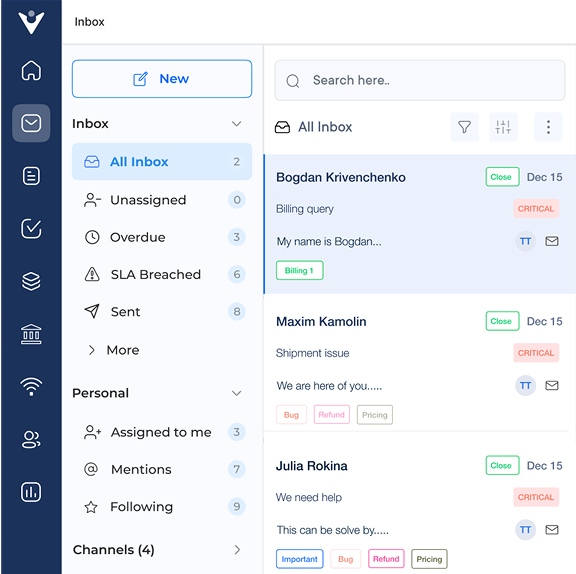
Grow Customer Relationships and stronger team collaboration with our range of products across the Conversational Engagement Suite.
Omnichannel Customer Support & Help Desk Software
AI Enabled Business Messaging and Chatbot Software
Sales Engagement & CRM Software
Call Center Software & Virtual Phone System
Product Marketing & Experience Platform
Customer Experience & Feedback Management Software

 User Experience Survey Questions Guide: Types, Steps & Templates
Scroll to top
User Experience Survey Questions Guide: Types, Steps & Templates
Scroll to top