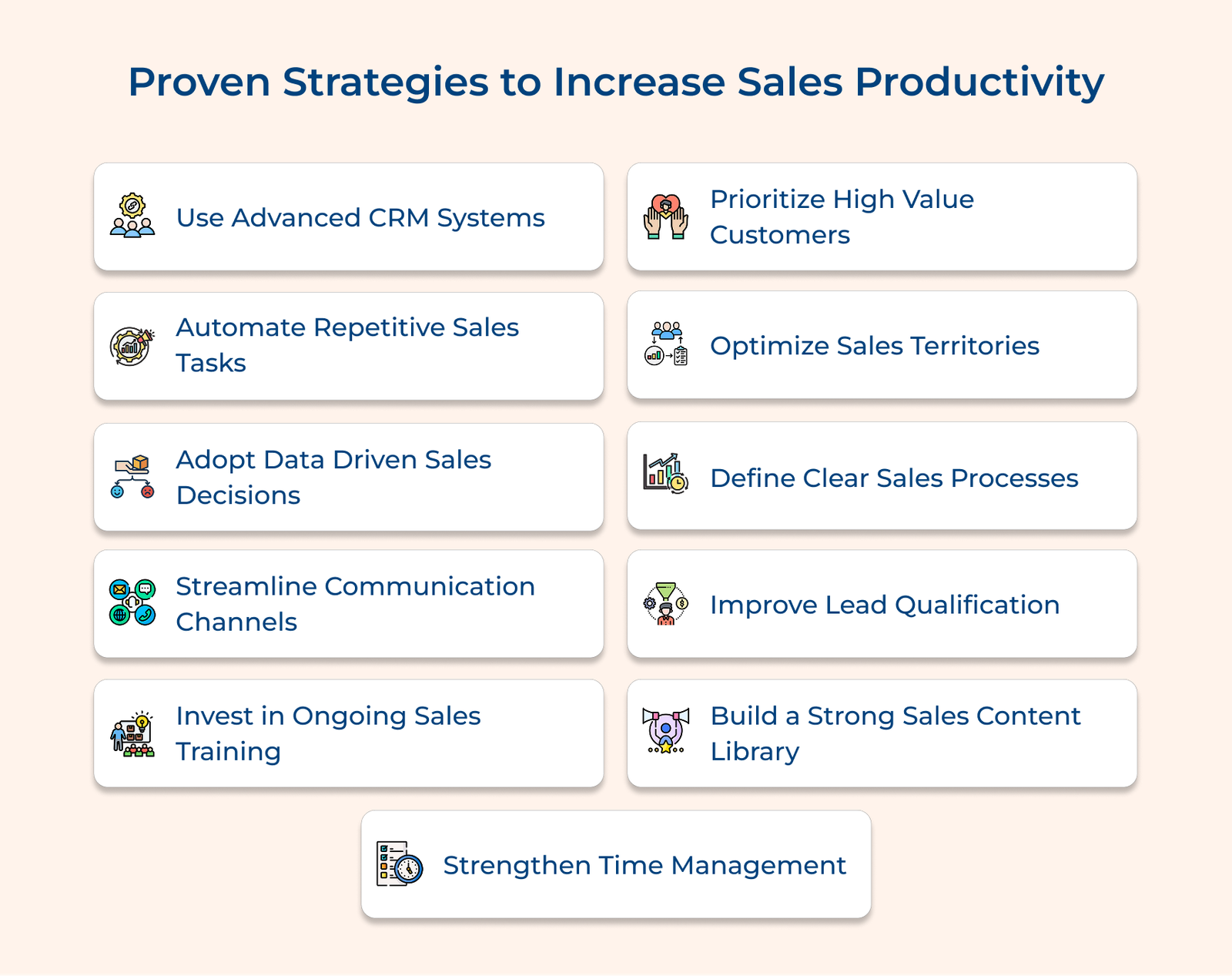
1. Implement Advanced CRM Systems Effectively
A powerful CRM system acts as the backbone of sales operations, consolidating all customer interactions into one easily accessible platform. It allows sales teams to track customer journeys, maintain detailed touchpoint histories and access relevant information instantly during interactions by centralizing data.
Automated workflow within the CRM streamlines the sales process, triggering actions based on predefined rules and customer behaviors. Its integration with other business tools like marketing automation, customer service software and financial systems creates a seamless ecosystem, offering a 360-degree view of customer relationships.
Actionable tips:
- Provide comprehensive training on CRM features and set clear data entry protocols.
- Conduct regular audits and feedback sessions to refine the CRM setup based on user needs.
2. Automate Repetitive Sales Tasks Daily
Sales automation streamlines routine tasks, handling follow-ups and administrative duties automatically. Email sequences ensure consistent communication, while automated reporting provides real-time insights into sales performance without manual data entry.
Assume a sales team sets up automated email sequences for each stage of the buyer journey. The system sends personalized follow-ups, generates daily performance reports and routes high-priority leads to specialized reps for immediate action.
Pro tips:
- Analyze the sales process to identify tasks that can be automated.
- Begin with simple automation and expand as the team adapts or performance improves.
3. Implement Data-Driven Sales Decision Making
Data-driven sales strategies rely on tracking and analyzing key performance indicators to inform decisions. Teams can optimize their approach based on solid data, not guesswork by monitoring metrics like conversion rates, sales cycle length and customer acquisition costs.
Think of a sales team that uses analytics tools to track deal progress and identify patterns in successful deals. The system predicts which opportunities are most likely to close, enabling teams to focus on high-potential leads based on customer behavior and preferences.
Best practices:
- Define clear KPIs aligned with business goals and ensure consistent measurement.
- Hold regular data review sessions to analyze trends and adjust strategies accordingly.
4. Streamline Communication Channels for Quick Response
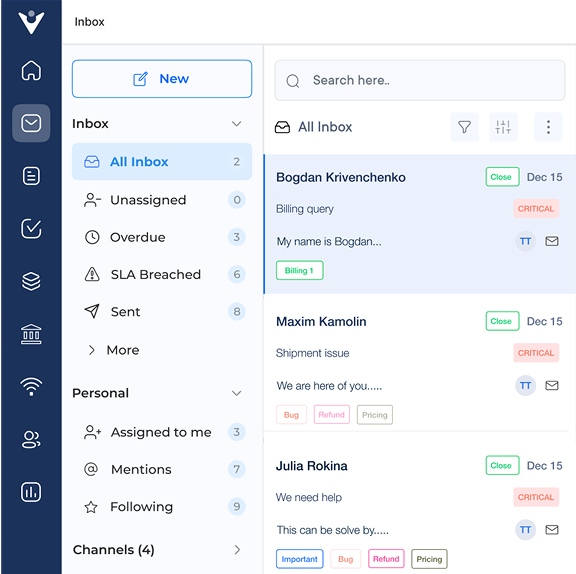
Multichannel communication platforms allow sales teams to connect with prospects through their preferred channels, all while keeping conversations consistent. Integrating email, chat, phone and social media ensures no interaction is overlooked.
Standardized response templates and real-time notifications boost response speed. Reps can quickly respond using pre-approved content and stay alerted to high-priority customer activities or urgent requests.
Actionable tips:
- Prioritize channels based on customer preferences and urgency.
- Build a template library for common scenarios, allowing room for personalization.
5. Invest in Regular Sales Team Training
Regular product knowledge sessions keep sales teams informed and confident in presenting solutions. Training covers everything from technical specs to competitive advantages, while hands-on experience strengthens product understanding. Combining sales techniques and soft skills development with peer learning enhances collaboration.
Think there’s a company that holds weekly training sessions alternating between product updates and sales techniques. Senior reps lead role-playing exercises with newcomers to practice objection handling. Monthly mentorship meetings focus on individual growth.
Pro tips:
- Develop a structured training calendar that balances product knowledge with skill development.
- Use feedback to assess training effectiveness and adjust content to meet team needs.
6. Focus on High-Value Customer Relationships
Identifying key accounts requires evaluating customer potential and strategic value. Sales teams assess factors like revenue potential, market influence and growth opportunities to allocate resources effectively. Personalized engagement strategies and value propositions ensure meaningful interactions with high-value accounts.
Let’s assume that a sales team creates detailed profiles for top accounts, including business objectives and pain points. Reps develop customized engagement plans with scheduled check-ins and quarterly reviews, aligning value propositions with industry-specific challenges.
Actionable tips:
- Establish clear criteria for identifying high-value accounts and review them quarterly.
- Develop account-specific communication plans with defined touchpoints and milestones.
7. Optimize Sales Territory Management Systems
Clear geographical boundaries and balanced workload distribution ensure efficient sales coverage. Sales managers assess market potential and account distribution to create territories that offer equal opportunities, factoring in travel time or account concentration.
Let’s consider that a company divides its market into territories based on customer density and revenue potential. Each territory is a mix of existing accounts and growth opportunities. Monthly reviews track performance and highlight areas for adjustment or additional support.
Best practices:
- Conduct quarterly territory assessments to maintain balanced workloads and growth opportunities
- Use territory mapping tools to visualize coverage and identify gaps or overlaps.
8. Develop Clear Sales Process Guidelines
Standardized sales methodologies provide a consistent framework for approaching opportunities across the organization. Clear processes guide teams through complex sales cycles, ensuring no steps are missed and best practices are followed.
Let’s assume that a sales team implements clear stages for opportunity progression with specific requirements at each step. Representatives follow standardized processes for qualification, proposals and closing with defined responsibilities.
Actionable tips:
- Create visual process maps outlining key stages and requirements for different sale types.
- Set regular checkpoints to ensure adherence to the process and identify areas for improvement.
9. Enhance Lead Qualification Process Efficiency
A structured lead scoring system helps prioritize prospects based on defined criteria and engagement levels. Sales teams focus on high-potential leads while ensuring early-stage opportunities through automated workflows and targeted content.
Let’s consider that a marketing team implements a scoring system based on prospect behavior and profile attributes. Leads are automatically nurtured until they reach sales-ready status, with reps notified when leads meet qualification thresholds.
Pro tips:
- Define clear scoring criteria based on ideal customer profiles and key buying signals.
- Regularly review and adjust qualification thresholds based on conversion data.
10. Create Effective Sales Content Libraries
Accessible content repositories empower sales teams to quickly find and use approved materials during customer interactions. A centralized library organizes presentations, case studies and product information while maintaining version control to ensure up-to-date content.
Let’s assume that a sales team builds a digital library with categorized content for different sales stages. Reps access auto-populating templates with customer information and product details. The system notifies users when new content is added or updates are needed.
Best practices:
- Conduct regular content audits to remove outdated materials and identify gaps.
- Use a tagging system to help teams quickly locate relevant content for specific scenarios.
11. Improve Time Management Through Planning
Time blocking helps sales reps structure their days for peak productivity by allocating dedicated slots for prospecting, client meetings and administrative tasks. The approach ensures focus on high-priority activities while balancing essential tasks. Activity tracking and clear priorities enable teams to measure productivity.
Let’s consider that a sales rep blocks mornings for client calls and afternoons for proposal writing. Weekly planning sessions prioritize key accounts while time-tracking tools analyze activity patterns for optimization opportunities.
Actionable tips:
- Hold weekly planning sessions to allocate time blocks based on priorities.
- Review monthly activity logs to identify inefficiencies and areas for improvement.
Biggest Challenges to Sales Productivity
Below are some of the key challenges of sales efficiency that can hinder performance and impact revenue generation. Let’s check them out.