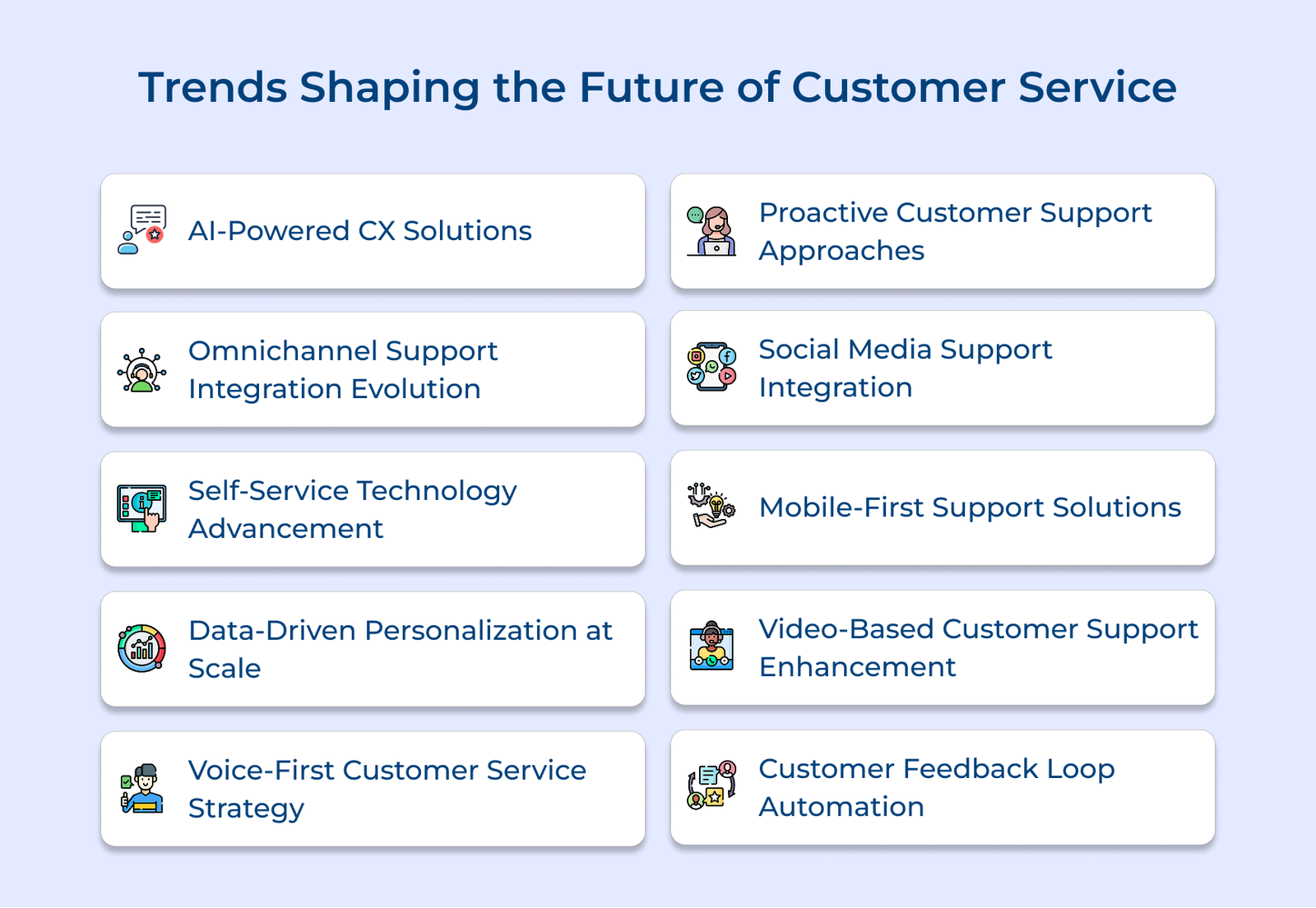
1. AI-Powered Customer Experience Solutions
AI is revolutionizing customer service by automating routine tasks and delivering personalized experiences at scale. Intelligent chatbots now handle common inquiries 24/7, improving efficiency and response times. A study by Gartner shows that 80% of companies are using AI to improve customer experience.
Predictive analytics further enhances personalization by analyzing customer data to anticipate needs and tailor interactions. The system analyzes historical data to anticipate customer needs and automatically adjusts interactions across various touchpoints. E-commerce sites, for instance, offer product suggestions based on browsing history.
Pro tips:
- Test AI with a pilot program focused on common inquiries before scaling.
- Combine AI with human agents for complex issues requiring empathy.
2. Omnichannel Support Integration Evolution
Omnichannel support is vital as customers expect smooth interactions across all platforms. Businesses ensure consistent service quality and enable seamless transitions, like continuing a social media chat via email without repeating details by integrating channels.
Cross-platform journey mapping gives support teams a complete view of customer interactions, allowing for personalized and context-aware assistance. Real-time data synchronization ensures agents have up-to-date customer information, including a call or a previous chat.
Actionable tips:
- Use a centralized customer data platform for consistent information across channels.
- Provide ongoing training for staff to manage cross-channel communications effectively.
3. Self-Service Technology Advancement
Self-service technology has evolved from simple FAQs to advanced solutions, empowering customers to resolve issues independently. It reduces support costs and boosts satisfaction by providing immediate answers. Modern consumers prefer self-help before contacting support.
Interactive knowledge bases now include videos, guides and real-time practice exercises. Let’s assume that software companies offer product tours to help users navigate complex features. Community platforms and AI-driven troubleshooting enhance the self-help experience, allowing users to share solutions while AI suggests fixes based on past cases.
Pro tips:
- Regularly review search data to identify content gaps and address common issues.
- Gamify community participation to incentivize and reward helpful users.
4. Data-Driven Personalization at Scale
Data-driven personalization is revolutionizing customer service by offering tailored experiences powered by sophisticated algorithms. Businesses can create more engaging and relevant interactions by analyzing customer behavior.
Advanced analytics track customer journeys across touchpoints, revealing patterns and preferences. Assume that an e-commerce platform might adjust promotional timing based on a customer’s browsing habits, like shopping during lunch hours. Continuous learning refines service recommendations and communication preferences, ensuring that interactions are increasingly personalized.
Best practices:
- Use A/B testing to find the most effective personalization for different customer segments.
- Develop customer personas using behavioral data to guide your efforts.
5. Voice-First Customer Service Strategy
Voice-based customer service is transforming support systems, driven by the popularity of smart speakers and voice assistants. The hands-free, intuitive technology offers more accessible and natural service interactions. Advanced voice recognition now understands various accents and contexts, handling complex queries with fluid conversation. Let’s consider that insurance companies enable voice-activated policy inquiries and claims processing, offering multi-turn dialogues.
Voice-activated support systems, integrated with smart devices, provide 24/7 assistance. A smart home system, for instance, might diagnose connectivity issues and guide users through troubleshooting via voice commands.
Pro tips:
- Design voice interactions using natural language patterns and include confirmation steps for accuracy.
- Develop voice-specific user journeys to optimize the unique nature of audio-only interactions.
6. Proactive Customer Support Approaches
Proactive support shifts customer service from reactive to preventive, identifying and resolving issues before they affect customers. Businesses can boost satisfaction and lower support costs by leveraging predictive technology. Predictive systems analyze patterns to detect potential problems, triggering alerts when anomalies arise.
Assume that a cloud provider might detect server issues and address them before customers experience downtime. Automated alerts and success tracking form a proactive early warning system, identifying at-risk accounts by monitoring performance.
Actionable tips:
- Establish clear escalation paths to ensure urgent issues get immediate attention.
- Create a scoring system to prioritize interventions based on customer value and issue severity.
7. Social Media Support Integration
Social media has evolved into a vital customer service platform, with modern consumers expecting swift support through their preferred channels. The shift allows businesses to engage customers where they are, building trust through transparent resolution. Real-time social listening and integrated messaging platforms form a comprehensive support system.
Community management automation enhances social support through messages based on urgency and sentiment. AI systems ensure critical issues are addressed quickly while maintaining consistent engagement across channels.
Pro tips:
- Develop response templates for common scenarios while keeping each interaction personalized.
- Implement a crisis management protocol specifically for social media to handle sensitive situations effectively.
8. Mobile-First Support Solutions
Mobile-first support is crucial as smartphones become the primary way consumers interact with brands. The strategy focuses on providing seamless, convenient and context-aware assistance directly through mobile devices. In-app support features enable immediate help within the app environment.
Location-based services combined with mobile messaging offer tailored support based on a customer’s context. The integration allows businesses to provide relevant, timely help according to a customer’s location and behavior.
Actionable tips:
- Optimize mobile interfaces for easy navigation with thumb-friendly design and minimal text input.
- Use push notifications wisely to offer proactive support without overwhelming users.
9. Video-Based Customer Support Enhancement
Video support has transformed customer service by adding a personal, visual element to remote assistance. The technology bridges the gap between in-person and digital interactions, enhancing the customer experience.
Research shows that 80% of customers prefer watching a video over reading a traditional text-based solution. AR-powered assistance takes it further, overlaying instructions on the customers’ real-world view through their mobile devices, improving accuracy and speeding up resolutions.
Pro tips:
- Invest in quality video infrastructure and ensure agents have good lighting. There should be professional backgrounds for clear, effective interactions.
- Establish clear guidelines for video support, including privacy protocols and recording permissions.
10. Customer Feedback Loop Automation
Automated feedback systems are essential for driving continuous improvement in customer support. Businesses can identify trends and enhance service delivery by analyzing customer sentiment. Real-time feedback and sentiment analysis provide immediate insights into customer satisfaction, helping companies act swiftly.
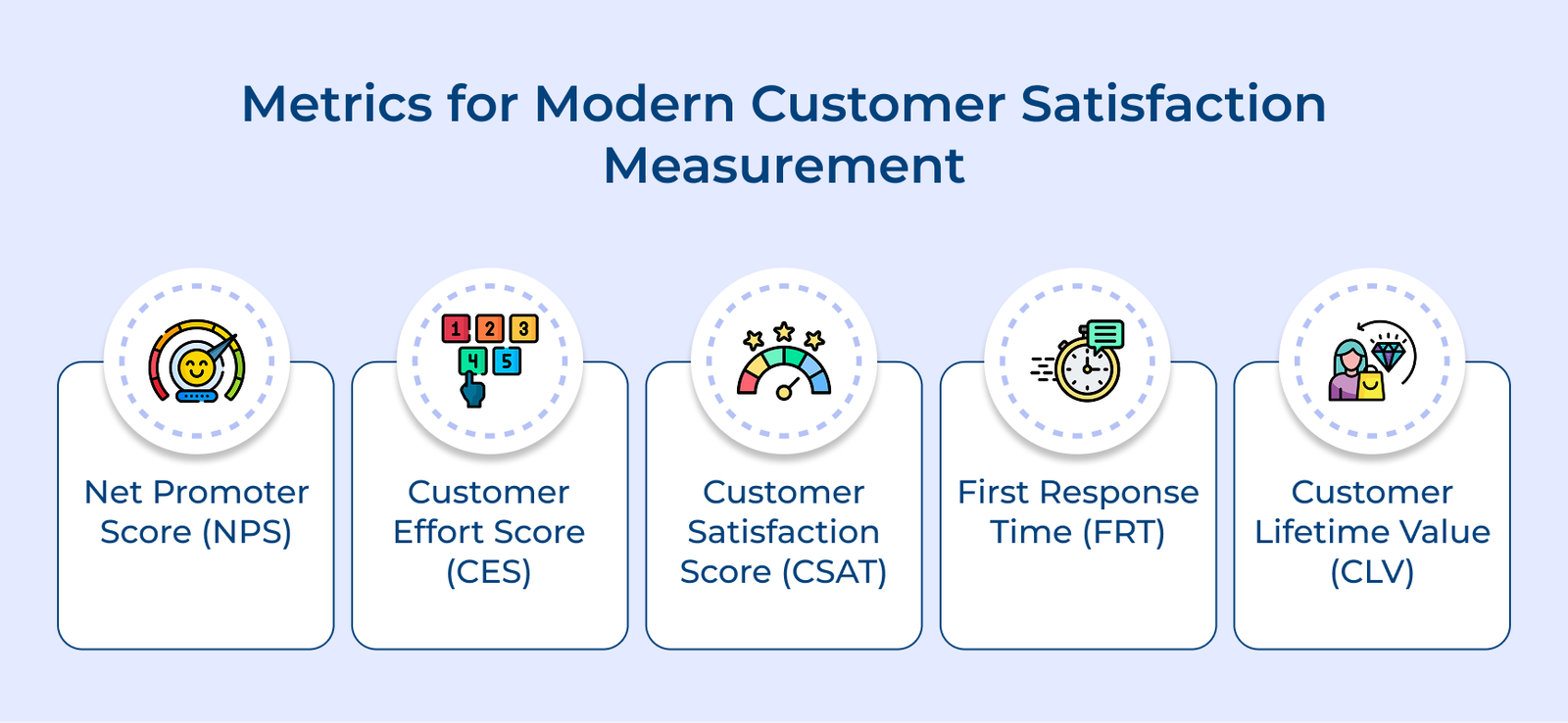
Continuous improvement tracking ensures feedback leads to meaningful changes, monitoring key metrics to optimize service. Automation maintains transparency, turning feedback into actionable insights.
Best practices:
- Implement closed-loop feedback, updating customers on how their input drives improvements.
- Time and context-specific automated feedback requests maximize response rates.
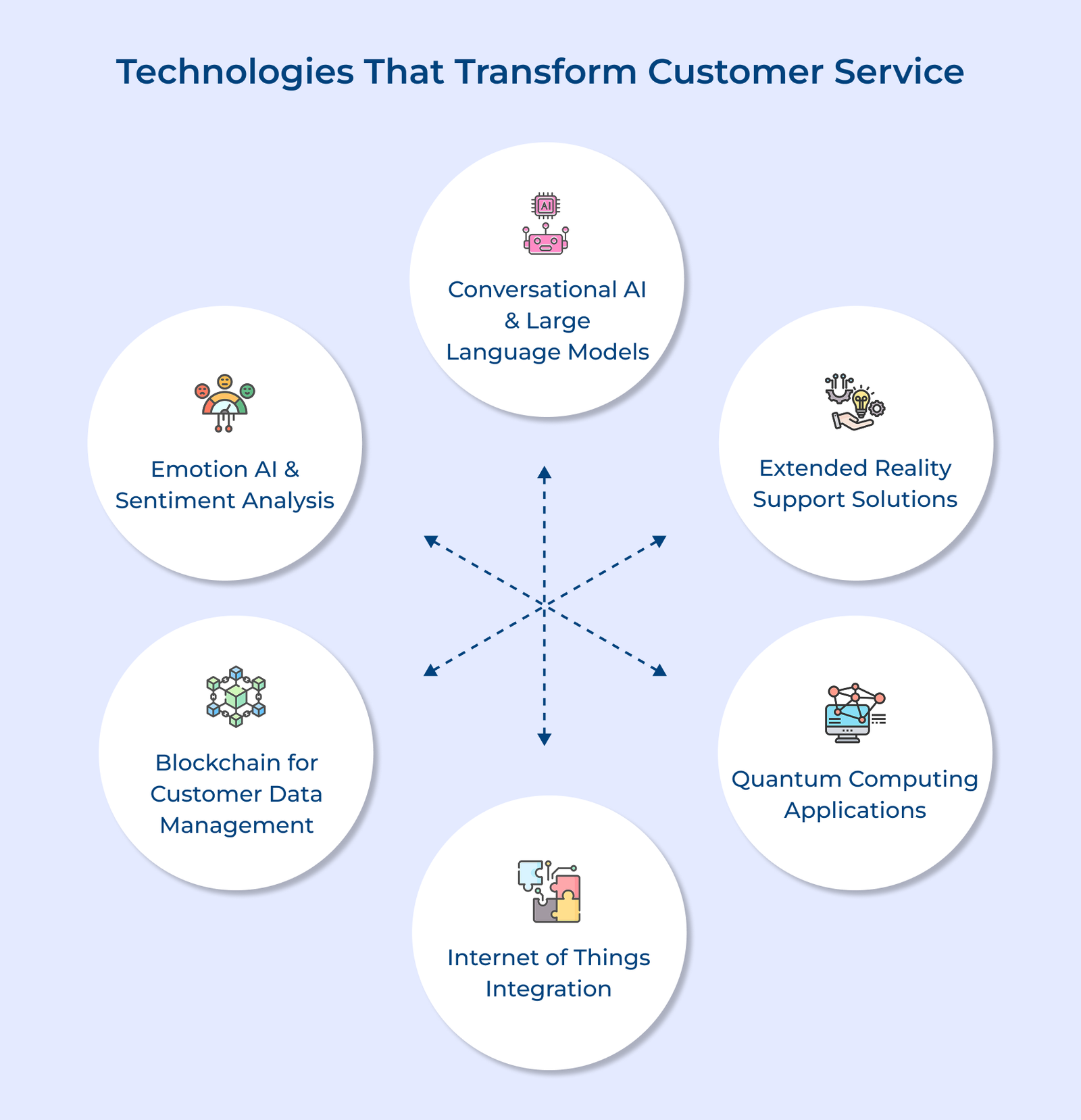
Emerging Technologies That Help In Changing The Face of Customer Service
Check out some groundbreaking technologies to understand the changing face of customer service and how they can redefine your interactions with brands.