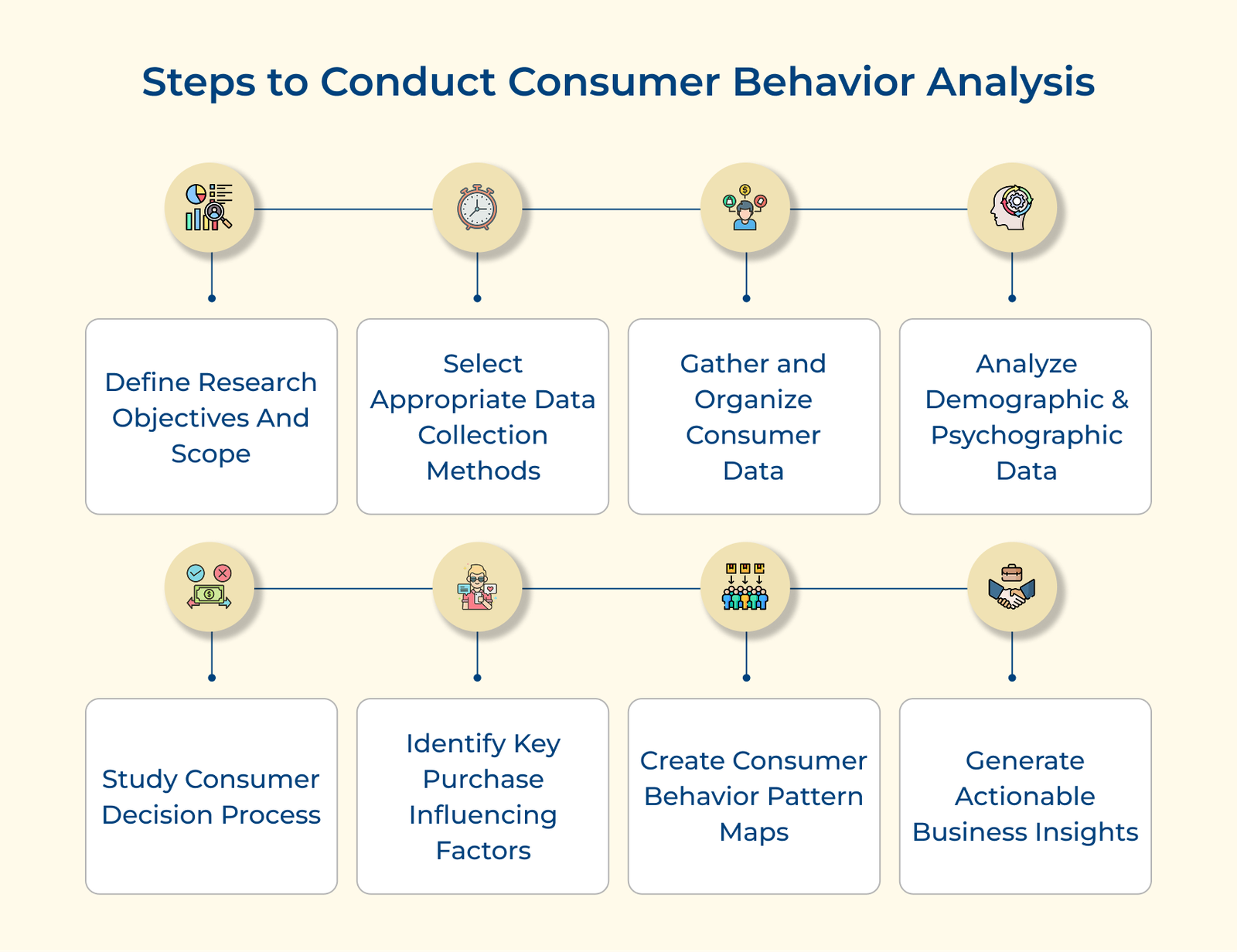
1. Define Research Objectives and Scope
Defining clear research objectives and scope is the foundation of any consumer behavior analysis. It ensures your efforts are focused on gathering the right information to drive impactful business decisions. Think of it as a roadmap that keeps your research on course, helping you stay aligned with your goals.
Start by defining objectives, like testing a new product or improving retention, aligned with your strategy. Identify target segments, set measurable outcomes, and track benchmarks such as satisfaction or repeat purchases.
Pro tips:
- Kick off with a brainstorming session involving cross-departmental teams to get fresh perspectives on research needs and any gaps in your current understanding.
- Use the SMART framework but stay flexible. Adapt your goals as you uncover new insights along the way.
2. Select Appropriate Data Collection Methods
Selecting the right data collection methods is crucial for obtaining reliable insights that truly reflect consumer behavior and align with your research goals. The step involves balancing your resources, timing and audience to ensure you gather both quantitative as well as qualitative data effectively.
Key questions:
- What type of data do you need: numerical figures or in-depth consumer feedback and experiences?
- How accessible is your target audience and what methods would they respond to best?
- What is your budget and timeline? How do the constraints influence your choices?
- Do you need real-time data or would historical trends provide enough insight?
- What existing data sources can supplement your primary research efforts?
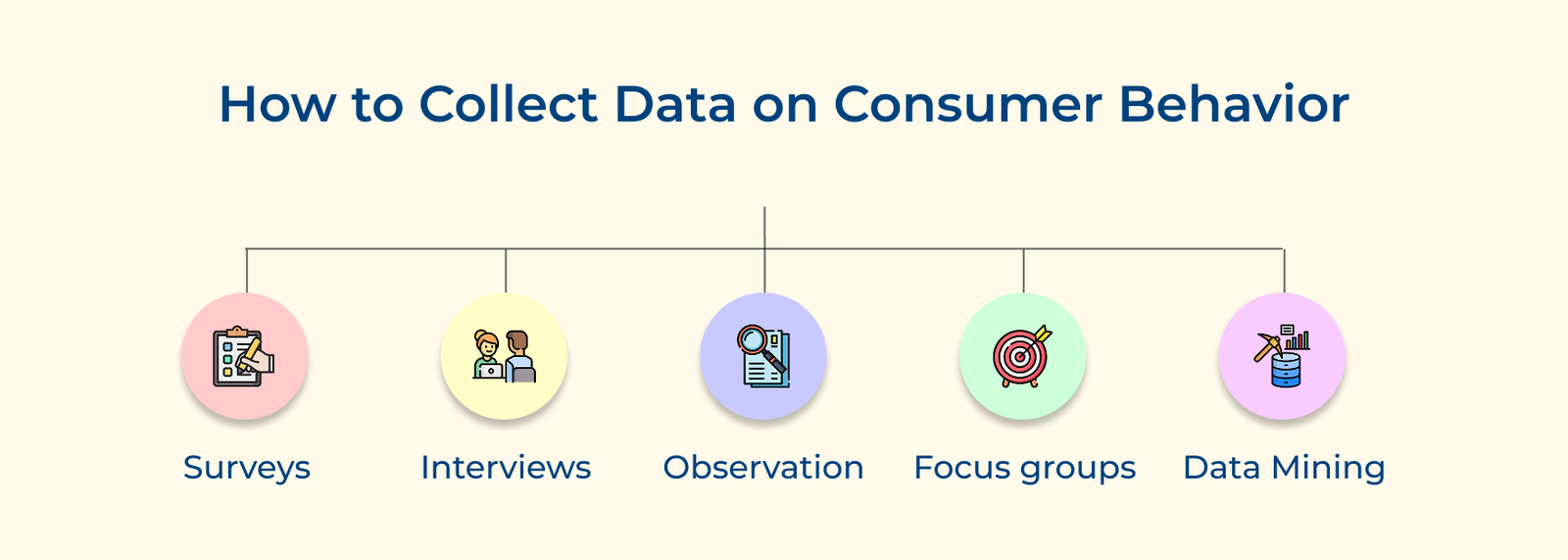
Primary research techniques are the core of your strategy. Surveys are ideal for reaching large groups quickly, while interviews offer deep insights into consumer motivations. Focus groups reveal group dynamics, while observational studies show real behavior. Secondary sources like industry reports add context without the cost of new data collection.
3. Gather and Organize Consumer Data
Data gathering and organization are the starting points for understanding customer behavior. The phase requires systematic collection approaches, quality monitoring and efficient data management systems to ensure your research yields reliable insights.
Implementing Collection Strategies
Begin with a structured plan that matches your research goals. Train your team on how to collect data correctly and set clear rules for every step. Use standardized templates so information is gathered in the same way across different touchpoints, reducing inconsistencies.
Ensuring Data Quality Control
Quality control in data collection involves regular monitoring of incoming data for accuracy and completeness. Set up validation checks to identify outliers or inconsistent responses immediately. Random audits and occasional refresher training help maintain accuracy over time.
Creating Systematic Storage Systems
Store data in a centralized system that’s both secure and easy to navigate. Use clear categories and tags so information can be found quickly. Regular backups protect against data loss, while a well-structured system makes analysis faster and more reliable.
4. Analyze Demographic and Psychographic Data
Understanding consumer profiles allows businesses to design strategies that truly connect with their audience. The analysis combines basic demographic information with deeper insights into consumer lifestyles, attitudes and behaviors to create comprehensive customer personas.
Implementation steps:
Mapping Consumer Characteristics
Start with the basics, like age, income, education and location. Identify common patterns that reveal your core market segments and clarify who your customers are at a fundamental level.
Studying Lifestyle Patterns
Examine how your consumers live their daily lives, including their interests, activities and opinions. Look for patterns in their daily routines, social activities and entertainment preferences. The information helps predict future behavior and identify opportunities for product positioning.
Examining Purchasing Power
Assess financial habits, including disposable income, spending priorities and sensitivity to pricing. It helps you design products, services and pricing strategies that align with what your audience can realistically afford.
5. Study Consumer Decision Process
Understanding how consumers make decisions shows the path from first awareness to purchase and beyond. The knowledge helps businesses create targeted interventions at crucial moments and design experiences that guide consumers through their buying journey.
Pro tips:
- Notice when people first recognize a need for your product or service and what sparks it.
- Monitor the information sources consumers consult during their research phase, including online reviews, social media and expert opinions.
- Study what matters most when they compare options, such as features, price or reliability.
- Examine the exact moment and context when consumers make their final purchase decision.
- Review post-purchase behavior to see what drives satisfaction and repeat purchases.
Consider that someone shopping for a new laptop may start looking when their old one slows down. They read reviews for two weeks, test models in stores and finally buy after a trusted friend recommends your brand. It lets you optimize your marketing for each stage, from creating content about performance issues to developing compelling in-store demonstrations.
6. Identify Key Purchase Influencing Factors
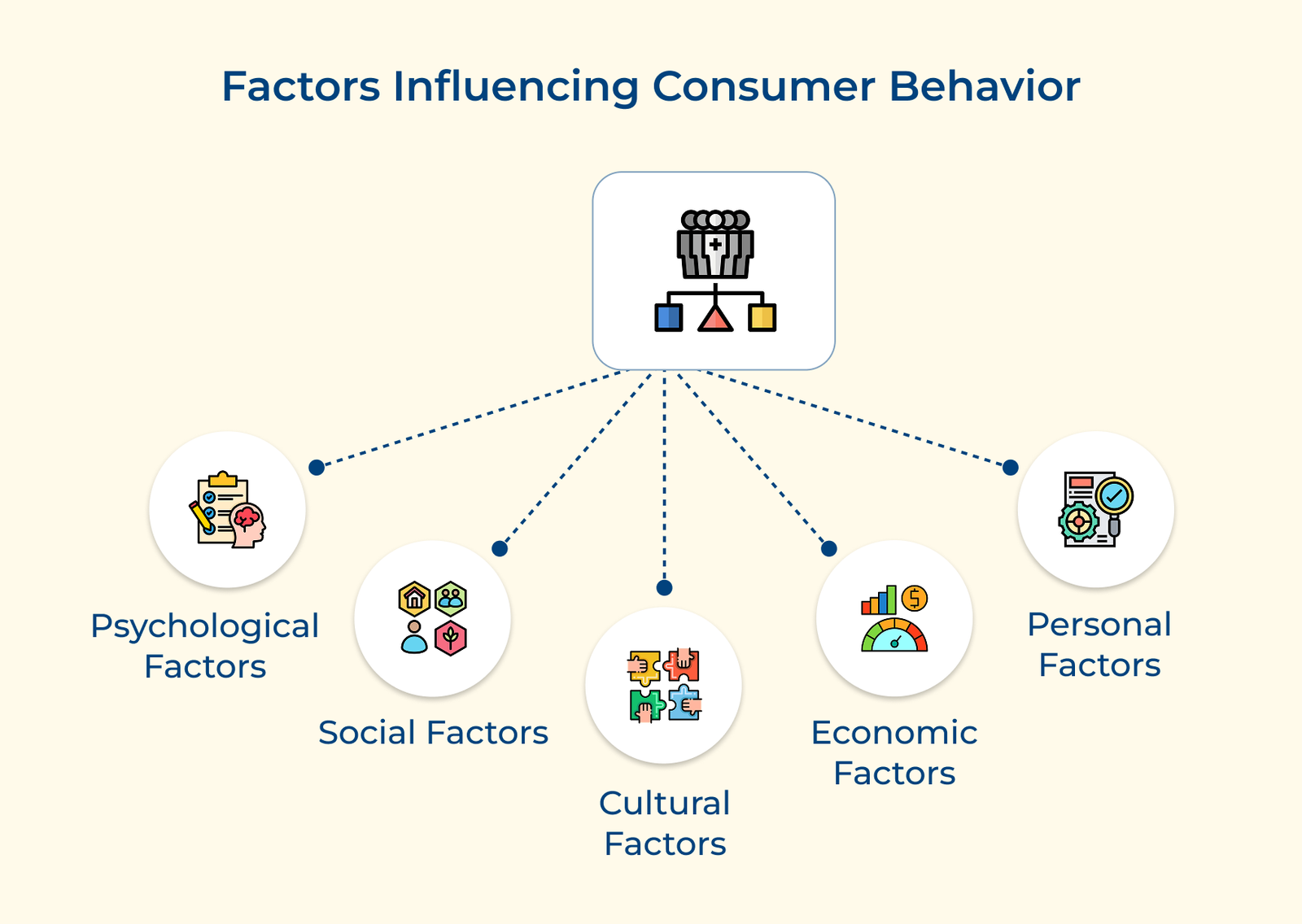
Businesses can shape offerings that better connect with their audience by studying social, economic factors. Social influences shape consumer choices through family, peers and cultural norms. Teens may follow friends’ brand choices, while parents may choose organic foods based on social circles.
Economic considerations, including disposable income, price sensitivity and perceived value, heavily impact purchase decisions. A consumer might choose a more expensive product if they believe its quality justifies the price or opt for a budget option during economic uncertainty. The understanding helps businesses develop pricing strategies and value propositions that align with their target market’s financial situation.
Pro tips:
- Look for unusual links, like how weather patterns affect when people buy certain products.
- Involve frontline staff in spotting trends. They often notice behavior shifts long before they show up in formal data.
7. Create Consumer Behavior Pattern Maps
Consumer behavior pattern mapping gives a clear picture of how customers interact with your brand over time. The approach to documenting consumer actions helps identify trends, predict future behaviors and optimize the customer journey across different touchpoints. Buying frequency patterns reveal how often customers purchase specific products and what triggers repeat purchases.
Understanding the patterns helps with inventory management, promotional timing and customer retention strategies. Channel preferences show where and how customers prefer to interact with your brand. Some might prefer online shopping for convenience, while others value in-store experiences for certain products.
Actionable tips:
- Use heat mapping to see which areas of your store or website draw the most attention.
- Create seasonal pattern overlays to spot how behavior changes throughout the year and plan your strategies accordingly.
8. Generate Actionable Business Insights
Turning insights into action means moving beyond analysis to concrete steps that improve performance. It is about applying what you’ve learned to make real changes that benefit both your business and your customers.
Key metrics:
- Revenue growth: Track changes in sales volume and revenue after implementing new strategies.
- Customer satisfaction: Monitor improvements in customer feedback and satisfaction ratings.
- Market share: Measure changes in market position relative to competitors.
- Customer retention rates: Track improvements in customer loyalty and repeat purchase rates.
- ROI investment: Calculate the financial impact of implemented changes versus their cost.
One of the biggest challenges in generating actionable insights is bridging the gap between data interpretation and practical application. Organizations often struggle with prioritizing different insights, coordinating across departments and measuring the impact of implemented changes.
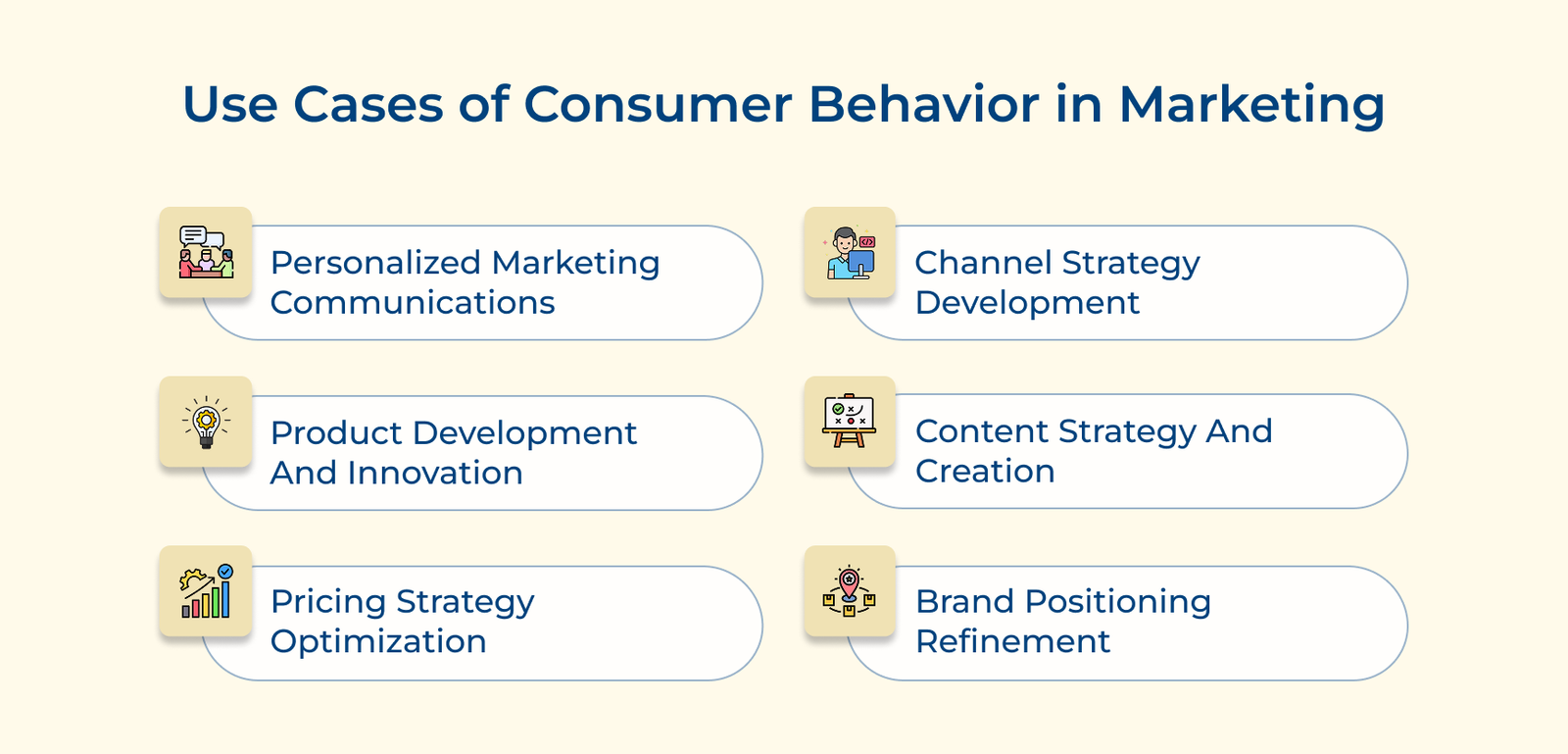
Use Cases of Consumer Behavior
Check out how companies can leverage consumer behavior knowledge to create more effective marketing strategies and build stronger customer relationships.