1. Customer Data Quality and Management Strategy
As a fundamental dimension of CRM success, customer data quality management serves as the backbone of your entire CRM ecosystem. The critical dimension ensures your business maintains pristine customer information throughout their journey.
Following the rules for relationship management success, establishing standardized data collection protocols begins with creating uniform templates and guidelines for gathering customer information. The dimension of relationship management success emphasizes the importance of consistency across all entry points.
Best practices:
- Deploy an automated data validation system at every entry point to prevent incorrect or incomplete information from entering your CRM system.
- Conduct monthly data quality audits and establish a dedicated team responsible for maintaining data integrity across all customer touchpoints.
2. Strategic Integration Across Business Functions
Strategic integration emerges as a critical dimension for CRM success by connecting all business departments and functions on a unified platform. The integration dimension proves crucial because it eliminates information silos, enables seamless collaboration and ensures that all departments work together toward common customer-centric goals.
Cross-functional communication channels and integrated performance measurement systems work together to create a cohesive operational environment. These systems enable real-time information sharing, performance tracking and collaborative decision-making across departments while maintaining accountability through clear metrics.
Pro tips:
- Create cross-functional teams that meet regularly to review integration effectiveness and address any departmental challenges or conflicts.
- Implement a unified dashboard system that displays relevant KPIs for each department while showing how they contribute to overall organizational goals.
3. Comprehensive User Training and Support System
A robust support framework acts as the bridge between sophisticated technology and effective user adoption. Think of it as teaching someone to drive a high-performance car – without proper training, they might only use basic features, missing out on the powerful capabilities that could transform their journey.
Ongoing support gives your team the help they need when they hit a roadblock. Be it through quick-reference guides or direct access to support staff, having clear, reliable options keeps work moving and builds confidence.
Best practices:
- Create a mentorship program pairing experienced users with newcomers for hands-on guidance and real-world application support.
- Develop a certification program with different levels of expertise, encouraging continuous learning and skill development.
4. Technology Infrastructure and Platform Scalability
Your technology infrastructure serves as the foundation supporting all customer relationship activities. Just as a growing city needs robust infrastructure to support its expanding population, your platform must scale seamlessly to accommodate increasing data users and functionalities.
Growth planning and performance optimization work hand in hand to maintain system efficiency. Regular performance audits help you catch issues before they slow things down. Capacity planning makes sure your platform can handle growth without disruption.
Implementation tips:
- Implement regular load testing scenarios to identify potential bottlenecks before they impact daily operations.
- Create a quarterly technology review schedule to assess infrastructure needs and plan strategic upgrades.
5. Customer Journey Mapping and Experience Design
Customer journey mapping creates a comprehensive view of every interaction between your business and customers. Like an architect designing a building with perfect flow, the dimension ensures every touchpoint feels natural, intuitive and valuable to your customers.
The development of personalized engagement strategies focuses on making each customer feel valued. Your approach must consider factors like communication preferences, purchase history and service interactions to create tailored experiences. Even though they resonate with individual customers, efficiency should be maintained at scale.
Best practices:
- Design journey maps for different customer segments, accounting for unique needs, preferences and pain points.
- Create feedback loops at every major touchpoint, ensuring continuous improvement of the customer experience.
6. Analytics and Reporting Framework Development
A robust analytics framework stands as a vital dimension of CRM success because it transforms raw data into actionable business intelligence. The capability enables businesses to make informed decisions, predict trends and respond proactively to changing market conditions.
Tracking KPIs alongside predictive analytics gives businesses a clear view of what’s working now and what’s likely to happen next. It helps teams manage relationships more effectively by spotting problems early and uncovering new growth opportunities.
Best Practices:
- Design role-based dashboard views that automatically highlight the most relevant metrics for each user’s specific responsibilities and goals.
- Schedule monthly analytics review sessions to assess the effectiveness of current reporting metrics and adjust them based on evolving business needs.
7. Process Automation and Workflow Optimization
Process automation represents another crucial dimension of CRM success that streamlines operations, reduces manual effort and minimizes errors. Serving as a foundational element, it ensures the delivered service is consistent while freeing up valuable human resources for more strategic tasks.
The development of streamlined workflows and automated response systems transforms your operational efficiency. When implemented as part of your CRM efficiency strategy, these automated processes ensure faster response times, greater consistency and improved customer satisfaction across all interaction points.
Best Practices:
- Conduct quarterly automation audits to identify new opportunities for workflow optimization and measure the effectiveness of existing automated processes.
- Create detailed documentation of all automated workflows, including trigger conditions, decision points and exception handling procedures.
8. Change Management and Cultural Adoption
Change management represents a critical leadership dimension that shapes how effectively organizations embrace new technologies and processes. The strategic element ensures that technological implementations achieve their full potential by focusing on the human aspects of change and organizational readiness.
Creating organizational buy-in strategies starts with understanding resistance points and addressing concerns proactively. Leadership teams must develop compelling narratives that highlight benefits while acknowledging challenges. The approach helps team members see themselves as active participants in the transformation journey.
Best Practices:
- Establish a network of change champions across departments who can provide peer support and gather real-time feedback about adoption challenges.
- Create a recognition program that celebrates early adopters and teams who demonstrate innovative uses of new processes.
9. Multichannel Access Strategy
The mobile and multichannel dimensions have become increasingly crucial as users expect seamless access to information across various platforms. The strategic element ensures that customer service teams can work effectively regardless of location while maintaining consistent service quality.
Developing mobile-first solutions requires careful consideration of user needs and workflow requirements. Your strategy should prioritize essential functions that teams frequently need while working remotely or engaging with customers outside the office environment.
Best Practices:
- Implement regular user experience testing across different devices and platforms to address any inconsistencies or friction points.
- Develop a comprehensive security protocol that protects sensitive information across all access points without compromising user convenience.
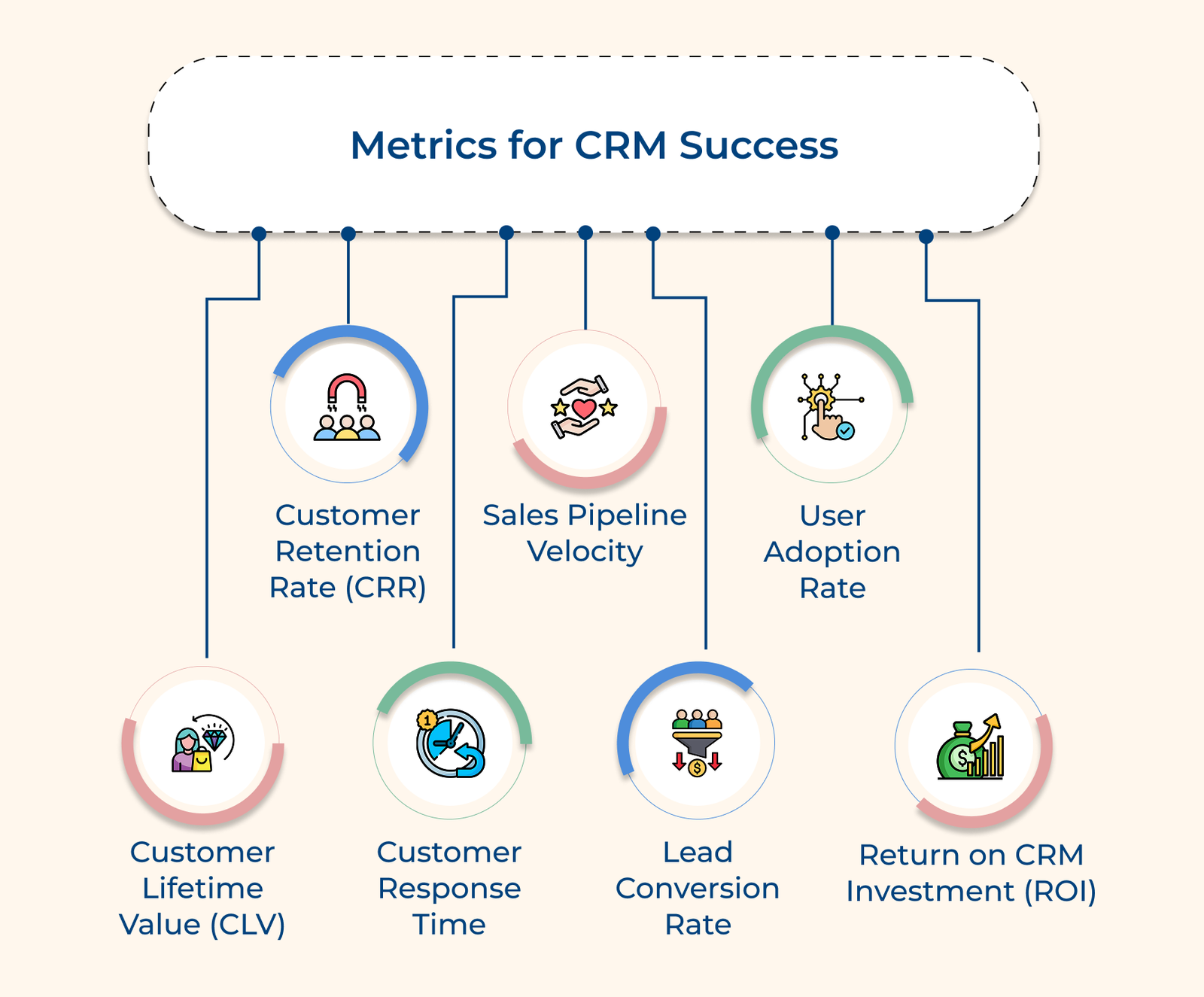
Key Metrics for CRM Success
Learn about the key metrics that can elevate your CRM success and drive your business forward, ensuring that your investment pays off in ways that matter.