Integrating Traditional and Digital Marketing
Tracking offline and online marketing data together is a major challenge. Businesses often struggle to link in-store interactions with digital touchpoints. It can often make it difficult to measure how traditional marketing drives online sales.
Selective Marketing Attribution
Attribution models often overlook offline interactions as they focus only on digital touchpoints. The selective approach creates blind spots, hindering a full understanding of marketing effectiveness and potentially misallocating resources.
Correlation Bias in Attribution
Attribution models often mistake correlation for causation especially when multiple marketing efforts run at once. It can skew results, giving too much credit to some channels while ignoring the real impact of others.
Cross-Device Tracking Complexity
Modern customers switch between devices as they shop, which makes it hard to track their behavior accurately. The device-hopping often leads to duplicate data or missed interactions, making it tough to understand the full customer journey.
Data Quality and Integration Issues
When tracking is inconsistent and data is messy, it’s hard to trust your attribution. Different tools often record the same interaction in different ways, creating gaps and overlaps that make cross-channel performance hard to measure accurately.
Tips to overcome the challenges:
- Develop a unified tracking framework that integrates both online and offline touchpoints, with unique customer identifiers across all channels.
- Use advanced attribution models that account for both digital and traditional marketing, regularly adjusting model weights based on real outcomes.
- Set clear data collection standards and conduct regular audits. Implement automated validation checks to ensure consistent tracking.
- Leverage deterministic and probabilistic methods for cross-device matching, while ensuring privacy-compliant user identification.
- Continuously test attribution accuracy and refine model parameters based on evolving customer behavior.
Ecommerce Attribution Models Example
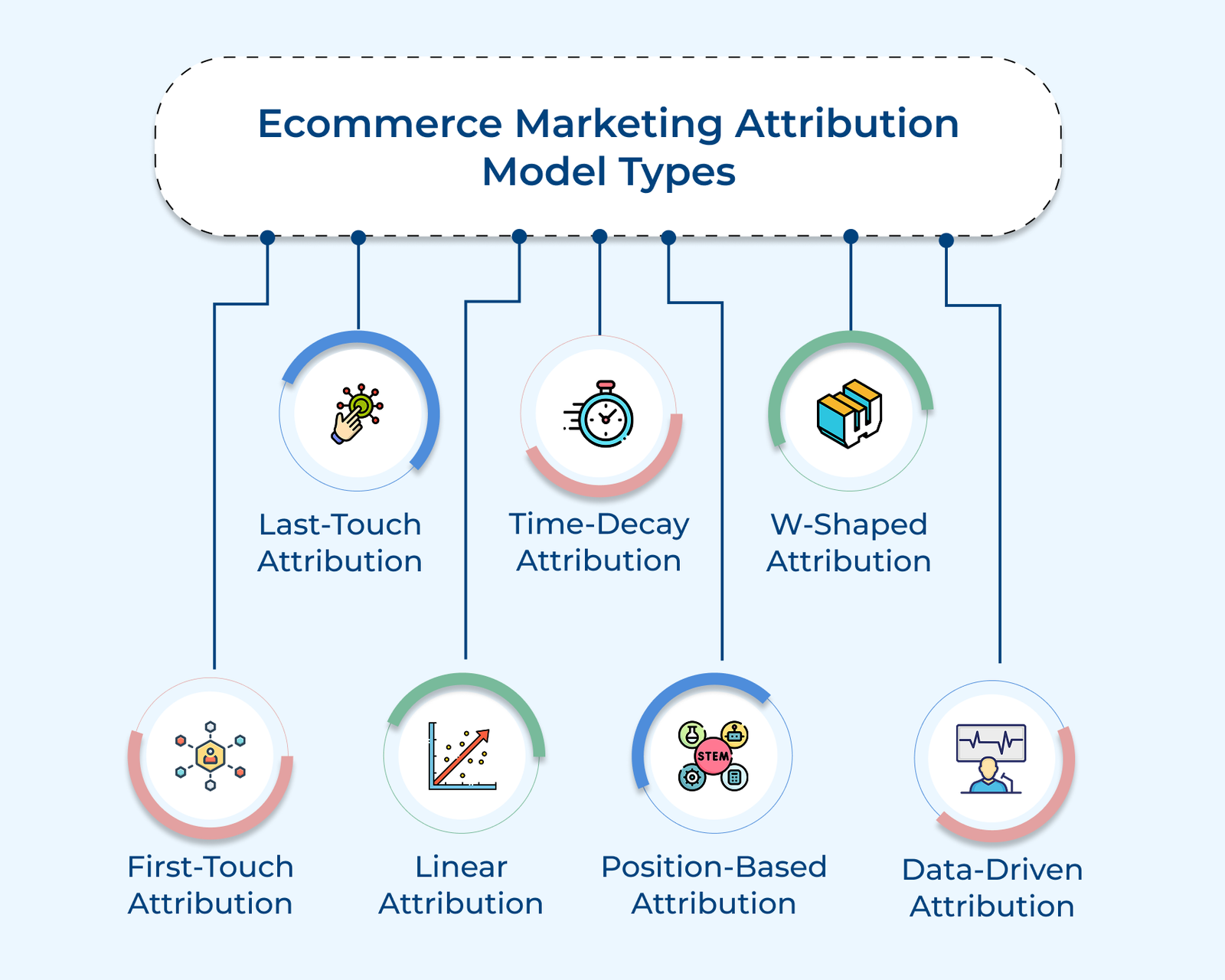
Let’s go through some examples of ecommerce attribution models to understand each tailored to different business needs.
1. Nike’s Digital-First Attribution Strategy
Nike used a data-driven attribution model to track how customers moved between their app, website and stores. It has helped them understand which digital interactions influenced purchases – both online and in-store.
The insights helped Nike by transforming their marketing strategy. Nike used these insights to shift focus toward its app. Data showed that app users were more likely to buy again, so the company doubled down on app development and mobile outreach.
2. Warby Parker’s Linear Attribution Journey
Warby Parker implemented a linear attribution model to analyze how their try-at-home program influenced online purchases. They discovered that customers were engaging with various touchpoints such as social media ads, email marketing and the virtual try-on tool.
The analysis showed that every customer interaction mattered. Users who tried the virtual try-on tool were more likely to make a purchase. It helped the team focus their budget on what actually worked.
3. Dollar Shave Club’s First-Touch Focus
Dollar Shave Club initially used a first-touch attribution model to pinpoint the most effective channels for acquiring new subscribers. They tracked how customers first discovered their service through viral videos, social media and referral programs.
The approach revealed that their humorous video content was a key driver of new customer acquisition. It led them to increase investment in engaging video content and expand their content marketing strategy.
4. Sephora’s Position-Based Approach
Sephora adopted a position-based attribution model to balance customer acquisition and conversion. They tracked interactions across their Beauty Insider loyalty program, mobile app and in-store visits.
The insights revealed that their loyalty program played a key role in driving conversions. Customers engaging with personalized product recommendations were more likely to make larger purchases.
5. Glossier’s Time-Decay Model
Glossier used a time-decay attribution model to evaluate how their community-driven marketing impacted purchases. They tracked social media, blog interactions and user-generated content while giving more weight to recent engagements.
The insights highlighted the power of community involvement. Customers engaging with content in the week before purchasing spent more, leading Glossier to boost investment in community building and content creation.
Ecommerce Attribution: The True Value of Your Marketing Efforts
Ecommerce attribution helps businesses understand which marketing channels lead to sales. When you map the customer journey from first touch to purchase, you become familiar with what’s working, what’s not and adjust their strategies accordingly.
Choosing the right attribution model makes it easier to track how each campaign contributes to conversions. It allows for smarter budget allocation and more targeted, relevant messaging based on real customer behavior.
Looking ahead, machine learning will play a bigger role in ecommerce attribution. As buying journeys become more fragmented, data-driven models will offer clearer insights to give businesses the clarity to make faster, better decisions.