A. Ecommerce Strategies for Converting Customers
E-commerce conversion strategies aim to turn website visitors into paying customers by optimizing the entire shopping experience. The tactics reduce friction and enhance the journey.
1. Streamline Product Page/On-Site Navigation
The strategy focuses on creating a smooth, user-friendly website that helps visitors find what they need quickly. A well-organized product page and navigation reduce friction, boosting the chances of converting browsers into buyers.
Categorize products logically, create clear menus with descriptive labels and add a robust search function. Use filters for easy product sorting, incorporate breadcrumbs and maintain consistent navigation across all pages.
Pro tips:
- Use heat maps to analyze visitor behavior and spot navigation issues.
- Add a “recently viewed” section to help customers easily revisit products.
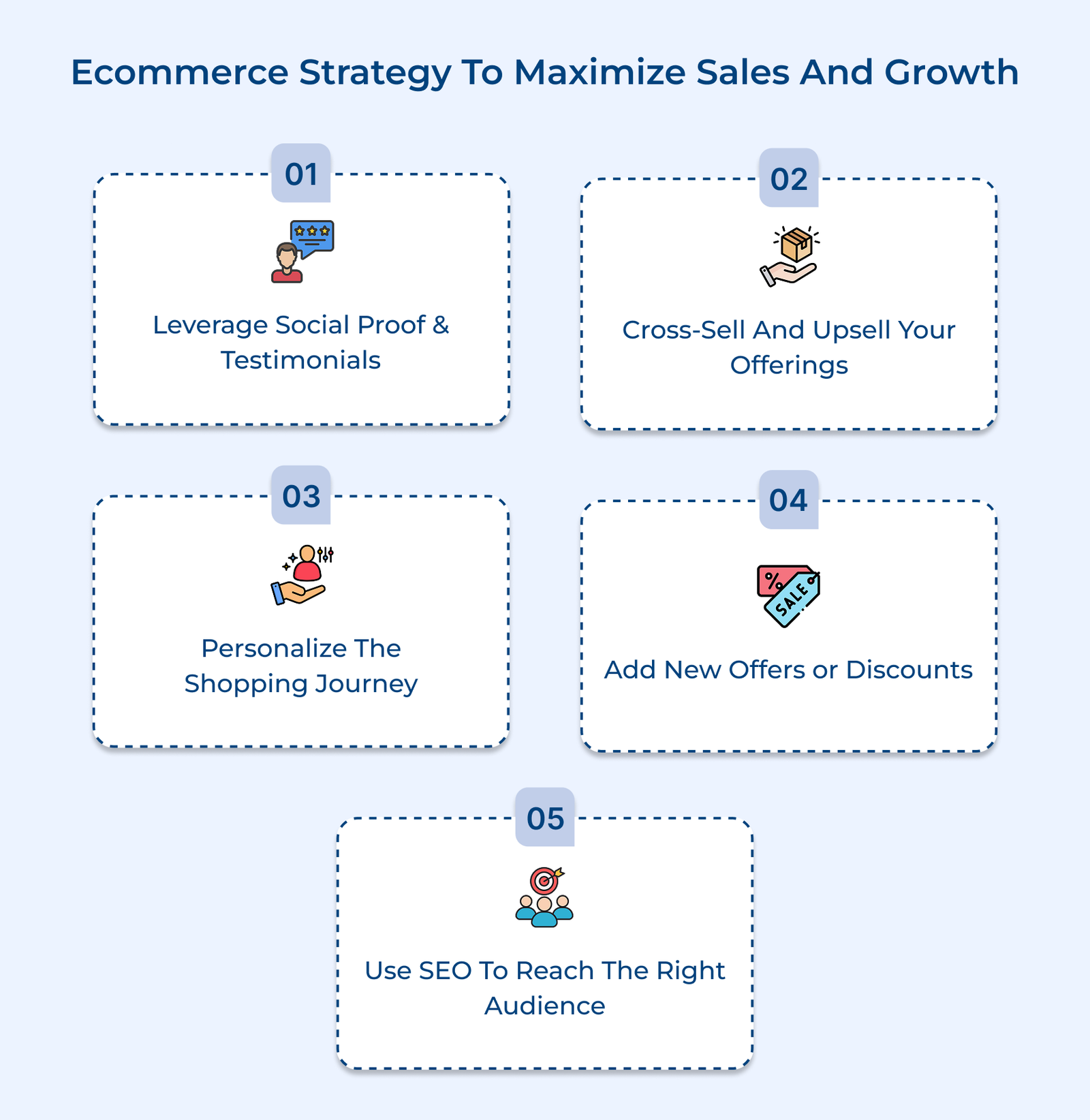
2. Leverage Social Proof & Testimonials
Social proof builds trust and credibility by showing potential customers that others have had positive experiences with your products, reducing hesitation and boosting confidence in their purchasing decisions.
Prominently display customer reviews, ratings and testimonials on your product pages. Automate review requests post-purchases and showcase user-generated content like customer photos or videos.
Actionable tips:
- Highlight industry awards, certifications or media mentions to enhance credibility.
- Use numbers like “10000+ happy customers” or feature reviews from verified users to further build trust.
3. Build an Email Marketing Strategy
Email marketing is a powerful tool for e-commerce, allowing direct communication with customers who’ve shown interest in your brand. A smart email strategy nurtures relationships and encourages repeat purchases through personalized content.
Start by building your email list with compelling lead magnets and sign-up incentives. Segment your audience based on behavior and preferences to send targeted campaigns. Set up automated email sequences for key stages, from welcome emails to abandoned cart reminders and post-purchase follow-ups.
Best practices:
- Use dynamic content to personalize product recommendations based on past purchases.
- A/B test subject lines and email content to optimize open and click-through rates.
B. E-Commerce Strategies for Small Business
Ecommerce strategies for small businesses focus on using digital tools and targeted approaches to compete online while maximizing limited resources.
4. Build an SMS Marketing Strategy
SMS marketing is crucial for e-commerce, offering immediate and direct communication through customers’ most personal devices. It is perfect for time-sensitive offers and order updates with higher open rates than email.
Build your subscriber list with opt-in incentives like checkout offers or website pop-ups. Plan a messaging calendar with promotions, order updates and exclusive deals. Remember to maintain a balanced frequency to avoid overwhelming your audience.
Pro tips:
- Personalized product recommendations based on past purchases for higher engagement.
- Time your campaigns strategically, analyzing when customers are most likely to engage.
5. Cross-Sell and Upsell Your Offerings
Cross-selling and upselling are powerful strategies to boost revenue by increasing average order value while providing additional value to customers. The techniques suggest complementary products or premium alternatives that enhance their purchase.
Start by identifying related products in your inventory and display them on product pages as well as during checkout. Use automation to show personalized recommendations based on browsing and past purchases.
Actionable tips:
- Test different placements for product recommendations to find the most effective spots for conversion.
- Create urgency with limited-time bundle deals or special pricing for upgrades.
C. Ecommerce Strategies for Smooth Customer Experience And Success
A winning e-commerce strategy focuses on delivering seamless user experiences with personalized shopping, streamlined checkouts and customer-friendly features like free shipping or responsive support.
6. Personalize the Shopping Journey
Personalization in e-commerce turns generic shopping into tailored experiences. It is important to make the customers feel valued by customizing content, product recommendations and communications based on their behavior. 45% of consumers are more likely to shop on a site that offers personalized recommendations.
Gather and analyze customer data to create segmented profiles. Use AI-powered recommendation engines to suggest relevant products and adapt website content based on past interactions. Tailor product collections to match individual browsing and purchase patterns.
Actionable tips:
- Prioritize personalized search results based on customer preferences and history.
- Create custom landing pages for different segments to boost engagement and conversions.
7. Consider Free Shipping
Free shipping is a powerful conversion booster, as many customers see shipping costs as a key factor in their purchasing decisions. Offering it can reduce cart abandonment and increase average order values.
Assess your profit margins and shipping costs to set sustainable free shipping thresholds. Offer conditional free shipping based on order value to encourage larger purchases and clearly communicate the policy throughout the site. Test different thresholds to balance conversions and profitability.
Best practices:
- Run limited-time free shipping promotions during peak seasons to drive urgency.
- Offer free shipping as an exclusive perk for loyalty members or email subscribers.
D. Customers Retention Ecommerce Strategies
Customer retention strategies in e-commerce focus on keeping existing customers engaged and driving repeat purchases through valuable, meaningful interactions.
8. Follow-up with Customers Frequently
Regular customer follow-ups are a powerful way to build strong relationships and encourage repeat business. You not only gather feedback and address concerns quickly but also show your commitment to customer satisfaction long after the first sale.
Create a follow-up schedule that includes post-purchase surveys, check-ins on product usage and personalized recommendations. Use customer service tools to track interactions and ensure timely, relevant responses. The goal is to maintain communication without overwhelming your customers.
Pro tips:
- Segment follow-up based on purchase history to keep messages relevant.
- Include helpful tips and product care advice to enhance the customer experience.
9. Prepare a Loyalty Program
A well-crafted loyalty program boosts repeat purchases and increases customer lifetime value by rewarding engagement. It enhances a sense of exclusivity, offering tangible benefits that keep customers coming back to your brand.
Define clear reward tiers with real value for customers. Ensure the process of earning and redeeming rewards is simple. Exclusive perks like early access to ecommerce sales or members-only products can also add appeal.
Actionable tips:
- Incorporating gamification can make the experience more engaging and fun.
- Regularly review program data to understand which rewards drive the most interaction and refine your approach accordingly.
10. Add New Offers or Discounts to Customers
Strategic discounting and special offers can boost sales while building customer loyalty when done right. You can drive growth while maintaining profitability through thoughtful promotion planning by targeting price-sensitive customers and encouraging larger purchases.
Start with a promotional calendar that aligns with business goals and customer buying habits. Tailor offers for specific customer segments and purchase histories. using time-limited promotions to create urgency. Track the performance of each promotional offer to optimize future campaigns.
Best practices:
- Offer exclusive deals for first-time customers to drive initial purchases and gather data.
- Run flash sales for specific product categories to create excitement and increase traffic.
E. Strategies for Attracting New Customers
Attracting new customers in e-commerce calls for a smart mix of digital marketing, brand building and a strong value proposition. The strategies work together to boost visibility and bring potential customers to your online store.
11. Use Search Engines to Reach the Right People
Search engine optimization (SEO) is key to e-commerce success, helping your products get discovered by customers actively searching for what you offer. A solid SEO strategy boosts organic traffic, reduces reliance on paid ads and supports long-term growth.
Start with keyword research to identify terms your target customers use. Optimize product pages with relevant keywords in titles, descriptions and meta tags. Create valuable content that answers common customer questions and pain points.
Pro tips:
- Develop detailed product guides targeting long-tail keywords specific to your niche.
- Optimize product images with descriptive alt text and compress them for faster load times without compromising quality.
12. Grow Your Social Media Presence
Social media is a powerful tool for brand building and customer engagement, offering direct interaction with potential customers where they spend most of their time. A strong social media presence boosts brand awareness and creates multiple touchpoints along the customer journey.
Develop your social media strategy by focusing on the platforms where your target audience is most active. Share engaging content that highlights your products in real-life settings and mix in user-generated content along with behind-the-scenes glimpses of your business.
Actionable tips:
- Use platform-specific features like Instagram Shopping or Pinterest Rich Pins to make your products easily discoverable.
- Create a content calendar that blends promotional posts with valuable educational and entertaining content.
13. Invest in PPC Advertising
Pay-per-click advertising offers immediate visibility and targeted reach to customers actively searching for products like yours. PPC has an average of 200% return on investment (ROI). The campaigns allow you to scale quickly based on performance and goals with measurable results.
Start by setting clear campaign objectives, identifying target keywords and defining audience demographics. Craft compelling ad copy that highlights your unique value and includes strong calls to action. Use conversion tracking to monitor performance and begin with a small budget to test ad variations before scaling successful campaigns.
Best practices:
- Use retargeting to re-engage visitors who showed interest but didn’t convert.
- Regularly update negative keywords to optimize ad spend and ensure your ads appear only for relevant searches.
Ecommerce Strategy Example
Let’s go through five notable examples of e-commerce brands that have successfully implemented strategies to attract and convert customers.
Nike
Nike revolutionized its digital presence with a direct-to-consumer strategy through its Nike Direct division. They offered tailored product recommendations and exclusive access to limited-edition releases by focusing on personalization via the Nike App. They also introduced augmented reality for virtual shoe try-ons, creating an immersive shopping experience.
The shift drove significant growth in digital sales and customer engagement. The personalized approach boosted loyalty and increased average order values, while their mobile-first strategy resonated with younger consumers who valued a seamless shopping experience across devices.
Amazon
Amazon constantly hones its customer acquisition strategy using advanced data analytics and personalization. Their recommendation engine suggests products based on browsing history, past purchases and similar customer behaviors. The Prime membership program enhances the experience with perks like free shipping and exclusive deals.
The strategies have helped Amazon dominate the e-commerce space. Prime membership enhances customer loyalty, encouraging frequent shopping and higher spending per order. Personalized recommendations boost cross-selling and customer lifetime value.
Sephora
Sephora transformed beauty retail with its “Digital First” strategy, blending online and offline experiences. They introduced virtual try-on technology, personalized beauty profiles and a robust loyalty program, Beauty Insider. Their mobile app delivers tailored recommendations and lets customers virtually test products.
The omnichannel approach has deepened customer relationships and boosted purchase frequency. Sephora has stayed ahead in the competitive beauty market by offering a personalized experience, especially appealing to younger consumers who value digital innovation.
Warby Parker
Warby Parker revolutionized the eyewear industry by prioritizing convenience and accessibility. Their home try-on program lets customers test five frames at home, while their website offers a virtual try-on tool and detailed frame measurements for confident purchases.
The customer-focused innovations have built trust and minimized hesitation in a traditionally offline market. Their approach to online eyewear shopping has drawn a large, loyal customer base who value the convenience and risk-free experience.
ASOS
ASOS adopted a powerful digital strategy centered on mobile shopping and social media engagement. Their intuitive mobile app features visual search and style matching, while user-generated content showcases products in real-life settings.
The strategy has strengthened ASOS’s position in the competitive fashion e-commerce market. They’ve effectively connected with their target audience of young, fashion-savvy consumers by focusing on mobile-first shopping and social proof.
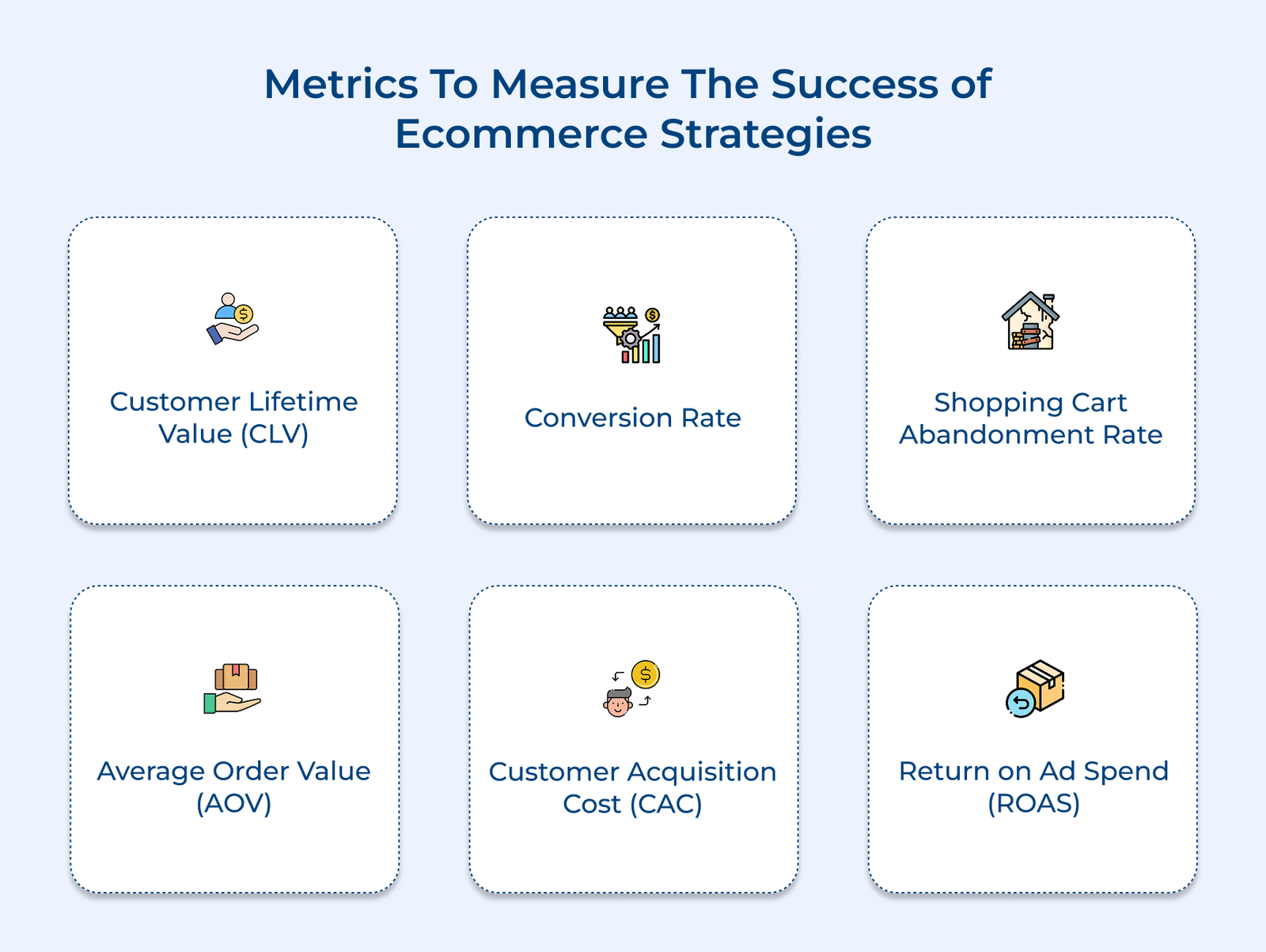
Metrics To Measure The Success of Ecommerce Strategies
Check out the key metrics to measure the success of e-commerce strategies. The metrics will help ensure your strategies drive growth.
Essential questions to consider:
- Are our customer acquisition efforts attracting profitable, long-term clients?
- How effectively are we converting website visitors into paying customers?
- Are our marketing investments delivering positive returns across channels?
- How successful are we at retaining customers and driving repeat purchases?
- Is our overall revenue growth both sustainable and profitable?