1. Audience Focus and Language
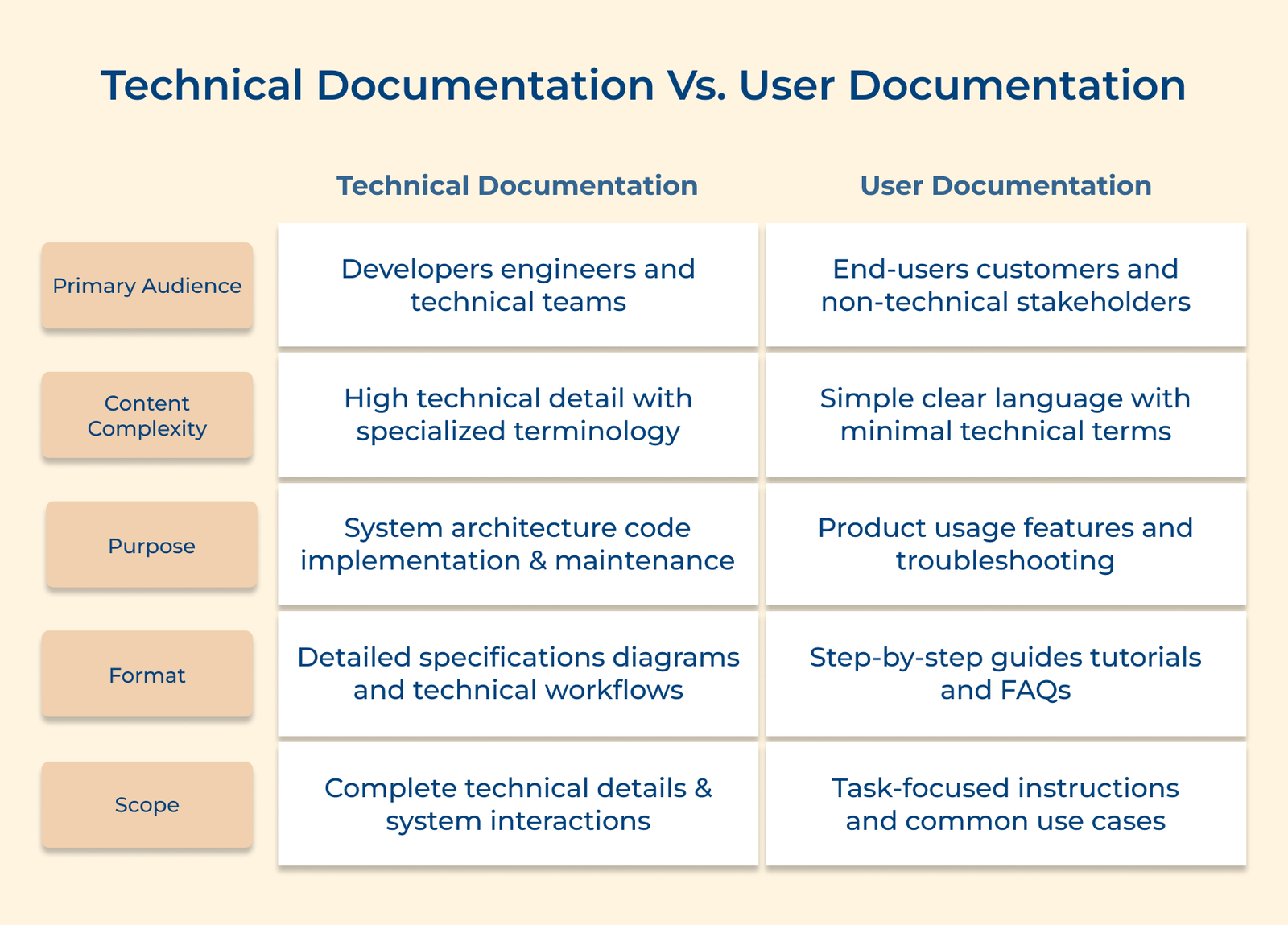
Technical documentation is designed for professionals, offering detailed insights into system components using industry-specific terms, technical process and mathematical notations.
User documentation caters to general users, focusing on clarity and simplicity to guide them through tasks with everyday language.
2. Content Depth and Structure
Technical manuals offer in-depth details on system architecture, code structures and implementation. It provides comprehensive information about system interactions, data flows and technical specifications.
User documentation simplifies complex tasks, breaking them into clear, actionable steps to help users achieve specific goals without delving into underlying systems.
3. Purpose and Goals
Tech documentation acts as a vital reference for building, maintaining and integrating systems. It empowers technical teams to grasp system architecture, make informed decisions and implement changes efficiently.
User documentation is designed to guide users towards achieving their goals effortlessly. It ensures smooth product usage and enhances the overall user experience by offering clear instructions.
4. Format and Presentation
Product documentation follows a formal, structured format, featuring detailed diagrams, code snippets and technical specifications. It focuses on delivering comprehensive and precise information, often at the expense of simplicity.
User documentation prioritizes clarity and accessibility. It incorporates visual aids, screenshots and easy-to-follow step-by-step instructions, ensuring a user-friendly experience with intuitive navigation.
5. Maintenance and Updates
Technical documentation needs continuous updates with every system change, code revision or architectural adjustment. It relies on strict version control and meticulous changelog tracking to ensure accuracy.
User documentation focuses on updating task-based instructions and user interface changes. It ensures that guidance remains relevant and aligned with the latest product features.
Technical Documentation Examples
Below are a variety of examples to help you understand how technical documentation is structured and utilized across different industries.
1. Apple
Apple’s technical documentation strikes a balance between minimalist design and thorough coverage on support.apple.com. It offers clear, step-by-step guides organized by product lines, along with targeted troubleshooting for common issues.
Incorporating visual aids, interactive tutorials and videos, Apple’s documentation ensures users can easily resolve issues. Intuitive search functionality provides both basic and advanced support, empowering users to solve problems independently.
2. IKEA Assembly Instructions
IKEA transformed assembly instructions with language-neutral visual guides. Their documentation features detailed illustrations, numbered steps and clear part identification, making furniture assembly easy for global customers.
Focused on visual communication, IKEA uses isometric drawings, tool lists and progress indicators, relying on universal symbols. The approach ensures consistent results, regardless of location.
3. Amazon AWS
Amazon’s technical documentation shines with detailed AWS service guides, API references and developer resources. The platform offers interactive code examples, searchable libraries and in-depth implementation guides.
The documentation covers practical use cases, performance optimization and security standards with version histories, integration examples and best practice tips – all backed by extensive code samples.
4. Zappos
Zappos technical documentation highlights size guides, product specifications and return instructions. Their documentation emphasizes clear measurement instructions detailed product comparisons and easy-to-follow return procedures.
The platform features comprehensive FAQs, sizing charts, wear-test results and material specs, helping customers make informed purchase decisions while reducing return rates.
Do’s and Don’ts of Technical Documentation
Check out the do’s as well as don’ts to help you craft technical documentation that is clear, concise, and valuable for your readers.