What is a Brand Strategy? Definition, Key Elements & Types
Learn everything about brand strategy, including its definition, key elements and various types. Get insights on how to create a strong brand identity to drive long-term business success.

Learn everything about brand strategy, including its definition, key elements and various types. Get insights on how to create a strong brand identity to drive long-term business success.
Businesses often struggle to stand out amidst huge competition. Having a great product isn’t enough with over 80% of startups failing in their first five years. Companies are lost in a sea of competition, unable to capture attention. The real challenge is building meaningful connections with customers who are overwhelmed by choices.
A strong brand strategy is the game-changer. It’s more than logos and colors—it’s about crafting a narrative that resonates and creates lasting emotional ties. So let us dive deep into the topic and understand how to build a brand that turns your business into the top choice.
A brand strategy refers to a long-term plan that defines how a company will establish a unique and meaningful market presence to connect with its target audience. It’s the roadmap for how, when and where to communicate your brand’s message.
A well-crafted brand plan aligns all business activities and communications with your core identity. It covers everything from visuals like logos to customer experience and messaging. When executed effectively, it creates consistency, builds recognition and enhances emotional connections with customers.
Key principles:
Let’s explore why a clear, well-crafted branding strategy is essential for your business’s growth and sustainability.
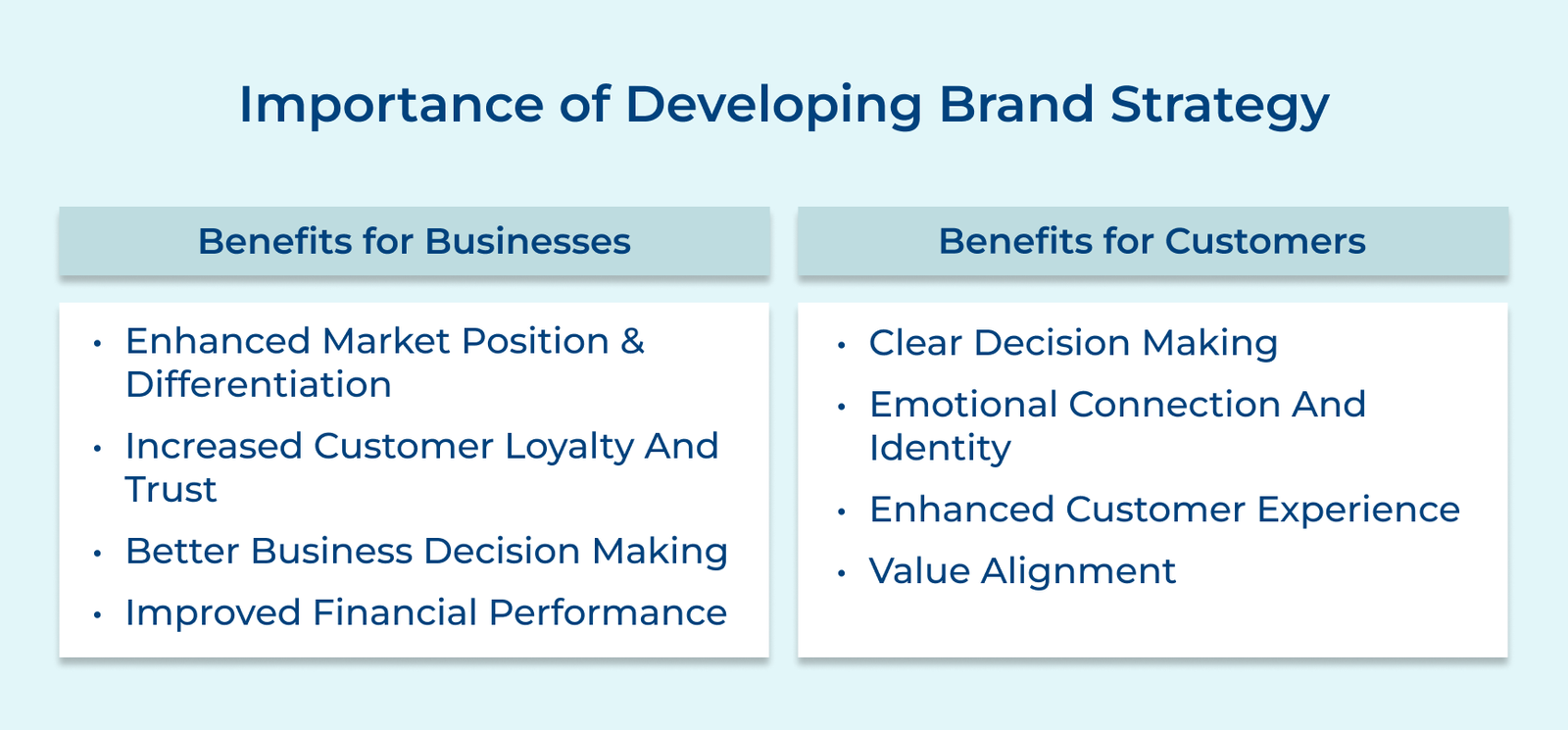
1. Enhanced Market Position and Differentiation
A strong brand strategy helps businesses secure a unique market position, making it easier to stand out. It offers a framework for communicating your distinct value and building an identity customers can recognize.
2. Increased Customer Loyalty and Trust
Consistent branding builds trust and credibility with customers. When people clearly understand your brand and experience it consistently, they’re more likely to form emotional connections, driving repeat business.
3. Better Business Decision Making
A clear brand strategy acts as a decision-making guide, aligning everything from product development to marketing with your core values and goals, ensuring more focused business operations.
4. Improved Financial Performance
Consistent branding can significantly impact revenue, with businesses experiencing up to a 23% increase in revenue through recognizable brand identities. It cuts marketing costs by improving targeting and driving word-of-mouth referrals, while also simplifying product launches.
1. Clear Decision Making
A strong brand guides customers in making confident purchasing decisions by clearly showcasing what to expect. Consistent messaging reduces decision fatigue and builds trust in their choices.
2. Emotional Connection and Identity
Strong brands create communities and give customers a sense of belonging. When people connect with a brand’s values and mission, they feel part of something bigger, creating more meaningful purchasing experiences.
3. Enhanced Customer Experience
A coherent brand strategy ensures customers receive consistent, high-quality experiences across all touchpoints. The reliability smooths interactions makes support easier to access and facilitates a more enjoyable brand experience.
4. Value Alignment
Customers can easily identify and support brands that share their values. The alignment drives purchases that fulfill practical needs while supporting causes and initiatives customers care about.
Let’s take a closer look at the essential components that make up a strong and effective brand strategy.
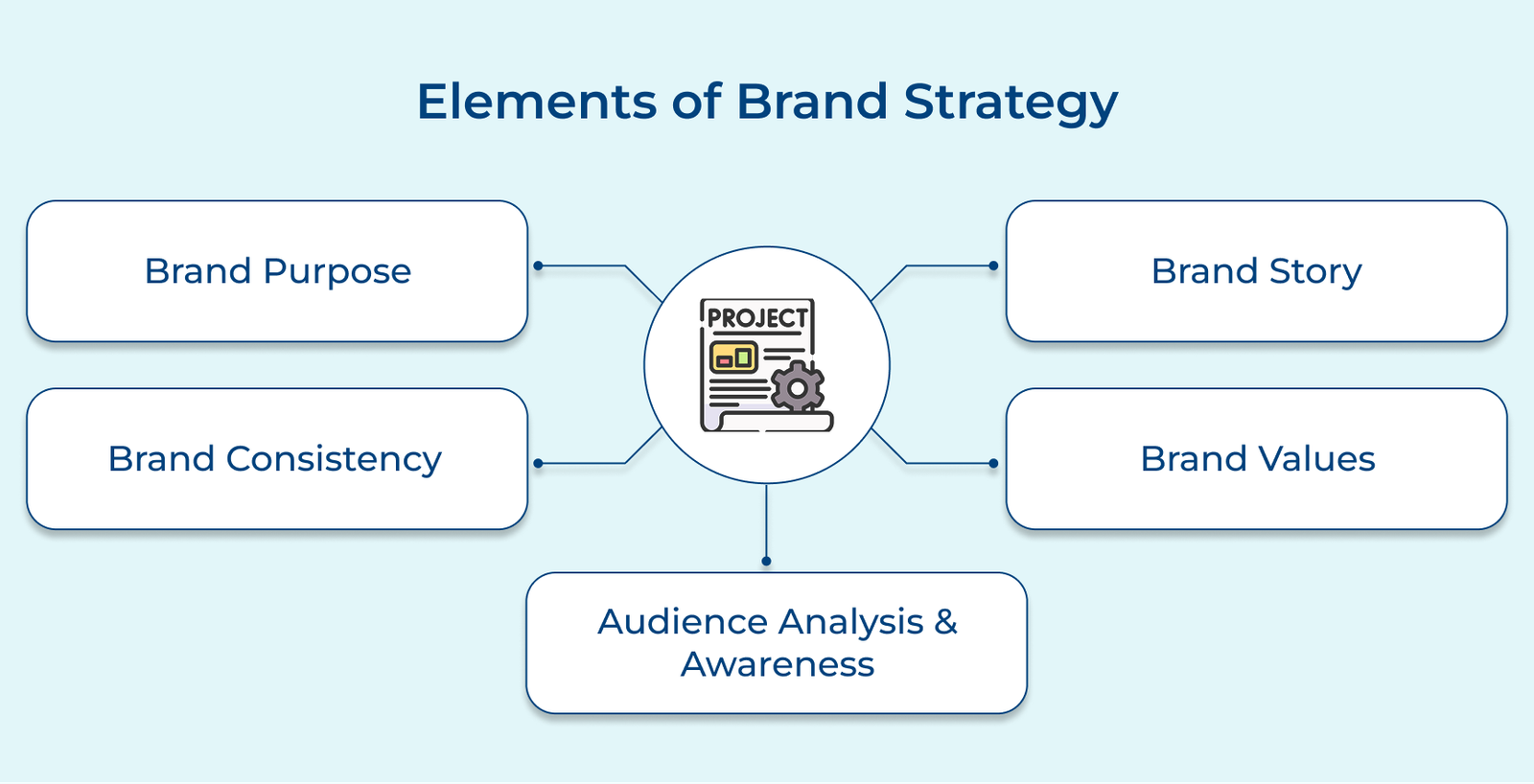
The purpose of every successful brand strategy is the deeper reason for its existence beyond profit. It defines what the brand stands for, its mission and its impact. A clear purpose drives decisions, inspires employees and connects with customers who share similar values. Let’s assume that Patagonia’s purpose goes beyond selling outdoor gear, it’s about protecting the environment.
Consistency is the foundation of a strong brand. It ensures uniform visuals, messaging, tone and customer experience across every touchpoint. Consistency builds recognition, trust and reliability, so customers always encounter the same brand experience, including online, in-store or through support.
Understanding your target audience is key to a successful brand strategy. It requires in-depth research into demographics, behaviors and pain points. Tailor brand awareness efforts to connect with the right people through the right channels and messages, ensuring your brand resonates effectively.
Your brand story connects your purpose with your audience, highlighting not just what you do, but why you do it and how it impacts lives. A compelling story establishes emotional connections, makes your brand relatable and sets you apart from competitors. It should be authentic, memorable and consistent across all communications.
Brand values are the core principles that guide your actions, shaping company culture and customer interactions. Strong values create authentic connections with customers who share your beliefs and ensure consistent brand behavior. The values should be lived, not just listed.
Below are the essential steps that will help you craft an effective brand strategy, ensuring your brand not only survives but thrives in the competitive landscape.
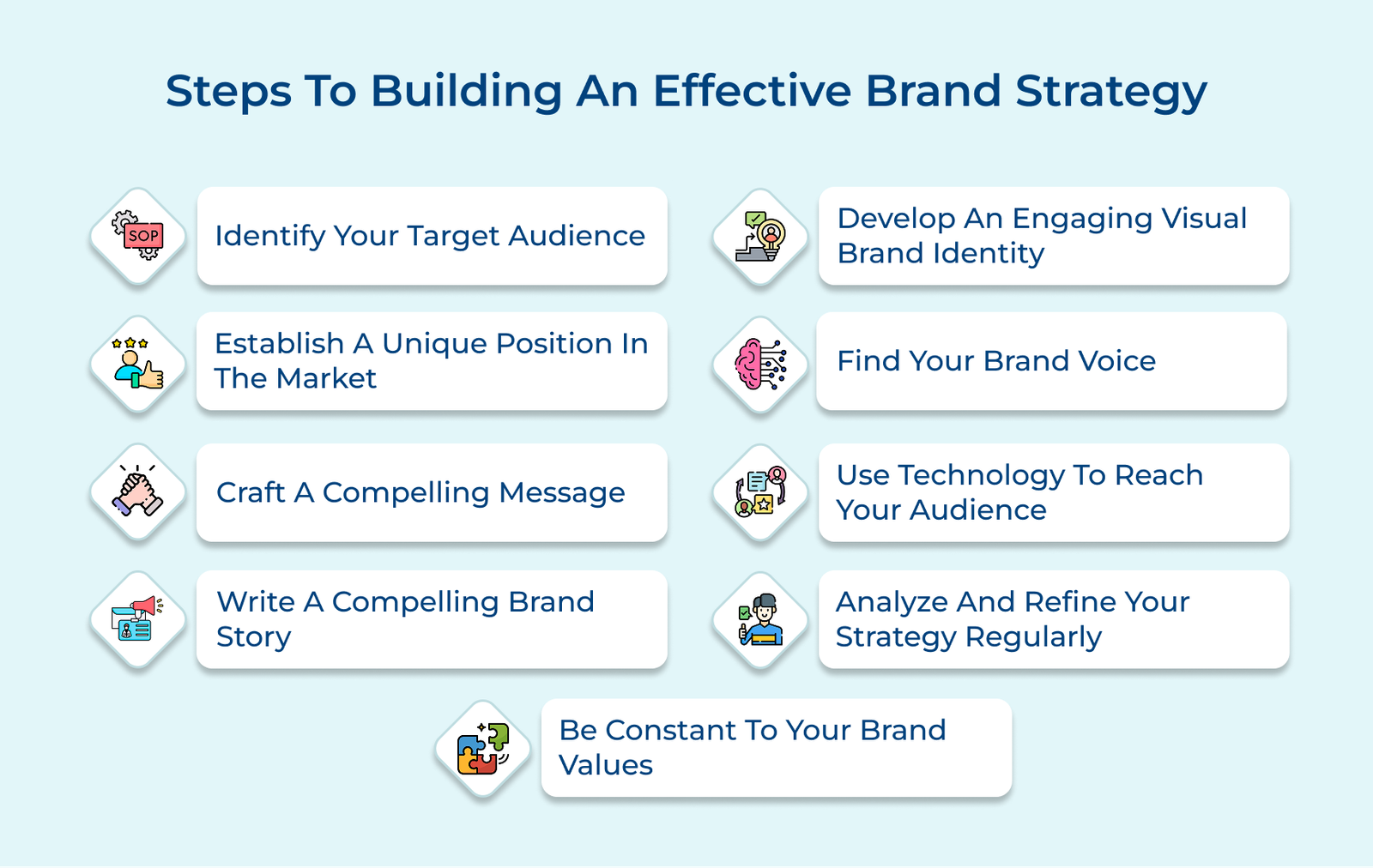
Building a brand strategy starts with creating detailed customer personas using demographic, psychographic and behavioral data. The research helps you understand your ideal customer’s age, income, lifestyle, interests and shopping habits, shaping all future branding decisions.
Let’s assume that a fitness app company discovers its core audience—busy professionals aged 25-40 who prioritize health but struggle with time management. It led to the development of quick, effective workout solutions and positioning the brand as a time-saving fitness choice.
Actionable tips:
Understanding your competitive landscape is key to carving out a unique market position. You can uncover market gaps or differentiation opportunities by analyzing competitors, helping you identify what they do well, where they fall short and how you can provide unique value to your customers.
Develop a clear and compelling unique value proposition that sets your brand apart. Let’s consider that an eco-friendly cleaning company positions itself not just as a cleaning solution but as a champion for environmental health, offering plastic-free packaging and concentrated formulas, while educating customers on sustainable living.
Pro tips:
The key is to focus on the platforms where your target audience spends time and engage with them in meaningful ways. You can align them with your brand’s communication goals and create impactful messaging by understanding the strengths of various digital channels.
Using data-driven marketing strategies across the platforms enables more targeted outreach. Automation tools and analytics streamline efforts while ensuring personalization. Assume that a boutique skincare brand uses AI-powered chatbots for personalized skincare advice and leverages social media analytics to identify trending concerns, adjusting its content strategy accordingly.
Best practices:
Crafting your brand’s narrative is about more than just sharing your company’s history, it’s about creating an emotional bond with your audience. A powerful brand story blends your origins, mission and values to resonate with your target market. 55% of people say they would consider purchasing from a brand after reading a compelling story.
The story should be authentic, relatable and memorable, inspiring customers while reflecting your brand consistently across all touchpoints. An example here can be a family-owned bakery weaving together its heritage of traditional recipes with modern dietary needs, creating a story of innovation and community through food.
Actionable tips:
Building a strong visual identity starts with consistent design elements that reflect your brand’s personality and values. Carefully chosen colors, typography and imagery should resonate with your target audience. The elements should work together seamlessly to create a professional and memorable brand image.
A well-crafted system should be adaptable to different mediums while maintaining consistency. It should evoke the right emotions and associations with your brand. Here we can take the example of a modern wellness brand that uses minimalist design, calming earth tones, clean typography and natural textures to create a sense of serenity across all its materials.
Pro tips:
Creating a distinct brand voice starts with defining the personality and tone that best represents your brand while resonating with your audience. The voice should align with your brand values, adapting to the preferences of your industry and target market.
Establish clear guidelines for your brand’s tone in various situations and ensure that all team members responsible for content or customer interactions apply the voice effectively. Let’s consider that a children’s educational toy company used a playful yet informative voice, blending simple language and creative expressions. It will help to engage both parents and children while maintaining educational authority.
Actionable tips:
Effective brand strategy requires ongoing monitoring of key performance indicators to assess what’s working and what needs improvement. Tracking metrics like social media engagement helps identify trends, uncover opportunities and highlight areas for enhancement. Regular analysis ensures your brand stays aligned with customer expectations and market demands.
Equally important is gathering customer feedback, which, alongside performance data, empowers you to make informed decisions and refine your strategy. The feedback loop allows your brand to evolve while maintaining consistency. Think of a subscription box service that can use customer insights to introduce personalized options and enhance the unboxing experience, resulting in increased satisfaction.
Pro tips:
Strong brand values go beyond simply listing admirable qualities, they should be woven into every aspect of your business. The values must guide decision-making at every level, from product development to customer interactions and should be demonstrated through action, not just words.
Let’s consider that a sustainable fashion brand showcases its commitment to environmental responsibility by adopting transparent supply chain practices, using eco-friendly materials and offering take-back programs for recycling old garments. When values are consistently reflected in operations, they become a powerful differentiator and trust-builder.
Best practices:
Check out the different types of branding strategies to understand how each can shape the future of your business by aligning with your overall vision and market positioning.
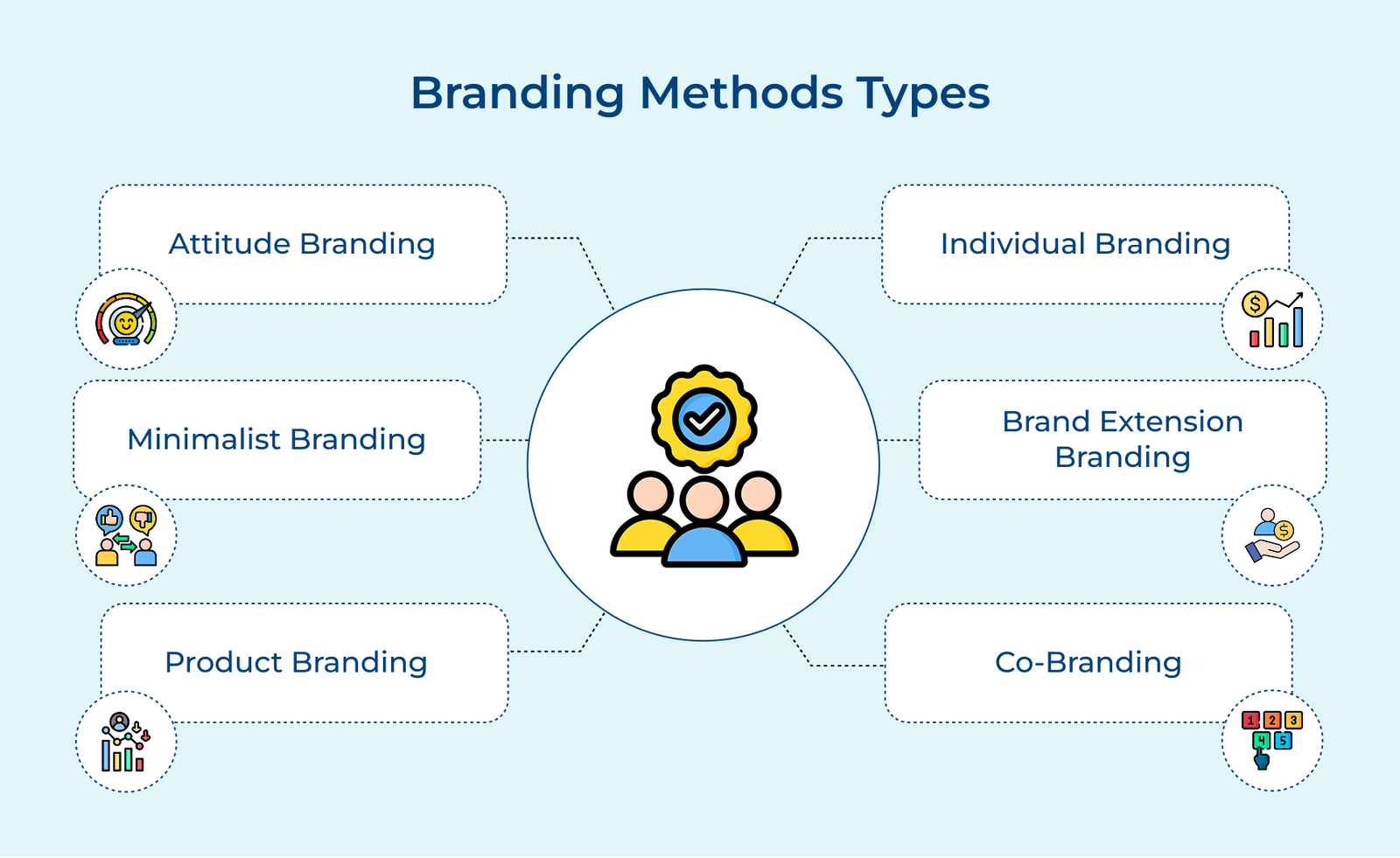
Attitude Branding
Attitude branding goes beyond products or services, aiming to forge a deep emotional connection with customers. It sells a lifestyle, mindset or feeling that aligns with the audience’s values and aspirations. The power of attitude branding lies in its ability to evoke strong emotional responses and create lasting psychological associations.
Minimalist Branding
Minimalist branding focuses on simplicity and clarity, removing excess to highlight what truly matters. It creates a sleek, modern and recognizable brand image that stands out with clean design. Minimalist branding delivers a memorable identity without overwhelming the audience with complexity by using white space, simple color palettes and concise communication.
Product Branding
Product branding aims to make individual products stand out by crafting unique identities, packaging and messaging that differentiate them from competitors, all while staying true to the brand. Success hinges on understanding target markets and customer needs, ensuring each product resonates with its audience while maintaining consistency within the brand family.
Individual Branding
Individual branding creates distinct identities for each product within a company, allowing for tailored positioning, target audiences and marketing strategies. The approach lets companies effectively capture diverse market segments without diluting the overall brand message. Each product can build its personality while still being part of the larger corporate umbrella.
Brand Extension Branding
Brand extension leverages the strength of an established brand to introduce new products or services in different categories. Companies can enter new markets with reduced risk and cost by building on existing trust. Success lies in staying true to core brand values while adapting to new market needs.
Co-branding
Co-branding is a strategic partnership where two or more brands collaborate to create unique products or services, combining their strengths and brand equity. Success relies on aligning with partners who share complementary values, leading to greater brand awareness, expanded customer bases and enhanced credibility.
Below are the critical distinctions between brand plan and marketing strategy to help you cultivate a holistic approach that nurtures both your brand’s identity.
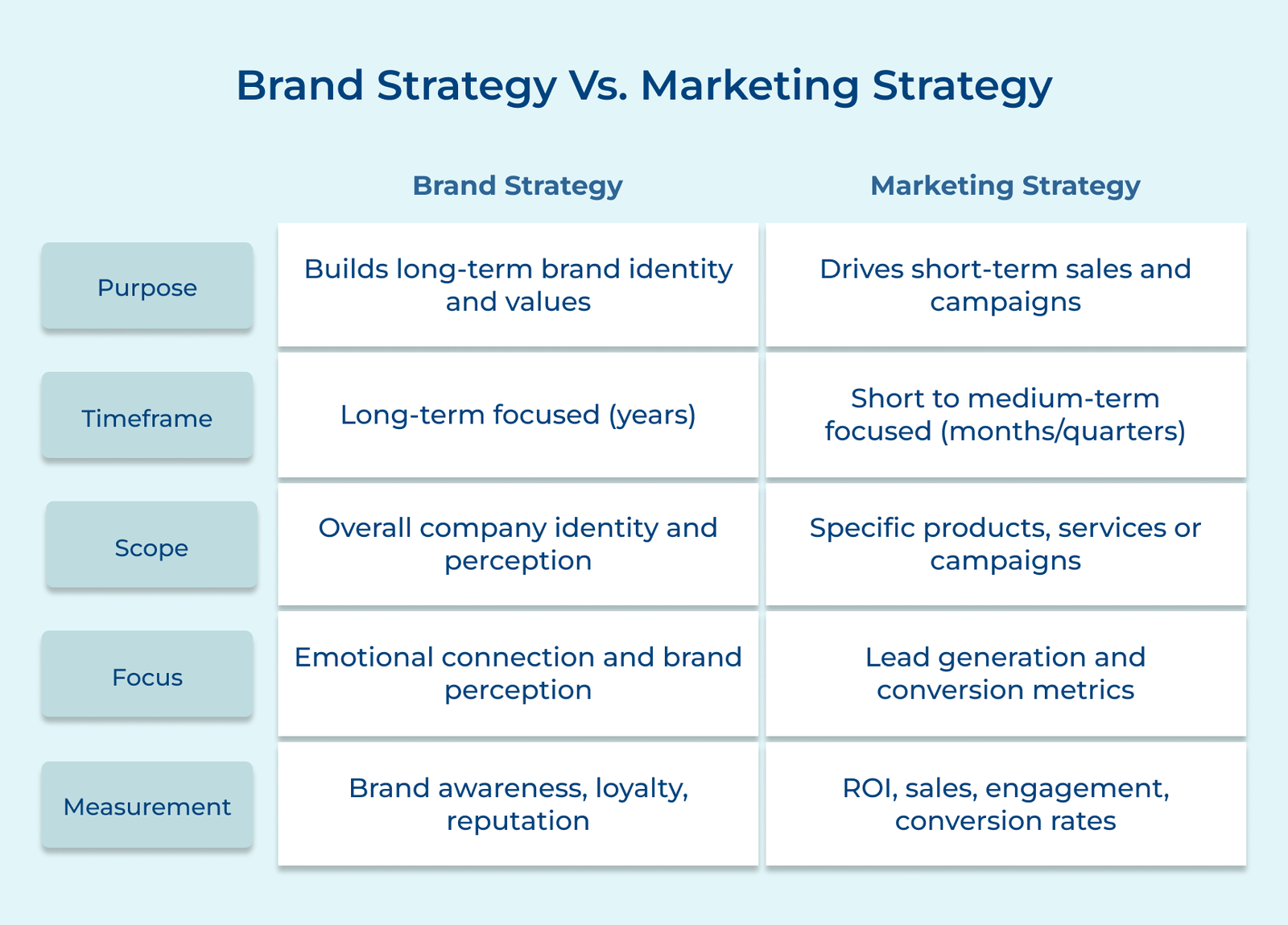
1. Purpose and Goals
Brand strategy is about shaping your organization’s core identity, enhancing emotional connections with customers and building long-term trust. It goes beyond products to create a lasting reputation.
Marketing strategy focuses on driving immediate results through targeted campaigns, seizing market opportunities and converting interest into sales. It’s all about achieving specific business goals in the short term.
2. Timeframe and Planning
Brand strategy is a long-term effort, focused on building a strong identity, values and market position over years or even decades. Changes are deliberate and gradual to ensure stability.
Marketing strategy operates in shorter cycles—usually months or quarters and is more adaptable. It allows for quick adjustments based on performance or emerging opportunities, enabling a fast response to market shifts.
3. Scope and Implementation
Brand strategy shapes your organization’s identity and perception, influencing everything from company culture to customer experience. It requires alignment across all functions to create a unified brand presence.
Marketing strategy focuses on specific products, services, or campaigns. It’s action-driven, targeting defined audiences through selected channels, with clear, measurable objectives to drive results.
4. Focus and Approach
The brand strategy focuses on building emotional connections and enhancing long-term relationships with customers. It creates a unique, resonant brand personality that drives loyalty through a value-driven approach.
Marketing strategy targets lead generation and conversion, guiding customers from awareness to purchase. It’s a tactical, results-driven approach aimed at achieving measurable actions.
5. Measurement and Success Metrics
Brand strategy success is measured by long-term factors like brand awareness, customer loyalty and reputation. The qualitative metrics require continuous monitoring to assess shifts in perception and brand strength.
Marketing strategy focuses on immediate, quantifiable results such as ROI, conversion rates and sales. The clear metrics offer direct insights into campaign performance and areas for optimization.
Creating an effective brand plan requires careful planning and execution. Here are common mistakes businesses make and how to avoid them:
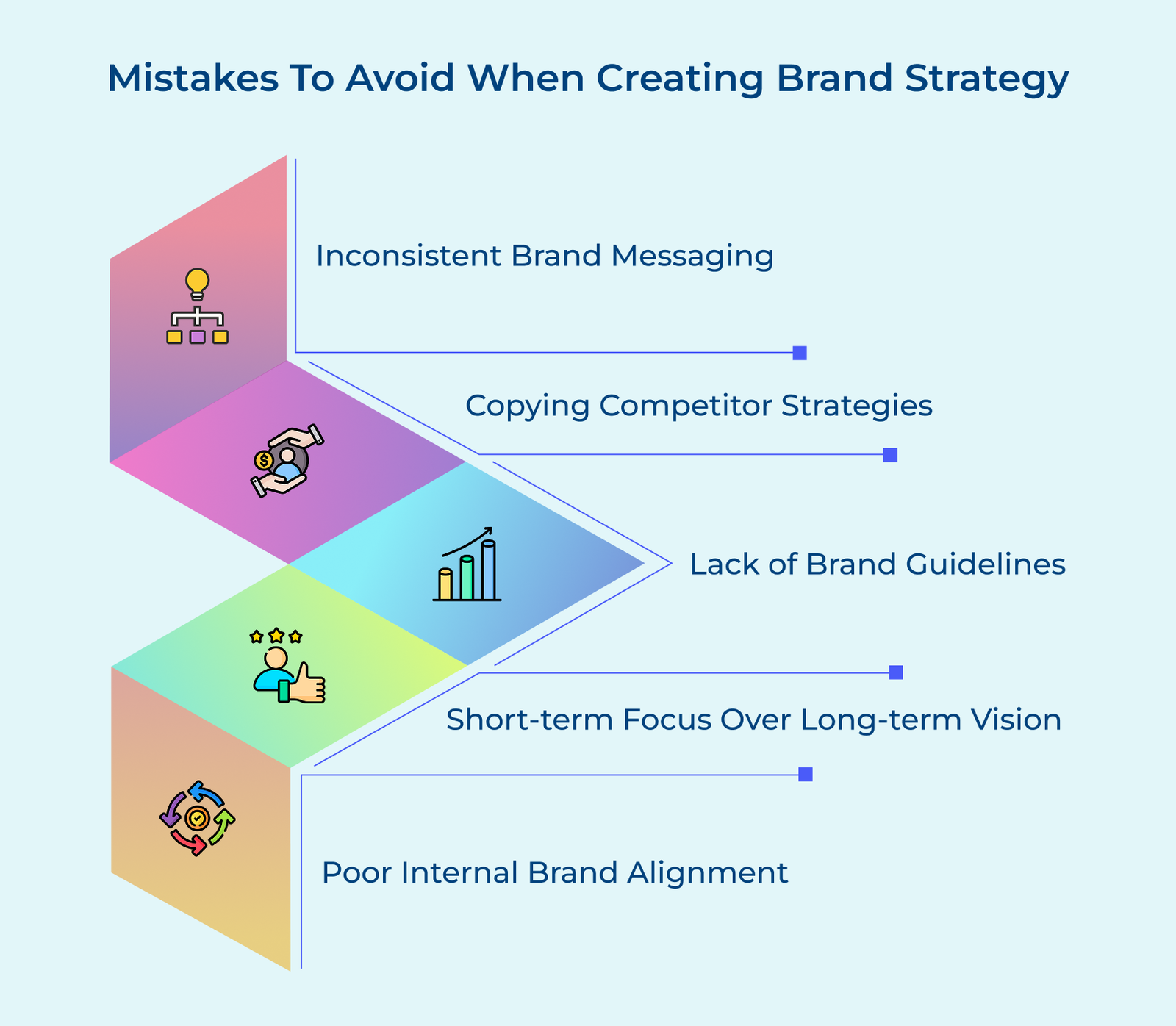
Brands often face challenges in maintaining consistent messaging across platforms, leading to mixed signals, confusing voices and a diluted identity. 71% of businesses agree that inconsistent brand presentation leads to customer confusion.
Copying successful competitors instead of crafting a unique identity causes market confusion. Brands that lack differentiation become forgettable and fail to form meaningful connections with their audience.
Without clear brand guidelines, organizations risk confusion and inconsistency. Teams interpret brand elements differently, causing misaligned content and uneven customer experiences across channels.
Brands often prioritize quick wins over long-term brand building. Brands create a disjointed image and confuse customers by chasing trends without considering their long-term impact.
Many organizations overlook internal brand education, leading to employees misunderstanding brand values and creating inconsistent customer experiences.
Strategies to address common branding mistakes:
1. Invest in audience research: Regularly conduct surveys, interviews and data analysis to understand your audience’s evolving needs. Update customer personas based on real data and market changes.
2. Establish strong brand guidelines: Develop detailed brand guidelines covering communication and visuals. Hold training sessions to ensure consistency in brand application across teams.
3. Monitor competitors: Implement a strategy for continuous competitor analysis. Leverage insights to identify market gaps and capitalize on new opportunities.
4. Track long-term brand metrics: Set KPIs that balance short-term performance with long-term brand growth. Create regular reports to track brand health and adjust strategies as needed.
5. Cultivate internal brand culture: Develop brand training programs for all employees and keep them engaged with regular brand updates.
Following are examples of successful brand strategies that showcase creative approaches and offer valuable insights that can inspire your brand-building efforts.
1. Nike’s “Just Do It” Brand Strategy
Nike’s brand strategy centers on empowerment and athletic excellence, moving beyond traditional sports marketing. They built deep emotional connections with consumers by telling inspiring stories of athletes. Their iconic “Just Do It” campaign evolved into a lifestyle mantra, not just a slogan.
The approach transformed Nike from a running shoe brand into a global lifestyle leader. Their strong emotional bond with customers fueled unmatched loyalty, enabling successful expansion into various sports and lifestyle products while staying true to their core brand values.
2. Apple’s Simplicity and Innovation Strategy
Apple’s brand strategy revolves around simplicity, innovation and an exceptional user experience. They crafted a unique product experience by prioritizing clean design, intuitive interfaces and seamless ecosystem integration. Their Apple Stores and high-profile product launches became immersive brand events.
The approach positioned Apple as a luxury tech brand with premium pricing, enhancing a loyal customer base eager for the latest innovations. It enabled Apple to expand beyond computers into a wide range of consumer electronics, all while maintaining its premium identity.
3. Starbucks’ “Third Place” Strategy
Starbucks’ strategy centers on becoming the “third place” between home and work, offering a consistent, welcoming environment worldwide. They prioritized customer experience and community, with thoughtfully designed stores.
The approach transformed coffee shops from quick stops to lifestyle destinations, allowing Starbucks to charge premium prices. Their focus on experience helped build a global brand that remained locally relevant while expanding internationally.
4. Tesla’s Innovation-First Strategy
Tesla’s strategy focused on disrupting the automotive industry with innovation and sustainability, positioning itself as a technology company, not just a car maker. They set new industry standards by blending premium products with eco-consciousness and advanced technology.
The approach established Tesla as a leader in sustainable transportation, enhancing brand loyalty and anticipation for future innovations. Their influence has helped steer the entire automotive industry toward electric vehicles.
5. Airbnb’s Community-Based Strategy
Airbnb’s strategy centered on building a global community of hosts and travelers, emphasizing authentic local experiences. They enhanced trust through reviews, high-quality photos and strong host support.
The strategy revolutionized hospitality, creating a new category of accommodation based on peer-to-peer rentals. It built a global travel community and allowed Airbnb to expand into experiences.
A strong brand strategy is essential for long-term business growth. It forms the foundation for meaningful customer connections, sets you apart from competitors and creates lasting value beyond individual products or services.
A solid brand plan enhances customer engagement by delivering consistent, authentic experiences across all touchpoints. Businesses can build loyalty with clear messaging, strategic positioning and emotional connections.
Key takeaways:

How long should my brand strategy last?
A well-crafted brand strategy typically has a 3-5 year horizon, though the core elements like purpose and values should remain relatively stable for longer. The implementation tactics and specific initiatives will need more frequent updates to stay relevant with market changes and customer needs. Think of it as having an enduring foundation with flexible execution layers.
What goes into a successful brand strategy?
A successful brand strategy combines several key elements working in harmony. You need a clear brand purpose that defines why you exist beyond making money. It connects with a distinctive brand positioning that sets you apart from competitors. You’ll also need consistent visual and verbal identity guidelines, along with a detailed implementation roadmap that covers all customer touchpoints.
What team do you need to build your brand strategy?
Building an effective brand strategy requires a diverse, cross-functional team. The core team should include marketing leadership, creative directors and brand strategists. You’ll also need input from customer insights, sales, product development and senior management. External brand consultants often provide valuable perspectives and specialized expertise, especially for major brand initiatives.
How do you measure brand strategy success?
Measuring brand strategy success requires tracking both quantitative and qualitative metrics. Key indicators include brand awareness, consideration and preference scores from market research. Financial measures like brand value, price premium and customer lifetime value matter too. Regular brand health tracking should monitor attributes like trust, relevance and differentiation against competitors.
How much should I invest in the brand plan?
Investment in brand strategy varies significantly based on company size, industry and objectives. When it comes to established companies, a comprehensive branding might require 2-5% of annual revenue, covering research, strategy development, creative work and implementation. Startups might need to invest proportionally more initially to establish their brand presence.

Grow Customer Relationships and stronger team collaboration with our range of products across the Conversational Engagement Suite.
Omnichannel Customer Support & Help Desk Software
AI Enabled Business Messaging and Chatbot Software
Sales Engagement & CRM Software
Call Center Software & Virtual Phone System
Product Marketing & Experience Platform
Customer Experience & Feedback Management Software
 Conversational Analytics Guide: Benefits, Examples & Use Cases
Scroll to top
Conversational Analytics Guide: Benefits, Examples & Use Cases
Scroll to top